
It started with a mistake.
In 1923, a housewife in Ocean View, Delaware USA named Cecile Steele ordered 50 chicks to restock her laying flock. Her hatchery sent 500 by accident. Rather than return them, she raised them for meat in a 16-by-16 shed and sold the survivors at 62 cents a pound.
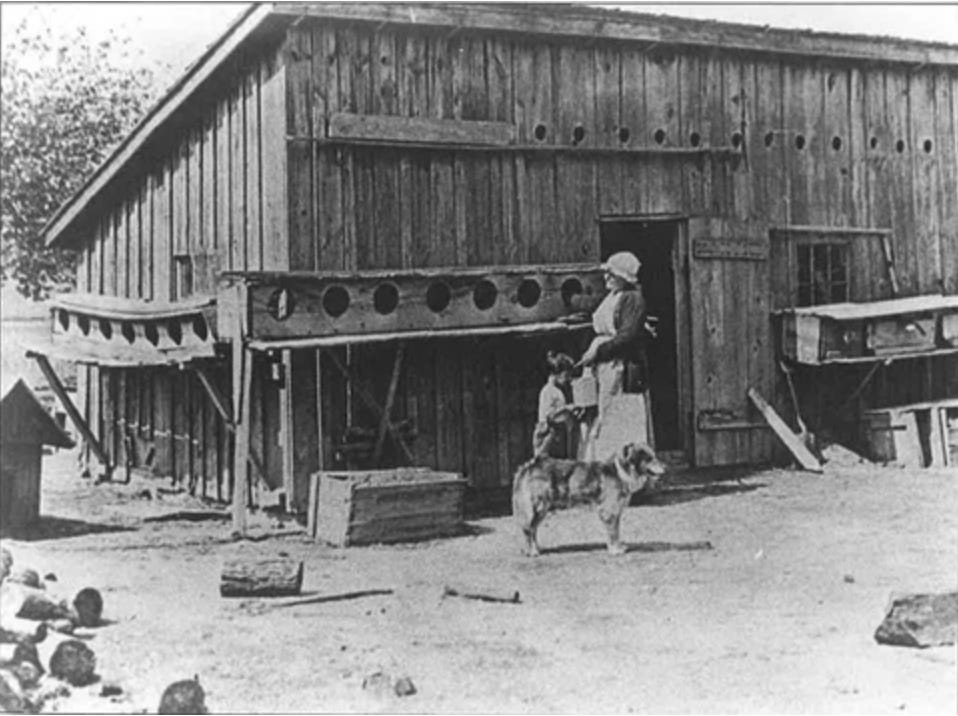
The next year she doubled the flock. Then doubled it again.
Her neighbours were watching and soon followed suit. Within five years broiler production on the Delmarva Peninsula in Delaware had jumped from 50,000 birds in 1925 to 7 million by 1934. Cecile Steele didn’t set out to build anything at first. She just didn’t send back the chicks. But she and others learned that if you push the animals and the communities hard enough, the profits follow.
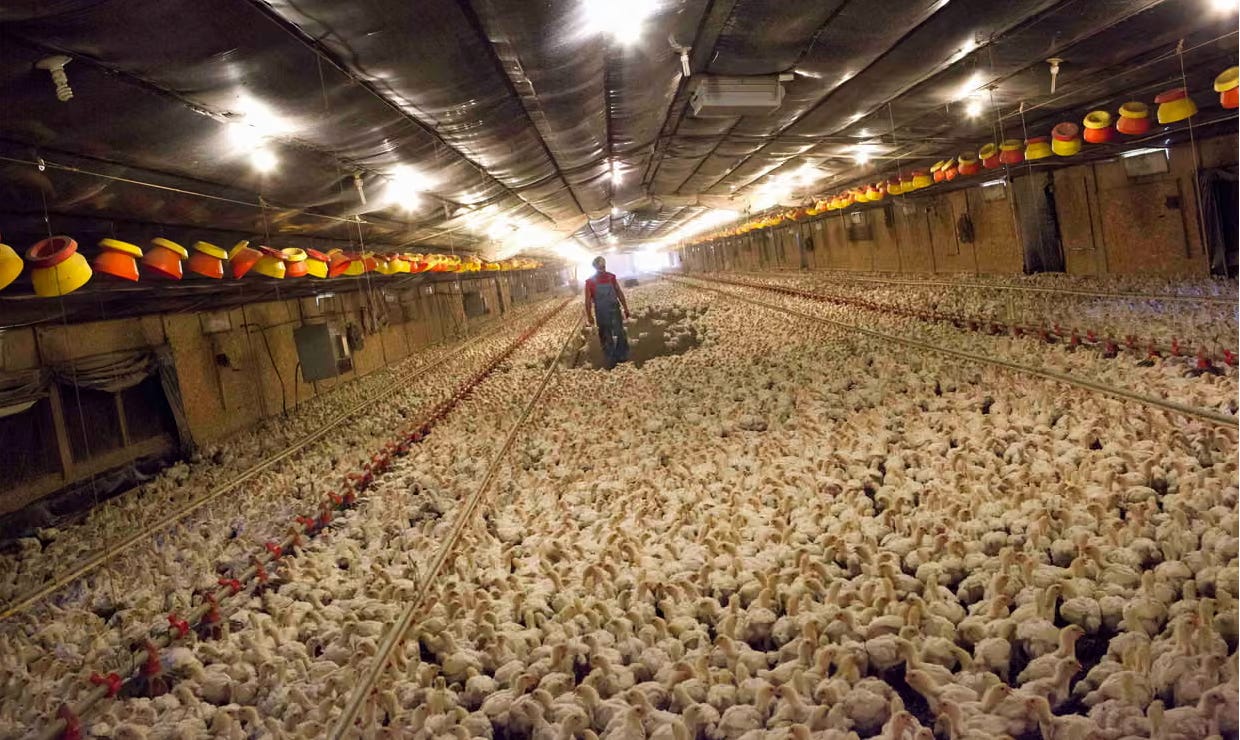
One hundred years later, a £2.86 billion corporation called Cranswick is planning to take that lesson to dystopian new heights. Cranswick wants to build an egg incubation facility in a quiet Suffolk village called Weybread. If approved, it will hatch an estimated 161 million chicks a year - every one of them destined for a factory farm - and funnel them into intensive poultry units across East Anglia. One building would supply up to 150 factory farms. This beating heart of Cranswick’s meat empire would pump living creatures through the system at a scale that would have been literally unimaginable to Cecile Steele in her 16-by-16 shed. And it is no mistake.
The council needs to feel the weight of our opposition before they decide whether to hand Cranswick the missing piece of its empire. If you objected to Methwold, Cranswick heard you. They came back. So must we, before April 2nd.
What Weybread actually is.
Cranswick wants to convert the site of a former slaughterhouse on the edge of the village of Weybread - population 400 - into a facility holding up to 15 million eggs at any one time. Running the numbers from their own planning documents: 20 incubation cycles per year, 80% hatch rate. That yields an estimated 169 million chicks annually. Each one leaves Weybread and enters an intensive poultry unit. Each one lives 38 to 42 days, never seeing sunlight and has been genetically selected to grow at a rate that causes chronic suffering.
Think about that number. 169 million. The entire population of the United Kingdom is 69 million. This facility would produce two and a half times that number in living creatures, every year, from a single building on a country road in Suffolk.
But what sets Weybread apart from a typical planning application isn’t just its scale. It is how critical it is to Cranswick’s plans for the future.
Cranswick’s own published corporate strategy, available on their website right now, explicitly identifies poultry as their primary growth priority. They call it their “Expand” strategy: building vertically integrated supply chains across East Anglia, investing in new sites, increasing incubatory capacity. They already have a primary processing facility at Eye in Suffolk. They have feed milling operations across East Anglia. They have growing farms scattered across the region.
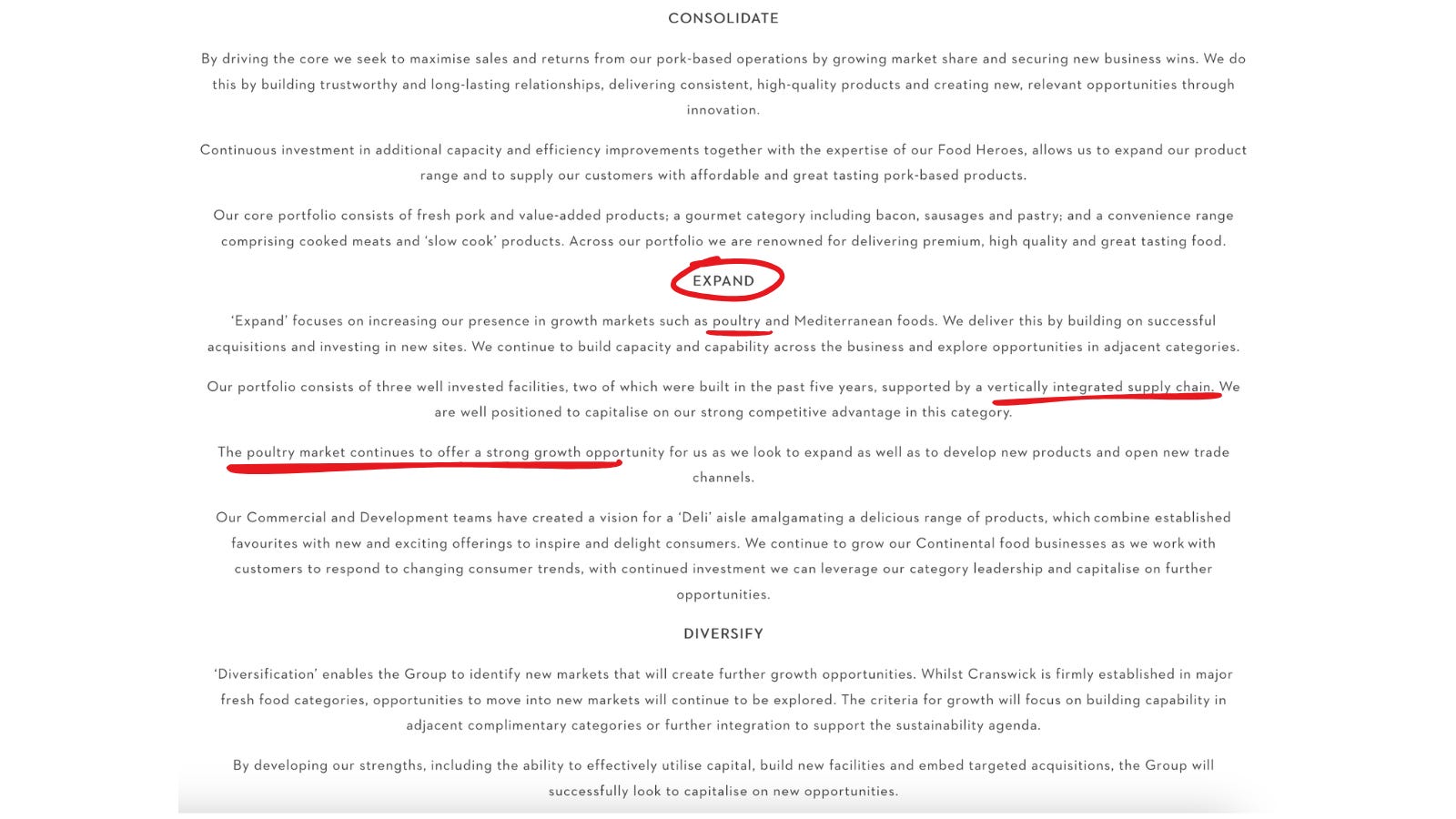
Their own FY2025 annual results - filed with the London Stock Exchange - reveal a £22 million investment in “incubatory capacity at the Kenninghall site.” Kenninghall is eight miles from Weybread. Their CEO committed to spending “almost £50 million across vertically integrated poultry operations” in this region. Poultry revenue grew 20% last year.
Here’s the takeaway: Weybread is not a standalone planning application. It is the missing piece of a supply chain Cranswick is actively constructing right now, in this region, with this money. The hatchery feeds the grower farms. The grower farms feed the Eye processing plant. The Eye processing plant feeds the supermarket shelves. One hundred and sixty-nine million chicks a year, produced at the centre of a machine Cranswick has been building for years.
Look, the Weybread Egg Factory is basically the death star. If we stop it we throw a wrench into the whole machine. Approve it and the network becomes dramatically harder to dismantle.
This installation is critical infrastructure for Cranswick’s Factory Farm Empire. But…
We’ve beaten them before. And we’ll do it again.
We’ve been fighting Cranswick across the UK… in planning portals, at council meetings, in legal submissions. We know how this company operates. We know what their applications leave out. We know what their ecological surveys miss, and we’ve beaten them.
This is the most important objection we’ve asked you to make. Help defeat this horrifying project, our portal is open with a sample letter and instructions on how to submit an objection to the council, two minutes is all it takes. The deadline is fast approaching on April 2nd.
And if you want to power every fight like this one:
Thank you to all who have donated already or donate monthly. We couldn’t do this work without you :)
Earlier this year, after a three-year battle and over 15,000 objections, Cranswick’s application for a mega pig and poultry unit in Methwold, Norfolk was rejected. The council found that Cranswick had failed to assess climate impacts, failed to demonstrate no harm to protected sites, and failed - despite multiple extensions - to provide the information required to make the decision lawfully. The planning portal even crashed under the weight of objections that we sent as a community. The application failed.
The Weybread application is also legally vulnerable. A local resident, Sally Mittuch, who lives directly adjacent to the site, has spent months collecting bird survey data between June 2025 and February 2026. Her records document 70 species on or immediately adjacent to the site. The ecological appraisal Cranswick submitted to the council records 15 to 20 bird species. She has documented approximately 10 Schedule 1 protected species. Cranswick’s appraisal records one. She has found at least thirteen Red List bird species. Cranswick’s appraisal records two.
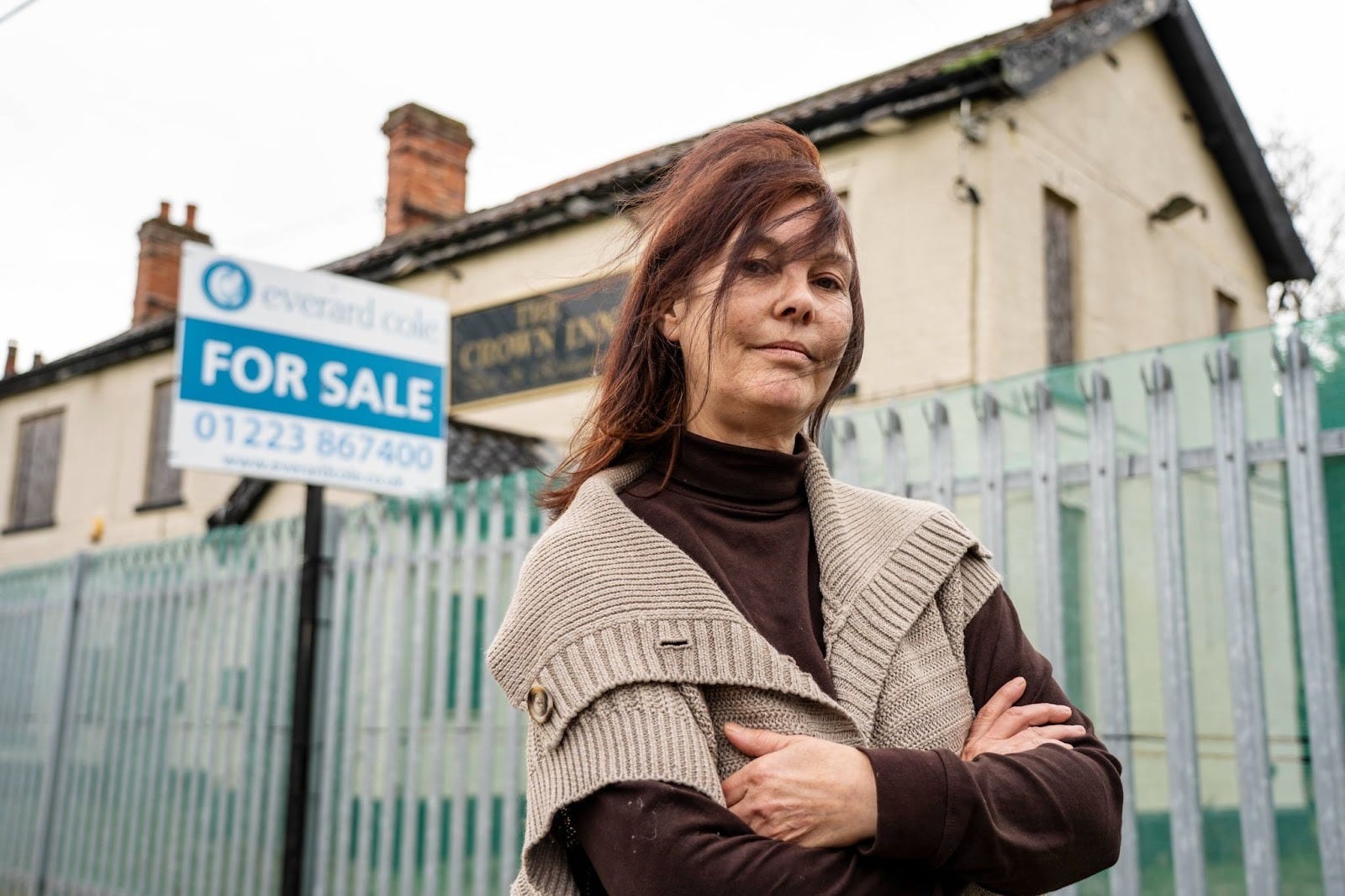
And it gets worse. That appraisal was based on a nature survey conducted in 2017, when the site was an operational slaughterhouse and the adjacent fields they own were arable. The survey was updated in 2024 and gave similar results. However since 2017, the land has re-wilded with a species-rich grassland, natural woodland regeneration, orchids and hundreds of young trees. The appraisal describes a wasteland; in reality the land is a nature recovery site, supporting at least 10 endangered bird species including breeding barn owls and greater crested newts.
The biodiversity net gain calculation, required under the Environment Act 2021, is built on this fabricated baseline. The numbers are wrong because the starting point is wrong. And under the Supreme Court’s ruling in Finch v Surrey County Council, the full upstream and downstream greenhouse gas emissions from the supply chain for the 169 million birds a year this facility will incubate, need to be disclosed– something that Cranswick still has not revealed. Suffolk is classified as a Seriously Water Stressed Area. There is a moratorium on new non-domestic water supplies in the Hartismere water resource zone, which includes Weybread, until 2033. None of this has been adequately addressed.
The application is deficient. The council needs to hear that from you.
This is the inflection point.
There is a version of the future in which Weybread gets approved, and then the next node in Cranswick’s East Anglia network, and then the next. In which the infrastructure of industrial animal farming becomes so entrenched, so vast, so deeply wired into the supply chain that the idea of dismantling it becomes genuinely unthinkable. In which 169 million chicks a year from one building becomes the template, replicated across the country, the continent, the world. In which the companies building this system grow ever greater in power and influence as their chairman continues to direct national policy, pocketing £4.6 million, while their lobbyists steadily deconstruct the planning laws that communities use to fight back.
We are not there yet.
We are, however, getting closer and closer to that cliff’s edge. And a crucial step in their plan is standing right in front of us in a quiet Suffolk village where the old slaughterhouse has been silent for six years, where the birds have come back to the hedgerows, where the residents can open their windows again, where a woman called Sally has spent months in the fields counting species that Cranswick pretended weren’t there.
Factory farming assembled itself piece by piece and it can be dismantled the same way. One planning application at a time. One council at a time. One set of objections, yours, at a time.
Cranswick has billions, a government advisory seat, and a CEO on £4.6 million a year.
We have you.
That’s always been enough.
Animal Rising with Communities Against Factory Farming
Communities Against Factory Farming (CAFF) supports grassroots communities fighting factory farm planning applications across the UK. Animal Rising is a movement working to end factory farming and build a just food system.
Thank you for your attention today, if you haven’t yet objected you can at caff.org.uk/weybread. It takes two minutes.
If you are more experienced, you can object directly, by creating an account on the Mid Suffolk Planning Portal, then searching for the application number DC/25/02757.
And if you’d like to donate to support more of this advocacy and help us take the fight to Cranswick, consider becoming a monthly sustainer of Communities Against Factory farming.
Comments
Nothing yet. Say the first thing.
Sign in to join the conversation.