
Dear Friend,
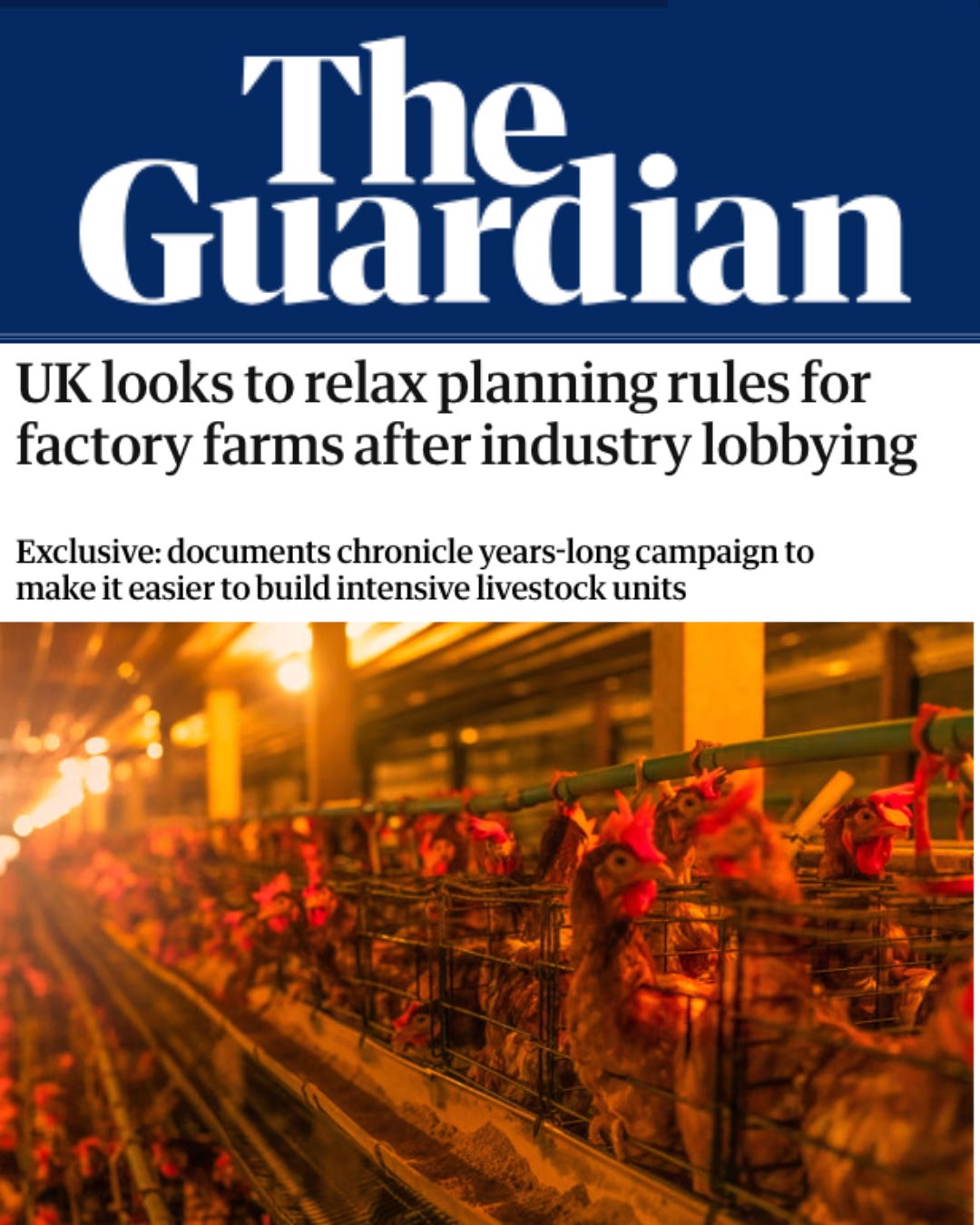
We’re in The Guardian. And the factory farming industry is rattled.
A Guardian investigation last week used Freedom of Information laws to uncover the truth behind proposed changes to our nation’s planning rules; rules written, it turns out, in direct response to industry lobbying to make it easier to build new factory farms. In spite of the evidence, the government denies the connection. Where did they get the idea to increase factory farming, if not from industry? The answer is obvious and so is the lie.
When the fate of nature, communities, and millions of farmed animals rests on your decisions, neither is good enough.
CAFF’s Legal Strategy Coordinator Maya Pardo is quoted in Zach Boren’s piece:
“By directing decision makers to give ‘substantial weight’ to the economic benefits of livestock intensification, the proposal will effectively give a green light to megafarm expansion, despite well-documented damage to rivers, air quality and rural communities.”
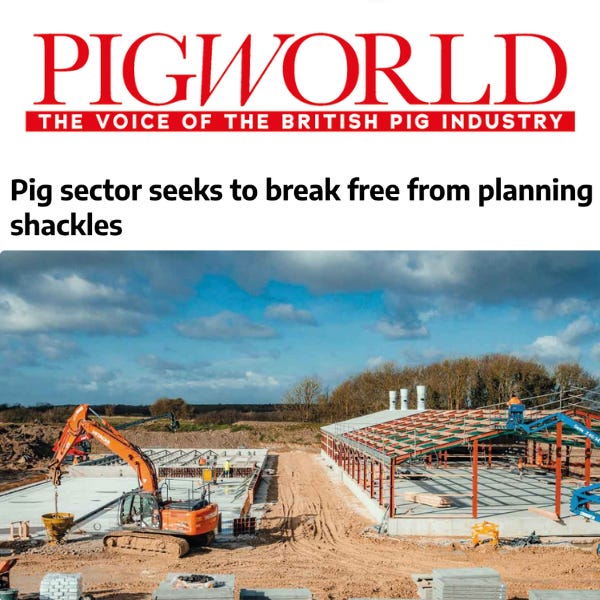
We also appeared a few days ago in Pig World, the industry’s own trade press, in a piece about how the sector wants to ‘break free from planning shackles’. The shackles they want to break free from are the communities, the environmental protections, and the legal scrutiny that stand between megafarm expansion and the British countryside.
In March, alongside 18 co-signatories, we submitted our formal response to the government’s draft planning framework. The proposals would give “substantial weight” to the economic benefits of livestock intensification, classify factory farm development as acceptable in principle, and strip local authorities of the tools they need to refuse applications for new industrial units. In short: more megafarms, less scrutiny, and communities left to bear the cost.
The industry’s justification for these changes? They argue they’ve voluntarily reduced stocking density, and now need more space. Well we’d welcome genuine welfare improvements. But voluntary corporate commitments carry no legal force and can be reversed at any time. Several restaurant chains withdrew from the Better Chicken Commitment just last month. Planning conditions offer no guarantee those density standards will be maintained and, as we pointed out in Zach’s piece, we would be left with ‘embedd[ed]’ mega-farms long after the welfare promises are forgotten.
Then there is their food security argument. Food security does not mean maximising short-term output while destroying the ecosystems that make food production possible. Professor Paul Behrens of Oxford told the Guardian the case is “illusory”, intensive poultry depends on imported feed and vitamins while making us more vulnerable to avian flu. It also poisons the very waterways agriculture depends on.
The Environment Agency’s own figures show farming is responsible for 70% of nitrate pollution in English rivers. 85% of British rivers are now in poor ecological health. You cannot build food security on dead rivers. A plant-rich food system which is not dependent on the imported feed that intensive livestock farming requires is far more resilient. Growing food for people, not for animals in megafarms, is what genuine food security looks like.
In fact a study just published in Nature Communications found we have a closing 20-year window before land use decisions lock in irreversible species extinctions across Britain. At the edge of this precipice we are being asked, right now, to loosen our footing.
And while these arguments are being laundered through ministerial briefings, real people are getting sick, animals are suffering, and the rivers and ecosystems we share are being degraded. Not as future risks. Now.
Factory farming is one of the most unpopular things in British politics. Our work exists to bridge the gap between what communities on the frontline actually want and what policy delivers. The government’s proposal does not close that gap. It buries it.
Take action
The intensive farming industry lobbied for these changes in private. We organise in public. And we are just getting started.
Read the Guardian investigation here. And here you’ll find our response to the draft National Planning Policy Framework consultation (what a mouthful huh).
Then help us keep going.
In Solidarity,
Communities Against Factory Farming and Animal Rising
Comments
Nothing yet. Say the first thing.
Sign in to join the conversation.