
I started the journey at Bennachie. The hill dominates Aberdeenshire, its summit crowned by a Pictish fort. At the base stands the Maiden Stone — a carved slab, weathered but still unmistakably Pictish, with interlace, monsters, and a Christian cross. Bennachie and the Maiden Stone are not just picturesque relics. Together they mark the southern fringe of a lost kingdom: Fortriu, the Pictish power that once ruled northern Scotland.
From there I drove on past Tap o’ Noth. Its great hillfort rises above Rhynie, where archaeologists have uncovered evidence of a royal Pictish centre. Excavation has revealed hundreds of houses packed inside its ramparts — perhaps one of the largest early medieval settlements in northern Europe. Tap o’ Noth is a reminder that Pictland was not a tribal backwater. This was a society capable of organising vast strongholds, centralised authority, and monumental statements of power.
Next stop was Elgin, with its ruined cathedral and the Pictish cross slab preserved within. Then Spynie Palace and Duffus Castle, later medieval sites that tell their own story: the imposition of Anglo-Norman lordship over the Moray heartland. After that, Burghead — once a vast promontory fort on the Moray Firth, possibly the capital of Fortriu itself. And finally Forres, where the great cross-slab, popularly but inaccurately known as Sueno’s Stone, towers above the roadside — the largest Pictish monument ever raised.
It struck me that, without realising it, I had traced a theme. From Bennachie to Burghead to Forres, the road leads through the rise of Fortriu, the survival of its people, and the suppression of its legacy. This arc — carved into stones and buried in ruins — is the real story of how Scotland began. Not by conquest or assimilation, but by the resilience of a kingdom that refused to vanish.
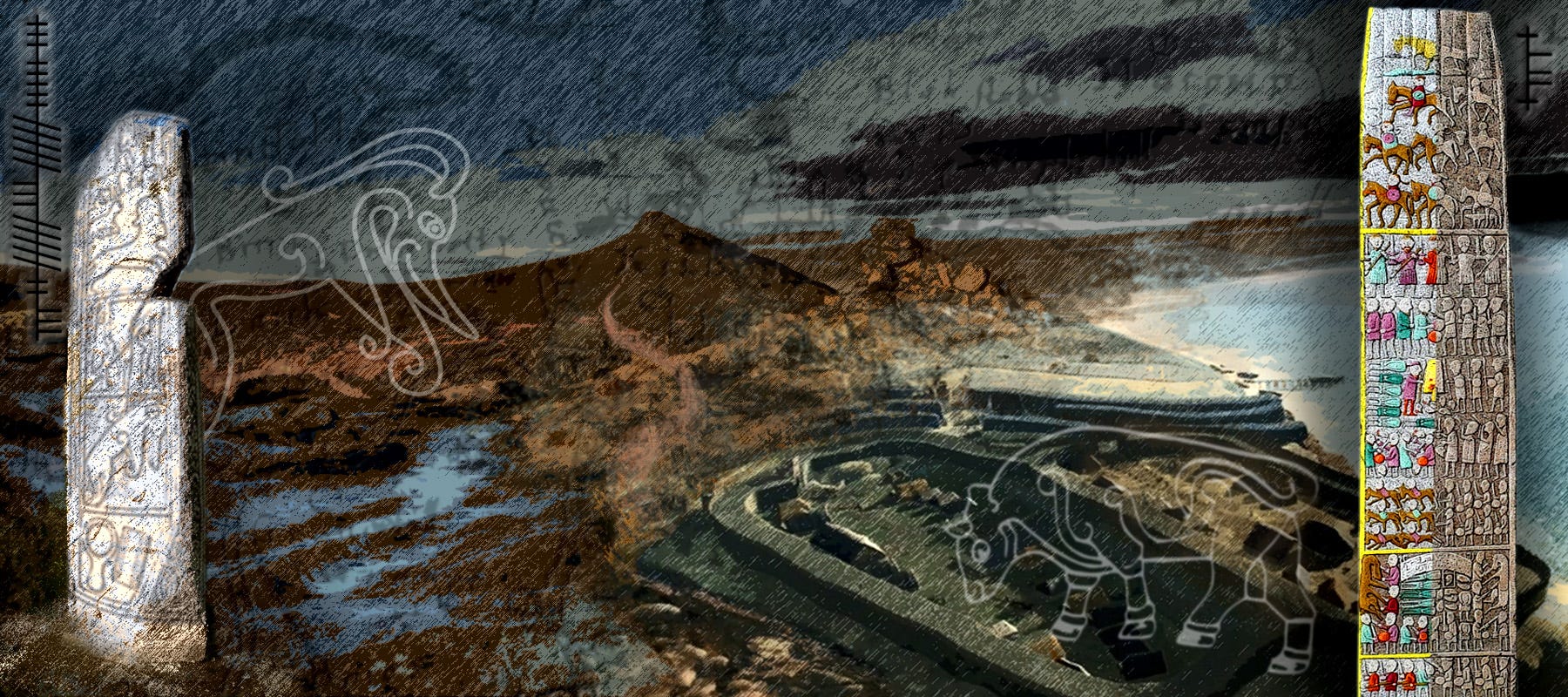
At Bennachie, the landscape itself carries the memory of Pictland. The hill dominates Aberdeenshire, and on its summit are the remains of a Pictish fort. Archaeology has revealed ramparts, stone walls, and occupation layers — evidence that this was more than a local refuge. Bennachie possibly marked a frontier: a stronghold controlling the approaches into the Moray heartland of Fortriu.
At its base stands the Maiden Stone, one of the finest surviving Pictish symbol stones. On one face, Christian crosses and intricate interlace announce the new faith. On the other, enigmatic beasts and abstract symbols echo older Pictish traditions. Local folklore tells a story of a maiden tricked by the Devil and turned to stone — a tale that shows how long memory clings to this monument.
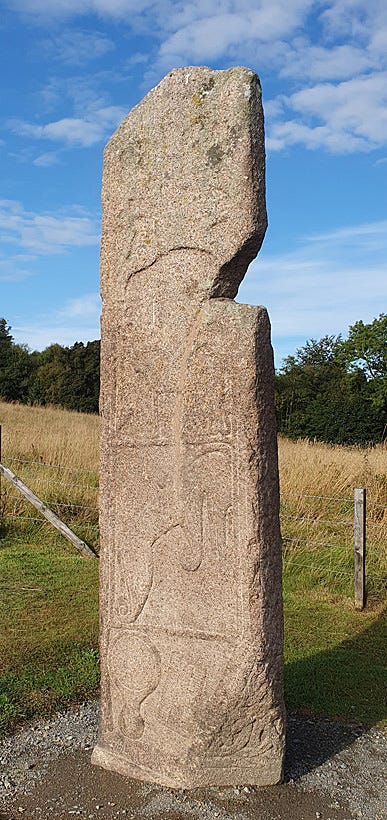
Together, the hill and the stone symbolise the dual power of Fortriu: military strength on the frontier, and religious-cultural authority expressed in enduring monuments. Bennachie was not an isolated site — it was possibly part of a defensive arc marking the southern limits of Pictish Fortriu.
From Bennachie the road leads north to Tap o’ Noth, a vast hillfort rising above the valley of Rhynie. Excavations led by Gordon Noble and colleagues have transformed our understanding of this site. What once seemed like a remote stronghold has been revealed as something far more impressive: a densely occupied settlement, with the remains of hundreds of houses packed inside the fort’s ramparts.
This evidence suggests that Tap o’ Noth may have been one of the largest early medieval settlements in northern Europe. Far from being tribal or scattered, the people of Fortriu were capable of organising large-scale, centralised communities. Such proto-urban centres speak to political authority, social hierarchy, and a degree of planning and coordination on a scale that matches anything elsewhere in early medieval Europe.
Tap o’ Noth, like Bennachie, wasn’t an outlier but part of a network of fortified sites. Together, they demonstrate that Fortriu was a kingdom with the capacity to mobilise labour, concentrate populations, and project power across its territory.
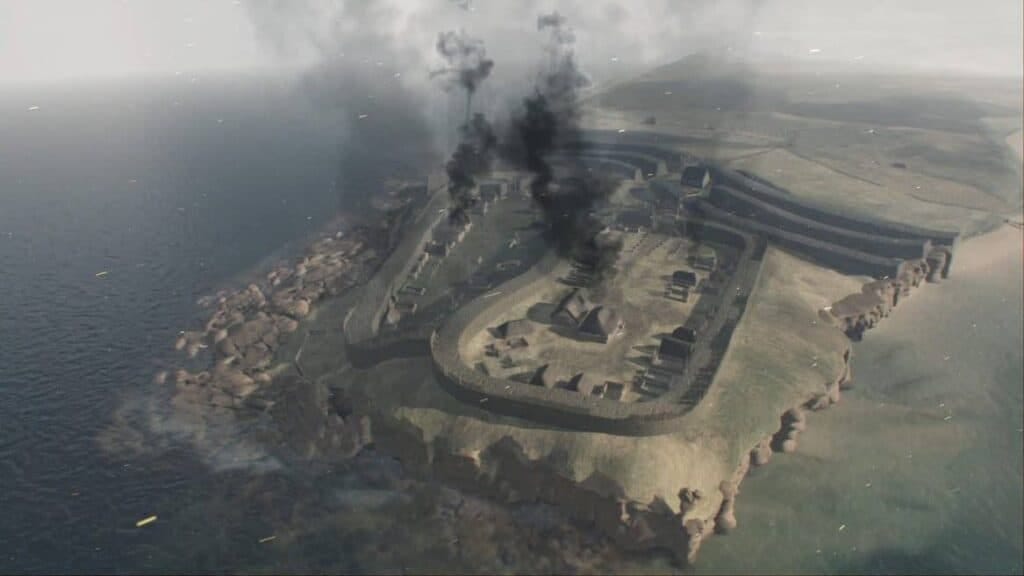
If Bennachie and Tap o’ Noth mark the fringes of Fortriu, Burghead represents its centre of gravity. The promontory fort at Burghead once stretched across 12 acres, enclosed by massive stone and timber ramparts. Excavations have revealed evidence of large halls, feasting, ritual deposits, and a mysterious underground ritual well. This was no frontier post — it was a seat of kingship, power, and ceremony.
Burghead commanded the Moray Firth, the maritime highway of northern Pictland. Control of this route meant control of trade, communication, and warships. From here, Fortriu’s rulers could project power along the coast and inland via the rivers that flowed down from Strathspey and the Highlands.
Just a few miles inland lay Kinneddar, a major Pictish monastery and sculpture workshop. Fragments of intricately carved crosses and slabs found there show both high artistic achievement and the central role of Christianity in Fortriu’s culture. Kinneddar was no provincial site — it was a hub of religious and intellectual life that tied Fortriu into the wider Christian world.
Together, Burghead and Kinneddar illustrate the true nature of Fortriu’s heartland: militarily powerful, culturally sophisticated, and spiritually central. This was the kingdom whose survival at Dún Nechtain would shape the future of Scotland.
In 685, the future of northern Britain turned on a single battle. King Ecgfrith of Northumbria marched north, leading his army deep into Pictish territory. His aim was not a border raid but the destruction of Fortriu at its heart. Bede, our main source, writes simply that Ecgfrith went “against the Picts” — and that he did not return.
Tradition long placed the battle of Dùn Nechtain at Dunnichen in Angus. But recent scholarship, notably by Alex Woolf, argues that it is better located at Dunachton in Strathspey, within the territory of Fortriu itself. The geography makes sense: Strathspey is the natural invasion corridor for an army advancing from the south. There, in the shadow of the Cairngorms, Ecgfrith’s force was trapped and annihilated.
The consequences were immense. Northumbria’s expansion was halted forever. Its kings never again pushed their dominion north of the Forth. Fortriu, by contrast, emerged stronger than ever. The kingdom that had been one among several now became the dominant power of the north.
Dún Nechtain was not simply a Pictish victory. It was the battle that made Scotland possible. Without it, Fortriu might have been swallowed into a Northumbrian realm. With it, Fortriu’s independence was preserved — laying the foundation for Alba, and eventually for the kingdom of Scotland itself.
A century and a half after Dún Nechtain, Fortriu faced a different enemy. In 839, the Annals of Ulster record a great disaster:
“The heathens won a battle over the men of Fortriu and Uuen son of Onuist and Bran son of Onuist and Aed son of Boanta and others almost innumerable fell there.”
The entry is brief but devastating. Both the king of Fortriu and the king of the Kingdom of the Scotti, Dál Riata, were killed in the same battle, fighting as allies against Viking invaders. The alliance was shattered in a single day. With the simultaneous loss of both royal lines, northern Britain was left leaderless.
Out of this crisis emerged Kenneth MacAlpin. His paternal ancestry tied him to the royal line of Dál Riata; his maternal descent, according to later tradition, linked him to the Pictish royal house. By 843 he was recognised as king of the Picts, and soon after, as ruler of a new kingdom called Alba.
This was not conquest. The Picts were not wiped out, nor were the Gaels triumphant invaders. Instead, Alba was born of fusion: Pictish institutions and territory providing the frame, Gaelic language and culture providing the veneer. MacAlpin’s unique dual lineage made him acceptable to both sides, bridging a vacuum created by Viking violence.
The catastrophe of 839 did not end Fortriu. It forced transformation. Out of trauma came a fused kingdom that would carry Pictish resilience and Gaelic identity forward together — the kingdom of Alba.
The story told for centuries was simple: in 843 the Picts vanished. Later chroniclers embroidered lurid tales of Kenneth MacAlpin’s “treason,” where the Pictish nobles were lured to a banquet and slaughtered. In this version, the Gaels of Dál Riata conquered their neighbours and founded Scotland on the ruins of a destroyed people.
This myth served two different purposes across time. In the Middle Ages, it glorified the Gaelic dynasty of Alba, presenting their rule as born from conquest. After 1707, Unionist historians gave it a new spin: Scotland, they argued, had always survived by assimilation — first the Picts, then into England. In both cases, the myth erased the Pictish contribution to Scottish statehood.
The evidence tells a different story. Archaeology shows continuity of settlement, fortifications, and monasteries across the 9th century. Place-names reveal Pictish roots persisting long after MacAlpin. Symbol stones continued to be carved. Even the Forres Cross-Slab (Sueno’s Stone) — the largest Pictish monument of all — was erected after the supposed extinction.
The reality is that Alba was not the product of conquest but of fusion. Fortriu’s political institutions and territorial heartland formed the frame of the new kingdom. Gaelic language and culture, already spreading through the church and elites, provided the outward identity. Kenneth MacAlpin did not wipe out the Picts; he embodied both traditions in a new synthesis.
The Picts did not disappear. They became the backbone of Scotland.
At Forres, the Picts left behind their most spectacular monument. Sueno’s Stone (aka. The Forres Cross-Slab) rises more than 6.5 metres into the air, making it the tallest surviving carved stone in Scotland. Its scale alone is extraordinary. Its date is later still more significant: late 9th or early 10th century — after the Picts were supposed to have vanished.
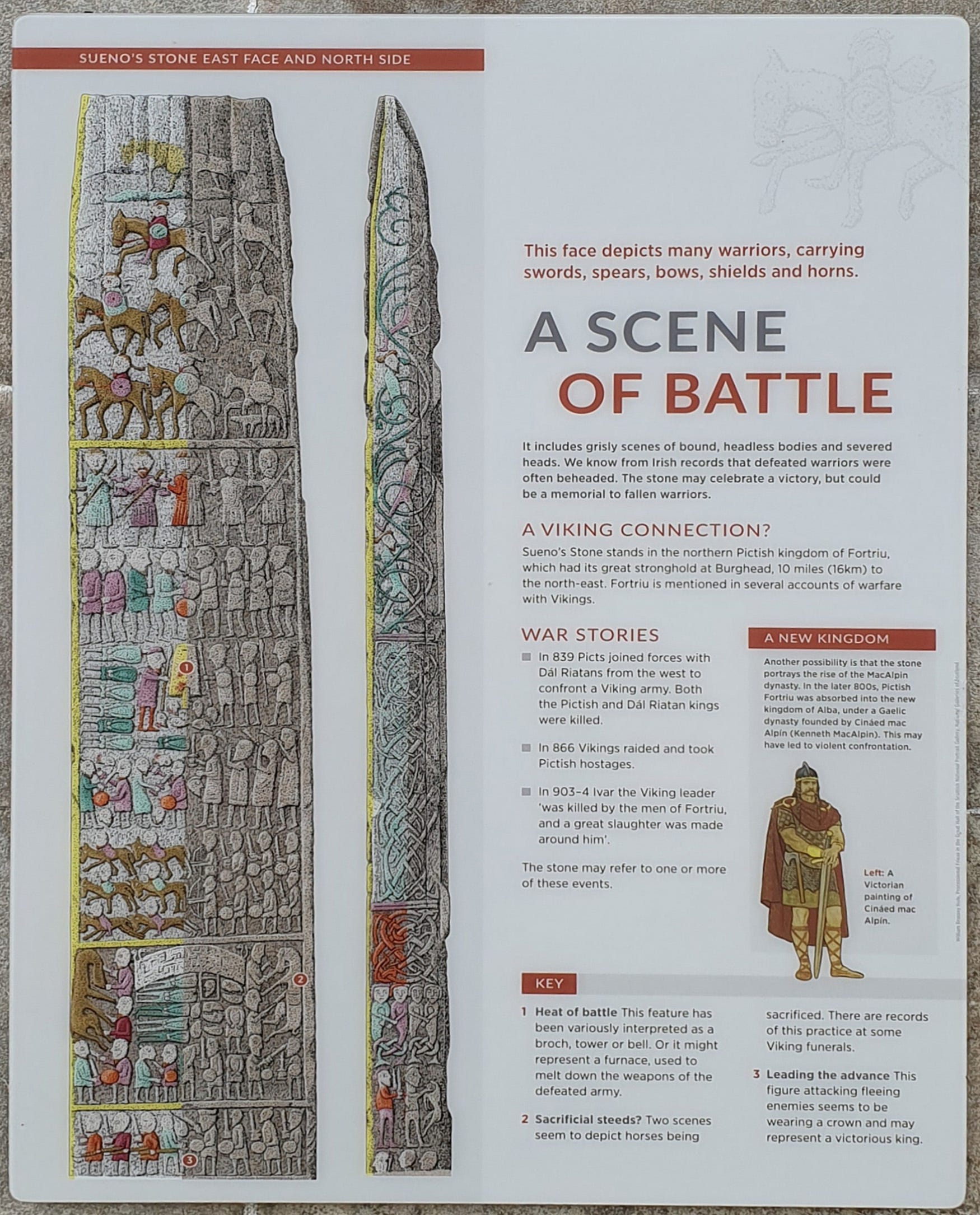
The east face tells a grim story in stacked panels. At the top, cavalry charge into battle. Below, infantry clash, prisoners are bound, captives executed, and severed heads displayed. This is not a single chaotic fight, but a sequence — a narrative carved in stone. It recalls the catastrophe of 839, when Fortriu’s king fell with his Dalriadan ally, and perhaps later Viking clashes too. Here trauma is preserved in imagery, a warning of kingdoms broken by violence.
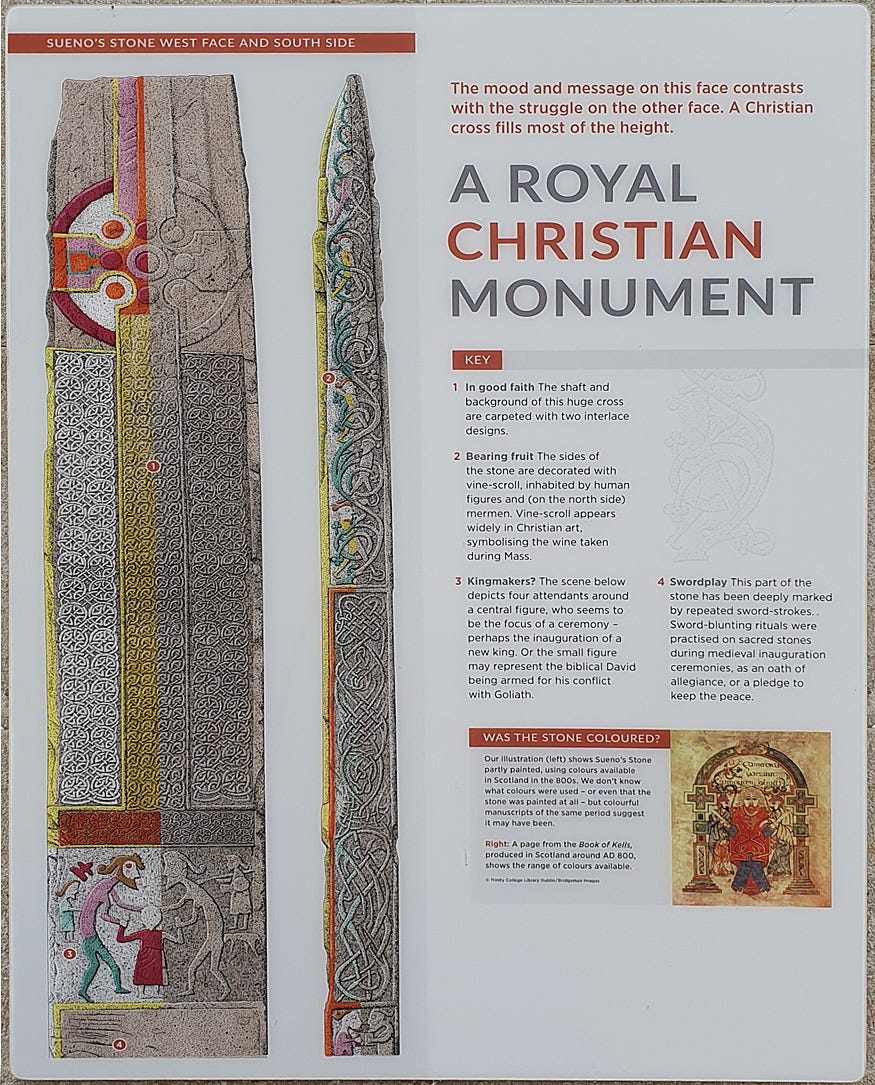
The west face answers in a different voice. A monumental cross dominates, flanked by vine-scrolls of life and renewal. At its base, attendants gather around a central figure in what may be a king-making scene. Sword-marks gouged into the stone show it was used in rituals of oath-swearing, as warriors pledged loyalty. This side is about legitimacy, order, and divine sanction.
Together, the two sides form a hinge. One face remembers Fortriu’s crisis, the other proclaims Alba’s renewal. Sueno’s Stone does not mark the end of the Picts but their survival — the carrying of memory into a new kingdom. It is the most powerful refutation of the myth of extinction: the Picts themselves inscribed their continuity into stone.
Two centuries after Kenneth MacAlpin, Fortriu’s line still shaped the kingship of Alba. Macbeth, who reigned from 1040 to 1057, was not a usurper from nowhere but the Mormaer of Moray, heir to the dynasty of Fortriu. His marriage to Gruoch, granddaughter of a former king, strengthened his claim. Far from being illegitimate, Macbeth’s rule rested on deep northern lineage.
His reign was stable and long by the standards of the age — seventeen years on the throne, a sign of strength rather than weakness. He was secure enough to make a pilgrimage to Rome in 1050, where he is recorded as giving alms to the poor. Such gestures show international recognition and resources to spare.
Macbeth fell in 1057 to Malcolm Canmore, supported by English allies. It was Malcolm’s dynasty, aligned with Anglo-Norman power, that came to dominate the later kingdom. To justify this shift, Macbeth’s memory was blackened. Chronicles depicted him as a tyrant and usurper, and centuries later Shakespeare made him infamous as the archetype of the doomed, bloodthirsty king.
In reality, Macbeth represents the last great expression of Fortriu’s line within Alba. His demonisation echoes the earlier erasure of the Picts: a northern king turned into a villain to legitimise the new southern regime. With his death, the balance of power moved decisively away from Moray and the legacy of Fortriu.
My journey began with Bennachie and the Maiden Stone — a frontier fort and symbol stone, marking the southern edge of Fortriu. It passed by Tap o’ Noth, with its vast hillfort settlement, showing the scale of Pictish organisation. At Burghead and Kinneddar, the heart of Fortriu came into view: a fortified naval base and a monastic centre of art and learning. At Forres, Sueno’s Stone towered as the hinge between catastrophe and renewal. And in Elgin, Spynie, and Duffus, I glimpsed the later layers of erasure, when Anglo-Norman power buried the old Moray line.
Threaded through these sites is the real story of Scotland’s foundation. In 685, Fortriu’s victory at Dún Nechtain shattered Northumbrian power and preserved northern independence. In 839, Vikings destroyed both Fortriu and Dalriadan kingship in a single blow. In 843, Kenneth MacAlpin fused the two crowns — not by conquest, but by embodying both traditions. In the late 9th or early 10th century, Sueno’s Stone carved that trauma and renewal into stone. And in the 11th century, Macbeth ruled as the last great Fortriu king, before his defeat shifted power permanently south.
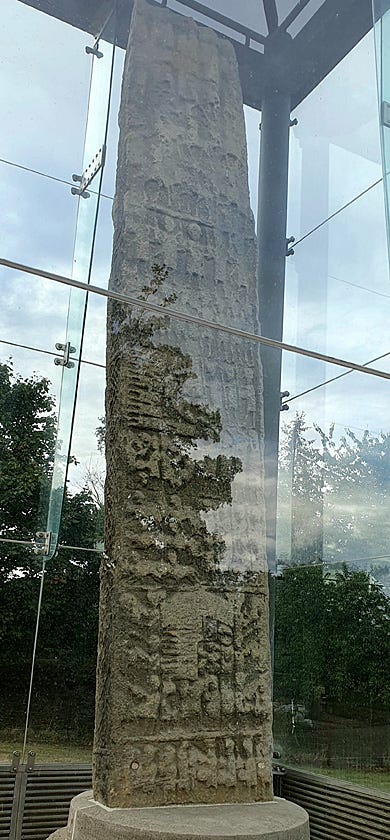
The myth says the Picts vanished. The monuments say otherwise. The Picts survived through fusion, continuity, and resilience, carrying their institutions into Alba and their legacy into Scotland.
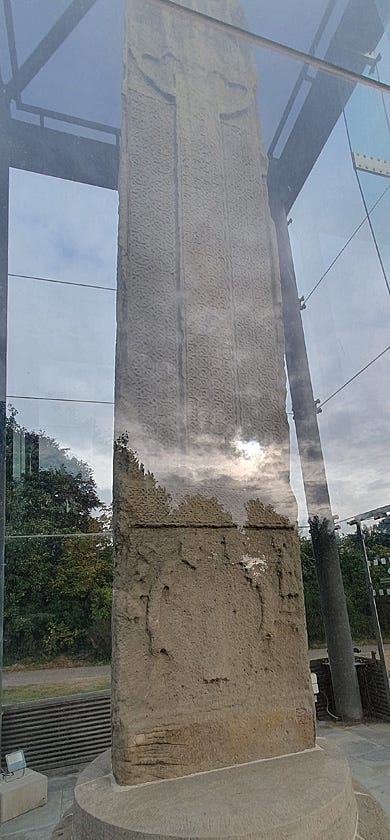
Scotland was not born of assimilation or erasure. It was born of survival — of a kingdom that refused to vanish, that carved its memory into stone, and that endured.
Further reading:
Picts: Scourge of Rome, Rulers of the North. Gordon Noble, Nicholas Evans. Birlinn Ltd 2022.
The King in the North: The Pictish Realms of Fortriu and Ce. Gordon Noble, Nicholas Evans. Birlinn Ltd 2019.
Picts, Gaels and Scots: Early Historic Scotland. Sally M. Foster. Birlinn Ltd 2014.
From Pictland to Alba, 789-1070. Alex Woolf. Edinburgh University Press 2008.
Macbeth: A True Story. Fiona Watson. Hodder 2011.
If you’d like to support my research into Scotland’s true history, you can chip in for running costs (and the coffees that keep me going) here: https://ko-fi.com/angrypict
No posts
Comments
Nothing yet. Say the first thing.
Sign in to join the conversation.