
How often do we invite the people we serve to reflect on their learning for more than their own metacognitive purposes? How often do we invite them to do this so that we might hear their stories and then…serve them better?
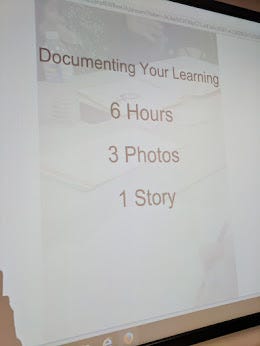
I’ve spent much of this summer using this space to illustrate what professional learning can look like beyond the typical one-day workshop or multi-day event. I shared some approaches for what I call stacking learning and even invited those who were interested to redesign an offer in order to make more agile, accessible, and evergreen.
I thought to add this idea to that collection of posts: What if, instead of dropping knowledge or speaking from stages about concepts related to our areas of expertise, we began by inviting the people in the room to share their own learning stories relevant to that hot topic instead? I’m talking beyond the icebreaker or introduction.
Maybe ask them to open up their phones and have a scroll through their photo albums. Have them skim their audio book shelves or take a minute to remember their favorite podcast episodes from the last little stretch. Let them talk with one another about the best learning experiences they’ve had in recent weeks or months or years relevant to the thing under examination. Invite them to share their stories and pictures and links and recommendations. Bookcovers of recent reads. Post them up—display their collective learning artifacts.
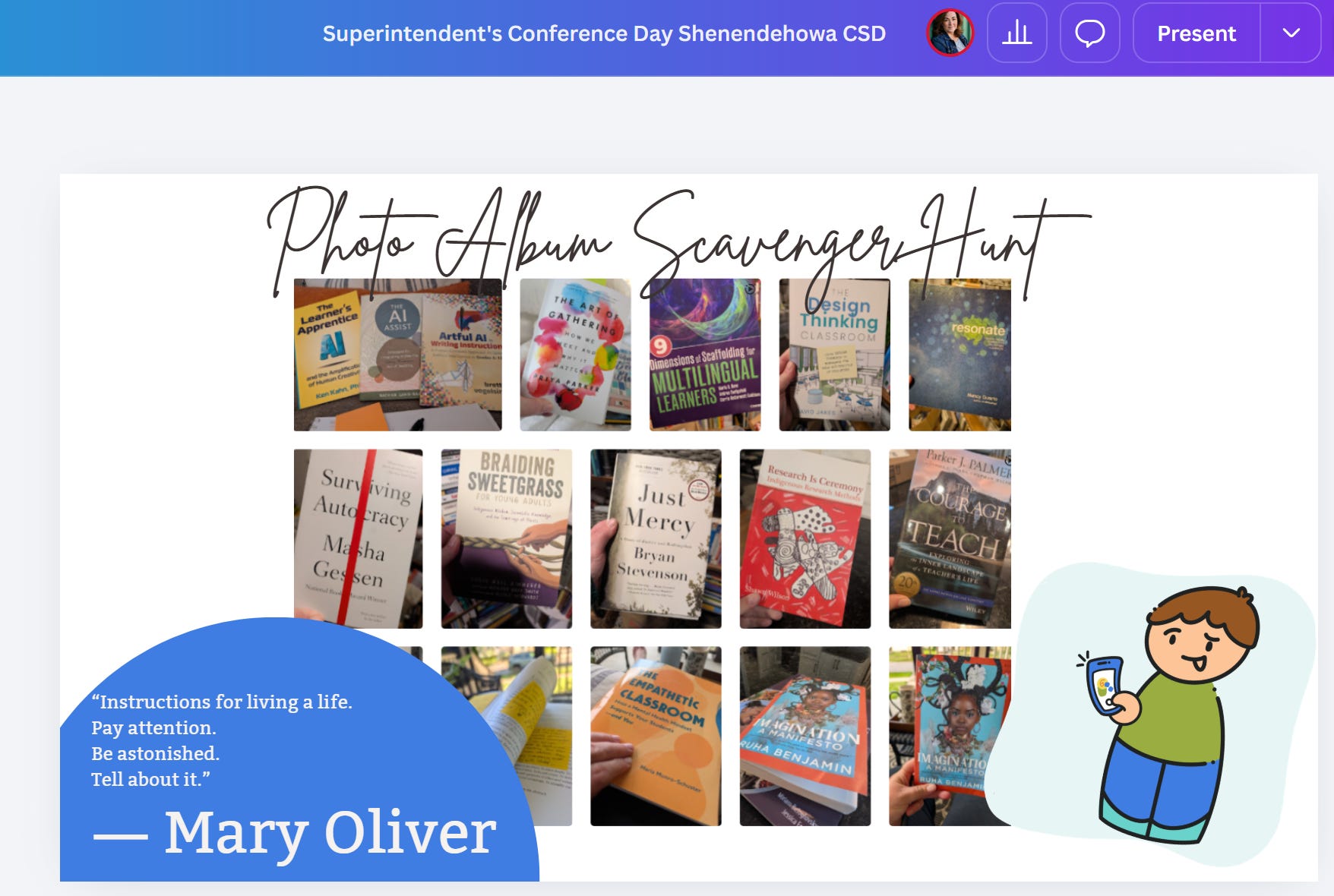
I do this quite a bit. I might begin by sharing my own research interests—multimodal expression and performance based learning and assessment, for instance—and I’ll kinda beg everyone to share their own. I usually have to nudge hard because teachers don’t like to talk about themselves too much. Often, whatever they’re into lives on a Venn diagram with whatever I’m into and also—there to explore with them. I’ll demonstrate how, and then, I’ll move them through a guided reflection that helps them recall everything they already know and do with this thing I’m there to avoid pontificating about. One great way to accomplish this? By asking people to share the names of the giants whose shoulders they’ve stood on. Taking notes.
Listening as they talk.
Sincerely learning from them and not just about them.
Okay, so then, what about this: What about the teachers who aren’t well acquainted with the knowledge we might efficiently drop? How do we democratize the learning and co-construct a rewarding experience with them? People don’t know what they don’t know, and no amount of pretending in the name of shared decision-making changes that. I can’t pretend this isn’t just as true for me, either.
The stakes for kids are higher than ever.
The temptation to rely on scripts or sages on stages is so high.
It’s also incredibly short-sighted.
The thing about authentically co-creating a learning experience is that we need to be real about it. We need to be honest. And that means we need approaches for facilitating shared inquiry that center the people in the room rather than our smartypants selves. I have a few favorite tools in my own kit, but I’m still deepening it. Wanna talk shop?
We’re nearly halfway through our learning in the summer cohort of the Intentional Facilitator, and questions like these are bubbling to the surface of our good work. If you’re a paid subscriber here and would like to join an upcoming fireside chat on this particular topic, drop me a line to let me know. I’ll make sure you have the dates, the times, and the link to our Zoom room when that’s happening.
Comments
Nothing yet. Say the first thing.
Sign in to join the conversation.