
Two years ago, I sat with a team of pre-K to second grade teachers in a school I’ve served for the better part of seven years. We were talking about reflection, about how we ask even our youngest writers and makers to notice their own learning and gather evidence of it. One of the teachers said something that tilted our conversation in an unexpected direction, and I can say with confidence now that it improved far more than performance. She said wasn’t sure her students actually knew what learning felt like. We spend a great deal of time focused on the products of learning as educators. In this school, we’d spent a great deal of time capturing artifacts of it beside learners, too. This was good, good work that taught us much that helped us get under the hood of the quantitative data we were considering. We documented our learning together, and we examined process work, too. This challenged us to prompt kids to reflect and then, gradually release the responsibility for reflection to them. Unprompted.
And they struggled mightily. We weren’t surprised.
When children were asked to notice when they were learning and gather evidence of it independently, even the most experienced learners struggled here. That felt sense of the thing happening inside them while their thinking, learning, or work began to change? Yeah, they seemed completely disconnected from that. We sat with that for a while. The longer we talked, the more we agreed: A person who cannot feel learning happening as it is happening has no real way to document it, no matter how lovely our intentions, tools, prompts, or classroom culture might be.
That conversation changed how I understood the work we had been doing together for years. We’d built real capacity for pedagogical documentation in that building, and we were proud of it, and still, our understanding of learners and learning was incomplete. This was one of the greatest lessons that my early documentation work in schools taught me: Before a child can gather evidence of her learning, they have to be able to feel the learning as it moves through them. They have to know the particular quickening that happens when something clicks, when a plan changes midstream, when a material does something they do not expect and they have to think again.
Our prompts began to evolve in response to these discoveries. We embraced fewer, used them routinely as teachers, and invited kids to do the same: How is my thinking changing as a result of today’s experience? How is my learning changing? How is my work changing?
Most of us were never taught to notice this ourselves. I graduated a long time ago, and if you had asked me in my first years of teaching to describe what learning felt like in my body, I would have handed you a definition instead of my felt sense. So none of this is a child or a teachers’ failing. We’ve been conditioned this way. We’ve learned to point at what we finished and rarely learned to notice what was happening inside of our selves while we made it. When we ask students to reflect on their learning without having helped them feel it first, we are asking them to report on something they have never been invited to sense.
In the schools I have walked alongside the longest, documentation has become something we want the learner to initiate. We want them to have attuned enough that they notice the learning themselves, as it happens, and they reach for a way to hold onto it. A seven year old in West Valley Central School District will tell you she is sparking now. A second grader in my writing studio will stop mid-build because he wants to remember the part where his first idea fell apart and a better one arrived. A graduate student in my action research course will describe exactly how their understanding of how reading capacity grows in a middle school classroom was shaped by their interviews with actual middle schoolers. It’s not about the answers, the products, or the performance improvement alone. That’s not enough. It’s about how it happened and how certain we are about that.
When documentation lives in the learner like this, it becomes part of their lived, embodied experience. The evidence grows richer because it is caught in motion rather than reconstructed after the fact. I want to be honest that in places where this shift is happening, the groundwork was built over years. We didn’t arrive here by adding a reflection protocol to the end of a unit. We are still arriving, and that’s happening as we help learners build a felt vocabulary for their own learning, slowly, in the same way we help them build any other literacy.
I’ve been writing lately about the Portrait of a Graduate work happening across New York, and about how much of it gets built on a definition of literacy that few communities have stopped to examine. I’m pretty hopeful about something though, and it’s this: The buildings that embraced pedagogical documentation years ago, whether or not they ever used this language, have been enacting their portrait of a graduate all along, and they’re already reaping the rewards of that learning and work. Living the portrait, documenting their learning beside their students, and interpreting those stories together has already changed them. It will continue to change them.
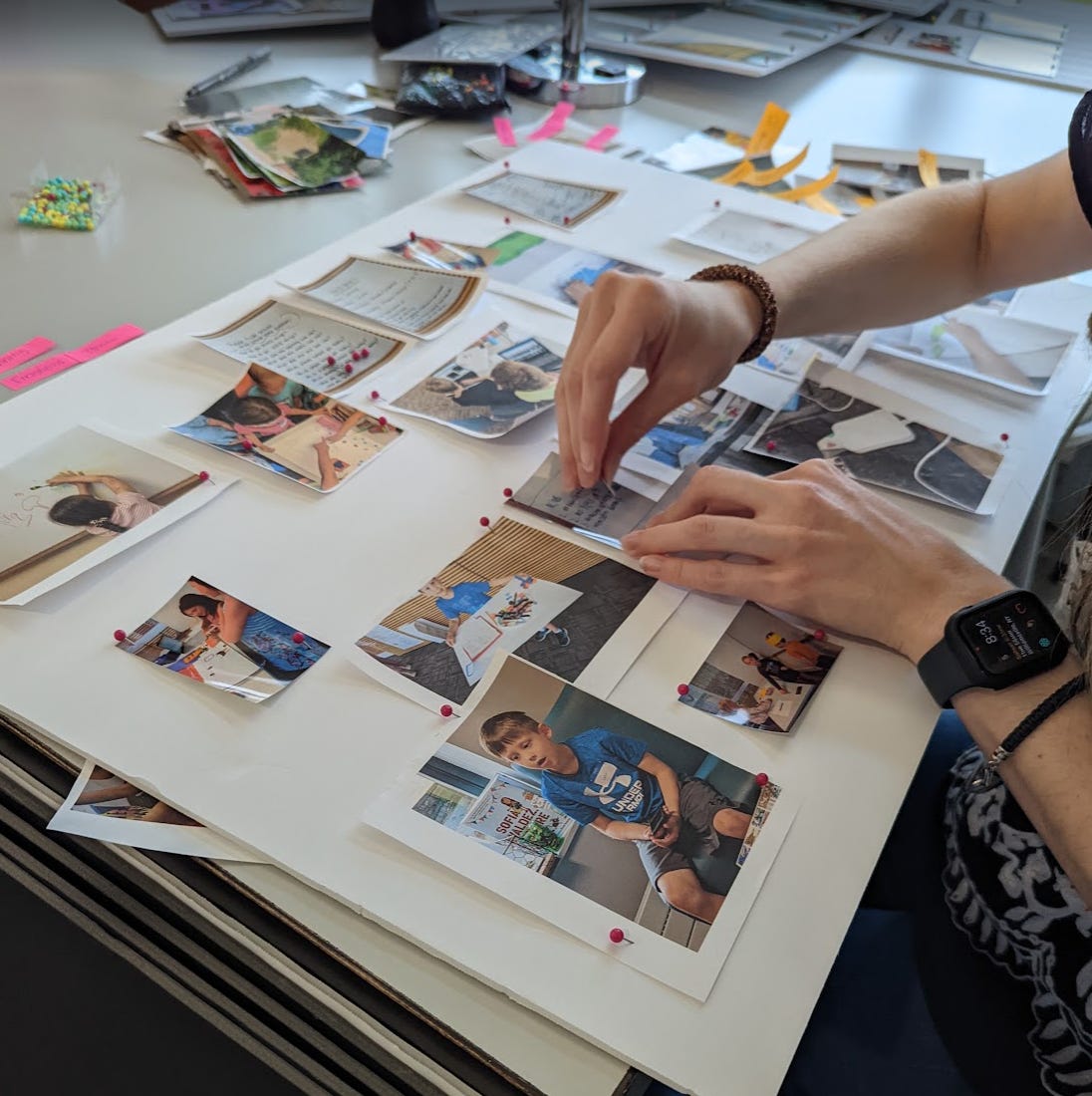
These teachers accomplished this by defining assessment expansively. They looked at their students through more than tests and more than the demand for written words, and they made room to notice learning that showed up multimodally, in what children built and performed and arranged and revised. They also refused to narrow their attention to academic and disciplinary knowledge alone. Because they were already paying attention to the fuller range of what a young person can do and become, they had already made discoveries about their students that a test would never have surfaced. The competencies that these teams are now working to define were, in these rooms, already being studied, honored, and documented.
Here’s where I find myself cautious, and where I think many of us are about to feel the ground give a little: A portrait of a graduate asks students to demonstrate competencies that no single test can capture, which means it leans entirely on the kind of evidence that pedagogical documentation produces. That is genuinely exciting. It also means this whole enterprise rests on something we cannot mandate into being on a compressed timeline.
You cannot ask children to seek and collect evidence of their learning if they have not yet been helped to feel that learning happening. When a school has spent its years focused on academic knowledge and disciplinary skill at the expense of this slower attunement, neither the students nor their teachers are ready to document in the way this work asks. The folders and the portfolios and the earnest prompts do not prepare a child who has never been invited to notice the embodied texture of her own thinking. Readiness for this work has less to do with willingness than with a pretty uncommon sort of practice, and practice takes time we have to actually protect.
This is where the youngest learners have something to teach the adults. In the schools that are ready, children learned to recognize their sparking because someone gave them explicit invitations and tools for finding it, and kept giving them until the noticing became their own. The frameworks were scaffolding, and eventually the scaffolding came down. I wonder what it would look like to offer ourselves that same patience. I wonder how many of our own theories of change would slow down and deepen if we admitted that we, too, need to relearn what learning feels like before we ask our students to document it.
I keep returning to that pre-K to second grade teacher who wasn’t sure her students knew what learning felt like. She was right to wonder, and she was braver than most for saying it out loud in a room full of colleagues who had every reason to believe they were already doing this well. Two years later, her students are among the ones who no longer wait to be told when to notice. They feel the learning, and they reach for it, and they show us things about themselves we would otherwise have missed entirely.
That is the engine underneath every Portrait of a Graduate worth drafting. The competencies on the page matter, and they come alive only when there are children behind them who can feel themselves learning and who have been trusted to gather the proof.
What will that ask of all of us?
What will that ask of those seeking to become teachers right now and those (like me) who mentor them?
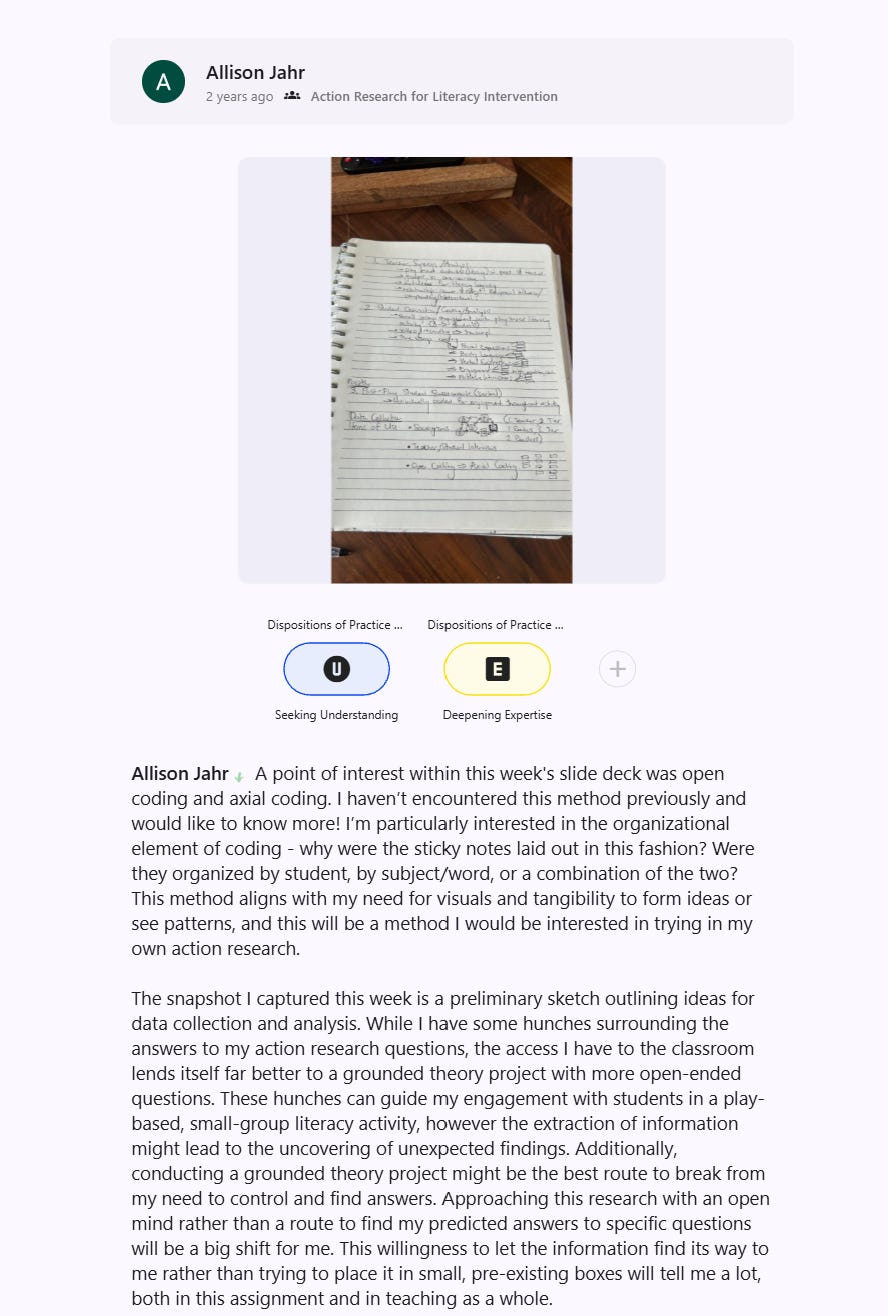
While many are prioritizing changes at the high school level as NY continues to inspire, I’m preparing prek-8 teachers and kids for the adventure ahead. I’m wondering what that might look like inside of our colleges and universities and especially…teacher preparation programs, too. I’m grateful to all of the undergraduate and graduate students I’ve taught in recent years, who were willing to lean into these shifts themselves, document their learning beside me, and consider what this kind of learning might offer to their future students.
We’re not simply being asked to facilitate this shift, after all. We’re being asked to live it ourselves. Thinking of all of you who had me for an instructor as the new school year begins. You got this, all.
You DID this.
Comments
Nothing yet. Say the first thing.
Sign in to join the conversation.