
We have entered into an era where any image can be generated by anyone, yet few have had the chance to develop the skill or vision to make AI generated images with any substance. Off the shelf AI image generators like Midjourney, OpenAI’s DALL-E and Google’s Nano Banana are so powerful and easy to use that even the most lazy AI images are proving irresistible grist for the content mill, not least within the fashion industry. These are images that privilege economy over creativity, replacing the human in both process and product with unadorned automation and eerie slop. However, some image-makers are emerging from this churn who recognise the potential AI tools have for making incredible images, the best of which illuminate themselves as the first signs of the emergence of an entirely new medium.
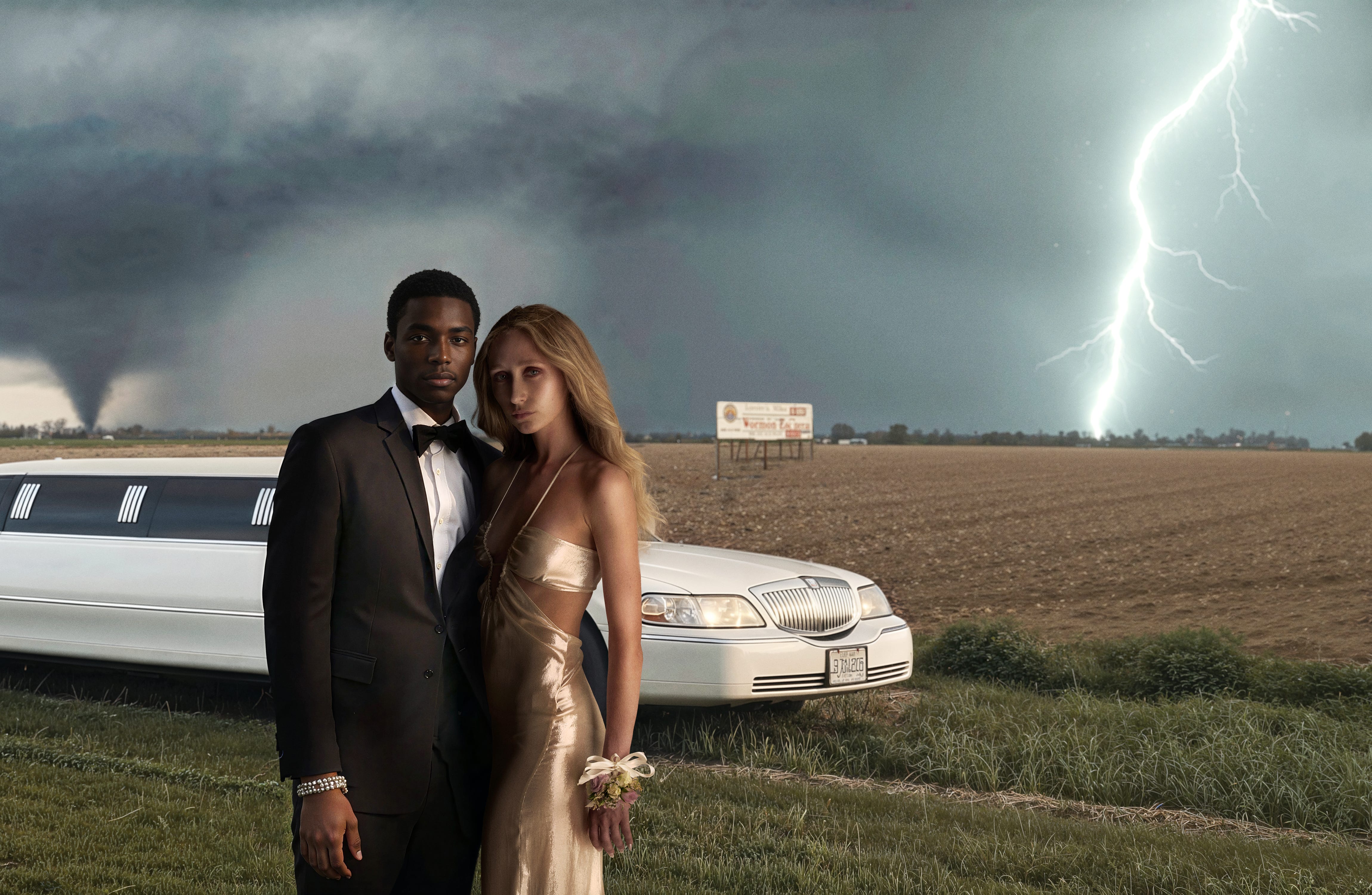
While off the shelf AI image generators are undoubtedly powerful, they can also limit users in their ability to control how images are made or to assess what data the models they use have been trained on. These limitations are somewhat addressed with node-based programs like ComfyUI, which enable greater technical and creative control by allowing users to build their own workflows and customise the image generation process step by step. Users can fine-tune datasets, build tailored workflows, and plug in small custom training files that help generative AI models focus on a specific style, subject, or identity. In the context of fashion imagery, these can be used to replicate specific objects or items of clothing, synthesise a certain aesthetic, or generate digital twins of real people, presenting both an incredibly exciting opportunity and an overwhelming new paradigm for the fashion industry. While making images that are beautiful or interesting is now much more accessible, the adoption of these tools is likely to exacerbate problems within an industry already riddled with them.
It is undeniable that AI is radically altering the landscape of the fashion industry. Image generation tools pose a very real threat to many roles within the contemporary creative team. Locations can now be prompted, rather than scouted, video content can be extruded directly from source imagery and entirely synthetic models endanger e-commerce jobs that keep the lights on for an enormous number of fashion workers. There’s no in front or behind the camera if the camera doesn’t exist in the first place. As generative AI tools are monopolised by big tech disrupters with no experience or empathy for the fashion industry, the minimum viable product will continually be presented as the norm. Entirely synthetic media, produced to be as cheap and disposable as possible, will continue to inundate us. Content as single-use plastic. However, while fashion doesn’t get to decide how these tools are built, or how they work, it does get to decide how they’re used.
If those who have real skin in the game, who care deeply about fashion and its workers, are able to wrest control of these tools and technologies, we can get ahead of these problems. Used with skill, consideration and within the wider context of the history of image making, generative AI tools allow creative teams to make better images than ever before, make savings on production costs that can be spent elsewhere and afford models more opportunities, enabling them to have control over their digital likeness within new forms of fashion media we are already starting to see emerge.
Before it is possible to determine how AI should and should not be used, it is essential to understand what kind of tool AI even is. Generative AI allows us to make images in ways that were previously very time consuming and extremely expensive, freeing up space for image makers to experiment and iterate. At the same time, these tools have not yet led to the discovery of entirely novel image formats. The technology behind these tools is not revolutionary, or even new, but the continued development of these tools allows us to work in new, revolutionary ways. Laura Herman, the head of AI research at Adobe, likens the impact of generative AI tools on image making to the impact Photoshop had on photography on its release to the public in 1990. “If you couldn’t believe anything that you saw because it could have been ‘Photoshopped,’ now you can’t believe anything you see because it’s AI-generated. The common refrain is that you can’t believe anything that you see, which has been a refrain since the Renaissance,” she asserts. “Maybe we should just all stop believing what we see, then this whole problem would be solved!”
This provocation gives rise to some of the most important questions shaping creative labour in 2025. Why should we believe in one image over another? What makes an image more believable? What is the difference between a ‘real’ image and a synthetic one? Is a photograph taken using a film camera, digitised, edited, uploaded and distributed by a creative team more real than an image generated by an AI tool? By the same token, is capturing an image using a sensor to convert light into pixels more authentic than sampling the pixels of a preexisting image? Does a large team working longer hours to create an image make that image more valuable than one generated by a single user in seconds? “Does it look like it was hard to make? If it does, then maybe it’s more valuable, whether or not it was actually hard to make,” suggests photographer and Collina Strada art director Charlie Engman. “At that point, labour becomes a bit aestheticised. People are making assumptions, which mutate into judgments, about what kind of labour was involved and what that labour means.”
“We care more about some kinds of labour than others,” asserts Engman, leaving us with what he describes as “a complicated equation.” While we may care more about certain creative practices than others, this does not necessarily mean that we should place greater value on them. The adoption of generative AI tools repositions where and how creative labour takes place, the smudged finger prints of the craftsman, artisan or technician swapped for the digital footprint of an emerging class of skilled workers. As their creative labour is further abstracted, it becomes easier to disregard and undervalue. Alongside legacy skills related to photography, post production and publishing, new skills are being added to our creative toolsets, like data set compiling, prompt tuning and workflow tailoring. These skills can be practiced with as much elegance, flair and rigor as any traditional technique and as such should be valued just as highly. While it’s true that synthetic images might require different kinds of labour than analog film photography, or digital image manipulation, they can be just as valuable and can require just as much labour to make.
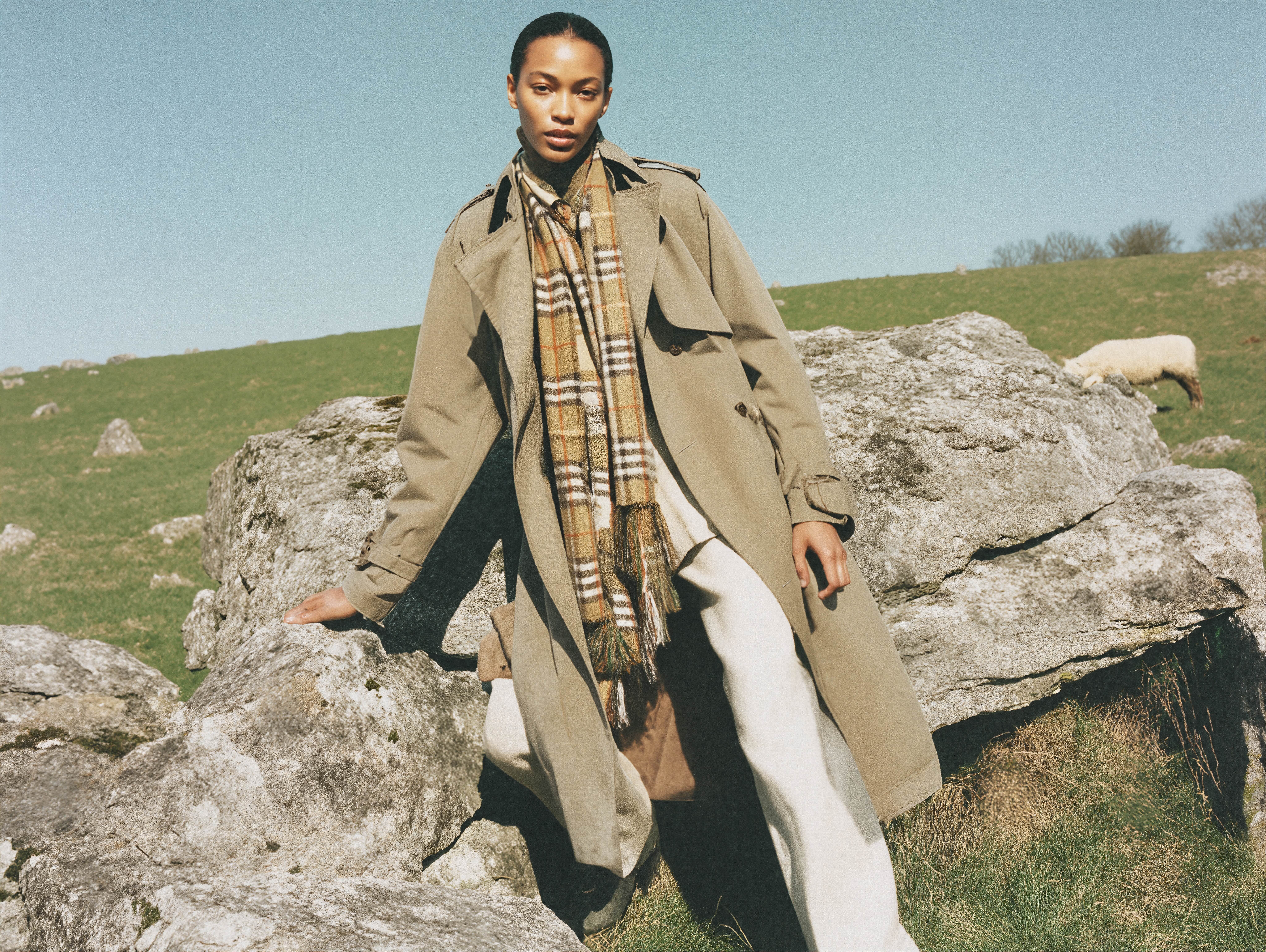
The above image is not an example of this. As part of our ongoing experimentation with these tools, we used an off the shelf generative AI image generator to spin up a synthetic Burberry campaign image. By using recent Burberry campaign imagery, a deft prompt, some nimble tuning, as well as thousands of hours of others’ creative labour, we were able to generate something in a matter of minutes that, while serviceable at a glance, is at the very best average. It’s also worth noting that this image has not been retouched, a process that we see as essential for any AI outputs to achieve the finesse of fashion imagery at its highest level. This is how, as far as we’re concerned, an image generated by AI can look ‘good’, but be ‘bad’. What is also true is that it was cheap, especially compared to how much a ‘real’ image, capturing a real model, in real clothes, on a real hill with real sheep, would cost to produce. It’s in exactly this way that we’re already witnessing the use of generative AI tools to maximise profits and undercut creative labour, regardless of how valuable we might hold that labour to be.
When Levi’s declares their intention to use generative AI to “increase diversity” among their e-commerce models while opting to use entirely synthetic models to do this, we are seeing a narrowing of beauty standards in real time. When AI marketing agencies generate synthetic models for brands to advertise in legacy fashion publications, or when fashion technology startups offer synthetic models alongside digital twins of real people, we are watching these companies catering to fashion workers with one hand while pulling the foundations out of their industries with the other. When Sketchers generates a fully AI illustration of their latest shoe without even bothering to unscramble the cursed faces of the people depicted, we are bearing witness to the normalisation of AI slop. This is depressing not just on a systems level, but on a creative level too. Ask anyone working with these tools, trawling through thousands of generated images to find flaws and iterate on specific details can be tedious and exhausting. At times, it feels like doomscrolling as creative profession.
Despite this, the solution, as we see it, is not to protest against generative AI, but to push for higher standards and zero tolerance for the minimum viable product. While it’s true that these tools can help us produce more things more quickly, they also allow us to think about both images and labour practices in entirely new ways. This presents us with an opportunity we simply cannot afford to ignore. The chance to redefine the paradigm does not come around very often. As creative director Katharina Korbjuhn notes, “CGI and AI are useful tools to get closer to an understanding of the physical in a digital world.” Yet, while synthetic model agencies and virtual fitting rooms smell more of the sterile silicon of big tech than they do the heady oud of haute couture, we will struggle to get past the novelty of the tool. To return to what is fundamentally evocative about the most powerful fashion images we have to remember that it’s the people that create and inhabit them that make them evocative in the first place. It’s a mistake to think that tech people can dictate the rules that fashion people must follow. Instead, it’s up to the fashion people to invite the tech people to play with their aesthetic codes.
AI does not spell the end of creative labour. In fact, making better AI images will require more people, not fewer. New tools necessitate new workflows, which in turn necessitate new kinds of skilled workers. For these people, the birth of a new medium looks less like the building of a new world and more like discovering the overwhelming vastness of a new frontier. This is no clearer than within the modelling industry. “Artificial intelligence is reshaping the modelling industry in ways that are both visible and invisible, with the introduction of synthetic models that threaten jobs on the one hand and then with the digitisation of real people without clear standards for consent and compensation on the other,” notes Model Alliance founder Sara Ziff. As Ziff underlines, the use of synthetic models removes humans from the picture, whereas creating digital twins re-centres them. This applies not only to the models themselves, but the teams of technicians and designers skilled in photogrammetry, motion capture, avatar design and animation.
To ensure that these emerging practices are carried out in ethical and accessible ways, with fashion workers retaining the proper legal rights in all aspects of their work, new policies and platforms will have to be developed. “We have outstanding questions about if and how models are being compensated for the use of their digital replicas,” Ziff underlines. “If we don’t have fashion shoots with a creative team on set there could be really big implications, so it’s essential that we have workers who are at the table informing these conversations.” The Fashion Workers Act, passed into law in New York State earlier this year as a result of the Model Alliance’s tireless efforts, represents the first time these conversations are taking place at the level of policy in the US. This landmark legislature, which skewers the power disparity upheld by agencies and fashion houses while giving fashion workers a chance to be heard, illustrates how desperately a rebalance is needed and how questions around AI can serve to tip the scales.
It is imperative that we use generative AI tools, not to disrupt the fashion industry, but to reinforce it. From where we’re standing, we all ought to be moving on influencing how these tools are used with much greater urgency. It might really be now or never. Rather than replacing creative labour, finding the fullest potential of generative AI tools will require collaboration with people who have spent years accumulating knowledge, gaining collective experience and developing taste. New technologies only make sense in the hands of the people who know how to use them. Making better images with AI necessitates a deference for the history of image making and its traditions. Taste and experience might be impossible to quantify, but they remain the realest qualities of our work. Images generated with AI might be synthetic, but if the process of their generation is derived from applied experience, care and taste, why shouldn’t we understand these images to be as real as any other?
As Laura Herman reminds us, believing what we see has been a complicated question throughout the history of image making. Whether an image is real or synthetic does not dictate whether said image is valuable or not, nor does it make a good image or a bad image. The qualities that identify our fake Burberry campaign as synthetic are not the same qualities that make it lazy. What remains crucial is the ability to distinguish between these things. Synthetic media as a minimum viable product does not emerge from experience and taste, but from volumes of data that can never equate to either. Without these qualities, users of generative AI tools will only ever be able to make mediocre images like our fake Burberry campaign. It’s our responsibility to make sure that these images are recognised as such, to make better images with AI and to re-centre creative technology on the people that animate it and make it beautiful.
Henry Bruce Jones
No posts
Comments
Nothing yet. Say the first thing.
Sign in to join the conversation.