
On June 19th, 2025, the Fashion Workers Act was passed into law in New York state. A landmark legislation for the notoriously underrepresented workforce that drives the 2.5 trillion dollar global fashion industry, the act is the culmination of over a decade of tireless work by the Model Alliance, an organisation founded back in 2012 by Sara Ziff. Galvanised by the experiences of her own modelling career, Ziff has led vital research into the industry’s skewed business practices while working to instil labour consciousness into workers who have been forced to accept less than ideal labour conditions as an inevitable price of increasingly fleeting chances at success. The Fashion Workers Act is a direct address of these conditions, skewering the power disparity upheld by agencies and fashion houses while giving those working on the ground a seat at the table and a chance to have their voices heard.
Not only does the act finally close the legal loophole that up until today has allowed model management companies to dictate the labour rights of the models they represent, it ensures that these essential labour protections can keep pace with an industry that is in the midst of a comprehensive technological transformation. From the manipulation of model’s likenesses using CGI and AI to the production of entirely synthetic models, the regulations that govern the near-future of fashion touch on the most fundamental questions of identity, authorship and agency. It’s becoming clear that the continued adoption of AI technologies has the potential to not only dismantle and reassemble the structures of power of the fashion industry, but to completely redefine what it means to work within them entirely, whether as a model, an agency or an image-maker.
With the Fashion Workers Act, the Model Alliance is beginning to sketch out equitable models of compensation for models that can stand up to the vicissitudes of an AI-augmented acceleration into a modelling industry unrecognisable from the one we might be familiar with today. Yet, far from opposing the adoption of these technologies, Sara Ziff is most interested in how they might serve to aid fashion workers in having agency over their labour conditions and enable a rebalance of power within the modelling industry, and throughout the fashion industry more broadly, that is long overdue. We caught up with Ziff mere days after the act passed into effect to find out how it might help fashion workers navigate an industry on the eve of a technological revolution.
Would you mind giving us a brief introduction to you and the Model Alliance, as well as what the organisation’s current goals are?
I’m Sara Ziff, I’m the founder and executive director of the Model Alliance. We’re a research, policy and advocacy organisation for people who work in the fashion industry. Our work really grew out of my own experiences working as a model, a career I began at 14. I was lucky to work with a lot of talented people at the highest levels of the industry, but also experienced the pitfalls of working in a largely unregulated business, so I formed the organisation back in 2012. We have basically worked to inject a labour consciousness into an industry that, certainly on the creative side, previously didn’t have one.
We’re very interested in the aspects of the Fashion Workers Act that address digital twins and CG/AI regulations. What does this act mean for AI’s impact on the modelling industry?
I would just start by saying that the use of AI within the fashion industry is not inherently exploitative, but without labour protections it is being used in that way. Artificial intelligence is reshaping the modelling industry in ways that are both visible and invisible, with the introduction of synthetic models that threaten jobs on the one hand and then with the digitisation of real people without clear standards for consent and compensation on the other. When it comes to synthetic models, there are these AI modelling agencies that offer subscriptions to synthetic AI models to e-commerce brands, like Deep Agency, Botika, and The Digiitals. Photogenics is a modelling agency that represents human models as well as avatars. Various fashion workers are worried about the threat of these AI-generated models replacing jobs, not only for the models, but also for photographers, stylists, hair and makeup. Members of our community have expressed particular concern about companies using AI-generated models as part of their diversity and inclusion initiatives. There are other companies that directly hire real fashion models to produce digital replicas, where models might receive a day rate and residual payments when a client uses their avatar. In some cases there’s no formal contract and even when there is, many models are offered terms that feel unfair, like usage in perpetuity, or feel pressured to accept terms that aren’t ideal because they lack negotiating power. This is a shift that’s not just about aesthetics, it’s about labour rights, power and control.
What does this mean for model management companies and the models they represent? Will it have the same impact across e-commerce, editorial and campaign?
We’re already seeing e-commerce platforms subscribe to agencies offering fully synthetic models, which allows them to bypass casting shoots and creative teams altogether. For cost-conscious brands I think there’s a clear incentive. What’s less clear is how this reshapes the entire ecosystem for workers.
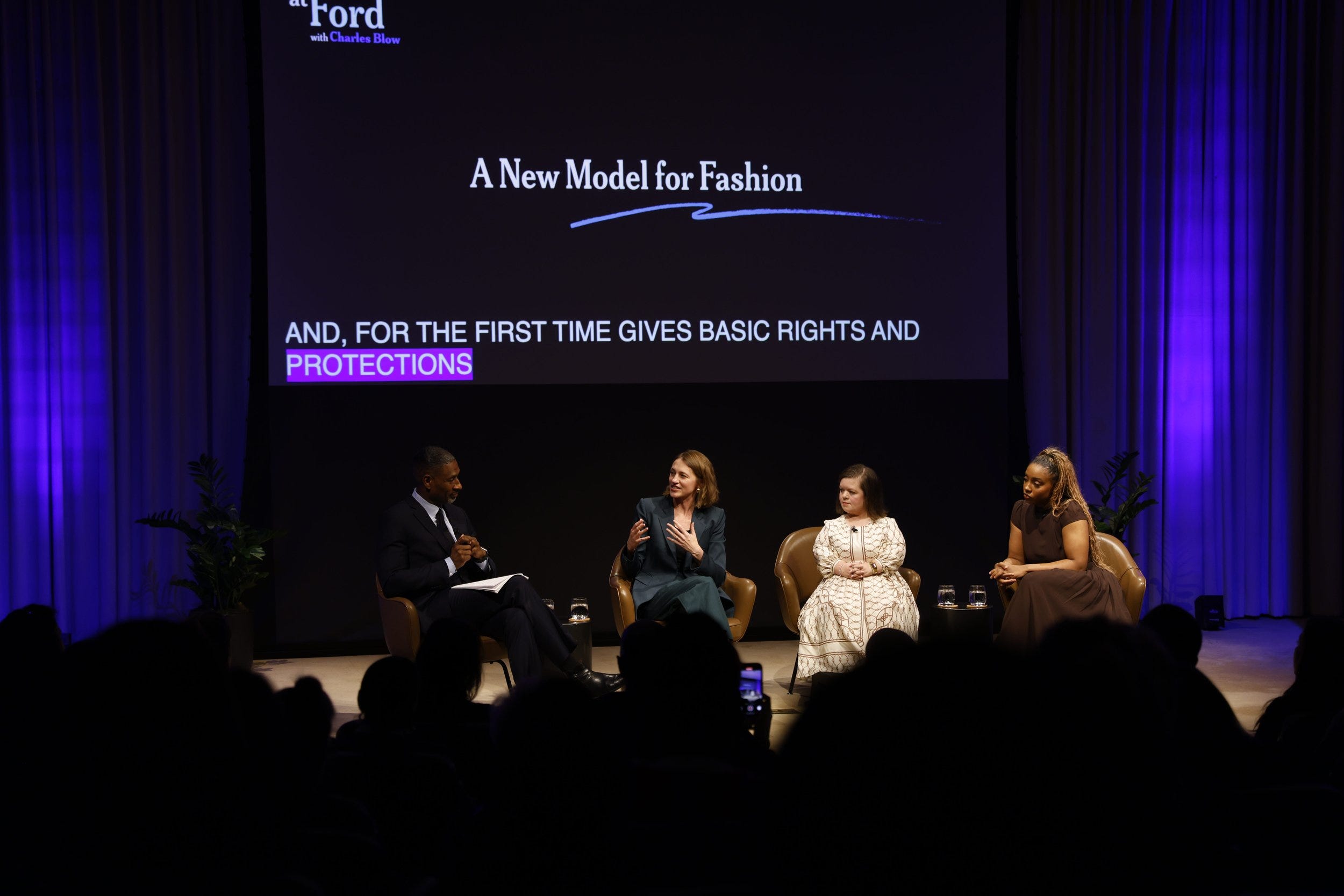
How will this change the economic structures of model management companies and models?
Often models and other creative artists will do ‘money jobs’ like e-commerce that allow them to pursue their artistic career. I do think that AI will have an impact on that. Speaking more broadly, the industry has relied on opaque systems for compensation for a long time and the rise of AI risks compounding that lack of transparency. Historically, models have often waited for months, even years, to be compensated for jobs that are booked through their agencies. In some cases they might not be paid money at all, they might just get paid in trade, or exposure. Models have typically handed over blanket power of attorney to their management companies, which allows them to book jobs, negotiate rates and deposit checks on their behalf. That basically means that models have had very little insight into their own contracts, including their rates and payment terms. This is true for regular jobs, let alone for jobs that use a model’s digital replica, so we have outstanding questions about if and how models are being compensated for the use of their digital replicas. Should they get paid more, or less? If we don’t have fashion shoots with a creative team on set there could be really big implications, so it’s essential that we have workers who are at the table informing these conversations. As AI-generated content becomes cheaper to produce, there is a risk that creatives, including models, could get cut out of the value chain entirely.
With the Fashion Workers Act, are you essentially saying that model management companies should have no power of attorney over the digital likenesses of models?
Correct. The law will basically end the practice of agencies holding power of attorney over digital replicas and will give models direct control over how their image is used. The Fashion Workers Act is our signature legislation, it’s a landmark law that brings labour protections into the digital era. As of June 19th. 2025, the Fashion Workers Act requires modelling agencies and brands that want to create or use models’ digital replicas to obtain clear written consent and to detail the scope, purpose, rate of pay and duration of the use. Models will have to receive deal memos and copies of their own contracts with their clients, something I think a lot of people outside the industry will be surprised to hear they weren’t already receiving. This is an important first step, but it’s not a silver bullet.
What are your personal feelings about the use of AI and CGI within the modelling industry?
I don’t think that it’s inherently a bad thing. I’m not anti tech, I’m anti exploitation. I just think it’s essential that the people who are going to be directly impacted, namely the fashion workers, should have a say on how this is being implemented and how the industry will move forward.
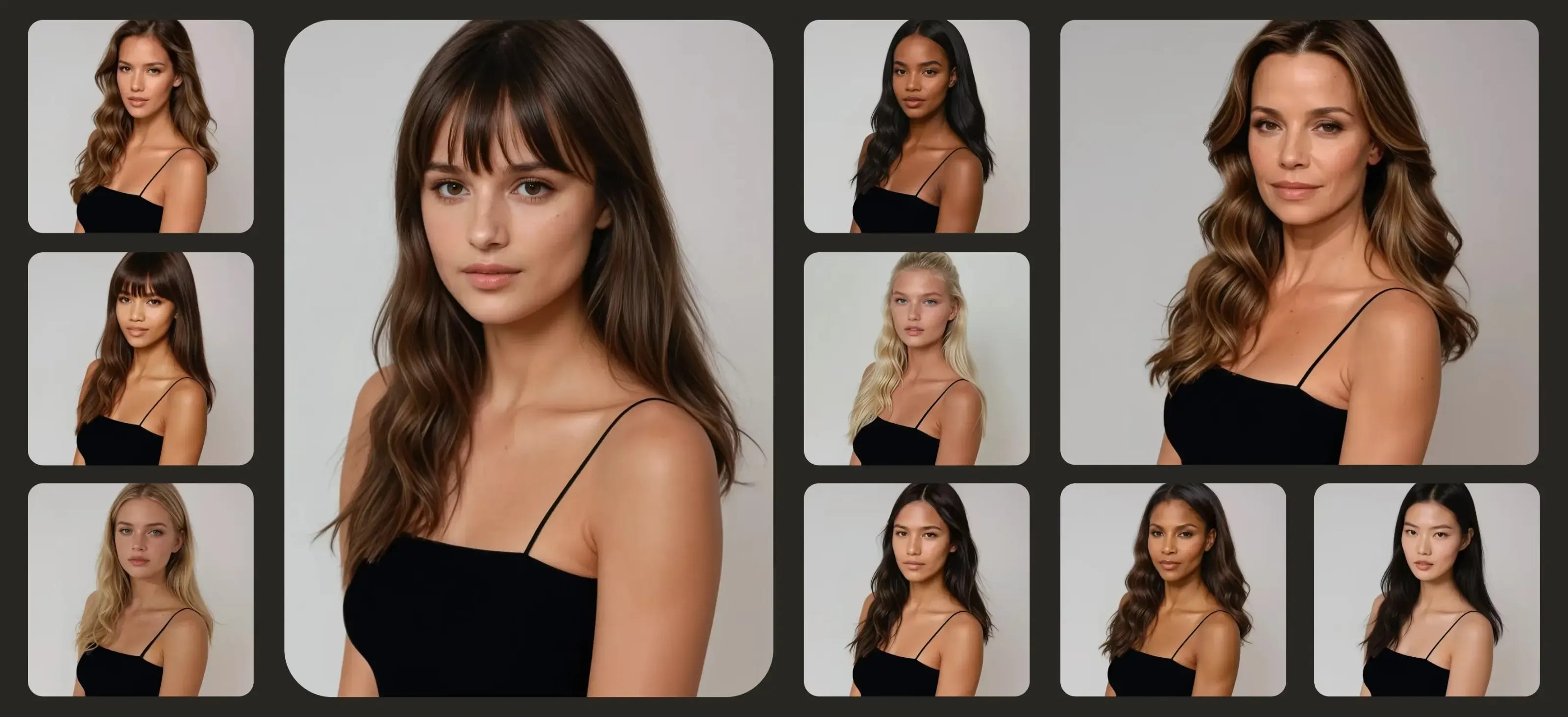
Synthetic model agencies offering e-commerce companies hugely reduced rates seems to come from a classic tech industry perspective, typifying this disruptive, ‘move fast break things’ position. We worry about this influx of problematic approaches into an existing industry that’s already under strain.
For sure. It could definitely redistribute power, which could be a good thing for models and other workers, but only if they have the right to shape how it’s used. If we’re allowing AI to be developed without worker input it just becomes a tool for exploitation, rather than creativity. The Fashion Workers Act is one of the first examples of the misuse of AI being regulated. We’re not saying: "don't use AI!" We’re just saying the model should consent to the use of her digital likeness.
What did you make of the H&M announcement that the company will start to use digital clones of models in their social media and advertising campaigns?
What struck me most about that campaign was that it seemed more like an ad for the use of digital twins, rather than clothes or anything that H&M was actually selling. It was definitely an effort to introduce the use of this technology to the industry, to put up a stake in the ground, which is alarming when you know that this is happening in an entirely unregulated environment.
What does fair compensation for the use of a model’s digital twin look like?
It’s an outstanding question. Some people would argue that you should be paid less because you’re not having to physically show up on set. Other people would say you should be paid more because they’re saving on the cost of production. There are open questions about compensation and the Fashion Workers Act doesn’t address them, other than to say they need to detail the pay and the scope of work.
Can you share a little of what you’ve heard directly from models on the ground about these questions of compensation?
There was a rallying cry around the experience of the model Shereen Wu, who serves on our worker council. She walked in a runway show for a designer in Los Angeles for exposure, not for money, so was then shocked to see that her face had been manipulated using AI to appear white when she’s Taiwanese-American. Not only was that insulting, it also meant that she didn’t get the exposure that she was expecting. She was one of the key voices in advocating for the Fashion Workers Act and helped us add that provision of the law towards the end of when we were campaigning for it. We were updating the law and making changes over the approximately three years it took to actually pass. The AI provision was extremely important, but we didn’t actually add it in until last year.
Has AI had an impact on beauty standards more generally?
I think it has the potential to widen beauty norms, but only if we’re intentional about how we’re training these systems. Without intervention they often reinforce the same narrow beauty ideals that we have fought to move beyond. It’s not going to be enough to diversify avatars, we need to ask who gets paid, who gets seen and who’s getting erased. The workers should be at the table as part of that process.
We’re always very surprised that nobody seems to ask what’s happening with the data accrued from photoshoots, or 3D-scanning and motion capture sessions for CGI and AI campaigns.
It’s not just about images, it’s also models’ biometric data. That’s been a concern for fit models, who are sometimes undergoing these body scans under the impression that they’re walking into a casting, but they’re not actually consenting to have their data used in that way.
In your years of research for the Fashion Workers Act, did you come across any application of CGI, AI or the use of synthetic models, that you found legitimately intriguing, or left you feeling optimistic about the affordances these technologies might pose for the modelling industry?
I am intrigued by the use of generative AI for storytelling, when it’s used to expand creative vision and not replace human labour. But the line between innovation and exploitation is really thin. It can exist, but it’s thin.
Interview by Henry Bruce Jones and Tom Wandrag.
No posts
Comments
Nothing yet. Say the first thing.
Sign in to join the conversation.