
Yesterday morning, after walking my son to his elementary school, I continued on to a medical laboratory for routine bloodwork, a list from my family doctor in hand.
Under the Romanian national health system, assuming you’re insured – I pay for annual coverage since I don’t have an employer – you get one free batch of blood testing per year as long as you have a biletul de trimitere, a referral “ticket” from a doctor that is signed and stamped. Every official paper of any kind in Romania must have the ștampila mark on it, not only a signature as is golden in America.
The Neighbor's Goat: An American in Romania is a reader-supported publication. To receive weekly posts and support my work, consider becoming a free or paid subscriber.
There are a few big lab chains here, but I usually go to one owned by a Swedish company. A local cardiologist friend said she “generally trusts” its results. How’s that for confidence?
The odd part is you have to phone the lab’s call center (same with all of them) to inquire if there are “funds” from the national health system – the money typically dries up in the early days of any given month. Or you pay out of pocket, which I’ve done. And of course, you need an appointment. Before Easter, I called three chains and none had funds left, but the Swedish one placed me on its waiting list and an opening came through a couple weeks later, as I learned via text.
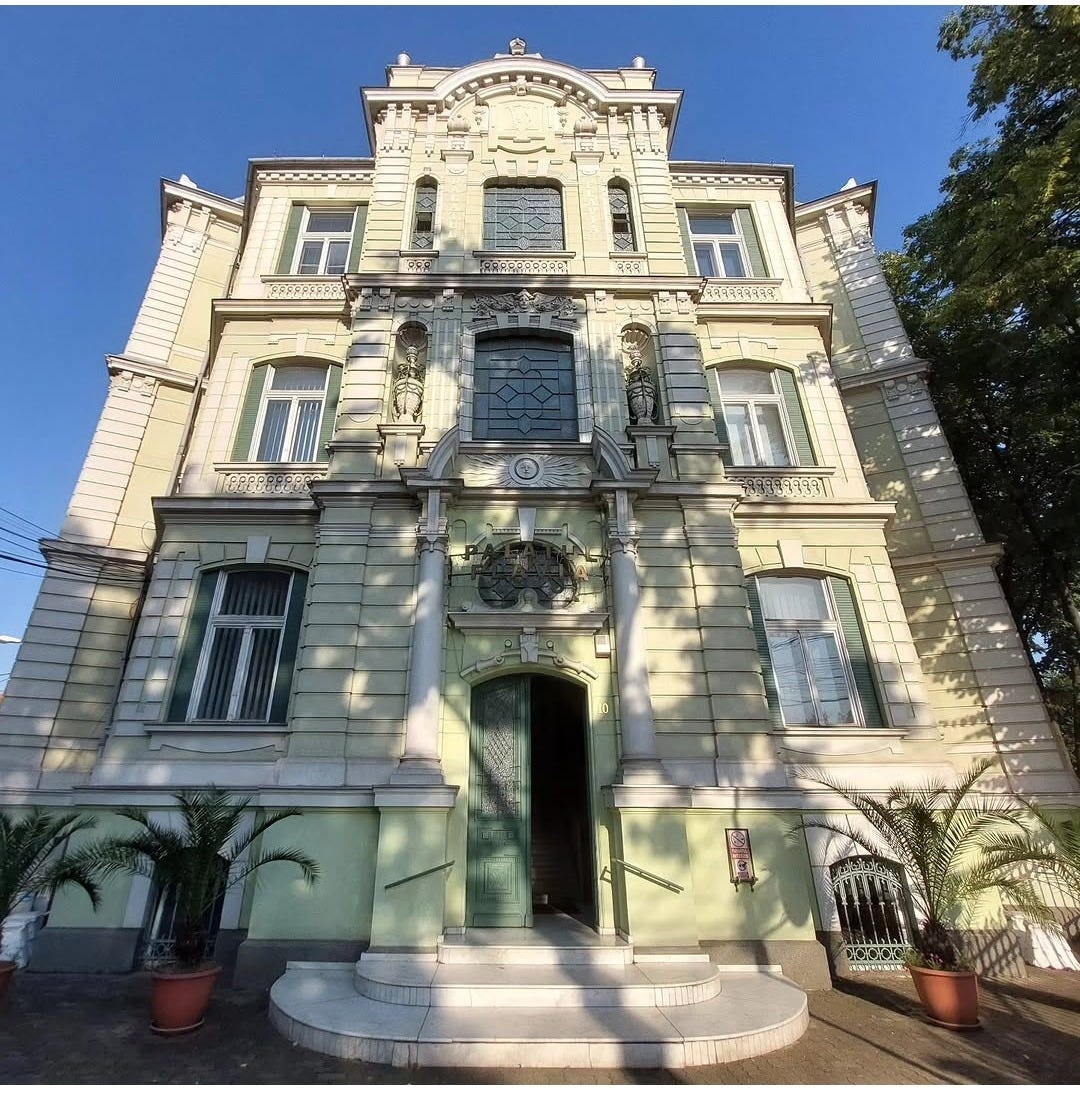
I’ve been there a few times. Although the company has several sleek locations, I typically go to its small lab in the city center, housed in the basement of the German Consulate, which is in a gorgeous pale green building known as Palatul Flavia (Flavia Palace), an elegant mansion built at the turn of the 20th century when Timișoara was an important city in the Austro-Hungarian Empire.
An armed, bereted gendarme (jandarm in Romanian, reminiscent of Italy’s Carabinieri) stays in a booth outside the consulate or wanders around in front, appearing relaxed. Romania is so safe that the gate is open and unlocked, but you might get a nod as you pass the German, Romanian and European Union flags near the entrance.
I arrived a bit on edge, and not just because I had fasted and hadn’t had my coffee yet. Outside my kid’s school each morning, it’s a cacophony of horns honking, cars running red lights, parking on sidewalks and moments of chaotic impatience.
On the way and nearby, it’s always the same with crosswalks – most stop, some clearly reluctantly, but cars often inch toward you while you’re in the black-and-white zebra, rolling slowly and not coming to a complete stop. As Romanians like to say, “Avem lege, dar nu și cine să o aplice”. “We have laws but no one to enforce them.”
Walking into the lab, I had a momentary sense of dread, as I do when engaging with any kind of Romanian bureaucracy. Quite often, as soon as I start speaking Romanian with my accent, there is a stare or furrowed brow, especially so when I’m asked for my buletin or national identity card. Foreigners don’t have a regular buletin but a residency card that looks totally different and is much smaller, though I understand the new identity cards for Romanians will soon look more like mine.
For example, every three months, when I go to a pharmacy to fill a common prescription, I get immediate pushback when the pharmacist sees my ID or asks for my national health card, which are never issued to foreigners. Never. But I am insured by the health system and all they have to do is look me up. Most don’t want to be bothered, so I usually go to two or three or four pharmacies until I find a cooperative pharmacist. This is a dose of Romanian attitude that I jokingly call Ro-ti-tude.
I was expecting the same rigmarole at the lab, which I’ve encountered a few times, though not usually at this one. The receptionist offered a warm Bună dimineața or Good Morning. After slight confusion about whether I had an appointment – flashing the text message did the trick – I was asked for my ID and health card. As I started to explain, her accent detector was going off and she asked me where I was from. When I said the United States, she asked which state. I replied with “California” and she said the Romanian equivalent of “Wowww, for real?!”
A smile appeared. Mutual disarmament.
From that point, Mrs. Horescu couldn’t have been nicer. A colleague helped her navigate the computer system to accommodate my foreigner documents and status, which she clearly had not encountered. It took a little longer and the line grew behind me, with audible huffs and puffs, but no one remarked out loud as I’ve experienced in other settings.
Along the way, she balanced work with brief conversation, telling me her husband works long-term in Ireland and she goes back and forth. She said how polite the Irish are, how clean it is there and how much Romanians could learn from them, touching her cheek with her index finger.
Embarrassingly, I remembered that the doctor included a urine test. I forgot to get a little plastic jar – you’re supposed to buy one at the pharmacy – and I sheepishly admitted that I’d already gone once at home.
No worries, Mrs. H. said, I’ve got you covered. She sent me to the water cooler to guzzle a few cups of cold water, handed me a free recipient and directed me to the bathroom while she completed the paperwork.
I came back to the counter as she was telling the next in line she wasn’t quite done with me. I really appreciated her patience and that of the other patients. She had me sign a few documents, joking it was like the wedding paperwork at City Hall and how Romania was slow to digitalize. The patient next to me agreed aloud as others nodded.
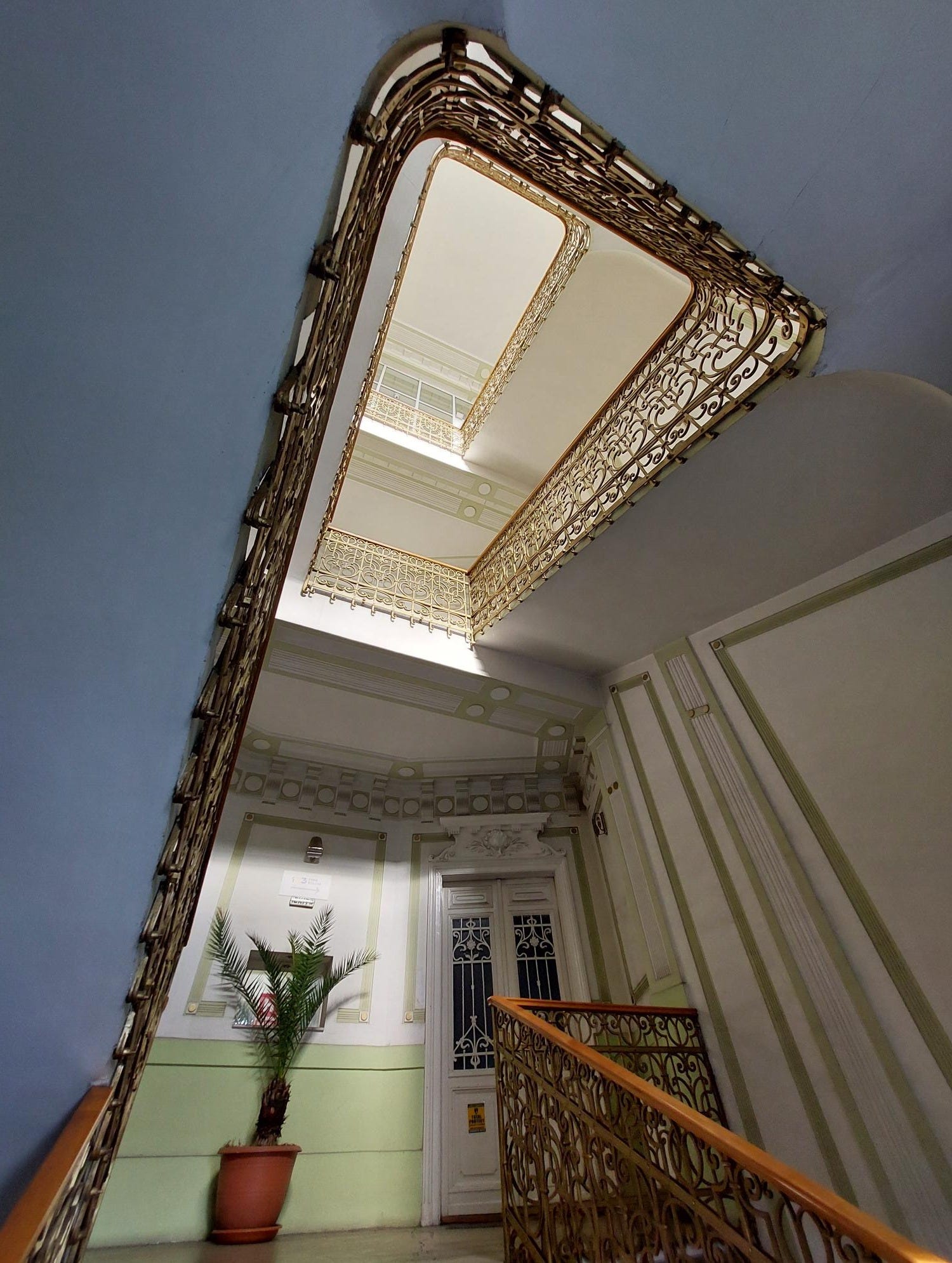
A few minutes later, the phlebotomist drew my blood with painless perfection and I was gone in a jiffy, first stopping to say goodbye to Mrs. H., who wished me good health and all the best. In the building’s hallway, I remembered to look up and snapped a photograph of the distinctive stairwell.
The sun was shining on a pleasant morning, even if it was a bit brisk. Barely 9 a.m., I could feel it was going to be a good one. Mrs. H. had already made my day.
The Neighbor's Goat: An American in Romania is a reader-supported publication. To receive weekly posts and support my work, consider becoming a free or paid subscriber.
If you don’t want to commit to a subscription, but you’d like to show appreciation for my writing on The Neighbor’s Goat, please consider Buy Me A Coffee. I like long black or flat white. Thank you!
Comments
Nothing yet. Say the first thing.
Sign in to join the conversation.