
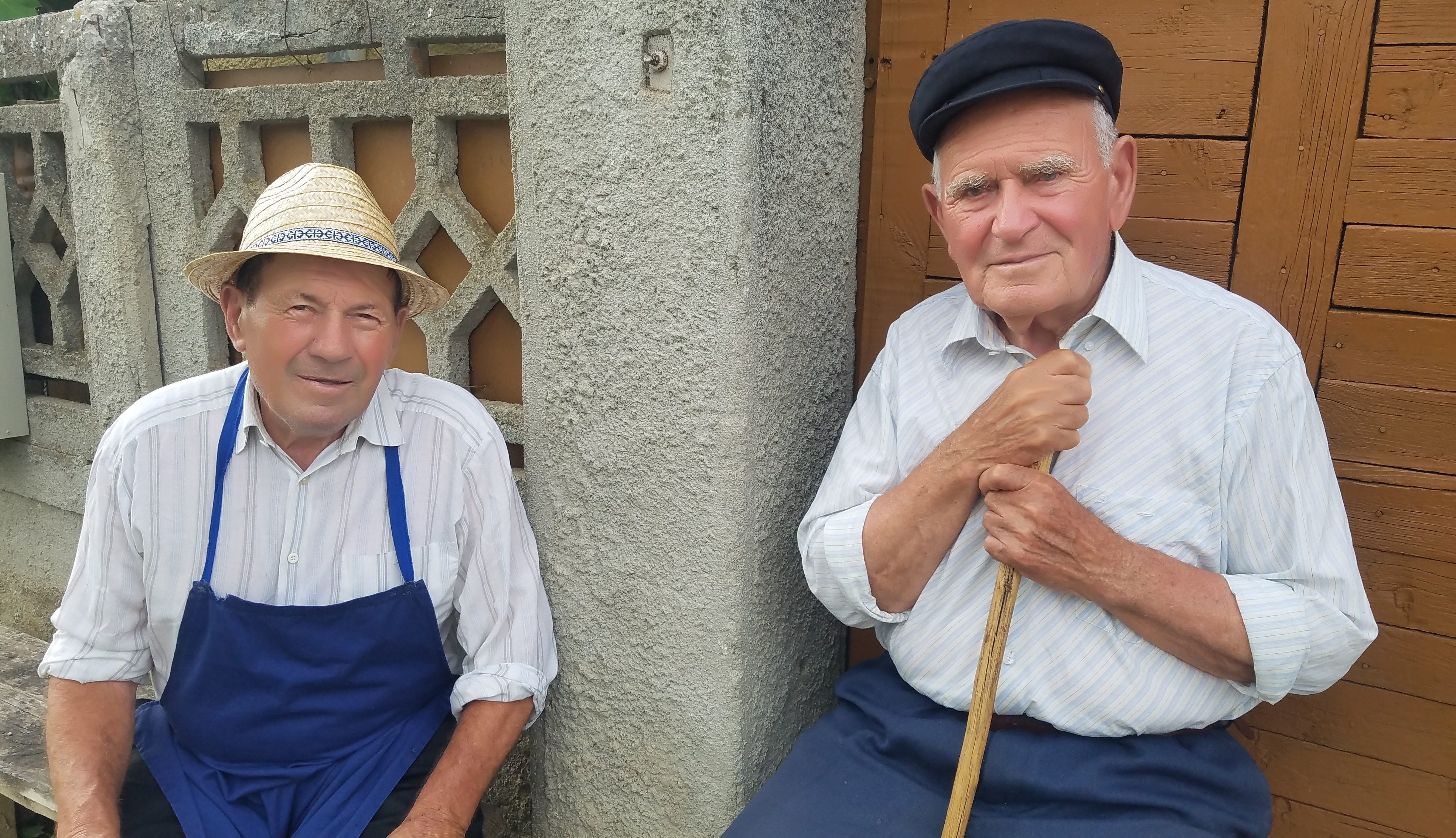
In almost any Romanian village, you’ll see them, usually in the afternoon, especially on weekends and holidays.
“Oameni stat la poarta.”
“People staying at the gate.”
Locals gather at the gate, have a look, take a breather and watch the world pass by, unhurriedly, in front of their house or a neighbor’s, a rural phenomenon I’ve observed for many years.
In villages, apartment blocks are rare and most people live in smallish single-family homes, typically close to one another and literally a few steps off the road – often the principal route through the village, sometimes the only one.
That’s where the gate assumes its starring role. Most people have a seat there, a narrow, wooden and typically homemade bench called a laviță where, after a hard day’s work, they stay at the gate, which every house has, formerly made of wood but nowadays usually metal, tall enough for privacy and with a barking dog behind it.
As we left the Transylvania countryside earlier this week to return to the city after the Easter holidays, two women were chatting at our neighbor’s gate as we drove off. Before we exited the village, I saw several more sets of people of all ages swapping stories at gates. Some knew us or recognized the car, bidding adieu. Our “out-of-state” license plates always give us away – well, out-of-county, as we’re three counties and three hours west.
Between our village and the autostrada (freeway), we passed through four other hamlets, where there were plenty more locals at their gates, some alone, a few in pairs and others in groups of four or five, elbow-to-elbow, butts on the bench. It was Tuesday, the third and final day of Orthodox Easter, a religious holiday and schools were still closed on the last day of vacation, though most city folk, bankers and bureaucrats had returned to work.
When I go by the gate sitters, I sometimes initiate a wave and get puzzled looks in return, as it’s virtually unheard of to wave to a stranger. Even if it looks like they’re anticipating a sign, waiting for a wave, it’s only young kids who occasionally do that.
As the car passes, all eyes are on the vehicle as they glance at the occupants and quickly look down at the front license plate, in unison. Seconds later, peeking at my rearview mirror, I see the heads looking at the back of the car, as if to wonder where it’s headed. Same ritual for each passing vehicle. Horse carts also roll by, more noisily, but they’re usually folks from the village or maybe one over. They get a wave.
This gate business is endearing for its traditional aspect, a time-honored habit of village life in the Romanian countryside – the best spots face the lingering afternoon sun – but it also serves a purpose. In many instances, these durable denizens have worked all day caring for their animals, plowing the nearby fields or tending to their garden, perhaps the ladies were laboring in the kitchen and the garden, and they’re simply taking a rest in the fresh air.
It’s also a way to socialize, particularly for those who live alone, like widows and widowers, to catch up with neighbors and to see what’s happening in the community. Gossip is rampant, though, and breaking news travels fast. Locals joke that the latest scuttlebutt comes from Radio Șanț (șanț means ditch), referring to the concrete rainwater drains that run through villages, parallel to the road and right in front of the gates – nice ones look like this.
I’ve seen such gate gatherings in the Maramureș and Bucovina regions, for example, both in far-northern Romania on the border with Ukraine. I’ve driven past the gatekeepers throughout Transylvania, which covers a large swath of the middle of the country, and I’ve seen it in the south, in Oltenia, and the east, in Moldova, and in the southeastern corner, in Dobrogea, a region hugging the Black Sea. As I mentioned, it’s mostly on weekends and holidays, but in the summer, when the days are long and the evenings warm, it’s common for people to stay at the gate on weeknights, too, savoring every moment until sundown.
As I’ve wandered our village, in Sibiu County, I’m often asked where I’m going, as no one really just goes for a leisurely stroll. Rather, they walk with intent, to the village’s only market, maybe to a relative or neighbor, or the cemetery. On a few occasions, I was chatted up by the gate folks, even asked to sit down and join them. As “the American” nearly everyone knows who I am, from the mayor to the shepherds, and oftentimes people are just curious.
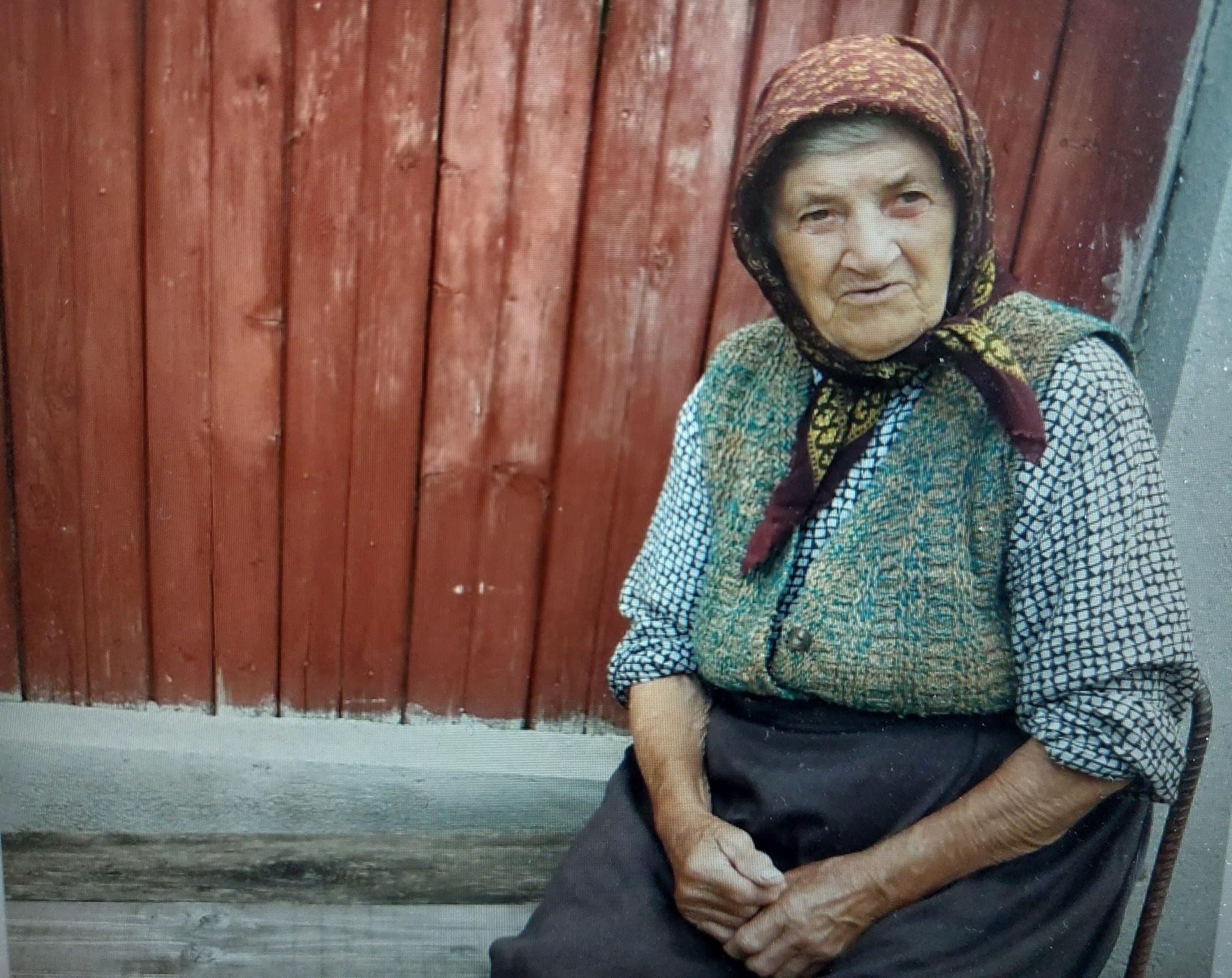
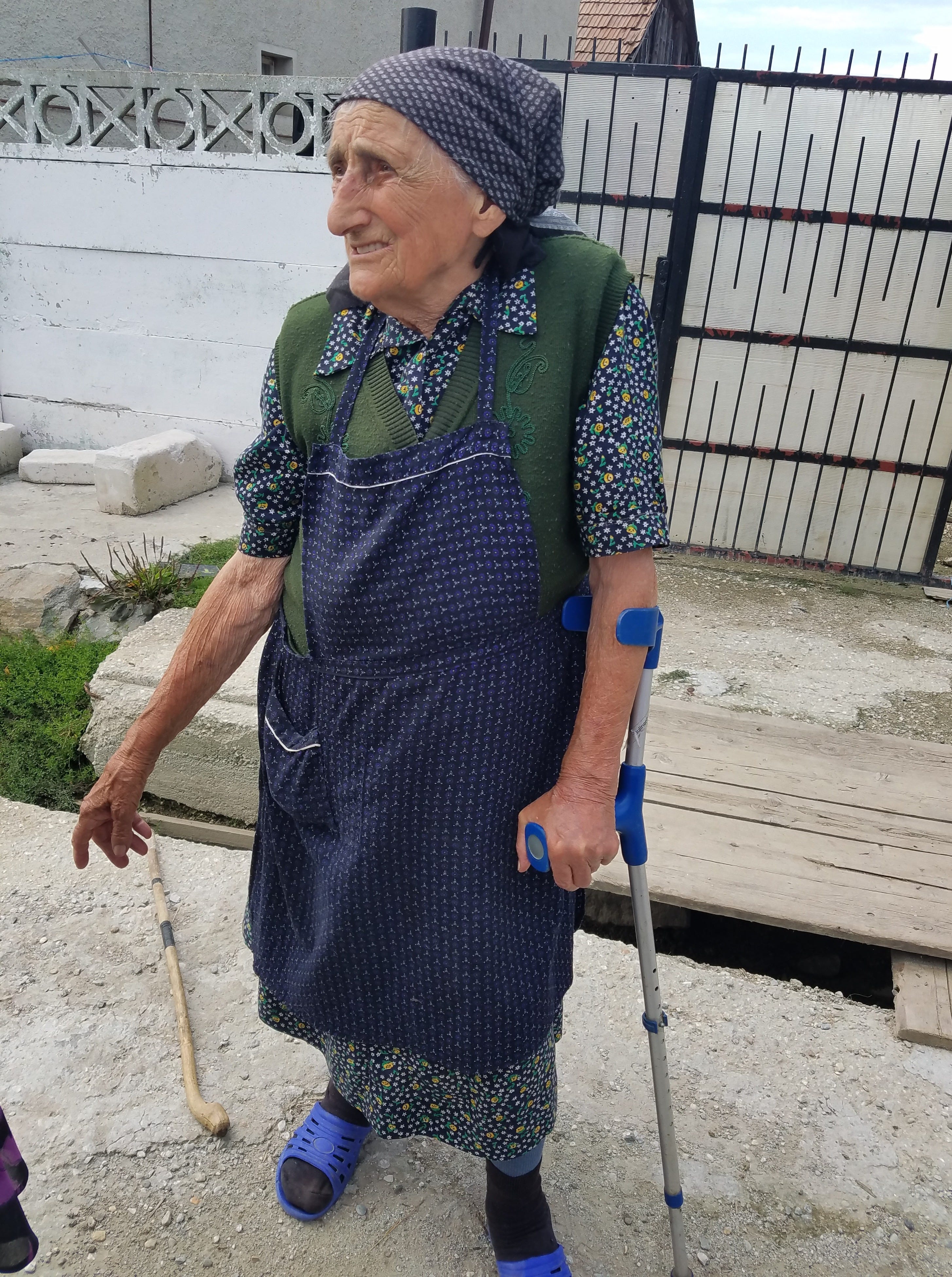
I have fond memories of my conversations with Nicolae and Dumitru and the lady with a walking crutch who has since died but stood at the gate as it was easier for her. Then there was the lonely lady with a strong, angular face in a sweater vest on a warm day a few summers ago – older villagers often overdress for the temperature and ladies wear kerchiefs for modesty – who asked me to sit down and take a break. She subsequently told me about her kids and grandkids living in Germany, and how she longed for their visits. Before I moseyed on, she took me in the back and showed me her large garden, which was meticulously cared for, as evidenced by her tanned arms.
The other day, I was tempted to stop the car and take fresh photos as this story idea popped into my head, but I didn’t want to intrude, especially in the other villages.
People were enjoying the holiday, shooting the breeze, staying at the gate.
If you don’t want to commit to a subscription, but you’d like to show appreciation for my writing on The Neighbor’s Goat, please consider Buy Me A Coffee. I like long black or flat white. Thank you!
Comments
Nothing yet. Say the first thing.
Sign in to join the conversation.