
I was on my second short podcast when I neared the Romanian-Hungarian border, just over an hour after leaving my house.
I’ve had a hectic stretch lately, immersed in a few in-depth writing and editing projects, one of which took me on a fascinating reporting trip. More on that soon.
Then there was the usual family stuff, short travel and various commitments, and trying to keep up my Substack each week – thank you for being here, by the way.
My head was still spinning on Monday morning when I took off on the three-hour drive to Budapest Airport to pick up my wife’s uncle, exactly where I’d dropped him off for his flight to North America in March, when I wrote about my fun day in Budapest. This time, though, I wouldn’t venture past the airport into the capital.
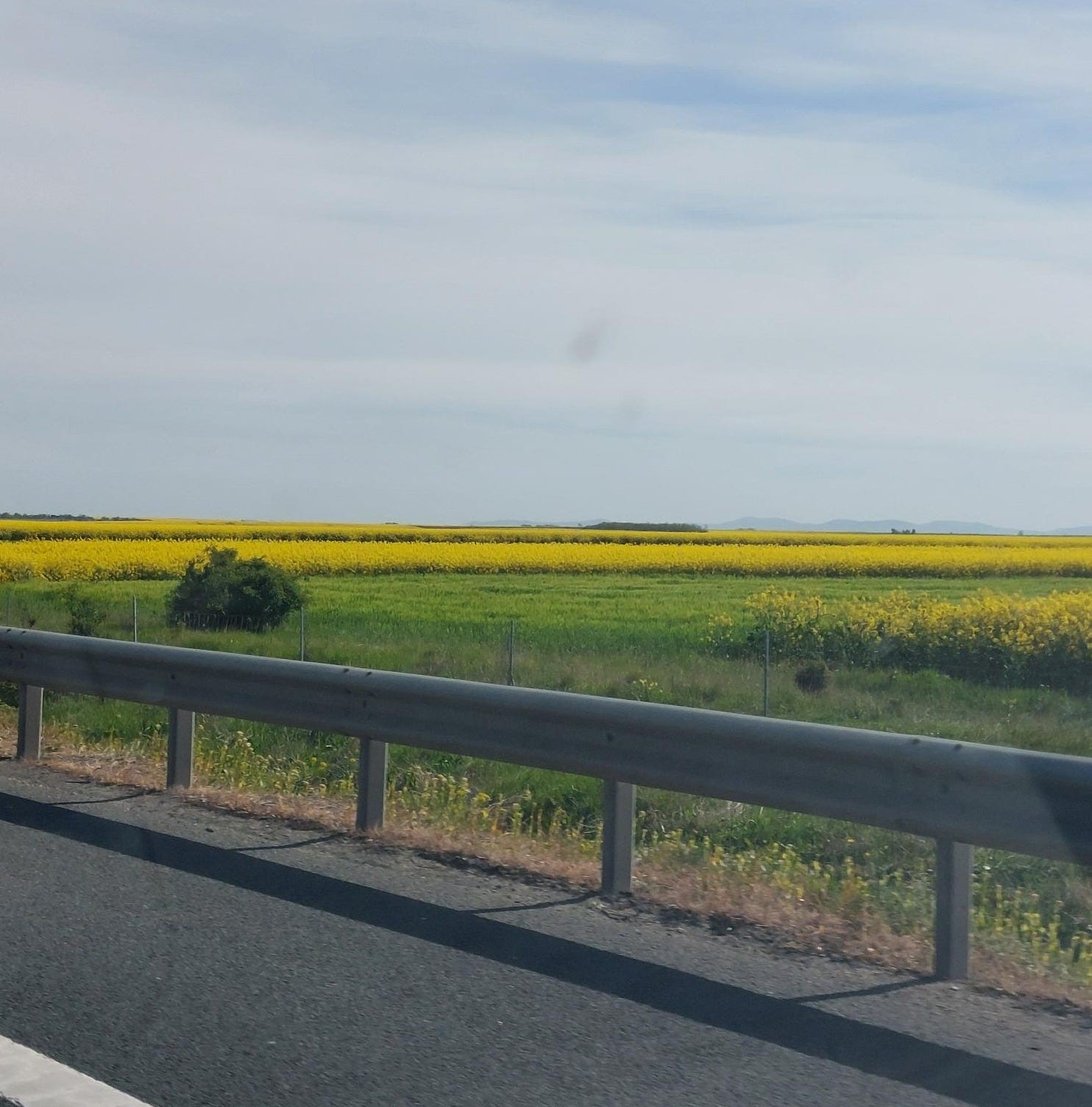
Cruising along the freeway, passing brilliant yellow rapeseed fields, I was listening to the podcasts to catch up on news from home, back in America, but I just couldn’t take it anymore. I needed music, not chaos. I pulled into a rest stop at the border and switched to my playlist, eclectic as it is.
Right after the sign for “Magyarország” – that’s “Hungary” in Hungarian – the tunes started filling my car. I still had a little coffee left, traffic wasn’t heavy, life was good.
Spotify served up the band Kansas first, with “Carry On Wayward Son,” a classic rock anthem about a man’s spiritual journey. As I crossed the pancake-flat Great Hungarian Plain, the powerful, crystal-clear vocals of Steve Walsh, the lead singer, transported me to America’s Great Plains, to Kansas itself, where I spent a few years as a staff writer for The Wichita Eagle newspaper many moons ago.
During my enjoyable, transformative Wichita days, I once saw the band perform at the aptly named Kansas Coliseum, after which the home-state musicians showed up the pub where my buddy Bob and I were hanging out after the show.
We had just watched the superstars on stage and there they were, a few feet from us, bellied up to the bar. We were stunned. People were buzzing and not just from the flowing drafts. Bob had the courage to ask them if they were going to sing on the bar’s stage and they politely said no. I can’t remember who responded, but I could hear Walsh’s distinctive tenor in his chatter with the band.
As the Hungarian countryside whizzed by, I was momentarily flooded with memories, so I stayed with Kansas for a few more songs, for nostalgia’s sake.
I also heard “No Sleep Till Brooklyn” by the Beastie Boys, which reminded me of the time I interviewed one of them, Mike Diamond, outside a courtroom in Jacksonville, Florida, when I was a reporter there. Listening to Elton John’s “Tiny Dancer,” one of my all-time faves, took me right to his concert in Romania when I was a Peace Corps Volunteer. Traveling by train across the country to see him play Bucharest in a shockingly empty soccer stadium – people ditched the cheap seats and moved closer and closer to the stage as the show went on – was an experience I’ll never forget.
The Red Hot Chili Peppers’ “Californication” and 2PAC’s “California Love” conjured up images of friends from my time living in sunny Los Angeles. Manhattan Beach and Redondo Beach, you were grand.
Better Than Ezra came through with “Desperately Waiting,” which I saw them perform in an epic, sweat-soaked show at a Boston indie rock club, where the New Orleans band simply killed it. My years in Boston were filled with hard work and good times, with all sorts of terrific live music.
I then mellowed out with Andrea Bocelli and Adele until I saw the exit for Kecskemét, one of Hungary’s mid-sized cities. I’d passed by it many times but never stopped. Just a few miles off the freeway, the city made for a perfect break this time. Checking the time and bearing in mind the uncle’s flight arrival, I had an hour and change to spare.
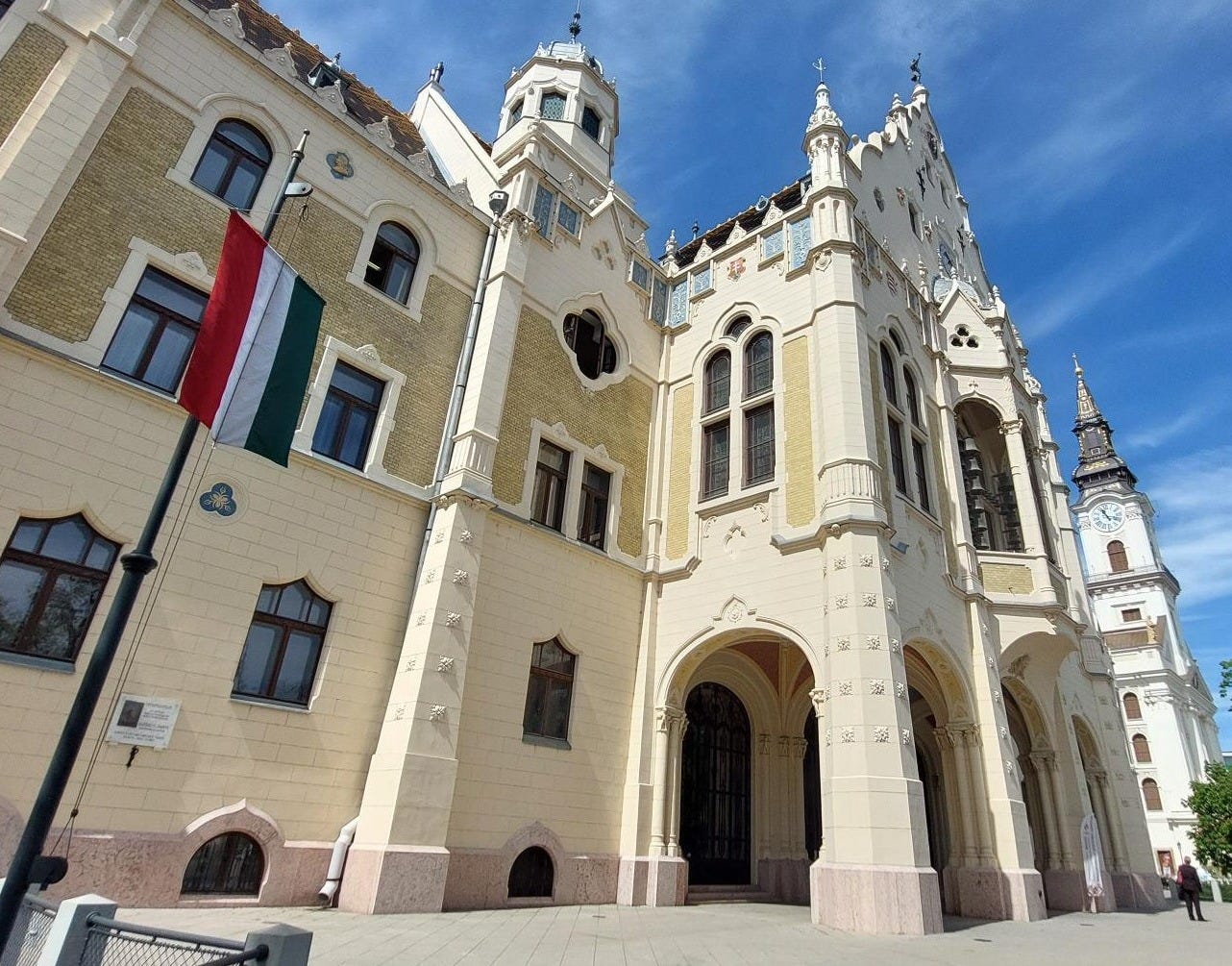
Kecskemét was tidy, compact and pleasant if not remarkable, but I already knew it had several fine examples of Art Nouveau architecture, specifically Hungarian Secession. Unfortunately, the city’s crown jewel, the Cifra Palace (1903), was shrouded in construction cloth over scaffolding, completely invisible. But there were other nice ones to see, then I found Jakó Cukrászda, a pastry shop with excellent reviews.
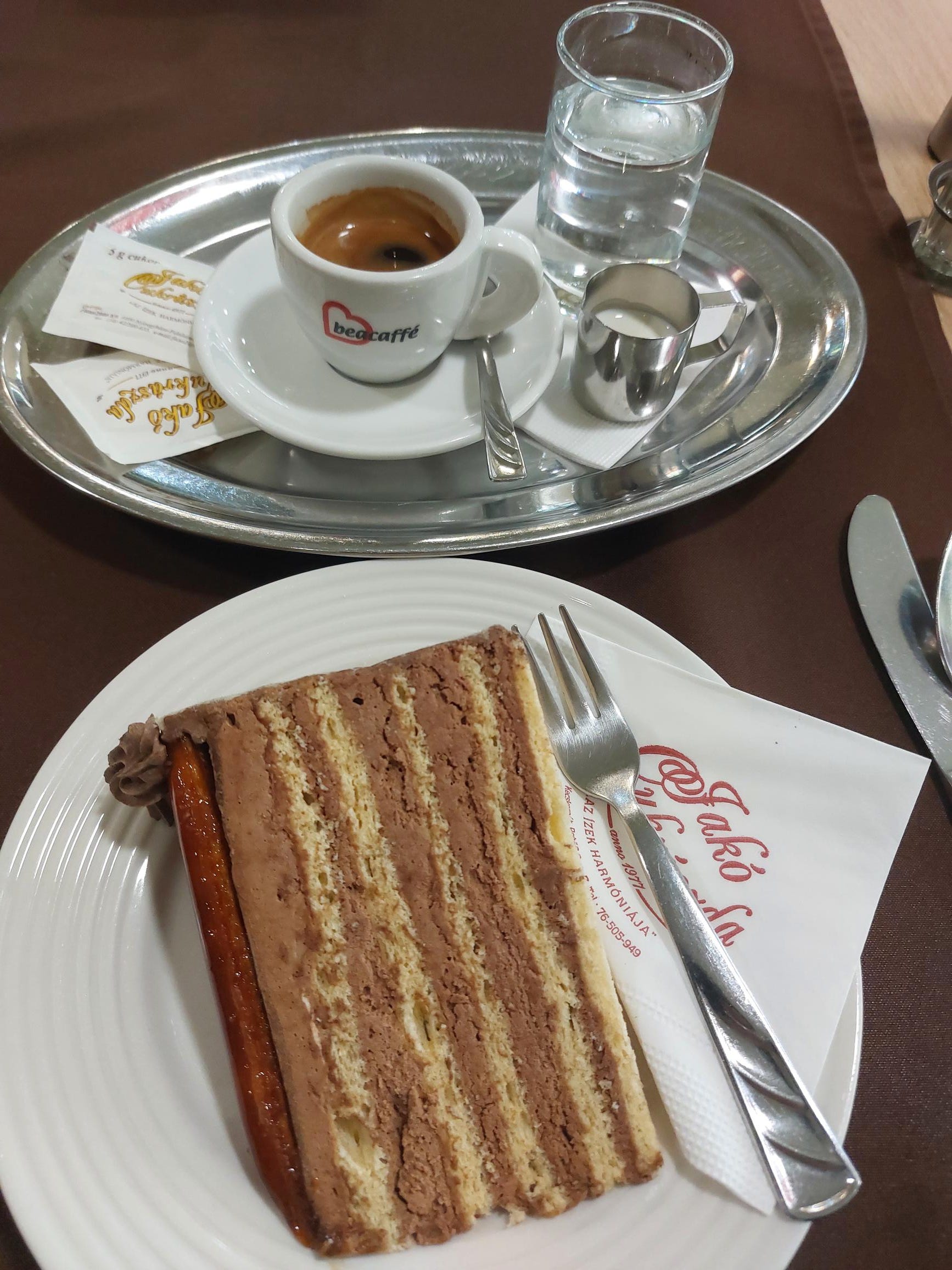
It didn’t disappoint. I had a perfect espresso and a slice of Dobos Torte, a sponge cake with multiple thin layers of chocolate buttercream, topped with a crunchy caramel coating – delicious and one of my favorite European desserts. It originated in Hungary but is also commonly found in Romania, where I live, especially in the western part of the country and Transylvania, in the former Austro-Hungarian Empire.
With my parking expiring and needing to hit the road anyway, yet another hour to Budapest Airport, I headed north toward the capital. My playlist continued to keep me company as the traffic thickened, clogged here and there by countless 18-wheeler trucks and random road work.
Zdob și Zdub popped up. The Moldovan punk-folk troupe, which sings mostly in Romanian and is often compared to The Red Hot Chili Peppers, brought a smile to my face. During Peace Corps, another volunteer and I talked our way into meeting the band backstage after a small-city concert, sharing a beer and a slice of pizza with them. That made me think of randomly meeting two famous but now “older” Romanian bands, Holograf and Voltaj, the former when they played at a private party that I didn’t expect to attend, and the latter at a hotel breakfast buffet. Both were brief but cool moments and they were stand-up guys. Just added both to my playlist, as I’d almost forgotten about them.
After fetching the uncle, I pointed the car southeast. We had a lot of catching up to do, so I skipped the playlist.
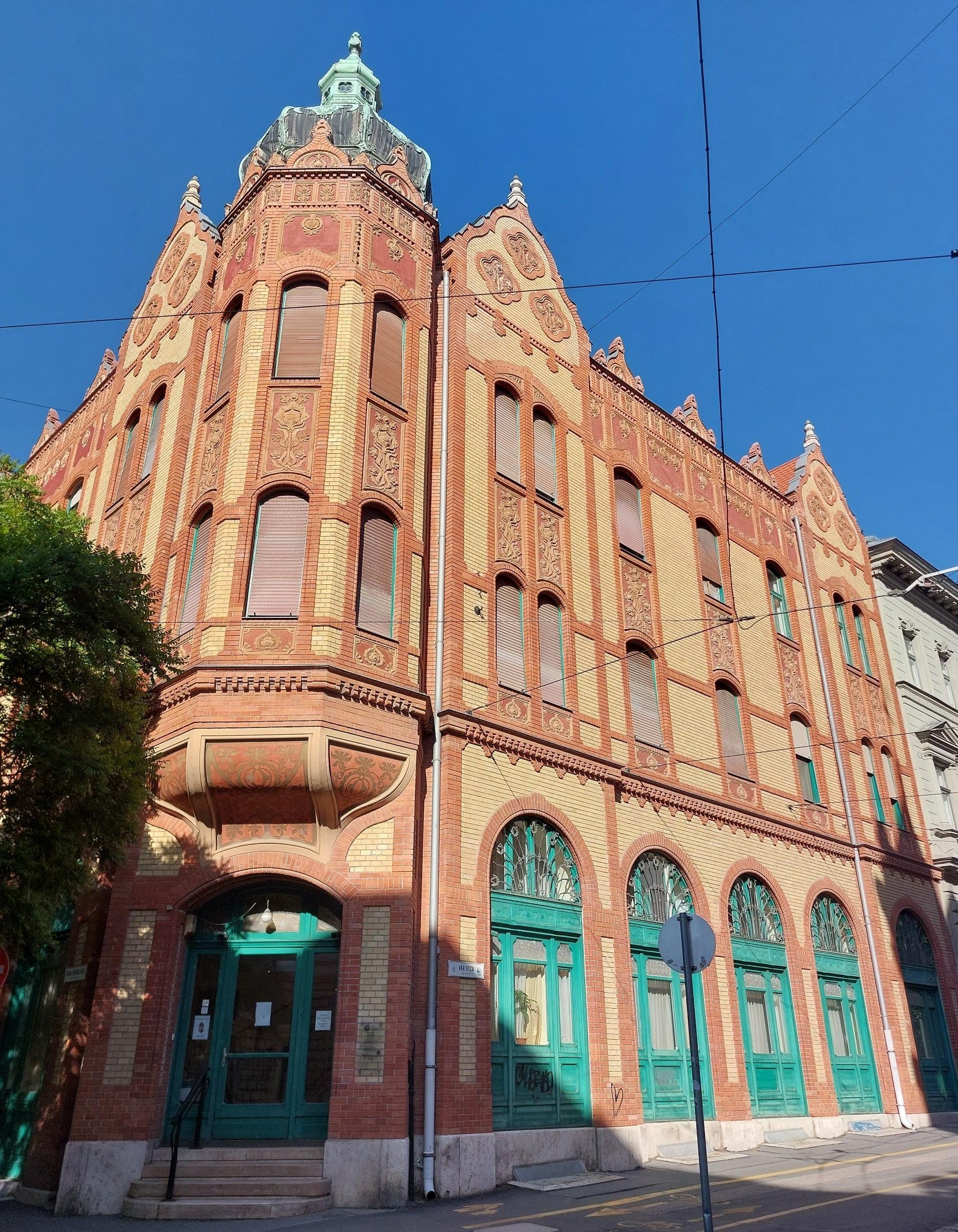
Szeged, a lively university city less than an hour from the Romanian border, would be our dinner destination. Straddling the Tisza River, Szeged is known for its Art Nouveau buildings and spicy, paprika-laced fish soup. We made a quick stop at the famous Pick Salami to buy goodies from its factory store, then strolled around the city. Hordes of people were out and about enjoying the late-afternoon sun, which cast a perfect mix of light and shadows on the gorgeous Art Nouveau architecture and manicured parks filled with statues.
When I was last in Hungary, six weeks ago, Viktor Orbán was still prime minister. Maybe it was my imagination, but on this visit people seemed more upbeat, with a little pep in their step, after his recent landslide election loss.
I was struck by Szeged’s cleanliness and lack of dust that often plagues Central and Eastern European cities, like I’m so accustomed to in Romania. Whatever Szeged is doing, they should keep it up.
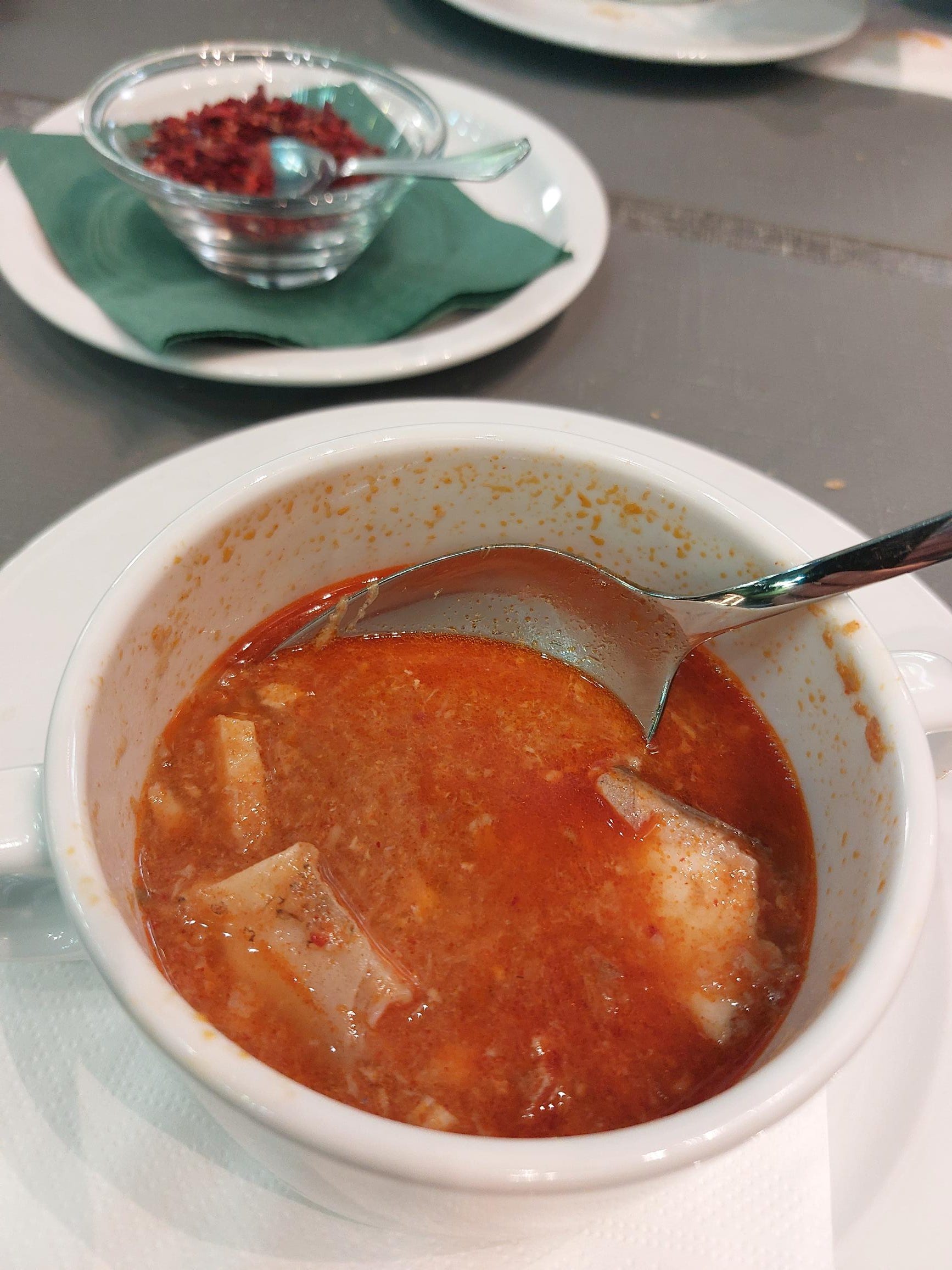
We ate dinner at aquarium-filled Régi Híd Vendéglő, Restaurant by the Old Bridge, just steps from the Tisza, and enjoyed a cup of “Szegedi” fish soup, which was the best I’ve had, and tasty second courses with local specialties, carp and catfish – farm-raised, of course, but from Hungary. Service was excellent and I’d go back.
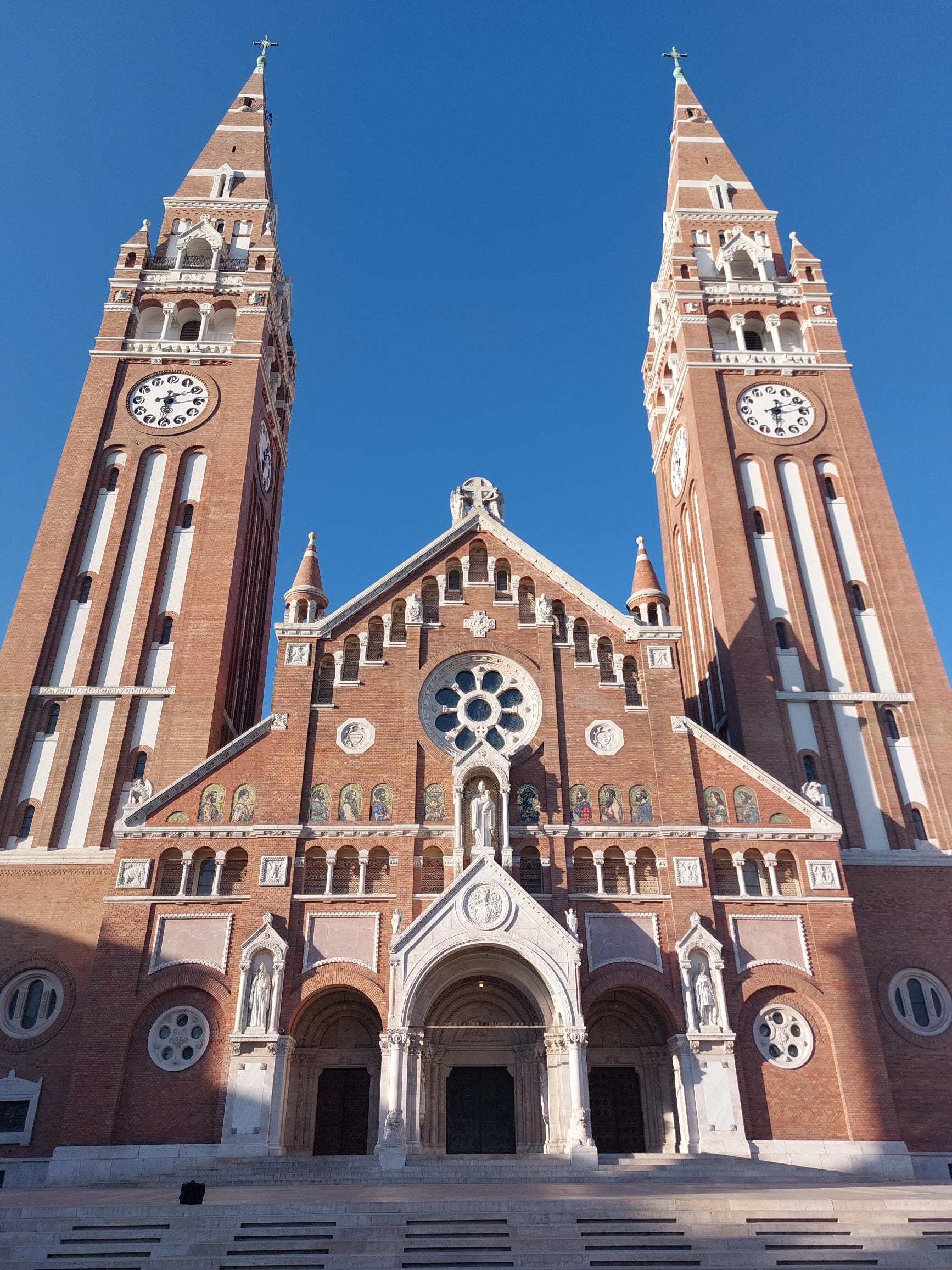
We were taking another lap around the old town to walk off dinner – no room for dessert, though many were strolling with ice cream – when I spotted a bagel café that I noted for next time. Szeged Cathedral, the city’s landmark twin-spired Catholic church, was worth a look before leaving.
On the way home, we talked some more but the uncle was tiring from jet lag. Until the Romanian border, I tuned into Bartók Rádió, as I often do in Hungary, a wonderful classical music station named for the country’s legendary 20th-century composer, Béla Bartók. Some chill music at sunset was just right.
But my spontaneous trip down memory lane sure was fun. Music does that, doesn’t it? Just takes you right back to a moment in time.
If you don’t want to commit to a subscription, but you’d like to show appreciation for my writing on The Neighbor’s Goat, please consider Buy Me A Coffee. I like long black or flat white. Thank you!
Comments
Nothing yet. Say the first thing.
Sign in to join the conversation.