
In 1966, Philip K. Dick published a short story called “We Can Remember It for You Wholesale.” A man walks into a company called Rekal Incorporated to buy a memory of a trip to Mars, because the memory is cheaper than the trip. Safer, too. No sunburn, no customs line, no wasted vacation days — just the part that was ever going to matter, which is the feeling of having gone. Rekal implants it directly, guaranteed indistinguishable from the real thing. The story was loose source material for Total Recall a few decades later, but the film kept the premise and threw away the ache — it turned an essay about the unreliability of your own mind into a chase movie. The original stayed with the smaller, worse problem: once the implant exists as an option, the man can no longer sort which of his memories he earned and which he paid for. The rest of the story is Dick watching that uncertainty rot him from the inside.
I did something smaller at Meigetsu-in, a hydrangea temple in Kamakura this past June. Peak bloom, a stone path lined with thousands of blue blossoms, and several hundred tourists doing what tourists do on a narrow stair — waiting, leaning, angling a phone over someone’s shoulder. I took a photo of it.
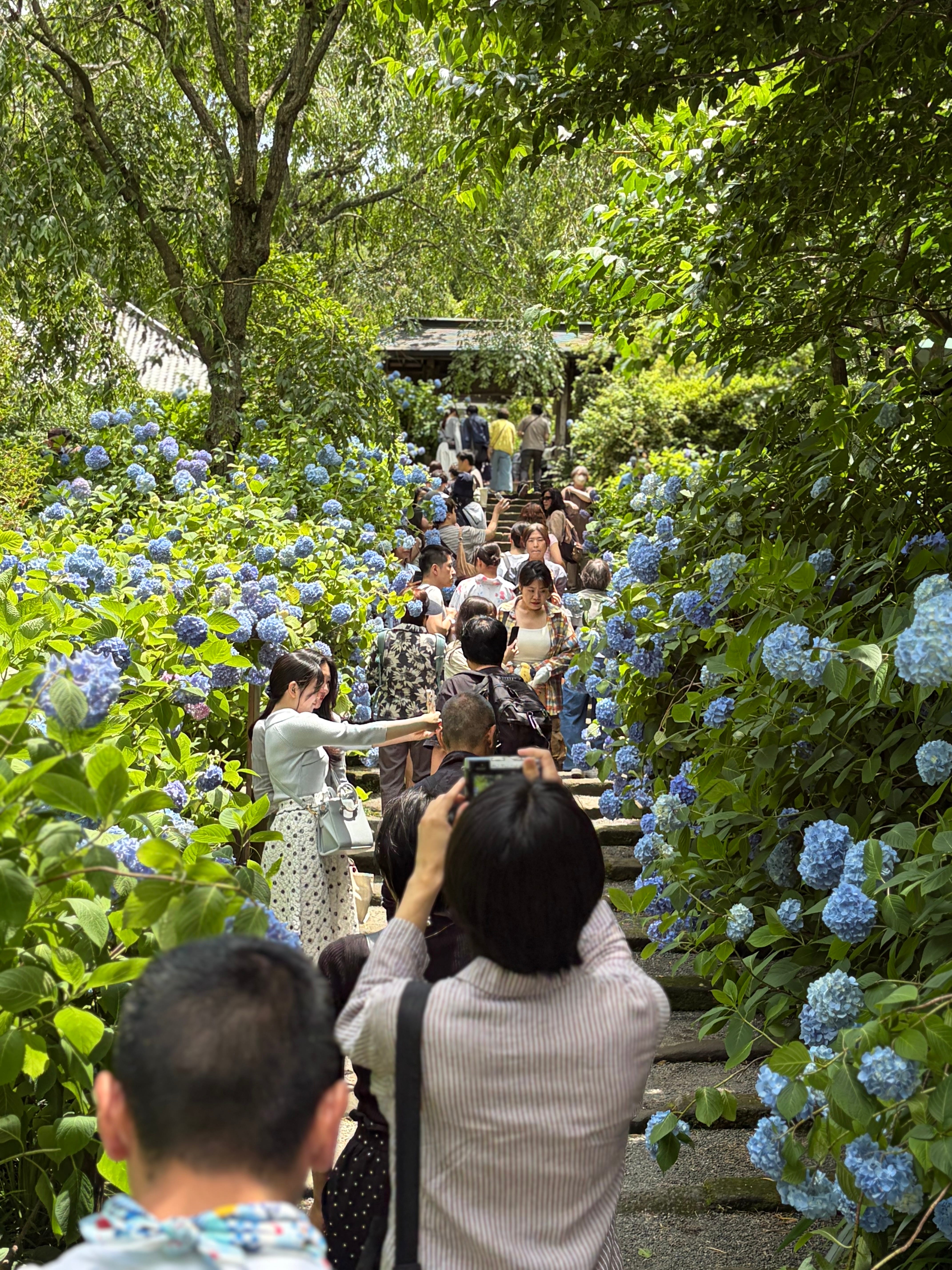
Then I did something that would have seemed impossible only a few years ago.
I asked an AI image generator to remove all the tourists.
Seconds later, they were gone.
The stairs were cleaner than stairs get. The light had gone soft in a way June light in Kamakura does not actually go. It didn’t look like my photograph anymore. It looked like the temple’s own idea of itself, the version it would choose if it could choose.
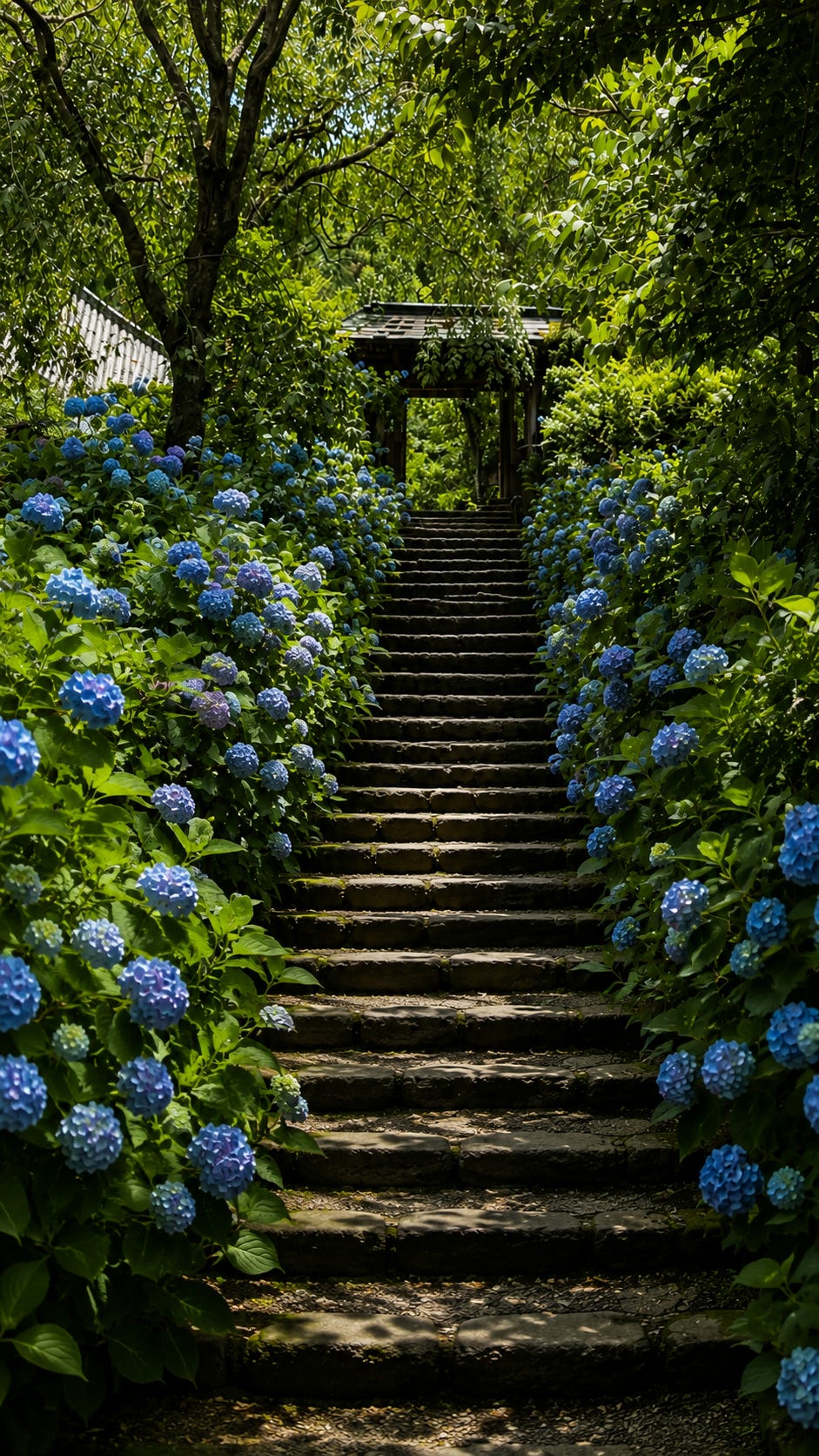
At first it felt inauthentic. Then it felt inevitable.
Tourists have always wanted the shot without the other tourists in it — Kodak-era travelers waited out a crowd the same way I could have; the difference is I didn’t have to. Daniel Boorstin wrote that we already carry a photograph of a place in our heads before we arrive, so that visiting becomes less an encounter than a confirmation. What’s new isn’t the wanting. It’s how little the wanting now costs.
There’s a ladder here, and most of it is already built. First you waited for the empty moment — real patience, deliberate choreography around strangers, the discipline of getting up before your own vacation was supposed to start. Then you stopped waiting, because you knew you’d fix it later, and the waiting itself began to feel like wasted effort, an old habit nobody had told you to drop. Then “fixing it” became instant and automatic: at the Taj Mahal there’s a whole cottage industry of photographers who arrive with tourists at sunrise, take thirty near-identical frames of the same empty-looking angle, and stack them in software that erases every stranger who wandered through any single exposure. They sell it as a private photo shoot. It is, structurally, identical to what I did on my phone in ten seconds for free.
Adobe has already demoed the corporate version of this — a phone feature called Monument Mode, built to erase “annoying tourists” from architecture photos while you’re still standing there, no trip home required.
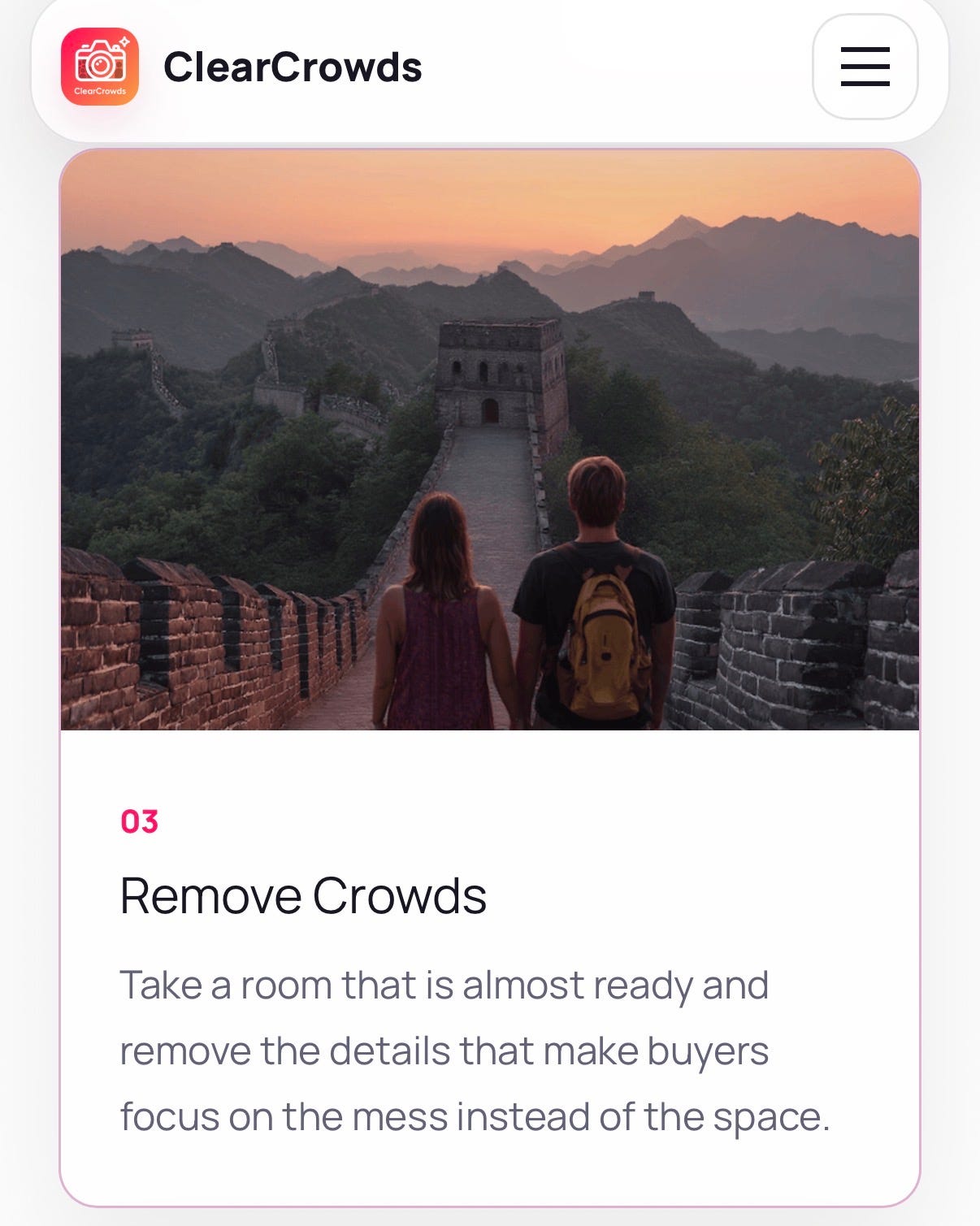
And there’s an app called ClearCrowds that skips the pretense of architectural preservation entirely. It’s marketed to “travelers, influencers, and everyday users,” and its pitch is two sentences long: crowds gone, you shine.
Nobody using it is claiming to document a monument. They’re claiming the monument as backdrop to a person who was, for one frame, the only person there. That’s still subtraction, though — a real photograph with real people cloned out of it, the marble and the light and the morning all still genuinely there. It’s the next rung that’s stranger: not removing what was present, but inserting what wasn’t. Standing closer to the shrine than any crowd would ever allow. Better light than the actual sky provided that day. A version of yourself composited into a place that has been edited to match a fantasy of the place, one that has never, at any hour it’s been open, looked the way the image now claims it did.
Roland Barthes thought a photograph’s whole claim on us was that it certified something had stood in front of the lens — not what it meant, just that it had been, what he called the ça-a-été. That certification was the entire contract. It didn’t need to be a good photograph, or a beautiful one, or even a legible one. It only needed to be true in that one narrow way. My hydrangea image still looks exactly like a photograph. It simply no longer keeps the one promise Barthes thought photographs made. The media theorist Alison Landsberg would say this doesn’t matter as much as Barthes thought — she coined the term prosthetic memory for the real, felt attachments people form to places and pasts through film, museums, and photographs they never personally lived through, attachments that function as memory even though nothing was directly experienced. Landsberg’s whole point is that the feeling isn’t disqualified by its mediation. I think both of them are right, which is the problem. The image moved me the way a memory moves you. It also wasn’t true in Barthes’s sense, not even a little. He would say that means it isn’t a photograph anymore. Just something wearing one, cut from the same cloth as a prosthetic memory but missing the limb it was meant to replace.
And here’s what unsettles me more than the fake: it competes with the real one. There’s research on this that predates any of this technology — Linda Henkel found that people remember less about something the moment they photograph it, because the camera gets delegated the job of remembering and attention quietly checks out. The mind’s eye and the camera’s eye, she wrote, are not the same system. That’s true of an ordinary snapshot. Now put a generated one in that slot instead — not a record of the day but a better-looking substitute for it, no elbows, no waiting, no forty strangers on a stair to sort out. Between an effortful, partial, crowded memory and a resolved, complete, empty image, the image wins the competition for what gets pulled up later. Not because it’s true. Because it’s usable.
The point of “We Can Remember It For You Wholesale” was never really about Rekal selling Quail a trip he didn’t take. It’s that once the implant is possible, Quail can no longer fully trust the memories he’s sure are real, either.
The fake doesn’t sit politely beside the real one. It infects your confidence in it.
An empty frame at a crowded shrine used to cost something — arriving before dawn, paying a photographer, having the kind of access other tourists didn’t. It was a receipt: proof you’d been somewhere when no one else could be. AI severs the proof from the thing that used to earn it, and it does this at the exact moment an entire economy has started running on the appearance of rare access — the influencer’s whole currency is I stood somewhere alone that thousands of people want to stand. Exclusivity was always a kind of capital.
There was a whole quiet choreography on those stairs that the empty version had no way of knowing about: small negotiations over whose turn it was, a head bowed to let someone else’s group pass, a stranger’s camera handed to you with the unspoken understanding that you’d get yours taken in return. Teenagers kept crowding into frame under the bluest hydrangea bush like it belonged to them. A cluster of older women stood off to the side of the path not photographing anything at all, just admiring how well the garden had been kept. And somewhere in the line, I gathered, was an older couple from the town who came back every year and had watched this same spectacle grow, season over season, into something almost unrecognizable from what they remembered it being. None of that made it into the generated version, because none of it was the point of the generated version. I generated the version with no one else in it, looked at it, and posted the original instead — because it was what had actually happened to me that afternoon, and the empty stair wasn’t.
Thanks for reading Andy Might! This post is public so feel free to share it.
Comments
Nothing yet. Say the first thing.
Sign in to join the conversation.