
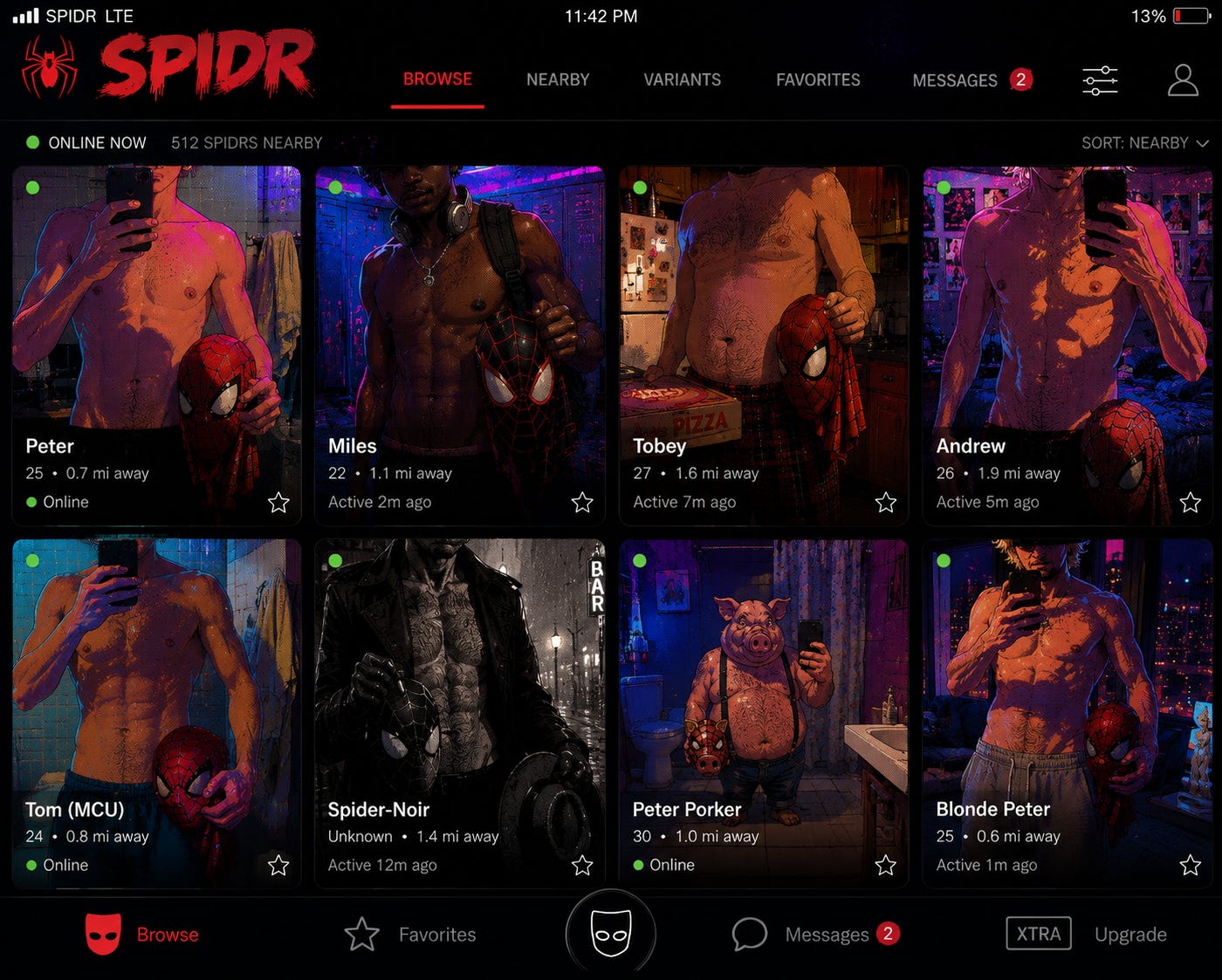
Tomorrow, Spider-Man: Brand New Day swings into theaters.
Which feels like the perfect excuse to ask an uncomfortable question.
If you opened Grindr tomorrow and every profile was Spider-Man, which one would you tap first?
The Original. Tobey. Andrew. Tom. Miles. Spider-Ham. Noir. The emotionally unavailable divorced one.
The funny thing is that almost nobody looks at a grid like this and thinks, There are too many Spider-Men.
They think, Apparently I have a type.
That’s the quiet revolution of Into the Spider-Verse. It doesn’t ask us to replace Peter Parker.
It asks why we ever assumed there could only be one.
Andy Might is a reader-supported publication. To receive new posts and support my work, consider becoming a free or paid subscriber.
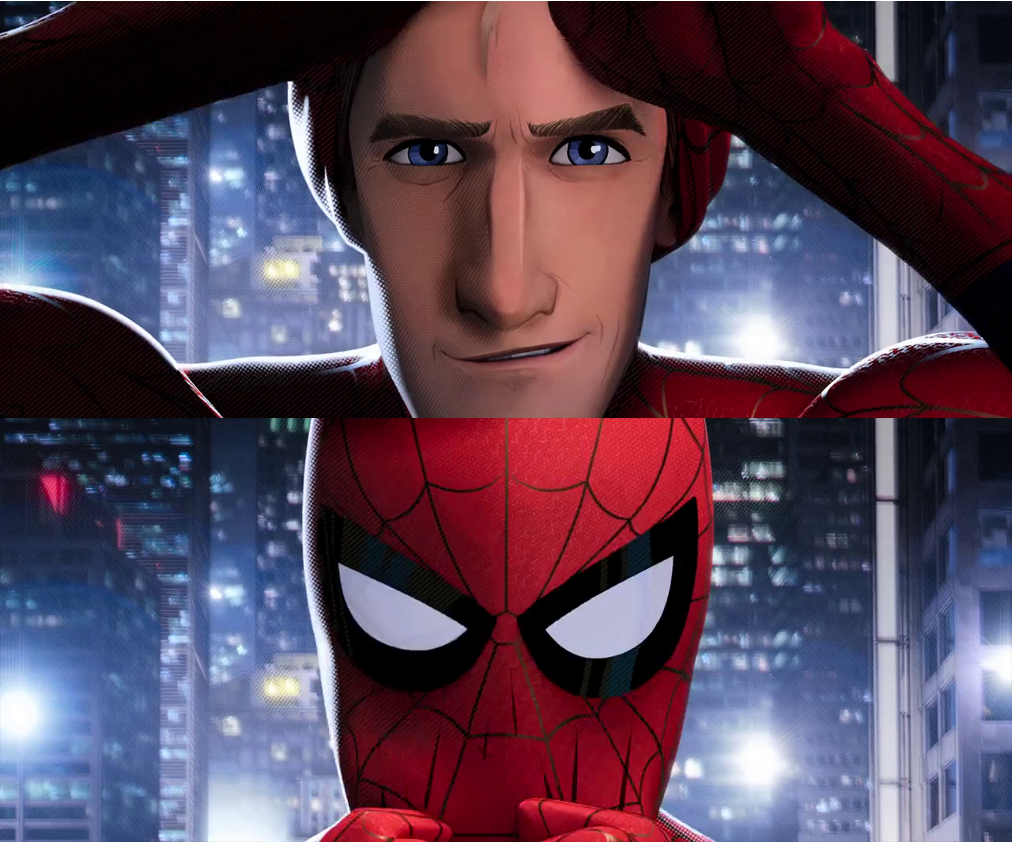
“There’s only one Spider-Man.”
Into the Spiderverse opens with that line and delivers it with the confidence of a bedtime story we’ve heard since childhood: radioactive spider, dead uncle, great responsibility, logo splash. The myth arrives laminated.
Peter Parker isn’t merely Marvel’s first Spider-Man. For generations he has functioned as a kind of cultural operating system: white, male, working-class, New York, awkward but brilliant. The nerd who became central. The bullied kid who won.
For many fans, especially white men who grew up finding themselves beneath that mask, Peter wasn’t just a favorite character.
He was identification infrastructure.
So when Miles Morales arrived, the backlash in certain corners of fandom was never really about canon.
Canon in superhero comics has always been held together with chewing gum and editorial deadlines. Heroes die, return, clone themselves, reboot, retcon, merge universes, split timelines, and wake up to discover last year’s story never happened. Continuity looks less like a sacred text than a detective’s corkboard connected by red string.
The panic wasn’t really about canon. It was about ownership.
If Spider-Man isn’t me, what do I lose?
Spider-Verse answers with disarming calm.
You lose nothing. You gain more.
The film’s genius is that it doesn’t erase Peter Parker.
It decenters him.
Peter B. Parker, the version we spend the most time with, is older, divorced, softer around the middle, and emotionally stalled. He isn’t the gleaming myth from the recap montage. He’s tired. But he is still Spider-Man. The film doesn’t humiliate him or exile him. It gives him something unexpectedly radical.
Company.
“It’s kinda nice not being the only Spider-Person around.”
That line is doing quiet ideological work. It reframes what many fans imagined as loss into relief. Peter doesn’t become obsolete when Miles rises. He becomes less lonely.
This is where the film gently exposes the scarcity fantasy underneath certain fandom anxieties. The logic goes something like this: if someone else gets the mask, I lose mine.
But Peter doesn’t lose anything. He grows. He reconciles. He begins imagining fatherhood. Multiplicity revitalizes him instead of replacing him.
Then the movie detonates the premise entirely.
Spider-Gwen.
Spider-Man Noir.
Peni Parker and her psychic mech.
Spider-Ham.
The absurdity is strategic. If you can accept a wisecracking cartoon pig as Spider-Man but not a Black Puerto Rican teenager from Brooklyn, the problem was never canon.
It’s racial imagination.
The multiverse isn’t fan service.
It’s argument.
The more ridiculous the roster becomes, the more fragile the exclusivity claim looks. If the web can stretch to accommodate a monochrome pulp detective, an anime schoolgirl with a psychic robot, and an anthropomorphic pig, it can certainly stretch to include Miles Morales.
And here’s the quiet truth.
The web was always stretching.
Long before Spider-Verse, Marvel had already filled its comics with Spider-Women, Spider-Girls, Spider-Man 2099, Ben Reilly, Ultimate Spider-Man, Mayday Parker, alternate Peters, alternate universes, and parallel timelines. There has almost never been only one Spider-Man in publishing reality.
What many fans were defending wasn’t textual singularity.
They were defending demographic centrality.
Suzanne Scott argues in Fake Geek Girls that fandom often polices authenticity by deciding who counts as a “real” fan and who counts as a legitimate inheritor of beloved stories. Authenticity becomes something to guard, and gatekeeping becomes a way of protecting an imagined core demographic. The backlash to Miles Morales wasn’t simply about continuity.
It was about who gets to occupy the center of the fantasy.
Spider-Verse doesn’t answer that policing with a lecture.
It answers it with structure.
“When will I know I’m ready?”
“You won’t. It’s a leap of faith.”
Within the story, Miles is accepting the mantle.
Outside the story, the audience is being asked a harder question.
When will you be ready to stop imagining yourself as the default?
You won’t.
It’s a leap of faith.
Across the Spider-Verse pushes the metaphor even further. Miguel O’Hara polices “canon events,” insisting certain tragedies must occur, the pattern must hold, and stories must preserve their hierarchy.
Canon becomes authoritarian.
The multiverse becomes bureaucratic.
And Miles says no.
He refuses narrative determinism. He refuses inherited suffering as structural law. He refuses the idea that stories exist to preserve a single lineage. The sequel literalizes gatekeeping and makes the hero the one who breaks it.
This is why these films hit such a nerve. For generations of white male readers, Peter Parker was one of the first nerd heroes who wasn’t merely comic relief. He proved awkwardness could become central rather than marginal.
Spider-Verse understands that attachment. It doesn’t mock it. It keeps Peter lovable. It gives him dignity.
It simply refuses to let him remain exclusive.
The multiverse becomes an argument against scarcity.
There is no limited supply of heroism.
Representation isn’t subtraction.
It’s addition.
The zero-sum fantasy that someone else’s visibility somehow diminishes your own turns out to be insecurity masquerading as tradition.
The film begins with a gatekeeping thesis.
There’s only one Spider-Man.
It ends with a correction.
Anyone can wear the mask.
Not anyone can be Peter Parker.
Anyone can be Spider-Man. The mask is transferable. Identity is expandable. The web has room.
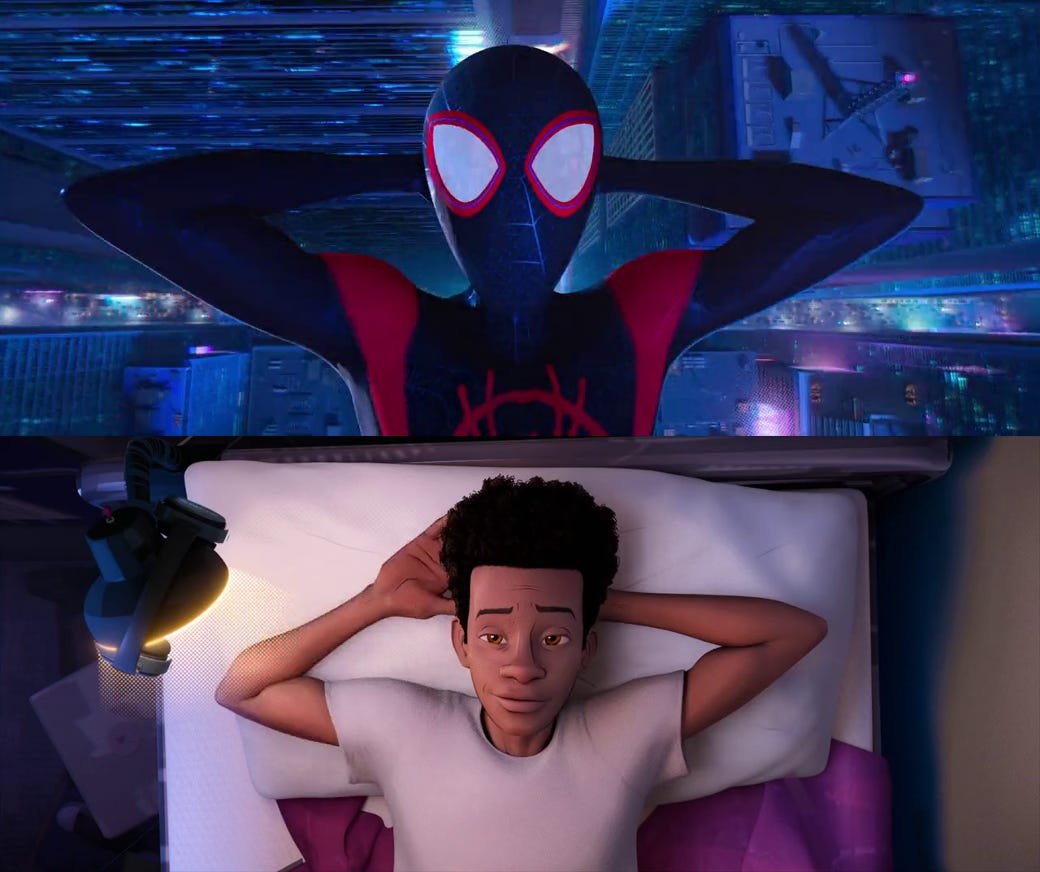
Who owns Spider-Man?
Not Peter.
Not Miles.
Not Marvel.
Not the loudest corner of fandom.
No one owns him.
Which is precisely why, more than sixty years later, there are still so many Spider-Men worth swiping right on.
Thanks for reading Andy Might! This post is public so feel free to share it.it.
Comments
Nothing yet. Say the first thing.
Sign in to join the conversation.