
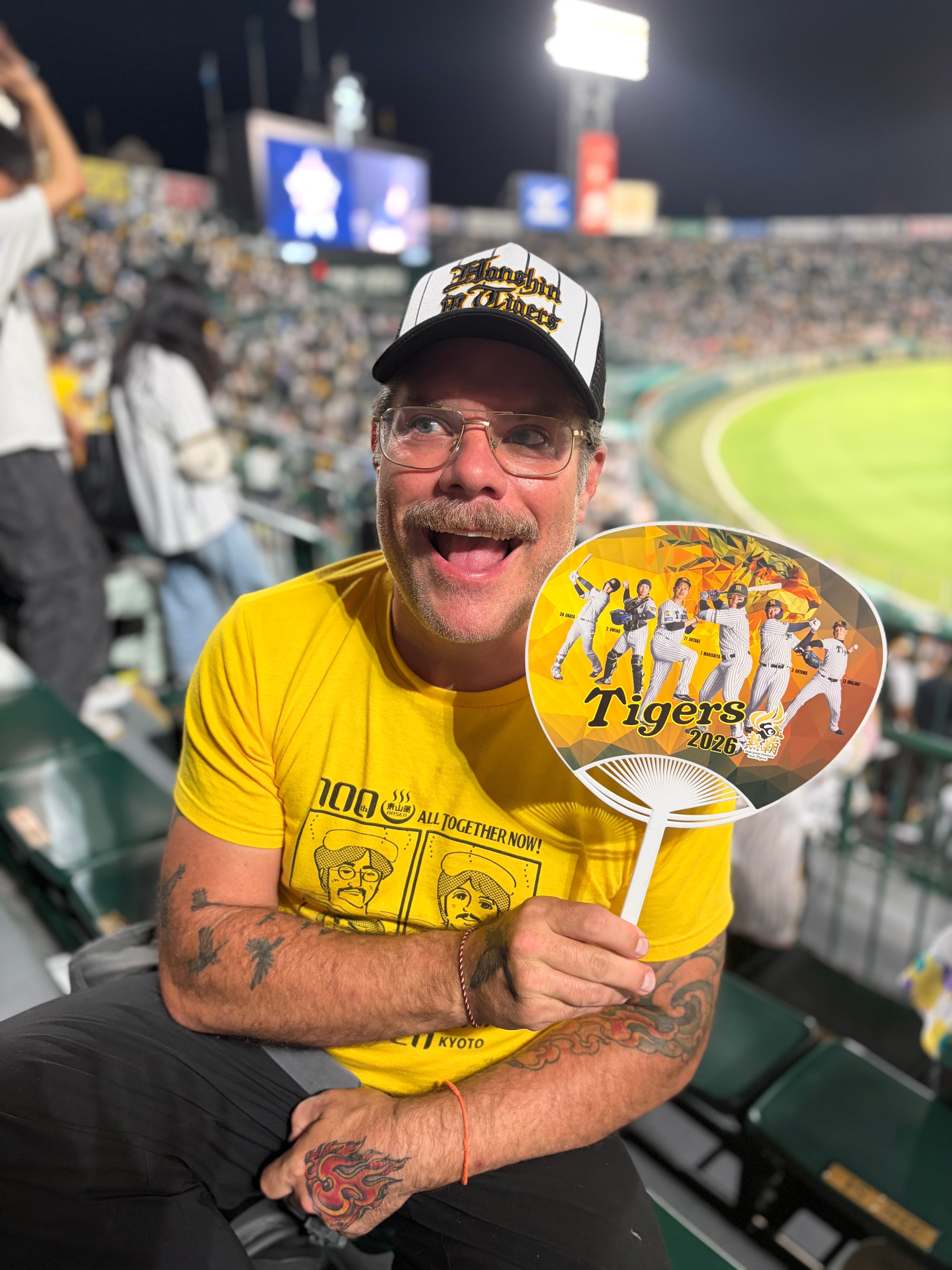
I’ve never been much of a baseball fan.
I understand the rules well enough. I’ve been to games. I appreciate the peculiar rhythm of a sport that can contain long stretches where nothing obvious seems to happen while devoted fans insist everything important is happening. But if you’d asked me why I wanted to spend three months in Japan, “watch a baseball game” probably wouldn’t have cracked the top fifty. I came looking for culture, and mostly the obvious kind.
Over the course of the summer I watched Bunraku puppets breathe beneath the hands of master puppeteers. I attended a rice-planting ritual whose songs have echoed across the countryside for centuries. I sat through torchlit Noh performances where almost every gesture carried the weight of tradition. I wandered shrines, temples, museums, and neighborhoods where history seemed layered into the architecture itself. Like most travelers, I had quietly divided my itinerary into categories. Here were the sacred places. Here were the artistic places. Here were the historical places. If I wanted to understand Japan, surely those were the places to begin.
Somewhere along the way, it occurred to me that if baseball had become one of Japan’s national obsessions, then maybe it belonged on that list too. So I turned to my friend Minoru and said, “One thing I haven’t done yet—we have to go to a Tigers game.”
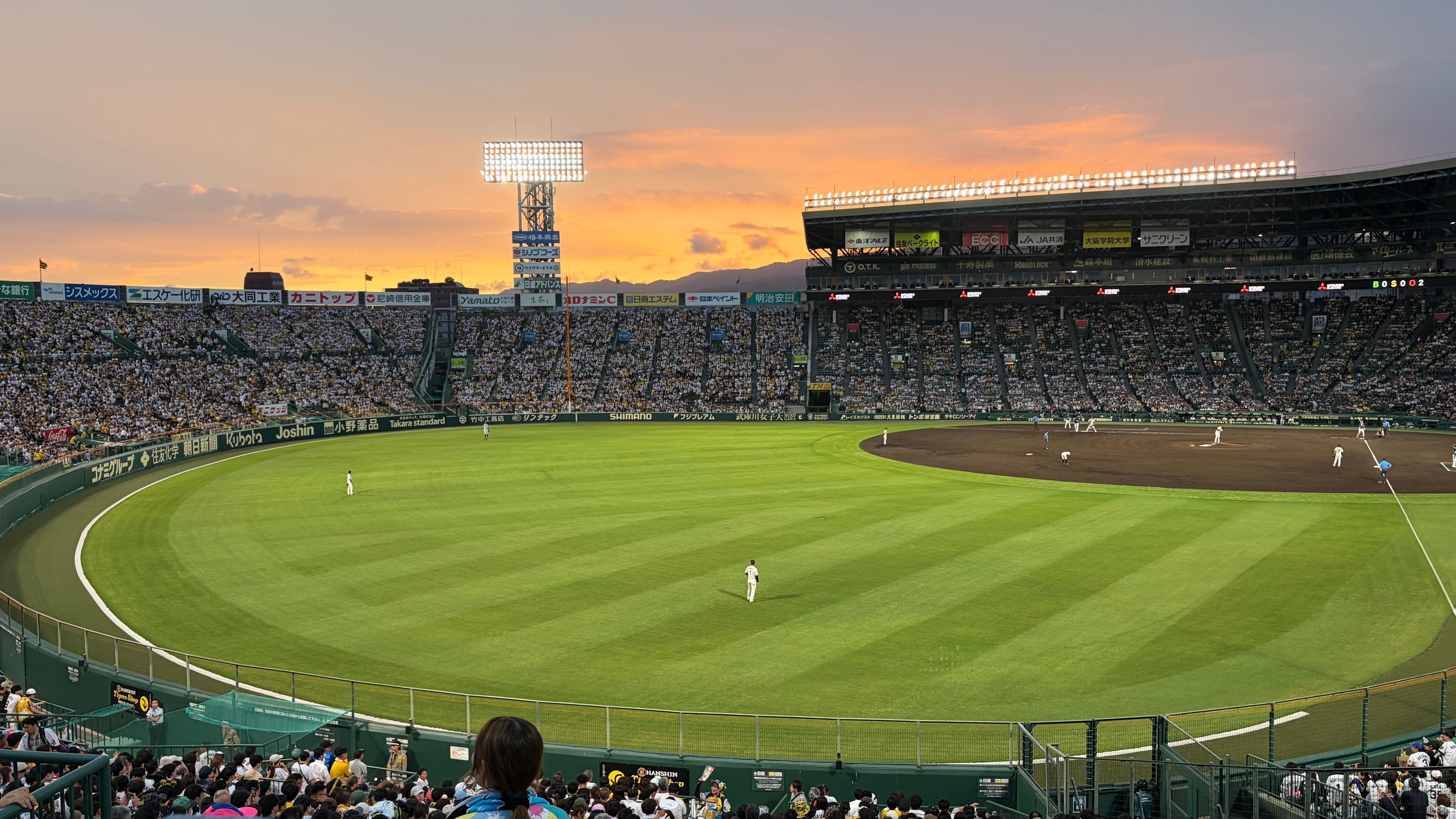
The first thing I noticed wasn’t the field. It was the sound.
The visiting Lions supporters had somehow arrived carrying an honest-to-God brass band. Not one ceremonial trumpet. A full brass section. Trumpets. Trombones. Sousaphones. People had apparently woken up that morning, packed instruments into cases, boarded a train, and decided this was simply what one does when traveling to support a baseball team. Then I looked across the stadium and realized the Hanshin supporters had done exactly the same thing.
Honestly, go Tigers.
But the Lions brought better tunes.
Every batter had a personalized fight song. The moment a player stepped into the batter’s box, thousands of people instantly knew which melody belonged to him. Nobody glanced at a screen. Nobody needed lyrics. The chants were already there, stored somewhere in collective memory.
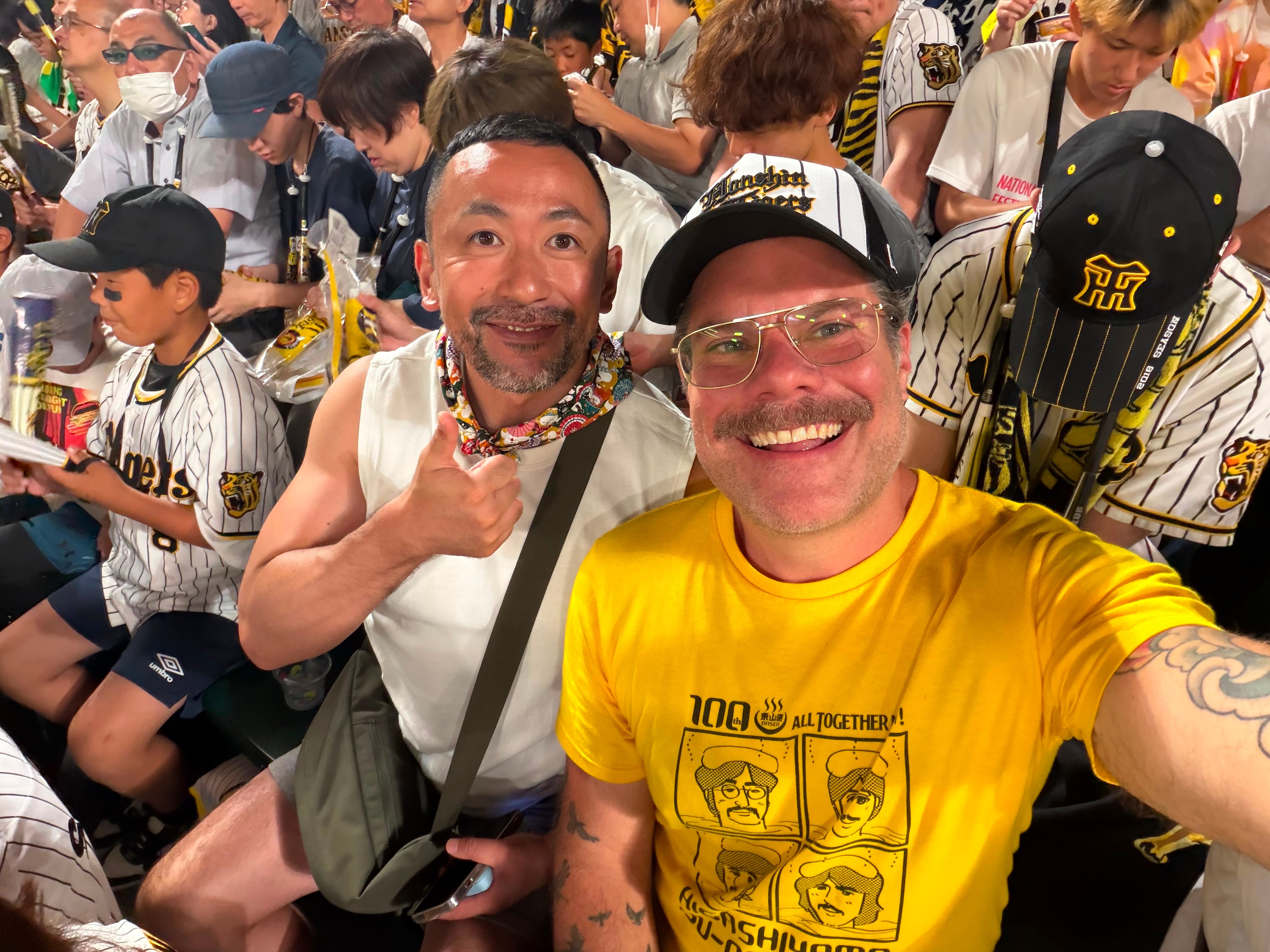
The game unfolded inside a soundtrack performed by the audience itself. American baseball crowds certainly cheer, but mostly as individuals reacting to what has already happened. At Koshien, it felt as though the crowd was participating in making the event happen. The musicians played. The crowd answered. Flags moved in rhythm. Towels rose and fell together. Somewhere around the middle innings I realized I’d spent as much time watching the stands as the diamond.
Andy Might is a reader-supported publication. To receive new posts and support my work, consider becoming a free or paid subscriber.
Then everyone reached beneath their seats.
Almost simultaneously, yellow balloons appeared throughout the stadium. Tens of thousands of them. For a few quiet moments everyone simply held them overhead. The anticipation became part of the ritual. Then they were released together, drifting into the summer night in one enormous wave of yellow.
No one had warned me this was coming.
I’m glad they hadn’t.
Some experiences improve by arriving before they’re explained.
After the final out, another detail quietly rearranged the evening. People lingered, not because they were waiting for traffic to thin out or hoping for an autograph, but because many of them simply began cleaning around their seats. Empty cups disappeared. Wrappers were gathered. The rows slowly reset themselves for whoever would occupy them next. Nobody made an announcement. Nobody pointed to a sign. Nobody appeared especially proud of doing it. It simply seemed to be part of attending the game, as ordinary as buying a ticket or finding your seat.
Walking back toward the train station with Minoru, I found myself thinking less about baseball than about translation.
American and Japanese baseball share almost identical rules. Saying that, however, is a little like saying a cathedral and a shopping mall both contain doors. Technically true, but it tells you almost nothing about why either place exists.
The interesting differences aren’t in the rulebook. They’re in what each culture imagines the game is for.
Baseball arrived in Japan in the nineteenth century as an American export. It wasn’t preserved under glass, nor was it copied verbatim. It was translated. The rules remained recognizable, but everything surrounding those rules slowly shifted. The game accumulated songs, rituals, expectations, habits, and forms of participation that made perfect sense within the culture that adopted it.
Walking back toward the train station, I found myself thinking less about baseball than about translation.
American and Japanese baseball share almost identical rules. Saying that, however, is a little like saying a cathedral and a shopping mall both contain doors. Technically true. Spiritually unhelpful.
The baseball itself remained remarkably recognizable. Three strikes. Four balls. Nine innings. But everything surrounding those rules had been quietly rewritten. The audience sang. Visiting fans packed brass instruments for away games. Every batter arrived with his own anthem. Thousands of yellow balloons drifted into the night sky. Strangers cleaned their section before catching the train home.
The game hadn’t really changed.
The social choreography had.
Comments
Nothing yet. Say the first thing.
Sign in to join the conversation.