
After the engagement was announced, the Queen went out of her way to make Diana feel welcome. She had deputed several courtiers, notably her lady-in-waiting Susan Hussey and Charles’s assistant private secretary Oliver Everett, to show her the ropes. When Charles was away on overseas visits, the Sovereign took the future princess under her wing. She installed Diana in the principal guest room at Windsor Castle and the couple dined together frequently and walked her pack of dogs around the grounds. By then, Diana was suffering from the eating disorder bulimia nervosa, a condition of bingeing and forced vomiting.
The Morton Files is a reader-supported publication. To receive new posts and support my work, consider becoming a free or paid subscriber.
Though her wedding-dress-makers David and Elizabeth Emanuel, and her close friends, particularly Carolyn Bartholomew, noticed her rapid weight loss, the Queen seemed not to have seen the warning signs. At the time, eating disorders were surrounded by ignorance and it would have been remarkable if the Monarch had even been aware of this condition. Even if she had spotted that Diana had been losing weight, she would have instinctively put it down to the nerves felt by many brides, particularly one whose wedding day was about to be broadcast worldwide. A former courtier said that although she was busy, ‘the Queen made a big fuss over Diana’, setting aside as much time for her as possible.
In the run-up to the wedding, Diana was based at Buckingham Palace where the Sovereign frequently invited her to join her for lunch or dinner. However, Diana, nursing the secret shame of an eating disorder, made endless excuses to avoid Her Majesty’s company. She did not wish to alert the Monarch to her condition. Although her future mother-in-law thought this behaviour was perplexing, she again put it down to nerves. For her part, Diana found the Queen friendly but intimidating. ‘I kept myself to myself,’ she recalled. ‘I didn’t knock on her door and ask her advice because I knew the answers myself.’
Around this same time, Diana would often go down to the kitchens to while away a few minutes in idle conversation. Barefoot, wearing jeans and a sweater, she helped with the washing-up and on one occasion even buttered the toast of a junior footman. Her excursions behind the green baize door irritated several chefs, who felt she was spying on them. Eventually, the Queen tactfully asked her to stop these visits as it was upsetting the equilibrium that exists between upstairs and downstairs. What she didn’t realise was that Diana went to the kitchens so that she could gorge on packets of cereal and cream. Then she would make herself sick afterwards.
With preparations for the royal nuptials moving along apace, the Queen was fully and enthusiastically invested in her son’s marriage. Not only did she pay £28,000 for Diana’s oval sapphire-and-diamond engagement ring, she also footed the bill for the opulent gala ball held at Buckingham Palace in the week of the wedding, where the extensive guest list included the US First Lady Nancy Reagan, together with all the crowned heads of Europe. The splendid, extravagant affair was a personal triumph for the Queen. It was certainly a night to remember, though the grand event was set against a backdrop of high and mounting unemployment, riots in deprived areas of London and Liverpool, and a government, led by Prime Minister Margaret Thatcher, that preached and practised austerity and low taxes.
While the juxtaposition of two very different Britains was striking – particularly to foreign television crews – on the wedding day itself, 29 July 1981, the focus was on other things, chiefly: Diana’s meringue of a dress and its record-breaking 25-foot train; the romantic contention of the Archbishop of Canterbury, Dr Robert Runcie, that the event was ‘the stuff of which fairy tales are made’; and the enthusiastic crowds that lined the route from St Paul’s Cathedral to Buckingham Palace to watch the horse-drawn parade. It was only later that the most senior member of the Church of England admitted to doubts, the prelate believing that the couple were ill-suited and that the marriage would not last.
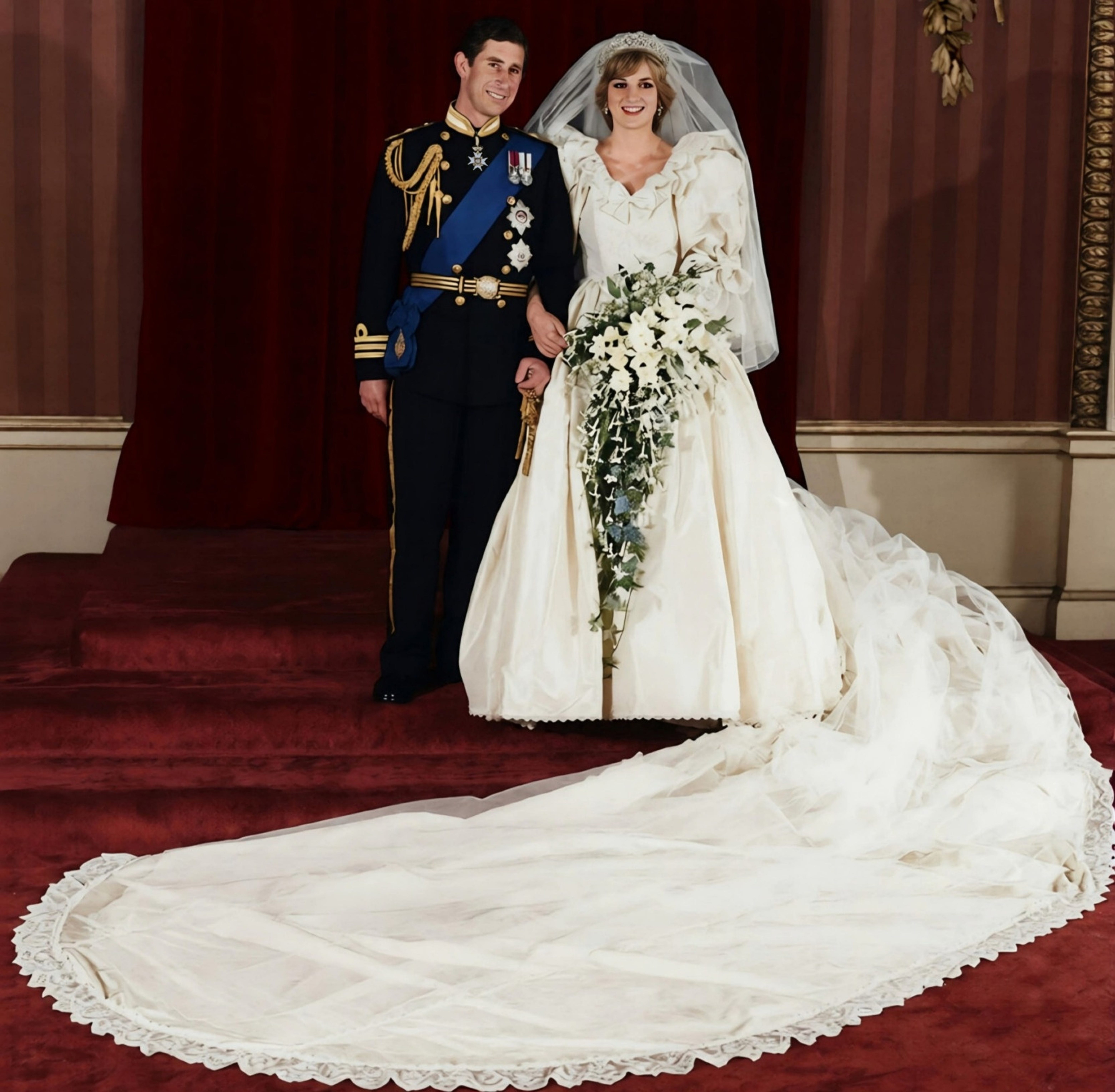
Inside the Cathedral, there were others who were equally concerned about the marriage’s foundation, including the bride herself. One of her abiding memories was spotting Camilla Parker Bowles, who was wearing a grey outfit with a matching pillbox hat, and hoping that the relationship with Charles was now at an end. It was a sentiment which would have found an echo with the Queen, who had edged towards tackling her son on the subject only to be told by the Prince of Wales, according to a rumour recorded in historian Hugo Vickers’ diary: ‘My marriage and my sex life have nothing to do with each other.’
Comments
Nothing yet. Say the first thing.
Sign in to join the conversation.