
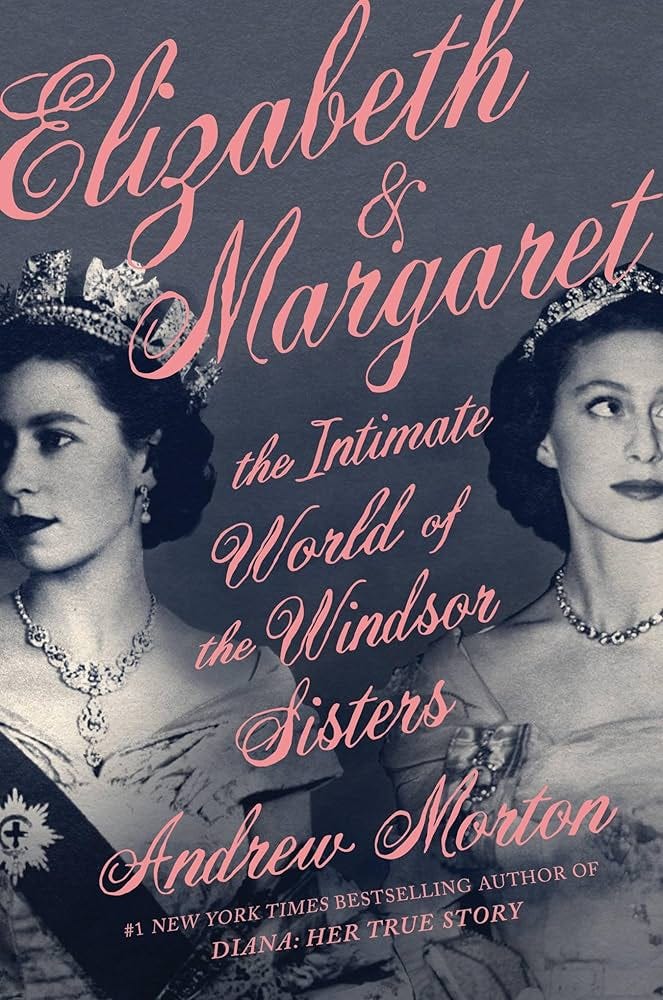
An extract from Elizabeth & Margaret: The Intimate World of the Windsor Sisters (2021) by Andrew Morton, published by Michael O’Mara Books in the UK and Grand Central Publishing in the USA. Also available as an e-book and audiobook.
In the summer of 1973, Roddy Llewellyn was working as a lowly researcher at the College of Arms in central London when, out of the blue, he received a phone call from a complete stranger that would change his life for ever. In the process it would rupture relations between the Queen and her sister and place the monarchy on trial.
The Morton Files is a reader-supported publication. To receive new posts and support my work, consider becoming a free or paid subscriber.
On the other end of the phone was Princess Margaret’s lady-in-waiting, Anne Glenconner, who explained that she was organising a weekend party at Glen, their home in Peeblesshire in the Scottish Borders, and that a guest had dropped out at the last minute. Would he like to take his place to make up numbers?
Glenconner explained that she had been given his name by her husband’s aunt, Violet Wyndham, who knew his father, the Olympic gold medallist show-jumper Sir Harry Llewellyn. As a sweetener, she offered to pay his train fare to Edinburgh and promised that her husband Colin would pick him up from the station. Oh, and by the way, she added, Princess Margaret would be present. Roddy accepted the intriguing invitation and started to pack. So began an adventure that would rock the House of Windsor.
When the stranger on the train arrived at Edinburgh Station, Colin took him for lunch at the Café Royal bistro where he met Princess Margaret and Colin’s son, Charlie. The princess, who knew Roddy’s father, immediately clicked with the rather shy young man, who was nearly eighteen years her junior. Though not the alpha male type she usually was attracted to, Roddy had other social gifts. When he was in top form, he was a marvellous raconteur, able to hold his own around any dinner table. Even the loquacious comedian Kenneth Williams was impressed, recalling in his diaries: ‘He’s one of the few people I’ve ever come upon who knows how to tell a story.’
From the beginning, though, there was a sexual undercurrent between the princess and the pauper. Margaret, hearing that he didn’t have a pair of swimming trunks, insisted on taking him to a store where he modelled a tight pair of Speedos, colloquially known as ‘budgie smugglers’, emblazoned with a Union Jack design. By the time they arrived at Glen, the duo were on the verge of holding hands. The chemistry was so obvious that Anne Glenconner said to her husband: ‘Oh gosh, what have we done?’
What they had done was introduce the princess to someone who would lift her spirits at a time when she was arguably at the lowest ebb in her life. Her marriage, now a sour, empty husk, was over in all but name, as Tony had embarked on a serious affair with the woman who would become his second wife, Lucy Lindsay-Hogg, the daughter of an Irish clothing manufacturer. In the beginning, she worked as a film assistant for a documentary Tony and broadcaster Derek Hart were making. The professional very soon turned to personal, their budding romance helped by the fact that they were work colleagues and could pass off meetings in public as related to their current project. Margaret, lonely and neglected, found the perfect pick-me-up in the inoffensive, somewhat inexperienced twenty-five-year-old. Until the princess came into his world, he had led a nomadic, aimless existence, a young man who was prone to depression and had kept himself afloat with a series of odd jobs. In company he was amusing, he could hold a tune and liked a sing-along – a perfect foil for Margaret. During their time at Glen, he joined her in a jaunty rendition of her favourite, Glenn Miller’s ‘Chattanooga Choo Choo’, while she sported a red dress in the style of a Southern belle and he pranced around in a mini-kilt.
Roddy was entertaining, he was thoughtful, but above all he was kind, a quality that had been in distinctly short supply for the last few years of Margaret’s married life. His effect on her was immediate. Before the young man whom she called ‘my darling angel’ came into her life, she was a wreck. Her drinking was seriously out of control and she was getting heavier through comfort eating. Now she had lost weight, cut down her alcohol consumption and regained her zest for life. Once they returned to London, Roddy moved into his own apartment in Fulham, which the princess helped decorate. Unbeknownst to either, it was only two doors away from the home of Snowdon’s photographer friend Bob Belton. Snowdon took perverse delight in blocking in Margaret’s Rolls-Royce with his own car when she visited her youthful lover.
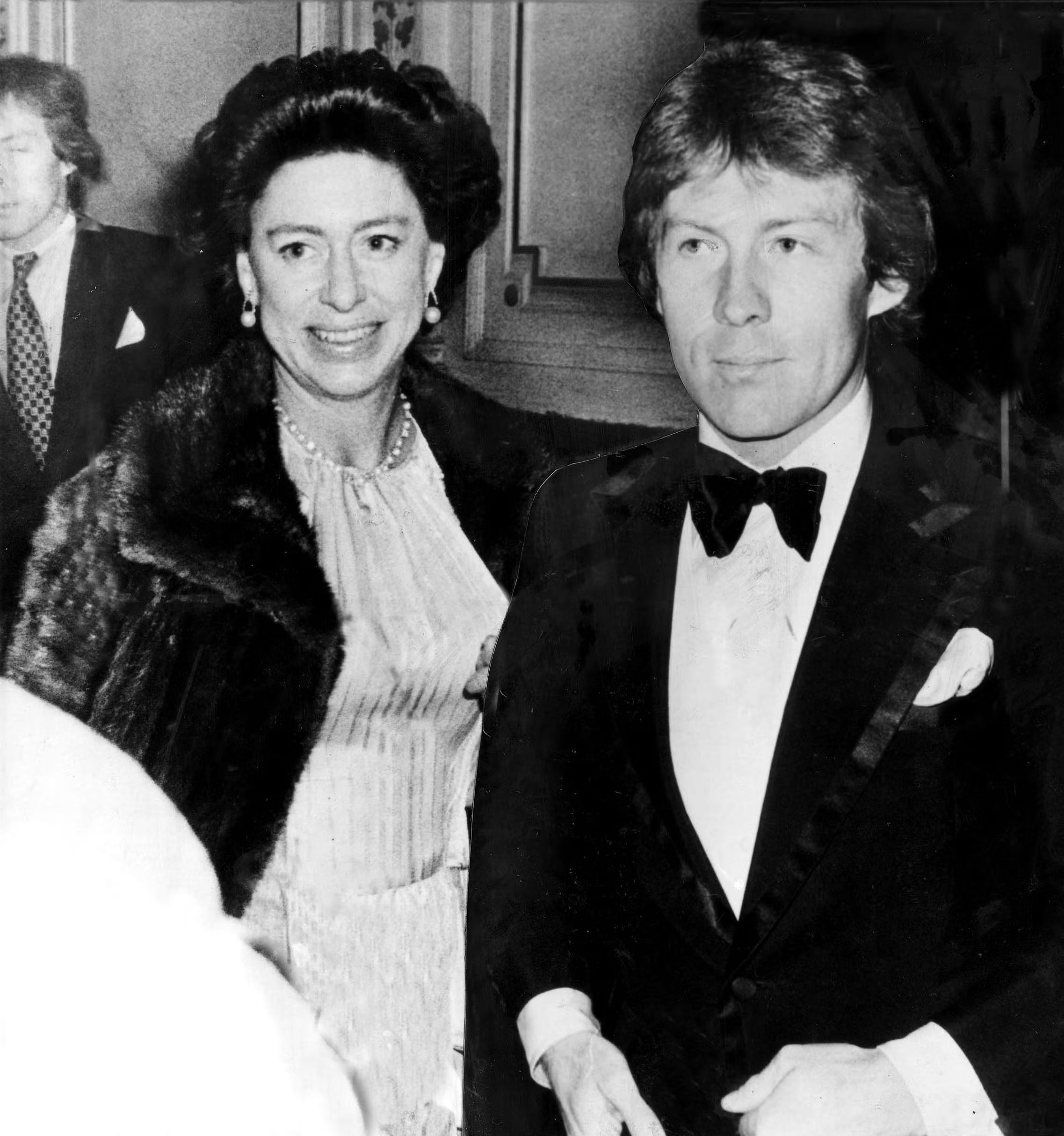
Though Roddy had put a spring in Margaret’s step, the Queen and Queen Mother hoped against hope that the Snowdons could resolve their differences and put their marriage back on track – at least for the sake of the children. The arrival of Roddy on the scene merely complicated an already difficult situation. In public, Margaret and Tony continued to call each other ‘Darling’ and were attentive to one another. They behaved as a couple on formal royal occasions such as the twenty-fifth wedding anniversary of the Queen and Prince Philip at Westminster Abbey, though the irony of the celebration was not lost on the warring couple.
In reality they were living such separate lives that when Tony went into a London hospital for a hernia operation in November 1973, his mistress was his most frequent visitor. When Margaret, who was in the country with friends when the operation took place, finally visited him, she was upset to find Lucy by his bedside. But of course, it worked both ways. When Roddy returned to London, the princess was delighted to entertain him at her palace home or at the Chelsea home of the Tennants. Not so her husband, who demanded, ‘Tell your friend to keep out of my house!’ – before heading off to spend the night with his mistress.
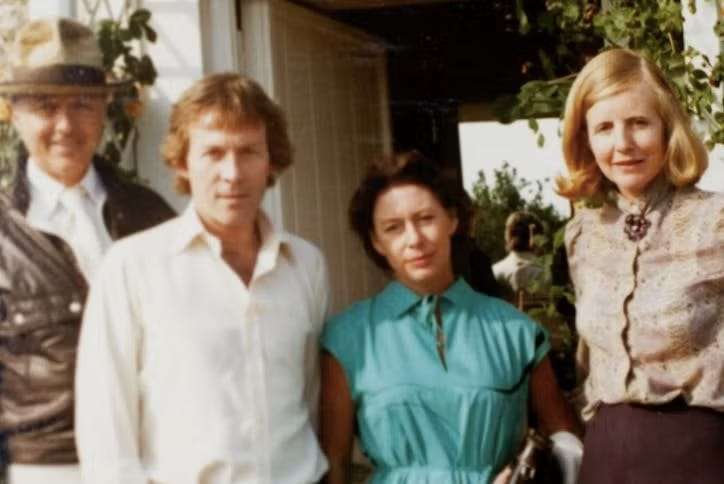
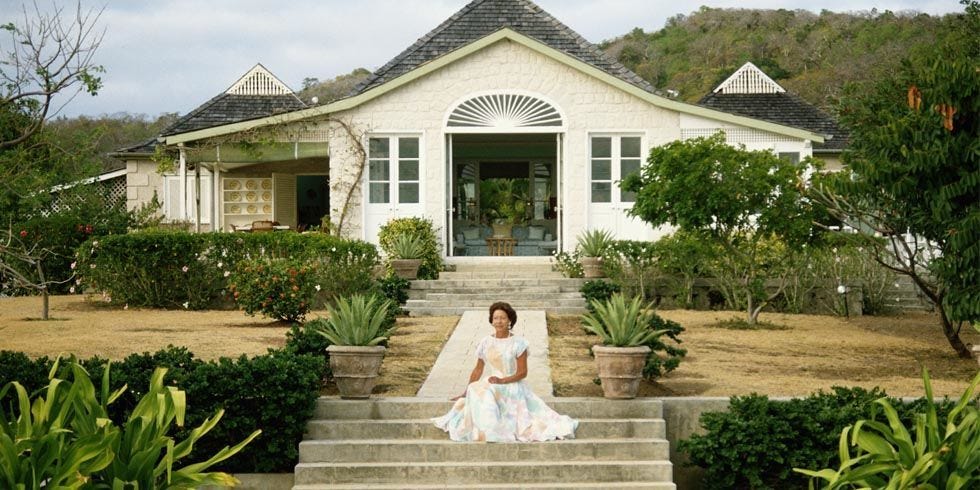
While Tony was able to conduct his affair with discretion, Margaret was more exposed given the media interest in her life. Yet the circle of secrecy held, and Margaret invited Roddy to join her in Mustique in February 1974, with the Glenconners in attendance.
The aspiring landscape designer, who replanted the garden at Les Jolies Eaux during his stay, soon got into the island rhythm: late breakfasts overlooking the breathtaking blue waters of Gelliceaux Bay; lazy but competitive games of Scrabble on the terrace; picnic lunch at Macaroni Beach; dinner, charades and singing in the evening. One of the favourite games was for a guest to recite a limerick and, once they completed the verse, the watching throng would join with a raucous chorus. Singer Dana Gillespie, Mary Magdalene in the first London musical production of Jesus Christ Superstar, recalls the evening when the woman she called ‘Ma’am’ delivered her ditty. It went:
There once was a man from St Pauls
Who did a turn on the halls
His favourite trick was to stand on his dick
And freewheel off the stage on his balls.
Dana recalled: ‘When that comes out of Ma’am’s voice it is exquisitely hilarious.’
Not so funny was the stressfully schizophrenic nature of Margaret’s life once she returned to London. After the relaxed Caribbean idyll with Roddy, she was with her husband in May for an official visit to the United States to watch the famous Kentucky Derby and attend a performance of the Royal Ballet in New York. From their bright smiles and friendly body language, few, if any, of the attendant members of the media had a clue about the seething cauldron of despair and indifference brewing beneath the surface.
When someone pointed out that the Duchess of Windsor was staying in the Waldorf Towers – the same hotel as Margaret and Tony – the latter suggested they go and see her. Though Margaret bridled – doubtless thinking of the reaction of her mother – she was soon convinced, and the couple spent fifteen minutes with the now-reclusive duchess, whose intersection in the life of Margaret’s uncle had shaped her own life for ever. Snowdon’s media instincts proved true: the photograph of the duchess and the princess went around the world, demonstrating that the public were still fascinated by the woman who caused a king to abdicate his throne all those years ago.
Whatever sense of conciliation the trip might have suggested to the outside world was shattered when the princess asked her husband to move out that June. He refused. Caught in the middle of this marital grinding machine, Roddy, inoffensive but somewhat fragile, was faced with an angry husband on one side and an older, more worldly lover who became increasingly possessive and demanding, both emotionally and sexually.
Confused, bewildered and well out of his depth, he got out of Dodge and went on the run, heading to Heathrow Airport and taking a flight to Turkey, where he travelled the country for several weeks on a bus as he tried to recover his shaky equilibrium. When he returned, his friends were concerned that he had suffered a mental breakdown, and indeed, for the next three weeks he was an in-patient at the Charing Cross Hospital before going back to the family home in Wales.
His collapse had direct consequences for the Queen and the Crown.
Roddy’s sudden disappearance left Margaret in tatters. Unable to sleep, she ended up taking too many tranquillisers and had to cancel all her royal engagements. On 15 November 1974, it was announced that she had caught a severe chill, which, given her heavy smoking and drinking, was believable. However, rumours persisted that she had tried to commit suicide. After leaving the hospital, she retreated to her bedroom and refused to leave. Her friends had to rotate caring for her day and night until exhaustion finally pushed one of them to call the Queen and explain the reality of her sister’s situation.
The Morton Files is a reader-supported publication. To receive new posts and support my work, consider becoming a free or paid subscriber.
Though not naturally empathetic to sick people, the Queen set aside her engagements and drove to Kensington Palace to see the ailing princess. ‘I feel exactly like the night nurse taking over from the day nurse,’ she said. Helped by her maid, Margaret was led out to the car, which then whisked her and her sister away for a recuperative weekend together at Windsor – a chance, too, to find out what was really going on in Margaret’s life. She was able to take a more robust stance with her sister than any of her ladies-in-waiting. As non-royals, those may have tactfully suggested a course of action, but found their advice ignored. They could suggest but not command. The Queen was able to go where a diplomatic lady-in-waiting feared to tread. While the Queen was always reluctant to become directly involved in her sister’s dramas, always hoping that they might resolve themselves, on this occasion ‘big sister’ came to the rescue. Indeed, Margaret’s lady-in-waiting, Lady Glenconner, repeatedly argued that the four-year age gap between the sisters ensured that Margaret was, ultimately, more compliant. ‘There would have been more rivalry if there had been less of an age gap,’ she now says.
The next twist in the marital drama shocked even Margaret’s imperturbable sister. In June 1975, after recuperating in the Welsh countryside, Roddy joined a commune at Surrendell, a 47-acre farm in Wiltshire, where some of his aristocratic friends, along with various actors and artists, were attempting to create a self-sufficient community. For extra income, they opened a restaurant, with Roddy, now elevated to the position of head gardener, providing fresh produce from the farm’s market garden.
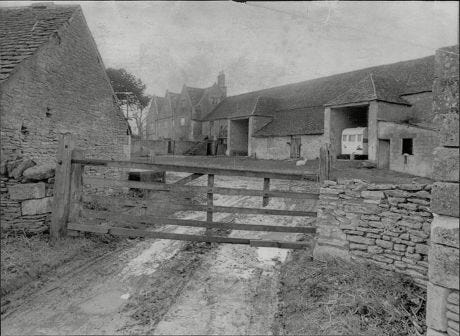
Now much calmer, he and Margaret resumed their relationship, but without the intensity and neediness that characterised the first frenetic few months. The Surrendell commune had a peaceful ambience that gave Roddy the space, both physical and mental, to heal himself and his royal relationship, which they now described as a ‘loving friendship’. As communication with the commune was difficult, the Tennants, once again, acted as go-betweens. Every Thursday, Roddy drove from Surrendell to their house in Chelsea to see Margaret, who arrived from Kensington Palace with a picnic hamper.
After listening to Roddy’s tales of life in a commune, Margaret decided that she wanted to visit to see what all the fuss was about. On one occasion she even spent the night there. Her decision created front-page headlines around the world and caused panic at the palace.
Margaret arrived by Rolls-Royce and sent her driver to find accommodation in the village. Then she joined fellow residents in a game of mah-jong, noting that she was rather rusty as it was the first time she had played since she was a child. Later, drink and ubiquitous cigarette in hand, she joined with the rest of the throng singing show tunes in front of the blazing log fire after the party had returned from a local restaurant. That night, Princess Margaret stayed in the most comfortable bedroom while Roddy slept in his blue Ford Transit van. In the morning, Roddy brought her a cup of tea in bed. It is as well he did as she struggled to work the on–off switch of an electric kettle. (Her sister was little better – she was unable to run her morning bath without assistance.) After her cup of tea, Margaret donned rubber boots and helped him in the garden.
A later arrival was actor Helen Mirren, sex symbol, Shakespearian stage star and leading member of the radical Workers’ Revolutionary Party. Though there was an initial frisson, the two women bonded – both were strong, independent and rather rebellious, and with a healthy interest in sex. Margaret would have found it amusing to know that the young radical firebrand she first met in a Wiltshire farmhouse would one day play her sister in an Oscar-winning movie, The Queen. She may have noticed, too, that Roddy seemed somewhat smitten by her. As he later told writer Ivan Waterman: ‘She was very striking, irresistibly delicious. There are very few women I have met who exude sex from every pore but she was and is one.’
The Morton Files is a reader-supported publication. To receive new posts and support my work, consider becoming a free or paid subscriber.
Another visitor who also caught his attention and would ultimately change Roddy’s life was Tania Soskin, the daughter of film producer Paul Soskin. When he reflected on that first meeting with the woman who would become his wife, he says: ‘I knew she was the one.’
In a summer when punk bands like the Sex Pistols put two fingers up at the Establishment, Surrendell was seen as a provocative outpost of skinny-dipping, free love and pot smoking. When news of Margaret’s presence leaked out, the lane outside the farm was packed with reporters and cameramen. Roddy made himself scarce, and the commune’s days were soon numbered when the police subsequently discovered almost three hundred cannabis plants under cultivation.
The discovery of an illegal marijuana farm and headlines such as ‘Margaret’s Darling Angel on the Dole!’ suggesting that jobless Roddy was claiming benefits from the state, were incendiary. Margaret’s visit to a hippie den of iniquity – as the tabloids saw it – was a colossal mistake. While the Queen sympathised with Margaret’s marital difficulties, she was not so forgiving of her sister’s retreat to a colony of aristocratic hippies, nor of her relationship with a rootless drop-out. As for Prince Philip’s view, it was not difficult to imagine.
This association could only bring calumny. The exasperated Queen, her patience exhausted, lamented to her private secretary, Lord Martin Charteris, ‘What are we going to do about my sister’s guttersnipe life?’ She had always felt responsible for her sister and worried about what to do with her. No more so than now.
In her heart she hoped that Margaret and Tony could at least have lived under the same roof while leading independent lives; monarchy was all about appearances. Snowdon, as a talented photographer, knew that better than most – including, it seemed, his wife. While the Queen was more flexible and forgiving about the issue of divorce than her mother, they were both deeply concerned that Princess Margaret could possibly become the first member of the royal family to divorce since Henry VIII and Anne of Cleves in 1540.
Events, however, were now moving apace. In October, she and Tony were due to undertake a ten-day tour of Australia. Margaret could no longer continue the charade, telling her private secretary Lord Napier that if Tony went, she wouldn’t go. So it was decided to pretend that Tony had to stay home for work commitments and that Margaret would go with her lady-in-waiting Anne Glenconner instead. Naturally, the Australian media sensed marital discord, but by giving briefings to reporters during a twelve-hour train ride from Canberra to Melbourne, Margaret was able to tame the local press for the time being. However, she was only putting off the inevitable.
Snowdon, his own affair a secret, took the moral high ground and wrote a letter to the Queen at the end of 1975 clarifying his view on their failed marriage. He stated that he could no longer tolerate their turbulent life at Kensington Palace, ‘The atmosphere is appalling for all concerned – the children, the staff, the few remaining loyal friends and she and I both.’
The Queen responded three weeks later, admitting that the delay had been caused by her despair over his letter. She suggested that she was already aware of how unsustainable the situation had become, but she pleaded with Snowdon not to take any hasty steps before Christmas. Snowdon, deeply respectful of the Queen’s wishes, took a vow of silence, as requested.
Behind the scenes, though, the palace began frantically preparing for the worst. The Queen certainly did not want the situation to come to a head in 1977, the year scheduled for her Silver Jubilee, an event several years in the preparation. This historic event was one of the way-points in the Queen’s reign, a grand pageant that was seen as a reaffirmation of the compact between the monarchy and the Crown. The Queen – and other members of the royal family – accepted as a matter of course that private and personal issues were sacrificed in the name of duty and obligation to the monarchy. In the annual calendar, the Crown came first. This was graphically demonstrated by Queen Mary, who, shortly before she died in March 1953, made it clear that court mourning should be limited so as not to interfere with the upcoming coronation. She placed duty before self.
During the Queen’s reign, however, Margaret and her personal problems kept getting in the way of major royal events. Her love affair with Group Captain Peter Townsend had, at one point, threatened to overshadow the coronation, an action that would have been unforgivable. Now, as preparations were underway for the Silver Jubilee, it was feared that Margaret’s marital issues might rain on her sister’s parade.
The Queen’s response was essentially practical – how and when the separation announcement could be made so that it was in the best interests of the Snowdons’ children and without affecting the tent-pole royal events that took months to plan and prepare. She and her ministers thus decided that the best time to announce a separation would be Easter 1976, when the children, David and Sarah, could receive the news quietly when they were at home for the holidays.
There were other considerations. Just a few days after Snowdon’s letter was handed to the Queen, her prime minister, Harold Wilson, told her that he intended to resign in March 1976. He would only stay on if Margaret created further calamity for the Queen or if there was an outbreak of terrorist violence in Northern Ireland, the region convulsed by paramilitary conflict in the long struggle for Irish independence. ‘I’m not going to leave her on her own,’ the outgoing prime minister told a royal aide.
The Morton Files is a reader-supported publication. To receive new posts and support my work, consider becoming a free or paid subscriber.
Through a twist of fate, the palace secured the desired timeline – though at great cost to Princess Margaret. On 1 February 1976, fuzzy photos taken by New Zealand photographer Ross Waby appeared in the Sunday tabloid, the News of the World, showing Margaret and Roddy sitting side by side at Basil’s Bar on Mustique. He was wearing his Union Jack swimming trunks, she was in a modest, one-piece bathing suit, though the tabloids preferred to call it a ‘skimpy bikini’. These pictures looked just intimate enough to be compromising, although, to make sure that readers focused only on the princess and her boyfriend, the paper cropped out the princess’s friends, Viscount Coke and his wife Valeria, who were sitting at the same table as Margaret and her ‘tanned toy boy’.
As the row exploded, the same tabloid seemed to have a man positioned in the room with the Queen when she called Margaret on the long-distance telephone. ‘How could you do this to me, to the family, to the monarchy?’ she was quoted as saying. ‘How could you have been so silly?’ Even if the quotes were tabloid make-believe, for many they had the ring of truth.
For the princess it was a disaster, not just in terms of public relations but with respect to the two women who mattered most in her life, the Queen and Queen Mother. As much as they loved Margaret, they were very fond of Snowdon and felt that the princess must shoulder much of the blame for the end of the marriage. They weren’t privy to the detailed ins and outs of the breakdown, but they knew Margaret’s character. As her friend and biographer Christopher Warwick observes: ‘They didn’t realise the depths of Margaret’s despair. They remembered her as the trickster, the prankster, the little girl getting things her way. There was a feeling it was mainly her fault.’ This conclusion was emphasised in the official biography of the Queen Mother by William Shawcross, in which Roddy Llewellyn’s name alone is linked to the marriage breakdown. There is no mention of Snowdon’s long-term relationship with Lucy Lindsay-Hogg, whom he eventually married.
Nor was her name mentioned in the tabloid stories that greeted the publication of pictures of Margaret and Roddy in Mustique. In the public mind, Lord Snowdon was a hard-working documentary maker and photographer whose work with the impoverished, the elderly and other disadvantaged groups had earned much acclaim. He was seen as the wronged party in this marital breakdown, the relationship of the photographer and his girlfriend being unknown to the wider public. The story became more than just about an extra-marital relationship and as much about whether the taxpayer was inadvertently paying for this holiday in the sun.
Elizabeth & Margaret: The Intimate World of the Windsor Sisters (2021) by Andrew Morton, published by Michael O’Mara Books in the UK and Grand Central Publishing in the USA. Also available as an e-book and audiobook.
The Morton Files is a reader-supported publication. To receive new posts and support my work, consider becoming a free or paid subscriber.
Comments
Nothing yet. Say the first thing.
Sign in to join the conversation.