
By Daniel Justel

The Mesopotamian world was not egalitarian. Society was heterogeneous, and each social class faced everyday problems differently: men, women, rich, poor, skilled workers, farmers, artisans, elders, adults, etc. In all this amalgam of variants we find some social groups that have undeniably been presented to us in the sources as secondary and even suffering. Among them are the children of the ancient Near East.
We could say “today more than ever” (but in reality, we should say “today, as always”) we should contemplate the children of ancient Mesopotamia, Syria and Palestine as passive people on many levels. They were (and are) the ones who suffer the most, the ones who do not realize what is happening around them, the ones who see (sometimes in despair) how their parents give them away in marriage (especially to girls) or directly sell them. Even so, children are never resigned. They want to play, contribute and build. They always did it, are doing and always will do it.
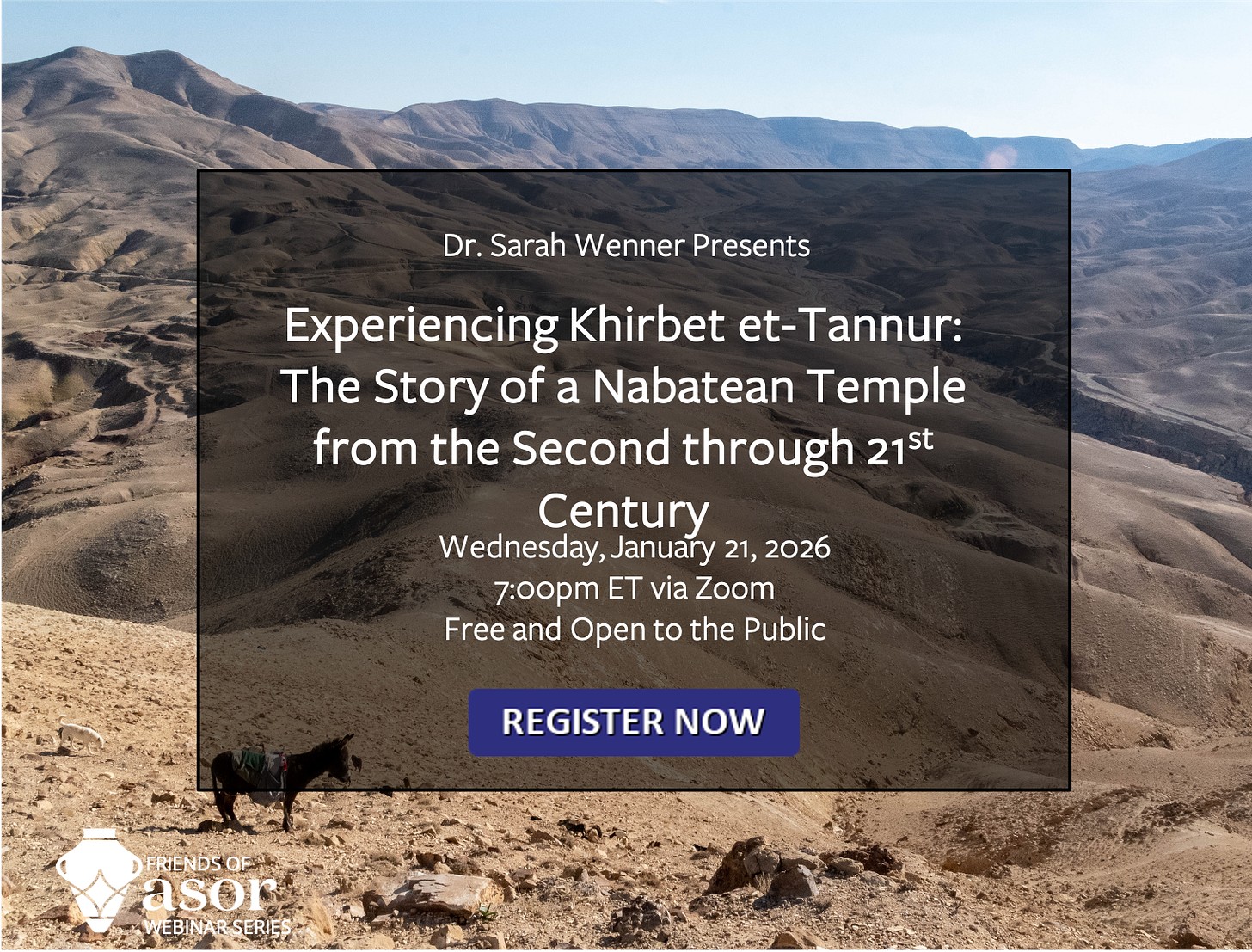
Don't miss the upcoming Friends of ASOR webinar on Wednesday, January 21 at 7:00pm ET: "Experiencing Khirbet et-Tannur: The Story of a Nabatean Temple from the Second through 21st Century," presented by Dr. Sarah Wenner. In the 2nd century CE, after Rome annexed the Nabataean Kingdom and transformed it into the province of Arabia, the Nabataean temple at Khirbet et-Tannur was constructed in Central Jordan. This lecture travels the site’s two millennia history and explores how Khirbet et-Tannur’s excavations, the collection at the Cincinnati Art Museum, and 21st century innovations have changed our understanding of the Nabataeans. Read more about the talk and register here.
Toddlers with facial tattoos: How Christianity expanded body art in Nubia (Phys.org)
Archaeological study challenges paleo diet, revealing humans have long eaten processed plant foods (Phys.org)
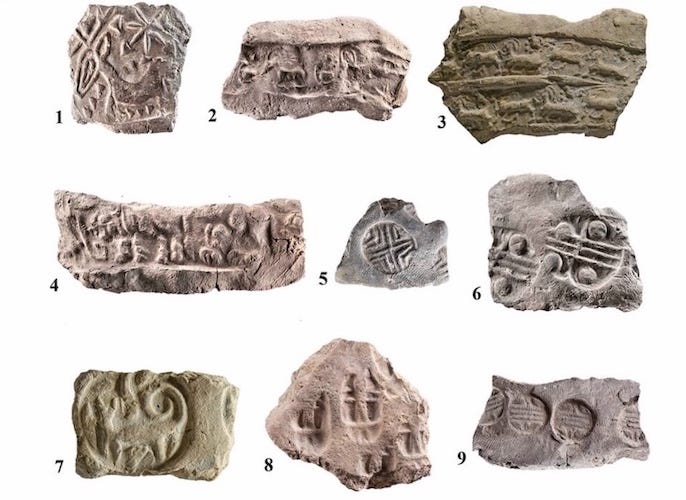
Silver necklace linked to Assyrian goddess Ishtar unearthed at Türkiye’s Amos (Türkiye Today)
1500-year-old church found next to Zoroastrianism place of worship in Iraq (Livescience)
First material evidence of Judah Maccabee’s battlefield discovered near Jerusalem (TPSIL)
Civilization and Writing: A Great Journey (National Museum of World Writing Systems, Incheon, South Korea). Link to Virtual Exhibit (on Matterport).
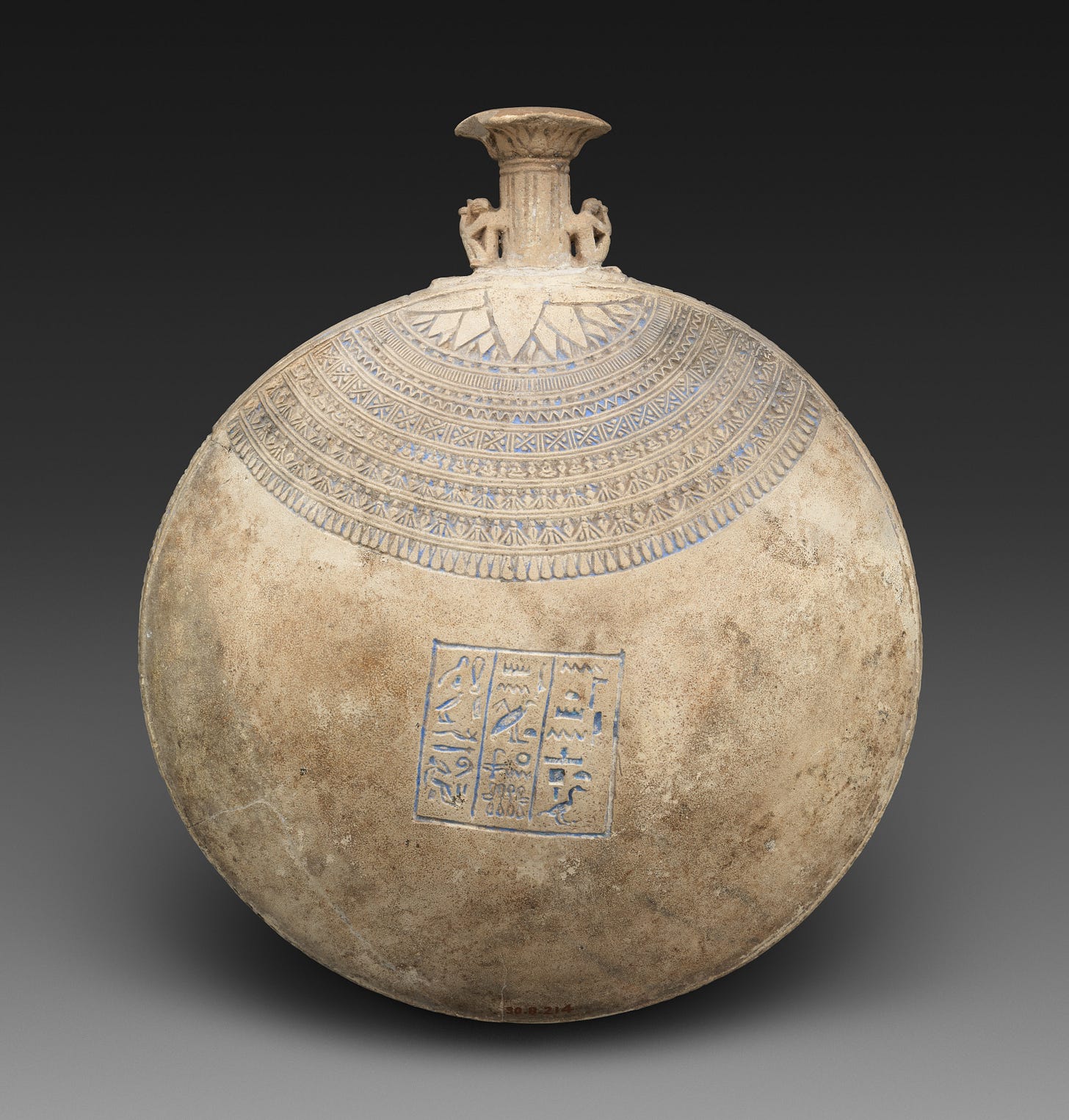
We’re starting off the year with an Egyptian “New Year’s Bottle”, a lentoid flask that was filled with perfumed oil or water from the Nile, gifted in connection to the New Year. This example is made of faience and decorated with incised floral motifs, and two baboons flank the neck of the flask, which is carved to resemble a bundle of papyrus and lotus plants; traces of turquoise-colored glaze remain. The inscription asks Amun, Mut, and Khonsu to give protection to Amenhotep, son of Iufaa. Further inscriptions on the shoulders ask Montu and Amun-Re to grant Amenhotep a Happy New Year. Diameter 18 cm, ca. 664 – 525 BCE, Metropolitan Museum of Art 30.8.214.
Reading Amos as a Book (The Bible and Interpretation)
Archaeologists May Have Found the Lost Iron City of the Silk Road in the Remote Highlands of Uzbekistan (Smithsonian Magazine)
Archaeology, Jesus, and Paul with David DeSilva (OnScript | BiblicalWorld)
The Great Nubian Gold Rush (of the Second Millennium BCE?) or, Gold Bugs of the Bronze Age (This Week in the Ancient Near East)
The Rise of King Herod (History Hit | The Ancients)
Lost Treasures of the Bible MEGA Episode (National Geographic)
The Kaska: The Hittite Nemesis from the North (Dig)
Deciphering Secrets of Ancient Civilizations, Noah’s Ark, and Flood Myths with Irving Finkel (Lex Fridman Podcast)
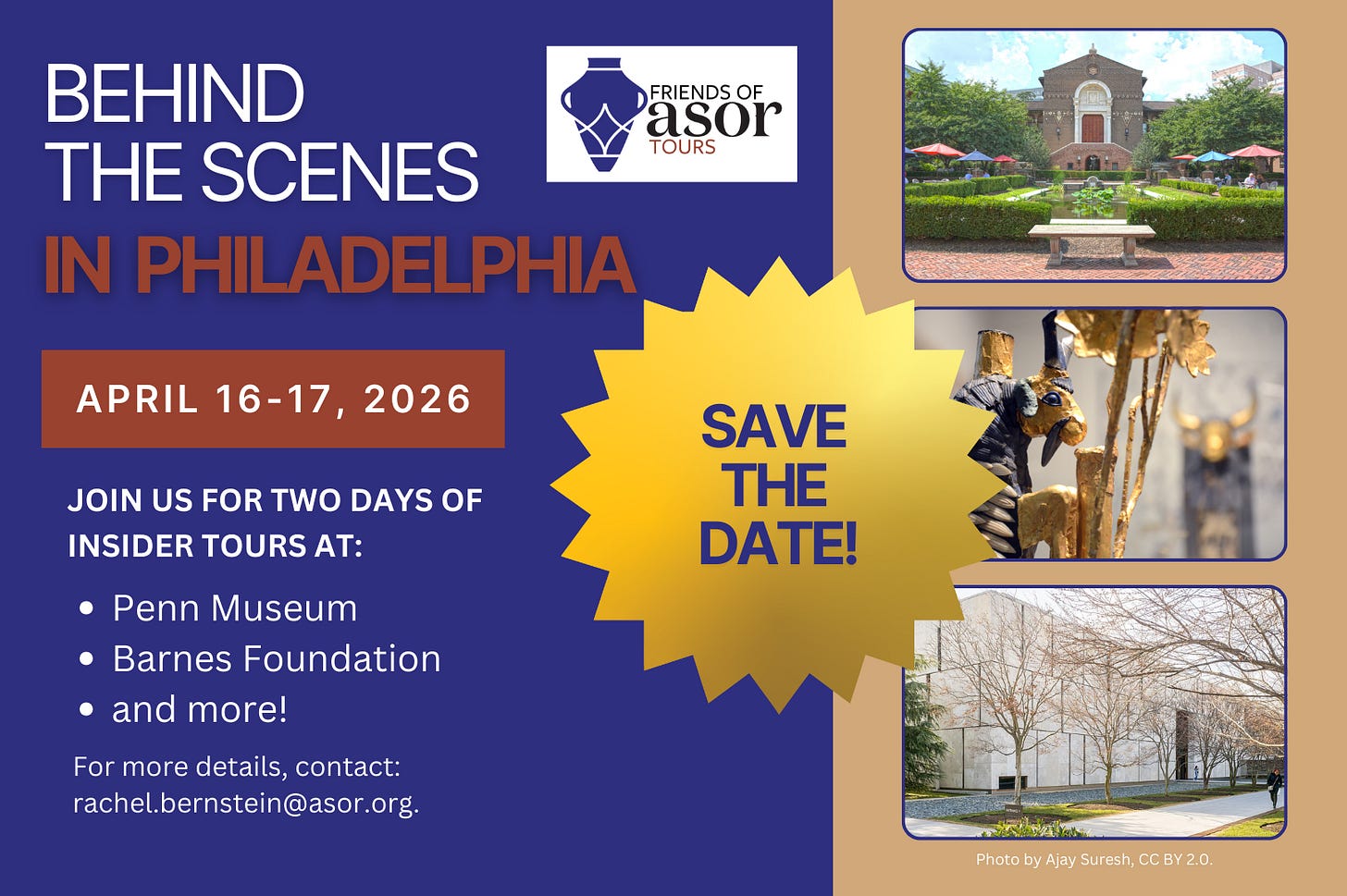
Save the date to join Friends of ASOR for a special Philadelphia tour taking place April 16-17, 2026. Come along for behind-the-scenes looks at the Penn Museum, the Barnes Foundation, and more for an exciting tour. Details and registration information coming soon—mark your calendar!
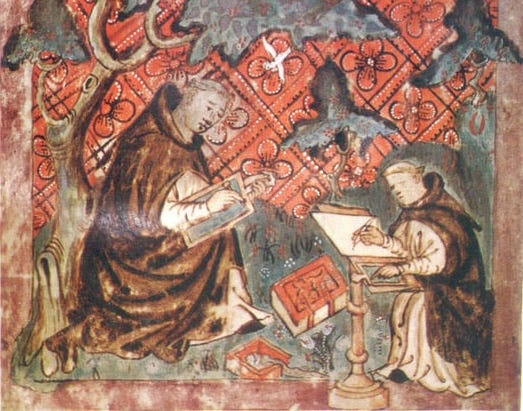
By Michele Cammarosano and Katja Weirauch
Writing on wax began in Mesopotamia and spread to the Mediterranean and Europe. But some lingering questions may have finally been answered by a science project with children. Read more here.
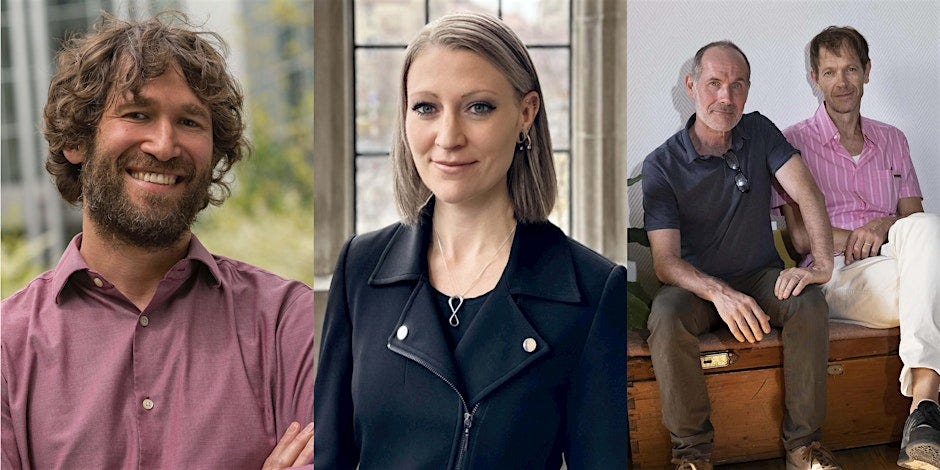
In conjunction with the ISAC Museum special exhibition Megiddo: A City Unearthed, A Past Imagined, (on view through March 15, 2026) join this online event on January 22 for a cross-disciplinary conversation on how complex archaeological, artistic, and scientific ideas are translated into compelling narratives and images for the media and wider public. Read more about the event and register here.
Enjoy what you’re reading? Consider supporting ANE Today through a once-off or recurring donation to ASOR.
Published with the assistance of The Lanier Theological Library and Stevan Dana
No posts
Comments
Nothing yet. Say the first thing.
Sign in to join the conversation.