
We are taking a short end-of-the-year break, so please enjoy this article from our archives. We wish all of our readers a happy and prosperous 2026. See you in the new year!
By Jordan J. Ryan
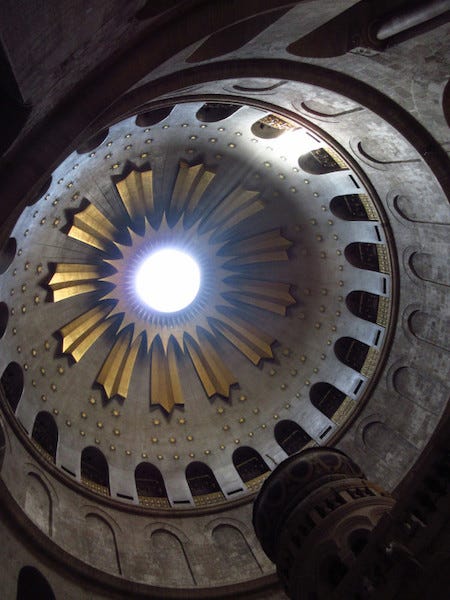
Since antiquity, Christians have travelled to the region that they call the “Holy Land” in order to follow in the footsteps of Jesus and to “adore in the place where his feet have stood” (Ps 131:7, LXX). Today, most of the waypoints on the pilgrimage are represented by churches or chapels, architectural spaces of Christian worship that mark the spots where events in the life of Jesus have traditionally been held to take place.
Although we cannot be certain that the modern pilgrims who walk the stones of these Christian holy places are literally walking where Jesus walked, they are following in the footsteps of the forebears of their faith. The remains of ancient commemorative churches are frequently incorporated into later churches. In one case, the Church of the Nativity at Bethlehem, contemporary Christians are able to worship in a standing church that has been continuously used since antiquity.

Make sure to join us for the next FOA webinar on Wednesday, January 7th at 7:00pm ET: "Beyond Edutainment: Reclaiming Archaeology in a Clickbait World," presented by Amanda Hope Haley. We all remember a time when the History Channel was about history, documentaries bored us with facts and black-and-white footage, and everyone knew Indiana Jones, Daniel Jackson, and River Song were swashbuckling adventurers (not serious scientists). When the did the lines between fiction and fact blur? Although many of us are still fascinated by our ancestors and the empires they built and destroyed, the field of archaeology is shrinking when we need more access to the lessons of the past, not less. Read more and register for free here.
Pottery from Mesopotamia shows humans embedded numerical logic and geometric reasoning into painted designs 8000 years ago – long before the appearance of written numbers. Read more at The Debrief.
A byzantine medallion depicting a seven-branched menorah was uncovered in Jerusalem. Read more at The Greek Reporter.
Researches used quantitative models to show just how profitable Egyptian gold mining expeditions to Nubia could be, with results that challenge previous assumptions. Read more at LBV.
New analysis of ancient and modern cat genomes suggests domesticated cats came from northern Africa to Europe about 2000 years ago, challenging previous arguments that they came from the Levant with Neolithic farmers. Read more in ConnectSci.
Researchers analyzed an ancient active construction site at Pompei and were able to confirm that “hot-mixing” was a key step in the process, despite not being mentioned by Vitruvius. Read more at Phys.org.
Archaeologists are probably misidentifying olive oil in residue remains in ceramics. Read more at Phys.org
The future of the Rockefeller Archaeological Museum in Jerusalem remains unclear; it may be turned over to private ownership or even converted into a hotel. Read more at The Times of Israel.
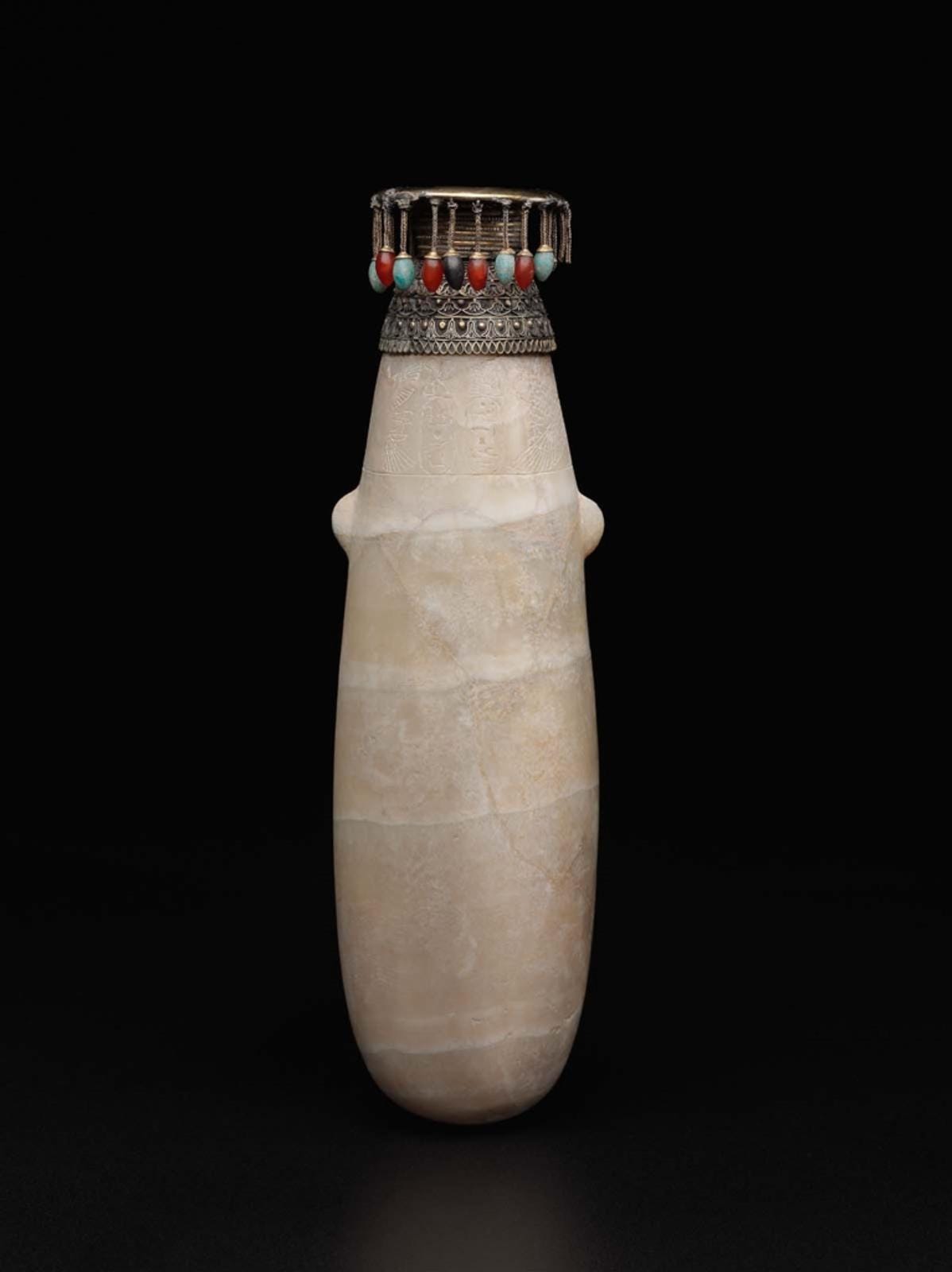
This week’s object is an elegant alabastron from the tomb of the Nubian king Aspelta in Nuri, Sudan, ca. 593-568 BCE. Alabastra are tapering or pear-shaped vessels, originally made from alabaster (as in this case), which originated in Egypt and spread throughout the Mediterranean. They are typically used to hold perfumed oils and of variable size. This example is on the larger side at 26.5cm high (10 7/16 inches) and exceptionally decorated with shoulder decoration of gold filigree, a neck of silver overlaid with gold decoration and drop pendants of carnelian, magnetite, and amazonite suspended with gold wire.
A brief history of Christianity in Africa’s Religious Traditions (African History Extra)
The Khalidi Library: The Preservation of Palestinian History in Jerusalem (Jerusalem Story)
All I Want for Chanukah is a New Hasmonean Wall, or, Shmeless Holiday Tie In Edition (This Week in the Ancient Near East)
Hand of a Giant: Discoveries from Abu Qir Bay, Egypt (Dive&Dig)
3 Problems with the “Evidence” Found in Jerusalem: Yeda’yah Seal Controversy Explained (Bible & Archaeology)
We used Ancient Egyptian Magic to heal our colleagues | Curators’ Corner (The British Museum)
Excavating the Time of David and Beyond at Abel Beth Maacah (Armstrong Institute of Biblical Archaeology)
By Jessica Nitschke
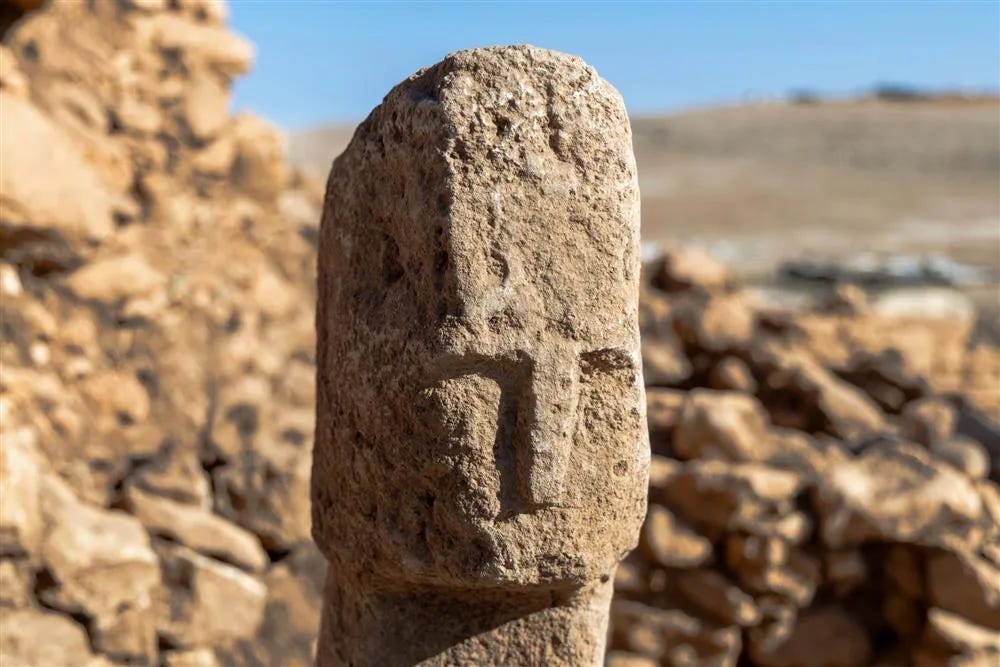
We offer you our annual list of some of the most exciting breakthroughs and discoveries in the archaeology of the Middle East and North Africa announced in 2025. Think we overlooked something? What’s on your list? Let us know in the comments! Read the list here.
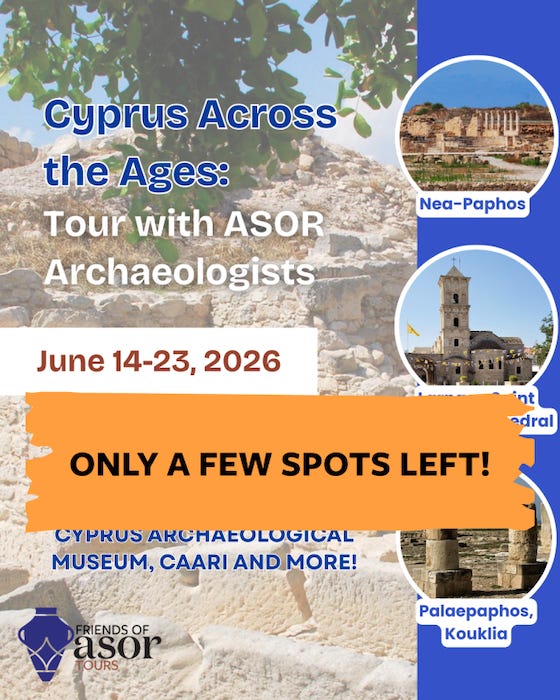
Only a few spots remain on the Friends of ASOR Tour to Cyprus this June. Join fellow ASOR members for an expertly guided journey through Cyprus’s remarkable archaeological sites, from prehistoric settlements to Byzantine and medieval monuments. Space is limited and filling quickly! Get more details and register here.
Enjoy what you’re reading? Consider supporting ANE Today through a once-off or recurring donation to ASOR.
Published with the assistance of The Lanier Theological Library and Stevan Dana
No posts
Comments
Nothing yet. Say the first thing.
Sign in to join the conversation.