
By T.M. Lemos
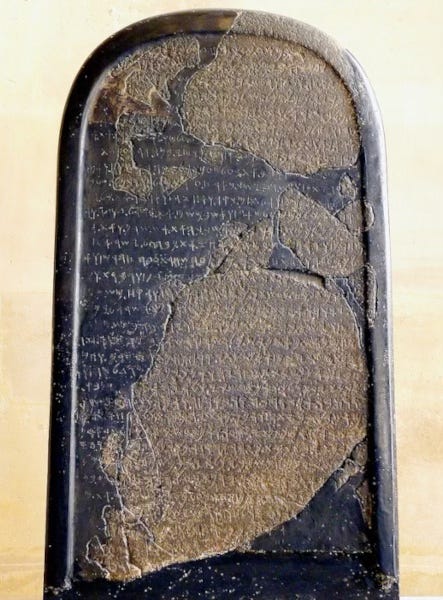
Narratives of extreme violence bookend the corpus of biblical literature. In both the books of Genesis and Revelation, we find passages describing anthropocide, the destruction of the human race, with only a few humans seen as fit for survival. Here, I focus on another form of biblical violence that is more limited in scope but no less disturbing—genocide. The term “genocide” has been defined in different ways, but the UN definition remains the most influential, for obvious reasons. According to this definition, acts of killing or other acts that prevent life are genocidal if they are “committed with intent to destroy, in whole or in part, a national, ethnical, racial or religious group, as such.” Intention, rather than motivation or successful execution, are what matters, in terms of this definition. Another central consideration is whether members of the group are being targeted as such, which is to say, for being members of that group. It is not difficult to find biblical cases of violence that seem to fit this definition. At least a dozen books of the Hebrew Bible contain passages that could be characterized in this way.

Join Friends of ASOR from April 16–17, 2026 for exclusive, behind-the-scenes access to some of Philadelphia’s premier cultural institutions, featuring expert-led tours and insights into spaces highlighting the archaeology and art of the ancient Middle East and Mediterranean. Find out more information and reserve your place here!
A foreleg from an Asian elephant along with weapons and a coin dated around the time Second Punic War (218-201) were discovered near Córdoba, Spain. Read more at LBV.
An overlooked Assyrian bas-relief from King Sennacherib’s throne room at Niniveh may be the oldest known depiction of Jerusalem. Read more at the Armstrong Institute.
Archaeologists working in southern Iraq think they have located Alexandria-on-the-Tigris, a Hellenistic port town linking Mesopotamia with trade networks reaching India and Central Asia. Read more at Archaeology News.
The British Museum is looking to hire a professional treasure hunter to track down hundreds of antiquities stolen and sold on the market by ex-curator Peter Higgs. Read more at Artnet.
A Middle Aramaic inscription was discovered at Rabat Fortress in eastern Türkiye, providing new evidence for the little-known Hellenistic Kingdom of Sophene. Read more at Arkeonews.
Archaeologists claim that newly discovered 5000-year-old rock art in the Sinai depicts Egypt’s conquest of the region. Read more at Live Science.
Jordan’s Karak Castle sits over a fault line, raising concerns after partial collapse. Read more at Türkiye Today.
This month, we feature a series of objects from graves excavated at Kedurma, located in the Middle Nile Valley, Sudan, dated to the Meroitic period (3rd century BC – 4th century AD. Although many of the graves had been looted or reused, some still contained artifacts. Pictured here are a stele with Meroitic script (3rd century AD), a painted bowl with Merotic-style decoration (late 1st century BC-1st century AD), bone or shell beads, and iron rings. The cemetery was recently published in the journal Antiquity by Mohamed Bashir. Read the open-access article here.
Real Egyptology? The Public Doesn’t Want to Hear It (Egyptian Streets)
Why Jewish Law Cares about Mother Birds, Baby Goats and the Bonds of Animal Families (Jewish Telegraphic Agency)
The Old Man and the Sun: Sex, Death, and the Turin Erotic Papyrus (Ancient/Now)
David DeSilva – Archaeology, Jesus, and Paul (OnScript Biblical World)
A Prehistoric Figurine of Problematic Possibilities, or Or, Mythogram for Mother Goose (This Week in the Ancient Near East)
The Oldest Harbor in the world: Khufu’s Papyrus & the Secrets of the Pyramids, with Pierre Tallet (Science Factory)
Palistin: Philistines of the North or Something Else Entirely? (Dig)
King Tut’s Tomb: The Discovery That Sparked a Global Power Struggle (HISTORY This Week)
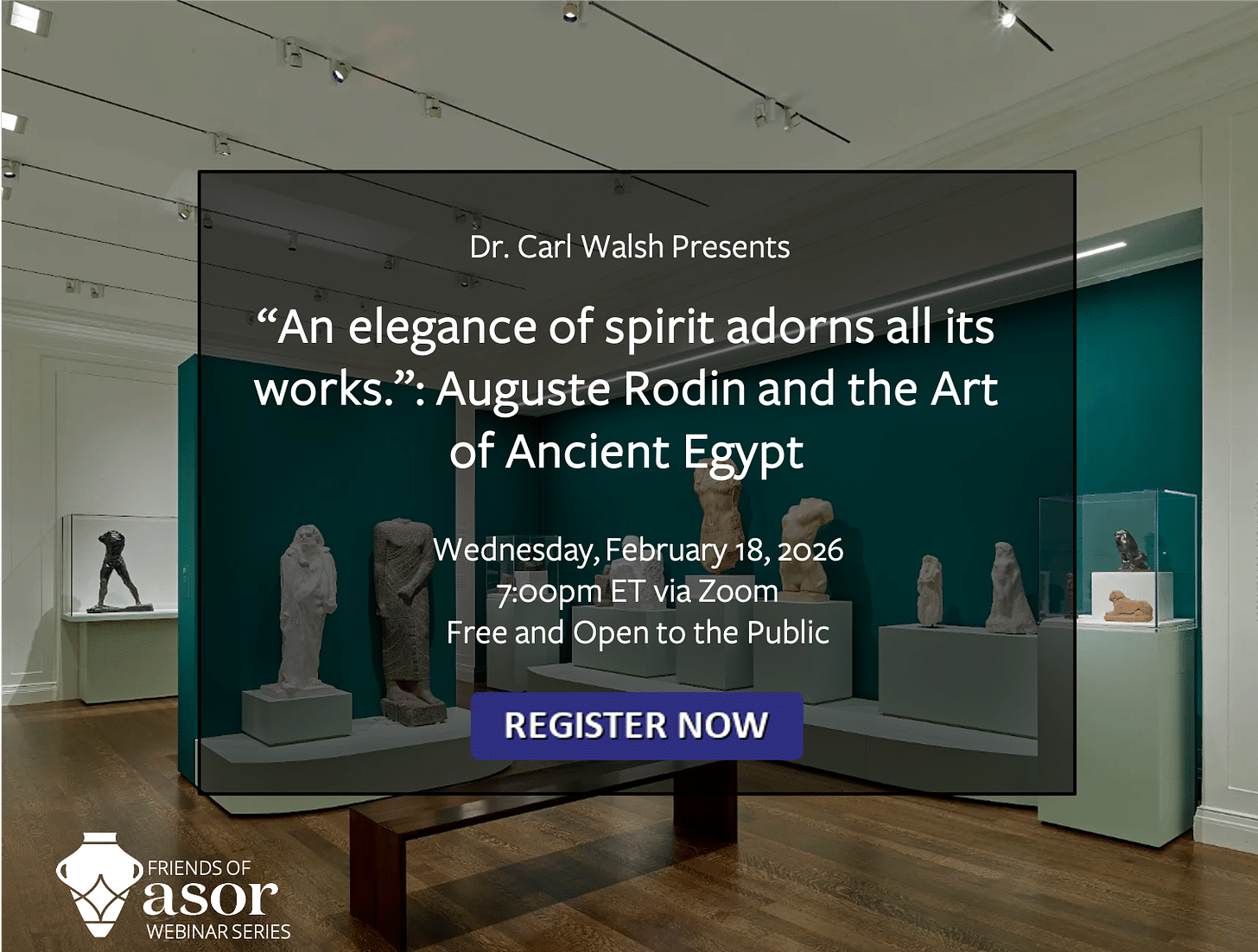
Join us for the next FOA webinar on Wednesday, February 18th at 7:00pm ET: "'An elegance of spirit adorns all its works.': Auguste Rodin and the Art of Ancient Egypt," presented by Dr. Carl Walsh. Most people would not conceive of any connection between the works of the master French sculptor Auguste Rodin (1840–1917) and the art of ancient Egypt. In this talk, Dr. Walsh will discuss how Rodin became interested in ancient Egyptian art in his waning years and the profound—if subtle—impact it had on the sculptor’s practice through the objects in the current exhibition Rodin’s Egypt, now on display at the Institute for the Study of the Ancient World at New York University. Read more and register here.
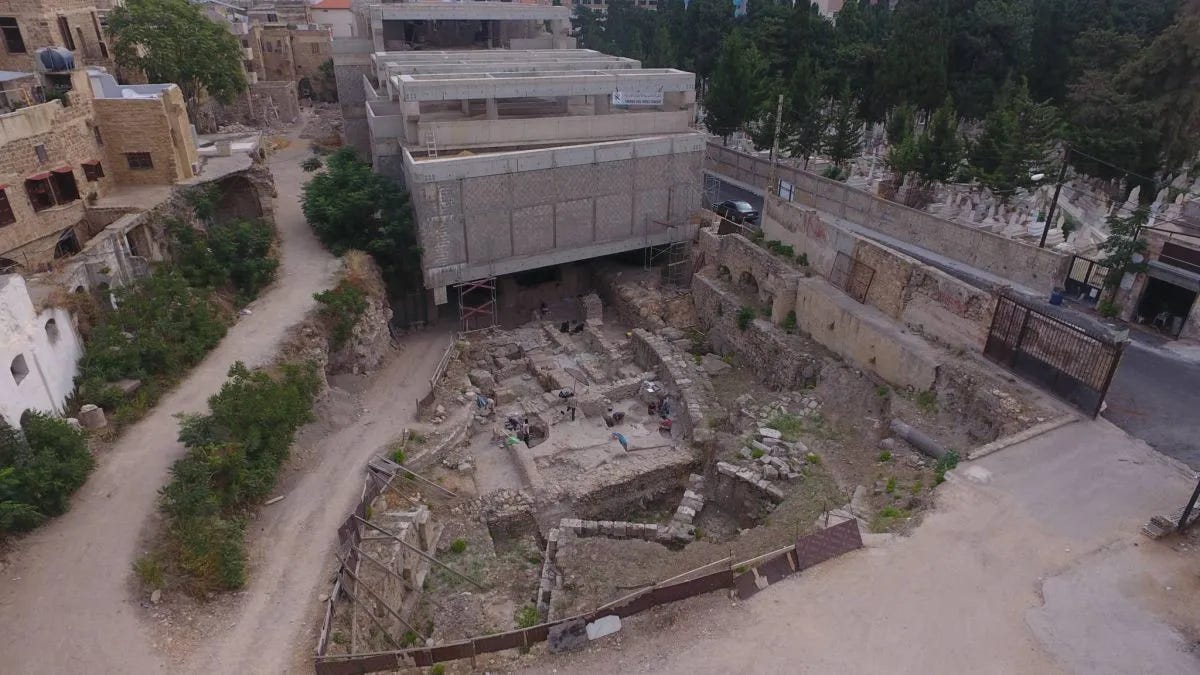
By Chris Stantis
Middle Bronze Age “warrior burials” are found in many parts of the Near East and Egypt. But a new study at Sidon shows that no one buried with weapons was actually a “warrior.” Read more here.
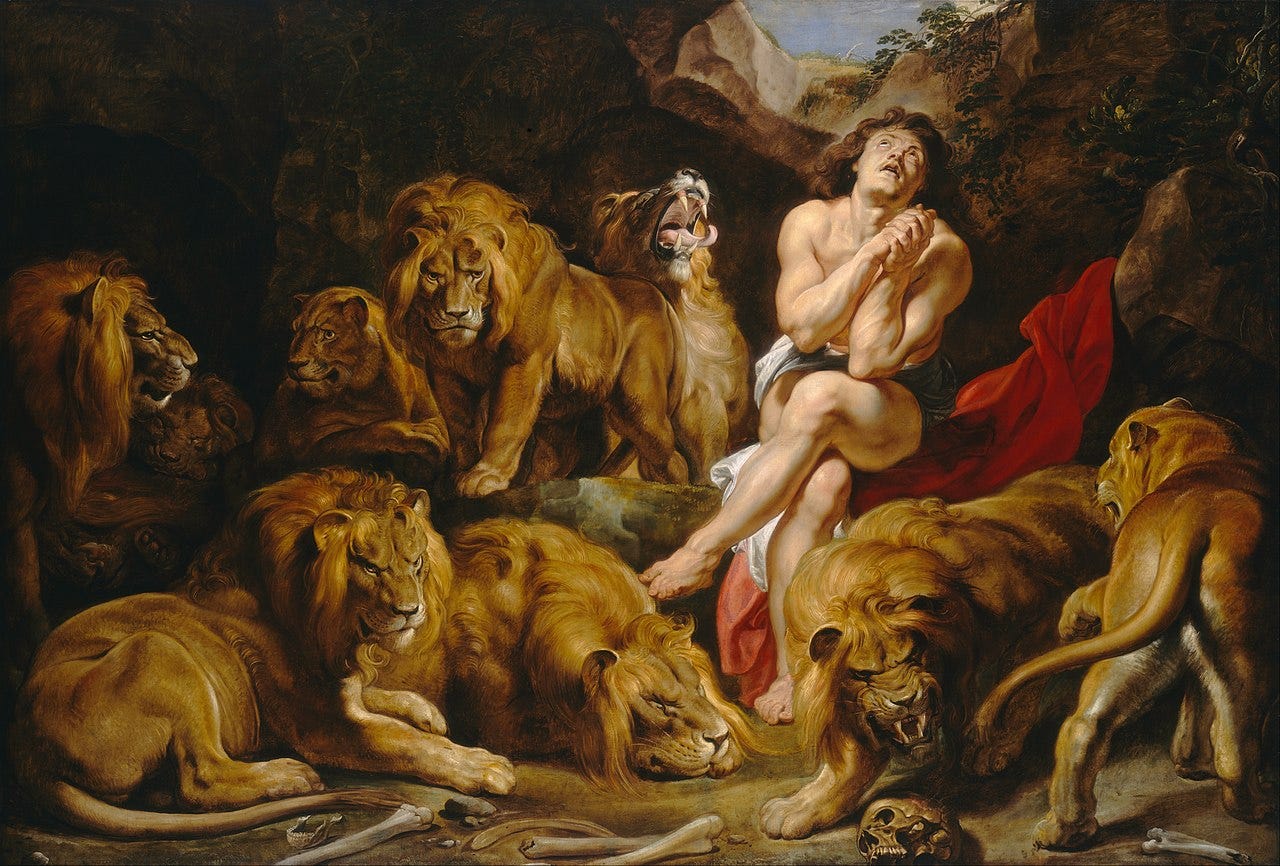
Are you in the greater Washington D.C. area? Dr. Stephen Cook (Virginia Theological Seminary) will discuss two of King Nebuchadnezzar’s famous dreams in the Bible’s Book of Daniel. In these two dreams, Daniel offers a theological vision of humanity’s potential to act fully in the image of God, underscoring divine judgment against human hubris and affirming ultimate redemption through restored cosmic order. This lecture will be held on Thursday, February 12 at 7:45 pm, at the Bender JCC in Rockville, Maryland.
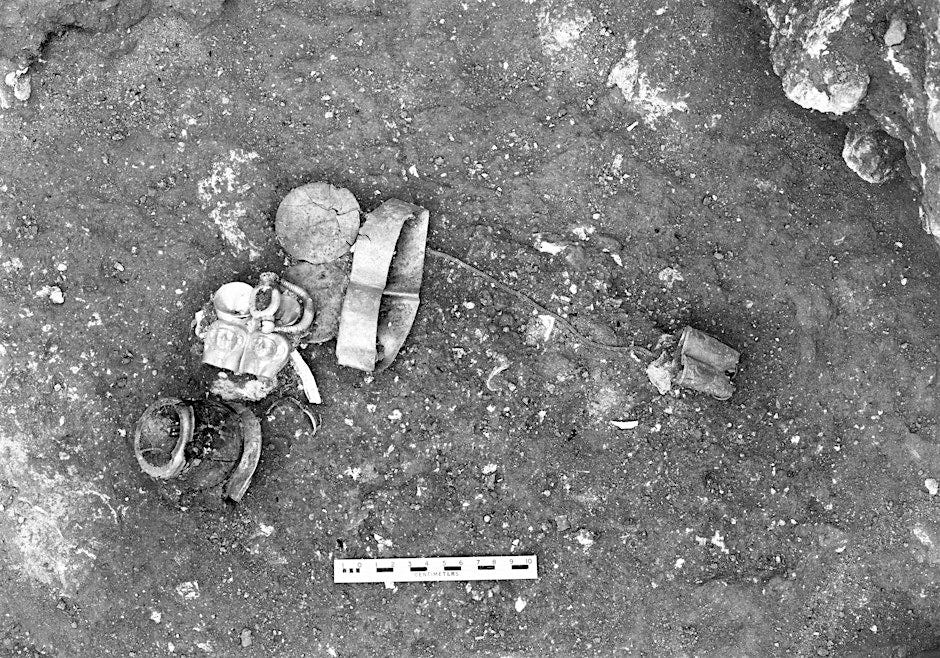
In connection with the ISAC Museum special exhibition Megiddo: A City Unearthed, A Past Imagined, this class focuses on some of the most exciting finds made by archaeologists exploring the Late Bronze Age of the Southern Levant: hoards of precious objects. Ranging from gold to ivory to stone, these rich finds demonstrate the connections between not only different parts of the Levant but also links to Egypt, Mesopotamia, and Anatolia. The class focuses on three key sites: Megiddo, Byblos, and Tell el-’Ajjul and the connections these sites have to each other. More details and registration is available here.
Enjoy what you’re reading? Consider supporting ANE Today through a once-off or recurring donation to ASOR.
Published with the assistance of The Lanier Theological Library and Stevan Dana
No posts
Comments
Nothing yet. Say the first thing.
Sign in to join the conversation.