
By Cécile Michel

The study of ancient cultures is based on archaeological discoveries and transmitted literature. Initially, Assyriologists drew on biblical texts, particularly the Book of Kings, as well as the writings of Greek historians such as Herodotus. However, these texts — which only mention the empires of the first millennium — provide an extremely inaccurate account of Mesopotamian history. Consequently, our main sources are archaeological discoveries, particularly the hundreds of thousands of cuneiform artifacts unearthed throughout Iraq, Syria, Iran and Turkey. Compared to other ancient civilizations, these written sources are abundant, and above all they are original. Nevertheless, these cuneiform sources are unevenly distributed in time and space and incomplete, having been filtered by ancient processes of preservation, loss and destruction over time, and shaped by chance discoveries and scientific practices.
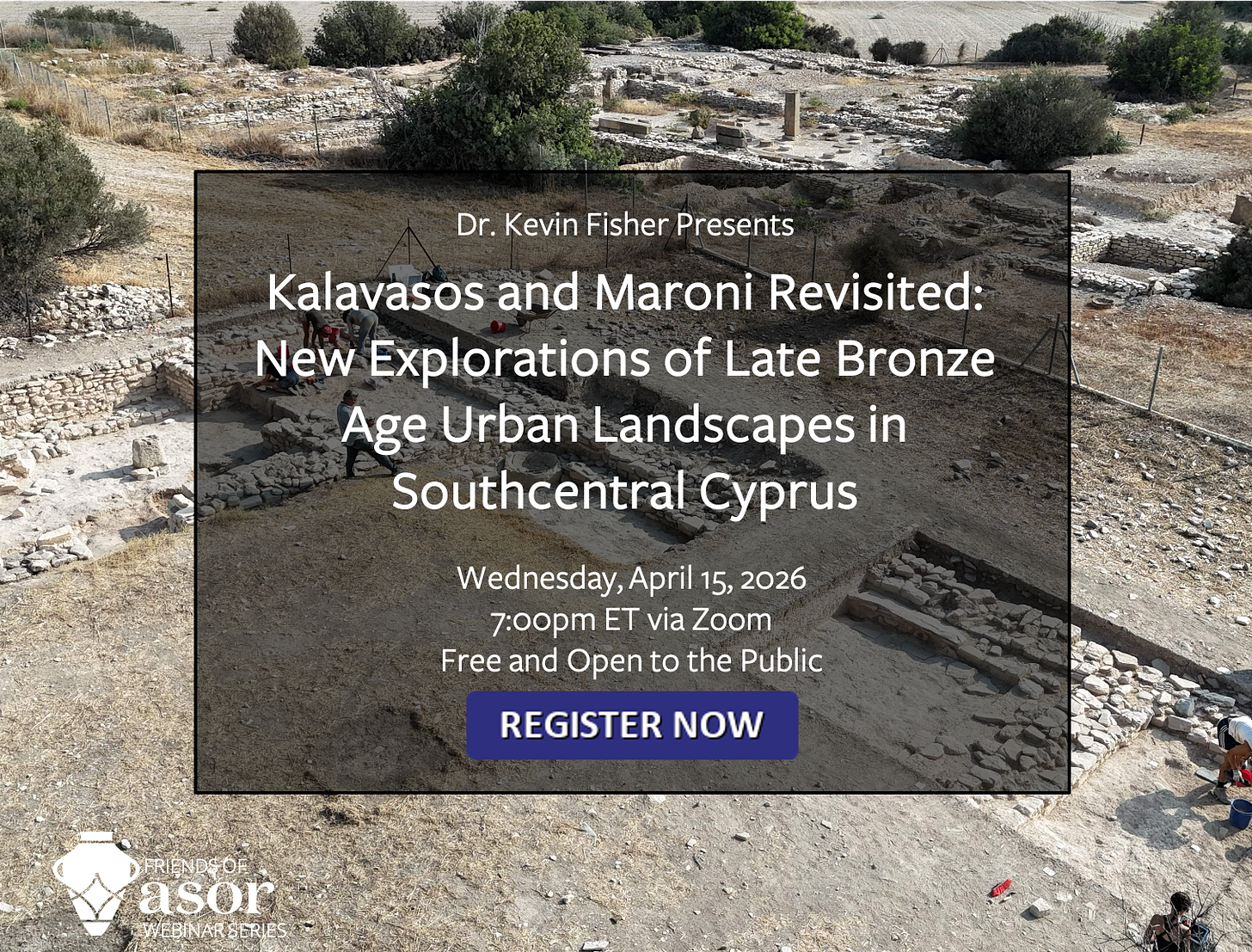
Join us for the next Friends of ASOR webinar on Wednesday, April 15th at 7:00pm ET: “Kalavasos and Maroni Revisited: New Explorations of Late Bronze Age Urban Landscapes in Southcentral Cyprus,” presented by Dr. Kevin Fisher. Compared with some of its better-known neighbors in the ancient eastern Mediterranean and Near East, Cyprus sees the relatively late emergence of urbanism. Its first cities appear in the Late Bronze Age (c. 1700-1100 BCE), along with other changes to the built environment. This talk presents the results of recent work by the Kalavasos and Maroni Built Environments (KAMBE) Project, a collaborative and interdisciplinary investigation of the relationship between urban landscapes and social change in south-central Cyprus during the Late Bronze Age. Read more and register here.
Researchers reconstruct the diet of everyday people in Mesopotamia in the 3rd Millennium BCE through zinc isotope analysis of tooth enamel. Read more at LBV.
Origin of the “Curse of the Pharaohs” revealed in scornful letter by Howard Carter that recently sold for $16,643 at auction. Read more at Artnet news.
DNA from dog bones unearthed at several sites across Europe and Türkiye has pushed back the earliest evidence for domestication by more than 5000 years, showing domesticated dogs were widespread at least 14,000 years ago. Read more at the Natural History Museum.
Earliest evidence of indigo-dyed textiles and single-needle knitting found at Beycesultan Höyük, dated to ca. 1915-1745 BCE. Read more at phys.org.
Researchers use computational tools to demonstrate a clear connection between the Ethiopia’s ancient writing system (Ge’ez) and that of Armenia. Read more at LBV.
Heritage lawyer (and ASOR trustee) urges US government to deter antiquities trafficking by amending the Iran sanctions to explicitly include antiquities. Read more at The Hill.
Archaeologists find prehistoric cache of clay beads and ornaments in Israel dated to 13,000 – 9650 BCE, upending beliefs that clay only became culturally significant with the appearance of ceramic vessels in the Neolithic period (ca. 8500 onwards). Read more at My Modern Met. Read the whole study at Science Advances.

This terracotta model, dated to the Middle Bronze Age, offers a glimpse into Cypriot beliefs about death and the afterlife. Eight schematic figures (and a bird!) crowd the rim of a bowl-shaped small boat, its hull decorated with painted basketwork-style hatching. Interestingly, none of the figures are rowing. The passengers rest in relaxed poses, hands on hips or gunwales, simply being carried. Boat models of this type have often been found in tomb contexts from the Middle Bronze Age to the early Classical period. Aurélie Cabrillet has suggested that these objects were inspired by Egyptian funerary boat traditions, serving as magical vehicles to transport the dead to the realm beyond.
When the Exodus Is Your Story—but Egypt Is Your Homeland (The Torah)
Typos Have Plagued Us for Centuries. Just Ask the Publishers Who Printed the Seventh Commandment as ‘Thou Shalt Commit Adultery’ in 1631 (Smithsonian Mag)
Beer in Bronze Age Mesopotamia with Tate Paulette (Drunk On History Podcast)
The Phoenicians (The Ancients | History Hit)
Please Don’t Eat the Halafian Daises, or Plant Based Mathematics in Prehistory? (This Week in the Ancient Near East)
The Truth About King Tut’s Golden Mask (National Geographic)
Inside a 12,000-year-old kitchen in Neolithic Anatolia (BBC)
The Dead Sea Scrolls: The Oldest Biblical Writings Ever Found (Hochelaga)

Only a few spots remain on the Friends of ASOR: Cyprus Across the Ages tour this June. Join Friends of ASOR for a behind-the-scenes journey through Cyprus’s remarkable archaeological sites, led by renowned archaeologists and specialists, from prehistoric settlements to Byzantine and medieval monuments. Highlights include rare insights and tours at Kourion, Idalion, Koukila, the Cyprus Archaeological Museum, and Nea-Paphos, among many other sites. Contact us for more information and registration.
By Alex Joffe
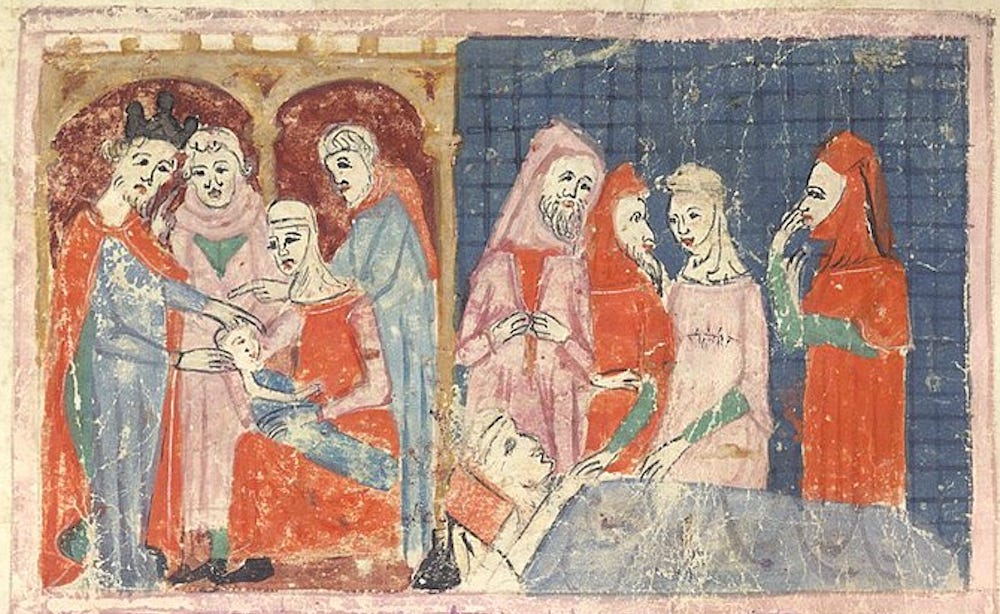
Disease and plague are known from prehistory to the present. They also draw lines between different epochs. Read more here.

Join the Badè Museum of Biblical Archaeology next Thursday, April 9 at 9:30am PT for the next installment of their 2025-2026 lecture series, “Disability in the Ancient Middle East and Mediterranean”. Corinna Guerrero will present “Physical Witness: Atrocity x Disability in the Hebrew Bible.” Watch live on the ARF YouTube channel here.

Are you in the greater Washington D.C. area? Jennifer Stager (Johns Hopkins University) will discuss her book, Seeing Color in Classical Art. Ancient Mediterranean art and architecture that have survived usually now appear white, but recent research shows they were originally multi-colored. Dr. Stager will examine the traces of color in a variety of media and recreate what the ancients would have witnessed. This lecture will be held on Tuesday, April 14 at 7:45pm in the Social Hall of the Bender JCC (6125 Montrose Road, Rockville, MD 20852).
Membership starts at $46 per year ($35 for students) and includes benefits such as a subscription to Near Eastern Archaeology. Your dues directly support ANE Today, as well as scholarships and other ASOR initiatives.
Published with the assistance of The Lanier Theological Library and Stevan Dana
No posts
Comments
Nothing yet. Say the first thing.
Sign in to join the conversation.