
By Christopher Metcalf

Kingship is one of the best-documented aspects of the ancient Near East, simply because so many of our sources are connected to royal figures in one way or another. Monarchical rule was also a feature shared by most of the various cultures that together make up the ancient world, and we know that ancient kings were aware of each other, across space and time: they maintained diplomatic relations, read their predecessors’ inscriptions, and compared their own achievements to those of others. In my recent book, Three Myths of Kingship in Early Greece and the Ancient Near East: The Servant, the Lover, and the Fool, I have drawn on the abundance of primary sources in order to identify several recurring story-patterns that were used, again and again, to explain and legitimise certain important features of ancient kingship. One of these story-patterns I have called the “Myth of the Servant.”

Only a few spots remain on the Friends of ASOR: Cyprus Across the Ages tour this June. Join Friends of ASOR for a behind-the-scenes journey through Cyprus’s remarkable archaeological sites, led by renowned archaeologists and specialists, from prehistoric settlements to Byzantine and medieval monuments. Highlights include rare insights and tours at Kourion, Idalion, Koukila, the Cyprus Archaeological Museum, and Nea-Paphos, among many other sites. Contact us for more information and registration.
Restoration work at the Great Mosque of Homs (ancient Emesa) in western Syria revealed a Greek inscription carved into the base of a granite column, reviving a debate about whether the mosque stands on the location of an older sanctuary to the solar god Elagabal. Read more at Archaeology News.
It turns out that ancient Egyptians had their own version of “white-out” to correct mistakes on their papyri. Read more at Artnet.
Archaeologists argue that strange cone-shaped ceramic vessels known only from chalcolithic sites in the Levant are the first “candles” in human history. Read more at LBV.

US border officials in Philadelphia seized a cache of Bronze Age swords and arrowheads believed to have been looted from Iran. Read more at The Independent.
Polish archaeologists have documented multiple shipwrecks site off the coast of Libya near the site of ancient Ptolemais. Read more at TVPWorld.
A research team working at Villena, Spain, have found the remain of a vertical warp-weighted loom dated to the Bronze Age, making it possible to reconstruct how fine fabrics and twills were woven. Read more at LBV.
“We found excrement when we were expecting perfume” Archaeologists in Turkey have found evidence that people in Roman times used feces medicinally. Read more at Reuters (with a video).
.jpg)
The site of Athribis (Hut-Repit / Atripe / El Sheikh Hamad) is located Upper Egypt, near the modern city of Sohag and across the Nile from the site of Akhmim. Athribis served as a cult center for the lioness goddess Repit, regarded as the Eye of the Sun God, who formed a local divine triad with the fertility god Min of Akhmim and the child deity Kolanthes. A temple to this divine triad was begun by Ptolemy XII in the first century BCE; it continued to be developed and used well into the Coptic period.
The joint Egyptian-German archaeological team working at the site recently announced the discovery of ~13,000 ostraca found during the most recent season, bringing the total to roughly 43,000 since they started working there – the highest number of ostraca for any single site in Egypt, more than even Deir el-Medina. These ostraca range in date and language from Demotic tax receipts dated to the 3rd century BCE to jar labels in Arabic dated to the 9th-11th centuries CE. Of particular interest are 130 ostraka related to astronomy and zodiacal signs – the largest such collection on the topic in Egypt.
You can fly through a 3D model of the Temple Complex of Repit, Min, and Kolanthes below, courtesy of the Bonn Center for Digital Humanities:
If you find yourself in continental Europe this summer, here are two exhibits to check out:
Byblos, cite millénaire du Liban, at L’Institut du Monde Arabe, Paris, from March 24 to August 23. This exhibition celebrating Byblos’ long and enduring history features many key artifacts from the National Museum of Beirut, as well as new discoveries from recent excavations on display for the first time.
Destiny in the Stars: The Beginning of the Zodiac, at the Neues Museum, Berlin, March 21, 2026 to January 10, 2027. Featuring artifacts from Babylonia, Egypt, Greece, and Rome, the exhibition was developed in coordination with the “ZODIAC – Ancient Astral Science in Transformation” project at the Freie Universität Berlin.
What Lies Under Istanbul? Hidden Byzantine Structure Beneath Molla Zeyrek Mosque (Türkiye Today)
The Troubled Memory of Rome’s Jewish Queen (The Bible and Interpretation)
The Medieval City of Sijilmasa and the Empires of North Western Africa (757-1818 CE). (African History Extra)
The oldest bridge in the world (British Museum | Curators’ Corner)
Look inside a 4,500-year-old sculpture from Iraq (The Met)
Stephen Fry tells the real story behind the Trojan War (Empire – World History)

Join us for the next Friends of ASOR webinar on Wednesday, March 25th at 7:00pm ET: “Lions, Rams, and Kings: Interpreting Animals at Persepolis,” presented by Dr. Neville McFerrin. Shortly after 515 BCE, the Achaemenid king Darius I began construction on a new imperial center: Persepolis. Across the site, a vision of an inclusive empire, one that celebrates diversity as strength, emerges. This talk argues that in reliefs across the site, the designers of Persepolis turn to depictions of animal encounters as a way to demonstrate to visitors the potentials of their imperial system. Read more and register here.
By Stefan Nowicki
There are few references to women in early Mesopotamian inscriptions. But those that are preserved show that women – especially high status ones – had important social roles. Read more here.
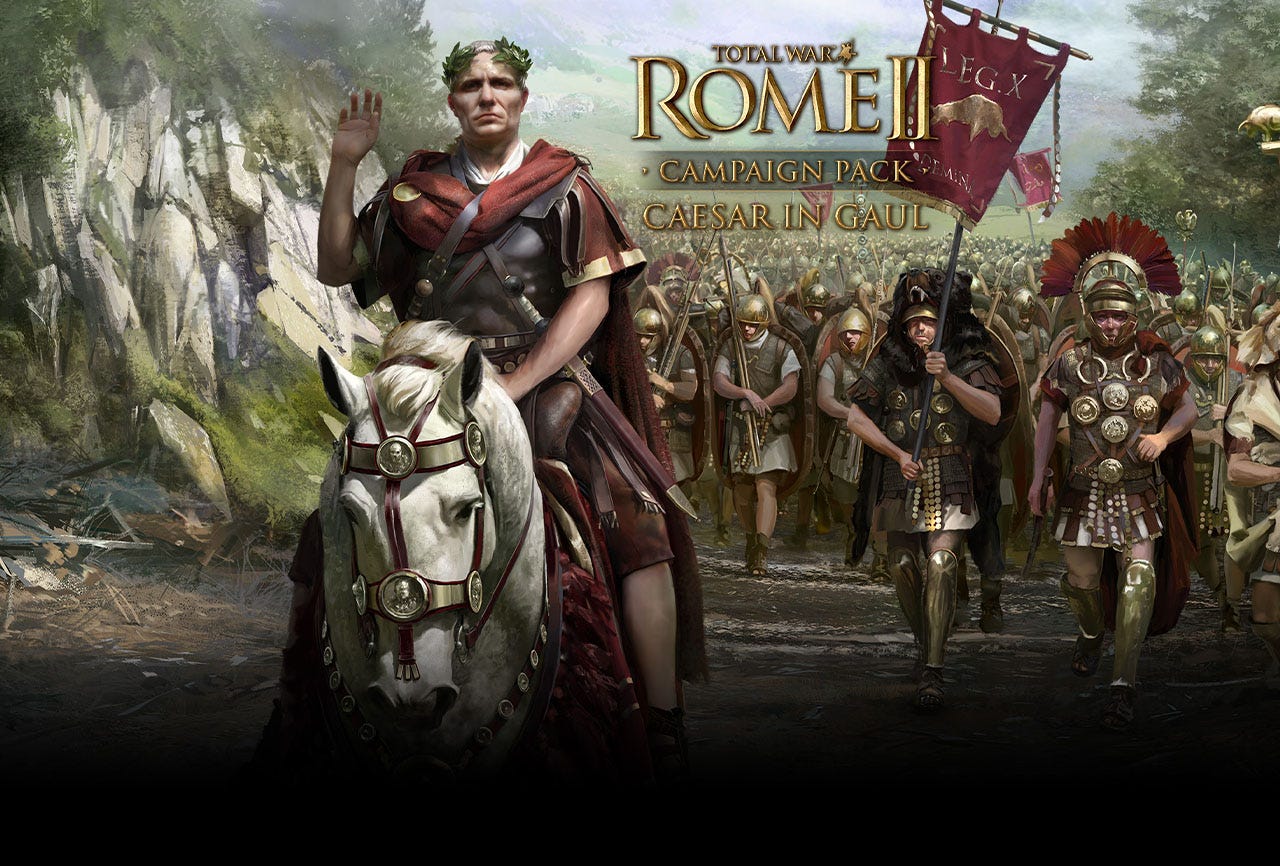
Are you in the greater Washington D.C. area? Jennifer Paxton (The Catholic University of America) will discuss Caesar’s conquest of Gaul. The famous formulation that all Gaul was divided into three parts came from the self-serving pen of Caesar himself, whose conquest of Gaul served as the springboard for a quest for power that ended fatally on the Ides of March in 44 B.C.E. This lecture will be held on Sunday, March 22 at 3:00pm (luncheon at 2pm) at Lebanese Taverna in McLean, Virginia.
Enjoy what you’re reading? Consider supporting ANE Today through a once-off or recurring donation to ASOR.
Published with the assistance of The Lanier Theological Library and Stevan Dana
No posts
Comments
Nothing yet. Say the first thing.
Sign in to join the conversation.