
Once you leave your home country for good, several things change.
You’ll remember it as frozen in time. At the time of your departure.
I remember crying on the bus heading to Helsinki, specifically about this. I will always have St. Petersburg in my heart, but only our past will know each other. We were together from 2007 to 2022, with some interruptions due to my travels. But I always came back before. Now, whatever happens there, the store closing or reopening, the new street artist coming up, the stray animals and new specialty coffee roasters, all the renovation and decay, I’ll miss them all entirely. Even if a friend sends me a photo or a detailed report, my point of view is now that of a tourist, as it was before 2007. I am not a local anymore.
I’ll miss how my city breathes and develops. This was a big grief point. My connection with St. Petersburg was special, and we’ve been close friends.
Now, we’re old friends who sometimes see photos of each other online, but it's difficult to recognize each other with this new haircut.
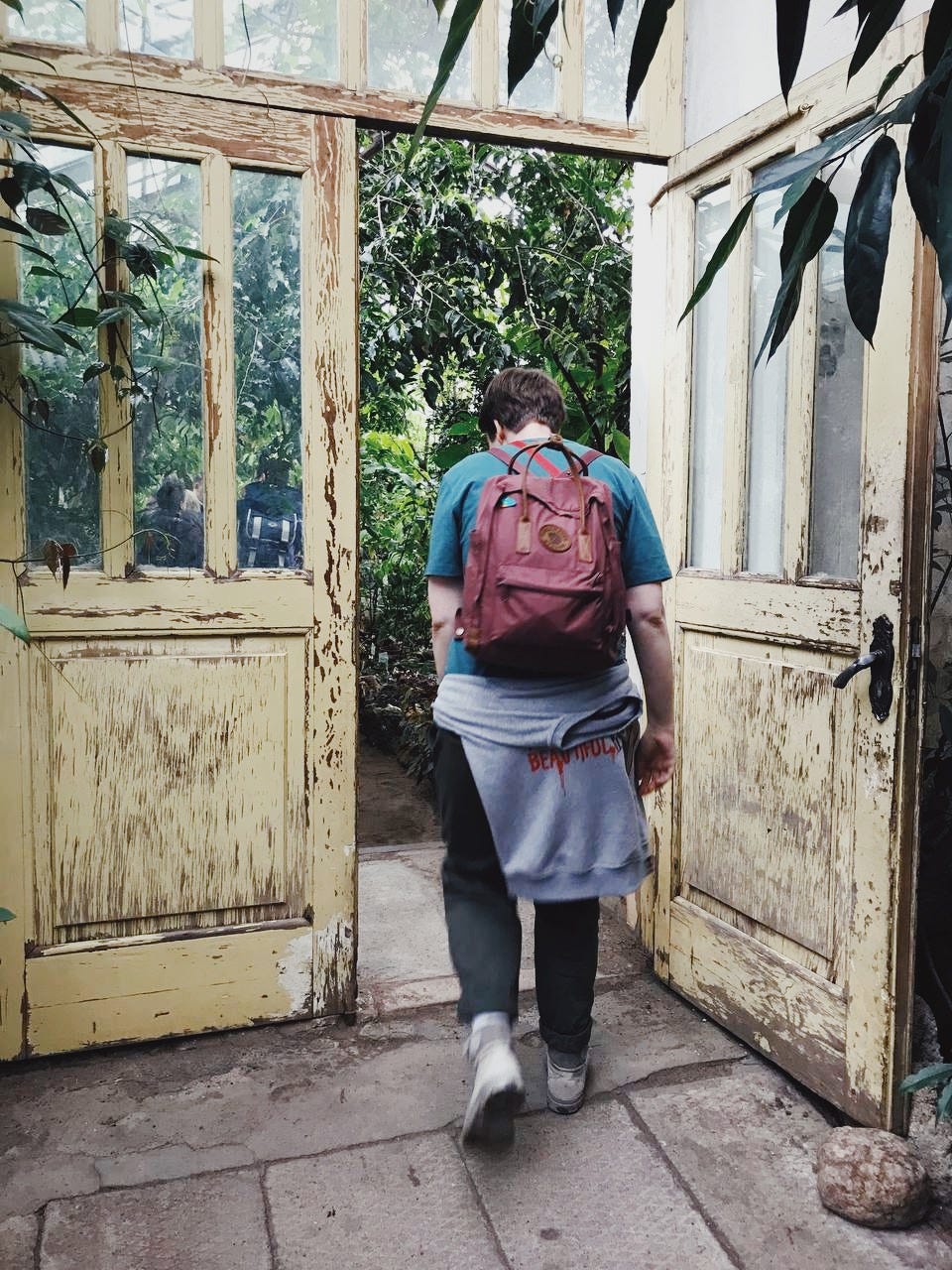
The relationship with the language change.
In the past, a major “forking”1 happened with language.
In USSR times, the emigrant’s language became frozen in time. It was preserved like an old software version, still running but no longer updated, disconnected from the app store, subscription canceled. Isolated from the world, it was standing still, while the major flow of Soviet Russian language evolved, having many users active at the same time.
Today, leaving is different. We have the internet, TikTok, and video calls. People travel and see each other. We learn new memes together. But emigrants' Russian develops alongside integration into a new society and in parallel with the strengthening of other languages. We all become a little strange — like an apple tree with a grafted branch of sakura: mostly white blossoms, but here and there, a spark of pink. When all-apple trees interact with us, they're sometimes startled. And we, in turn, sometimes need to reach for the pink part — even in our first language — because it's now a legitimate part of who we are.
We replace words, change word order, and start saying "take a course" or "take a bus" in Russian (vzyala kurs/avtobus) — instead of more naturally sounding "walk through a course" (prokhodit' kurs) or "sit yourself into a bus" (sadit'sya v avtobus).
(I had to Google if it was “sit yourself into a bus” or “sit yourself on a bus,” and I am only four years in. The brain is happy to release what it doesn’t use.)
You’ll know your home country better.
This one is controversial.
I remember thinking that emigrants know shit when I was inside the country. They posted opinion pieces about Russia on Facebook, and I would disagree with whatever their new hot take was. They mixed up acts, chose a good-looking angle, and relied on anecdotal knowledge. They sometimes missed the point entirely, already too foreign. They didn’t know what life inside was really like anymore.
This gap is still very valid. I, as an emigrant, know my limitations. I am connected to (queer) people who live in my home country to get everything firsthand, avoid clickbait, and check independent media. It’s only fair.
At the same time, the shell of the egg has two surfaces. Just as you cannot touch the inner one if you're outside the egg, you cannot touch the outer one if you're inside.
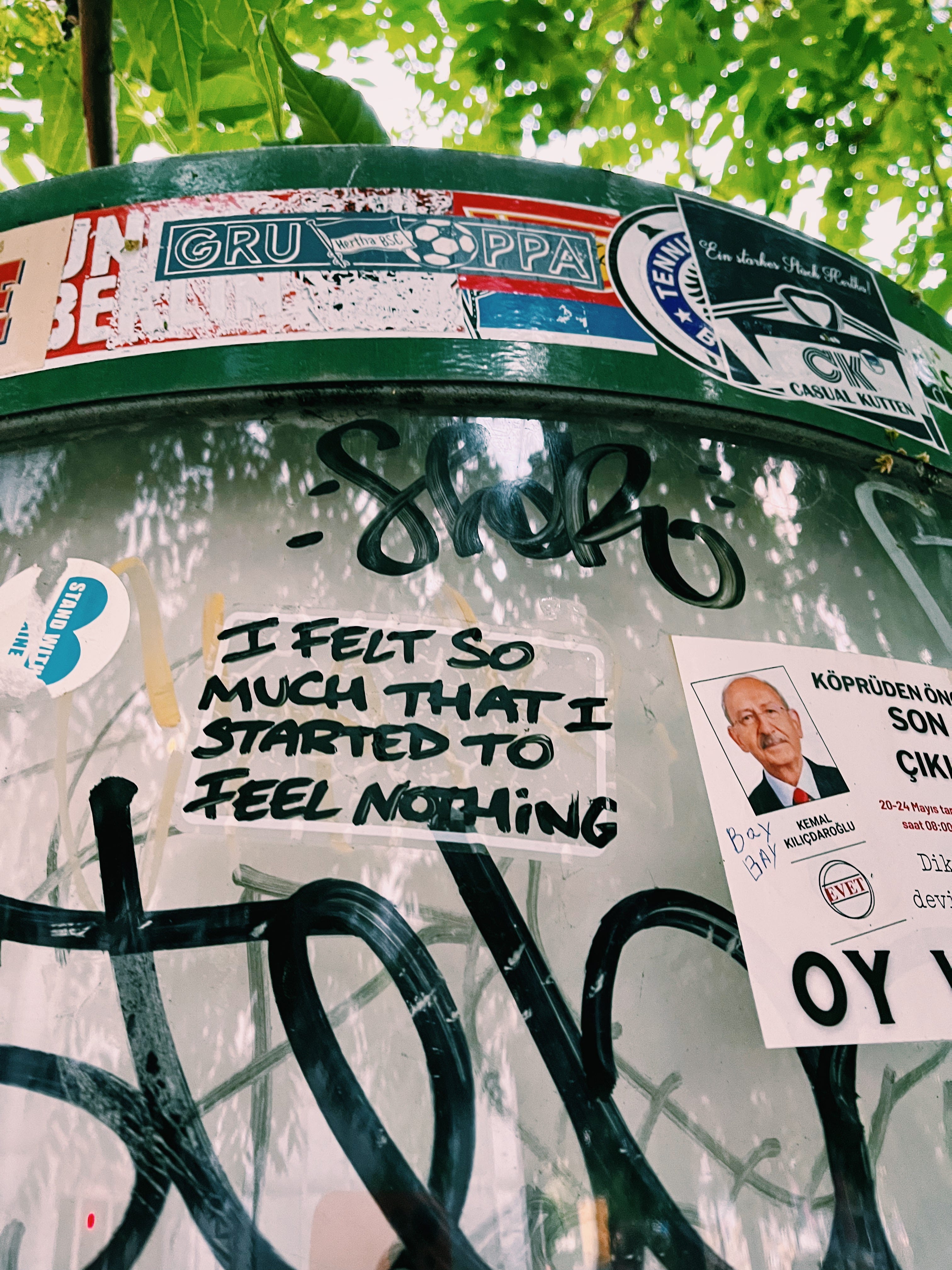
Leaving my home country gave me a certain distance, helping me understand it better. My reference point changed. I spoke with people from everywhere and learned a lot. Unfortunately, that couldn’t have happened inside the egg. I needed to exit to get the second perspective. To stop being a local.
Leaving the egg changes you. The shell is broken. Your view is never whole again; it’s always nuanced now. You have to hold several points of view true, because you see how consequences and context shape them. There is no universal truth.
One strong interest I’ve developed outside the egg is reading books about my first country from the outside-the-egg perspective. It adds dimension to my insider experiences and, at the same time, speaks to my current outsider worldview.
I’ve found some really interesting ones. The books mentioned below are not the only ones that I’ve found, but the ones I’ve enjoyed the most. Please share anything you’d like to add in the comments.
📙 Bears in the Streets: Three Journeys Across a Changing Russia by Lisa Dickey
Once a decade (in 1995, 2005 and 2015), Lisa traveled to Russia. Not to Moscow but to Russia. She went through the country and spoke with people on her way.
She was cautious to open up about her queerness, but to her surprise, everyone answered similarly, getting to know her: “Your secret is safe with me, but don’t tell anyone else, people are different.”
📙 Russian Tattoo: A Memoir by Elena Gorokhova
I found this book in a second-hand bookstore in Chiang Mai, Thailand. I thought it was about tattoo culture, so I planned to bring it home as a gift for a friend, a tattoo master. Instead, I fell in love and am re-reading it every couple of years since.
This is effectively a second part of Elena’s memoir. The first one is A Mountain of Crumbs, less dynamic but might be more interesting for a foreigner as it has lots of USSR-time details. The style of Elena is flowy and deep; she broke out of the eggs in the 80s and emigrated to the USA. She is retelling the story from the start.
Her books gave me hope that a person could write well in another language and the courage to try 🥺 Role models are so important.
📙 Muppets in Moscow: The Unexpected Crazy True Story of Making Sesame Street in Russia by Natasha Lance Rogoff
A bizarre story of localizing the Muppets in the 90s. I was so happy to find this book because I do remember the show going on TV, but I had zero context on why I didn’t know who Big Bird was. Turns out it’s a part of the localization to create another huge Muppet instead, the one that feels natural, and so I know Zeliboba instead.
A note here: in the book, Natasha (author changed her name to highlight the special connection she had with Russia) goes on and on about how Sesame Street installed democracy because children watched it and grew differently. I think it’s a stretch.
I remember watching Muppets, and I was just the age to be democratized. I was bored instead. Still, a great book to get more context on the production behind this big, ambitious, weird idea.
📙 Queer in Russia: A Story of Sex, Self, and the Other by Laurie Essig
A first book about queerness (mostly gays and lesbians) in the 90s Russia, written from the perspective of a foreign queer activist. Later books would add more nuance, but Essig was the pioneer. The book is uneven, which makes it feel human and alive rather than academic.
I was ten in 1994. Reading Essig now feels like a gift: I get to add a grown-up lesbian’s witnessing perspective to the memories I carry from those years, when I was still under my family’s influence, borrowing their lens. Now I can borrow Laurie’s.
One important note: to contact locals, live close to queer communities, and understand their perspectives, you had to have a solid command of Russian. The authors who wrote more in-depth books on this subject often had a connection to the language, usually through relatives who had emigrated a generation or two earlier. So they often reconnected with their family’s past by visiting.
Another note: the locals and activists who appear in this and similar books are often prominent people with good connections. Some of them I recognized from newspapers. I would never have met them myself. So this is, for me, a parallel history — a story of another bubble. But one that existed within the same culture I remember.
📙 Cracks in the Iron Closet: Travels in Gay and Lesbian Russia by David Tuller
Another favorite of mine. A vulnerable, curious book about the others. David went to Russia after Laurie and built on her learnings. He is more cautious in his assumptions and summarizes his findings pretty on point.
Where Laurie guessed (wrongly) that in Russia, queerness works differently, David found out (correctly) that it’s not about Russia. Challenging his own identity, he explored his own sexuality boldly and bravely. A fascinating personal journey alongside the cultural one, and a willingness to be changed by another culture, not to change or judge what you don’t understand.
📙 My Pink Road to Russia: Tales of Amazons, Peasants, and Queers by Sonja Franeta
A little bit later, Sonja arrives. Building on previously published work, she dives even deeper, drawing on her fluency in the language.
Coming from the academic field, she notices now the local lesbians sometimes count her in as “our own person” (svoi) and sometimes push her out, “but she’s a foreigner, after all,” because this or another opinion doesn’t fit the expectations. She feels both similar and very much other, able to stay with this helpful ambiguity.
Sonja was able to infiltrate Pushka’s rough community (I was always a little afraid of their harshness) and interview lesbians from diverse life paths.
📙 Charlottengrad: Russian Culture in Weimar Berlin by Roman Utkin
A professor at Wesleyan, Roman is interested in many of the subjects I am following, including Berlin, emigration, queers, and Soviet culture. This book is at the intersection of the first three, explaining how Charlottenburg became a “Charlottengrad” after the huge wave of intelligentsia fleeing the bloody revolution a hundred years ago.
One chapter is dedicated to Sergei Nabokov, the gay brother of the writer Vladimir Nabokov. Vladimir lived in Charlottengrad, later becoming the only person deemed both a great Russian and a great American writer, teaching at places like Cornell. Sergei’s life was lost in the concentration camp.
📙 A Terrible Country by Keith Gessen
M. Gessen’s brother wrote a book about a guy who returns to Moscow in 2008 out of boredom to look around, but quickly learns how far it is from what he expected it to be. It is very autobiographical and based on Keith’s year in Russia.
📙 An American Engineer in Stalin’s Russia: The Memoirs of Zara Witkin, 1932-1934
I saved the most curious story for dessert.
No one knows about this book. I found it in an obscure footnote of one of the previous books. Sometimes I feel like a detective, one book done, five others noted for my To-Be-Read list.
First, who was Zara? His parents emigrated from Russia. His name was a version of “morning light”, a Russian word “Zarya” (I would never have guessed). His surname is an Americanized version of Utkin (sounds nothing like it, but his parents probably had their reasons).
Zara was an engineer and an architect (from what I’ve read in the memoirs, probably neurodivergent, socially awkward, naive, yearning for simple answers for complicated social questions).
Zara didn’t know Russian, unlike all the previous writers who used it as a bridge. What was the reason for his going there during Stalin’s time? Maybe a search for his ancestors?
No. There were two reasons: an ideological one (fellow Americans were calling him a Bolshevik for his working-class leanings) and a personal one (he saw a movie with Emma Tsesarskaya, fell in love, and needed to see her in person).
He called her "Dark Goddess," and she called him "Heavy Industry.”
— New York Times, December 29, 1991
In the meantime, he befriended journalist Eugene Lyons (who would later save Zara’s memoir from oblivion) and met Ernst May, who arrived from Germany with his New Frankfurt team in 1930 in hopes of better working conditions, but quickly saw the difference between theory and practice and fled elsewhere.
Do you feel the drama approaching? Witkin couldn’t convince Emma to marry him (one reason was that she, a film star, wouldn’t be allowed to leave). He then grew disappointed with his supervisors, the lack of progress at work, and, most significantly, with the idea of the Soviet State. He was lucky enough to leave just in time.
Back in the US, one task he had was to describe these three years. However, no publisher was interested. Zara died without a published book, and his relatives burned the two manuscripts he had, together with other useless papers left from an old man.
The next chapter opens with Michael Gelb. He is a historian at Franklin and Marshall College in Pennsylvania who found a photocopy of the memoir in Eugene Lyons’ archive in Berkeley while researching something else. He copied one page, then another, and then he took it all. He couldn’t fathom why this wasn’t published, and set himself on an adventure (possibly losing some time to write his own book to secure the tenure).
Michael’s wife was another Soviet emigrant. She taught at Berkeley. Michael shared the story with her right away, and she mentioned it to some students. One said that Emma is still alive. What does Michael do? It’s 1989, and he travels to meet Emma. He wanted to read the memoirs to her. She is mentioned there many times.
Emma finds out Zara was in love and thought she was, too. She says she didn’t love him back. We cannot know if it was true or the memory was rewritten after certain events (she married someone from the Secret Services, and he was executed when the chain of command wobbled, leaving her with a baby, ostracized, a widow of the enemy of the state). She dies half a year after Michael’s trip.
It’s all so unreal. I don’t know how it wasn’t made into a movie. Such a fascinating character development story. Once you’re an idealistic architect from the West, traveling to the land of dreams to meet a film star, and soon you’re disillusioned, but with a much better grip of reality.
Soviet pencils are amazingly bad. With the best graphite in Europe, and unlimited supplies of fine lumber, the Soviet factories manage to produce the worst pencils in the world.
This is due to failure to grind the graphite fine and uniformly and to season the wood. Instead of letting the wood dry out after manufacture, though the nation suffers from a shortage of oil paint, pencils are enamelled and moisture sealed in.
The result is a pencil which cannot be sharpened with the ordinary penknife. It requires a razor-blade. The lead is brittle, breaking constantly, causing a large proportion of waste.
— Zara Witkin.
Thank you for reading 🫶🏻
I am happy to hear your thoughts — in a comment or email.
splitting in two and developing separately, a tech word
No posts
Comments
Nothing yet. Say the first thing.
Sign in to join the conversation.