
I’m restlessly swiveling side to side with the momentum of the desk chair as the family computer screen stings my twelve-year-old eyes, a precursor for an upcoming decade of further blue-light damage. The Jansport website stares back at me, backpack designs organized at attention in geometric grids. I shouldn’t pick the kind with the leather bottom, although my dad says that’s the most durable option. No one at school has one with a leather bottom. I should get mint green; the other girls at school have mint green. But do I even like mint green? What if mint green isn’t cool next year?
At my private Catholic school with uniforms, students have adapted to using backpacks as a way to subvert the playing-field-leveling intention of uniforms and uphold social and class order. My family can only afford for my sister and I to attend the school because my mom is the music teacher, and I continue to embody my role as the only “scholarship” student in my grade. While my wealthy peers can buy a different backpack for every school year (some have multiple that they switch out day to day!) my family can’t afford that, and I’ll have to keep the same backpack until it gets enough use that we can justify buying a new one. My identity is hardly formed, and my tastes are constantly changing. How am I supposed to choose a bag that will not only prove that I am worthy of being high in the social order, but will also define my self-expression for multiple years? On the heels of womanhood, I am faced with my first petrifying taste of being defined by the objects I carry and the accessories I wear.
That night, after settling on a basic black backpack that I planned on personalizing with patches and pins, a smaller screen illuminates the dark of my bedroom. With splintering wired headphones plugged into my iPod touch, I closely study Zoella, a small British woman beaming at me from the handheld screen. She shows me the contents of her leather TopShop handbag. Headphones, a beanie, wallet, gum, gum wrappers, candy, a camera, lip balm, a parking ticket. She’s so cool. She’s so relatable.
Carrying a bag is as inherent to humanity as gathering items to retain in said bag. For a majority of our history, these utility items were served for that purpose alone—utility, with bags previously being designed to hide under clothing or hang on belts for easy accessibility.
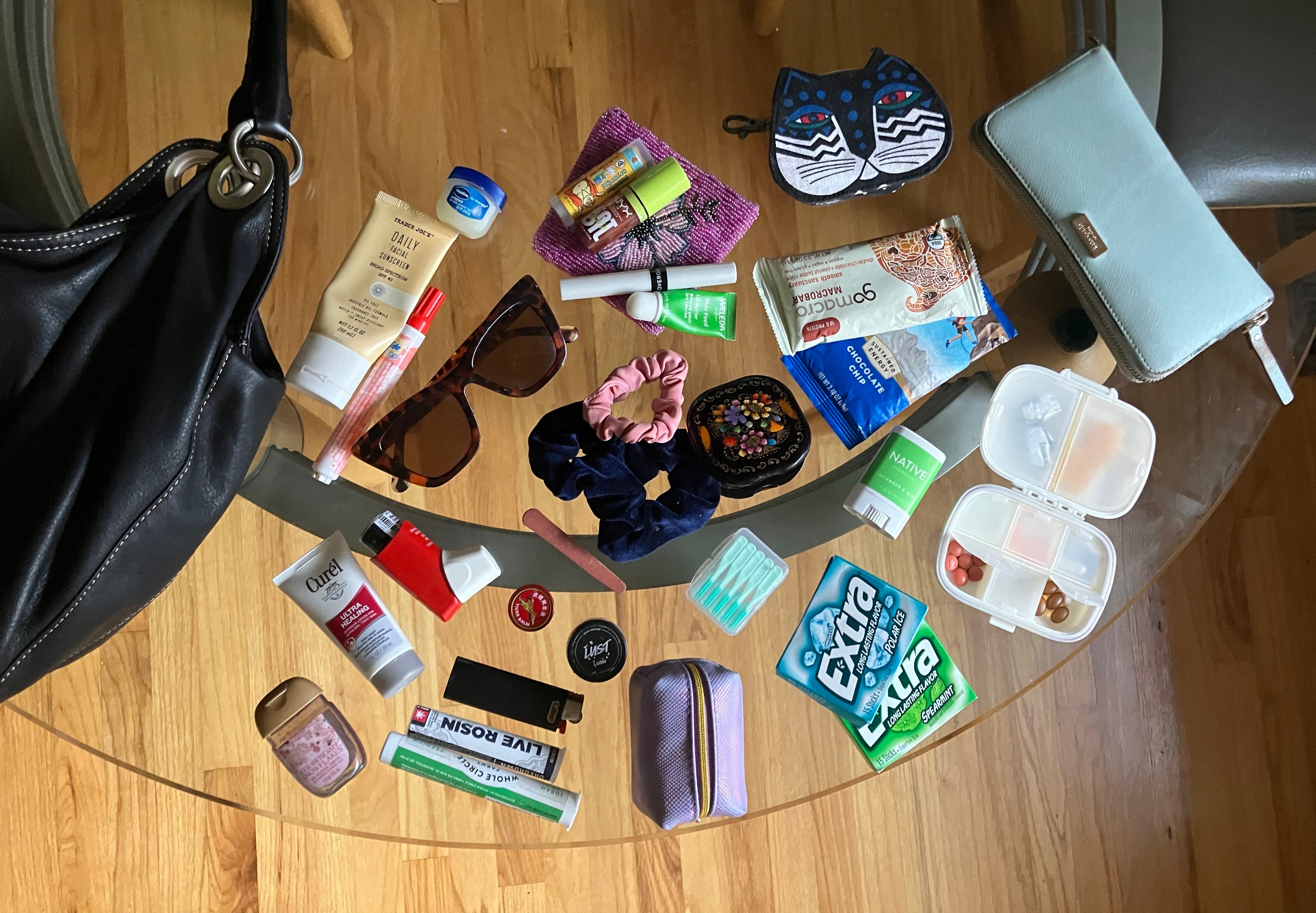
My friend Caitlin sends me a picture of the contents of her bag, but barely reveals the bag itself. Granola bars, a pill box, inhaler, lotion, hair ties, floss, wallet, sunscreen, deodorant. Oh, and a couple joints. “My purse genuinely brings me a sense of security,” she tells me. “I have tiny versions of everyday things that one might need, and I also always have an ‘emergency kit’ which includes things like double-sided tape and a sewing kit for whatever or whoever needs it around me. When I leave my house, my purse is employed as my security blanket.”
While bags always had a level of personalization depending on class and culture, socialites and celebrities began requesting individual manufacture of personalized bags at a higher volume during the Industrial Revolution, driving luxury designers to offer more customized options for those that could afford it and incorporating bags as another element of the fashion industry. The item used for use now had an added dimension: status and style, a way to define who you are based on what you take with you and what you carry it all in. With the rise of public train travel and women traveling independently around this time, the use of a personalized bag also began to symbolize upper-class female liberation and womanhood as a whole, a quality that has remained in our public conceptions of bags and purses for over 100 years.
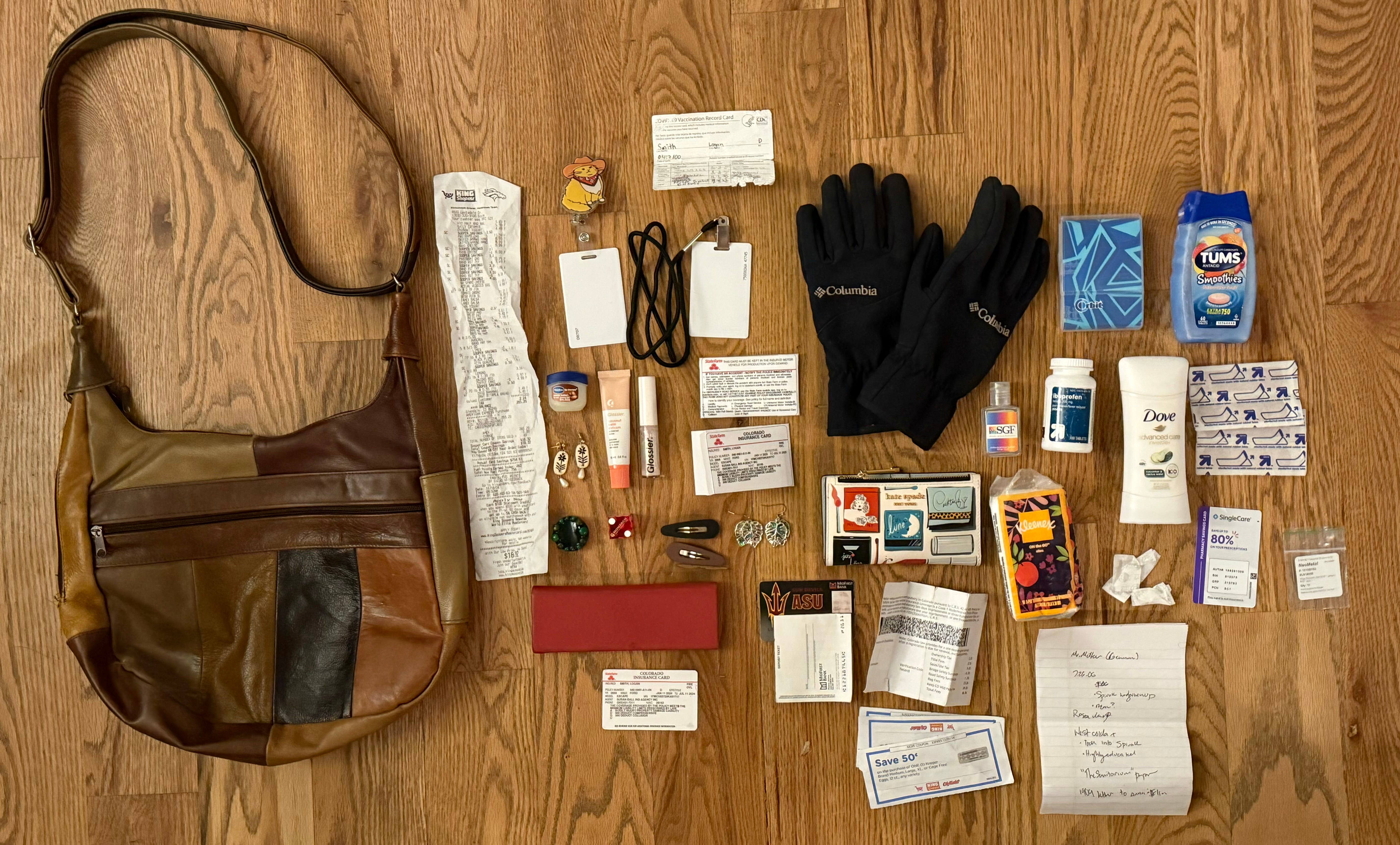
“Growing up, I remember my mom, grandmother, and aunt having a different purse for every season and occasion. It always confused me; what would ever necessitate more than one bag?” my friend Logan tells me. Speaking about her own stockpile of purses she now has an adult, she says, “everytime I open my bag and smell that mix of mint gum and my own perfume, I feel connected to every woman in my life.” In her every day bag, a patchwork leather purse from Goodwill, she carries receipts, access badges for work, vaseline, Glossier lip gloss, earrings, a clay worry stone, die from a casino, hair barrettes, a glasses case, insulated gloves, a wallet, car registration, coupons, notes from an archival research trip, gum wrappers, Kleenex, hand sanitizer, cucumber scented deodorant, gum and tums.
My three younger siblings and I are all 5-7 years apart, meaning there was rarely a time in my childhood that my mom was not taking care of a child under the age of 6. Buried with other unused items in her closet is a diaper bag gifted to her at a baby shower, padded and white with images of Winnie the Pooh characters frolicking in the Hundred Acre Wood. As with other strictly utilitarian bags (briefcases, for example) diaper bags like this sacrifice a level of self-expression inherent between a person and their accessories, with both internal and external defined by the bag’s purpose (baby design outside, baby products inside, the person carrying the bag completely defined by parenthood). Diaper bags scream to the world, “Hey! I have children! I change diapers in public restrooms and carry applesauce pouches with me everywhere I go!” as if the children themselves don’t already do the job.
My mom refused to surrender this element of self-expression, however, and instead finds ways to store diapers, wipes, tissues, medicine, snacks, you name it, in a green leather handbag, in a red plaid messenger bag, in a hand-made bag adorned with vintage magazine covers. The turtle keychain on the bag strap recalls a retired nickname she had before she was called “mom.” When she’s out in public without children, you’d have no idea that she has a mini container of baby powder in her Fossil shoulder bag. You already know she’s a mother by the stroller she’s pushing around, but her bag, the container of not only her needs but the needs of other people, is both a declaration and maintenance of who she is outside of the defining roles of “mother” and “wife.” Through the purse, a utility object associated with womanhood, she maintains connection to her expression as woman and as self.
As the eldest daughter and therefore her #1 helper, I had the privilege of access to the internal of her purses, digging through to find whatever she needed while handling one of my siblings. The inside was always organized, and the contents were always an amalgamation of her needs as both a mother and an individual. Snacks, baby wipes and diaper cream mixed with rosaries, tinted lip balm and coupons. There’s a certain mysticism to the inside of a person’s bag, a desire to peek into the secret garden of someone’s every day needs. Within heterosexual contexts, the contents of a woman’s purse has served as a secret access to a woman’s mind for men conspire over, and it’s often seen as impolite to peer into someone’s bag without permission. While the external portrays an image of a person and how we choose to present ourselves, the most intimate details are available only to the owner and those deemed worthy to look inside. The bag is our skin, the clutter inside our secrets. Like with my mom, the internal of the bag can serve as a revelation of our multiple identities. Or it could just have all the normal boring stuff that everyone else puts in their bag.
This obscurity and its corresponding privacy have been slowly peeled back as our innate curiosity drives us to pursue the mystery of the objects within the bag. Voyeurism and attention seeking go hand-in-hand, compelling us to both show off the contents of our bags and to excitedly study the inside of someone else’s bag. Our mouths water as our desire to know someone closer, to crack the code to their inner sanctum, is satiated through the display of seemingly miniscule everyday objects. We can’t know something about someone purely from their curated external image, we must know their daily consumption habits to the tiniest, most minute detail.
I couldn’t find the initial origins of the “what’s in my bag” trend, but can assume that this concept was conceived with the popularity of fashion magazines post-WWII, with the earliest example I could find coming from a magazine in 1945 (bag contents: lighter, calorie counting guide, and a picture of her husband) (thank GOD I am a woman of the 21st century). Divulging into our generations-long curiosity over the enigmatic world inside the bag, “what’s in my bag” has been developed and recycled over decades of lifestyle and beauty journalism, with Cosmopolitan, Marie Claire, Vogue and Elle releasing colorful curated spreads of celebrity bag contents. Thanks to the internet, “normal” people can now show off the insides of their bag as well. Relief of curiosity once only granted to high resolution, filtered images portraying the glamour of the rich and famous even in their most personal spaces are now open to badly-lit phone images of your messy bag contents. Now everyone can turn their every daily operations into content!
Why has “what’s in my bag” withstood generations and remained prominent even as the mediums in which we consume content have shifted? The most obvious answer is that it’s easy marketing. In the fashion/lifestyle environment, this content can be used for fabricated promotion of “holy grail” beauty products that an otherworldly, airbrushed celebrity/influencer can’t possibly leave their house without. And the more relatable this person and their content seems to be, the more we’re likely to buy the products they endorse, so let’s throw in something quirky to remind everyone that they, too, are one of us (they just have way, way more money). I filled many lonely pre-teen nights hiding under my covers, watching supposedly “relatable” beauty YouTubers show me their daily morning routines, clothing hauls and “what’s in my bag” videos. As professionals in crafting a seemingly realistic persona for their audience, these influencers found ways to be both aspirational and relatable. As a 12 year old girl (and even as a 24 year old woman) I couldn’t afford to have a bottle of luxury fragrance to carry around in my bag like the women on my screen, but hey, they have a crumbled up granola bar wrapper in there too! They’re just like me!
Celebrities/influencers (who are one in the same at this point) get to market themselves as one of us and devise a level of relatability because they also carry around tissue and deodorant in their $3,000 purse. In Molly Soda’s Substack article about the topic, they refer to this content as an equalizer, saying that “not only do those of us with 500 views aspire to have bags and view counts as high as those of celebrities, but celebrities themselves perform relatability through revealing what they carry around with them.” The playing field is temporarily evened as we all attempt to emulate a class separate from our own for social notoriety and personal/professional marketing with something as miniscule as the contents of our bag. The only difference is when celebrities do this, they get sponsorship money. And when civilians do this, we get the false satisfaction of pretending we’re something we aren’t.
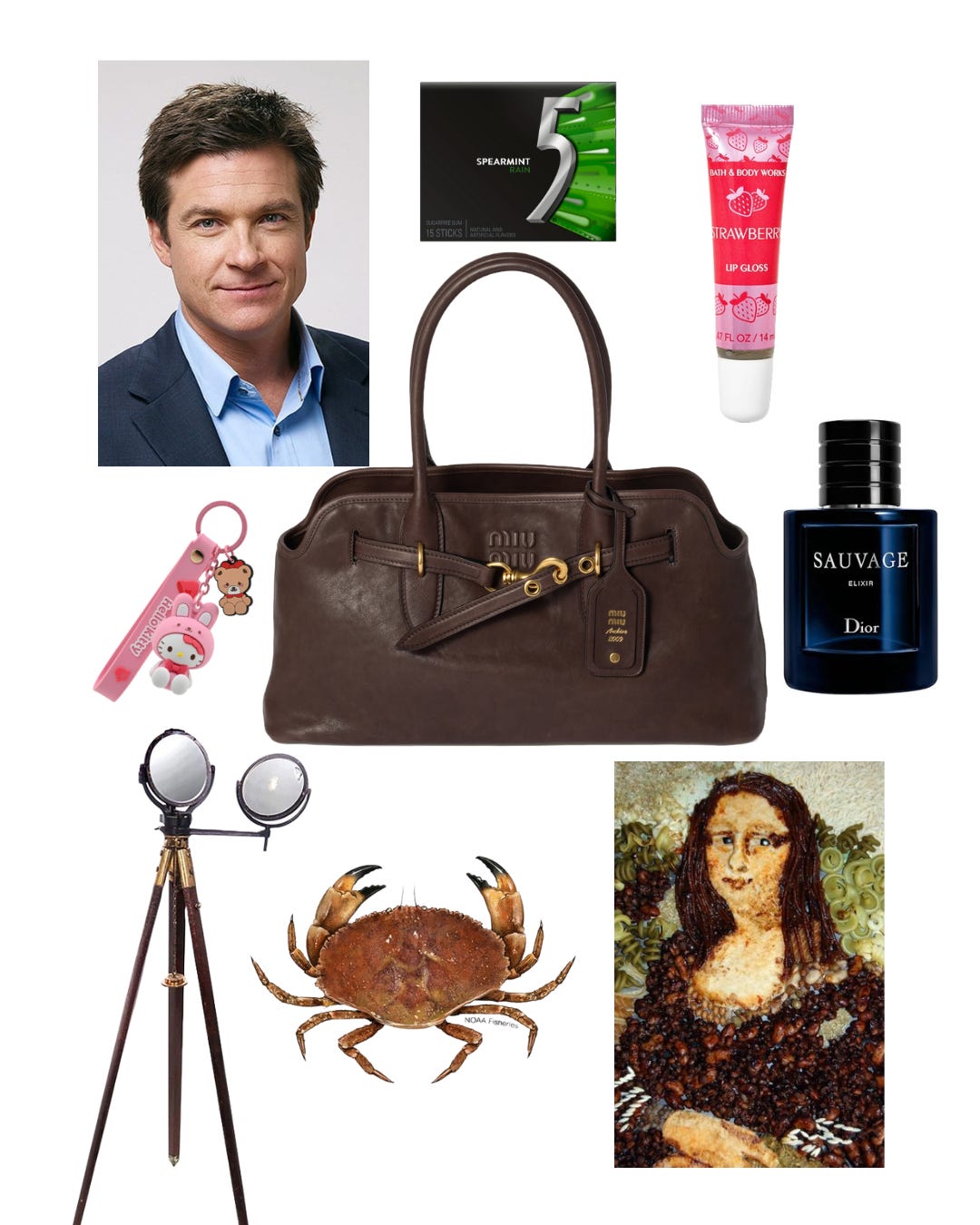
Veronica’s What’s in my Bag
Bag: $4000 brown leather Miu Miu tote bag with a cute hello kitty keychain!
Contents: A telekinetic wallet (I’ve ascended beyond the need for physical currency), gum, a live crab from the coast of Maine (because I’m a cancer :P), a full bottle of Dior Sauvage Elixir X Baccarat eau de parfum, macaroni art made by my little brother, Jason Bateman, a heliograph (in case I want to communicate with anyone hehe), the crushing weight of the future, and some strawberry lip gloss!
“What’s in my bag” lives comfortably in the constant pull between utility and performance within fashion. We perform and uphold style, gender, culture, age, class and personal taste through objects intended to protect and assist us day-to-day. “What’s in my bag” and the aestheticizing/curating of typically obscured objects is a turning point of this already established pull. Through this content, we extend that performance to operational items carried with us within the object (the bag) that already serves to outwardly communicate image/expression. Not only are you selling an image of yourself from the outside, but your personal life is also a product to fabricate, promote and sell.
This is no surprise, as bags and purses are associated with concepts of classic womanhood, and womanhood in itself relies on persona-curation and performance. In Cricket Guest’s beautiful analysis of Sabrina Carpenter’s image, they explain the relationship between womanhood, identity curation and consumption:
Media has allowed women to consume themselves only as vessels to be consumed. Media has in this way trained women on how to best present themselves within the context of being consumed. But more specifically on how to be consumed by a very specific target demographic.
As women are socialized to consider ourselves not only as an individual but as an object to be perceived by society (men, particularly), we are masters at curating an image of who we are to be interpreted by an audience. Who we are as women (our “true” expression) and how we are consumed as a product are intrinsically linked as we are trained from childhood to be aware of public perception and to craft a concept of ourselves. What we purchase and utilize day-to-day also contributes to this personal image-curation. This is why buying something as simple as a backpack in adolescence can be a staggering decision; the backpack didn’t just serve and represent me as a student, but established how I would be perceived, and in returned treated, by my peers. Now imagine if my peers were formulating judgements about me based on what I held in said backpack. (Truthfully, they would’ve just found EOS lip balm and crumpled up doodles.)
This concept of social performance extends past womanhood with sociologist Erving Goffman’s dramaturgical approach exploring how individuals present “idealized” rather than authentic versions of the self. Using Shakespeare’s line “all the world’s a stage,” to represent his point, Goffman considered life a stage for activity, where humans perform different versions of themselves for specific spaces/times. Using the metaphor of a stage play establishes that we not only perform for an audience, but also serve as an audience that maintains expectations for those performing for us. We curate an image for ourselves to share to the public, and we come to expect certain images and behaviors for others based on what they’ve presented to us. With the internet, the concept of space/time in this approach is transcended, as we can perform for anyone, anywhere, anytime and create expectations for the performances of others, often without even knowing them personally. We are now considering the ways in which we are being perceived at all times in all areas and how we can exhibit our personal lives to our audience. What’s the point in doing anything if we’re not showing it off?
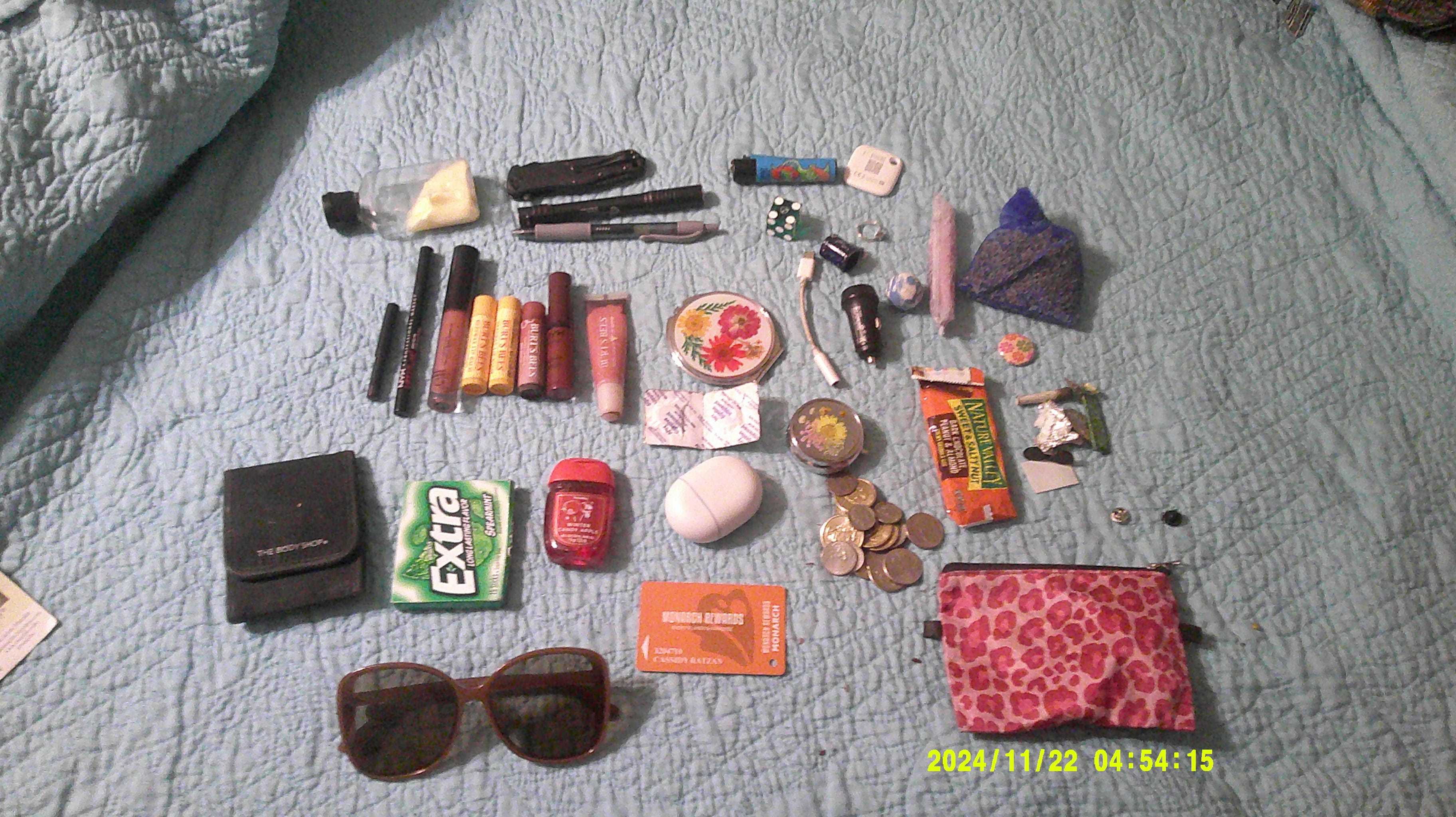
While this places heavy limitations on authentic expression, I can’t blame us for using the internet and social media in this way. Our desire to connect and to be accepted on intimate levels drives us to crave validation, and the internet makes it easier to be a fantasy version of ourselves in order to pursue the attention we desire. We are grasping for connection and recognition immediately and without effort, through flattened images on a screen. “...I feel like the issue always comes from the sobering idea that we all care too much about being cared about,” my friend Cassidy expresses. “The thought that someone is looking at your purse, and even complimenting you, is a rush that comes from a ranked interaction…As much as half of the joy comes from having fun with fashion, the other half is influenced by the potential perception of others.” Cassidy’s bag contains lip glosses and chapsticks, pens, a pocket knife, hand sanitizer, sun glasses, gum, change, headphones, a portable mirror, wallet, granola bar, loose change, crumbled up receipts and an old joint bottom. Cassidy says she kept those items in the picture because “I wouldn’t want to look like I’m trying too hard, now, would I?”
There’s also something to be said about the power of using both utility and performance in “what’s in my bag” as a vision board, as proposed by Molly Soda. Putting physical items in a bag that you typically wouldn’t carry with you can be an attempt at self-improvement that is more applicable than vague images inspiring you to do better. Displaying curated, aesthetically-pleasing bag contents for the internet can assist in devising and circulating personal ambitions and aspirations (along with fantasies, because envisioning a different version of yourself requires stepping out of reality, even a little). You’re designing your desired niche for your internet audience, but you’re also communicating to yourself the person you want to be. You might not immediately read the book you put in your bag, but having it with you puts you in a position to potentially read it rather than picking up your phone when you’re on the bus or waiting for an appointment. Maybe you’ll remember to reapply deodorant or perfume if you see it in your bag while digging for something else. Maybe if we show off the pretty lipsticks we have in our bags, we’ll actually remember to keep them in a safe pocket rather than letting them smear all over the bag’s lining (speaking from personal experience…) Through fashion and performance in a highly image-based, consumerist culture, appearance can be representative of something lying beneath. As the economic divide expands, the average, working class person also wants to feel as though a lavish, fulfilling life is attainable. If you show the world one version of yourself, perhaps you can eventually embody that version of yourself.
“The bag I carry around makes me feel like I’m listening to Nora Jones in a 90’s/2000’s coffee joint. It makes me feel like a cool academic meets Paris Hilton,” my friend Lilly tells me. “I got this cherry chapstick for Christmas last year and it made me feel like Britney Spears. I was reading her book at the time and she talked about the ‘what’s in my bag?’ interview she did. She said she had cherry lipgloss, a roller of vanilla perfume, and Hubba Bubba bubblegum. I’m missing the perfume and the gum, but the chapstick makes me feel like an ‘it’ girl.”
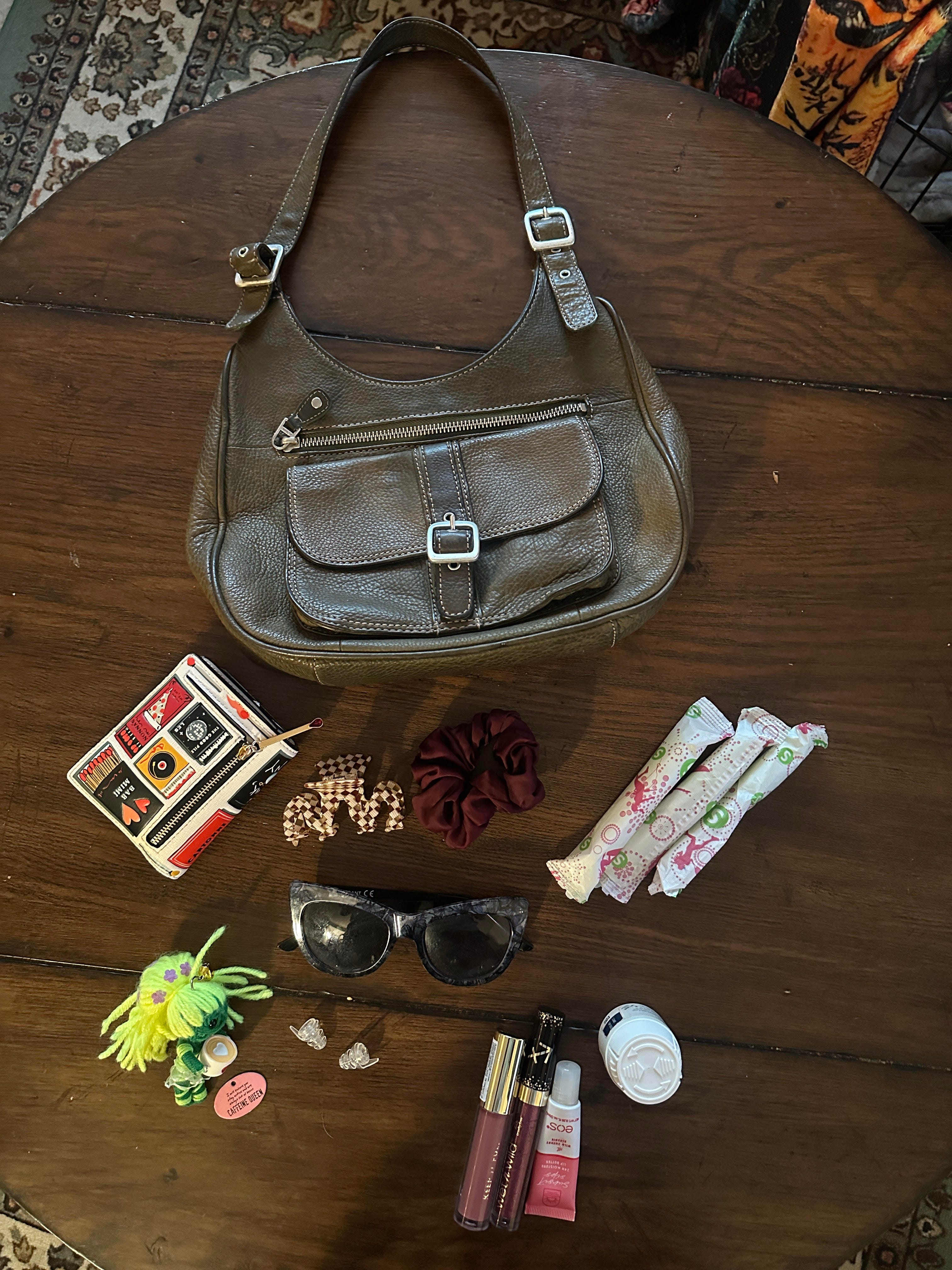
Along with the chapstick, Lilly carries in her bag a pair of sunglasses, a wallet, a voodoo doll, hearing protection, scrunchies and hair clips, tampons and Advil.
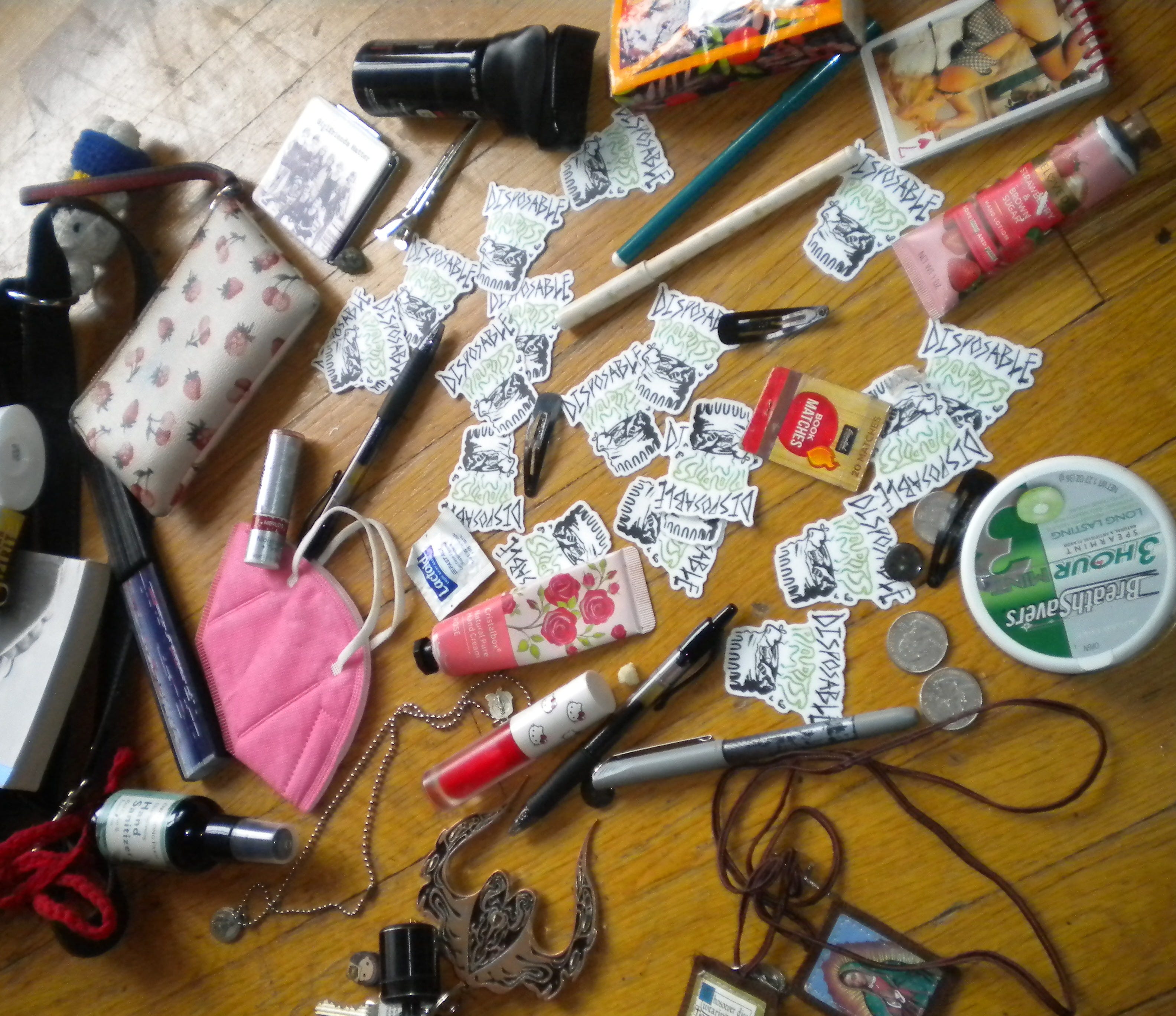
Veronica’s Actual What’s in my Bag
Bag: slouchy leather cross-body bag found at a Mormon thrift store, crocheted red ribbon tied around the strap and keychains dangling from the zipper pulls
Contents: chapstick, stickers, a mini notebook, Lactaid, pepper spray, hand sanitizer, a portable mirror, keys, a lighter, 2 bottles of hand lotion, wallet, pens, On Earth We’re Briefly Gorgeous, Narcan, a mask, a fold-out fan, a parking ticket given to my rental car on Thanksgiving that I do not plan on paying, lipstick/lip gloss, gum, Catholic scapular, vintage pill container that was my grandmother’s, mints, stickers for my magazine, granola bar.
Remaining at the center of all this analysis and explanation of our enduring love for “what’s in my bag?” is the simple fact that it’s fun. Sharing the contents of our bag is a way to share an expression of ourselves (whether idealistic or not) and connect with others. I love looking at “what’s in my bag” content from decades ago, observing the way bags were once designed and the items within them were once packaged, the items we once found necessary to carry, marking a period now passed. The intimacy of the inside of a bag, and the subsequent reveal of those intimate details, incites a level of connection, of seeing each other at our most mundane and casual. I love being surprised by a random item in someone’s bag, like my friend Moira carrying around a can of peaches while out to brunch. While doing research for this, I even found an article published in the American Anthropological Association of anthropologists showing off what they carry in their bags. On every level, we have fun with sharing this piece of ourselves, allowing a glimpse into the inner crevices of our lives.
It feels incomplete to discuss “what’s in my bag” without mentioning journalist Sergey Stroitelev’s 2016 “What’s in my Bag?” project for VICE media, which disconnects this content from the tendency toward curation through randomization: spontaneously approaching women in public and asking to take pictures of the contents of their bag. He did not take pictures of the bags holding the content, but instead took ID images of the women and asked their occupations, pairing a face, an identity, with the objects on display. A 31 year old gallerist has a kid’s math workbook and mini saw in her bag. A 58 year old security guard has cigarettes, eye drops and multiple pill bottles in her bag. Some objects make sense based on age and occupation, but a lot of it is random, inexplicable to the outsider.
It is fascinating to relate and compare our lives and habits with those of other people through objects they carry in their bags, and the reality is that most people carry around normal, unsubstantial items just like the rest of us. And yet, those boring items are still a piece of our who we are, of what we feel necessary to have with us as we live. While we are constantly bombarded with reminders that we are not who we want to be, that we can pretend to be someone else, that the world is analyzing our every move, at the end of the day we all have a little trash at the bottom of our bag, and maybe a pack of gum.
Sources:
“A Brief History of the Handbag.” Maiook, 23 Feb. 2025, www.maiook.com/blogs/journal/history-of-bags.
“9 Things Guys Think about Your Purse - Cosmopolitan.” Cosmopolitan , 28 Oct. 2015, www.cosmopolitan.com/sex-love/news/a48400/things-guys-think-about-your-purse/.
Andonopoulos, Vasiliki, et al. “Authentic Isn’t Always Best: When Inauthentic Social Media Influencers Induce Positive Consumer Purchase Intention through Inspiration.” Journal of Retailing and Consumer Services, Pergamon, 14 Aug. 2023, www.sciencedirect.com/science/article/pii/S0969698923002722#sec4.
Soda, Molly. “👜🧾 What’s in My Bag 💖📁.” Substack, 28 Feb. 2024, mollysoda.substack.com/p/whats-in-my-bag.
Guest, Cricket. “Who’s Afraid of Sabrina Carpenter?” Substack, substack.com/@finalgirldigital/p-155636718.
Hogan, Bernie. “The presentation of self in the age of social media: Distinguishing performances and Exhibitions Online.” Bulletin of Science, Technology & Society, vol. 30, no. 6, 1 Nov. 2010, pp. 377–386, https://doi.org/10.1177/0270467610385893.
Fuentes, Agustín, et al. “What’s in Your Bag? .” Anthropology News, American Anthropological Association , anthrosource.onlinelibrary.wiley.com/doi/10.1111/var.12127/.
Stroitelev, Sergey. “Photos of the Fascinating Things Women Keep in Their Bags.” VICE, 28 July 2024, www.vice.com/en/article/whats-inside-the-womens-bags-russia-876/.
Comments
Nothing yet. Say the first thing.
Sign in to join the conversation.