
The Fabric of Skin is my style series where I catalogue my wears and fashion inspirations for the month. It’s also where I explore the connection between my interest in clothing with my history of disordered eating and my relationship to my body. I analyze the fabric, therefore I analyze the skin. You can read my intro to this series HERE for more info. As a content warning, while I don’t dive into triggering details of my eating disorder, I do discuss elements of it that may be upsetting or uncomfortable.
FABRIC
As you may know, I became unemployed last month. I wrote all about it. The survival instinct that kicked in from having no consistent income has led to: 1) actually not buying clothes I don’t need and 2) having no occasion for going out and wearing a cute outfit because I don’t have money! Most of my days this month were spent wearing t-shirts and yoga pants, or pajama shorts if I wanted to really spice it up.
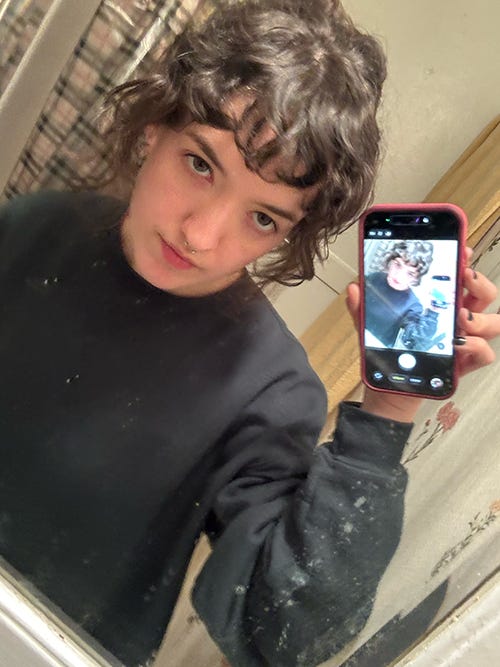
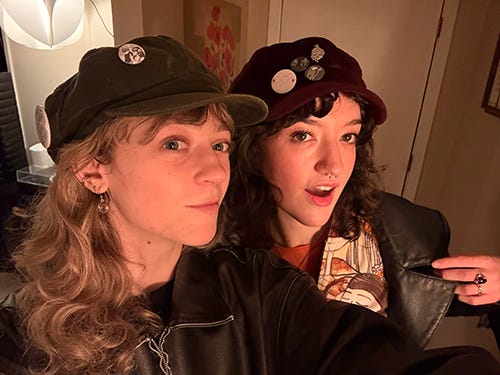
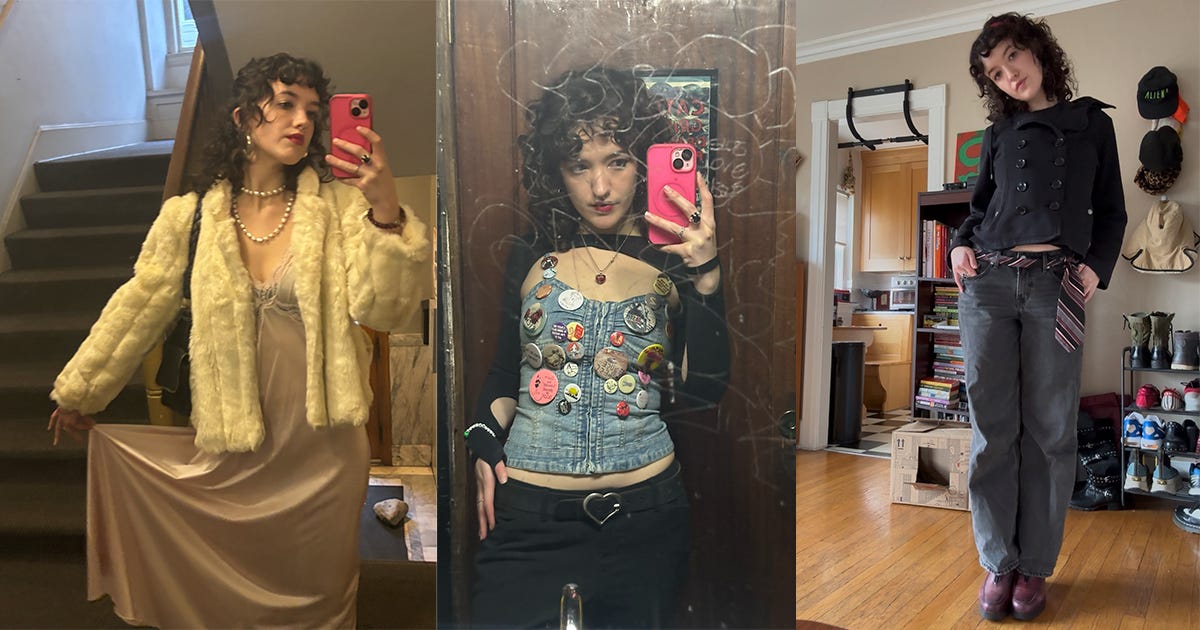
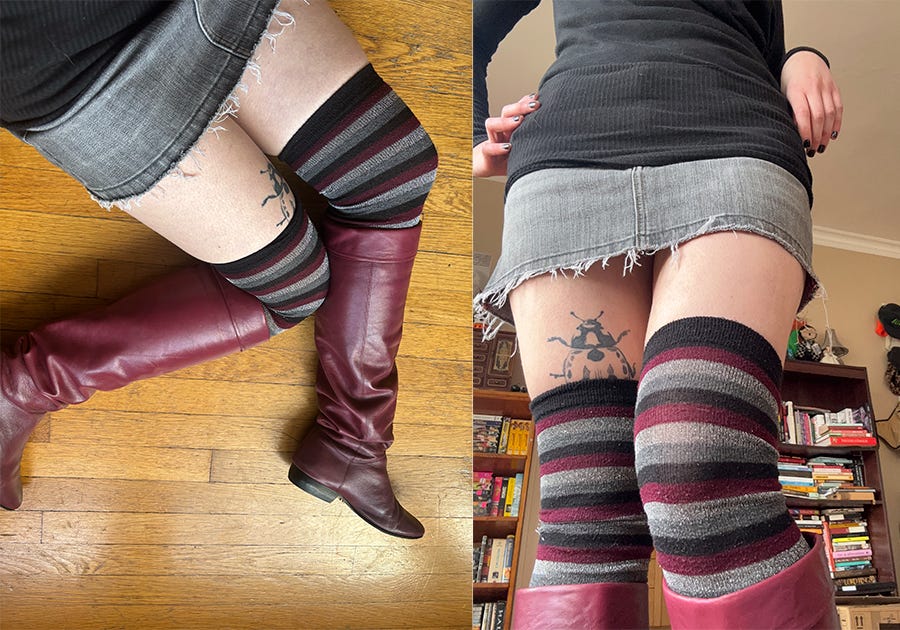
The days I did leave my apartment, I tried to embrace winter’s final lingering by layering jackets and styling cute hats. Wearing hats decorated with pins has been a recurring bonding ritual with friends. I also attended a Mafia-themed birthday party in March, which gave me an opportunity Cinderella transform from 5 day old sweatpants to silky furry Maria wife glamour.
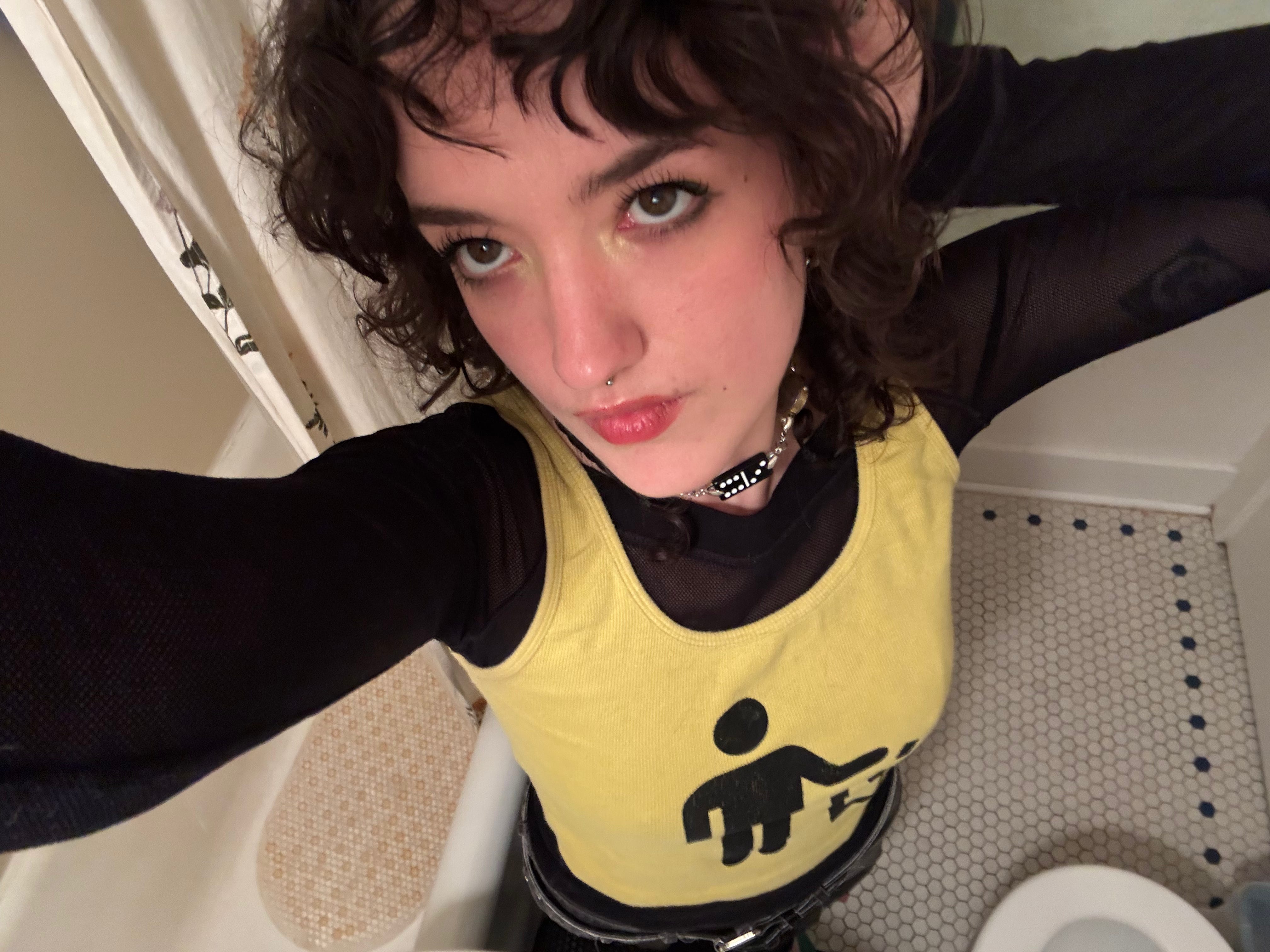
I didn’t buy anything new, except for this 2010’s-Coachella-as-fuck necklace I ordered on Depop before I lost my job. I was also gifted a tank top with my magazine’s logo screen-printed from the our most recent release party <3
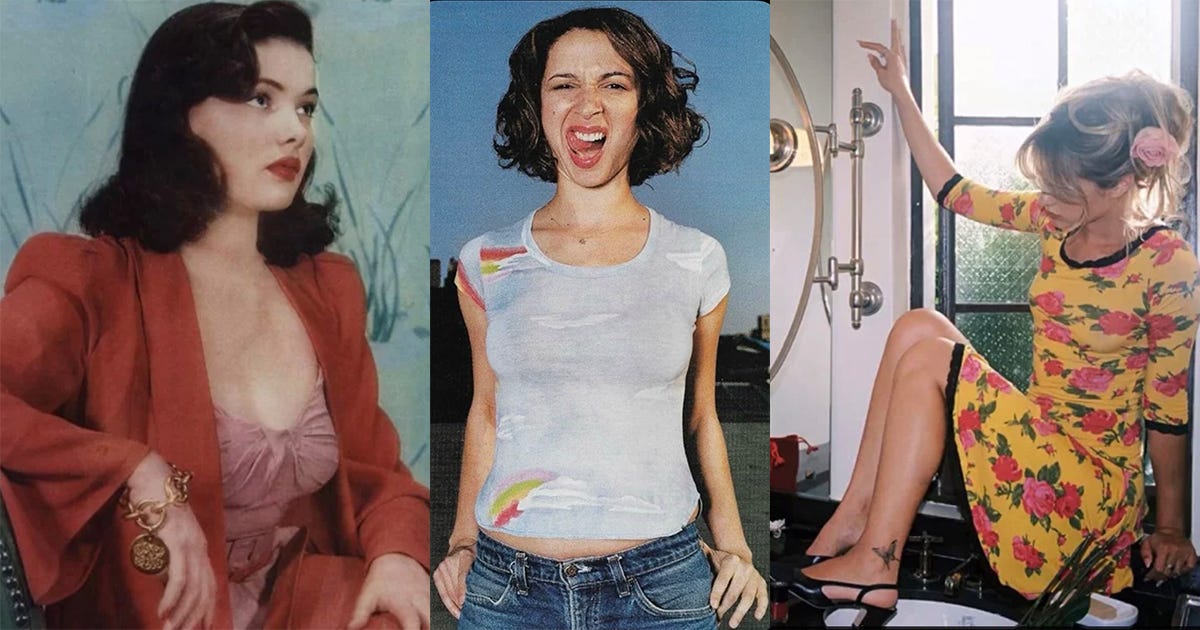
As for inspiration, I’ve been finding myself more drawn to feminine styles as I fantasize about the romance of spring and the slowly approaching summer. Low rise bootcut jeans, vintage dresses in 50s-60s silhouettes, tight t-shirts, florals, eccentric heels, saturated colors, red lipstick, painted nails, scarves, lace…you get it. I’m always inspired by archive Face Hunter photos posted on the @indiesleaze Instagram, and designers Sinead Gorey and the queen of punk-cute Betsey Johnson always wander onto on my Pinterest boards.
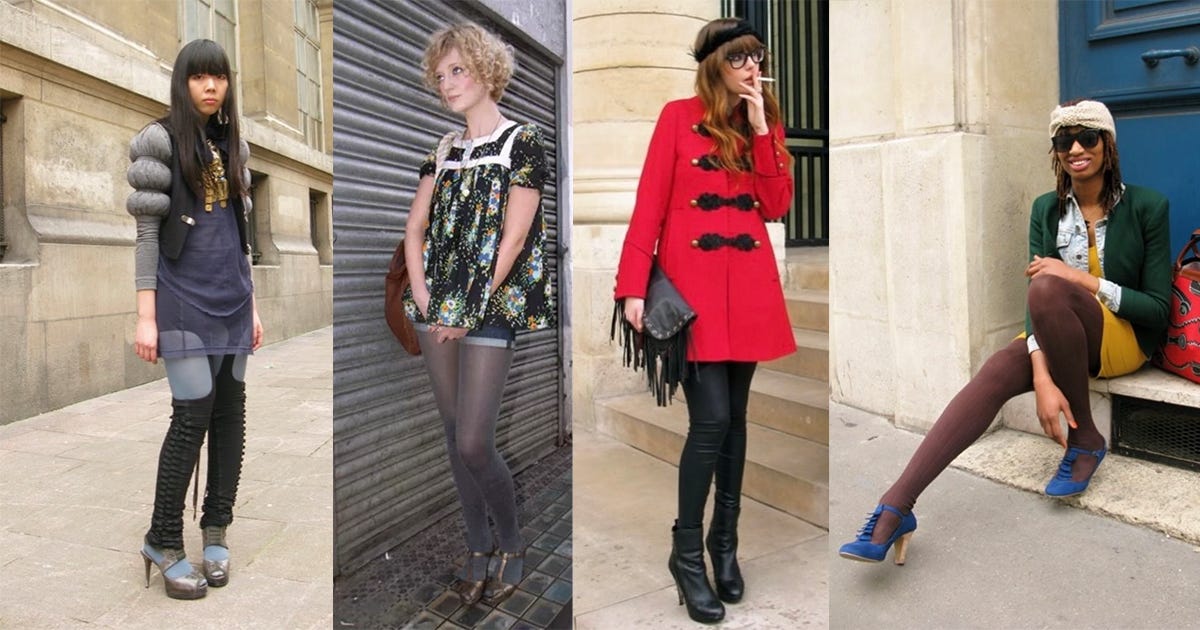
Hyper-femininity has been more prominent in fashion thanks to the Sandy Liang revolution, Sabrina Carpenter and Addison Rae, Miu Miu, the return of the 2010’s bandage dress and boho-chic, and so on and so forth. Depending on what side of the cultural argument you’re on (especially when discussing Sabrina Carpenter), this influx of feminine culture is either a negative side effect or a cheeky subversion of the popularization of more traditional gender roles, along with the dangerous obsession with young girls. I’ve recently seen feminine-presenting people, myself included, abandon experiments in masculinity, rejecting pixie cuts and baggy clothes to embrace longer hairstyles and tighter silhouettes. Maybe we’re starting to understand that femininity does not have to be a weakness, and can in fact be extremely exciting and beautiful. Maybe we’re recognizing that presenting more femininely protects us in many contexts. Maybe we’re growing up. Maybe we’re being subtly influenced by the trends and culture controlled by larger figures surrounding us. Maybe multiple things can be true at once.
While I may be being influenced to dress more “womanly” by the fashion and political propaganda gods, I also think I’m being drawn to more classically feminine silhouettes because they actually flatter the hourglass body type I have. For the first time in my life, I want to accentuate my features rather than hiding them, and for me, that has lead to a desire to wear clothes that fit my body so I can flounce around adulthood without being weighed down by insecurity and heavy fabric.
SKIN
How do you start blogging about your ED? Do you dive straight into the deep end and blame your mother? If you do that, then you inevitably have to blame her mother. Do you blame the media, the fashion industry, advertising? It all feels like low hanging fruit. Since I’m recently finding inspiration through plays on femininity and embracing my womanhood, so to speak, perhaps we start by unpacking the basics: having the body of a woman.
There are approximately one million think pieces about womanhood published on this website, so here’s the gist: female existence, our rights, purposes, and appearances have been discussed and governed in so many cultures and contexts for so long that trying to define womanhood in its most basic form is near-impossible. The narratives are constantly controlled and changing, and at the end of the day womanhood is a virtue, maintained under surveillance. Because of this, womanhood in itself is its own form of simulation, performance and expectation layered over performance and expectation, on and on and on. I think of it as cheap paint landlord-specialed over a doorframe so many times the original condition of the frame is nowhere to be found. If you haven’t already learned about all of this, congratulations, and I’m sorry to break the glass. This video by Shanspeare is a great resource to deeper discussions of performance and surveillance for women of various identities.
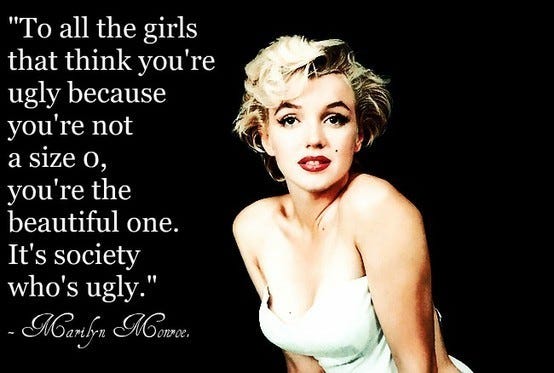
The unanswerable question of what constitutes as a Woman swam around my childhood head as soon as I budded the beginning of breasts. The women around me, the teachers and mothers and aunts and doctors, etc., were exuberant and loving. They laughed loudly and conversed fiercely. They encouraged creativity and empathy in their children. They discussed dieting, workout routines, and quick tricks for losing weight. In eight grade I read that “real women have curves” on a Twitter post paired with a picture of Marilyn Monroe. Was this true? Growing up within Mexican-American communities, I uncomfortably watched the eroticization of curvy Latina bodies as a spicy alternative to waifish white girls and a fetishization of what a woman with a little more meat can do for men, both in bed and the kitchen. The women surrounding me certainly had curves, but not in the sex idol Marilyn Monroe or Salma Hayek curves, the kind that are carved and craved. The curvy women around me had sagging breasts, thighs dimpled with cellulite, floppy stomachs striped with stretch marks. Did that make them real? Did it make the women I saw on screens any less real?
As early as third grade, I remember being conscious of the fat pockets spilling over the waist band of my pink leggings and the soft chub under my chin when I looked down. I didn’t want to smile in photos, and I cringed at my tummy when I wore dresses. I cried the first time I had to wear a bra (age 9) and when I got my first period (age 12). Both times my mother held me as I sobbed, repeating “I know, I know,” into my ear, and I believe a piece of her choked on the suffocation of womanhood as she watched her first daughter being shoved underneath it. She tried to comfort me with ideas of bras in fun patterns and the bonds I would form with other girls experiencing the same thing. I didn’t want to be able to relate to female confusion and insecurity; I wanted to be more than that. Looking back, this is what connected me closest to the women and other girls around me.
When I was put on The Pill my sophomore year of high school to combat my acne, I woke up one morning to find boobs and hips glaring back at me in the mirror. My mom took me to Kohl’s to get a bra fitting, where a woman with white hair accompanied me in the fitting room and made me fold forward over my legs (what we in Seattle call “The Stapler”) while she shimmied my chest into a t-shirt bra to ensure all the tissue was captured by the cup. She diagnosed me with a 34 DD. I was 15.
In Women, a 1999 collaboration between photographer Annie Leibovitz and writer Susan Sontag, Sontag writes, “To be feminine, in one commonly felt definition, is to be attractive, or to do one’s best to be attractive; to attract. While it is perfectly possible to defy this imperative, it is not possible for any woman to be unaware of it.” (Whipping out a Sontag quote in the Substack essay about womanhood, real original Veronica).
If I was already questioning the contradictions surrounding womanhood as a pre-teen, being a teenager with glaring targets on my chest and thick thighs squished into skinny jeans gave me at least one firm answer—the gaping hole defining your existence is filled with the fact that you will watch yourself be watched, and you will watch yourself be sexualized. If being feminine is synonymous with learning to attract, do you choose to lean into it or fight it? My answer was to fight it, by embracing perhaps one of the most defining qualities of womanhood: restriction. But in doing so, I actually situated myself on an uncomfortable seat in the center of the fence. I fought and hid my body, not out of rebellion to the sexualizing powers that be, but with the intention of attracting a different attention than what I was receiving. My hips and chest held all of my guilt and insecurity, so I figured ridding myself of them and obscuring them under baggy clothing to emulate a small, flat, and straight figure would attract the genuine love, admiration, and respect I desired. I was Oedipus Rex in my own tragic irony; I so desperately fought my oncoming womanhood that I unintentionally stepped into the line of my own fate.
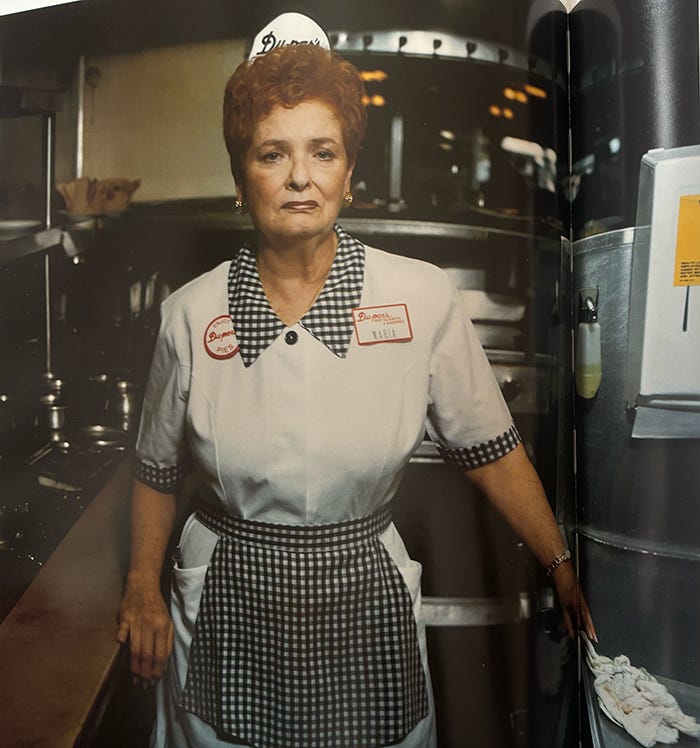
Why am I becoming comfortable with femininity and having a woman’s body now? That is yet to be fully discovered, but to be completely honest, my curves are now paired with a thinness that has come from years of fluctuation and restriction. I am curvy in a way that is still desirable to Western beauty standards, and I don’t think I’d be as comfortable in my body if that wasn’t the case. This isn’t to say women that don’t fit the beauty standard should feel uncomfortable in their bodies, if anything I’m saying I’m still too weak-minded to give a middle finger to them.
Maybe it’s because I’m in a long-term relationship with someone that respects both my body and my personal autonomy. Maybe I’m also stepping into adulthood in ways that have nothing to do with my body—through accomplishment, friendship, and exploration—which in turn gives me the confidence to actually appreciate the vessel that carries me. Maybe my definition of womanhood and the body I inhabit within it will continue to be nebulous and developing. Maybe multiple things can be true at once. We’ll leave it here for now.
Comments
Nothing yet. Say the first thing.
Sign in to join the conversation.