
NOTE (July 19, 2026): Apologies for the glitch with the “The Cuban Treat of the Week” video. It should now run as planned!
17 de julio 2026
Hola y welcome back to CubaCurious.
Thanks for caring about the struggle for freedom in Cuba.
Sometimes people ask me why more Cubans don’t protest publicly against the dictatorship, or why it has taken this long to see consistent, large protests on the island. This week’s tres scoops provide one answer: the regime’s pattern of punishing, threatening, or harassing people in the activist’s orbit, including family members.
Whether still in Cuba or exiled, forcibly in many cases, activists know they are putting their loved ones in harm’s way when they speak out. They cannot rely on any Cuban law or institution to protect their friends and relatives from repression. Cuba’s laws, courts, schools—even so-called “civic” groups—are subordinate to the will of the Partido Comunista de Cuba (the Communist Party of Cuba), the only legal—and the one ruling—political party. The Castro Clan’s “influence” on the PCC stretches back to the day it was created in October 1965.
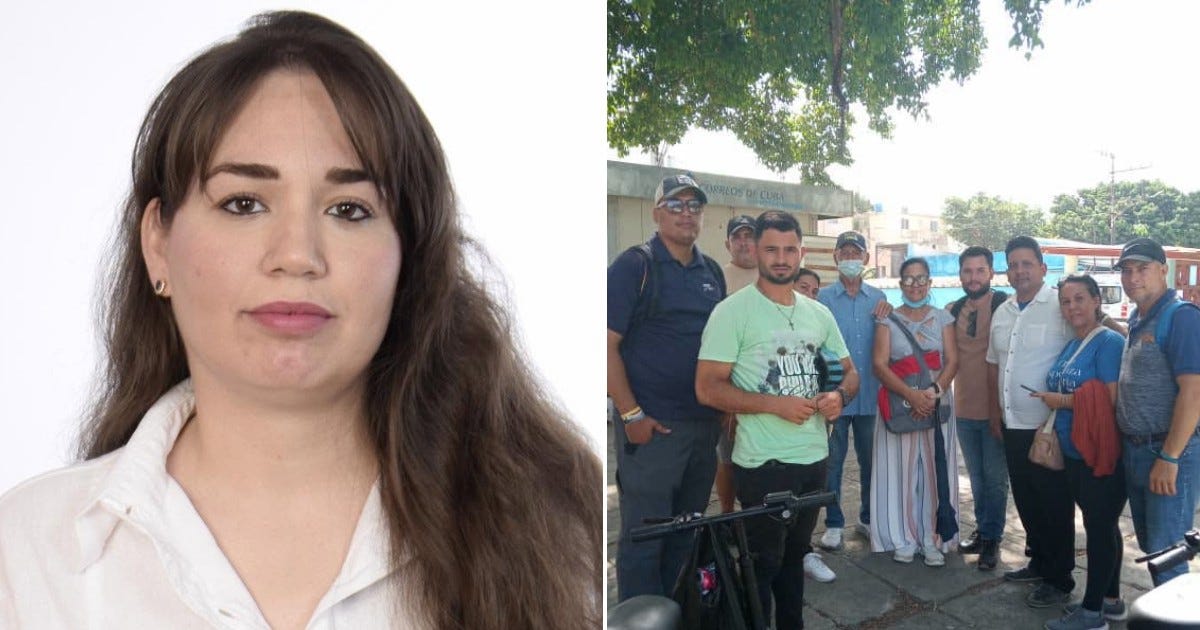
Your tres scoops this week focus on what the struggle for freedom is costing Cuban families, whether living in Cuba or in forced exile. Because the regime punishes its opponents by targeting those around them, including the most vulnerable, like the 84-year-ol d father of Amalia Calzadillo, a Madrid-based Cuban pro-democracy activist. This week state security hauled in the activist’s father and mother, both of whom suffer from heart conditions, in their ongoing attempt to silence Amelia. You’ll see below why those agents are wasting their time.
We shouldn’t forget that the struggle for freedom in Cuba is intertwined with an even more dire battle. Survival. The country suffered its third total power failure this month, the 10th complete nationwide collapse of the system in five years. No electricity means water can’t be pumped into homes. People hunt for barely trickling public taps in other neighborhoods, fill their buckets or bottles, and lug them back home to fill more buckets or tanks.
In some areas, like San Miguel del Padrón, on the outskirts of Havana, potable water is so scarce that people have been collecting it from a nearby polluted river. Cuba’s large elderly population is especially at risk, both from dehydration during the intense summer heat and from the exertion of bringing water into their homes. Elders are often seen carrying buckets of water in the streets and in stairways of apartment buildings.
Mountains of uncollected trash line the streets of most Havana neighborhoods. Residents gave up on the government’s ability to clear them long ago. For the last few years, they’ve been burning trash piles, often during protests. Cubans are breathing in the toxic air from burning food and human waste on a regular basis, adding another health risk to daily life.
Protests—and repression—are increasing in direct proportion to the blackouts and daily challenges. In its June report, Cubalex noted a record-breaking number of protests (253) and police operations, the “militarization” of society, and that roughly half of the known victims of repression were unaffiliated with political activist groups.
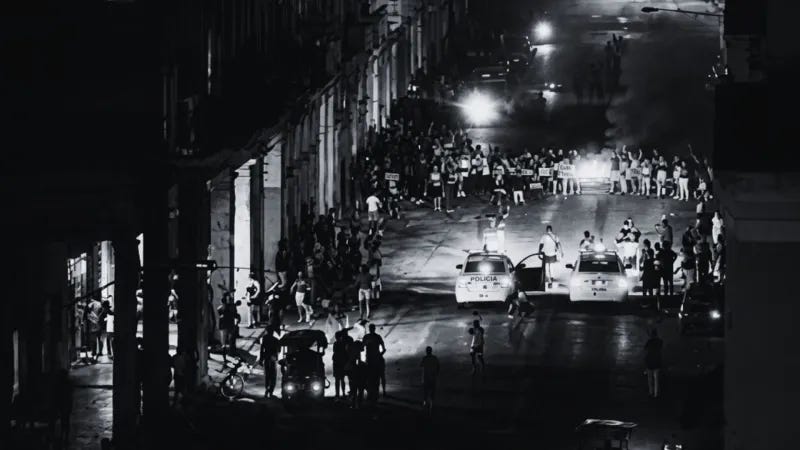
State terrorism against citizens exists. No one knows that better than the people of Cuba.
Gracias for taking the time to think about this. If you appreciate this post, please click the heart, restack, share, or subscribe if you haven’t already. If you have, thank you for joining me in this project.
Hasta la semana que viene,
Ana
“If you think you have jurisdiction in Spain, come and get me.”
Source: DiarioDeCuba.com.
Amelia Calzadilla knows how to get in trouble with the Cuban government. She says what she thinks. She calls the regime out for failing to solve Cubans’ problems, from food shortages to the unjust imprisonment of peaceful protestors. She has hundreds of thousands of followers on social media after years of pro-democracy activism both in Cuba and in Spain, where she fled after years of systematic harassment by the regime. She is part of a network of young Cuban exiled activists who are forming political groups and preparing for a democratic transition in Cuba.
But Calzadilla’s parents remain in Cuba and are vulnerable, both because of health problems, they are in their 80s, and because officials target them to silence Calzadilla.
Agents delivered a summons to her parents, who both suffer from heart conditions, on the 5th anniversary of 11J, July 11th, for an interrogation the following day. Calzadilla, in a scathing post on Facebook, said her parents live as “hostages of a tyrannical, bloodthirsty, and criminal dictatorship” and called on her supporters on the island to protect them.
After they were released, she posted an update. She said her mother was not asked a single question, “so why did you have her there?” The agents focused on her father, demanding that he pressure Calzadillo to stop work that “she is not qualified for.”
“No, you did not beat them,” she said, “but you did something worse, you humiliated them and tortured them psychologically, because they are two vulnerable elderly people, thought they would be victims of your political vengeance,” she said.
Calzadilla said she would continue to denounce the dictatorship, “especially to the EU to end the whitewashing they’ve given the dictatorship under the guise of the PDCA (the EU’s democracy-promoting pact with Cuba), so it ends their financial support of the dictatorship.”
She criticized the “cosmetic change” the regime is trying to achieve with its recently announced 176 economic reforms “that in the end you won’t implement, because when you see that those measures threaten your interests, the first thing you’ll do is revoke them. The change in Cuba has to come from structural changes and real political changes. . . No private citizen, no foreign investor will feel secure . . . in property that is quasi private, in laws that are malleable, that you create one day and take away the next.”
The activist railed against the regime for taking the money from the “EU, from international groups, from the Spanish Left and nothing, none of that money has been reflected in improvements for the Cuban people.”
Calzadillo’s gratitude to Pastor Rolando Pérez, who has been supporting other activists and their families on the island, was heartfelt. Pérez was arrested in March 2026 for recording a biblical teaching video and detained for eight hours with members of his group, apparently as punishment for holding a vigil while activist Anna Bensi was interrogated for eleven hours on July 2nd.
“Cubans are ready for a change. We dream of change,” Calzadillo said in her post. “You are wasting your time with my parents. I don’t tell them anything precisely to protect them from your tactics.”
“I will not stop my political activism or working to become a better leader so the change I want to see in Cuba happens.”
“If you think you have jurisdiction in Spain, come and get me. Because I’ll be here waiting.”
“If you keep publishing . . . kiss your wife on her (pregnant) belly because you’re going to prison.”
Source: 14ymedio.com
Cuba’s appointed president, Miguel Díaz Canel, told quite a few whoppers in his Meet the Press interview last April. Among them: “There is talk of political prisoners in Cuba. That image that in Cuba we imprison anyone who speaks out against the Revolution is a lie; it is slander.”
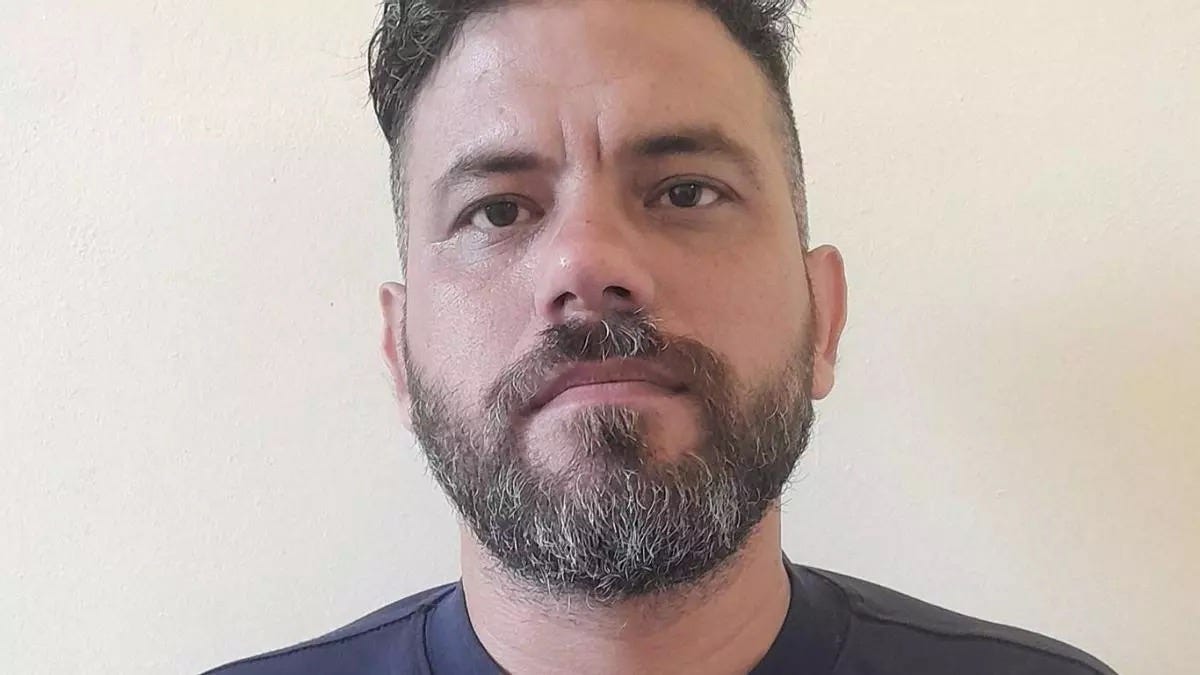
Few people in Cuba believe that, especially indie journalist Austin Llerandi, who is continually threatened for publishing Amanecer Habanero (Havana Dawn), a monthly bulletin focusing on human rights issues and local news. On Tuesday, during an hour-long interrogation, a state security agent again told him that he will be jailed if he continues his work and showed him a document charging him with “crimes against State Security.” The agent’s threats extended to Amanecer’s team—and even to Llerandi’s father.
Llerandi said the agent, who identified himself only as Rodrigo, knew his team members’ addresses and schedules, that Llerandi’s wife is pregnant, their clinic appointments, and other details about their lives. “If you keep distributing the bulletin, the next call from me, give your wife a kiss on her belly because you’re going to jail,” the agent threatened, according to Llerandi’s statement.
ICLEP (Cuban Institute for Freedom of Speech and the Press), a Miami-based NGO, has gathered reports about the case, including the agent’s visit to Llerandi’s father’s home the day before the interrogation. The agent knew the addresses and movements of his team and warned of “consequences” to them if they continue with Amanecer.
Llerandi says the agent, who identified himself only as Rodrigo, arrived at his father’s home on Monday. The agent, despite knowing Llerandi’s address, told the elder Llerandi he was trying to find him and that he could have arrested him the day before but hesitated because his wife is pregnant. In that encounter, the agent described in detail the couple’s hospital schedule.
ICLEP considers the agent’s actions, including the reference to the journalist’s wife’s pregnancy and the surveillance of his family, violations of the rights to freedom of the press, expression, and privacy and says they’re consistent with Cuba’s pattern of part of intimidating independent journalists. ICLEP reported a total of 1,188 violations of freedom of the press and expression in Cuba during 2025, a 54.7% increase compared to the previous year.
ICLEP and other freedom of the press groups have called on the regime to immediately cease its harassment and threats against Austin Llerandi.
According to Reporters Without Borders 2026 index, Cuba ranks 160th out of 180 countries in press freedom, second worst in the Americas (Nicaragua was 168th).
Source: 14ymedio, Luz Escobar interview.
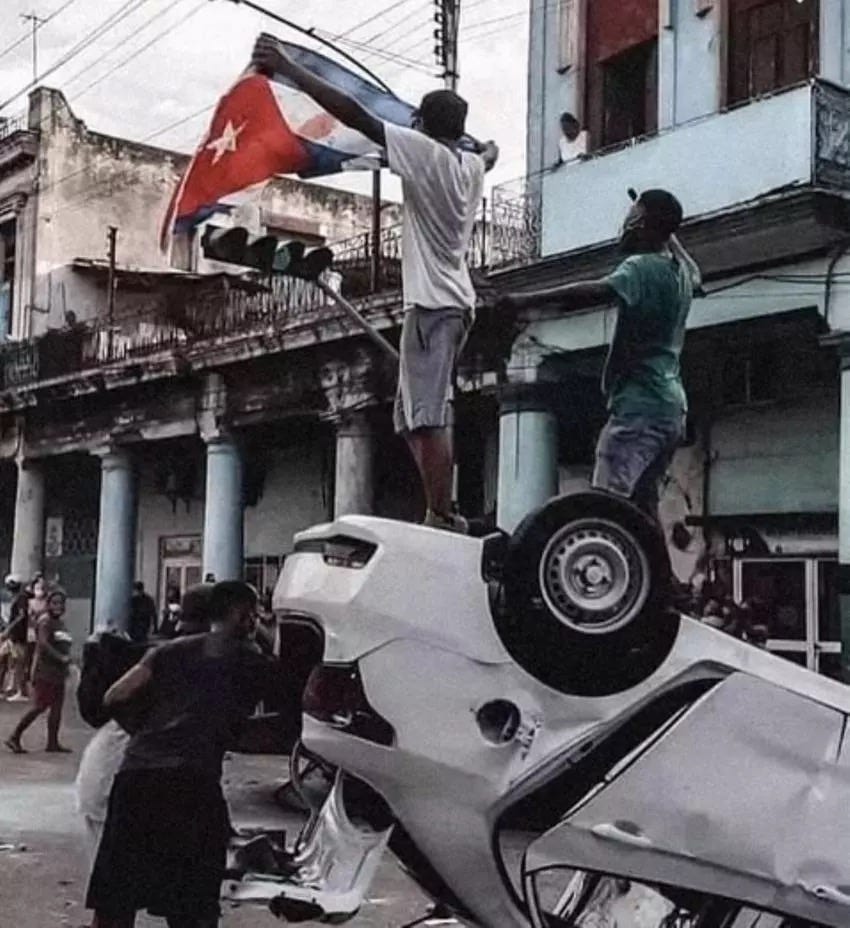
Rizo León fled Cuba five years ago with his family after participating in the historic countrywide anti-regime protests of July 2021, also known as 11J. He had disguised himself during the protests, but police identified him. He was in one of the most iconic photographs of 11J, standing on top of an overturned police cruiser waving a Cuban flag stained with the blood of fellow protestors. His mother fooled police into thinking she would turn him in. Instead, the family went into hiding and flew out of Cuba three weeks later to Russia, then Serbia, then Greece, and finally to Spain.
Elías spoke with Luz Escobar about his odyssey.
Here are a few of the eye-opening takeaways from that interview.
He was ready for protest. He’d gotten his hands on clandestine documentaries and learned that “parts of Cuba’s history had been erased: the executions . . . [rebels who turned against Fidel] . . . it was all a lie . . . that information opened my eyes.”
“I think Toyo, (the corner in 10 de Octubre where the photo was taken) was where the confrontation . . . was most intense. Cubans were rebelling there for real and reclaiming their rights.”
He hid the flag under his shirt on the way to the protests. “In Cuba, people are manipulated by propaganda and think the flag is a symbol of the Communist Party, an icon of obedience to the dictatorship, but that’s wrong: The flag belongs to all Cubans. “I was one of the few protestors who had one. When the pro-revolutionary units appeared, they took out their own flags. That infuriated me. But we were fundamentally different: ours had the blood of people who’d been injured [by the police and the military] and theirs was clean.
The flag is in Cuba. His mother washed it out of fear. Elías wanted to preserve the bloodstains, for the moment when, in a free Cuba, he could donate it to a museum.
Everyone thought the dictatorship was ending that day. “We were one voice, one voice echoing. That’s true unity, what is born from liberty, not from the demands of the Party.
He knew he was in real danger when the national police and the avispas negras (black beret shock troops) “marched against us, they let loose their dogs on us, and began shooting. They shot into the air but also toward us. State security confiscated all the cell phones, deleted the videos of them shooting . . .They were coordinating by radio and walkie-talkies; we just had our voices and they had shut down the internet. I knew I was done for.
Thanks to his mother and supporters, and tremendous luck, the family went into hiding for over a month and managed to get out of Cuba. “My history would be very different, I’d be serving a sentence of 15 to 30 years imprisonment, like so many guys my age. I would have lost my life in prison for simply asking to be free.”
Today’s post focused on courageous Cuban freedom lovers and their families. I’d like to invite you into our home and show you another brave freedom-loving Cuban, my father. That night 90-year-old Papi was tired. He’d been battling cancer for a about a year. But our cousin Sady insisted on a dance, and Papi, like all good Cubans, rose to the occasion.
That’s freedom and courage, fueled by Beny Moré’s La Mucura (1949). Warning, the song is a Cuban ear worm that’s hard to shake once you hear it. But it’s so good. Hope you enjoy it.
No posts
Comments
Nothing yet. Say the first thing.
Sign in to join the conversation.