
24 de julio 2026
Hola y welcome back to CubaCurious.
Gracias for being here.
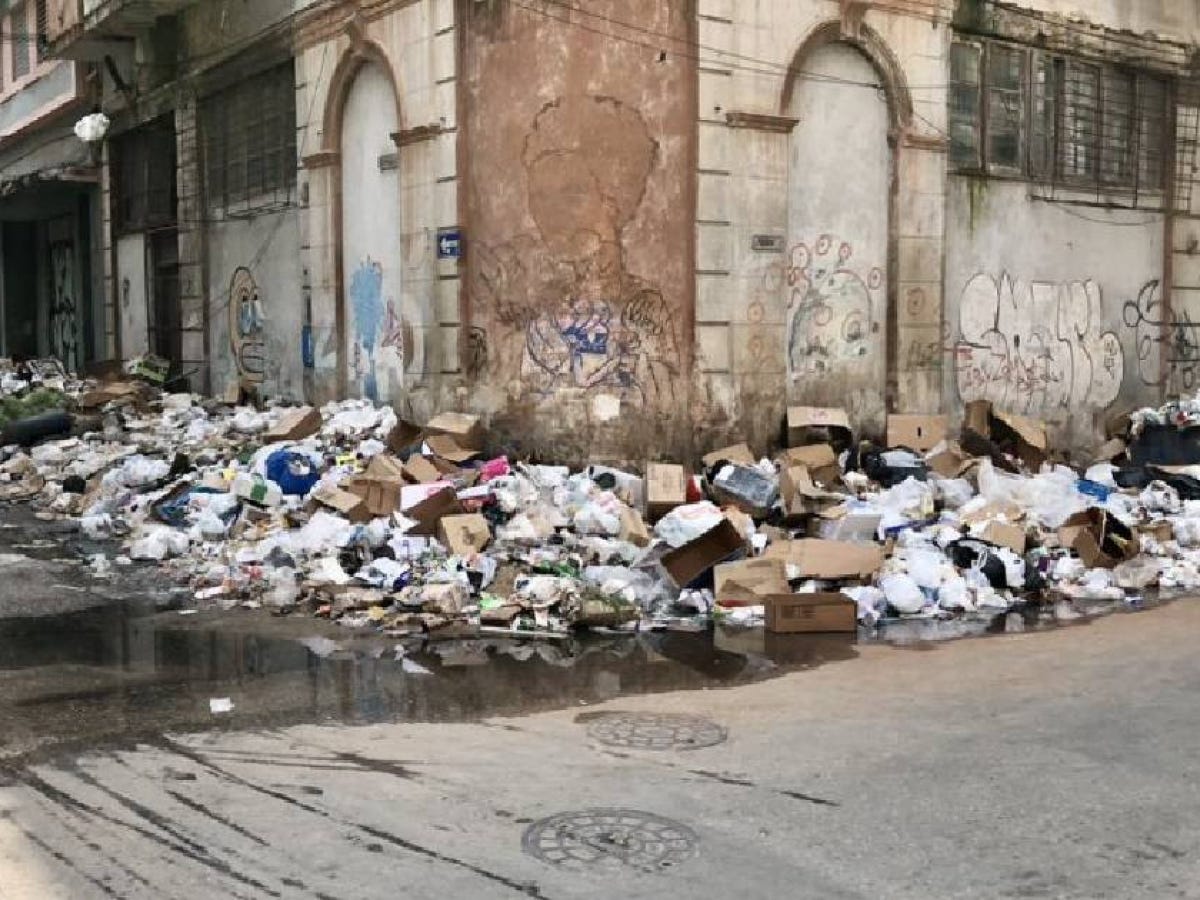
A street-level view of the real Cuba. That’s what I try to bring you each week in CubaCurious. Award-winning Cuban journalist Yoani Sánchez captured that scene so powerfully in a recent essay that I thought it deserved center stage today. Warning. Your sense of smell will be awakened in a not-so-good way. But you’ll see the Havana where average Cubans live and glimpse the state of their spirit amidst this latest crisis.
Living in American comfort, with electricity, water, and food so dependably available that we barely notice their presence, it takes effort to imagine a world where they’re not there when you need them—and haven’t been, for most Cubans, for a long, long time.
I have a small scar in the middle of my forehead that reminds me that power outages, for example, have been part of daily life since the first years after the revolution. I was running with a friend on the sidewalk one night when the street lights suddenly went out. I tripped and slammed head first into a stucco wall. I remember darkness, blood, and chaos. Five stitches later, life, including the nightly blackouts, went back to “normal.” That was circa 1966.
Sánchez’s essay shows what a “normal” of constant struggle and perpetual decline is costing the Cuban soul. Seventy years of collisions with stucco walls, put up by a system that doesn’t work but won’t change, leave their mark on even the toughest foreheads.
Here’s the original essay in Spanish. I made a few edits that I hope add clarity to the English translation that appeared in Translating Cuba, where some of 14ymedio’s articles appear.
I thought I should also share news of a controversy that is still unfolding in the Cuban activist community.
The week began with the joyful news that former high-profile Cuban political prisoner Luis Manuel Otero Alcántara had arrived safely in Miami. He’d been missing for a week after being “freed” from prison, having completed his five-year sentence for “disrespecting national symbols.” The joy over the release of the Amnesty International Prisoner of Conscience turned into confusion and finger-pointing when some in the activist community and the diaspora questioned the artist-activist’s healthy appearance, his statement that he was not political, and the allegedly expensive watch he was wearing.
Had Luis Manuel sold out? Was he in cahoots with the regime? The dust has settled a bit, thanks to a filmed statement by Luis Manuel and Anamely Ramos Gónzales, a friend and fellow activist who has worked tirelessly for his release from the U.S. But the damage may last and cast doubt on not just him but the work of activists advocating for political prisoners and their families.
That’s a shame, because the regime’s cruel persecution of the artist has been well documented for almost ten years—the last five in a notorious maximum-security prison. Authorities have vilified him on national television, destroyed his artwork, surveilled him intensely, published his health records, threatened his family, and violently arrested and disappeared him on so many occasions most have us have lost count.
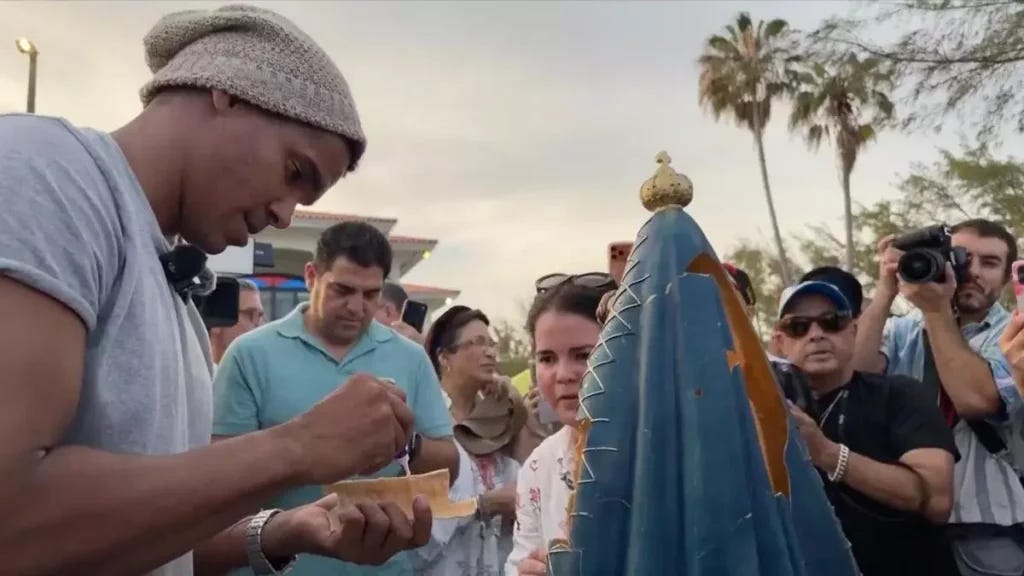
The accusations and questioning got ugly and personal and distracted at least some in the activist community. The regime, I’m sure, celebrated the controversy, because the more we doubt each other’s motives, the weaker we become as a community and the harder it is to support political prisoners, their families, and what Cubans are asking for: political change, freedom, prosperity, justice, peace.
I’ve seen this division among Cuban activists before. Is she wobbly on the embargo? Is he anti-communist enough? Has this political prisoner suffered enough to earn our support and trust?
We should have differences of opinions, and we should ask questions of each other. That’s the freedom we say we want for ourselves and Cuba, messy but open and real. If we stay measured in our debates and focused on the work—what needs to be done, who needs to be helped, how to keep Cubans’ calls for freedom in the news—we have a chance to get something done. If we don’t, we squander our unity and our opportunity.
Luis Manuel mentioned our shared mission in his recorded statement about the controversy. “I need people to settle down, to put their energy toward this goal, not for me, but for Cuba, because there are a ton of people there without electricity, water . . . I am privileged, because I escaped, but there are sons of Cuba, many people, who can’t.”
Luis Manuel may never walk the streets of Old Havana again, certainly not in the foreseeable future. He won’t be able to share his son’s life, help his elder aunt, return to his barrio, see old friends, be at home.
He is free, but he is not free, because he’ll be haunted by what his government took from him for the rest of his life. The Cuban diaspora, desterrados, uprooted, banished, or forced to flee, should know what that is like—and that it is enough.
Gracias for reading, clicking the heart, re-stacking, sharing, and subscribing, if you haven’t already.
Hasta la semana que viene,
Ana
CubaCurious is a reader-supported publication. To receive new posts and support my work, consider becoming a free or paid subscriber.
Cuba, The Country That Unlearns
The Cuban crisis forces people to give up the basic habits that sustain communal life. Yoani Sánchez walks through Havana and considers the hidden losses.
14ymedio, Yoani Sánchez, Havana, July 22, 2026
The street I walk down is called Hidalgo, but on one of its corners, the poorest people in my neighborhood gather, waiting to pay for their rationed bread. Some couldn’t survive without it. For others, it’s just a small piece of dough, sometimes sour, sometimes almost greenish. I have a neighbor who goes down more than ten flights of stairs and then back up just to make sure he gets this portion of his daily ration. Poor in quality, but still subsidized, this bread remains the main source of sustenance for many of the people I pass every morning.
I jump over a sewage-filled stream, just a few meters from where a tamale vendor is hawking his wares. I quicken my pace toward La Timba. Only the building of the General Customs of the Republic appears freshly painted. Everything around me is parched from the heat and lack of rain, peeling from the crisis, and dulled by neglect. Even Paseo Street, once the sacred thoroughfare of power, where caravans of official vehicles escorted by motorcyclists used to parade, looks abandoned. Have the Party leaders boarded that plane and we don’t even know it? As in some novels, is it that power in Cuba is nothing more than an empty shell that survives only in our imaginations and in the offices of State Security?
“For the work and grace of daily survival, now “five” means five hundred and “two” is enough to describe two hundred.”
It’s not because it’s summer. In July and August, everything usually slows down a bit; the heat flattens you, and the city seems to yawn at every turn. But this year is different. This isn’t slowness. It’s paralysis.
“It’s three to Prado,” the driver of the electric tricycle tells me as I hop on in Vedado. Even money has become so difficult to pronounce that we’ve ended up simplifying it. Thanks to the daily grind of survival, now “five” means five hundred and “two” is enough to describe two hundred. We drop zeros from conversations as quickly as those colorful bills disappear from our pockets. But if “one” equals one hundred, what do we do with that bill that showed José Martí’s face and that for so long represented one peso? That one no longer exists. It has been erased by inflation and by un-remembering.
The almendrón, the classic American car, that’s taking me home is running at full speed. I’m pressed against the back door, and right in front of my face is a sign that warns: “Don’t slam the door.” It’s asking for a kind and courteous gesture in this “save yourself if you can” world. “It’s five to Boyeros and Tulipán,” the driver explains. His statement confirms that zeros to the right of the fare are worthless; they’ve become as useless as those on the left. Just as we’ve eliminated hundreds and thousands of our conversations, we’ve also been stripping our days of any adornment. There’s no room for frills anymore. Only the most urgent and basic needs remain.
“Animalization rarely happens suddenly. It creeps in little by little. The real deterioration is not just in the streets or on the facades.”
While walking down Colón Street a few days ago, a bag full of excrement flew over my head before hitting the pavement. The residents in that area have been without water for days. Instead of accumulating their waste in a toilet that can’t be flushed, they throw it in the nearest garbage can. In this country, we’ve been pushed to disregard centuries of basic lessons: mixing shit with public space ultimately turns life itself into shit.
It is not the only regression we’re experiencing. There are neighborhoods in the middle of the capital where people cook with firewood and where the darkness of the blackouts forces them to go to bed as soon as the sun goes down. A friend called me a few days ago to invite me to a comedy show. “I can’t,” I told him, “I have to get up before five in the morning to get online for a few minutes and get some housework done.”
Progress can not only stop; it can also reverse at great speed.
Havana didn’t exist solely as buildings or avenues. It was also built on unspoken agreements: don’t throw excrement out the window, keep sewage far from where you cook. Rules so old they seem instinctive, but a prolonged crisis is enough to reveal that they aren’t. We’ve begun to accept as normal scenes that just a few years ago would have seemed like something out of a refugee camp.
Animalization rarely happens in one blow. It creeps in little by little. The real deterioration isn’t just in the streets or the facades. It’s in realizing that, to survive, we’ve had to forget the things that kept us healthy and sane.
Thanks for reading CubaCurious! This post is public so feel free to share it.
Cuban Treat of the Week
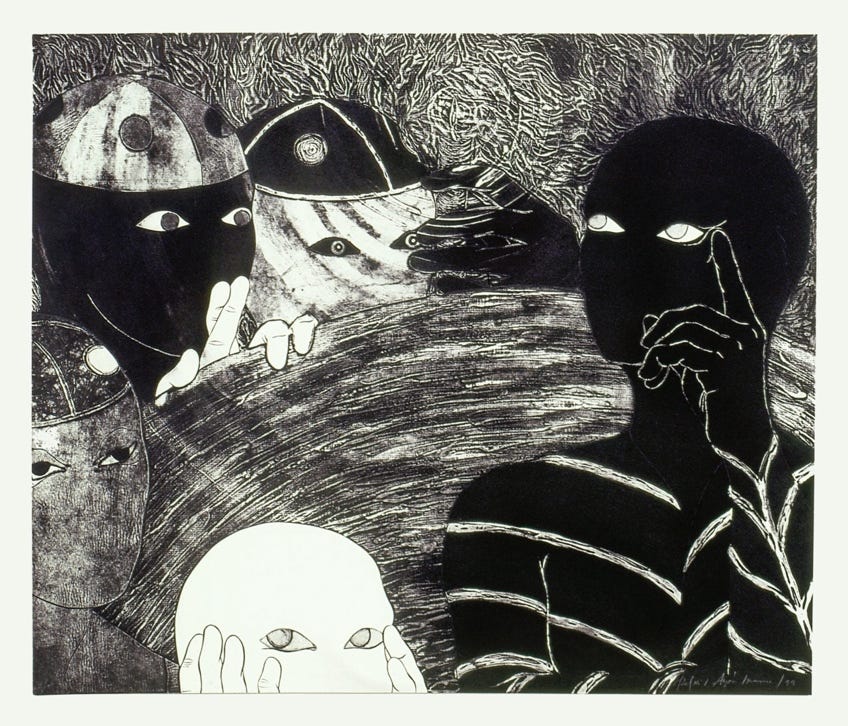
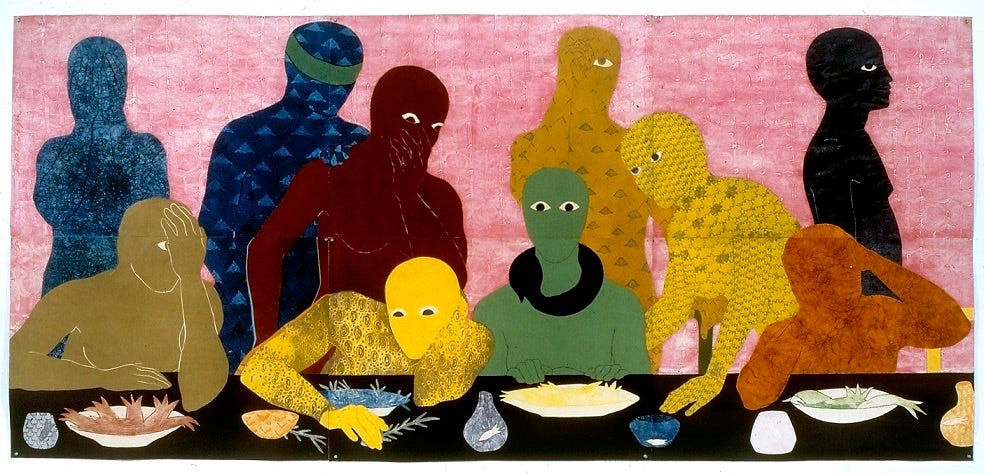
Artist Belkis Ayón
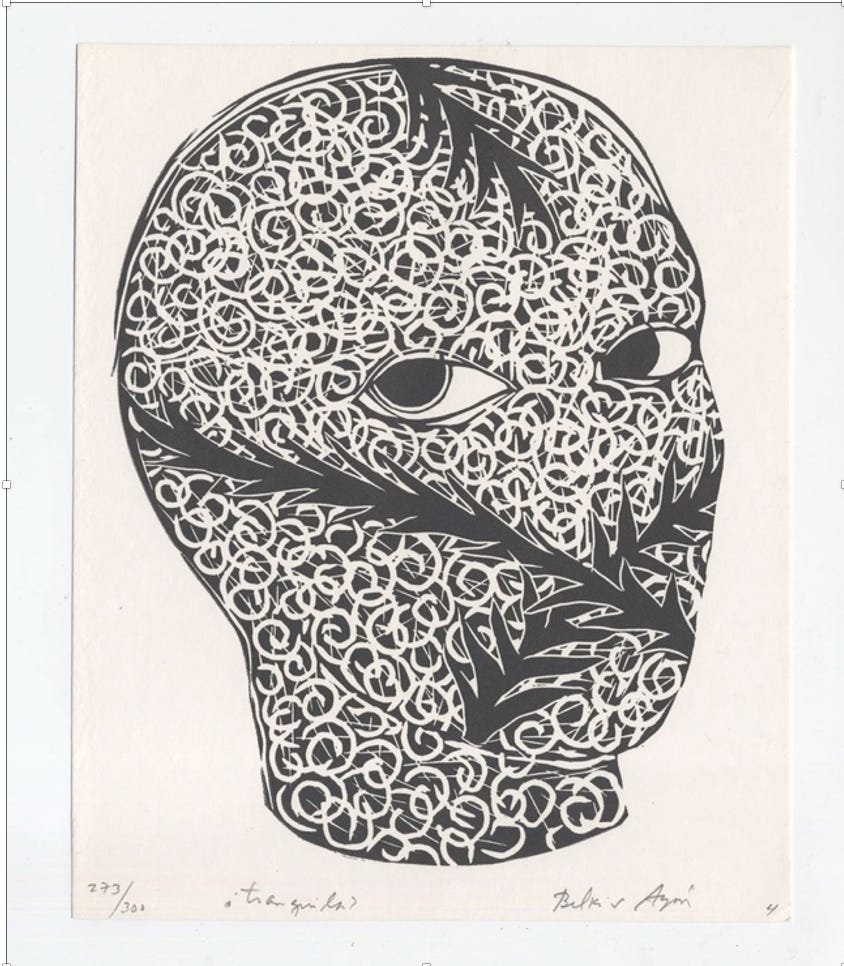
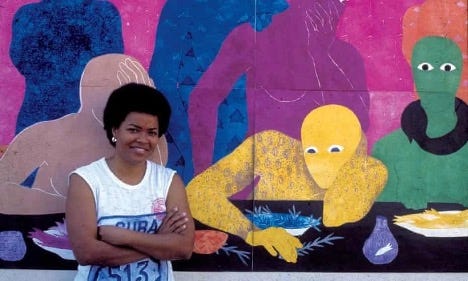
I heard abou Belkis Ayón (Cuba, 1967-1999) in a recent episode of Yoani’s podcast, Cafecito Informativo. Yoani ends each news-filled episode by plugging a Cuban artist, musician, or writer—another reason I tune in each morning.
Ayón’s art was influenced by the iconography and mythology of the Abakuá, a secret all-male religious society that began in Nigeria and came to Cuba and Haiti during the slave trade in the 1800s. It seems she never commented publicly about the revolution or politics, probably for obvious reasons, but she expressed her discomfort with censorship, patriarchal systems, and lack of freedom through her art.
Her work is in the permanent collections of New York’s Museum of Modern Art and Los Angeles’s Museum of Contemporary Art, among others.
Comments
Nothing yet. Say the first thing.
Sign in to join the conversation.