
3 abril 2026
Hola y welcome back to CubaCurious.
Thanks so much for being here.
For the first time in my life, everywhere I go people are talking about Cuba. Unfortunately, most Americans I speak with think U.S. sanctions are the primary source of Cubans’ suffering.
If you’ve been reading CubaCurious for a while, you’ve read too many stories to believe that. But if all your news comes from traditional English-language sources, I doubt you’d question the prevailing view of Cuba in the media.
This is crucial, because we may not be able to deliver democratic change to Cuba—something Cubans wanted and expected from the 1959 revolution—but we can at least get a clearer picture of the real source of Cubans’ suffering.
Let’s keep trying with this week’s line up.
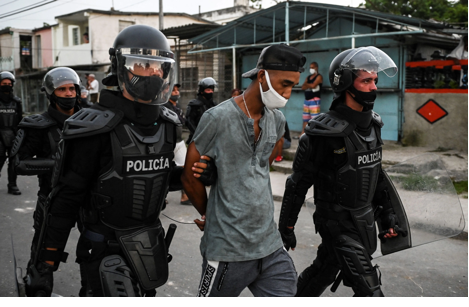
Late yesterday, the Cuban Communist Party announced that Cuba will release 2010 “prisoners.” There was no mention of political prisoners. Why would there be? Cuba says it has none. That’s why NGOs like Prisoners Defenders have to document the cases they can confirm, despite the threats to political prisoners and their families of worse outcomes if they go public.
Just before the prisoner release was announced, a story broke about a woman in Guanabacoa who reported being beaten by plainclothes agents carrying rifles and machine guns. She said the agents violently entered and ransacked her home and beat her while they were searching for her son, who was accused of protesting a power outage on 23 March.
This assault is the latest proof that while the regime tries to win international support for its “humanitarian gestures,” it continues to repress its citizens mercilessly.
A video taken by the woman’s niece captures the destruction of her aunt’s humble home and her testimony of the beating.
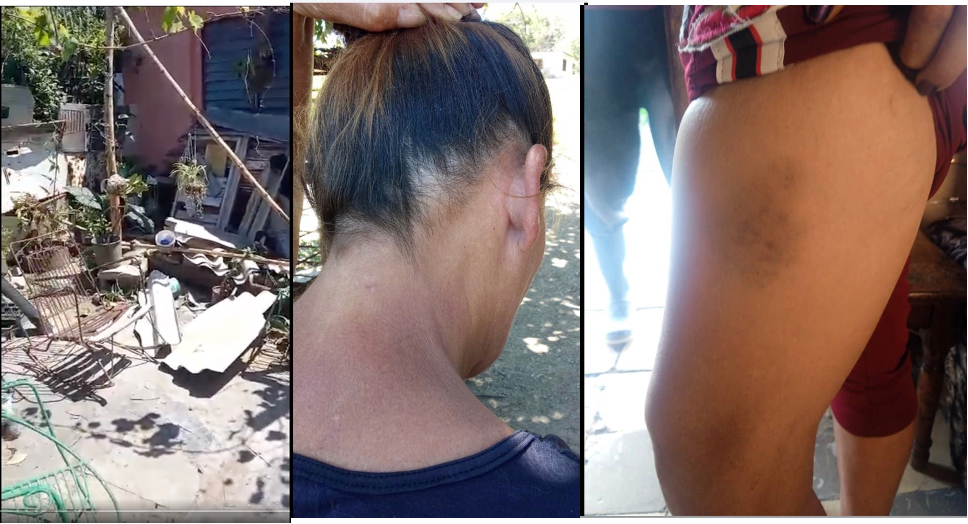
“He put me in a headlock,” the aunt said, “It was the stocky one, dressed in yellow, I don’t know if he’s from [state security] or the Guanabacoa police, he slapped both sides of my face hard, threw me to the ground, they were going to arrest me . . . I was on the ground, in a hold, and they kicked me in the thigh before they left . . .” The video shows the bald patches on the woman’s scalp where she said the agents ripped her hair out.
The niece, who lives next door to her aunt, showed the entrance to her own simple home and said the agents went there first by mistake. “They came in with machine guns. . . and my son was there. He’s 10 years old.”
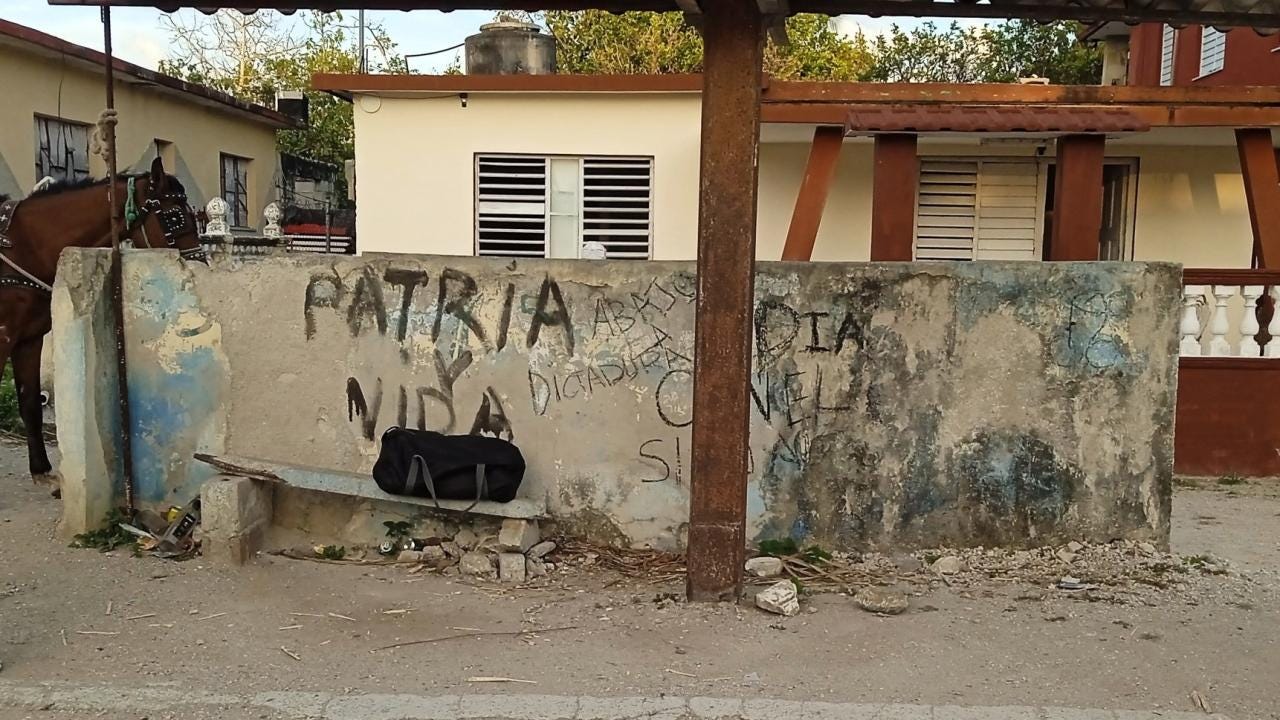
Bail for some of the protestors arrested in Guanabacoa was as high as 50,000 pesos, 25 times the minimum average salary (2,100 p), according to Cubalex, a legal rights advocacy NGO.
I doubt the regime’s new humanitarian attitudes and prisoner releases will help this family. They have “challenged authority” by protesting, which the president has said will not be treated with impunity. I worry about what will happen, the reprisals against all of them, now that the story has spread.
Cuban pro-democracy activists in exile criticized the regime’s prisoner release announcement for failing to recognize Cuba’s estimated 1,200 political prisoners. The lack of transparency—who is on the list, why they’re on it, when they’ll be released— adds to the suffering of prisoners and their families.
The greatest problem is the harsh restrictions placed on the releasees, including prohibitions of movement, expression, forced labor, and onerous court obligations. Many of the previously released prisoners were re-arrested not long after for not complying with the terms of their “freedom.”
“I am happy for those who get out of those infernal places,” exiled dissident leader José Daniel Ferrer said. But “the only and valid solution is the end of the tyranny that today is trying to save itself at all costs.”
The prisoner release, which was announced in the official newspaper of the Cuban Communist Party, Granma, had the self-congratulatory note of similar announcements. The “humanitarian and sovereign gesture” was “in the context of Holy Week”—the regime has spiffed up its history of religious persecution in recent years—and is part of Cuba’s “system of penal justice and the humanitarian trajectory of the revolution.”
The prisoner releases are a “habitual practice,” according to the statement, and benefit prisoners in good standing, those who have health issues, are foreigners or Cubans residing abroad.
The statement ends with facts meant to impress, I think. There have been five of these releases since 2011, benefiting more than11,000 prisoners—and this will be the third release since January.
But the math doesn’t match the rhetoric. Two prisoner releases in 13 years do not a “habitual practice” make. And three prisoner releases in the last three months is too dramatic to be the unpressured, spontaneous burst of humanitarianism this military dictatorship claims.
So, I’m going with the obvious to rationale. The regime is reaching buying time and offering morsels at the negotiating table.
And the Cuban people are waiting.
There were too many interesting stories to give you just tres scoops this week, so here’s a quick round up of the ones that got to me.
Thanks for reading.
Hasta la semana que viene,
Ana
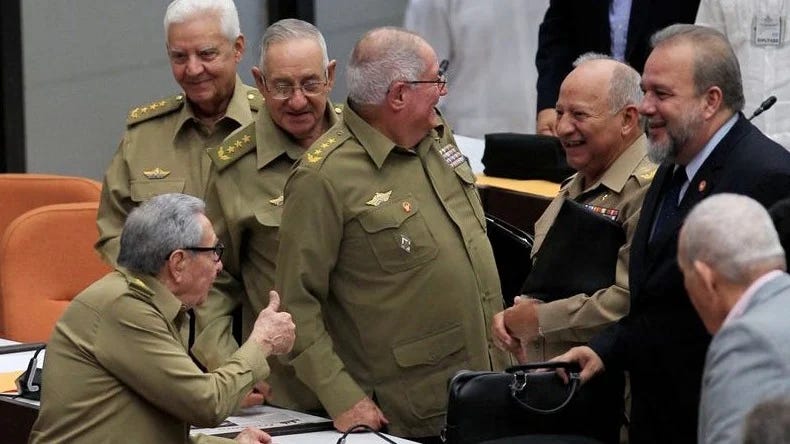
The latest report from the V-Dem Institute at the University of Gotemberg, Sweden, gave Cuba one of the worst rankings (161 of 179 countries in the world) for democratic indicators. The world is living a “third wave of autocracy,” that affects all existing democracies and has caused a regression of democratic liberties to 1978 levels. Cuba ranked close to China, North Korea, Saudi Arabia, and Eritrea in the report.
The regime doesn’t need to worry about getting its pro-revolution narrative into the world. Article after article seems to pin Cubans’ suffering almost entirely on the recent U.S. oil sanctions. Power outages, food lines, medicine and food shortages, lack of water service, transportation—all are neatly tied to the recent oil sanctions.
If these decades’ long problems or the regime’s catastrophic state-planned economy get mentioned at all, you find it in the last paragraphs. And when the dictatorship is held to some account, the shining triumph of its educational and health care systems are presented as successes to counter the failures.
Nothing about historic uprising of July 2021, the ongoing protests, the clear daily signs that Cubans want political change. Nothing about Cubans’ rage about daily blackouts while the military’s hotels are ablaze in light and full of food they can’t find anywhere let alone afford. Nothing about political prisoners.
From two recent NYT articles:
“ . . . a community doctor in one Havana neighborhood, said this year her patients haven’t received any milk or supplements like folic acid, which the state once provided regularly. That is occurring as overall food prices have shot up since January, another result of the soaring cost of fuel. —NO. Milk has been rationed since the first years of the revolution, along with most basic staples. The shortages have been increasing in severity in recent years. Inflation has been rising for years, since the regime’s disastrous “economic reordering” in 2020.
“ . . . which has struggled to function under crippling, sometimes days long electricity blackouts since January, when the Trump administration told the rest of the world to stop providing Cuba with oil.—NO. Cubans have endured rolling blackouts since the beginning of the revolution. The regime has under invested in infrastructure and over invested in tourism for decades. The entire energy grid has collapsed multiple times in recent years, even when Venezuela sold Cuba oil well below market rates and Cuba sold as much as 60% on the international market. The regime said it was reinvesting the proceeds in infrastructure, but power outages only worsened.
A Russian tanker arrived in Cuba this week with about a 3-week supply of crude for the country. Trump appears to have reversed course on his partial (diesel deliveries have been allowed for non-state owned businesses)oil blockade. Trump’s new take: Sure, countries can deliver oil to Cuba, maybe. It won’t change the catastrophe the regime has created.
Perhaps, but isn’t that oil going to go straight into the gas tanks and businesses of the political and military elites, empowering them and helping them to keep their repressive apparatus in fine working order? The shipment is a drop in the bucket, so the millions of average Cubans won’t feel the impact. But favored military and party members running the juiciest parts of the economy will. (GAESA, the military’s conglomerate controls an estimated 70% of the economy (tourism, dollar only stores, gas stations) and almost all of Cuba’s financial system.)
And whatever happened the sanctions on Russian oil shipments as a consequence of Russia’s invasion of Ukraine?
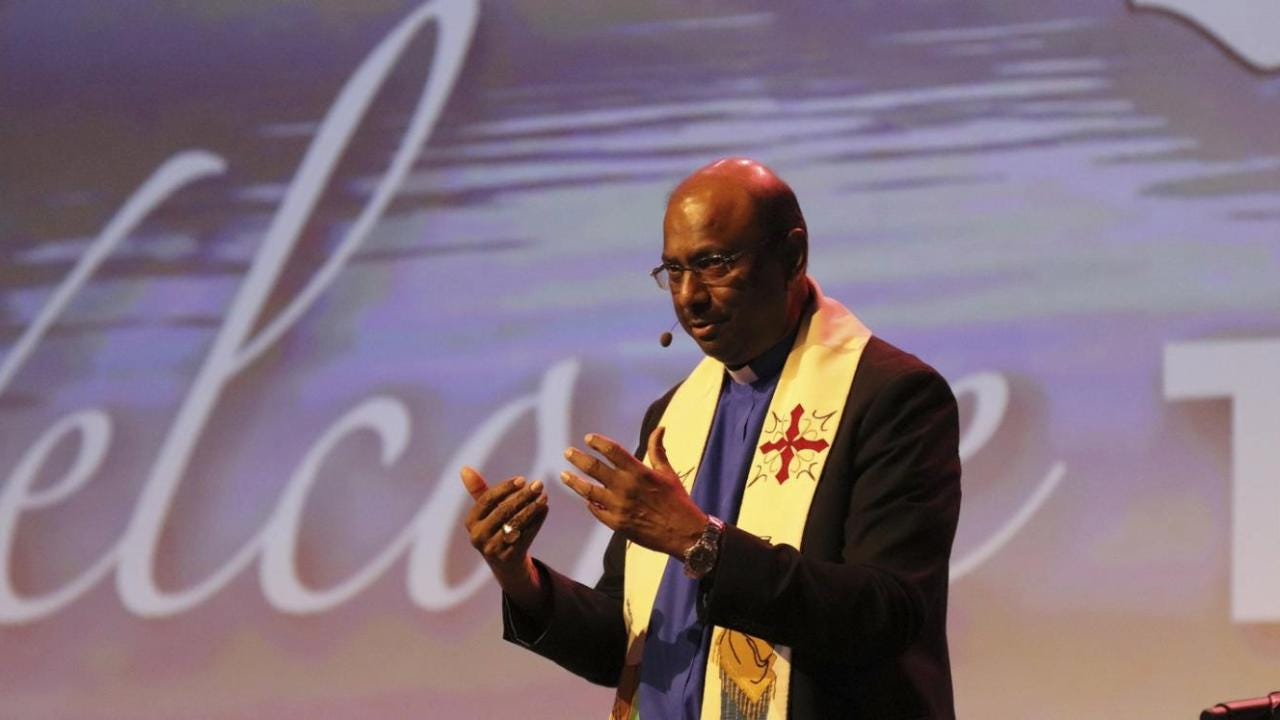
An international ecumenical clergy delegation visiting Havana considers “false and unfounded” allegations that the regime is violating citizens’ religious rights. Maybe the visitors stuck too closely to the regime’s guides during their stay. They could have checked in with pastor and activist Elier Muir Ávila, who has been persecuted for years for denouncing the regime’s human rights violations. His 16-year-old son is in prison for protesting the regime and bound for a maximum-security prison. Did anyone check with the members of the Ladies in White, a pro-democracy Christian group whose members have been persecuted for decades or their members currently in jail?
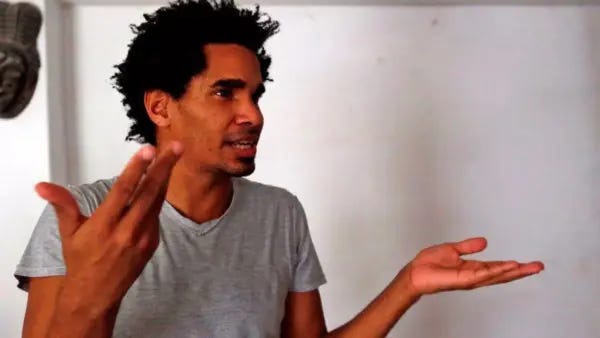
Luis Manuel Otero Álcantara. Served five-year sentence for “defamation of martyrs and symbols of the revolution.”
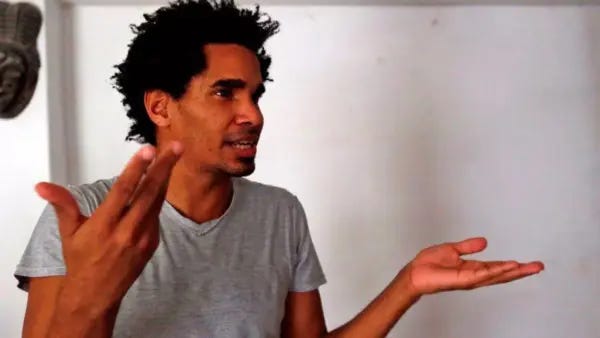
Imprisoned artist-dissident Luis Manuel Otero Álacantara reported that prison officials at the maximum-security prison where has already served his five-year threatened to kill him this week. He fears the regime will create new charges against him to keep him behind bars.
The legal rights NGO Cubalex has been petitioning for his release given that he has completed his sentence, based on time served while awaiting trial. But the court rejected a habeas corpus plea. When Cubalex appealed, the same court denied the request because, the official in the case was “unavailable.”
LMOA’s supporters are asking, once again, for the international community’s help. He began a new hunger strike this week to protest the latest psychological tortures..
I’ve lost track of the number of hunger strikes this gentle activist has undertaken. His activism is founded on non-violence, which has increased his vulnerability in the notorious prison of Guanajay.
Thanks for reading CubaCurious! This post is public so feel free to share it.
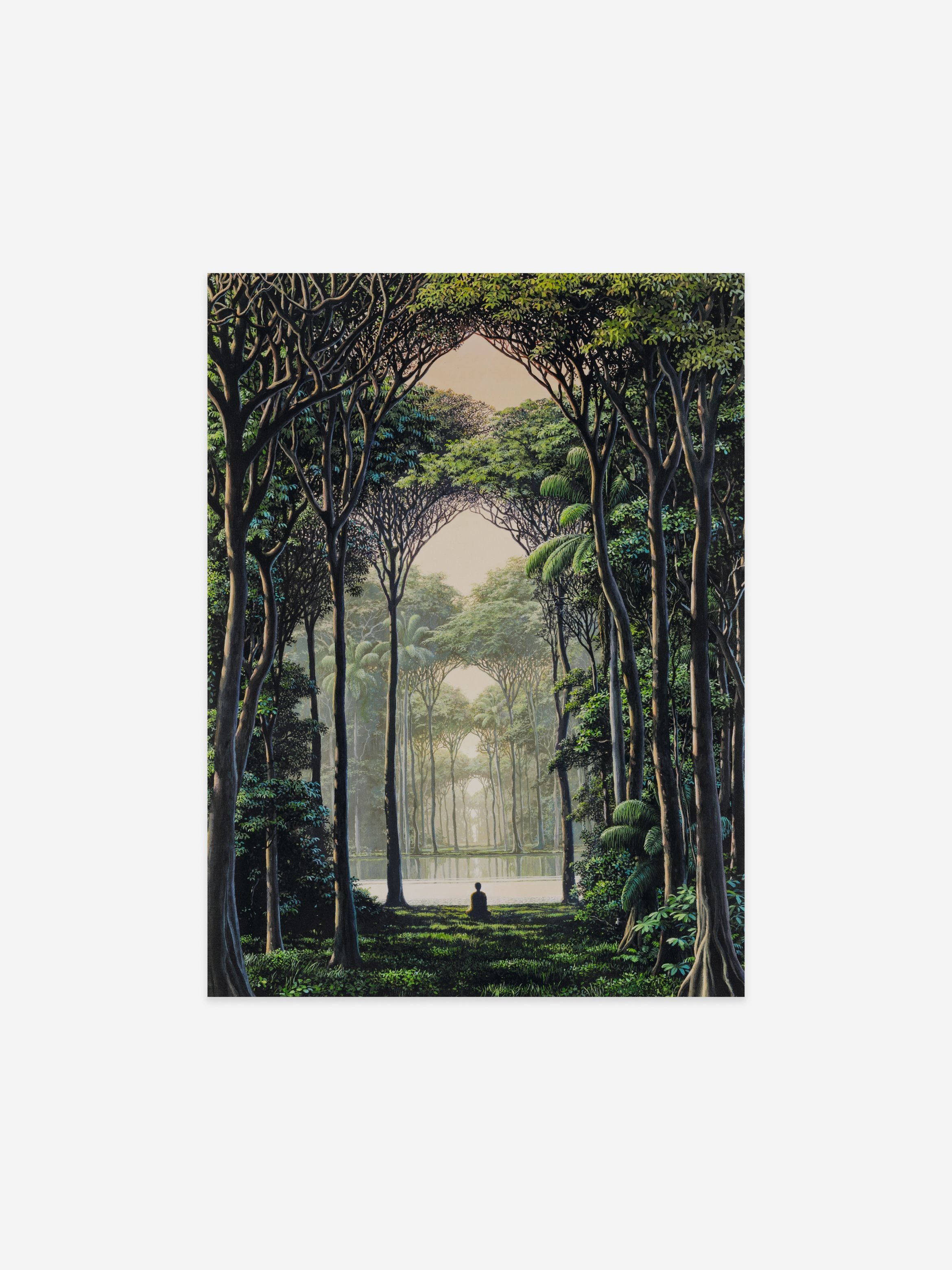
Tomás Sánchez is one of the most acclaimed living Cuban artists. His gorgeous works are linked closely with meditation and the search for self awareness. There is a mystical beauty in the images I’ve seen of his paintings. Maybe one day I’ll be lucky enough to see one in person.
A documentary about painter, Perseverancia, will be shown on April 13 at 7:30 p.m. at the Koubek Center, as part of the official selection of the Miami Film Festival.
No posts
Comments
Nothing yet. Say the first thing.
Sign in to join the conversation.