
27 marzo 2026
Hola. Welcome. Gracias for being here.
Before we get to the progressive internationalists who arrived in Cuba with tons of humanitarian aid but little awareness of Cubans’ suffering, here’s a powerful 1-minute video response to the visitors, in English, by former Cuban political prisoner Ruhama Fernández. “If you go to Cuba to defend that regime, do not pretend that you are helping my country . . .”
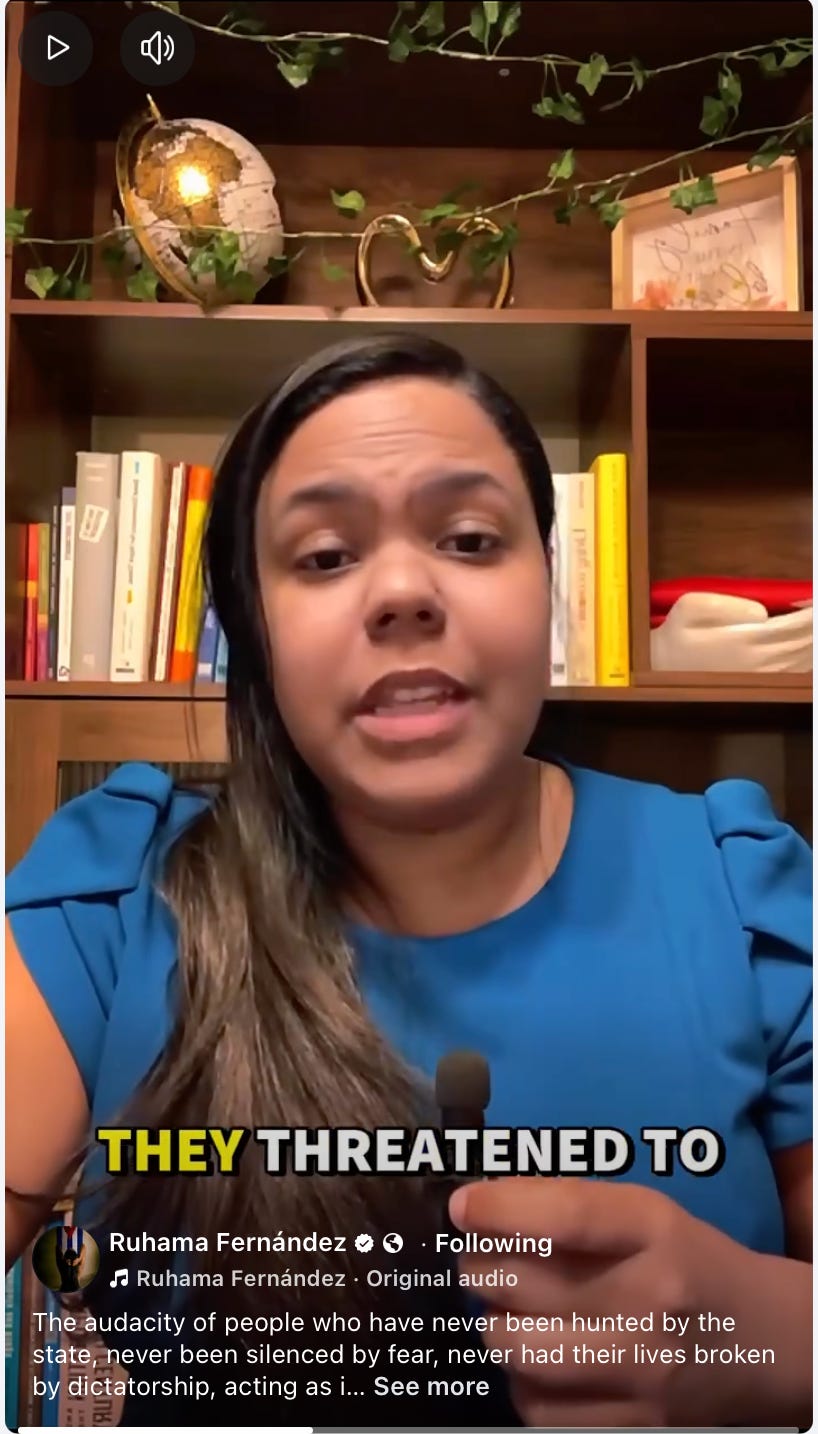
Ruhama tells it hard and straight. This Cuban quip gets to the point with a lighter vibe.
Las cosas en Cuba están tan malas que están importando a los comunistas.
Things are so bad in Cuba that they’re importing communists.
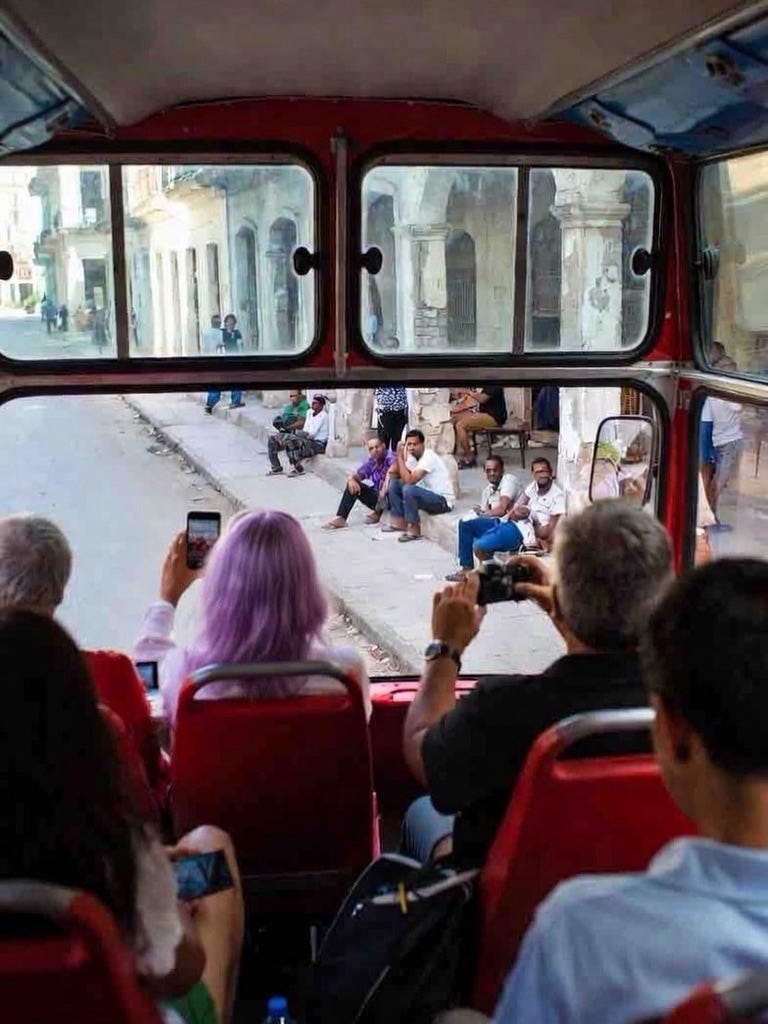
That gave me on of the only smiles I got this week tracking the story. Roughly 600 foreigners—and some Cubans who love the revolution but no longer live in Cuba—came on boats and jets to pledge allegiance to the revolution, swear to defend it with AKM rifles, take pictures of hungry Cubans on the street from inside their air-conditioned buses, consume scarce food, energy, and other resources, donate aid to alleviate “67 years of U.S. economic warfare,” and then—I assume—return to their democratic countries and the fruits of capitalism.
When they get home, they’ll be free to come and go as they please, vote for the candidate of their choice, maybe form their own political party. They can protest, form labor unions, enjoy freedom of speech, religion, assembly, and due process rights.
Cubans lost all those rights in 1959, when the revolution promised to make things so perfect they’d never have to even consider political change. Imagine that. Because that’s all you can do with it. Imagine.
That’s story is numero DOS this week. Numero TRES shows how the regime’s distortions about the crisis, some would say “lies,” often go unquestioned in the foreign press, allowing it to whitewash its mistakes and perpetuate its propaganda.
And numero UNO gives us new painful evidence that Cuba is a . . . dictatorship, a totalitarian state that systematically denies citizens the most basic human rights.
You would think we could all agree on that. I mean, there’s only one political party allowed in Cuba, the Communist Party of Cuba. Every institution and branch of government is subjugated to that party. Cuba has been under the same military leadership since 1959—and only since 2018 led by someone other than a Castro. Its political system is “irrevocable,” as stated in the 2019 constitution. Even its representatives in the National Assembly are appointed; many aren’t even from the area they represent.
Then again, the constitution also declares that Cuba is a democracy. Go figure.
Lots going on back home, that’s for sure. I’m doing what I can to bring you angles on the stories that I haven’t seen in the English-language press.
I hope you enjoy the read. Please consider sharing it with others. Cuban Treat of the Week awaits at the end. Gotta find a light note in these heavy times.
Thanks for reading and for caring about Cuba.
Hasta la semana que viene,
Ana
Far from softening its stance toward dissident voices, the regime is increasing its repression against its opponents—or perceived opponents. Artists, protestors, indie reporters, known activists, or average Cubans who dared to shout, write, march or say something inconvenient to the dictatorship are reporting harsher punishments, more violence.
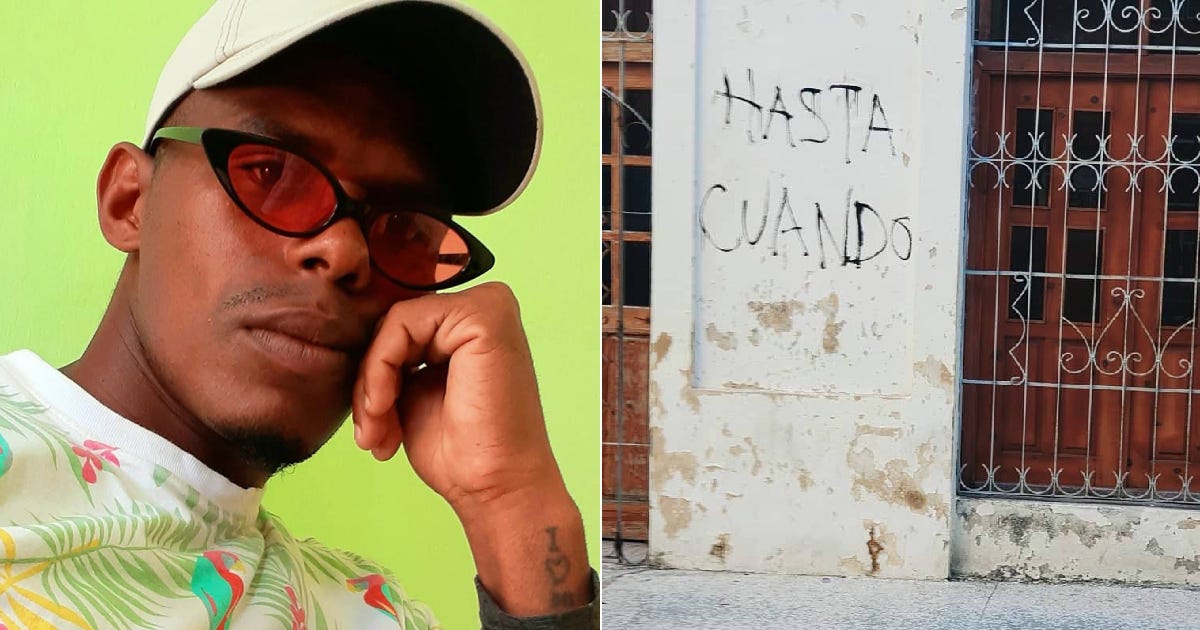
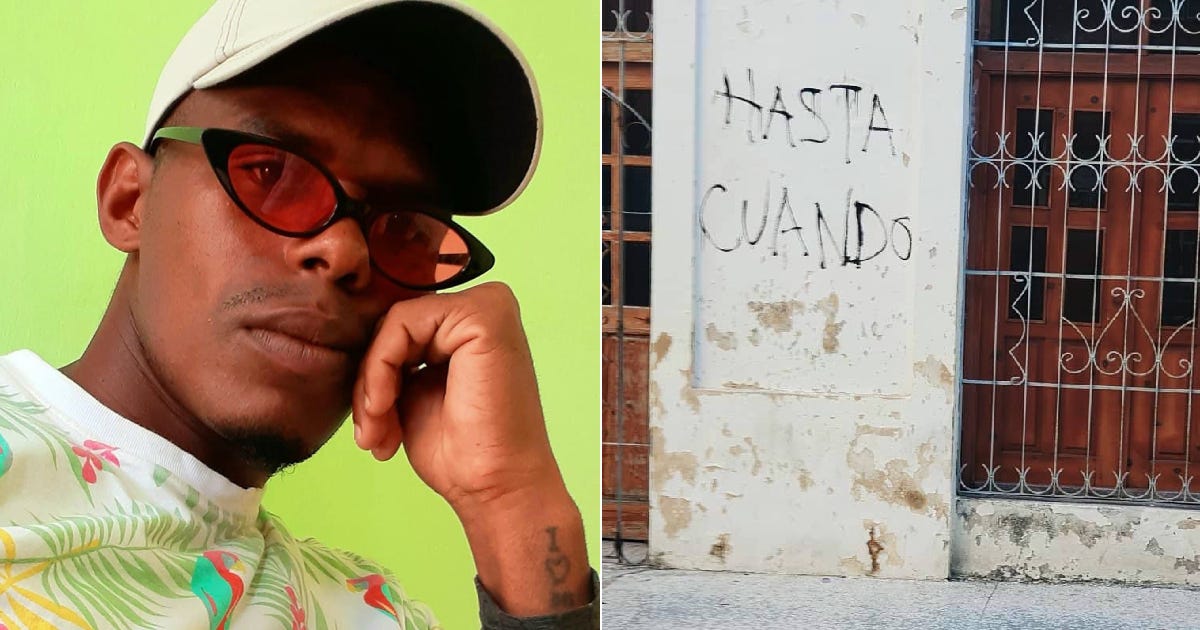
On Wednesday, Leonard Richard González Alfonso, a Regla artist and musician, was sentenced to 7 years imprisonment for painting signs criticizing the regime. He was charged with “propaganda against the constitutional order and threats.” The case file described him insulting someone who found him in the act of creating the sign and then leaving without “resolving” the situation.
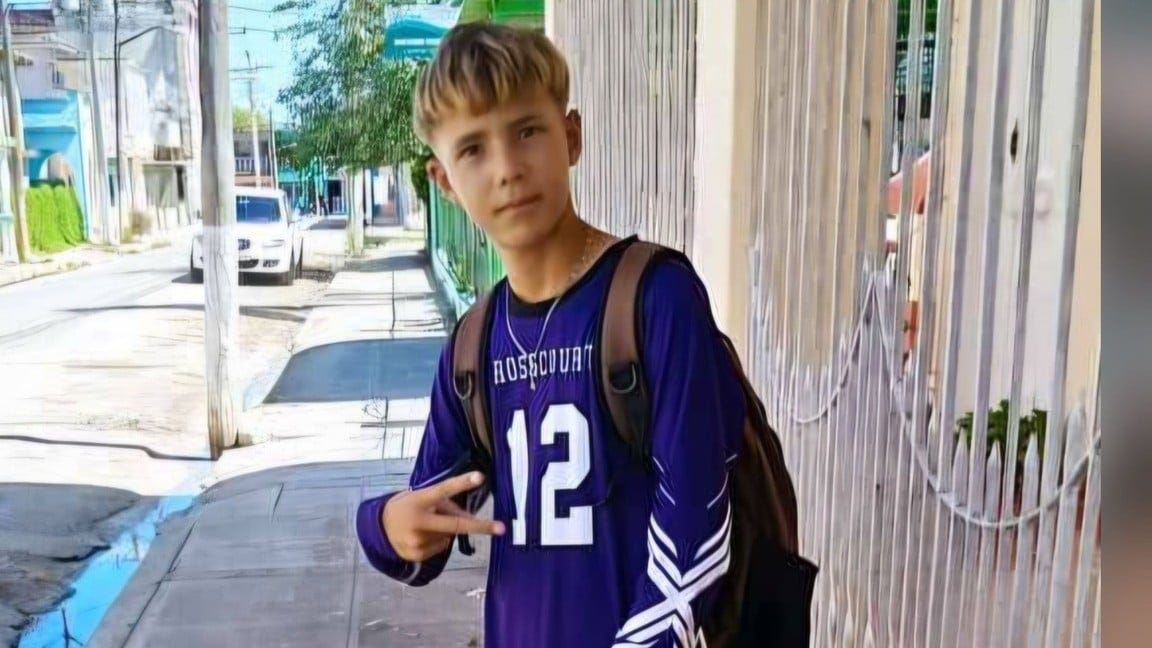
On Wednesday, a Cuban court denied a habeas corpus plea on behalf of Jonathan Muir Burgos, the 16-year-old son of an activist pastor. The minor was arbitrarily detained after protests broke out in Morón earlier this month. He is being held in “subhuman conditions” according to his father, who was also jailed but then released. The teenager is reportedly sleeping on the floor of his cell because the putrid mattress he was given is riddled with insects. NGOs and activists say he is being psychologically tortured, denied nutrition, and have called for the international communities support.
Jonathan’s parents were able to see him in prison and are worried that his chronic skin infection twill worsen and trigger a rheumatic fever. His parents told Cuba Decide, one of the U.S.-based groups helping the family, officials threatened to deny them legal representation, a measure that further violates international conventions protecting the rights of children. His parents fear Jonathan will be transferred to Canaleta, a notorious prison and the site of a recent violent uprising, and that he will remain there awaiting charges and a trial.
Also this week, the persecuted 21 year-old activist and YouTuber Anna Bensi was put under house arrest pending probable charges for “acts against the personal and family identity, voice, or image of a person and their data.”
Anna and her mother are in this particular mess because they recorded a plainclothes political agent who came to their front door with a summons for an interrogation. Anna’s mother is facing a five-year sentence for accusations of conspiring with the U.S.
But isn’t the regime the guilty party here, the one that violates citizens privacy with impunity? It runs programs on state-run television defaming opponents, entire shows dedicated to counter-revolutionaries, without a thought to their privacy rights or even the right to respond.
A few years ago, one of these programs dedicated a full hour to reviewing the medical records of a political prisoner on a hunger strike (Luis Manuel Otero Álcantara). His bloodwork and personal data were broadcast to the nation as proof that he was not as ill as his supporters were claiming. Cuba needs a good dose of HIPA.
In April 2025, doctors were interviewed on television about a young boy who had died following a prolonged, complex illness and treatments that his mother publicly denounced as negligent. She had campaigned to get the doctors’ permission to to take the boy to the U.S. for care, but they denied her request. The doctors said, on national tv, that the mother, by then in the U.S., had ignored their advice, delayed decisions, and wasted time on getting the transfer, something they denied until international support for the family forced them to acquiesce. Ten-year-old Damir Ortiz died of septic shock shortly after arriving in Miami.
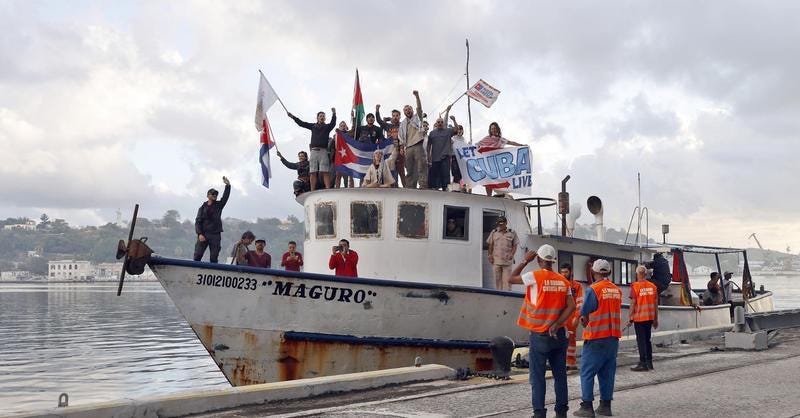
The 600 leftist activists and politicians from the U.S., Spain, the U.K., and Latin America who arrived in Cuba pledging support for the revolution and bearing donated aid delivered something else. A profound insult to many Cubans, who are struggling to survive a multi-faceted crisis—energy, food, water, health care, economic, social, political. Average Cubans, activists, and families living abroad, ridiculed and raged at the insensitivity and political blindness of the visitors’ “poverty safari.”
The Nuestra America, Our America, project handed over the donations to a regime that has been caught—repeatedly—selling donated goods to citizens in the military’s dollar-only stores and has more than 1200 known political prisoners. Not one of the “humanitarians” tweeted or Facebooked about them or their persecuted friends and families.
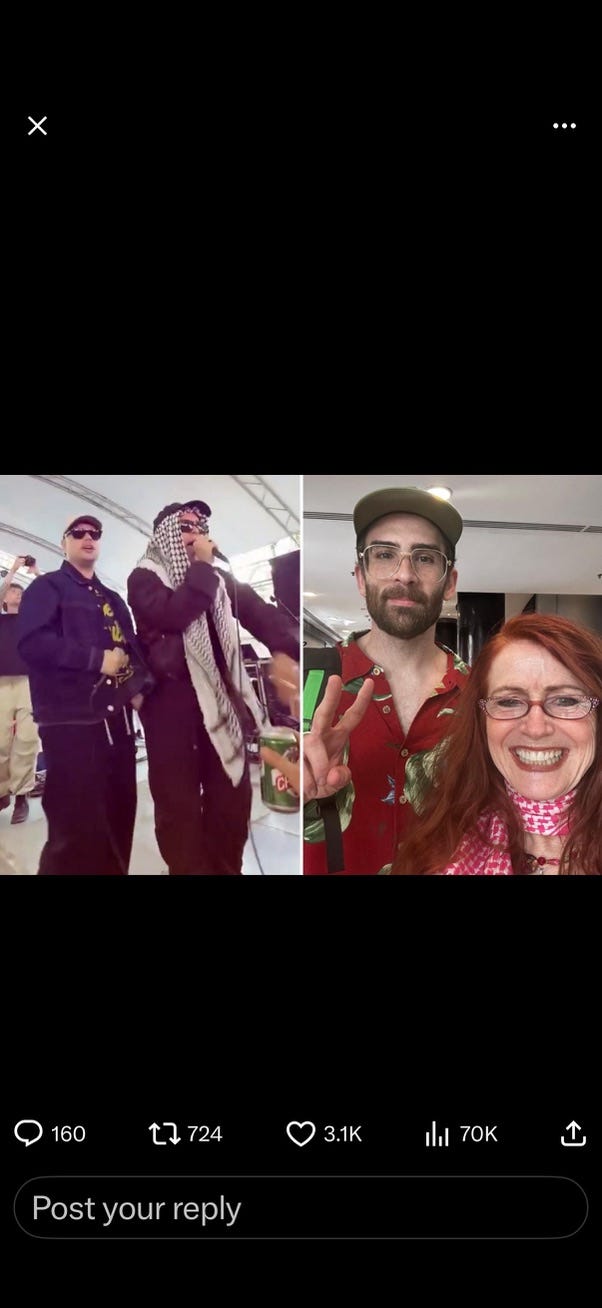
Some reports allege that the regime is paying at least some of the visitors’ expenses, including stays at the military’s mostly empty luxury hotels, taking them on tours in air-conditioned buses, giving them food Cubans can’t find, let alone afford. The visitors posted photos and recordings of their parties aboard boats and at an outdoor venue with a live band.
Meanwhile, Cubans have been risking imprisonment by protesting every night, banging pots and pans, shouting “down with the dictatorship” and “freedom.” Citizens and some indie news sites have been reporting increasing violence by military and political police forces against protestors. Families say loved ones have been “disappeared” and others imprisoned after the demonstrations, including the 16 year-old son of an activist pastor who is still in prison.
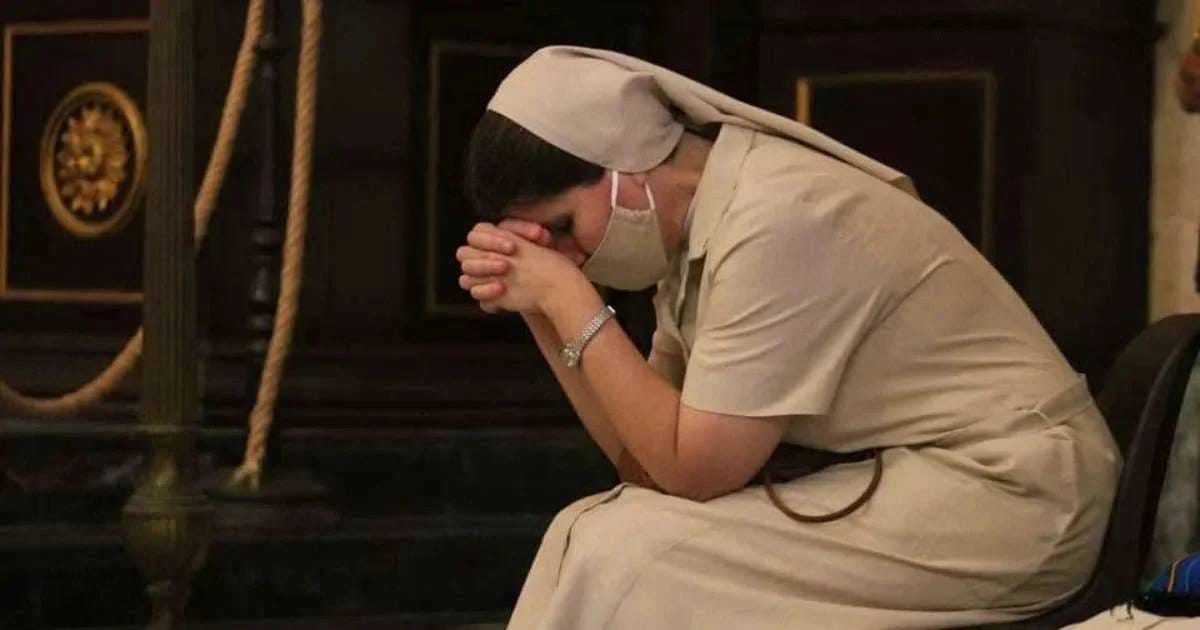
Sor Nadieska Almeida Miguel. H.C, a Cuban religious and activist, described “living hungry, enveloped in piles of garbage, and [the internationalists] arrive with shows of solidarity, gestures of friendship toward children that show total lack of respect, and taking photos of us without our permission.” (referring to scenes of one internationalist holding a cookie above a Cuban child’s head while the child danced).
From Spain, Sor Lucía Caram, an Argentinian activist nun, rebuked Spanish leftist politician Pablo Iglesias, one of the leaders of the convoy. "Pablo, you're wrong. You’re promoting a dictatorship, a regime that has oppressed. I do not agree with what the United States has done, but I also do not agree with this pathetic defense you are making of the Cuban regime, an oppressive and dictatorial government."
Spanish leftists weighed in on El Estornudo’s Facebook page on Wednesday. “ . . . as a member of Podemos (far left socialist party), a feminist, dedicated to social justice . . . it profoundly depresses me that people from the left are going to Cuba and joining in this pantomime of propaganda,” Clara González, said.
Others in the recording wondered why the internationalists didn’t go to the barrios to ask people directly about their lives. Alberto Schwarzmann said, “Humanitarian aid, empathy, doesn’t consist of whitewashing a repressive regime, giving more propaganda to a system that has clearly failed and has condemned so many people to misery.” Sara Sánchez, said her Cuban friends all have the same opinion: “Cuba is a a communist dictatorship.”
Anamely Ramos González, a forcibly exiled activist now in the U.S., lambasted the regime for denying its own citizens the right to return home as punishment for criticizing it—yet welcoming ideologically acceptable foreigners and allowing them to to play hero to suffering Cubans. Some religious Cuban Americans recalled the regime denying the humanitarian aid they had attempted to deliver directly to churches after a hurricane. The regime said the group had infiltrated anti-regime propaganda in the shipment. Officials showed photos of cans with writing that said “from your brothers and sisters in Florida.”
Other Cubans were indignant that while the regime forbids them from riding on motor boats around their own island (due to fears they’ll flee), but it had organized a joyful reception for “poverty safari” members, who floated into Havana Harbor dancing and singing on the decks of their boats.
Former Cuban political prisoner Ruhama Fernández sent a scathing and powerful video message to the internationalists. It’s a short but powerful must-see. Girl tells it like it is.
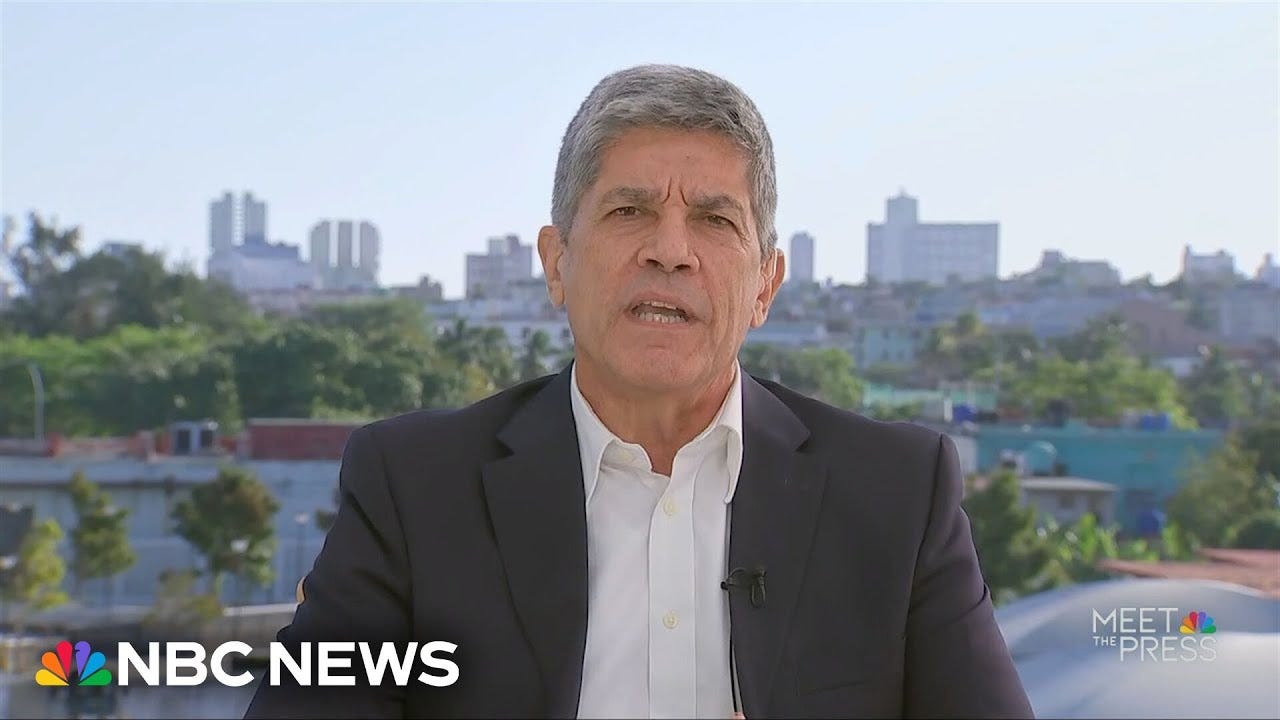
One of the most disturbing aspects of the crisis in Cuba is how easily Cuban diplomats distort—some would say lie—its causes. They often tell interviewers that the severe outages, the food, gasoline, medicine shortages, and even some Cuban deaths are due to the embargo, particularly the recent oil sanctions. But they regularly omit the loopholes that make the partial embargo so porous that I can order food for family members online in New Hampshire and have it at their door in Cuba two days later.
A recent article by a pro-Cuba trade group calls out some of the whoppers.
For example, Cuba officials constantly say the U.S. won’t permit investment in Cuba. Yet in 2022, the Biden-Harris Administration authorized direct U.S. investment in and financing to a Cuban enterprise. Four years later, the Cuban government has still not provided the necessary documentation for that process to open up. But its leaders and spokespeople continue to say the U.S. “does not permit direct investing and financing.”
Among the most skilled at this obfuscation is Deputy Minister of Foreign Affairs, Carlos Fernández de Cossío. He is a favorite of the foreign media. His English is strong and his demeanor calm. On the rare interviews where I’ve seen a reporter challenge him, he pivots beautifully or restates the “untruth” more emphatically. There are no political prisoners in Cuba. The U.S. has the greatest number of prisoners in the world, yet Cuba would not dream of insisting that topic be a condition for negotiations. The U.S. embargo prohibits Cuba from securing financing around the world—or trading with other countries.
Cossío recently told Thomson Reuters that trade between the two countries has been “severed by the comprehensive U.S. economic embargo.” But Cuba’s imports of U.S. food and agricultural products (approx. $490 million) increased 13% between 2024 and 2025.
Cuba imports other U.S. products, like jacuzzis, golf carts, and luxury vehicles. I doubt those things alleviate the suffering of average Cubans. They certainly help the tourism sector, run by Cuban military enterprises, and the political elites, who need there status symbols.
Maybe it’s better to skip over that on Meet the Press.
Reporters, lawmakers, and credulous foreigners too often take the regime’s spokespeople at their word. Is it politeness? Is it cluelessness? Is it out of sympathy, political affinity?
You would think journalists from a country with a free press that demands transparency of politicians and business leaders would ask the representative of a totalitarian regime a few tough questions backed by a hard fact or two. 1,214 Cuban political prisoners? Anyone?
Would that roasting cost them the next chance at an interview with a twitchy Cuban official? Maybe.
So . . . thank you so much for being here—and mum’s the word.
Thanks for reading CubaCurious. If you appreciated this post, please click the heart at the end of the post and share it.
For Cubans and people who love Cuba, there is a treasure in Miami that you may not know about. Nope. Not a new Cuban sandwich shop. It’s the University of Miami Libraries’ Cuban Heritage Collection, a treasure trove of documents, books, ephemera, and other Cuban artifacts dating back centuries.
I was there earlier this month for a book event for Property of the Revolution: From a Cuban Barrio to a New Hampshire Mill Town, my almost one-year-old memoir.
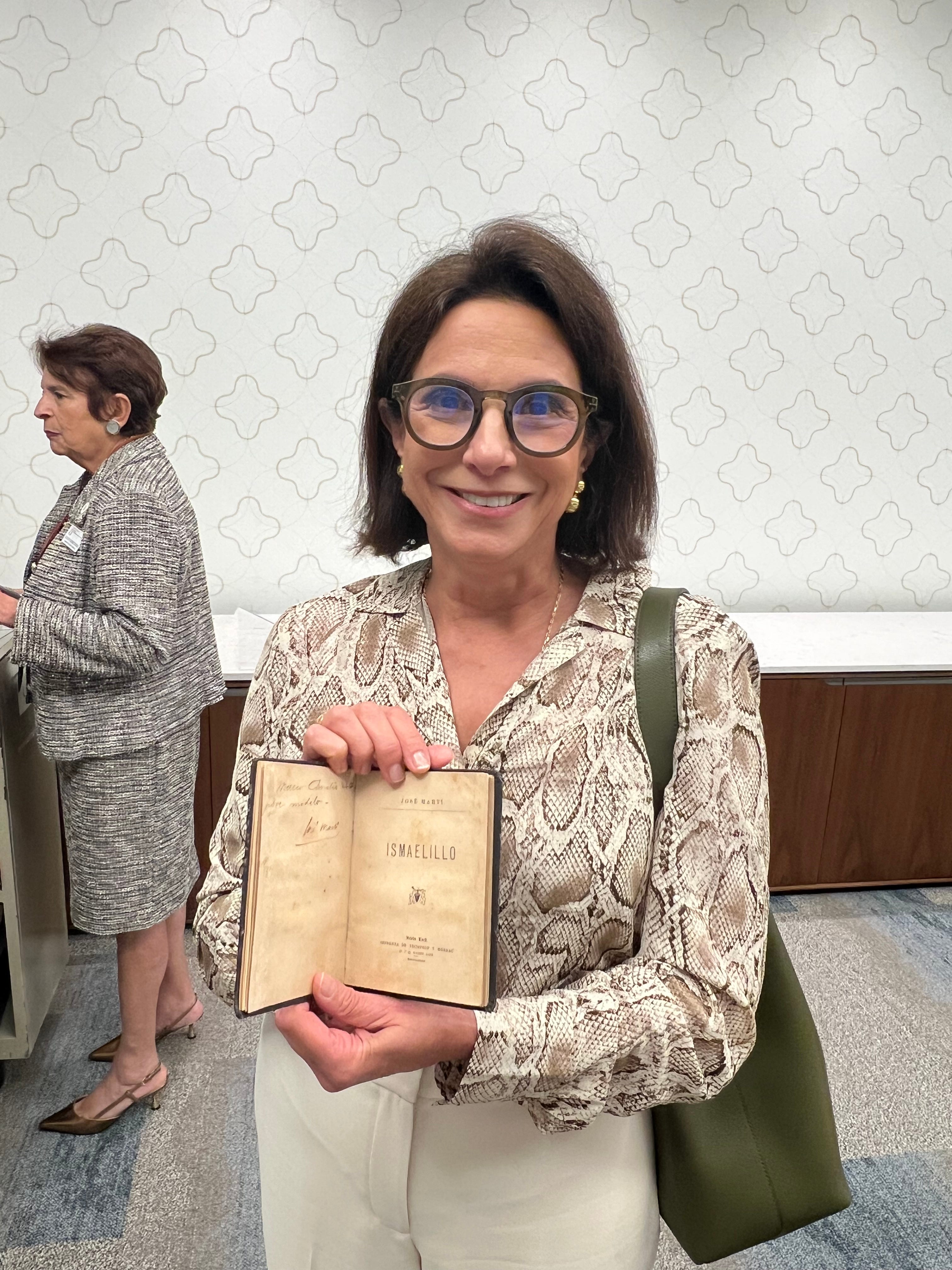
Gladys—loved her sling backs—let me hold José Martí’s Ismaelillo, which was signed by him. Major goosebumps. I also got to hold a copy of History of the Americas, by Bartolomé de las Casas, begun in 1542 and possibly printed around 1552. More escalofrios.
I hope you get to visit this beautiful space and enjoy the exhibits. How wonderful that some Cubans and friends of Cubans created this project so people like me—and you?—can our literature, art, history, and heritage.
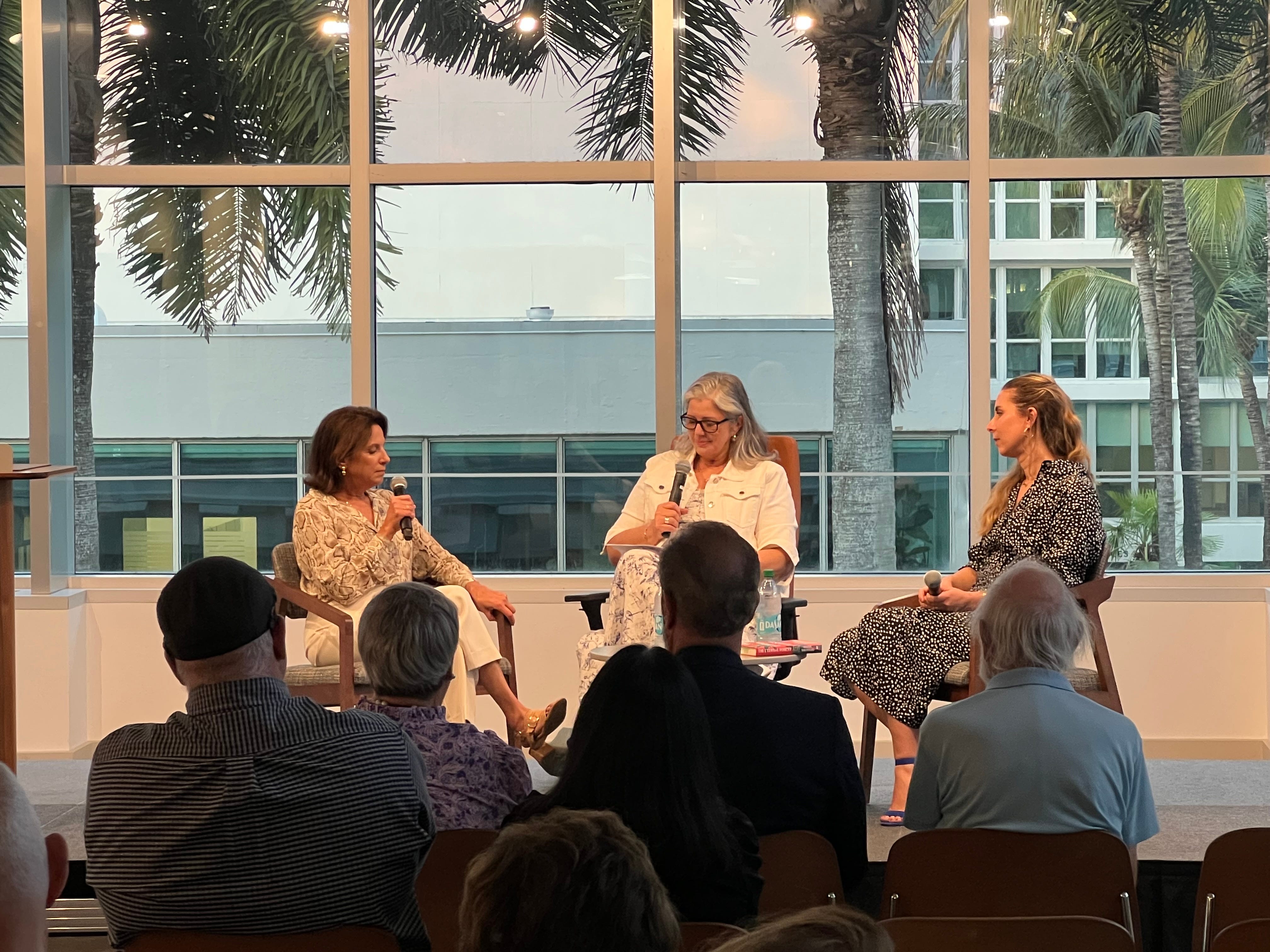
I highly recommend these new, gorgeous books by my talented cubana friends. Mirta’s historical fiction novel, Deeper than the Ocean, and Elena’s memoir, The Eternal Forest . Happy reading.
No posts
Comments
Nothing yet. Say the first thing.
Sign in to join the conversation.