
“I would rank them as probably the most aggravating intelligence
service I’ve ever worked against. That’s not just because they’re so
devious and ruthless, but because they’re so good.”
– James Olson, former Chief of Counterintelligence at the CIA (under George H.W. Bush and the early Clinton administration), describing Cuba.
31 de julio 2026
Hola y welcome back to CubaCurious.
Thanks for being here and caring about Cuba.
The protests, repression, and hardship continue on the island and I keep wondering when, when will there be relief for Cubans.
Rather than bring you the more on that painful front, let’s look at the U.S. State Department’s new 100-page report on Cuba. It’s a sizzler.
With no holds barred and in the strongest language, the report asserts that Cuba has long prioritized spycraft, influence-building, strategic alliances, and fomenting unrest to spread revolution and far-left ideology, that it has been extremely successful, and that we had better pay attention, because far-left extremism is on the rise, here and around the world.
I haven’t seen much coverage on the report. Where it has popped up, people are either dismissing it outright as biased, given the administration’s hard push for political change in Cuba and the pro-revolution crowd’s forgiving lens, or welcomed with a hearty por fin, finally, by pro-democracy activists and conservative-leaning folks.
I found it mission oriented but also compelling, with good evidence (e.g., corroborated intelligence defectors’ accounts), in most cases that, despite chronic economic and social problems at home, Cuba has invested heavily in its goal of spreading revolution and intervening militarily and financially to support leftist ideology since 1959.
So what? All countries promote their economic and political systems. But Cuba plays the game both ways. The regime cries foul when criticized for its human rights abuses, claiming no nation should interfere in another’s right to self-determination—and it denounces imperialism’s evils and hypocrisies.
Yet since 1959, when the revolution came to power, Cuban soldiers and financial and material backing have propelled leftist skirmishes and wars from Panama to Mozambique. That kind of imperialism is okay, evidently. Such intense, consistent, and successful involvement in foreign conflicts is rare for smallish countries, especially those claiming to be victims of imperialist aggression. That’s worth noting.
Regardless of your take on the report, there’s no question it can be used to support more aggressive—possibly military—action by the U.S. to create democratic change and economic flexibility on the island.
Thanks for reading CubaCurious! This post is public so feel free to share it.
Of course, Cuba’s role in Nicaragua and Venezuela are given as prime examples of the regime’s interventionist successes in the report. We know the regime supported politically subversive groups in those countries and then strengthened their military and intelligence operations after they came to power. These better-known cases of Cuban intervention are put in the context of Cuba’s long history of overseas involvement in similar left-right conflicts and Fidel Castro’s promise that when the war in Cuba was over, “a much wider and bigger war” against the United States would follow.
Thanks for reading CubaCurious! This post is public so feel free to share it.
The report describes Cuba’s infiltration of the highest levels of U.S. government, activist groups, and its promotion of domestic unrest, including links to the protests following George Floyd’s death and pro-Palestinian campus activism. These connections were more associative than clear cut, in my opinion. But we read how leftist groups with ties to Cuba pushed or broke boundaries during or preceding protests. And FBI reports from 2023 and 2024 alerting U.S. academic institutions of Cuba’s efforts “to target students using recruited academic personnel to spot an assess potential recruits,” help back up some of the allegations.
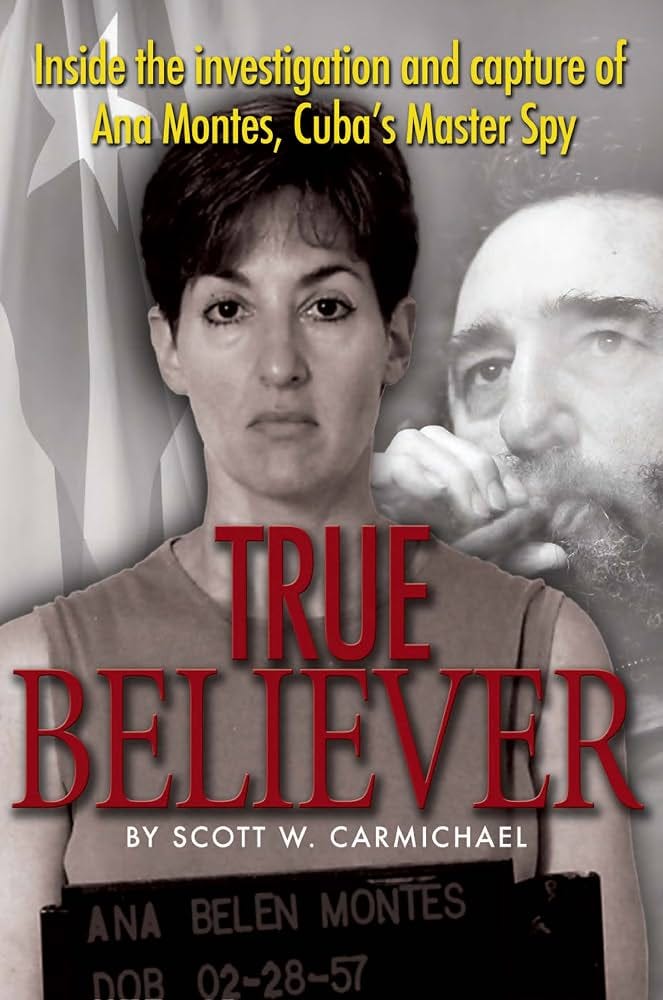
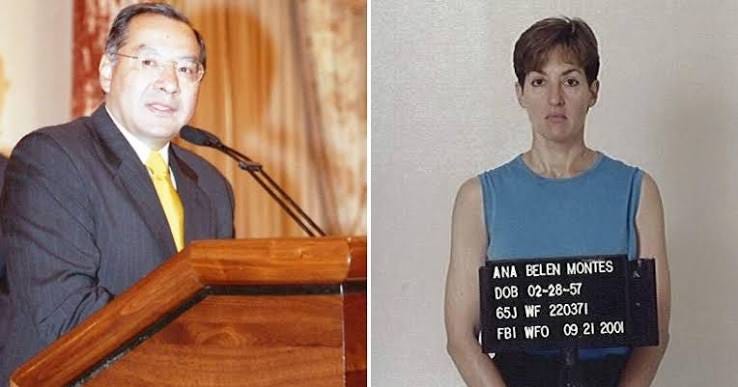
The cases of U.S. Defense Intelligence Agency analyst Ana Belén Montes and U.S. diplomat Manuel Rocha, both of whom pleaded guilty to secretly acting as Cuban agents for decades, are well known and demonstrate Cuba’s success in recruiting spies in the U.S. We also know Cuba’s history of harboring American fugitives and running training camps where “tens of thousands of militants from Latin America, Africa, the Middle East, and eventually Nort America
The report asserts a tripling of Chinese and Russian signals-intelligence facilities on the island in recent years, giving the U.S. adversaries electronic surveillance access to military and naval activity throughout the southeastern United States.
Cuban pro-democracy activist Orlando Gutierrez Boronat, president of the Assembly of the Cuban Resistance, told NBC 6 in South Florida, that the report “shows why Cuba is a threat to the entire hemisphere, to the U.S., how it’s been consistently behind efforts to subvert American democracy and American politics.
Cuba’s appointed president, Miguel Díaz-Canel, described the report as a new form of McCarthyism. A spokesperson for China’s Ministry of Foreign Affairs wrote on X that “The U.S., with its massive surveillance operations in the world, is in no position to sling mud at other countries.”
That’s fair, but the report isn’t “slinging mud” as much as it is blowing the whistle on a regime that demands respect for its sovereignty when it represses its own citizens yet has jumped into other countries’ conflicts since 1959 to promote its brand of revolution.
From Mozambique and Algiers in the 1960s, to Angola and Ethiopia in the 1970s, to Venezuela and Nicaragua in 2025, the regime has sent tens of thousands of soldiers to other nations’ battles. It has, as many analysts have said over the years, punched far above its weight.
Cuba is not a stay-at-home political wall flower, as the regime claims. It is not a peace-loving nation that respects other nations’ right to self-determination.
Our justified fear of McCarthyism shouldn’t keep us from considering the evidence in the report. It isn’t about right- vs left-thinking. It’s about plain old thinking.
I hope you’ll at least skim the report and let me know what you think.
I’ll be off for the next two weeks but look forward to returning with news from Cuba’s streets on el 20 de agosto.
Hasta entonces and thanks for reading.
Ana

The Cuban bolero originated in eastern Cuba, in Santiago de Cuba in the late 19th century.
As a kid, I hated Cuban music, especially boleros. It embarrassed me when Mami would sing along to these ancient songs with a lumbering beat. When she played the second-hand records on our third-hand record player in the living room, she swooned. I fled.
Now, these old melodies remind me of her and her love of music, especially romantic Cuban boleros. And I love them, this one in particular, from Buena Vista Social Club. Dos Gardenias.
More details on the Céspedes and Horta show on 14ymedio.com.
Enjoy.
No posts
Comments
Nothing yet. Say the first thing.
Sign in to join the conversation.