
Hello dear readers!
Welcome to the second edition of Baking Time. Before I hand the screen over to Gretchen, I want to tell you about Liberty Hyde Bailey, who was a phenomenal plant man and educator. Longtime readers may recall how besotted I am with him!
One of the many things I love is how he created channels for peer learning, an activity I see in action at many grains events, like the Northern Grain Growers and the Cornell Organic Field Crops and Dairy Conferences last month.
There is an effort to form the Bailey Center, and I hope it can meet its ambitious fundraising goals. Here are a few words about the project:
A limited “window of opportunity has opened to preserve and restore the historic home, gardens, and herbarium complex of Liberty Hyde Bailey (1858-1954) in Ithaca, NY, as the center for a dynamic new effort. Inspired and informed by Bailey’s ecological and polymathic writings and lifework grounded in rural culture, this center would address the environmental crisis of climate change by directly tackling the rural-urban divide that stymies climate progress and that concerned Bailey over a century ago.
If you donate, please let me know and I’ll send you a token of my affection.
—Amy
Gretchen Kuehnlein-Kopmanis is a director of financial support programs at the University of Michigan. To keep her family’s heritage recipes alive, she started a cottage food business in 2012 called Czechbox Bakery, specializing in Eastern European and Baltic baked goods.
My great-grandmother came to this country in 1912 when she was eight years old. At that time, my family wasn’t “Czech”, they were Austro-Hungarian immigrants. Czechoslovakia (later the Czech Republic, now Czechia) didn’t even exist yet. Only after World War I, when new borders were drawn, did their village end up firmly in the Moravian province of the newly formed Czechoslovakia.
Why am I telling you this? Since starting my bakery in 2012, I’ve talked to so many people who cling fiercely to their idea of a “country of origin”—even when that country didn’t exist a little more than a hundred years ago. Sometimes they get downright defensive. “That isn’t Czech. That’s Hungarian.”
That curiosity led me down yet another historical rabbit hole after a long conversation with a customer about our family backgrounds. When Austria-Hungary dissolved after World War I, it fractured into new nations—Czechoslovakia, Yugoslavia, and the smaller modern states of Austria and Hungary. Other territories were absorbed into Poland, Romania, and Italy, forming what we now know as Czechia, Slovakia, Slovenia, Croatia, parts of Ukraine, and more. Ukraine gained regions like Galicia and Bukovina, while Montenegro, Serbia, and Bosnia-Herzegovina joined with Slovenia, Macedonia, and Croatia to form Yugoslavia.
So when I come across a recipe labeled as Ukrainian, I know it may actually have Austro-Hungarian roots and therefore belong to my own family’s food culture.
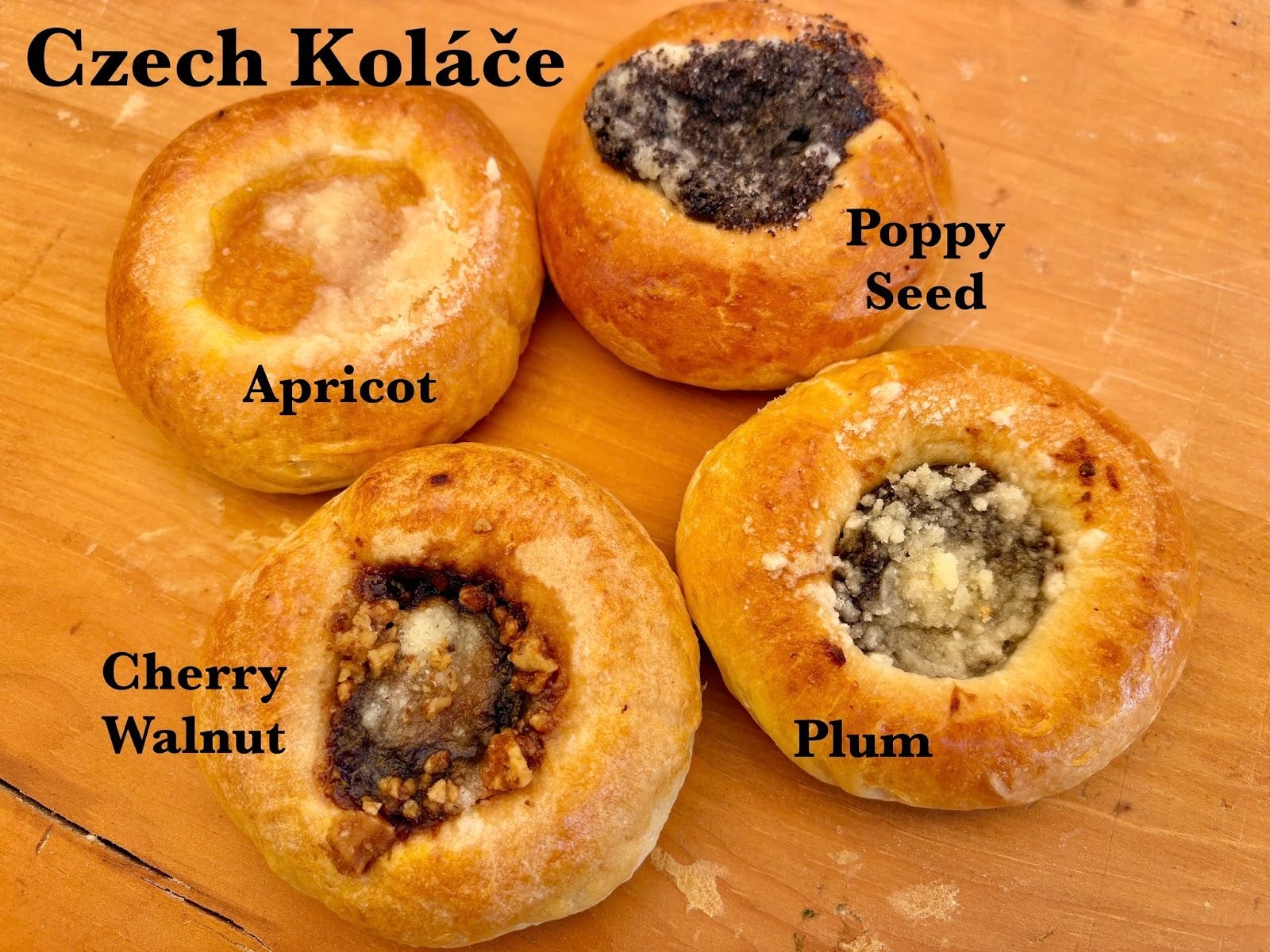
Yes, I truly did spend hours staring at maps from before and after WWI. I’m weird that way, but I found it fascinating. My grandma once told me that Czech kolačký varied from village to village, and that the birds painted on the lintels of houses did too—you could supposedly tell which village you were in based on which bird was painted above the door.
I haven’t been able to find the right rabbit hole to verify those charming claims, but I love the idea of it. What is true is that the same baked goods were made across regions with small variations in flavor and technique. When the Austro-Hungarian Empire dissolved, the baking traditions remained. Immigrants carried them to America and the names followed, shifting, changing, and developing new meanings in their new home.
Language changed too. My Hungarian customers sometimes call my kiffles their version of kolačký. I’ve had Czech nationals point at an apple pie and tell me they call it kolach, meaning a large round pastry, while kolačký refers to small round ones. So when someone asks if I make kolačký, I have to ask what they picture in their minds. Texas Czechs, for instance, make pastries that look like Danish, but they also make something that resembles mine, which they call “Grandma’s Kolache.” Mine are sometimes called vdolečký—filled pastries with streusel on top.
Pronunciation plays a part too. My Latvian husband’s family has a pastry called pīrāgi, pronounced “pea-rah-gee,” but younger generations who can’t roll their R’s say “pea-rug.” Some of my American-Latvian customers ask for “pea-dogs.” None of these are correct according to Latvian phonetics, but the family traditions are so ingrained that it no longer matters, though it does make it harder for a baker like me to search for recipes. If I can’t spell it, I can’t find it. But the rabbit holes I stumble into are delightfully deep.
Whenever I can find the right spelling, translation becomes the fun part. My husband’s younger cousins in Latvia help, but I get a kick out of the online translations of the instructions. To make Latvian sauerkraut, you “cook it forever.” For a saffron birthday bread, you’re to “add rum until you can’t see the words for the recipe.”
Most of my Czech recipes came from my grandparents, passed down from their mothers. My Latvian recipes come from my husband’s family, many of whom still live in Latvia. If you ever want to marvel at architecture, go to Prague, but if you want to experience what old-world life actually felt like, go to Riga during Līgo and Jāņi, Latvia’s major summer solstice celebration. It’s basically Thanksgiving, the Fourth of July, Memorial Day, and Labor Day all rolled into one.
Latvian food culture is deeply rooted in rye flour, guided in part by the Latvian Bakers Association. It was fascinating to see how revered rye bread is, along with the legends and customs surrounding it. Latvian rye bread (Rupjmaize) is a sacred cultural symbol, central to life, hospitality, and folklore, representing continuity and prosperity, with strict customs like kissing dropped bread, never placing it upside down (to prevent hunger), and incorporating ancestral starters, marking significant life events from baptisms to funerals. My favorite story came from our young cousins, who told us about “bread day” when the old bread stored in the attic was replaced with fresh loaves and the older bread was turned into desserts and snacks.
A funny side story: after my grandmother passed, I reconnected with my Czech cousins here in the States. They invited us to dinner and opened a bottle of Slivovitz, a traditional plum brandy. They poured me a small glass. I sipped. It was wonderful. I sipped again. I finished it. They stared and quietly refilled it. I drank that one too, chatting away, oblivious. They kept sharing sly smiles as they topped me off throughout the evening. At the end of the night my cousin finally asked how I felt. Honestly? Perfectly fine. No buzz whatsoever. They shook their heads in amazement. “Well,” one said, “if you ever doubted you were Czech, this clinches it. No one but a real Czech can drink Slivovitz like that and not notice.”
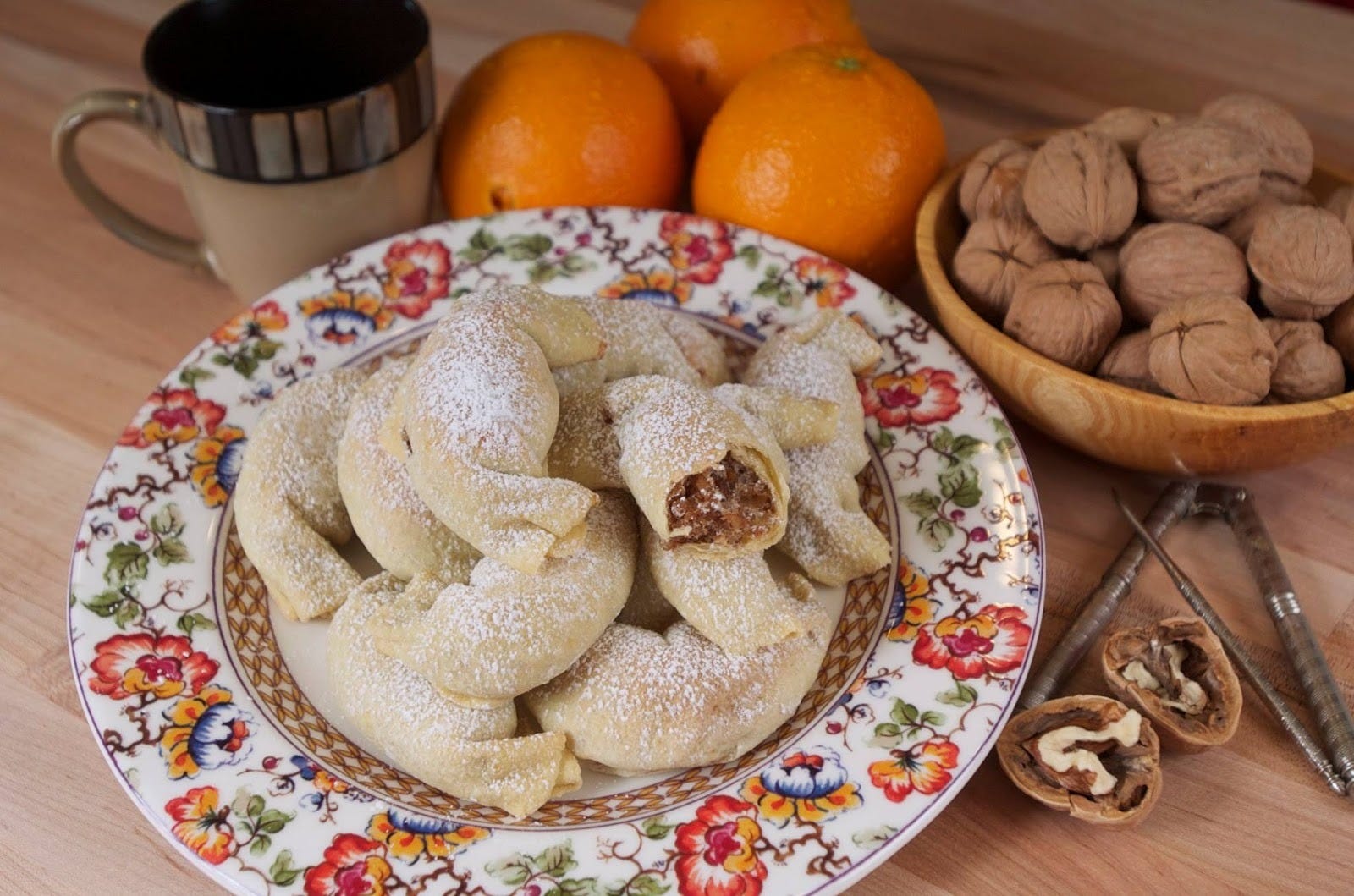
That night I learned a lot about the origins of the names in our family’s baked-goods lexicon. My grandmother made a pastry she called myší ocasy, or “mouse tails.” My customers were always startled and horrified by the name. My cousin told me that my grandmother had completely made it up. The actual name is apparently rohlíčky, but when I looked up rohlíčky, I found Czech Vanilla Crescent Cookies (vanilkové rohlíčky) that look a lot like the Hungarian kiffles Zingerman’s sells for the holidays. Nothing like my grandma’s mouse tails.
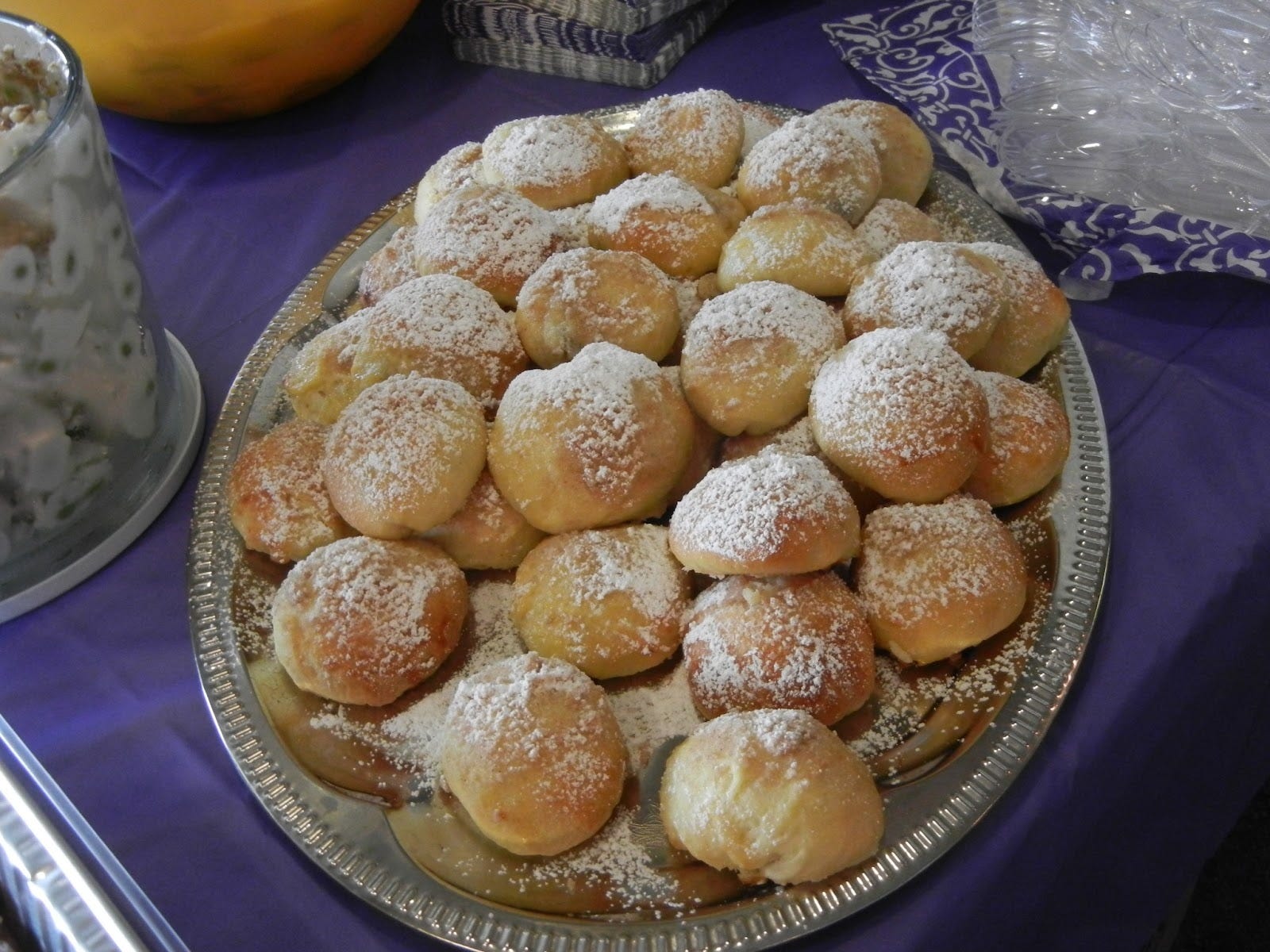
The closest match I could find was Hungarian hamutáska; “cinder sacks.” Even that search produced mixed results, because sometimes hamutáska is described as a thumbprint cookie. The name translates literally to “ash pockets,” referring to the shape and powdered-sugar dusting. Meanwhile, Hungarian crescent cookies (kifli or kiffles) are rolled and flaky. It’s all confusingly delicious, and cultural naming inconsistencies are my personal quicksand. It convinces me that only someone born and raised in a place truly understands its culinary quirks and even then, you get lovable oddballs like my grandmother inventing the term “mouse tails.”
I wish I could ask her where that name came from. But everyone in the family knows what mouse tails are, and it’s far too late to change the name now.
When I attended Amy Halloran’s class at Zingerman’s Bakehouse, “The Evolution of American Baking,” I couldn’t help wanting to learn about the evolution of baking in Eastern Europe. I adore French pastries like anyone else, but something in me pulls toward understanding my heritage. Maybe it’s in my DNA.
No posts
Comments
Nothing yet. Say the first thing.
Sign in to join the conversation.