

Dear Readers!
I got to be with Ellie Markovitch last week, and talk to her students at the University of Maine about writing. It was a delight to share myself with young people who want to work with words. And it was a joy to be together with my BFF (best food friend) and be fed by her.
Watching her kitchen rhythms is inspiring. She is in her element, gathering items from pantry and freezer, glancing at the whiteboards of ratios on the side of the fridge. While making dinner, she made a quick pie, using apples she’d lightly cooked and frozen, and a crust that came together deftly and swiftly.
Repetition is the mother of such ease. I see this in myself, when I get busy with a temporary favorite, like Morning Glory Muffins, and lose the need to measure. Batch to batch, if there’s little time between, I can improvise. If I made one now, the result would show my lack of attention.
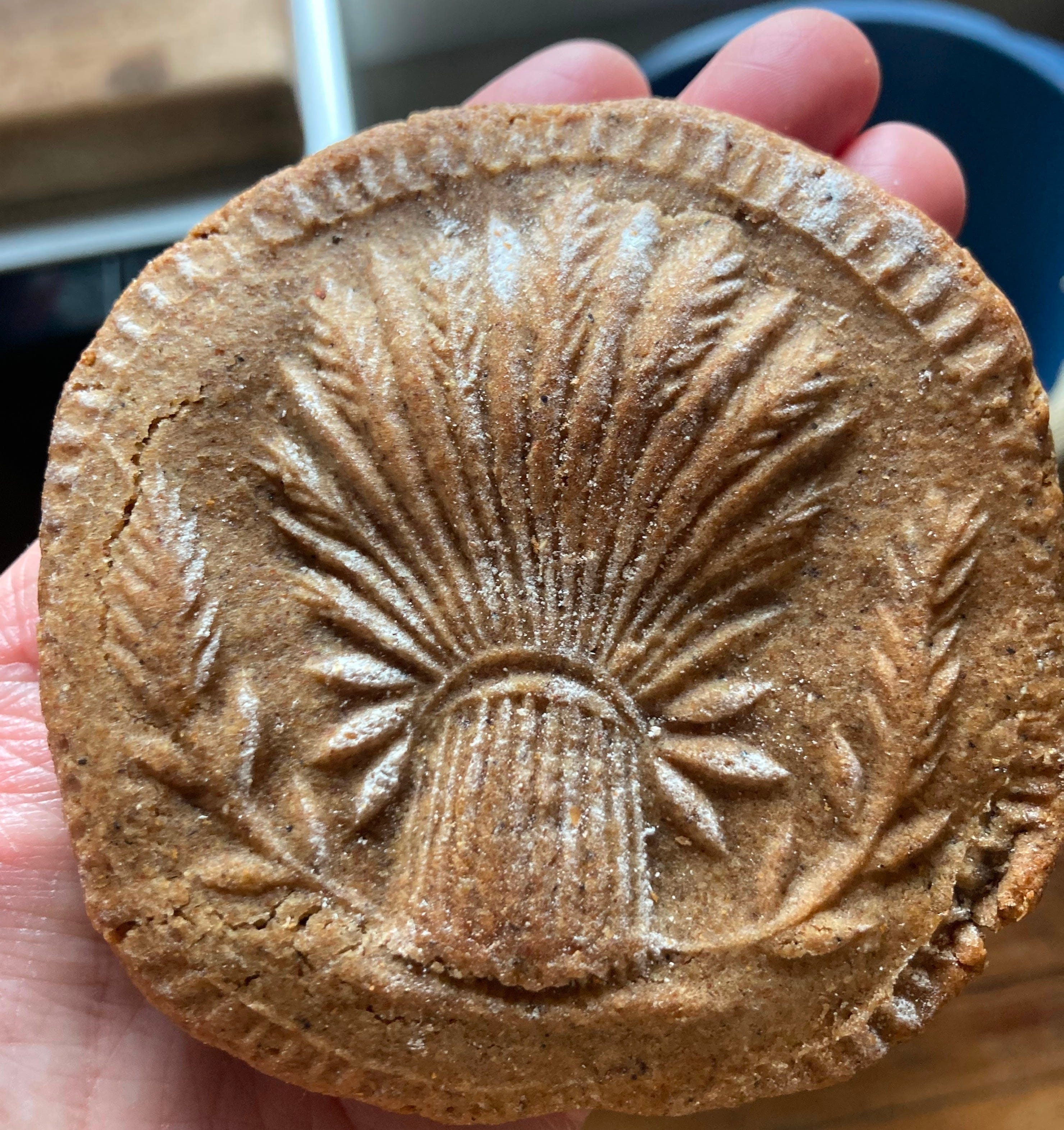
Ellie’s cooking and baking carry her mother’s movements, and a tradition of making the most of what you have. Her kitchen is a place to make bridges, like the astonishing cookie below, Pryaniki, a cookie of her husband Dmitri’s childhood. He helped her research, translate and taste test until they got it right, and I adore these cookies so much I can’t share!
I will share this page with Gretchen of Czechbox Bakery and her reflections on this theme of baking bridges.
Yours, Amy
Gretchen Kuehnlein-Kopmanis is a director of financial support programs at the University of Michigan. To keep her family’s heritage recipes alive, she started a cottage food business in 2012 called Czechbox Bakery, specializing in Eastern European and Baltic baked goods.
Honoring Memory
The first Latvian dessert I ever tried to make was Aleksandrs cake. This layered shortbread cookie has a filling of red currant and raspberry jam, topped with a lemon icing. It’s said the treat was created for and named after a Russian Tsar who visited Latvia in the early 1800s. Of course, I had to go into the rabbit hole which had one version of the story from Latvia, and another from Finland.
The “Czar Aleksandr” (Alexander) cake is a traditional Latvian, Finnish, and Estonian shortbread bar cookie with raspberry jam and lemon glaze, named after Russian Tsar Alexander I’s visits to the Baltic region in the early 19th century, though the exact origin is debated, with similar recipes existing across Europe. It’s a popular festive treat, featuring crumbly buttery pastry, sweet raspberry filling, and tangy icing.1
I reached out to my husband’s family in Latvia after my father-in-law passed away and they gave me the recipe. He was born in a refugee camp in Germany as his family fled Russian occupation. He was five years old when he came to America, so he grew up speaking Latvian. Even though his family deeply embraced becoming a naturalized citizen, he was still connected to his heritage and I wanted to honor that. The recipe they gave me was Aleksandrs Kuka (cake). It was very tricky because there are several steps you have to follow while the cookie is still very hot, but after several attempts, I figured it out.
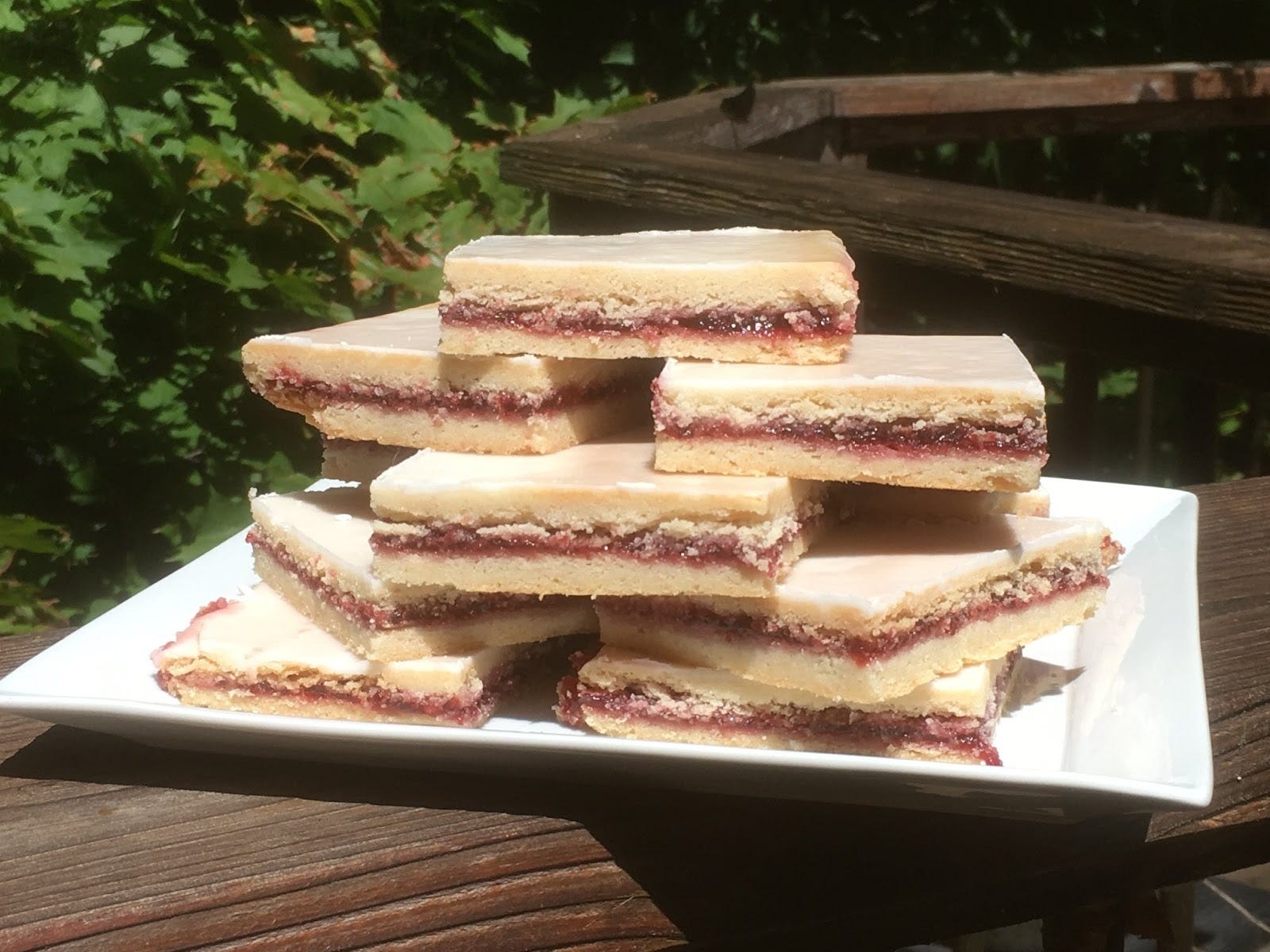
For the memorial, I made two half-sheet pans of the Aleksandrs cake and whispered quietly to the Latvian-American cousins here in Michigan that I had made it, and a strange thing happened. All through the lunch, I’d hear my name whispered urgently across the room to get my attention and when I looked, there was a cousin smiling at me and giving me a thumbs-up. A few minutes later, there’s another “Gretchen!” and another smile with a thumbs up. It was such a strange thing to happen at a funeral. I was completely bewildered. By the fourth time, I just watched them to see what was going on. They were going back for seconds of my dessert. Then I understood. They were trying to tell me that I got it right!
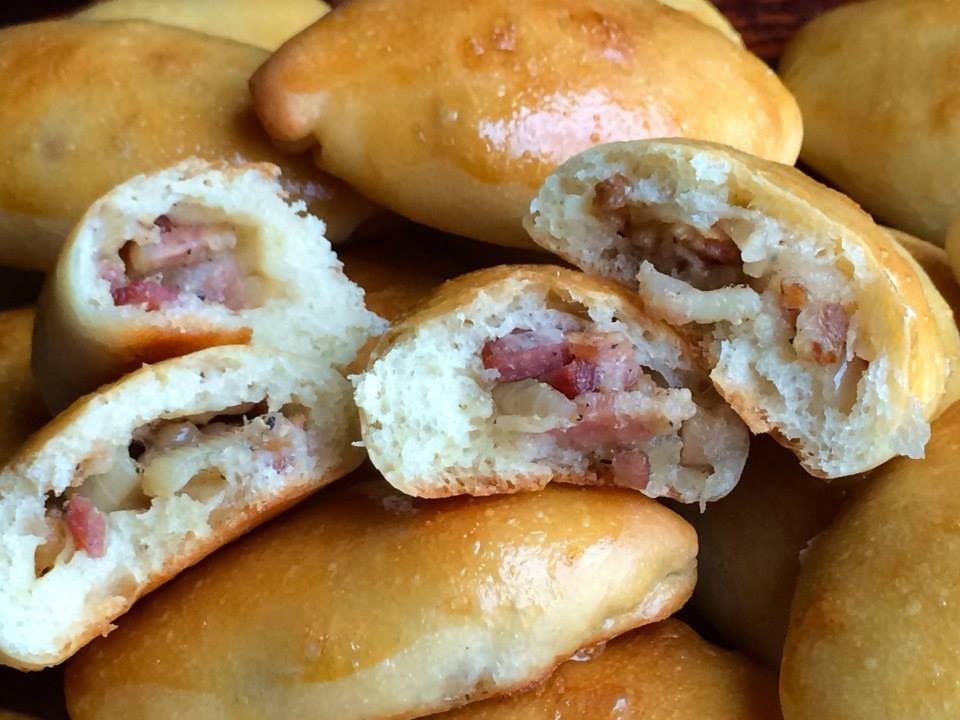
A similar thing happened when my husband’s uncle, the elder brother of my father-in-law, passed away. Again, I wanted to make something to honor his heritage and since most of the women in the family no longer baked, I felt it fell to me to keep up the traditional repast. I made Latvian pīrāgi but intended it to be special for the family, and took them immediately to the family bereavement room before we went to pay our respects in the visitation room. We consoled the family and barely ten minutes had passed before the visitation room began to empty out. I reached for a passing cousin and asked if everything was all right, and they informed me that “someone had brought pīrāgi in the other room!” I was flabbergasted and honored — and a little ashamed. I felt I had to apologize for creating chaos at the funeral, but I was so grateful that I could provide that little bit of cultural comfort to the family. I understood that there was a lot more going on psychologically than just grief.
There’s a deep comfort we get in heritage food that reaches far beyond taste. It’s a memory you can hold in your hands, a feeling that something of those who came before us is still present, still warm, still familiar. In that moment, I realized the pīrāgi weren’t just rolls — they were connection, continuity, and a way for everyone to steady themselves amid loss. Heritage food reminds us that even when someone is gone, the traditions they carried don’t disappear; they live on in us, in what we create, in what we choose to preserve. And maybe that’s why a simple tray of pīrāgi could pull a roomful of grieving people together, because it offered a taste of home when home suddenly felt smaller.
This definition is an amalgamation from several sources, listed below.
https://ediblemadison.com/recipes/latvian-alexander-cake
https://www.thefooddictator.com/the-hirshon-latvian-alexanders-torte-aleksandra-kuka/
Comments
Nothing yet. Say the first thing.
Sign in to join the conversation.