
Hello dear readers! Below is the first post from Gretchen Kuehnlein-Kopmanis, a cottage baker I met at Zingerman’s Bakehouse last fall. She asked good questions about sourdough history, and invited me to visit. Unfortunately, I did not have time, but looking at her website, I was fast enamored with how she talks about baking.
“Being a European bakery means my ingredient palette is different from an American bakery,” she writes. “Eastern Europeans use poppy seed, not peanut butter; English walnuts, not Southern pecans; apricots, not peaches. Being a heritage bakery means I only use ingredients that were available in the 1850s.”
Gretchen’s use of the word heritage rather than traditional really strikes me, and is something I want to think more about.
Welcome to her world! — Amy
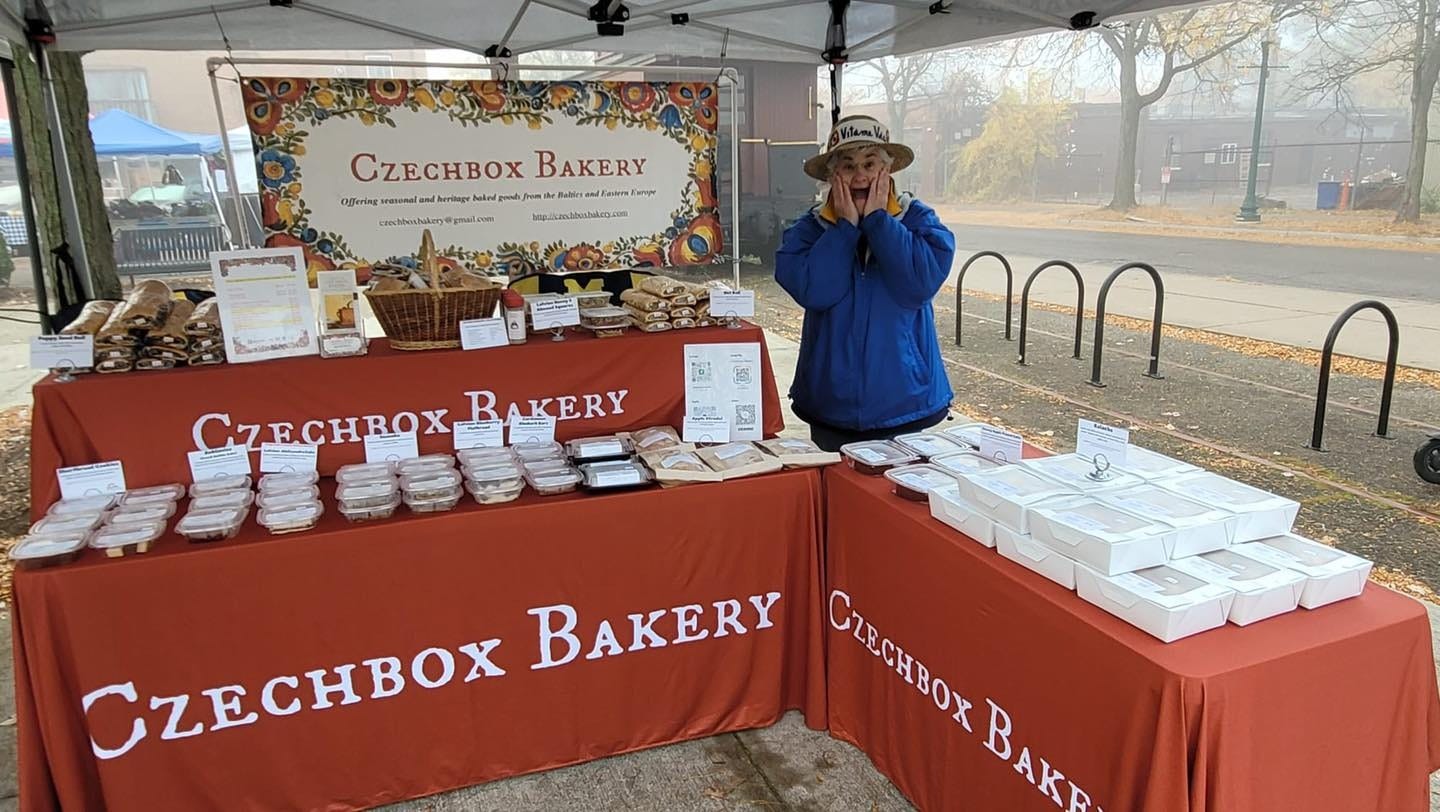
Gretchen Kuehnlein-Kopmanis is a director of financial support programs at the University of Michigan. To keep her family’s heritage recipes alive, she started a cottage food business in 2012 called Czechbox Bakery, specializing in Eastern European and Baltic baked goods.
Here’s a little story about a kid who was a foodie even before the word was invented in our society. Something you should know about me is that I often venture into intellectual ‘rabbit holes’ and even as I typed that first line, I wondered, ‘Hey! When did foodie actually become part of our culture?” So I had to look it up. Yes, sorry. I googled it: The term “foodie” entered our culture in the early 1980s, coined by writers like Gael Greene in the U.S. and popularized by Paul Levy and Ann Barr’s 1984 book, The Official Foodie Handbook, initially describing enthusiasts who elevated food from mere sustenance to a hobby and art form, eventually becoming mainstream with the rise of specialized media and food culture in the 90s and 2000s.
So, there I was — ten years old — and on Sundays my great-grandmother would go out to deliver things she had baked that morning to all her grandchildren’s families. I wish we had the technology to take images from our minds and turn them into pictures because my image is this little pale yellow car pulling slowly up the gravel driveway and feeling the rush of excitement. Grandma Cajka is here with goodies!! It was usually one of three things: bališki, kolačký , or strudel.
I can’t recall the exact moment, but I had a terrible epiphany. One day, she would be gone, I’d never have these things again, so I asked her if she would teach me how to make them. Being only 10, I wasn’t interested in the chemistry of it all, and yeast was my nemesis until I was in my 40’s, but I learned.
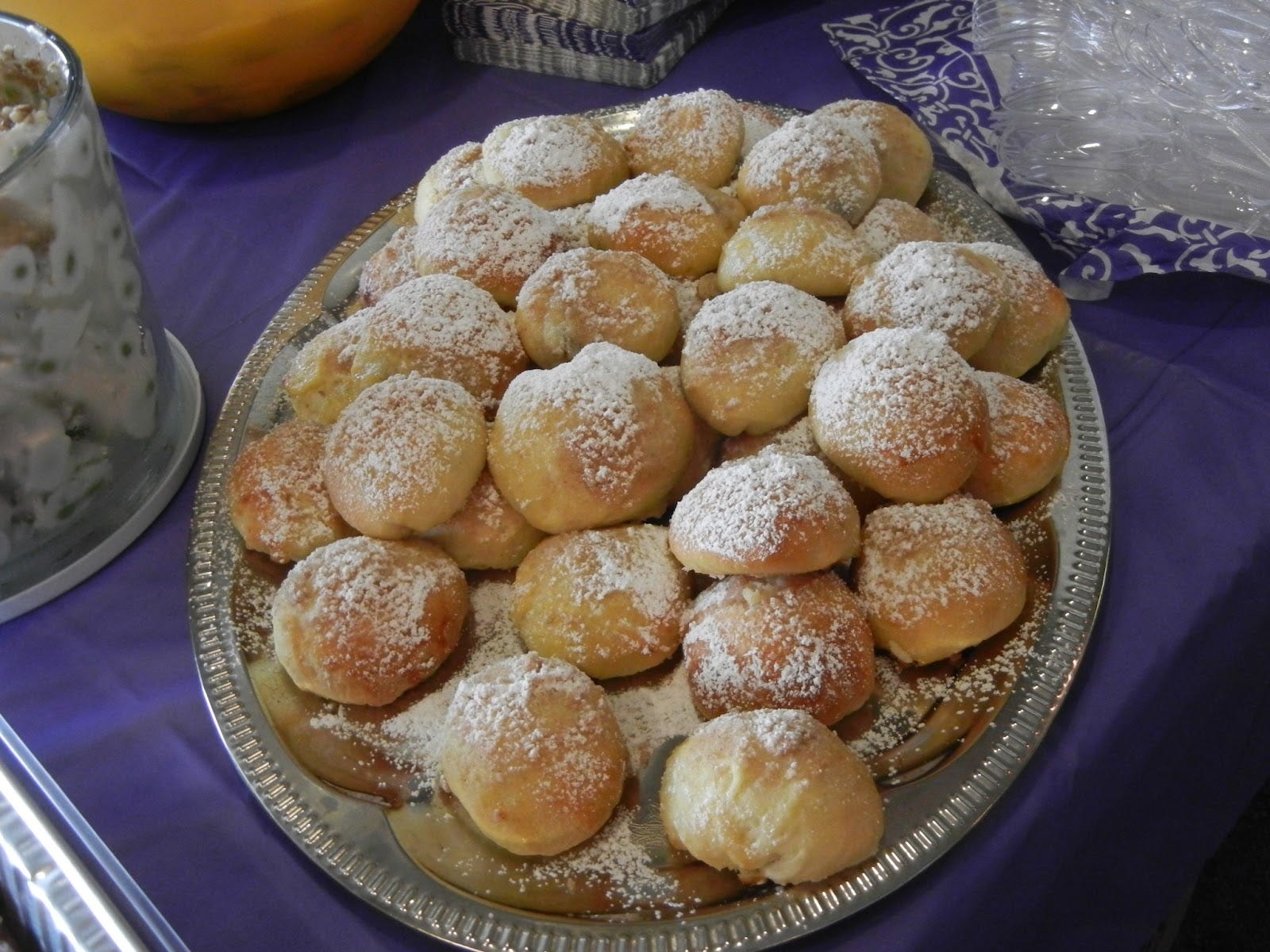
The bališki was my personal favorite. It was a yeast pancake slathered with lekvar. They looked like English muffins, but were fried on a hot griddle. The lekvar was usually plum or apricot, and of course poppy seed. There was a small hand grinder to chop walnuts, and another one for grinding the poppyseed. My go-to was apricot with ground poppy sugar, followed by plum and ground walnut as a close second.
What blew my young mind, though, was watching grandma make the dough. She was a human machine. She’d tuck this 3000 pound ceramic bowl under her arm and grab a 20 foot wooden spoon and knead the dough with it. Her little arm was chunking along like a boat motor. It looked easy! So I stepped up with the famous childhood phrase, “Let me help.” I sat down with this enormously heavy bowl between my knees and took a firm grip of that 2x4 sized spoon and dug in. Once…. Uh, twwiiice?...C’mon, Gretchen, you can do this…. Three times?? Ugh!! Um. No. No, I couldn’t do it. I dug that spoon into the bottom of the shaggy mass and was stymied.
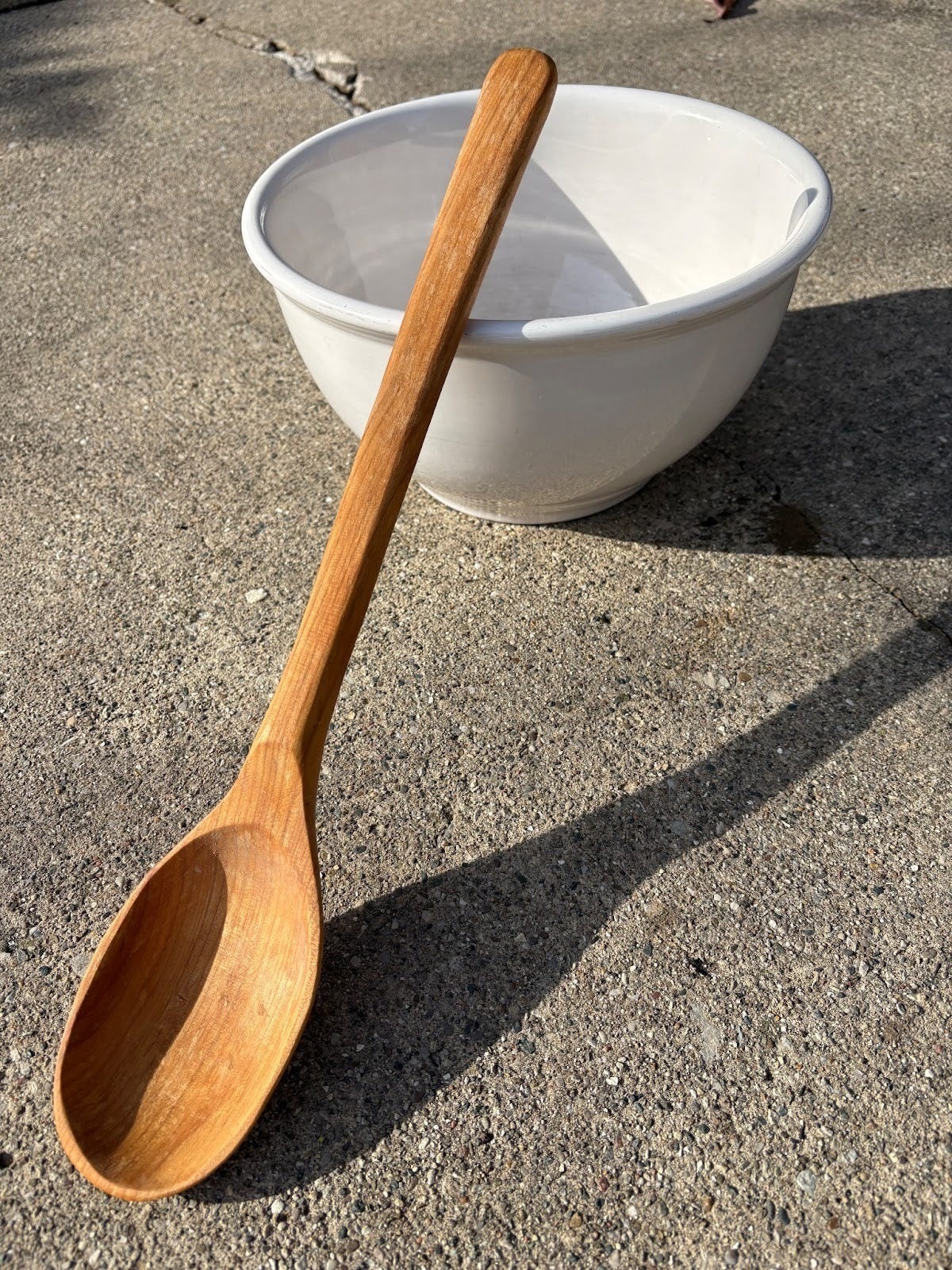
I mean, really! She’s an old lady! How could I not do it? Well for starters, she had forearms like Popeye, and I was just this skinny twig of a kid. She smiled and took the bowl back, probably thinking “that’ll teach you!” and finished kneading the dough. She dropped a warm towel over it, and we waited. She let me punch it down for the second proof, which was great fun, but then she pulled out that spoon again, and I ran like a puppy who’d been hit on the nose with a newspaper. Nope, nope, nope. Needless to say, that experience left an impression, and to this day still leaves me in awe.
Do I make bališki now? Yes. Do I use that crazy heavy ceramic bowl? Well, no, but I do have it. What about that spoon? Yes, I have that, too. And my KitchenAid mixer is nicknamed “The Spoon.” Thank goodness for affordable technology or I don’t think I could do this.
She also taught me to make kolačký (yes, bowl and spoon) and taught me the “old” way, with the filling on the insides so it looks more like a dinner roll, but with streusel and powdered sugar on top. Texas Czechs put the filling on the outside so they look like a danish.
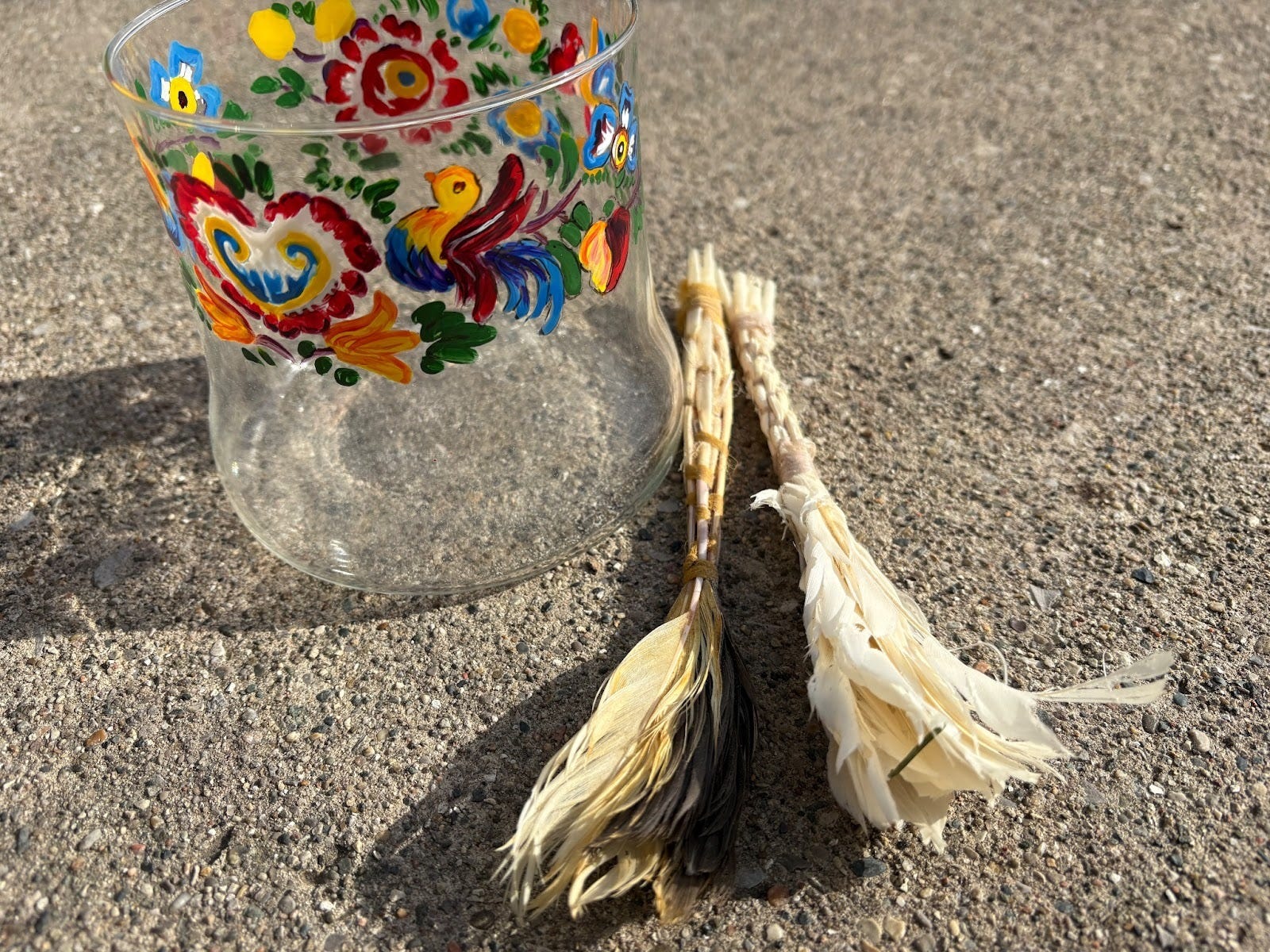
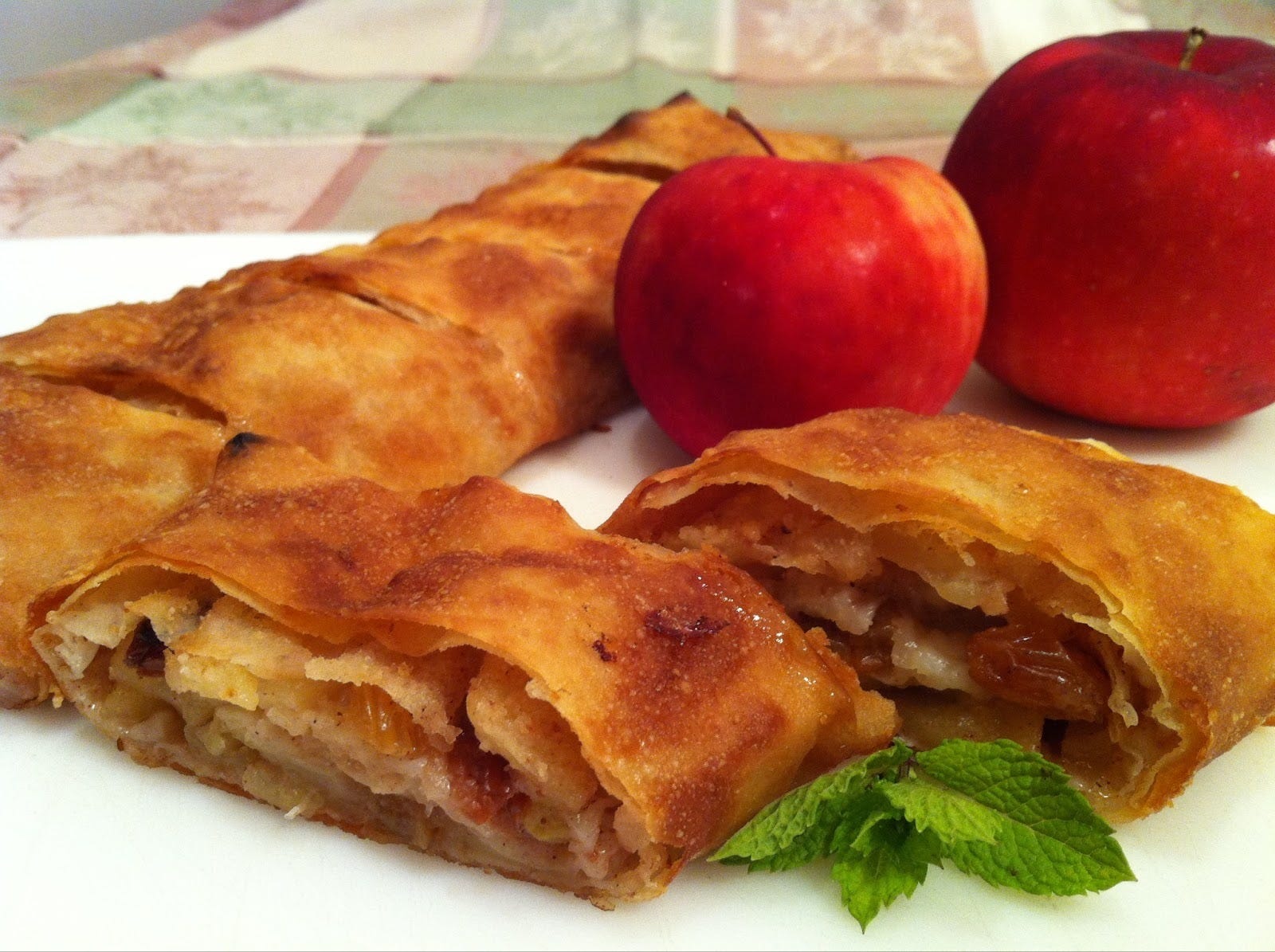
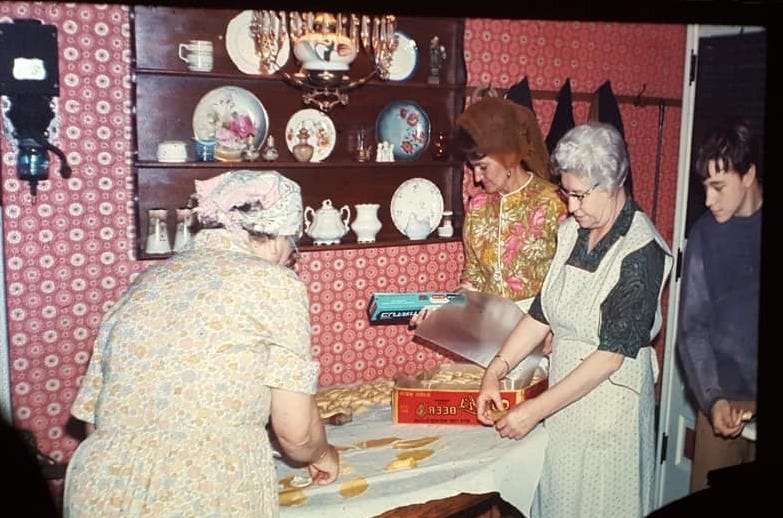
The most fun, however, was making strudel. I can pull a strudel with the best of them, but never learned to make the dough. Grandma Cajka had already made the dough when I arrived. We’d pull the strudel across her entire kitchen table, brushed the dough with melted butter using a bundle of feathers, slice the apples over the entire dough, then sprinkle it all with cinnamon sugar, which sweetened the crunchy ends and started fights among her grandsons, who all wanted the heels. After rolling it, the strudel was so long no cookie sheet could hold it, so she bent it round and round in a spiral to make it fit. She’d bring those by on Sundays in a cardboard box that was used to hold pop cans together.
Well, she did pass away in 1996 when I was 30-years old (how many people can say they had a great-grandma in their lives at that age?) but I never learned how to make strudel dough. She’d always have it done when I arrived. I lamented this over the years, and in 2011 I discovered that Zingerman’s Bakehouse offered baking classes. There was one class called “Noodling About Strudeling” and I rushed to it. There I learned the answer to why she always made the dough without me. Once you build up an incredible amount of gluten in the dough — and yes, I’m sure she was using the infamous spoon — you have to let the dough rest for 3-4 hours. She probably had a limit to how much time she could entertain an over-excited hyper child who just wanted to eat all the goodies.
I took the strudel class and crowed about it to my dad and his brothers. I can make strudel now!!! They kinda nodded with that parental look on their faces. You know the one. It’s the same one you use when you get crayon art, or a tin can sculpture. Yes. That one.
My dad gave me seven apples from his farm and said, “show me!” So I did. Yep, that was his jaw you may have heard dropping to the floor. “I never thought I’d have this again after grandma died,” he said around a mouthful of strudel. He then gave me seven bushels. Here’s another thing you should know about me. I hate waste. So of course I had to make all the strudels. I ended up with sixty seven strudels and no idea what to do next.
Michigan Cottage Food laws went into effect in July 2010, and a friend of mine told me about it. He was making artisan breads. Another friend has a small software company and told me how to get a small business started (EINs and LARA). Between the two of them, Czechbox Bakery was created in 2011, and I sold my first products to friends and coworkers under my new business.
Later that month, November 2011, my grandmother passed away. She was the middle daughter of my great-grandmother. She was a professional artist and she tried seven ways from Sunday to get me hooked on art: oil painting, water color, charcoal, pouring ceramics, sewing, and most importantly how to sell those things at a market. I was more into words and writing though, so our compromise was baking together. When great-grandma Cajka passed, grandma showed me more recipes and I learned something I wish I had known when great-grandma was alive. How to measure by weight.
Being older now, I recall how many times grandma was simply pouring flour and milk into a bowl, taking a handful of yeast, a tablespoon of sugar… and it was impossible to recreate those recipes. “It’s too wet, add this” or “it’s too dry, do that” were branded on my infuriated brain. When I took more classes from Zingerman’s, I learned the importance of making a consistent product is to use weight, not volume.
When people now tell me the same story, I give them this advice. Take out every single ingredient you will use, including milk and water, and weigh everything even in the containers. Then enjoy the time with your mom or grandma and let them make it their way. When it’s all done, weigh everything again in their containers. Write down the weights they used. The next day, make everything again based on the weights, and this time learn the process, what to look for. Do not change the recipe. Don’t let them add anything. Tell them this is your chance to make mistakes and see what happens. Take photos of things along the way. Don’t get frustrated. Enjoy the moment. You can always fix things the next time, just make sure there is a next time. Don’t lose the chance to learn from them. Don’t lose the chance to make those memories.
To be completely fair to our forebears, I feel I should add this observation. Peasants in the 1850’s like my great-great-grandmother, who taught my great-grandmother, likely got their flour from a local mill. The consistency of that flour probably posed the same challenges faced by today’s home millers: wildly variable grind sizes.
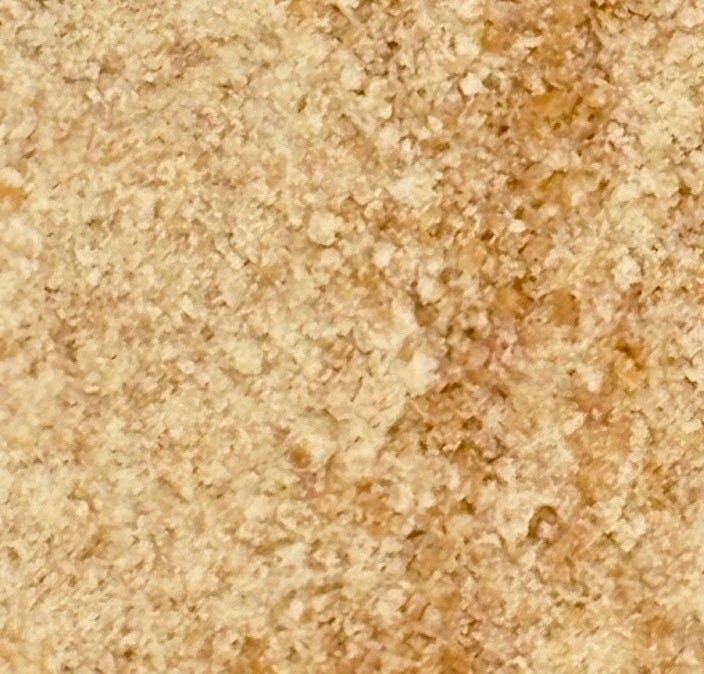
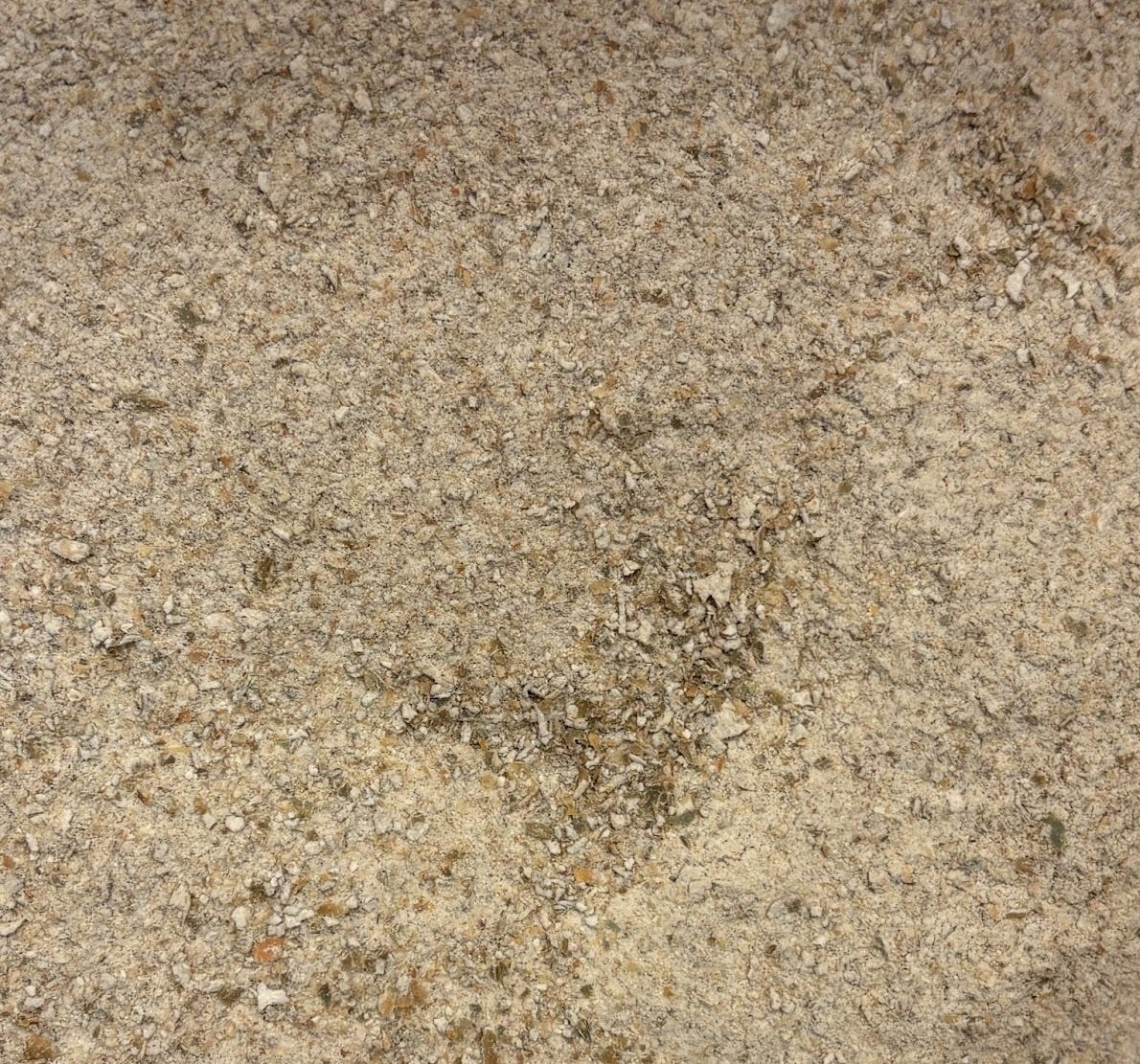
When you have a consistent, finely milled flour, weighing wet ingredients makes perfect sense. But when the grind is inconsistent? Commercial flour that we know and love feels like baby powder. The flour from smaller mills might look like sawdust or cement. In that case, adding exactly 100 grams of water may not be the right course of action because the flour simply won’t absorb it the same way.
So yes, I understand “it’s too dry, add more milk,” or worse, “it’s too wet, add more flour.” You do the best you can with the ingredients at hand, and that’s perfectly fine as long as you understand where that process came from. After you’ve made a few hundred loaves of bread, you start to recognize how it’s supposed to look and feel, and you’ll be dropping in a dash of flour without weighing it, too, just like grandma!
Thanks to grandma Cajka who loved me enough to teach me her own mother’s recipes, and my grandma who taught me how to sit still but be engaging at a market, and charming enough to smile when people ask me if I do gluten-free or sugar-free as I patiently explain I’m a heritage bakery so those ingredients weren’t around in the 1850’s. And thanks to Zingerman’s and their ‘community of bakers’ who taught me so many techniques that I’ve been able to incorporate into my own baking, and for helping me overcome my fear of yeast. And last of all, thanks to Amy Halloran who gave me an opportunity to share my story with all of you.
No posts
Comments
Nothing yet. Say the first thing.
Sign in to join the conversation.