
Late in the documentary Memories Frozen in Time (《冰封的記憶》), directed by Hsu Ming-chun (許明淳) and available to stream for free on Taiwan’s PTV+, the camera settles on Masao Go (吳正男). Born in 1927 in Douliu, then part of Tainan Prefecture, Go was a Taiwanese subject of the Japanese Empire. Like so many young men of his generation, he was drawn into the imperial machine.
At sixteen, without his parents’ consent, he volunteered for the Japanese army and trained as a radio operator. The war’s end would carry him into Soviet captivity. He became one of the few Taiwanese swept into the Siberian camps. He is perhaps the last man left among them. Few people in Taiwan know that this generation is still alive.
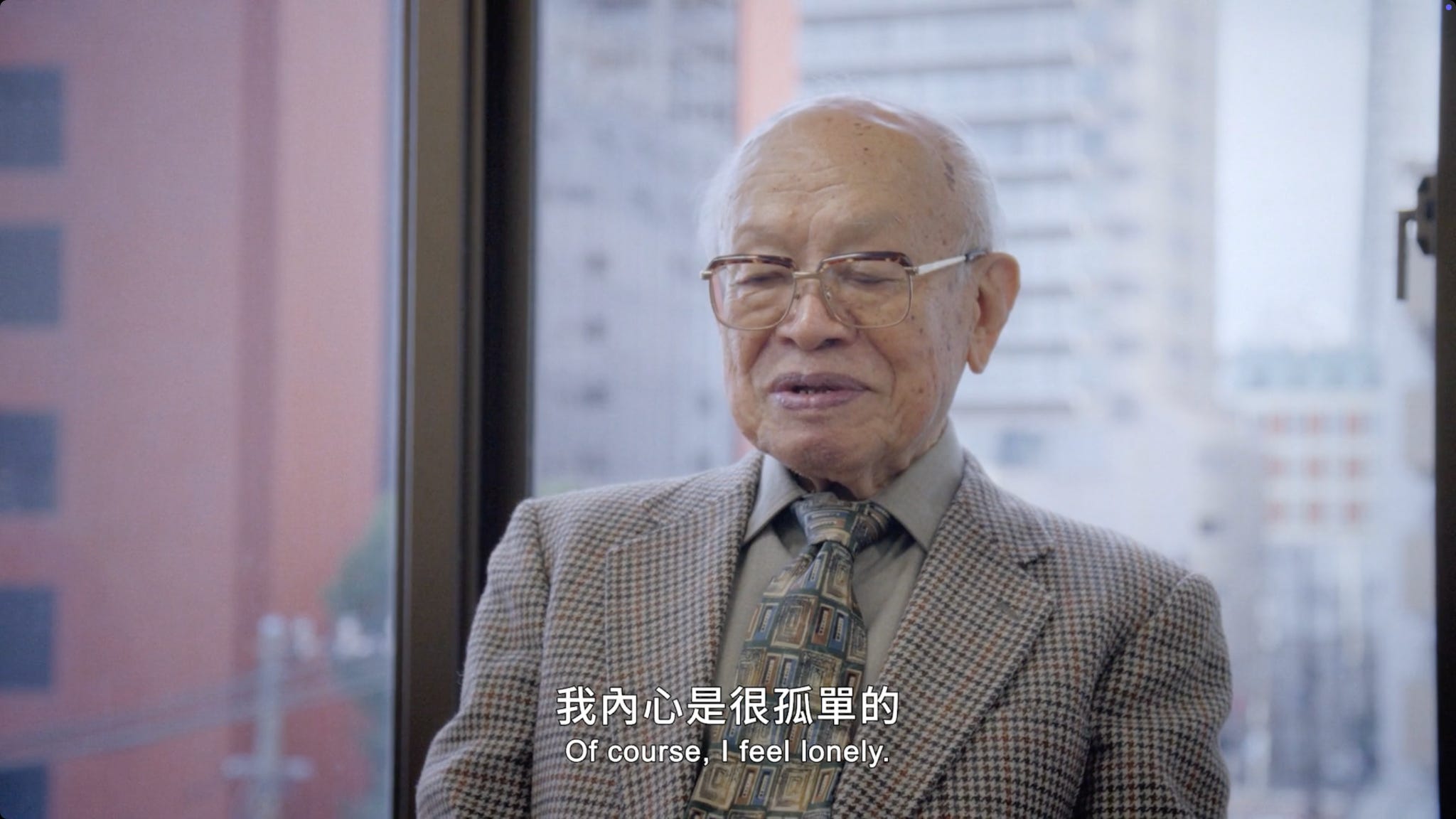
When asked, softly, whether he feels lonely, Go-san answers without hesitation. “Of course,” he says. “Of course, I feel lonely.”
The end of the war found Go near an airfield in northern Korea. When the emperor’s surrender broadcast crackled over the radio on August 15, 1945, he heard it but could not make out message through the static; he assumed the emperor was exhorting his subjects to fight harder. He learned the truth on the road. His signal unit had set out for an airfield in the country’s northwest, and only when they found themselves the lone column moving north against a tide of southbound trains did they grasp that Japan had lost.
Go and two comrades struck out on foot along the railway tracks, hoping to reach Japan. They boarded a southbound train. At a station called Sinmak, a Soviet officer’s voice came over a microphone ordering every man off.
Go would spend the next years in the camps. In the last days of the war, an enormous number of Japanese personnel were imprisoned by the Red Army as it drove through Manchuria and northern Korea. Estimates of the detained run from roughly 560,000 to 900,000; somewhere between 60,000 and 300,000 died in captivity. Their fate diverged sharply from that of the roughly 3.5 million Japanese soldiers serving elsewhere overseas, most of whom the Americans and the Chinese Nationalists repatriated within a year.
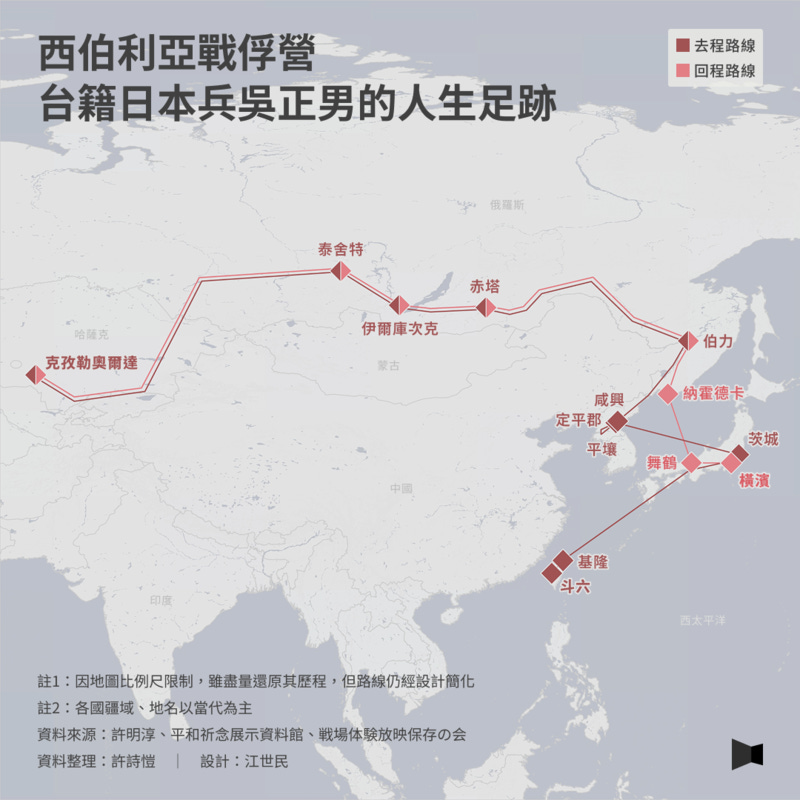
Go was not sent to Japan. He disappeared instead into the Soviet camp system. Journalists at The Reporter (《報導者》) have reconstructed his journey: from Douliu and Keelung in Taiwan, by way of Yokohama, up through Korea, and then deep into the interior — Khabarovsk, Chita, Irkutsk, Taishet, and finally Kzyl-Orda, in what is now Kazakhstan. He moved through half of Asia.
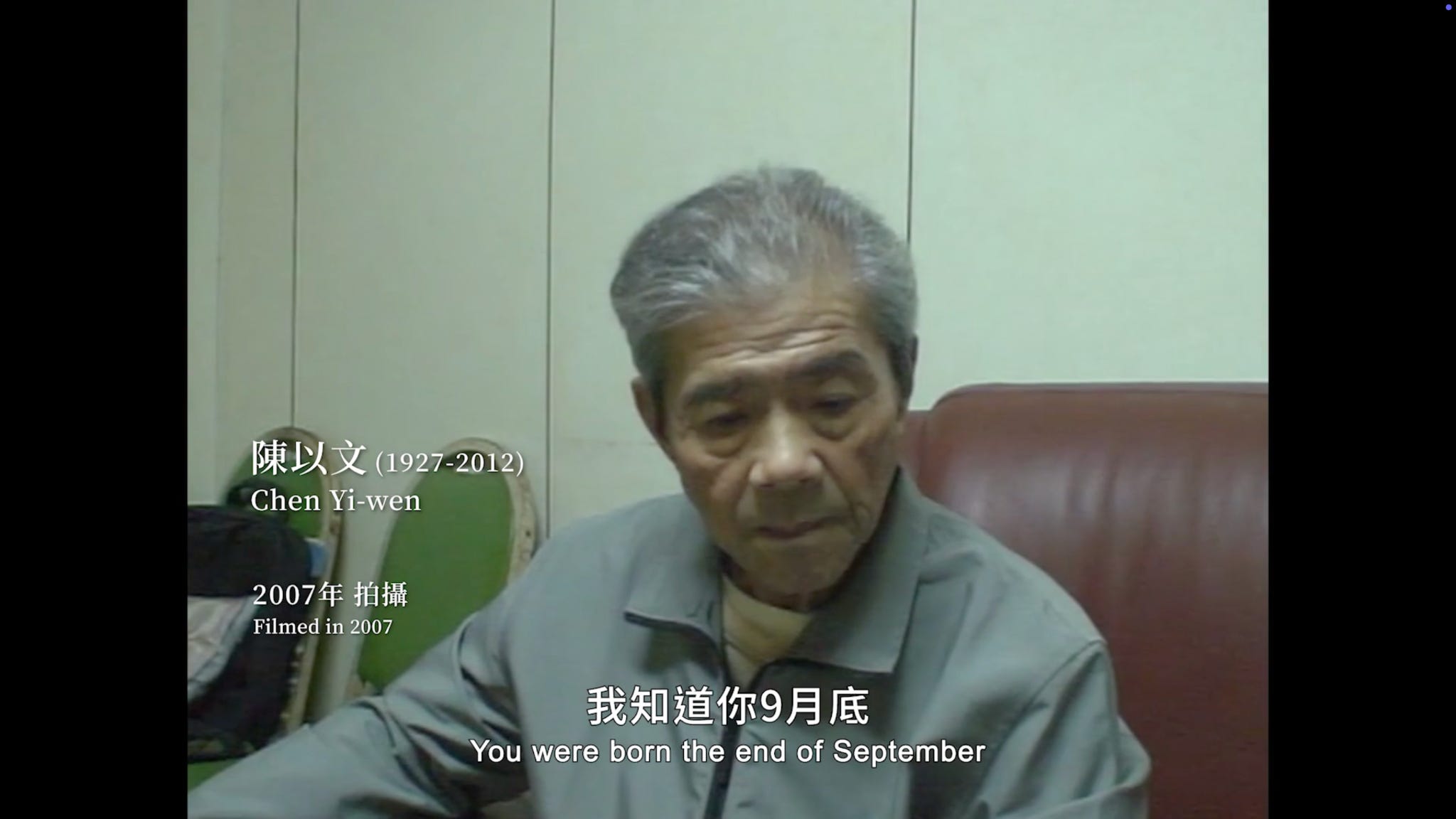
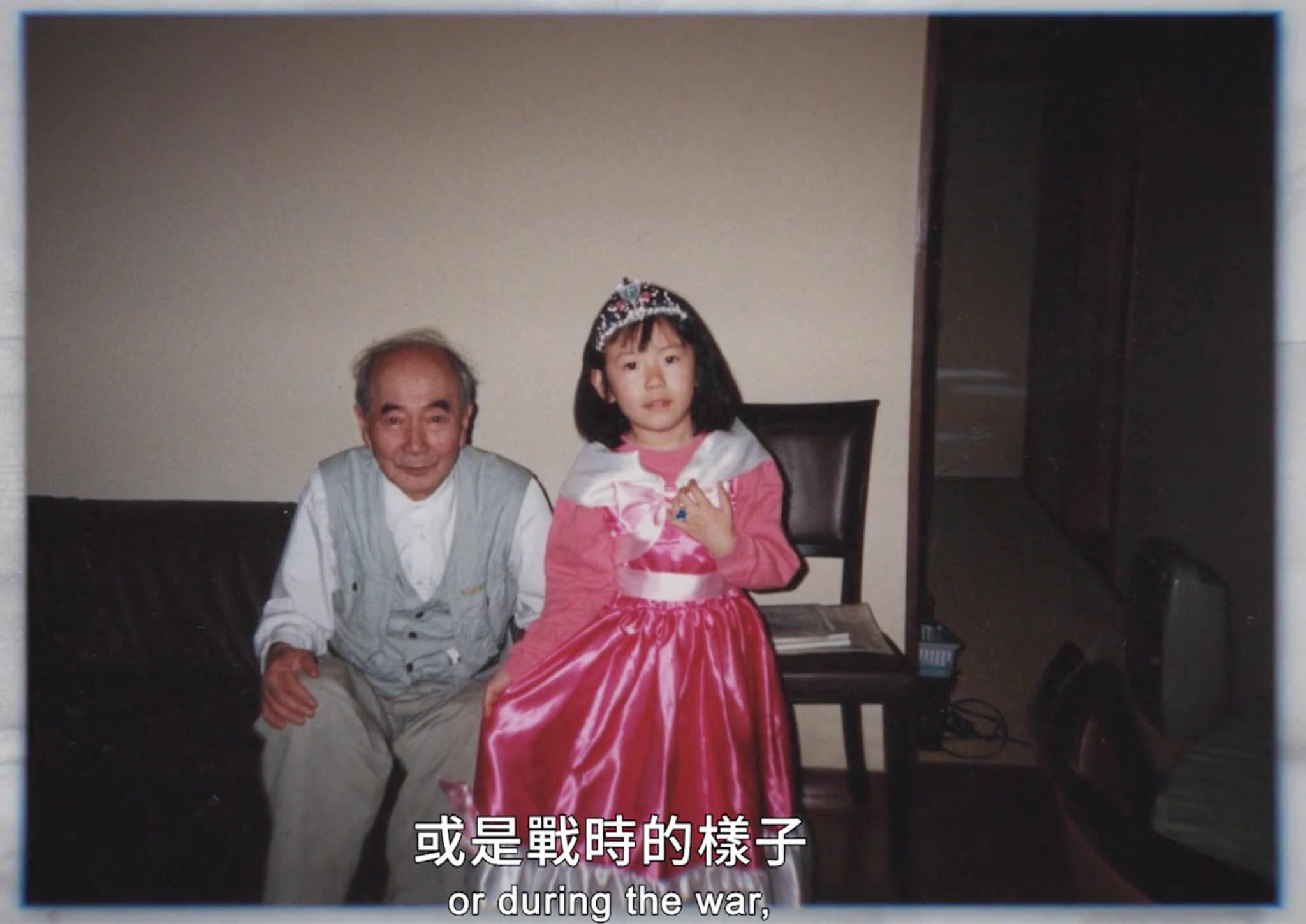
Hsu and other historians have identified nineteen Taiwanese men who passed through the Soviet camps after the war. The number is almost certainly an undercount—the names in the records are all Japanese, making it difficult to tell who was of Taiwanese or Korean descent. The film follows the stories of two others, both deceased: Chen Yi-wen (陳以文, 1927–2012), who appears in footage his grandson Chen Li-hang shot in 2007, and Hsu Min-hsin (許敏信, 1921–2000), who kept a diary and whom we see through family footage and photos. In one, he poses beside a little girl dressed as a Disney princess. Now, that granddaughter and his two daughters long to know his story.
The act of recovery is remarkable in itself, and it is deeply moving to watch Go, now nearly a hundred, recount his history. We have not been able to stop thinking about one small exchange:
My son has no interest in my past — it is hard to believe how little. My three grandchildren are all in their thirties, but it never comes up. Of course I feel lonely…I survived all of that, and when I raise the subject, they have no interest. That feels lonely.
Hsu patiently reveals the texture of intergenerational trauma, how it burrows into a family. Its sources are manifold. There’s geopolitics. There are language barriers. What makes the film so interesting is Hsu’s choice to turn away from the harrowing experiences of Siberia. Silence itself is the subject of the film.
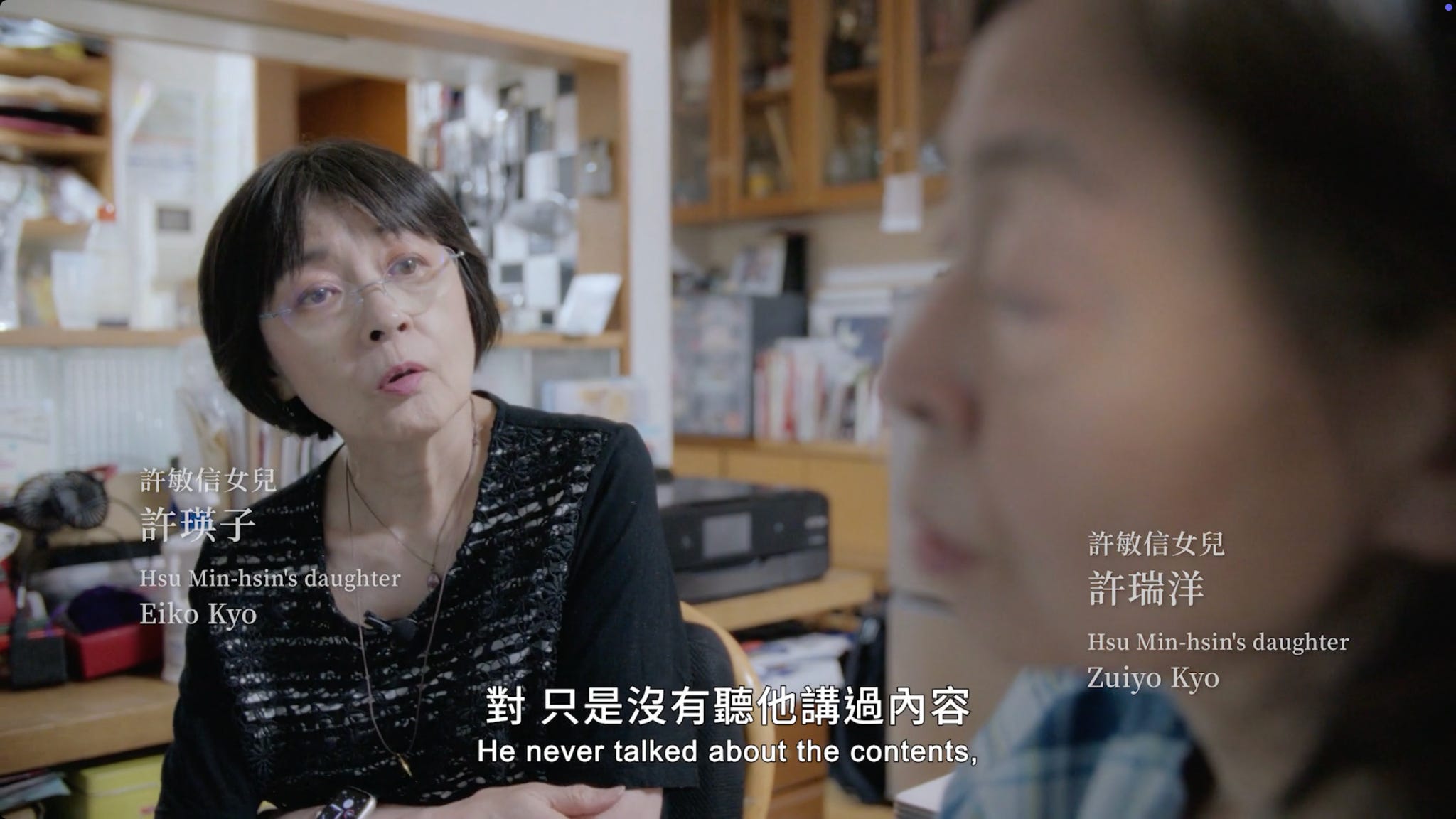
Eiko and Zuiyo, the daughters of Hsu Min-hsin, recall a stranger approaching them at their father’s funeral, sobbing. The man, they learned, had served with their father in the camps. “He saved my life,” the man told the daughters. “I was starving, and he had two cloves of garlic. He shared them.” Yet their father never spoke of Siberia. When they scour his diary, they find not a single word about his imprisonment — and nothing, of course, about a life-saving clove of garlic.
To be clear, historians have amply documented the brutalities Japanese POWs suffered at Soviet hands; the film does not dwell on them. We glimpse Go entering the Memorial Museum for Soldiers, Detainees in Siberia, and Postwar Repatriates museum in Japan. Reading placards from his wheelchair, Go learns of a dog rescued from the Siberian camps. The dog went on to live a charmed life in Japan. “Is the story of this dog real?” he asks, incredulous.
The film cuts to an archivist explaining that wartime record-keeping left no way to tell whether a given soldier came from Taiwan or Korea. As Go exits the museum, the director’s voiceover notes in a somber, bitter tone: “The museum memorialized a dog, but does not mention any Taiwanese.”
Another heartbreaking moment. When Go speaks at an online event hosted by another Japanese museum, he is courteous, deferential. In flawless Japanese, he apologizes for having kept his Taiwanese citizenship all these decades, for never having become Japanese. The scene unsettled us. It unsettled the director too, who shared at our event that he was deeply upset as he filmed it. Here is a man in his nineties, a survivor of the Siberian camps, a former subject of an empire that has never recognized his sacrifice, enduring the indifference of his own children and grandchildren (who have perhaps taken their cue from Japan itself)—and he remains excruciatingly polite. He feels compelled to apologize for his Taiwanese identity.
Memories Frozen in Time is a profound meditation on silence and the political gulf between generations. For the men who survived the Soviet prison camps, the post-war silence and alienation may bind them together even more tightly than the camps themselves.
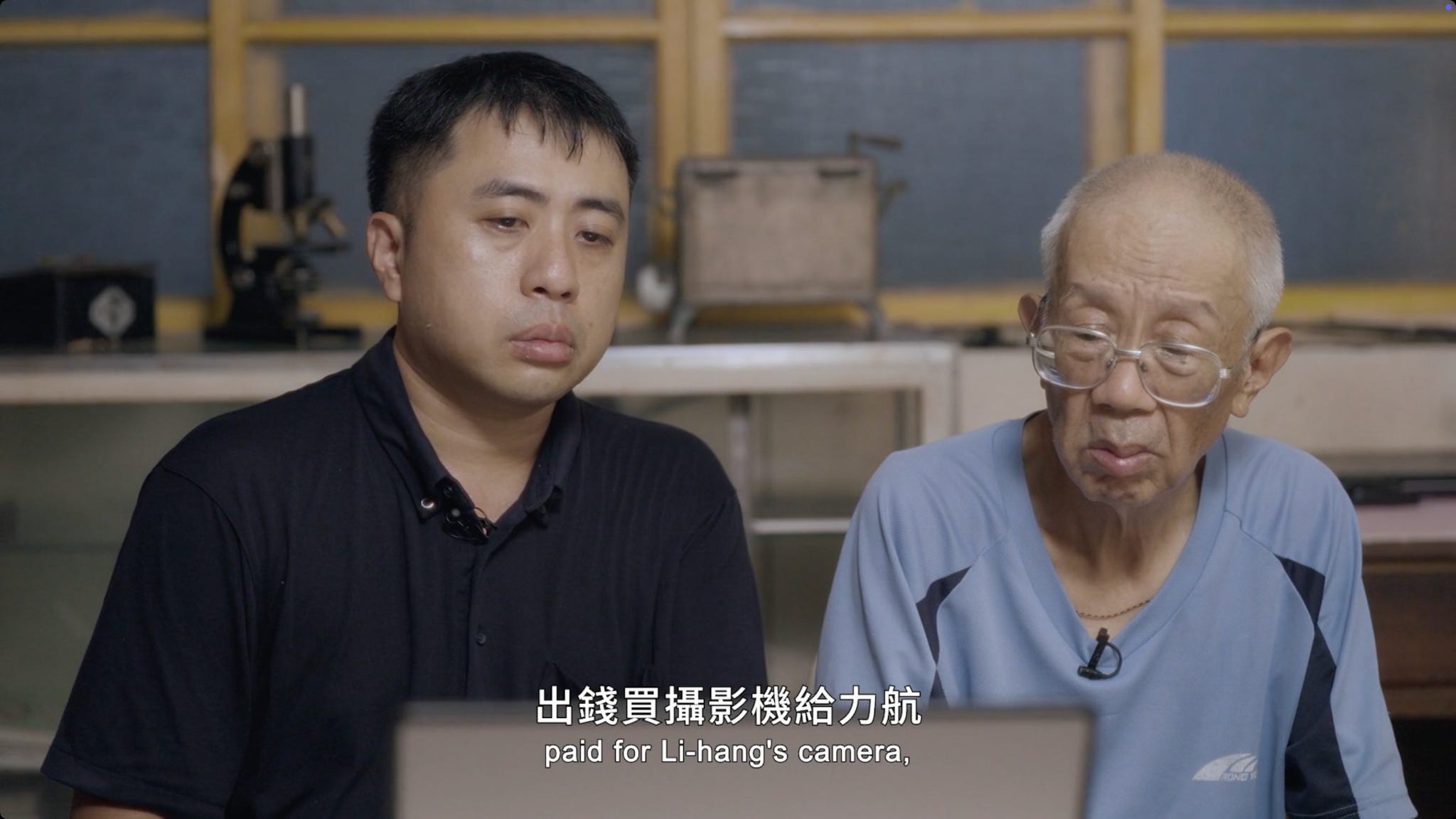
In Japan, Go endures the lack of interest from his Japanese son; in Taiwan, Chen endures a similar fate. His son Ming-liang, educated under martial law by the Chinese Nationalists, is ashamed of his father’s associations with the Japanese. Ming-liang and his son Li-hang, in turn, disagree deeply about Taiwan’s history and politics. In one of the most wrenching scenes of the film, Ming-liang watches footage of his father being interviewed by Li-hang. When the director asks whether he had ever known these details, Ming-liang goes silent. His father had never told him anything.
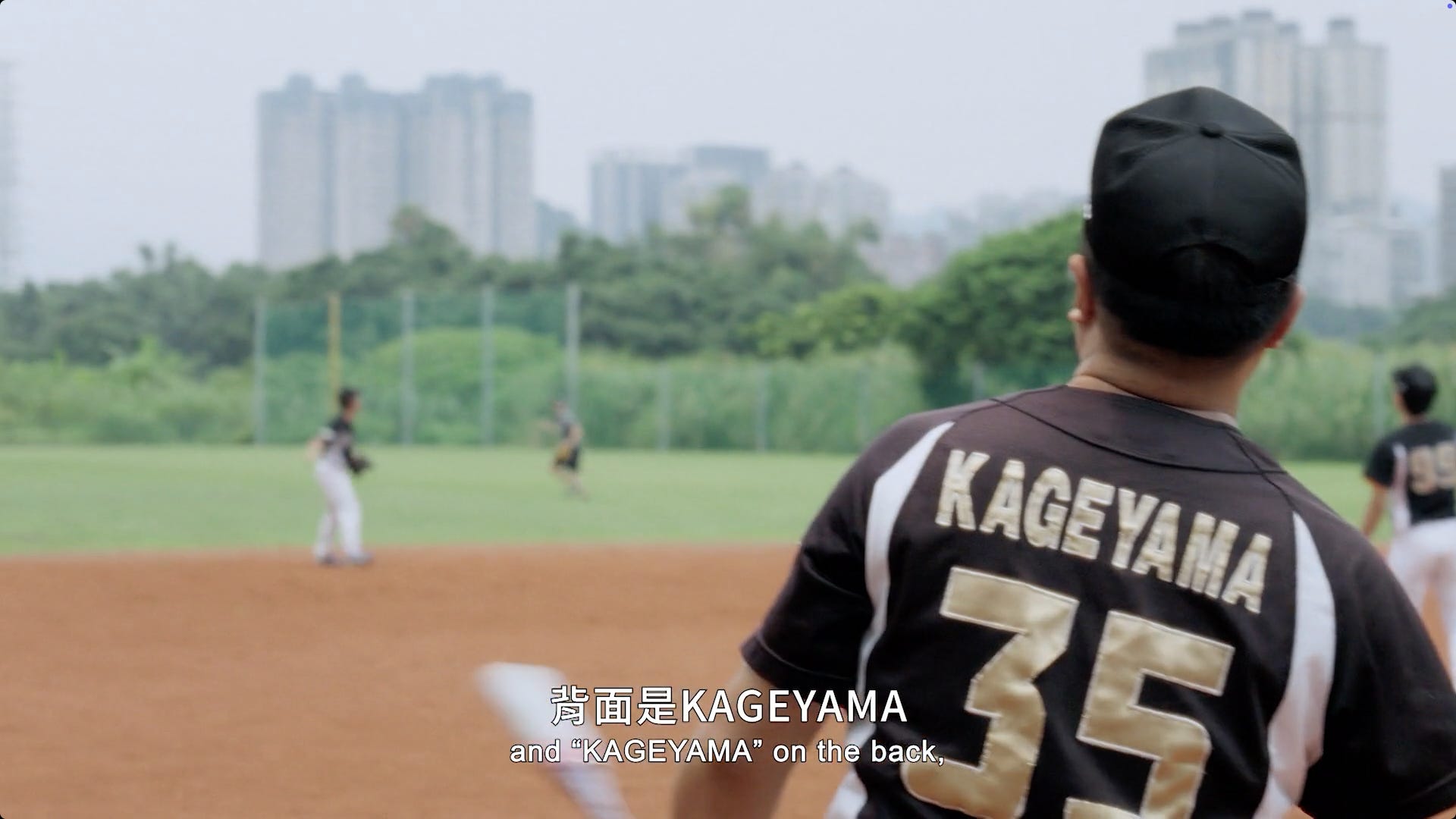
But the film is also fundamentally hopeful about history’s restorative potential. It warmly portrays individuals actively assembling a coherent picture of a father or grandfather from only fragments. We glimpse Li-Hang playing baseball, wearing a jersey whose front says HISTORY and the back reads Kageyama, his grandfather’s name in Japanese. Watching the film, Albert had a hunch that the director Ming-chun becomes a sort of surrogate son to Go. With Go’s son noticeably absent in the film, it is Ming-chun who asks Go questions and affirms the worth of Go’s story.
At our event, Ming-chun seemed to confirm this hunch. Ming-chun shared that his own father had died when he was a child, and Go is roughly the age his dad would have been. We imagine that Go is comforted in these last years on earth to share his story to a younger person. This fall Memories in Time will be released in Japan. Ming-chun and his wife will go to Tokyo to attend the premiere, celebrating its release alongside Go.
*
Memories Frozen in Time appears amid a surge of interest in Taiwan’s Japanese colonial period. Readers of this newsletter have already heard about Taiwan Travelogue, which won this year’s International Booker Prize and set off a sharp debate in Taiwan over how to weigh those colonial decades.
Why are these stories surfacing now, eighty years on? The simplest answer is time. The youngest conscripts are nearing a hundred, and their children and grandchildren are racing to reconstruct these lives before the last witnesses are gone. In Taiwan the work comes later than almost anywhere else, because for decades the subject was forbidden. Any man who had worn the Japanese uniform kept quiet under the Nationalist regime. And a man who came home from the Soviet Union carried a heavier mark still, what people called a “red label.”
Because of that “red label,” when Hsu returned to Taiwan from the camps, he was deported — sent to Japan by the KMT, and turned away even by his own frightened family. Japan was little kinder: even though these men received a heroes welcome, soon afterwards Japanese employers treated returnees from Soviet captivity as probable spies and kept them under watch. Many turned to underground work. Their stories reflect the tragedy of small countries caught between empires: in just five years, these men were swallowed by three empires— Japanese, Chinese, and Soviet.
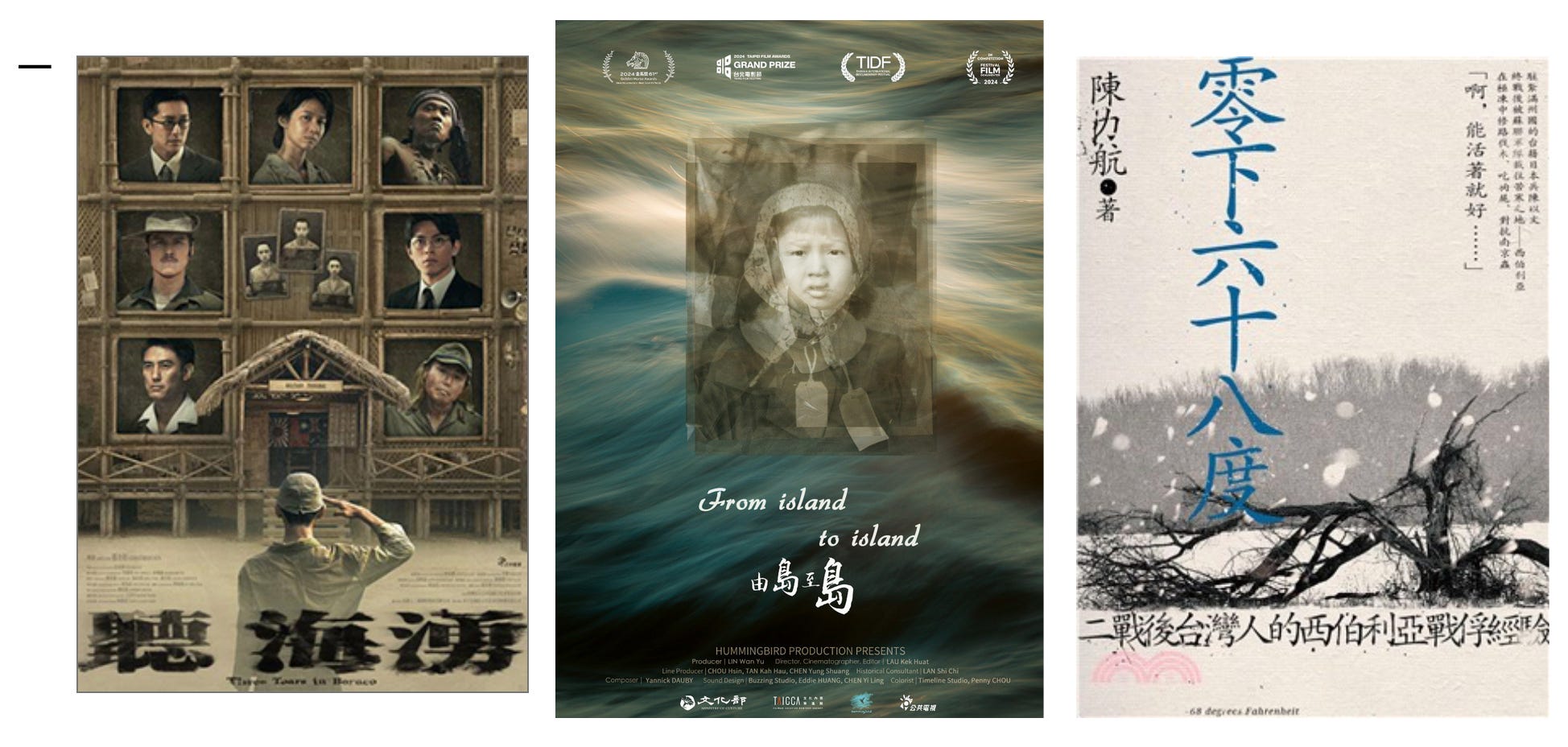
The film joins a wave of recent work on Taiwanese soldiers of the Japanese Empire. The drama Three Tears in Borneo 《聽海湧》 follows Taiwanese men conscripted to guard Allied prisoners in wartime Borneo; Lau Kek-huat’s documentary From Island to Island 《由島至島》 traces Taiwanese drawn into Japan’s southern war. The final volume of Li Chiao’s (李喬)Wintry Night trilogy 《寒夜三部曲)》, Lone Lamp 《孤燈》, follows Taiwanese youths shipped to the South Seas and left to die in the Philippines. The first full English translation, translated by Jim Weldon and Michael Nakhiengchanh, was published by Bookman Books. An excerpt of Lone Lamp has been adapted into the gorgeous graphic novel Sobbing published by Avanguard Books, illustrated by the great artist Ruan Guang-min (阮光民). (A sidenote: Its English translation will be done by the Booker Prize-winning Lin King, who has been a champion of not only Taiwanese writers but artists too.)
These works reflect some of the most cutting-edge research historians have pioneered. Chen Li-hang himself is trained as a historian, and he reconstructed the Siberian captivity of his grandfather in his 2021 book Minus Sixty-Eight Degrees 《零下六十八度》. Hsu Hsueh-chi’s (許雪姬) Diaspora and Return: Taiwanese in Manchuria, 1905–1948 《離散與回歸:在滿洲的臺灣人》, published in 2023, is a work of oral history that took her nearly thirty years to assemble, gathering the testimony of Taiwanese who went north as civilians, as construction hands, as students training in Manchukuo’s medical colleges.
On a geekier note, Memories Frozen in Time shows how the historical profession has moved, asking questions that now drive the field: how empires made their colonial subjects, how those subjects were remade once the empire fell, and how to write a single life across several empires. Seiji Shirane’s Imperial Gateway and Sayaka Chatani’s Nation-Empire have recast colonial Taiwan in just these terms, following Taiwanese out through the wider circuits of the Japanese empire rather than treating the island on its own.
But the timing is also political, and there is no use pretending otherwise. Under the Chinese Nationalists, the official story tried to place Taiwan firmly within the confines of Chinese national history. They treated the Japanese decades as a shameful interruption to be hurried past or buried altogether. To recover these imperial subjects is to construct a fresh account of Taiwan’s twentieth century. To document their human experience refuses both the Republic of China’s mainland-centered narrative and Beijing’s claim to an unbroken Chinese sovereignty over the island. To tell the story of a Taiwanese man who fought for Japan and suffered in a Soviet camp before being “repatriated” to Japan, all while refusing to give up his Taiwanese citizenship is, among other things, to insist that Taiwan’s past is its own and does not resolve neatly into any narrative.
*
Storytelling carries a particular weight in Taiwan. Compare Taiwan to the other societies that have come out of authoritarianism or war. There is a familiar repertoire of things such societies do to mark the end of a regime: war crimes trials, amnesty, lustration laws, truth and reconciliation commissions, the abolition of the death penalty, compensation to victims, public memory. Taiwan did only the latter two. It held no equivalent of Nuremberg; it has not, like much of Central and Eastern Europe, purged officials of the old order; it never held a single perpetrator to account; it never abolished the death penalty as a way of disavowing the executions of the past. What it has done, haltingly and incompletely, is public history and public memory—the museums, the books, the films, the family reckonings like this one.
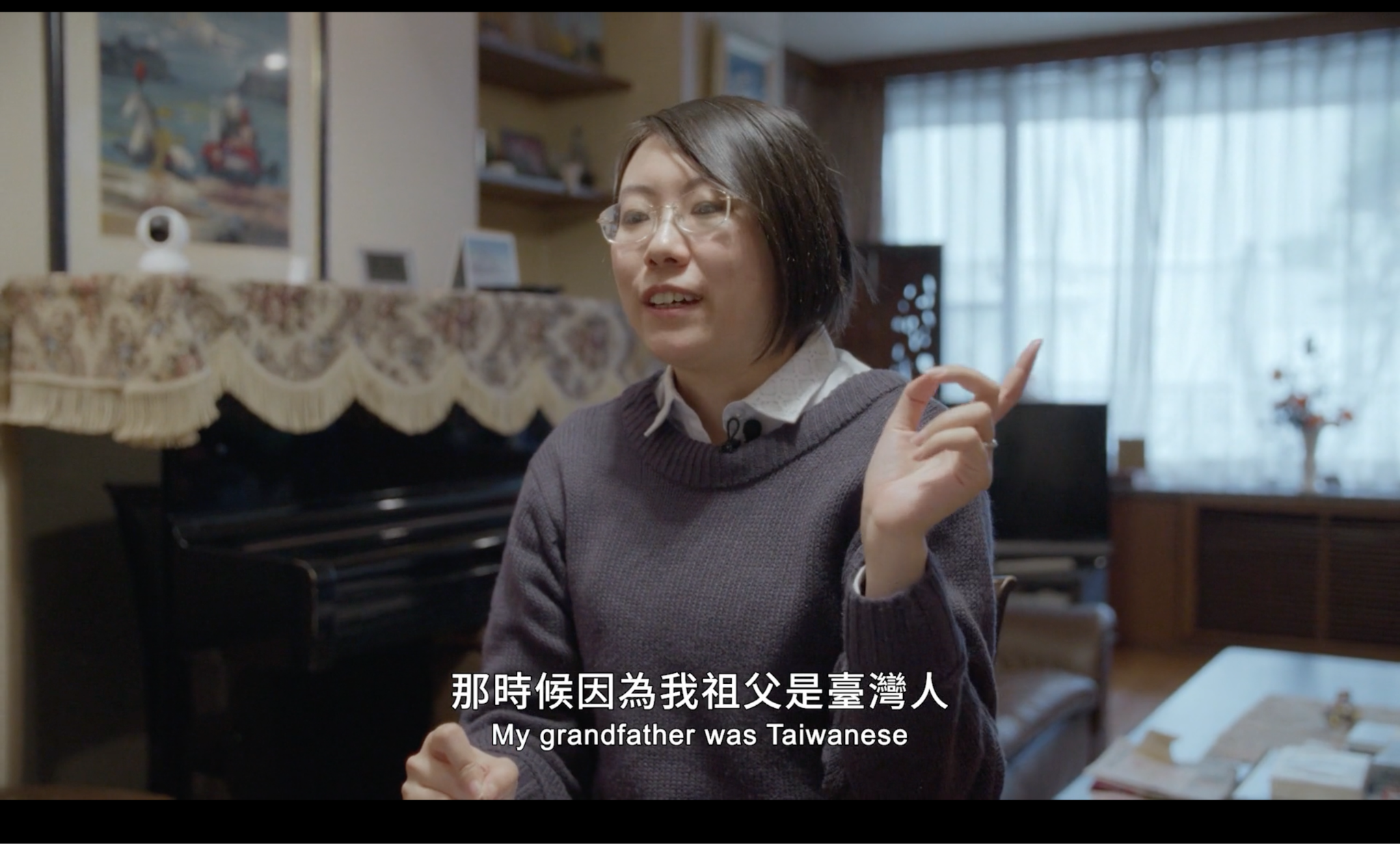
The result is a public memory that is messy, fragmented, and far from settled. But we want to resist reading that as failure. The fragmentation also reflects pluralism: there is no single official line that everyone is obliged to recite, which is exactly why a documentary like this one can exist and find an audience. And the film is honest about the limits of any tidy political reading. On one side, it shows how much a national story can anchor a person—the granddaughter of Hsu Min-hsin in Japan says simply, “My grandfather was Taiwanese.” She is not ashamed of her grandfather’s second-class status.
So perhaps the film does not offer redemption in a narrowly political sense. So what else could it possibly offer? Here we found ourselves reaching for Walter Benjamin. In the “Theses on the Philosophy of History,” written in 1940 as the world was darkening around him, Benjamin proposed that the present is bound to the past by a kind of secret agreement: that the generations who came before expect us to exert a “weak Messianic power.” The dead lay a claim on us that we cannot settle cheaply. It is a strange, almost theological idea, and we are not sure we fully believe it. But sitting with this film, watching a son finally hear what his father could never say, watching a granddaughter piece together a hidden life, we thought we understood what Benjamin was after. The redemption on offer here is not national vindication. It is something smaller and more intimate—the simple act of one generation listening to another and refusing to let a life vanish into silence.
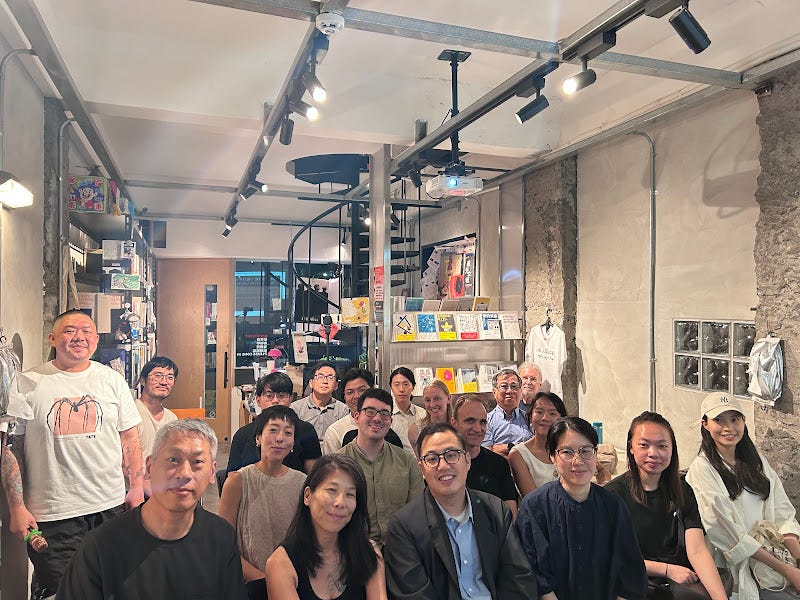
This piece grew out of a conversation held at Citizen Bookstore (市民書店), organized by the wonderful people at Plain Law Movement (法律白話文運動) and Khí-Sū Culture Publishing (挑興文化). Thanks to founder Joshua Shu-wei Yang, Finn Wu, producer Diana Fu, to the kind audience members who all came out to our intimate gathering or joined us online, and of course Ming-hsu.
This is part 1 of a series on the Taiwanese prisoners of war in the Siberian camps. Look out for part 2 from the terrific translator Petula Parris. She reflects on the process of translating part of Li Lu’s (李璐) Prisoner of Snow《雪的俘虜》, a novel that also describes the experience of Taiwanese soldiers in Manchuria. Our friend & reader Hanling Wu’s masters thesis on Taiwanese prisoners of war was also helpful in writing this piece.
A correction. Last week we incorrectly cited Chris Horton’s piece in Nikkei Asia. We wrote that Taiwan’s vice president Hsiao Bi-Khim spoke at the European parliament. A sharp-eyed reader wrote in to correct us: Hsiao did not speak at the EU Parliament, but in a private meeting room within the Parliament building, booked by the Inter-Parliamentary Alliance on China. (Horton’s original piece also states that she spoke to the Inter-Parliamentary Alliance on China.) We have corrected our piece. Thank you for taking such care with reading our work!
On June 30, from 14:00-15:30, Ke Ren, an associate professor at the College of the Holy Cross, is giving a talk “Peace, Propaganda, and Public Diplomacy: The International Peace Campaign and the Chinese League of Nations Union in the Second World War” at the National Central Library. Ke is a friend of the newsletter and a fantastic scholar, it’s going to be a great talk!
The always brilliant Sebastian Veg, a professor of intellectual history at the Centre for Historical Research, School of Advanced Studies in Social Sciences (EHESS) has a terrific interview with Le Monde (in French). Its title: “In China, there is no longer any space for holding senior leaders personally accountable.”
We’re touched by this lovely tribute to Michelle’s teaching on the National Chengchi University website. We stumbled upon it ourselves—the student who wrote it, Wan-Shan Sandra Wu, was so humble and didn’t even tell Michelle about it. Very generous & kind.
We loved talking to you all about Niall Williams’s This is Happiness!
We’ll talk about Darin Strauss’s Half a Life on June 26th (Friday 7 PM EST/Saturday 7 AM Taiwan time), and after that, we’ll read Omar El Akkad’s One Day, Everyone Will Have Always Been Against This for Friday, August 7th / Saturday, August 8th. After that, we’re reading Diana Athill’s Stet, Ferrante’s My Brilliant Friend, Kiran Desai’s The Loneliness of Sonia and Sunny, Anuk Arudpragasam’s A Passage North, Arundhati Roy’s Mother Mary Comes to Me, Ana Paula Maia’s On Earth As It Is Beneath (translated by Padma Viswanathan). Thanks to our book club members for their suggestions! Please reply to this email for a zoom link if you’d like to join.
No posts
Comments
Nothing yet. Say the first thing.
Sign in to join the conversation.