
Dear all,
Hello dear readers! Thanks to all who replied to our missive about a film portraying the last living Taiwanese prisoner-of-war in Siberian camps. Our next rec: we urge everyone who lives in Taiwan to see All Things to All 《為一切人,成為一切》in the theater. It’s a beautiful documentary depicting Catholic priests who have worked in Hualien for over 50 years. Also, if you happen to have a connection to Pope Leo (!), tell him to watch it! It might persuade the Vatican to continue diplomatic relations with Taiwan rather than switching to the PRC.
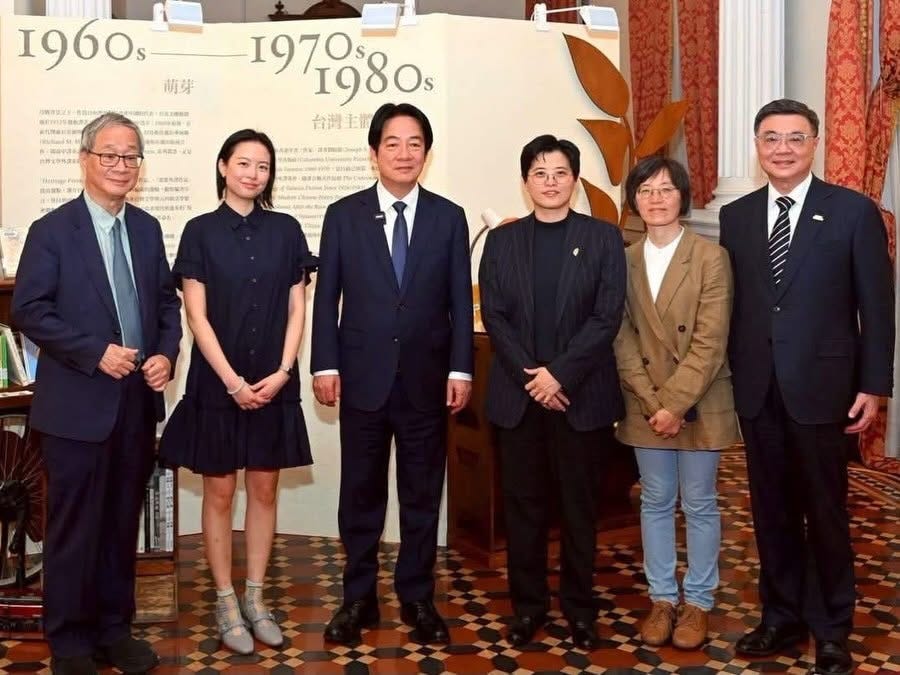
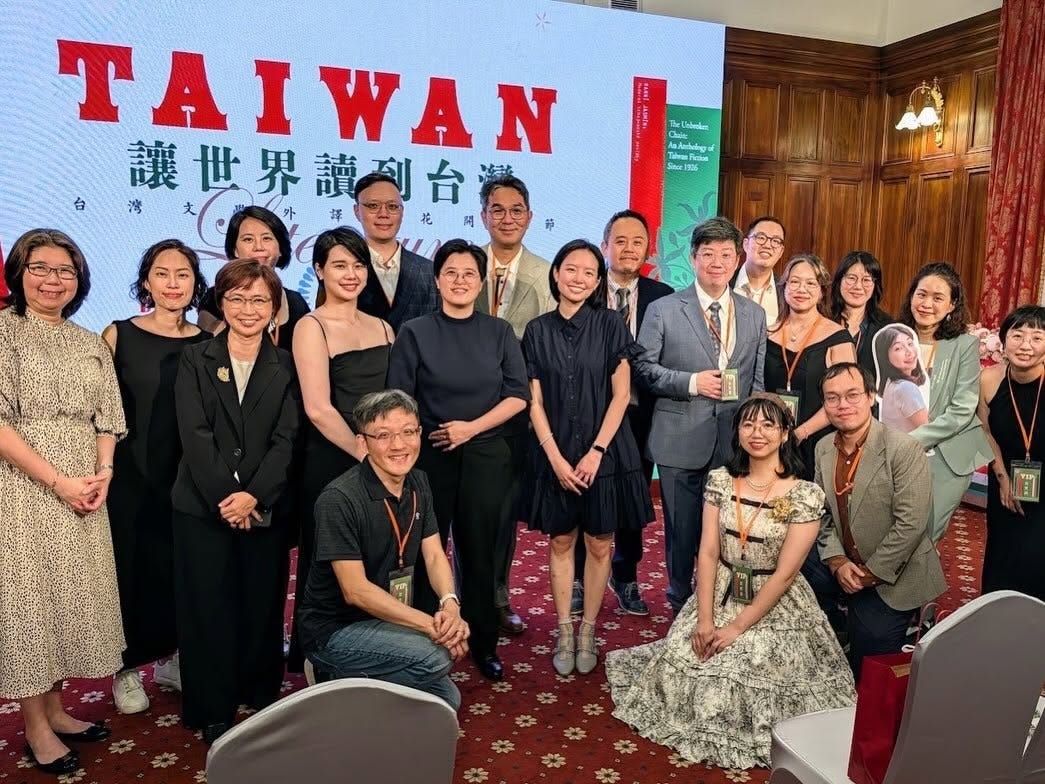
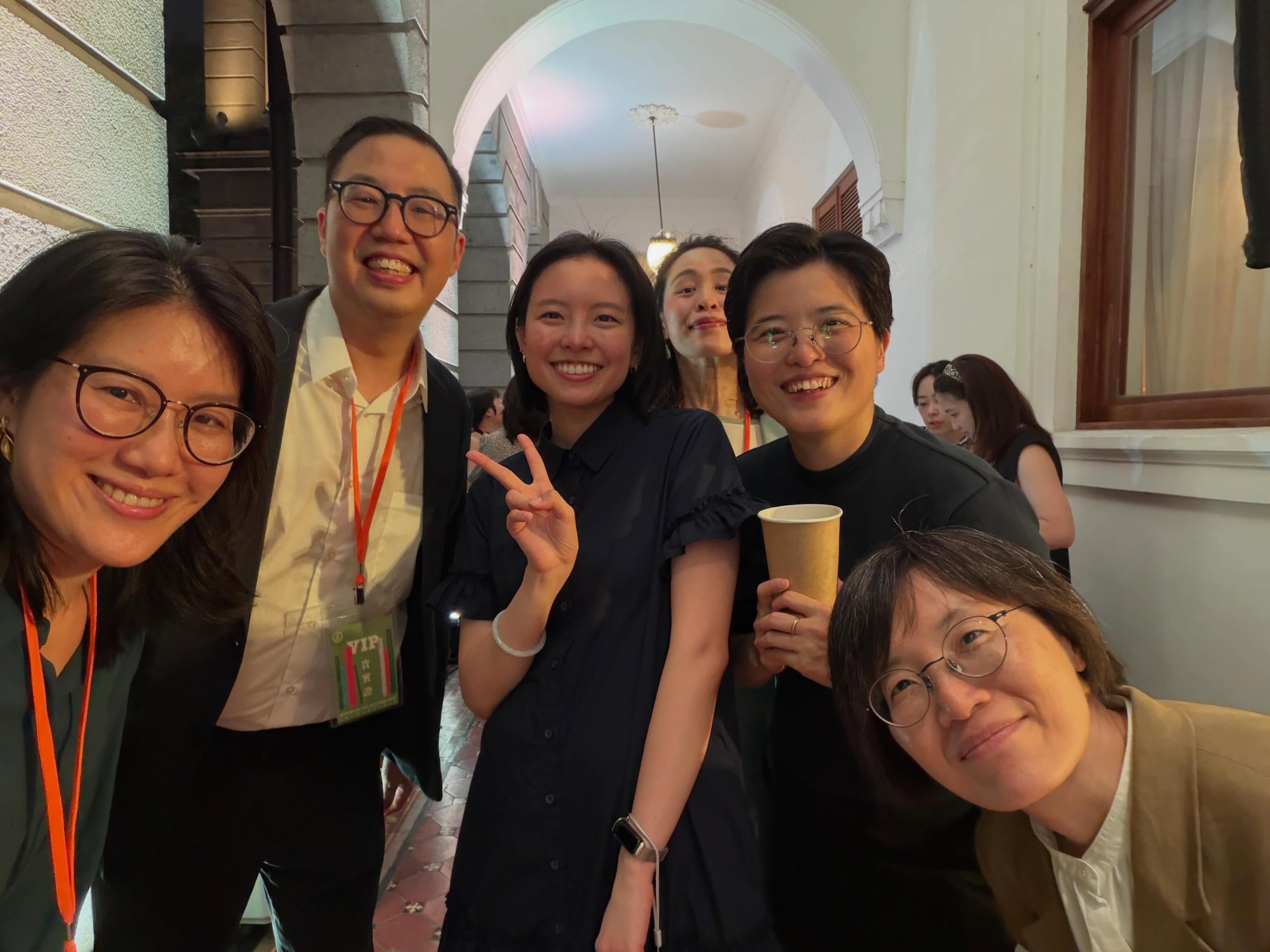
This past Tuesday, we were moved and uplifted by a joyous ceremony celebrating Taiwan Travelogue, the first Taiwanese book to win the International Booker Prize. The president and Ministry of Culture honored the trifecta of brilliant and principled women: the author Yang Shuangzi, the translator Lin King, and Springhill Publishing editor-in-chief Patience Chuang. What rock stars, what ferocity of vision and purpose.
We believe we’re witnessing a golden age of Taiwanese literary culture. This culture has been a century in the making, with ebbs and flows, but the Booker win has catapulted Taiwan to the world stage and injected a new self-confidence and optimism.
We were also dazzled by the exquisite band Tsng-kha-lâng (裝咖人), who sing in Taiwanese and performed at the ceremony. People have been telling us about this band for years, but this is the first time we’ve heard them play in person. (We blame our six-year-old!) And wow, were we blown away: the intricate harmonies, the beiguan temple music woven together with spoken storytelling, the soaring melodies over rock. Below, we share more of their songs and story.
During the ceremony, Chuang emphasized that Taiwan is a powerful force in Asia where writers from China, Hong Kong, Malaysia, and Singapore choose to publish. This is the “freest Mandarin-speaking country” in Asia, she said. Meanwhile, Lin King spoke of how it takes a village to bring a book like this to life and to the world. She also gave this newsletter a generous shout-out in her speech—we were stunned and taken aback. (Thank you, Lin! We want to cry.) You can find the speeches, in Mandarin, at Springhill’s Facebook page.
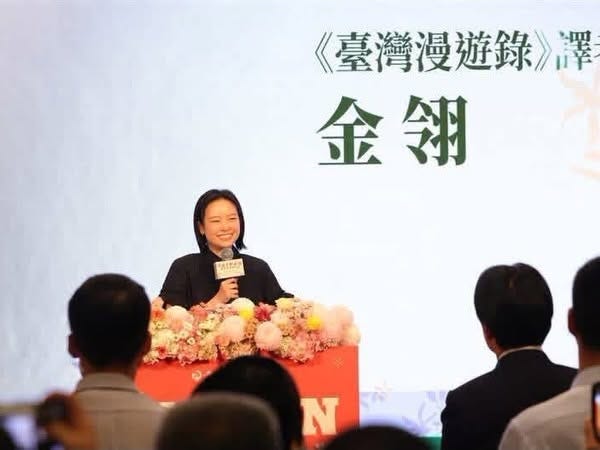
The very celebrity of King & Yang in Taiwan—they are household names here, we do not exaggerate—is worth thinking through. Why are people in Taiwan so proud of this moment? We believe that the pride doesn’t come from just a love for prizes and Western recognition, although that certainly is part of it. The other part of it is existential: people in Taiwan believe, correctly, that its survival depends on the world knowing of its existence. Every little bit counts. Taiwan has not yet attained universal recognition of its statehood, though we have all the legal markers of it. A country under threat of invasion needs allies.
More deeply, Taiwanese people who care about literature have longed for their stories to join the postcolonial canon. If you think about the writers who are considered canonical—from Tagore (India and Bangladesh) to Yeats (Ireland), from Senghor (Senegal) to Césaire (Martinique)—almost all wrote in English and French, the languages of their colonial overlords. But Taiwan’s history of having been colonized by three Asian regimes—the Qing, then Japanese, then the Chinese Nationalists—has made it unique as well as a bit of a black box. Paradoxically, to join the postcolonial canon, it depends on translation into Western languages.
Yet until recently, few Anglo-American publishers were interested in translating Taiwanese books to English. On the whole they expect other countries to buy their rights and translate them, but translate a tiny percentage of books. With the success of Taiwan Travelogue and the glittering talent of translators such as King, now Taiwan will not be underestimated. “Before, Taiwanese readers read literature of the world,” literary agent Gray Tan said in an interview. “Now, the world is reading Taiwan.”
And last, there’s deep pride in this book—multilingual, historically imaginative, written by a queer woman—as well as in Yang’s poignant life story. (We wrote about her story here and reviewed the book here.) Together they reflect Taiwan’s rich and idiosyncratic history. Expansive and averse to binaries, Taiwan Travelogue resist any easy ideological reduction.
We suspect there must be at least one legislator from the opposition party who ventured to read Taiwan Travelogue, trawling for “evidence” that the author has “cultural hatred of China”—a typical dog-whistle to their base in Taiwan. (This is not so different than MAGA folks in the U.S. searching for evidence of “antiwhiteness” in literature.) If so, he or she must have been sorely disappointed. Indeed, the characters in Taiwan Travelogue trade references to Chinese literature. And as Yang, King, and Chuang have all emphasized in their various speeches, literature holds a special place for complexity and nuance.
We revisited Edward Said, ever our lodestar, to think through today’s moment, of which there are parallels to Irish literary renaissance (1880s to 1930s). In his landmark essay “Yeats and Decolonization,” published in Culture and Imperialism, he compares writers such as Yeats, Darwish, and Césaire. The Négritude movement doesn’t come out so well in his view (he mostly uses Wole Soyinka to make his point), but Césaire’s expansive sensibility endures as a model. While Said disparages the nativist’s “emotional self-indulgence of celebrating one’s own identity,” he praises poets such as Césaire who abandon rigid essentialisms. Such writers express the “possibility of a more generous and pluralistic vision of the world.”
We wish Edward Said were alive to see this current flourishing of Taiwanese literature; we’d love to ask him how he sees it. We think he would have liked more than he disliked. True, Taiwan isn’t so great on Palestine, but Said would have admired its self-conscious hybridity and its embrace of both East and West. Writers in Taiwan, such as Wu Mingyi and Syaman Rapongan, reflect a spirit of self-interrogation, exploring indigenous ways of life and the Taiwanese complicity in destroying the environment. Multiple languages and cultures co-exist in one book, and there’s none of the false self-adoration that Said and Soyinka so loathed. It’s fitting that Taiwan Travelogue is the book bringing Taiwan to the world stage; among King’s bold choices as a translator was her decision to bring Taiwan’s multilingual, multi-ethnic reality to surface.
When Chuang praised Taiwan as a place that Mandarin-speaking writers across Asia choose to publish, she said, “Taiwan is Taiwan—but it is also more than Taiwan.” What a lovely and eerie echo of Said’s remarks a generation before: poets of decolonization, he insisted, must envision an Ireland that is more than Ireland, Martinique more than Martinique, Pakistan more than Pakistan.
Thus to those leftist friends with whom we sometimes argue—they chafe at any sort of national identity-making, fearing its temptations to chauvinism—we insist that Taiwanese nationality has been maturing for over a hundred years. “Nationality, nationalism, nativism” must be parsed out, Said writes—and he sequences these three concepts according to their constraining power. Nativism is harmful and exclusionary, but as the Palestinian struggle teaches us, nationality can also be inclusive, a gateway to broad solidarity with other oppressed peoples.
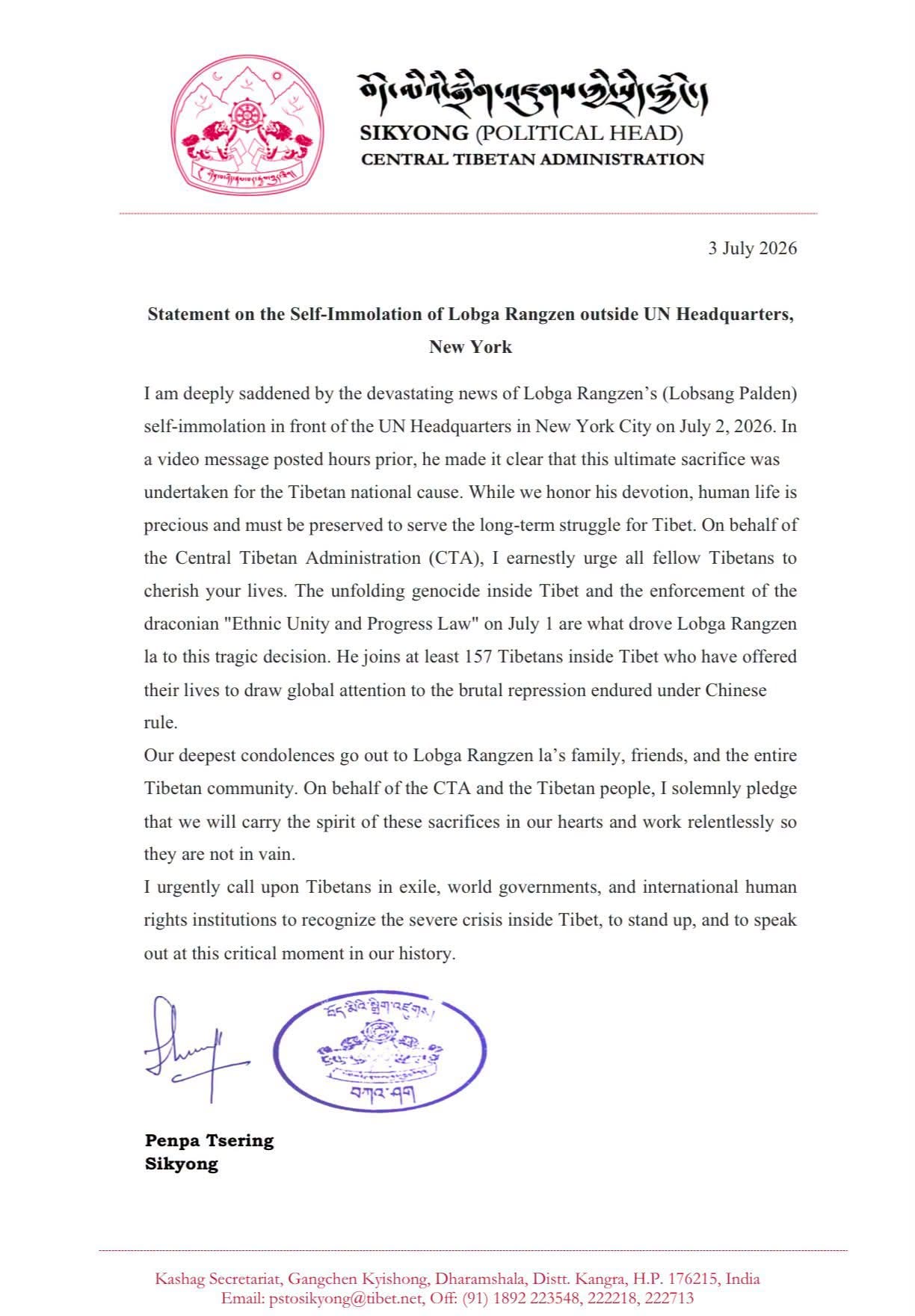
This expansive consciousness sharply contrasts with oppression across the strait. Just this week, China passed a law that codifies its violent Han ethnonationalism. Vague legal language—you can be arrested for “undermining ethnic unity”—makes it a thought crime for Uyghurs, Tibetans, Taiwanese, and other ethnic minorities to regard themselves as anything other than “Chinese.” The law encourages citizens to report on one another. The insane law also states the PRC can arrest people outside of China’s borders who “undermine ethnic unity.” The law also forbids schools to use minority languages as a primary mode of instruction.
Last week, a Tibetan activist self-immolated in protest of this law, setting himself on fire in New York. The circulated images are highly disturbing, and Mayor Mamdani said he was heartbroken, sending messages of solidarity to the Tibetan community.
The parallels to Ireland, by the way, are illuminating. Like the Taiwanese language, Irish had been banned from being spoken in schools. By the 1880s, parents “spoke Irish only to children who answered in English only,” Declan Kiberd writes in Inventing Ireland: Literature of a Modern Nation. “[Douglas] Hyde would ask children ‘Nach labhrann tu Gaelige?’—don’t you speak Irish?—and the children would believe the English spoke was Irish. (Taiwanese, by the way, is not a dialect of Mandarin; this is a common misapprehension. Linguists describe it as a separate language that evolutionarily diverged from Mandarin over a thousand years ago.) Like Taiwanese in Taiwan, Irish came to be regarded as lower-class and trashy in Ireland. Before Ireland’s president Douglas Hyde became Douglas Hyde, society ladies would gossip about him, saying, “He cannot be a gentleman because he speaks Irish.”
For Ireland—and in Taiwan, too—the artists, writers, poets, and musicians hoped to offered an alternative to the rhetoric of political leaders. Culture and politics are intertwined, yes, but politicians cannot win over the country unless the country itself is invented, reinvented, and loved by its own people. “Does not the greatest poetry always require a people to listen to it?” asked Yeats. Irish culture had to be founded on “something more positive and lasting than mere hatred of England,” writes Kiberd. Their goal was to make “Ireland once again interesting to the Irish,” deepening within people a “self-belief which might in time lead to social and cultural prosperity.”
In many ways, the timing is perfect and ripe for books like Taiwan Travelogue to enter the world stage: the late nationalism of Taiwanese people has matured, martial law has been lifted for over a generation, and the literature lacks what Said calls an “ambiance of polemic.” Yang and King’s fiery commentary—“we refuse to be second-class citizens,” as Yang has said—is different than what Taiwanese stories contain. We feel very fortunate to be living during this time of cultural flourishing.
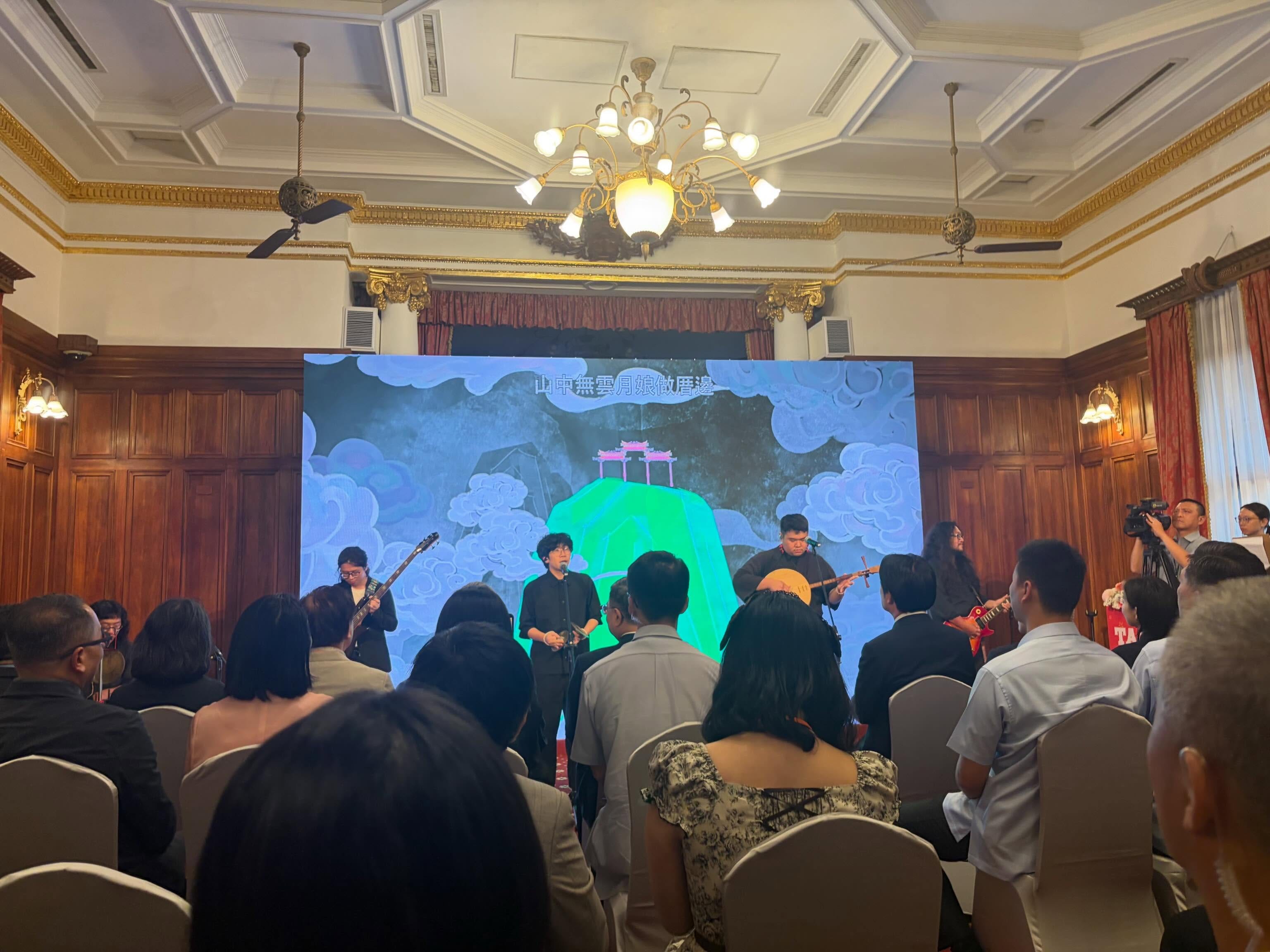
The other big revelation of our night out was hearing the band Tsng-kha-lâng (裝咖人) play live.
We’ve been playing their song〈花巷〉 hue-hāng (”Flower Lane”) on repeat ever since hearing it at the ceremony. Here’s the official music video, which imagines a woman waiting by the flower lane for her lover, a painter taken away during the White Terror.
This song was the first Tiunn Ka-siông (張嘉祥), the band’s frontman, ever completed. He recounts that he cried at the sound of a few simple notes played by Chen Ming-chang, the musician who composed the soundtrack for Hou Hsiao-hsien’s Dust in the Wind. As Tiunn wrote the song, he imagined his grandparents walking together down a road blooming with mango trees that had been planted in the Japanese era. That road was once the village’s only route to the outside world. Four chords, he says—that was all the band could manage at the time.
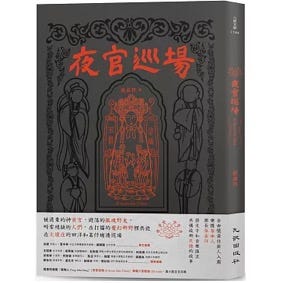
Their debut album, Iā-Kuan Sûn-Tiûnn (夜官巡場, roughly “night deities patrol the grounds”), came out in 2021 and earned them a Golden Melody nomination for Best New Artist. It’s sung and recited in Taiwanese. The songs brim with ghosts, wild gods, spirit mediums, and details from the history of martial law.
Their music is also a product of Taiwan’s literary world. Tiunn studied literature and creative writing at National Donghwa University in Hualien, a university with a special place in our hearts. (This university started the country’s first indigenous studies program, and we’ve visited it for many years.) He studied with the great aforementioned Taiwanese writer Wu Ming-yi. Tiunn also met his fellow band members there; four of the five current band members are Donghwa graduates. (Go Donghwa!)
In early 2017, Wu Mingyi offered a course titled “Chinese-language Popular Music” at Donghwa that, despite its name, covered everything: the history of foreign rock, Taiwan’s Blacklist Studio of the 1990s, all the way up to the 2016 Nobel laureate in literature, Bob Dylan.
“To this day I can still remember the sound of Professor Ming-yi reading Bob Dylan’s lyrics with us in class,” Tiunn recalls. “It was a shock — an American folk singer could win the prize that everyone who writes literature dreams of winning. I suddenly felt that the boundaries between fields aren’t so cleanly cut, aren’t so clearly drawn. My whole creative sense was thrown open, stretched far, far out.”
Then Lin Sheng Xiang (林生祥) came to campus to perform, and hearing him live was the final push. Tiunn decided to form a band.
You can’t listen to the band without hearing the influence of Lin Sheng Xiang everywhere. He’s one of our favorite musicians, and we often share his music with our students. Read about him in our old post. (Scroll down for his music videos.) The first piece, sung alternatively in Mandarin and Vietnamese, is an homage to the Vietnamese migrant women who stand for hours cultivating water lily, a beloved Taiwanese vegetable. The second features organic tofu makers.
Tiunn says he can’t write a song from a melody alone; every song needs a story underneath it, so the fiction and the music grew together, each feeding the other. Both draw on Tiunn’s childhood in Hué-sio-tsng (火燒庄), “Burnt Village,” in Minxiong, Chiayi — the same Minxiong famous for goose meat, pineapples, and Taiwan’s most notorious haunted house.
Another song, 〈羅漢〉 Lô-hàn, is named for the lô-hàn-kha, the rootless bachelors at the bottom of village society. Tiunn knew one of these figures as a child, an odd-job man who taught him to catch catfish and frogs in the irrigation canals. As he grew older, he realized that what he saw as freedom was really poverty. Tiunn brought this figure to life three times: in this song, in a Qing-era tale, and in his novel, which features a betel-chewing, toothless drifter whom the village children adore.
One song is devoted to Tsuí-lâu-Má (水流媽), the “Water-Flow Mother.” She originated as a corpse, a drowned body that washed up under a bridge near his village. In Taiwan, bodies like hers rarely stay anonymous for long. The dead depend on the living to feed them, and by custom that duty belongs to descendants, who tend the grave and keep the incense lit. Someone who dies unclaimed has no one to perform those rites, and an untended spirit turns hungry and restless.
The community takes up the duty of tending the spirit: it recovers the body, gives it a resting place, and makes offerings. In this way, the unclaimed dead are fed and enshrined rather than forgotten. And because they died outside the proper order, they are thought to grant favors that respectable gods refuse to perform. So the villagers built her a shrine, and over time she became the kind of unofficial deity to whom the desperate and gambling pray. Her restlessness became converted into a form of power. Tiunn’s mother always told him to hurry home whenever he passed her temple.
And then there is the White Terror. One of the album’s most devastating sequences imagines Lîm Siù-bī (林秀媚), daughter of one of Chiayi’s wealthiest families, whose husband — a doctor and city councilman — went out to negotiate during the 228 Incident in 1947 while she was about to give birth, and never came home. In a spoken interlude, she addresses him decades later, incense in hand: I knew you were never coming back. I’ve repaid the funeral costs. When will we no longer have to fear dying at the muzzle of a machine gun?
Tiunn also spent five years writing a novel while composing music. A special edition pairs the book and the album in matching covers, one finished in gold foil and one in silver, so that side by side they mirror each other like gold and silver joss paper. The novel comes with QR codes to six of the songs, meant to be read and listened to together. It was also recently translated into French and Korean.
In the video below, they play with Sheng Xiang himself in 2024 at The Reporter. (We keep spotting our late-twenty-something friends in the audience—we see you Ashish and Jackie! Albert said to Michelle ruefully, “Ah, it’s P.’s fault, we don’t get out…”)
In short, this band seems to have been created to speak directly to us. We’ll be following their movements closely from here on out.
After the high of the ceremony, the very next day we were reminded that these cultural battles are still ongoing and unsettled. One of our favorite legislators, Wu Pei-yi—she’s featured prominently in the documentary Invisible Nation (our review here)—attended the ceremony Tuesday. The next day, she posted on Facebook criticizing the legislature’s budget cuts. This continues a pattern from last year, when the legislature attempted to cut wholesale the budget for public television, arts, and literature.
In the latest round of budget negotiation—yes, the current legislature still hasn’t passed the budget for this year—KMT legislator-at-large Weng Hsiao-ling copied and pasted a single proposal across at least thirteen government agencies, striking anything labeled a promotional expense without pausing to ask what the money actually is for. From the Ministry of Culture she proposed to cut NT$47 million (roughly US$1.5 million), leaving the Ministry NT$380,000 (roughly US$11,800) for marketing and promotion. On Facebook she wrote sneeringly that the Minister of Culture Li Yuan should write his own Facebook posts.
The cuts threaten to eliminate promotion budgets for the Golden Horse, Golden Bell, and Golden Melody awards, the Taipei International Book Exhibition (our favorite book fair!), Taiwan’s film festivals, and its overseas publishing outreach—the very channels and infrastructure by which Taiwan tells the world it exists.

In the KMT’s distaste towards Taiwanese culture, they share a kinship with the reactionaries who, across the Pacific, spent 2025 trying to erase the National Endowment for the Arts. (Many of you are based in the United States, so you know this story better than us.) The Trump administration proposed eliminating the agency outright in its FY2026 budget. It also abruptly canceled approved grants for hundreds of organizations, opening an estimated $27 million funding gap. The instinct is the same on both shores: treat art as a luxury the nation can jettison at any notice.
Is the timing of Weng’s proposed cuts a coincidence? Perhaps, but it isn’t surprising, since the KMT has spent decades opposing the very Taiwanese narratives now being celebrated. It was the KMT that pushed Taiwanese off the radio, required schoolchildren to memorize the rivers and provinces of a land they would never visit, and made any honest reckoning with the Japanese colonial era impossible. Opposing the kind of Taiwanese literature now emerging is, in this sense, baked into the party’s DNA.
What has changed with the KMT is its method. The KMT no longer has the power to ban books, films, and music outright, so it works through the budget instead, starving the infrastructure that carries culture to the public. People in Taiwan tend to learn that a book or film exists through award ceremonies, prizes, exhibits, fairs, showings, and foreign recognition—all events that require money and that KMT aims to defund. Choke off the money, and this emerging culture never reaches the audience waiting for it.
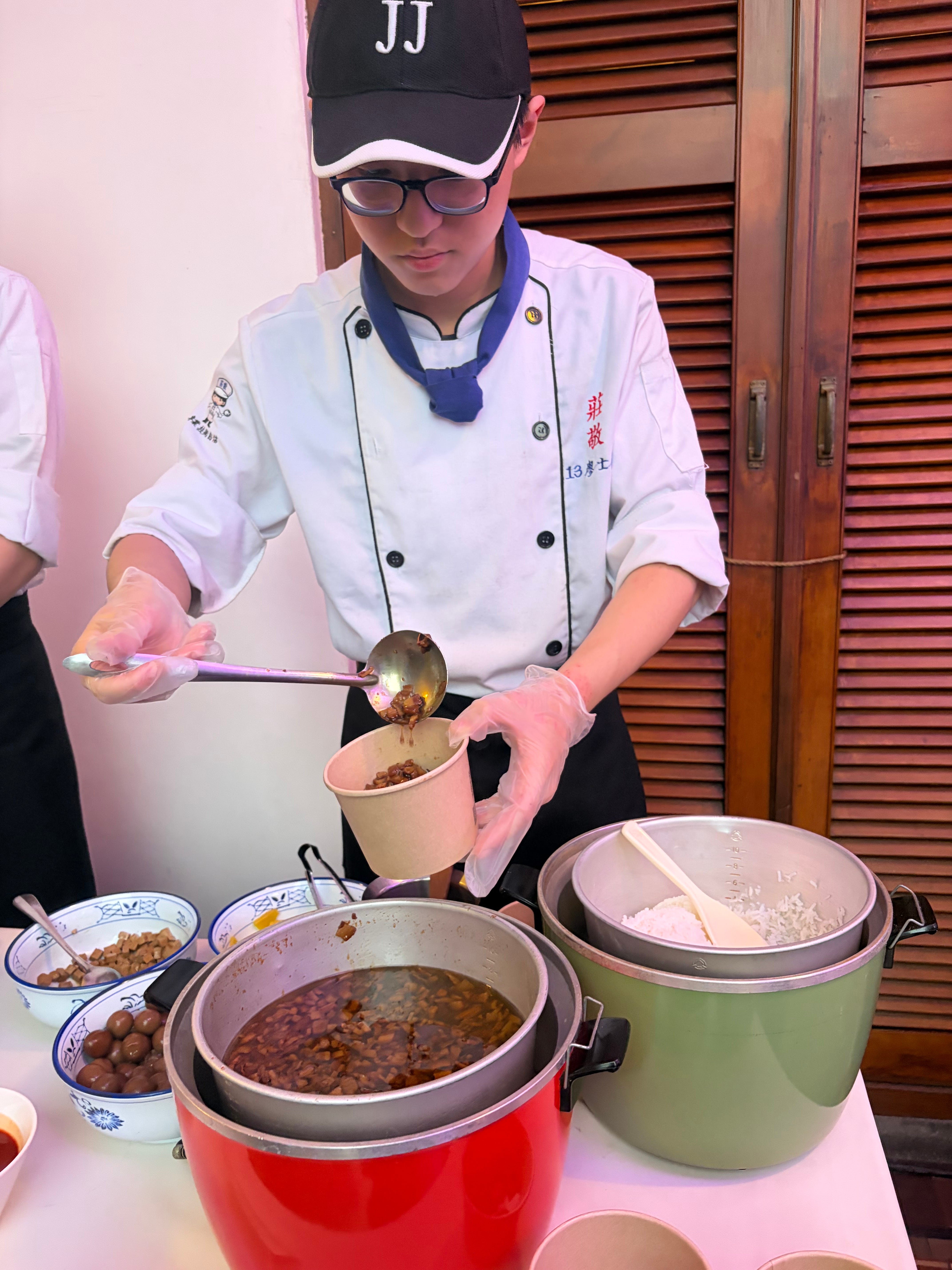
On a happier note, the food at the ceremony from the famed Mountain & Sea House (山海樓) was mouth-wateringly good. We had helpings of aiyu jelly and braised pork rice. (Albert often says this would be his last meal.) The menu took its cues from Taiwan Travelogue, down to a bowl of “muâ-ínn-thng” (麻薏湯/麻芛湯), which is described in the novel as a summer soup made from “newly grown jute leaves” and is meant to help you cool off. A Taichung specialty, it’s sent plenty of readers looking for the real thing since the novel came out.
We love the people who come to our book club, yay! Thanks to everyone who came. Our next book is Omar El Akkad’s One Day, Everyone Will Have Always Been Against This, and we’ll meet Friday, August 7th / Saturday, August 8th. After that, we’re reading Diana Athill’s Stet, Ferrante’s My Brilliant Friend, Kiran Desai’s The Loneliness of Sonia and Sunny, Anuk Arudpragasam’s A Passage North, Arundhati Roy’s Mother Mary Comes to Me, Ana Paula Maia’s On Earth As It Is Beneath (translated by Padma Viswanathan). Thanks to our book club members for their suggestions! Please reply to this email for a zoom link if you’d like to join.
No posts
Comments
Nothing yet. Say the first thing.
Sign in to join the conversation.