
Welcome to new readers of the American Geographical Society’s weekly, the AGS Globe! The Globe shares articles on geography and geospatial, along with exciting opportunities and news from our network. As the world revolves, geography evolves. The mission of the AGS Globe is to bring our storied legacy of exploration and thought leadership into the frontiers of the future.

By Lauren Johnson
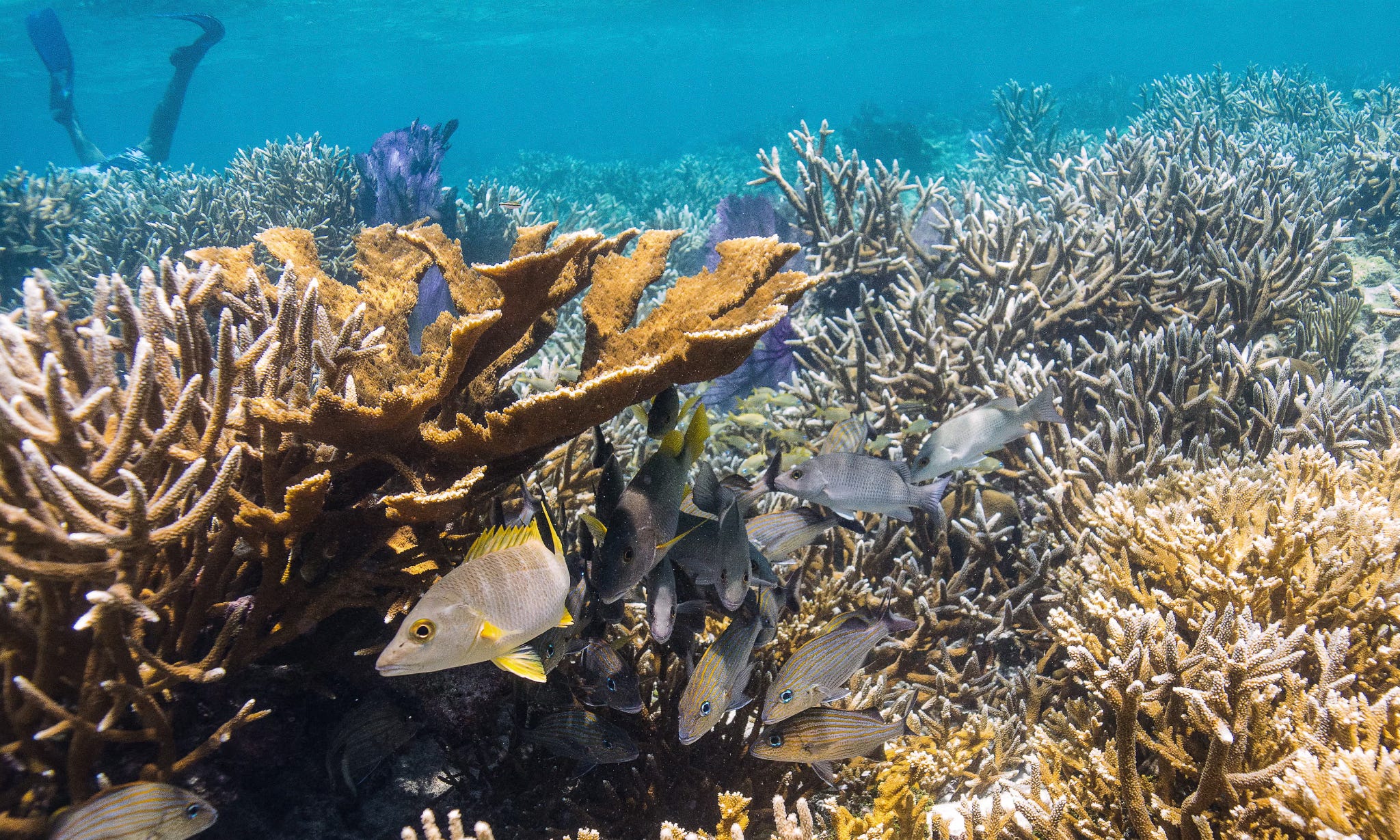
Along the Caribbean coasts of Mexico, Belize, Guatemala, and Honduras, the Mesoamerican Reef is home to some of the most critically important marine ecosystems in the Western Hemisphere. The reef stretches 700 miles from the northern tip of Mexico’s Yucatán Peninsula to the Bay Islands of Honduras. It is the largest barrier reef in North America and the second largest barrier reef system in the world, after the Great Barrier Reef. Its biodiversity, including coral reefs, mangrove forests, seagrass meadows, and coastal wetlands, has created a connected landscape that has supported communities and cultures for centuries. For coastal towns throughout the region, the reef is an economic and cultural foundation. Still, its future depends on whether the growing tourism economy built around its beauty can coexist with the reef’s ecological limits.
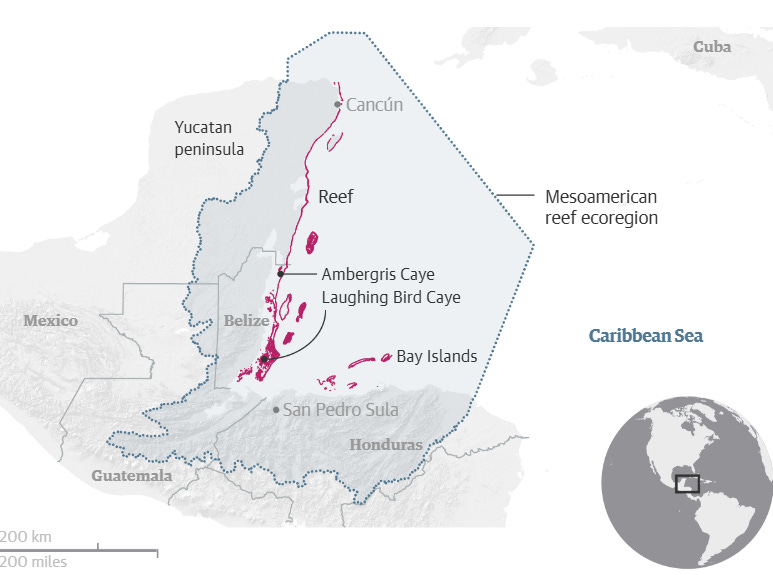
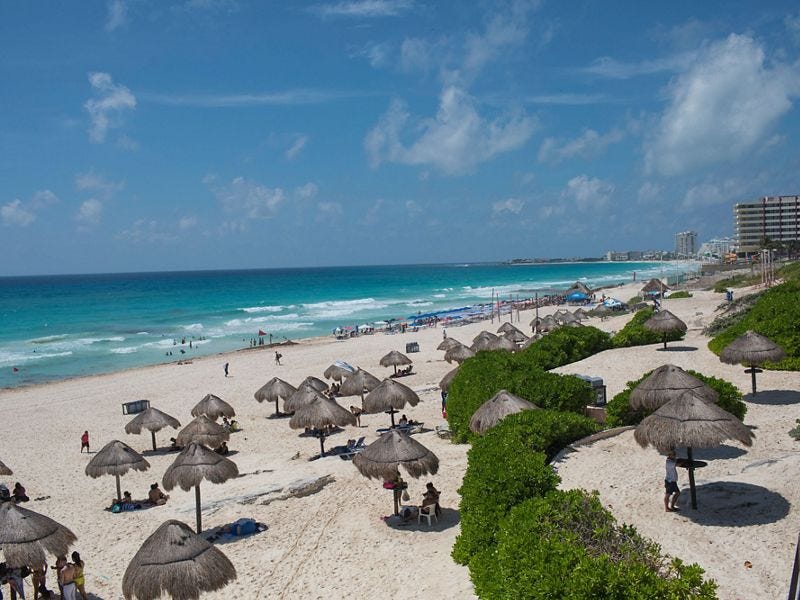
Tourism is a dominant economic force reshaping the Caribbean shorelines. For years, development has expanded rapidly south from Cancun into Belize and Honduras and has brought new pressure to the reef systems that are already stressed by climate change and overfishing. Along Mexico’s Caribbean coast alone, there are more than 300 hotels and roughly 100,000 hotel rooms, with approximately 12 million visitors arriving each year and spending billions of dollars in the region. Cancun, Playa del Carmen, Tulum, Puerto Morelos, the Belize Barrier Reef, and the Honduran Bay Islands are all internationally recognized destinations for snorkeling and diving. This scale of tourism increases pressure on the delicate marine and coastal habitats that make the region valuable. As tourism grows, so does the demand for hotels, roads, wastewater infrastructure, boat traffic, beach access, and shoreline development.
The Mesoamerican Reef region is home to more than 60 types of hard coral, over 500 fish species, five species of marine turtles, and one of the world’s largest populations of whale sharks. This biodiversity is a major part of what makes the reef a popular tourist destination, drawing visitors to the same marine environments that provide habitat, food, shoreline protection, and livelihoods for local communities. While tourism brings investment and employment, it has also accelerated overdevelopment along the coastal environments. Large hotels, resorts, marinas, cruise ship infrastructure, and beachfront construction can increase pollution and place additional stress on marine ecosystems already vulnerable to warming waters and coral disease. Over time, poorly planned coastal development has contributed to habitat destruction, declining water quality, and widespread reef degradation, with an estimated 80% of living coral along Mexico’s Caribbean coast lost or degraded since 1980. What remains uncertain is how long the Mesoamerican tourism economy can continue to depend on a reef system it is helping to degrade.
Between 1– 2 million people depend directly on the region’s reef for their livelihoods. These communities include Miskito, Garifuna, Caribbean Creole, Q’eqchi’, Mopan, Yucatec Maya, and Mestizo people. Fishing, tourism, coastal protection, food security, and cultural identity are all connected to the reef. In Belize, the reef is a critical economic resource and foundation of the coastal economy. Coastal and Indigenous communities are often the first to experience the consequences of declining reef health, even though they may contribute the least to large-scale coastal development.
When coral reefs are damaged by pollution, sediment runoff, boat traffic, and habitat loss, the effects move quickly through the surrounding ecosystem. Fish populations can decline as reef habitat becomes degraded, affecting local fishers who depend on the reef for food and income. At the same time, damaged reefs provide less protection from waves, flooding, and beach erosion, leaving coastal settlements more exposed to storms and shoreline change. Reef degradation is a loss of biodiversity and a disruption to daily life for communities whose economies and cultural identities are tied to the sea.
Overtourism also reshapes the social and economic landscape of reef communities. Large resorts, cruise ship infrastructure, and beachfront development can limit local access to coastal areas for indigenous people, increase pollution, and shift employment trends toward tourism industries that depend on the continued attraction of a healthy reef. This creates a difficult feedback loop for Mesoamerican communities: tourism provides jobs and income, but unchecked tourism growth can weaken the same marine ecosystems that sustain those livelihoods.
The 2024 Mesoamerican Reef Report Card, released through the Healthy Reefs Initiative and the Global Coral Reef Monitoring Network, found that reef health showed its first improvements in five years, however overall condition remained poor. Most of the 286 monitored reef sites were still categorized as either poor or critical. The report found that live coral declined from 19% to 17%, with over 50% of corals severely affected by bleaching impacts. Coral bleaching occurs when prolonged heat stress causes corals to expel the algae that live within the tissues. Without the algae, corals lose their color and become vulnerable to starvation, disease, and death. Combined with rising ocean temperatures, intense tourism pollution and coastal development are compounding pressures on the corals
When coral dies after a bleaching, the reef begins to lose its biodiversity and structure. Fish, sea turtles, and other marine species depend on coral habitats for shelter, food sources, and reproduction. When coral populations decline, fish and marine populations also decrease, which in turn weakens local fisheries and the food security of coastal Mesoamerican communities. Dying reefs also provide less protection from waves and storm surge, leaving shorelines more vulnerable to flooding, beach erosion, and hurricane damage - events that are increasing in recent years with a changing climate.
The loss of reef health has direct consequences for coastal protection, especially in a region where communities and tourism economies are built along Caribbean shorelines. Coral reefs act as natural barriers, reducing the force of waves before they reach land and helping protect beaches from flooding and erosion. When reefs are damaged by intense storms, bleaching, disease, pollution, boat traffic, or construction, shorelines become more vulnerable to the same hazards the reef once helped absorb. In recent years, new restoration efforts in Puerto Morelos, Mexico, are working with trained reef-repair divers who respond after hurricanes by removing debris, stabilizing damaged reef sections, and reattaching broken coral fragments. These efforts are repairing damaged reefs and strengthening coral in the hopes of giving them a better chance of surviving future storms.
Restoration work also includes coral nurseries, reef monitoring, and the transplantation of more resilient coral species into marine protected areas. Local conservation organizations and scientists grow corals that may be more resistant to disease and warming waters, then plant them on damaged reefs where their regrowth and survival can be monitored over time.
Coral reefs also need clean water, healthy fish populations, protected mangroves, and better-managed coastal development in order to recover. The slight improvements reported in the 2024 Mesoamerican Reef Report Card suggests that conservation, enforcement of overfishing, and local stewardship can make a measurable difference. Still, restoration cannot replace prevention. Replanting coral is important, but it cannot fully compensate for overtourism that continues to weaken the reef faster than it can heal.
The Mesoamerican Reef cannot continue to withstand the unlimited pressure from a changing climate and over tourism. The reef is critical for protecting the shorelines and strengthening local economies. If tourism continues to expand without stronger environmental planning, the entire coastal region risks degrading the very reef that makes it valuable. Coral reefs grow over centuries and damage from bleaching, pollution, or intense tourism development can destroy in one summer season what may have taken thousands of years to grow.
References
The Mesoamerican Reef. The World Wildlife Fund. https://www.worldwildlife.org/places/mesoamerican-reef/
Bracing for Impact. The Nature Conservancy. https://www.nature.org/en-us/magazine/magazine-articles/bracing-for-impact/
Freedivers, leftover cables and bits of clay: Cuba gets inventive to save its pristine reefs amid US blockade. The Guardian. https://www.theguardian.com/global-development/2026/jun/13/freedivers-leftover-cables-and-bits-of-clay-cuba-gets-inventive-to-save-its-pristine-reefs-amid-us-blockade
A Glimmer of Good News from the Mesoamerican Reef as reef health improved for the first time in five years, although the overall grade remains “poor.” GCRMN. https://gcrmn.net/2024/11/08/mesoamerican-report-card-2024/
Reef Health Showing Slight Increase in Mesoamerican Reef Region. CORAL Reef Alliance. https://coral.org/blog/reef-health-showing-slight-increase-in-mesoamerican-reef-region/
‘Coral bleaching is getting worse ... but the biggest problem is pollution.’ The Guardian. https://www.theguardian.com/environment/2017/dec/27/coral-bleaching-is-getting-worse-but-the-biggest-problem-is-pollution
Thanks for reading The AGS Globe! This post is public, so feel free to share it.
Did you enjoy reading this? Support the American Geographical Society today with a donation of $50 to help us support Geography education.

Members of the American Geographical Society enjoy reduced-price access to AGS events and free access to the online version of Geographical Review.


Submit Lightning Talk and Exhibition Poster Proposals Today! Speak at our annual fall symposium, Geography 2050: Africa Shaping Tomorrow, taking place this November 19-20, 2026, at the Schomburg Center for Research in Black Culture in New York City! By 2100, over one-third of the world’s population will live in Africa, already the world’s youngest and fastest-growing continent, with profound implications for the interconnected human and environmental dimensions of the transformative demographic and technological boom across Africa. Submit proposals to speak at Geography2050 here!
Our Geography 2050 Trip Planning Page is Up! You can view information about this year’s venue as well as our partner hotels with Special Symposium Rates. Early birds can register at the lowest ticket price and book their stay at the Aloft Harlem at this special rate TODAY by going to the Geo2050 Trip Planning page.
Comments
Nothing yet. Say the first thing.
Sign in to join the conversation.