
Welcome to new readers of the American Geographical Society’s weekly, the AGS Globe! The Globe shares articles on geography and geospatial topics, as well as exciting opportunities and news from our network. As the world revolves, geography evolves. The mission of the AGS Globe is to bring our storied legacy of exploration and thought leadership into the frontiers of the future.

By Lauren Johnson
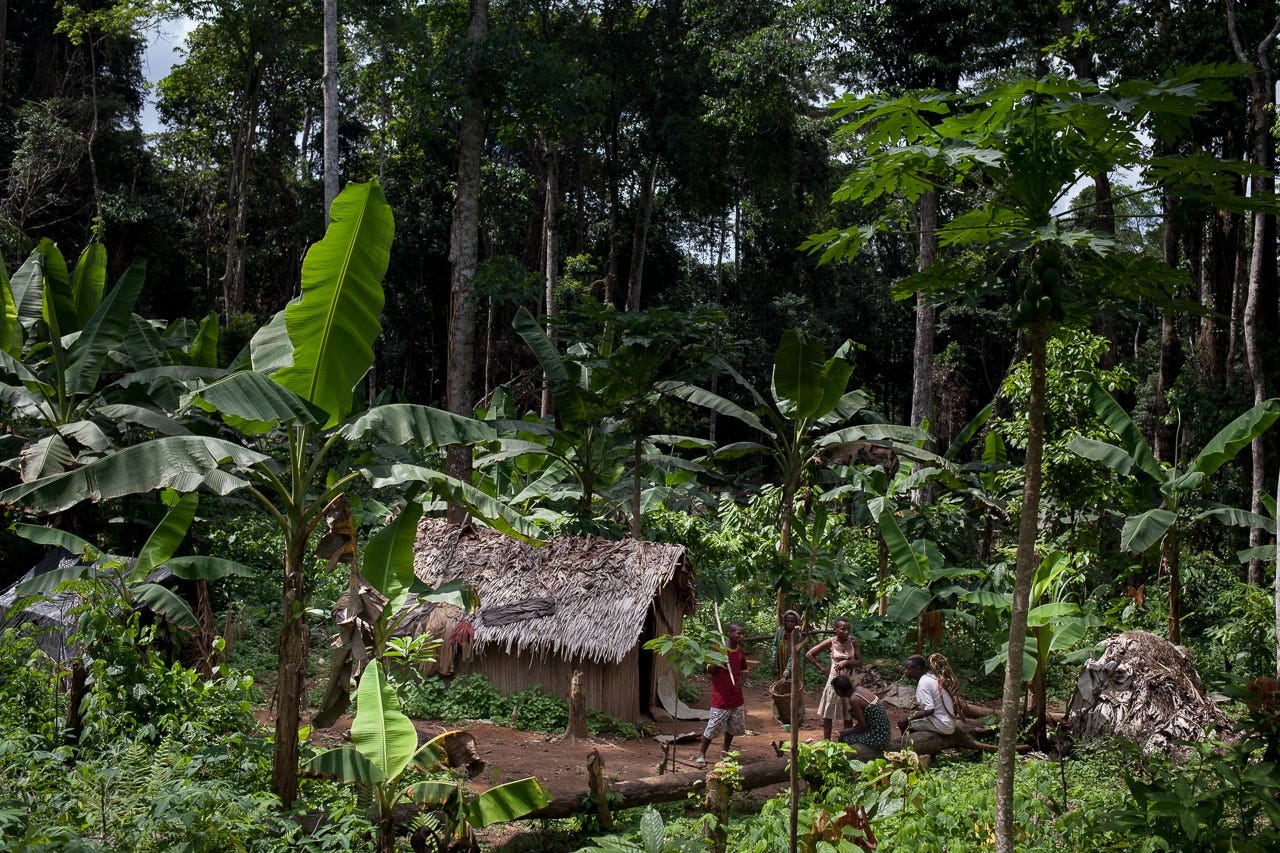
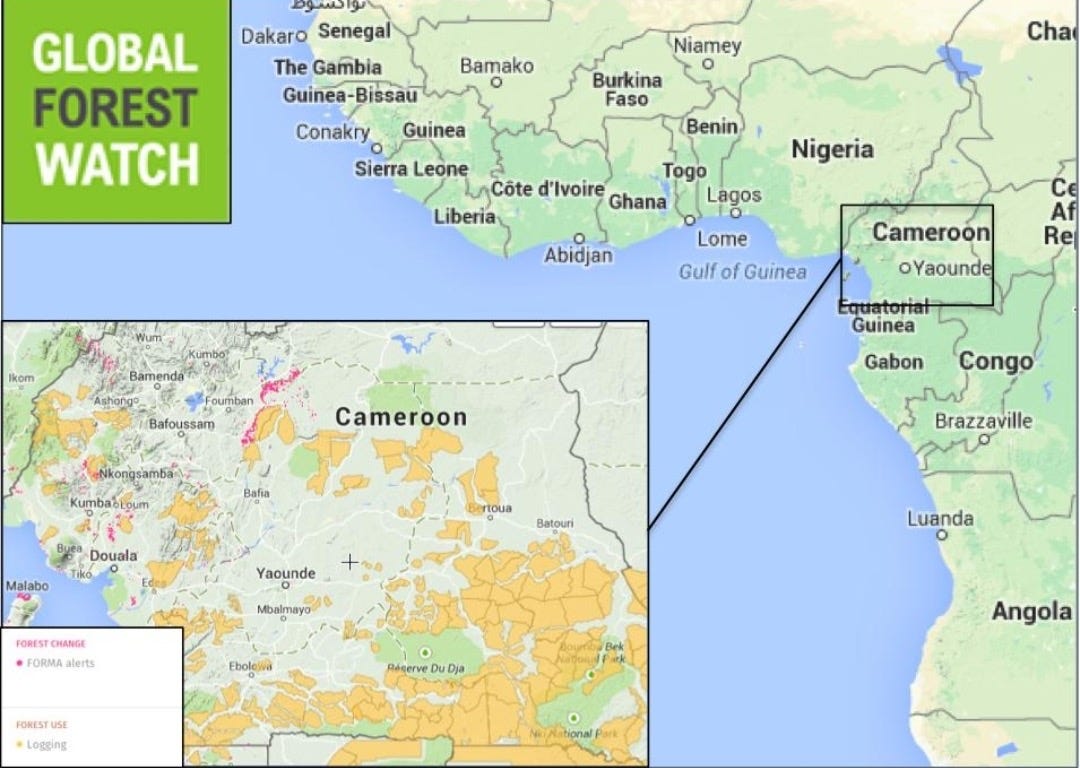
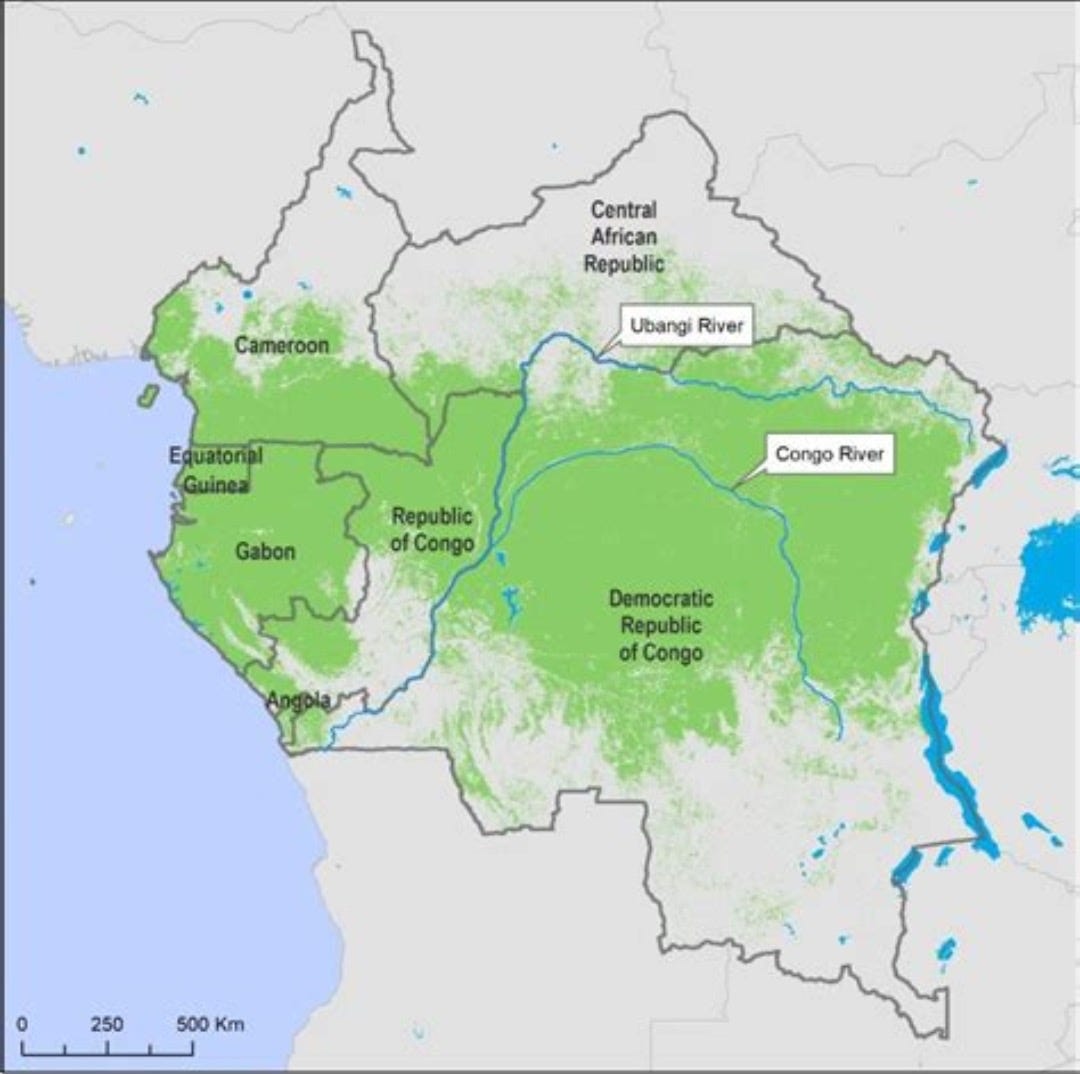
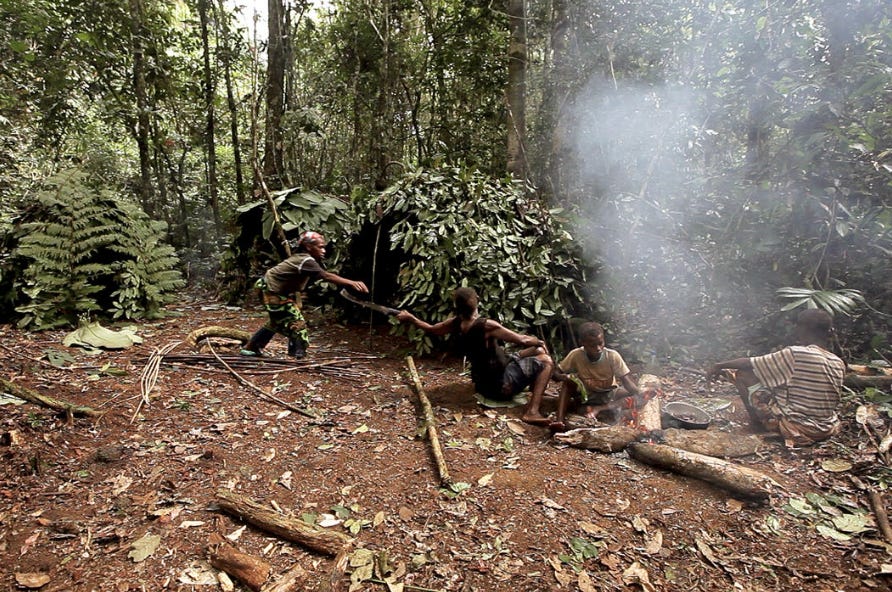
Cameroon’s remote eastern regions have been the ancestral home for the indigenous Baka and Bagyeli forest peoples for thousands of years. They traditionally inhabit the country’s southern and eastern tropical forests that form part of the Congo Basin rainforest. They are often deep within these forests, with the Baka concentrated in the eastern regions, and the Bagyeli living farther southwest near Campo Ma’an National Park.
In recent years, human rights and conservation groups have been monitoring a growing number of Baka and Bagyeli residing in temporary settlements and roadside villages. These are built along the forest edge and logging roads as a result of years of unsustainable overlogging and mining practices encroaching into the forest. The temporary settlements allow some Baka and Bagyeli to remain close to employment opportunities in the outside world, but this often comes with new challenges in adapting to a Cameroonian society that’s foreign to them.
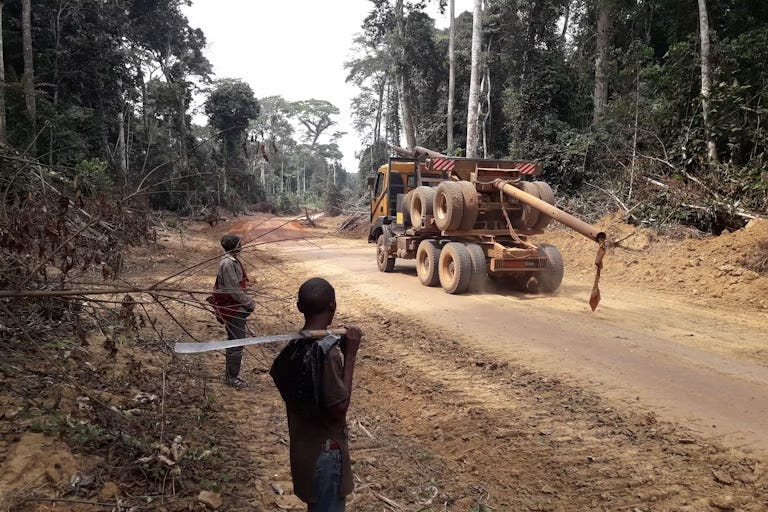
For the Baka and Bagyeli, the forest is more than a natural resource or home. It represents a food system, pharmacy, spiritual place, and their cultural identity. Anthropologist Simon Hoyte describes how Baka people understand themselves as part of the forest and organize their use of it around community sharing and responsibility to people, animals, and ancestors. One forest area near the Dja River is used for gathering medicines and hunting, but in recent years the area was turned into an industrial logging road to transport goods through the rainforest. Many of the trees were medicinal and food sources, but are now being destroyed by trucks owned by foreign and government-authorized logging companies.
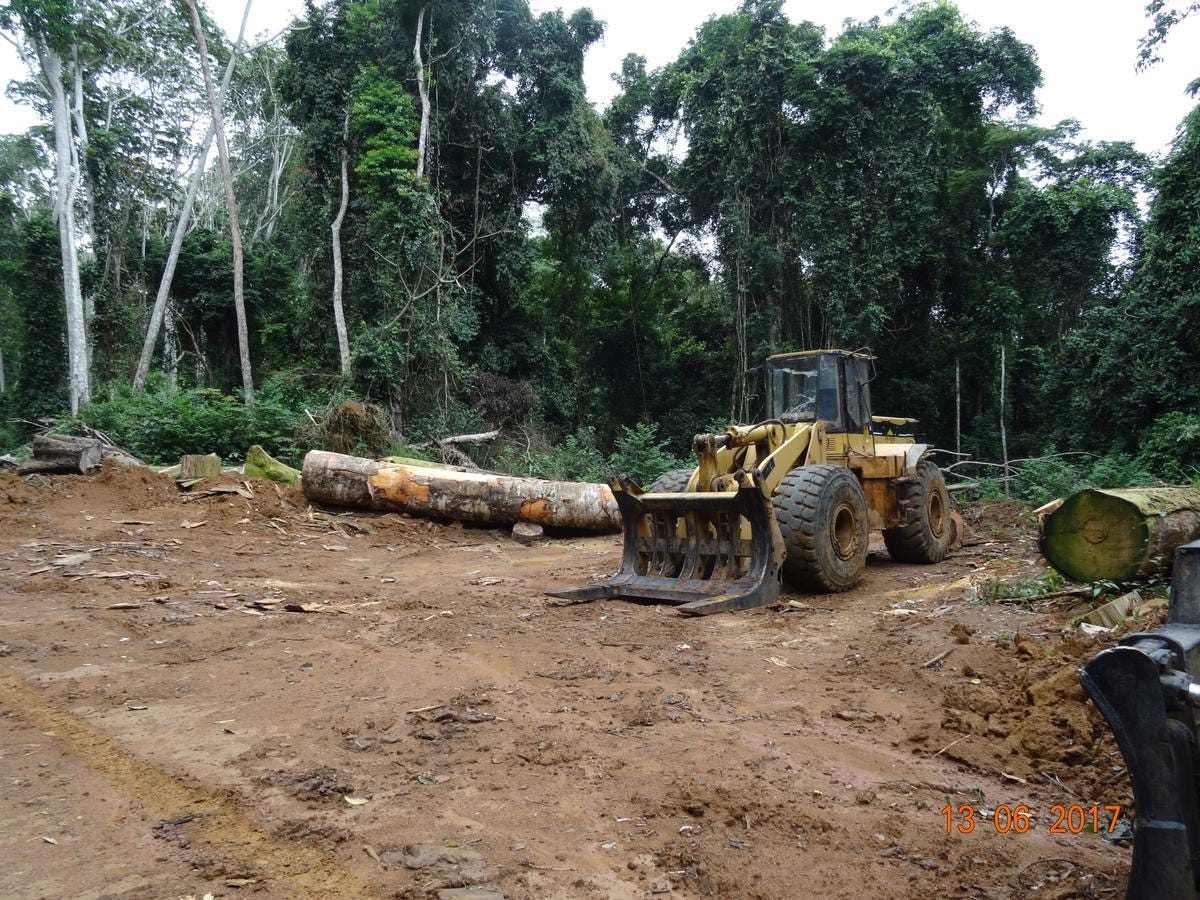
In the Lokoundjé-Nyong forest, the Baka described witnessing machinery cutting across fields, medicinal-plant areas, and the ancestral lands of the Bagyeli communities. Many were not consulted before the logging took place. In Bidjoumam, Baka families left the forest after logging operations forced them to move to the edge of a muddy road. Their former forested area supplied fruits, palm oil, fuel, and fishing materials. Losing access to this means there’s now an increased possibility of poor health, exploitation, and land insecurity for the Baka people.
To support their families, many Baka and Bagyeli people continue to rely on hunting and gathering in the periphery of logging roads, while also seeking wage work from companies operating near their communities. However, they often face challenges in gaining formal employment due to never having been issued birth certificates. Indigenous families living deep within the forest historically had little interaction with government institutions or Cameroonian society, and no incentive to register births.
Without birth certificates, young people of working age and adults are unable to obtain national identity cards, continue with formal education in workforce trades, secure formal employment, or access healthcare and other public services.
This lack of documentation can also make it difficult to prove Cameroonian citizenship. Some undocumented Baka and Bagyeli have faced harassment from government militias while traveling and being forced to pay bribes because they don’t carry identity cards. Some are refused employment because they cannot provide a birth certificate. Many communities remain far from administrative government centers and cannot afford the transportation to travel and obtain documentation. Even though many Baka and Bagyeli are Cameroonian by birth, their inability to document that status leaves them legally vulnerable and at risk of statelessness.
Some Baka and Bagyeli experience being forcibly displaced from their ancestral forest areas or prevented from accessing them due to government conservation policies. Protected-area rules can restrict hunting, fishing, gathering, and the collection of medicinal plants, even though these activities have sustained Indigenous communities for millennia. In some areas, Baka have reported harassment by wildlife guards when entering their forest home to obtain food.
Baka and Bagyeli missing their national documentation complicates these shared experiences of exploitation and exclusion. Many are Cameroonian under the law but cannot prove their nationality, leaving them vulnerable to discrimination. Territorial displacement and legal identity are especially complicated for Indigenous communities who often struggle with their ancestral forests extending across modern national borders. When communities are removed from their traditional territories without being fully incorporated into government systems and decision-making, they risk losing their cultural life and the documentation needed to live and function within society.
Deforestation creates land loss and statelessness for the original stewards of Cameroon’s vast rainforests. These ancient communities, with their extensive knowledge of forest ecosystems, will continue to be excluded from conservation programs intended to protect landscapes they have historically helped sustain.
Logging, mining, and restrictive conservation policies are actively separating the Baka and Bagyeli communities from the forests that provide their food, medicine, livelihoods, and cultural identity. Displacement then pushes these families toward roadside settlements where poverty, discrimination, and isolation continue to limit their access to schools, employment, and public services. Without birth certificates or national identity cards, people who are Cameroonian by birth struggle to prove that they belong. Protecting Cameroon’s forests must involve more than preserving ancient trees and forest cover, but also recognizing that land rights, generational knowledge, legal identity, and inclusion of the Indigenous peoples are critical for ensuring they continue to steward these landscapes.
Annagu, F. (2021, June 2). Cameroon: Large-scale logging forces Indigenous Baka out of the forests. Rainforest Journalism Fund. https://rainforestjournalismfund.org/stories/cameroon-large-scale-logging-forces-indigenous-baka-out-forests
Chimtom, N. K. (2024, September 22). Lack of birth certificates puts Cameroon’s Indigenous people on the brink of statelessness. AP News. https://apnews.com/article/cameroon-stateless-birth-certificate-indigenous-e66ac688d68f1c57cabcfd2c0ec788d8
Forest Peoples Programme. (n.d.). Cameroon. https://www.forestpeoples.org/partners-countries/countries/country/cameroon/
Greenpeace International. (2018, July 24). Halcyon Agri clearing nearly 10 football pitches a day near UNESCO site. https://www.greenpeace.org/international/press-release/17860/halcyon-agri-is-clearing-unesco-rubber/
Hoyte, S. (2025, March 19). Cameroon’s Baka people say they are part of the forest: That’s why they look after it. The Conversation. https://theconversation.com/cameroons-baka-people-say-they-are-part-of-the-forest-thats-why-they-look-after-it-250289
Kouagheu, J., & Ngeunga, M. (2023, June 13). In Cameroon, logging concessions dispossess villagers of their land. Le Monde. https://www.lemonde.fr/en/le-monde-africa/article/2023/06/13/in-cameroon-logging-concessions-dispossess-villagers-of-their-land_6031232_124.html
Minority Rights Group. (n.d.). Baka and related groups. World Directory of Minorities and Indigenous Peoples. https://minorityrights.org/communities/baka-and-related-groups/
Thanks for reading The AGS Globe! This post is public, so feel free to share it.
Did you enjoy reading this? Support the American Geographical Society today with a donation of $50 to help us support Geography education.

Members of the American Geographical Society enjoy reduced-price access to AGS events and free access to the online version of Geographical Review.


🌍 How will climate change reshape mobility across Africa? Join the American Geographical Society on Friday, July 24, at 11:00 AM EDT / 5:00 PM CAT for a Locus Charter Chat featuring the co-authors of African Shifts: The Future of African Climate Mobility. Discover how climate change is transforming migration patterns across the continent and what geography and geospatial science can do to help build more resilient futures. 🎙️ Featuring Mr. Lukmon Akintola, Ms. Chiamaka Rita Akpuogwu, Dr. Susan S. Ekoh, and Dr. Alex de Sherbinin. 🔗 Register here to attend!
Submit Lightning Talk and Exhibition Poster Proposals Today! Speak at our annual fall symposium, Geography 2050: Africa Shaping Tomorrow, taking place this November 19-20, 2026, at the Schomburg Center for Research in Black Culture in New York City! By 2100, over one-third of the world’s population will live in Africa, already the world’s youngest and fastest-growing continent, with profound implications for the interconnected human and environmental dimensions of the transformative demographic and technological boom across Africa. Submit proposals to speak at Geography2050 here!
Our Geography 2050 Trip Planning Page is Up! You can view information about this year’s venue and our partner hotels with Special Symposium Rates. Early birds can register for the lowest ticket price and book their stay at Aloft Harlem at this special rate TODAY by going to the Geo2050 Trip Planning page.
Comments
Nothing yet. Say the first thing.
Sign in to join the conversation.