
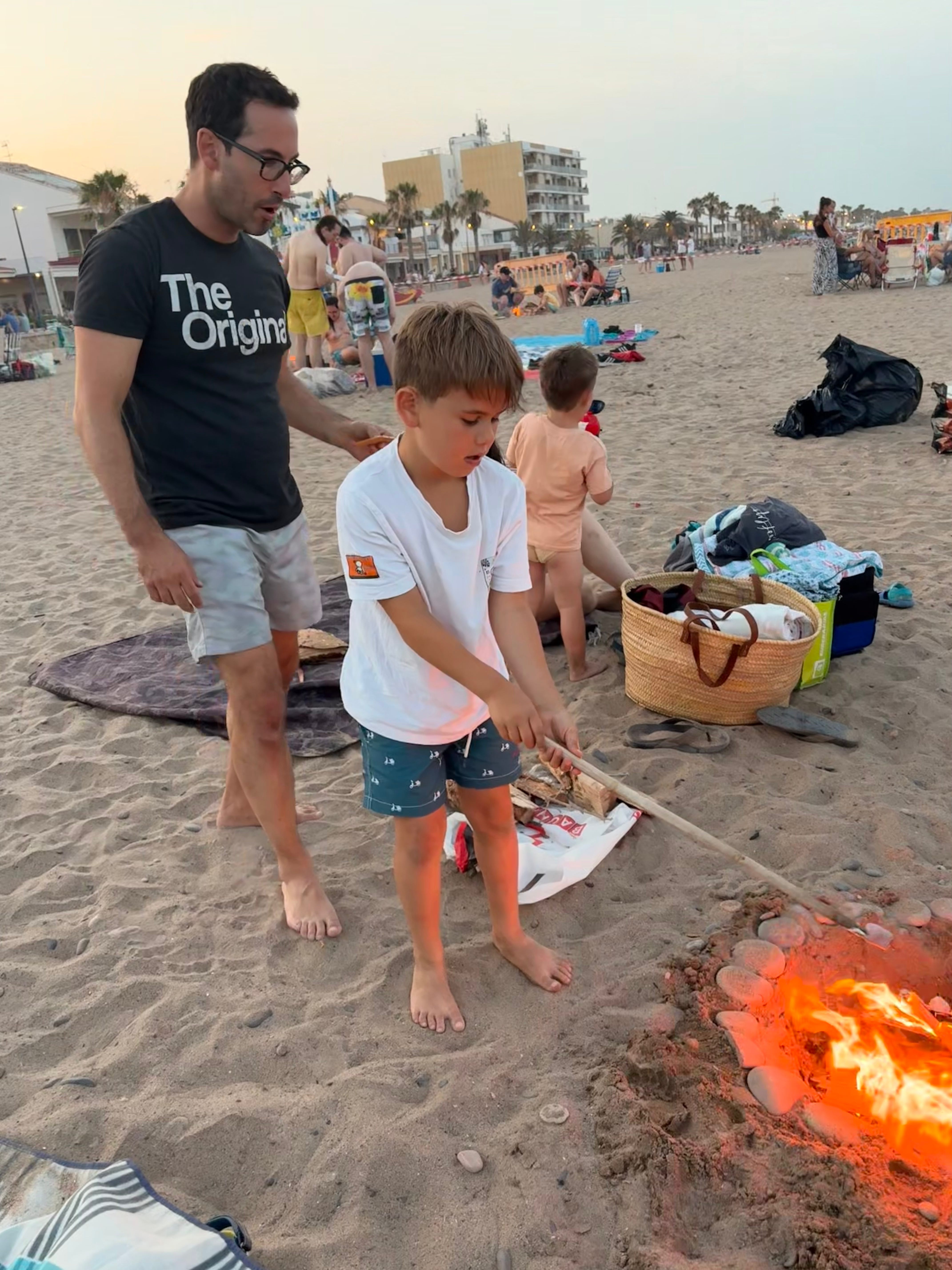
This piece was written together by Robert Glazer and Jeff Hittner. Both of us have spent years thinking about leadership in business and at home. In this article, we wanted to connect those worlds and share some of the lessons, gaps, and tools that can help dads (and all parents) raise resilient kids.
Imagine you’re a leader in an organization reviewing the results of a 360-degree feedback report. You pick up the report for Taylor, a manager in your department, and as you begin to read, the comments leap off the page:
“Taylor is a micromanager, constantly looking over my shoulder without giving me space.”
“Taylor tracks our whereabouts using tech and questions us when we aren’t where he expects.”
“Taylor never holds people accountable. When we make mistakes, he fixes them for us, rather than coaching us to learn on our own.”
“Taylor rarely lets me lead without ‘correcting’ me, making me feel incapable of handling responsibilities.”
These comments describe a leader who smothers people, undercuts autonomy, and has unwittingly built a culture with zero trust or autonomy. As you read this, you think to yourself, “This is a serious problem,” and immediately loop in HR to do some intensive management training.
Most people would recognize the comments in the report above as clear signs of poor management: a leadership approach that prevents employees from learning, growing, and building resilience. But I’d wager that, if you asked 100 children to write 360-degree feedback reports about their parents, the responses would sound eerily similar. Perhaps even your own child would write comments similar to the ones below:
“Mom/Dad always checks on me, even when doing homework. It feels like they don’t trust me to handle things myself.”
“They use apps and technology to monitor me constantly. If I’m not where they expect, they start questioning me, making me feel watched instead of trusted.”
“When I make a mistake, they jump in and fix it for me, rather than telling me how to fix it myself.”
“They involve themselves in all my relationships and conversations, even with friends, which feels like they don’t trust me to manage on my own.”
Just as Taylor’s micromanagement erodes his team’s trust and stifles their growth, overbearing parenting does similar damage to children. Instead of fostering independence, resilience, and confidence, many modern parents are breeding anxiety, dependence, and fear of failure.
The funny thing is that no parent would ever want someone like Taylor as their manager, but they unconsciously/unknowingly adopt similar tactics in their own most important leadership role: being a parent. Why do so many parents default to behaviors that would feel restrictive or counterproductive if they had to live and work under them? Why do they do things that they’d, in many cases, never do in their own leadership style at work? While in most cases these heavy-handed tactics come from a desire for love and protection, this approach undercuts the essential mission of preparing kids to be resilient once they’ve left the nest.
Helping Parents Help Kids
We’re quick to call out helicopter parents. But I don’t know a single dad who started parenting thinking, “I want to disempower my kid.”
The truth is, we’re often trying to over-function at home because we’re under-equipped internally. Many of us never had models for emotionally grounded fatherhood. We’re improvising. And because we’re fearful of being too hands-off, many dads gravitate toward being far too hands-on.
Through more than 200 interviews with fathers, Jeff Hittner, founder of Ambitious Dads, has seen these patterns show up again and again. The challenges aren’t random; they fall into six recurring “Dad Gaps” that quietly hold fathers back. Naming these gaps gives us a way to recognize where we’re struggling and start closing the distance between the dad we are and the dad we want to be. Left unaddressed, these gaps push dads toward two unhelpful default modes: control (micromanaging) or withdrawal (checking out). The 6 Dad Gaps are:
The Time Gap – We’re pulled in a thousand directions and never feel fully present in any of them. Krishan Patel, CEO, explained, “There is no balance, and I need to recognize I just can’t do it all. I’m built with this desire to get my work done but then my 3-year-old is screaming for her dolls, and I need to do that.”
The Role Model Gap – Most of us didn’t grow up with a clear example of modern fatherhood, so we’re improvising. Prat Panda, Accenture Partner, describes it like this: “I didn’t have a [male] role model that had taken the amount of time off from work that I wanted to after my child was born, and it made it a scarier decision than it should have been.”
The Confidence Gap – We want to be steady and patient, but we’re often reactive, doubting if we’re doing it right. Prakash Raman, Executive Coach, described it like this, “I want to always be patient and emotionally available when my children really need it, but I can react too much.”
The Brotherhood Gap – Moms have communities; dads usually go it alone. Isolation makes everything harder. Joseph McCarthy, former Commander, USMC, said it best, “It’s very difficult to make new friends as a dad, especially with young kids, so I don’t have many places to vent about work or parenting challenges. It just stews around in my head.”
The Co-Parenting and Partnership Gap – Misalignment with our partner or co-parent around parenting and work spills over into everything else. As one Ambitious Dad and venture capitalist vulnerably described it, “I wish we didn’t shame each other for working late. When we don’t communicate about our workload, it creates frustration… like, ‘I’m carrying all the burden at home.’ But it goes both ways. If I don’t give 110% at work, I feel like I’m letting my colleagues down.”
The Legacy Gap – We’re so busy surviving the day-to-day that we forget to plan for the long-term values and vision we want to leave our kids. William Peak, Executive Director, implored, “What can I do to be sure I’m setting my children up for success?”
Naming these gaps isn’t about pointing out where we’re failing. It’s about finally seeing the map. But awareness isn’t the same as change. The real question is what we do next.
In our experience, the simplest way to close most of these gaps is to replace improvisation with a shared operating system: values.
One of the most powerful ways parents can close those gaps is through values work, guiding their kids toward good behavior without excessive rules or oversight. Just as effective leaders do, effective parents create, articulate, and reinforce values for their children to live by.
In his work with Ambitious Dads, Jeff uses a tool called the “Fatherhood Philosophy” to help fathers do exactly that: build a practical, values-based roadmap for how they want to show up. It’s not a mission statement or a set of house rules, but a living compass. And when dads parent from that compass, they shift from reactivity to intentionality, leading their families with the same clarity and purpose they bring to their careers.
This is the same intentionality we bring to work every day: strategic plans, leadership principles, cultural values. We just rarely give our families the same gift.
For example, you might set a family core value of “Be Healthy.” Then, when your kid wants to have a third, fourth, or fifth cookie after dinner, you can remind them of that value, rather than setting an arbitrary rule of “no more cookies because I said so.” Because the kids were involved in formulating that family value, they understand why it’s important not to overindulge, rather than being handed an arbitrary rule they’ll want to rebel against.
Brand Strategist Chase Friedman explained to Jeff, “When I was able to tell my son why I wasn’t going to let him jump off the couch, tying it to our values and my role as a dad, he surprised me and acquiesced.”
Progress, Not Perfection
Even the most thoughtful, enlightened parents won’t get this right all the time. There will be cases where we over-function, refuse to let our kids fail and learn, or keep too close a watch on them when they should be learning independence.
The point is not to be the perfect parent—and in fact, that push for perfection is what leads parents to do the type of parental micromanagement discussed earlier. Instead, we need present, values-driven, self-aware parents who model what it means to live with intention, clarity, and resilience, rather than fear.
As Ramphis Castro, an investor and dad, told Jeff: “My kids don’t need me to be perfect. They need to see me recover, own my mistakes, and keep going. That’s what resilience looks like.”
And maybe this is the truest mark of leadership at home: not that we raise flawless kids, but that we show them what resilience looks like in practice. When we stumble, own it, and return to our values, we’re not just teaching lessons, we’re living them. That’s how dads grow. And that’s how kids do too.
The next time we feel ourselves over-functioning, we can pause and ask: “Are we protecting our child… or protecting ourselves from discomfort?” Then return to a value and lead from there. Because at the end of the day, fatherhood really is the highest-stakes leadership role we’ll ever hold.
No posts
Comments
Nothing yet. Say the first thing.
Sign in to join the conversation.