
It is a little before midnight at Changi Airport, and my children have quietly vanished. I know roughly where they have gone, because they go every time: to the duty-free cosmetics hall, to work the testers and free samples with the focus of trained operatives, a ritual they love nearly as much as the holiday itself. What I suspect, and cannot prove, is that tonight the raid has a second objective. Shona, wrung out after a brutal few weeks, is nursing a coffee she has no intention of finishing. We are about to board a budget carrier to Athens, no lie-flat seats, no champagne, no fuss, and somewhere over the Indian Ocean the clock will turn, and it will be Father’s Day. My daughters, I think, have gone to arrange a small ambush for the moment it does. They have inherited a great many things from their grandfather. The one at work tonight is the best of them: not mischief, exactly, but his particular delight in making another person feel like the most important one in the room.
On my lap is a small book I was handed yesterday, at lunch, by a generous tech entrepreneur I was meeting for the first time. His father was an English professor in Kerala, which may be why he gives out books the way other people give out business cards. The book is Ethan Hawke’s “Rules for a Knight”: a letter, written by a fifteenth-century knight to his four children on the eve of a battle he does not expect to survive, setting down everything he wants them to know before he rides off and cannot tell them himself. He promised me it was brilliant. I have no evidence for this beyond his word, which I have decided to trust, in part because my father spent seventy-nine years teaching me that the most reliable thing about most people is that they mean well.
I have not opened it. I am saving it for the dark hours after the surprise, when Shona is asleep, and the cabin is quiet, and there is nothing to do but read and think about the man this day belongs to.
My father was not a knight. He was, by every measure the world bothers to keep, an ordinary man.
He was also a cricketer who could clear the ropes when he chose to, and who decided, for the better part of fifty years, to keep his head down and play singles instead. It has taken me six months to understand that this was not a smaller way to bat. It was a larger way to live.
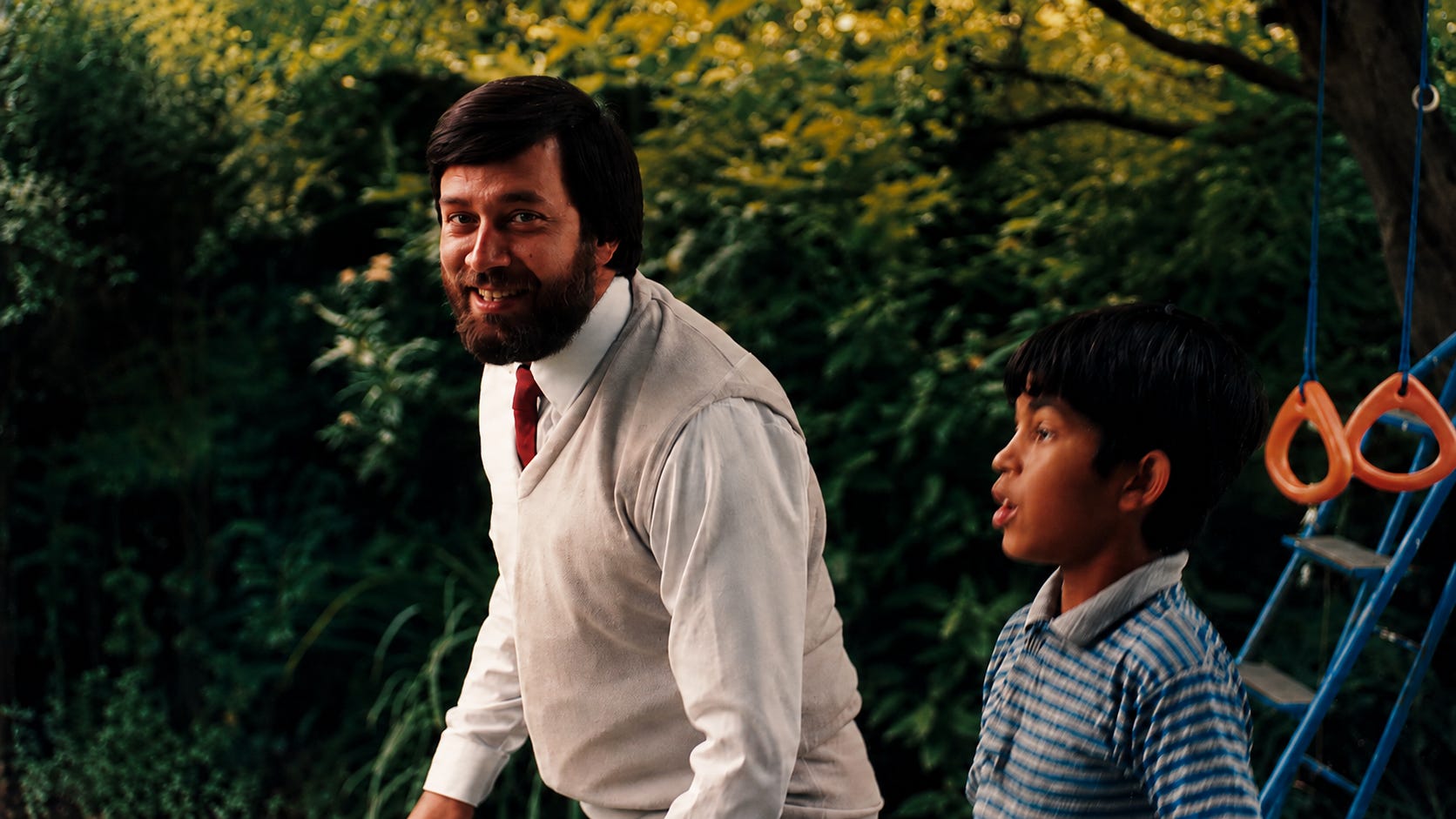
Six months ago, on the morning my father died, I could not sleep, and so I wrote. The result was The Unconquerable Innings, a tribute composed in the small hours and posted before the day was out, while the house was still filling with people who had come to sit with us. It was an obituary written in the only language my father and I ever fully shared, which was cricket.
That same sleepless night, I did one other thing. Two months earlier, on the eve of his birthday, I had recorded a long conversation with him, the last of his life and, though I did not know it then, only ever the first part of one. I edited it that night, and then I put it away. I have waited until now to share it, because the person it belongs to most is not me but my mother, his greatest innings and his only true partnership, and I needed her to be ready. A few weeks ago I asked her. She said yes.
This Sunday, on what is both my first Father’s Day without him and, by a stroke of timing that would have made him chuckle and shake his head, the day after the six-month anniversary of his death, I am releasing that conversation. And I am writing this, which is the other half of it: his words, and my reflection on what they were really about.
A knight, in Hawke’s telling and in every telling, is a man defined by the grand gesture. He rides out alone. He faces the dragon, the rival, the impossible odds, and he does it partly so that the story will be told afterwards. Chivalry is, underneath the armour, a theory of how to be remembered. Even the humility of the knight is a performance of humility, staged for an audience that will write it down.
The first of Hawke’s rules, the one the dying knight gives his children before any other, is this: never announce that you are a knight, simply behave as one.
My father followed that instruction more faithfully than any knight, by the simple method of never announcing he was anything at all.
This is not false modesty on his behalf. It is a literal description. He was, by the accounts of everyone who watched him as a young man, a naturally gifted sportsman, the kind who could, when the mood took him, hit a cricket ball clean out of the ground. His younger brother still talks about watching him, as a schoolboy, make a hundred and forty-seven not out in a single innings, and deciding on the spot that here was a man to measure himself against. Somewhere in his twenties he made a decision I do not think he ever spoke aloud, even to himself. He decided to keep his head down. He stopped swinging for the boundary. He played, from then on, for ones and twos, for the gap rather than the rope, and he did it not because he had lost the power to clear the field but because he had worked out that clearing the field was not the point.
Thanks for reading A Man Who Blogs! This post is public, so feel free to share it.
He captained things. Two rubber factories, then his own company, then whatever team or committee was unlucky enough to need a steady hand. And when the thing he captained won, he never took the lap of honour. He would hand the trophy to whoever was standing nearest, find a reason to be looking the other way when the photograph was taken, and treat the whole business as though he had merely been there to hold other people’s coats while they did the scoring. He could not see the appeal of the individual milestone. The eightieth birthday party we had been planning in Goa meant nothing to him; he would have skipped it without a second thought for a good Test match on television.
A boundary is a shot you play for the people watching. A single is a shot you play for the people you are batting with. My father, very early, and very quietly, decided which audience he was for.
There is a shot in cricket that appears in no coaching manual, because it cannot really be taught. It is the stolen single: the quick, alert run taken off a ball that was never meant to be a scoring ball. A thick edge that dies behind square. A misfield the bowler assumes he has covered. A delivery that beats everyone, the batsman included, and rolls away as a bye, runs no bat has touched. Cricket has a name for this entire category of run. It calls them extras. Byes, leg-byes, wides, overthrows: runs that go on the team’s total without any one player being credited with the stroke.
Most batsmen ignore them. The extra is unglamorous. It does nothing for your average. The scorecard files it in a column with no name attached. The batsmen who take extras are a particular breed, and they are not, as a rule, the most gifted. They are the most awake. They are watching the gap behind the keeper while everyone else is watching the ball. They back themselves to complete the run before the fielder has finished being surprised. And they do it with nothing in it for them personally, no four beside their name, because a run is a run, and the team’s total is the only number that has ever held their attention.
My father was the finest taker of the sneaky single I have ever known.
I mean that in the plainest sense on the field, where he ran cheerful singles into his sixties. But I have only understood the larger version of it since he has been gone. He was an ordinary man who was permanently, contentedly alert to the extra run, the extra kindness, the extra laugh available in a situation that did not, on paper, offer one. He took the extras other people walked straight past. That, in the end, is the whole of it. The extra is what turns the ordinary man into the extra-ordinary one, and my father took every single one that was going.
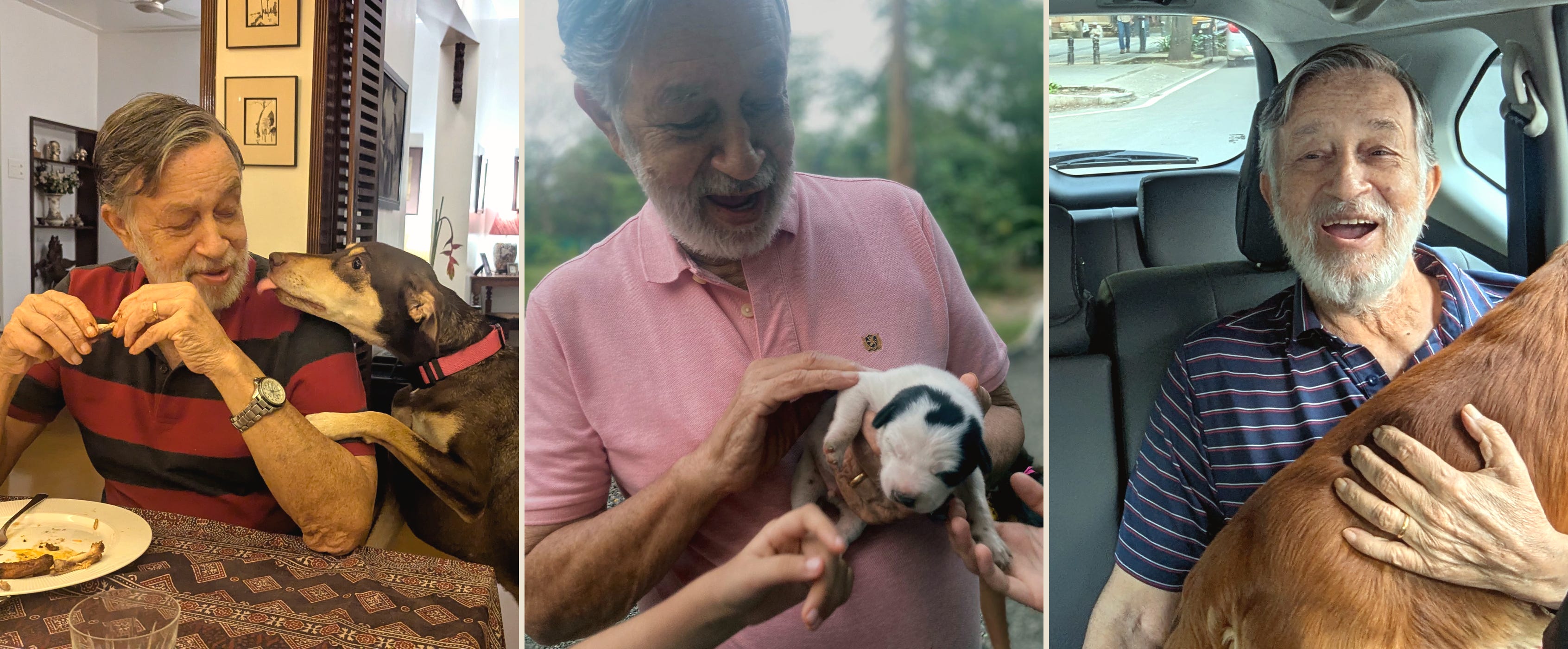
Stealing a single requires a specific kind of confidence, and it is not the boundary-hitter’s kind. The man who clears the ropes is backing his strength. The man who steals the run is backing his judgement, and underneath that, backing himself. You cannot take the cheeky single if you are worried about how you will look caught halfway down the pitch, scrambling to get back. My father was entirely free of that worry. He knew precisely who he was, was comfortable in his own skin in a way I am still working towards at almost fifty, and this is what let him do the two things that defined him at once: stand up, without fail, for what was right, and refuse, without fail, to be boring about it.
He never made being good look like hard work. He defused every tense situation, a strike on the factory floor, a hospital ward, a piece of bad professional news, with a joke, almost always at his own expense. He walked into the casual racism of nineteen-sixties Britain the way he walked into everything, lightly. In a London pub after a match, a group of new acquaintances decided his name was inconvenient and informed him they would be calling him Pete. Fine, he told them, as long as I can call you Mary. He reported, half a century later, that he never had any trouble after that. It was a small masterpiece of the form: he had turned an attempt to make him smaller into an introduction, and left the men who tried it laughing on his side.
Humour, for him, was a form of self-government. It was how he kept his own pulse steady, and how he gave everyone around him permission to lower their shoulders.
When I was struggling with work a few months before he died, he gave me the only advice that has ever stayed. He did not reach for strategy or for corporate language. He spoke, as he always did, in the language of the crease. “Don’t swing for the boundary,” he said. “Focus on the ones and twos. Stop listening to the slip cordon. Play yourself in, and remind yourself, if required, you can take the game deep like Dhoni.”
It has taken me until now to hear what he was actually saying. He was not telling me how to bat. He was handing me the code.
He stole singles for fifty years, and he gave every one of them away.
Here is the part nobody tells you about a life played in singles. The total is invisible until the very end.
Boundaries are remembered as they land. The crowd is already on its feet; the commentator has his phrase ready. Singles disappear the instant they are run. Nobody replays a leg-bye. And so a man who scores almost entirely in ones, twos and stolen extras builds, across fifty years, an enormous total that nearly no one is keeping track of, himself least of all. The score only reads out at stumps.
My mother has spent the last six months reading it.
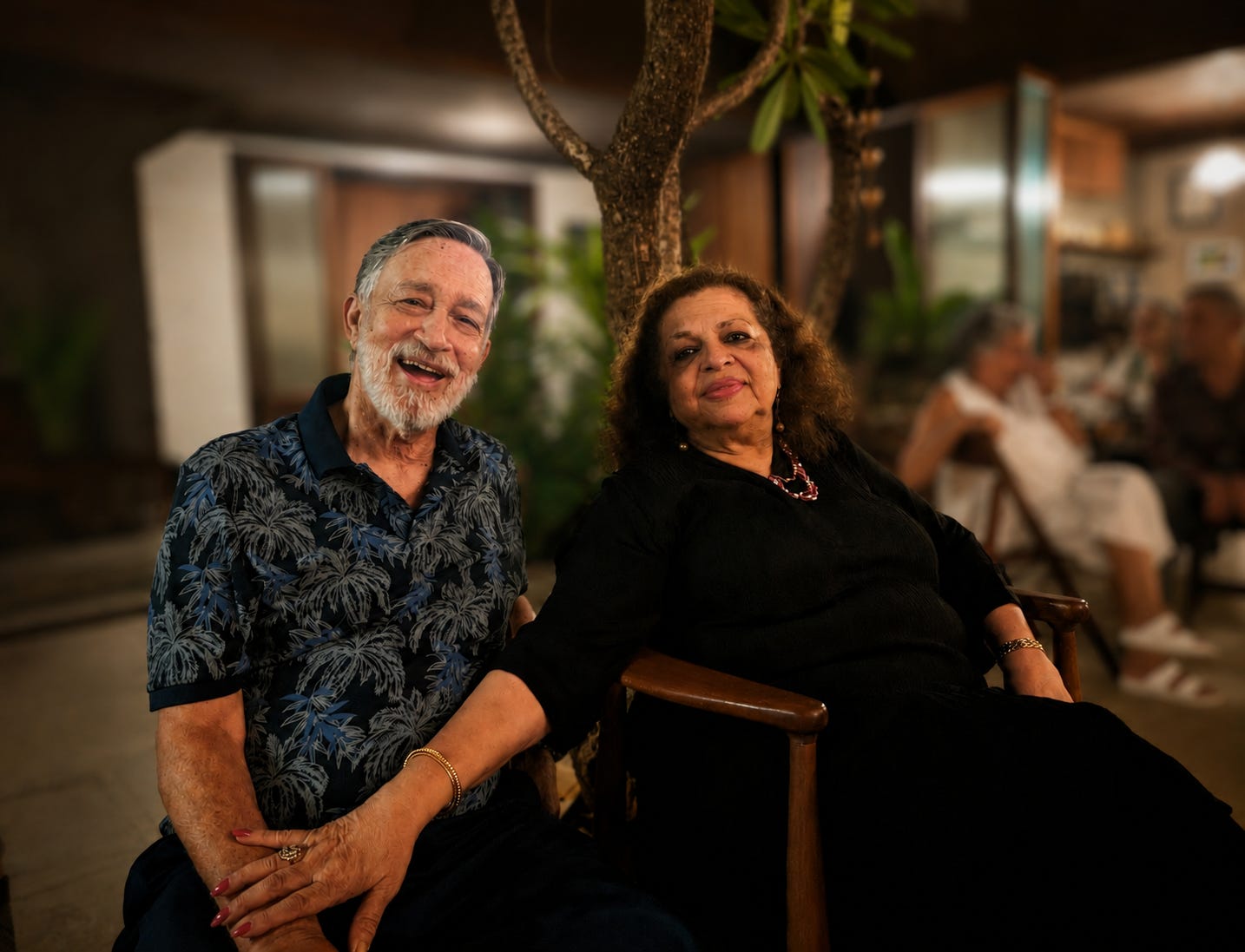
People keep finding her. People she had never heard of, who knew my father in ways she had no idea existed. The man at the licensing office he saw once every five years to renew his car papers, who came in person to pay his respects. The corner-shop acquaintances I wrote about earlier this year, a quiet, scattered network he had assembled one unhurried conversation at a time. Former colleagues. A startling number of people, now spread across companies and continents, who turn out to have been quietly mentored by him at some point, and who arrive at our door using almost the identical sentence: he was the one who told me I could.
These were his extras. Not as a figure of speech. Exactly. Each of them was a run he took off a delivery that was not, on the face of it, a scoring ball: a five-yearly errand, a purchase of milk, a junior colleague nobody else had the patience for. My father saw the run that was available, a kindness, a word of belief, a genuine question asked of a stranger and then actually listened to, and he took it, and, as ever, he handed it to someone else.
His generosity was not, in the main, financial, though it was that too. It was emotional and professional, which is the rarer and harder kind, because you cannot do it with a chequebook and you cannot do it at scale. It has to be done one person at a time, fully present, with nothing in it for you.
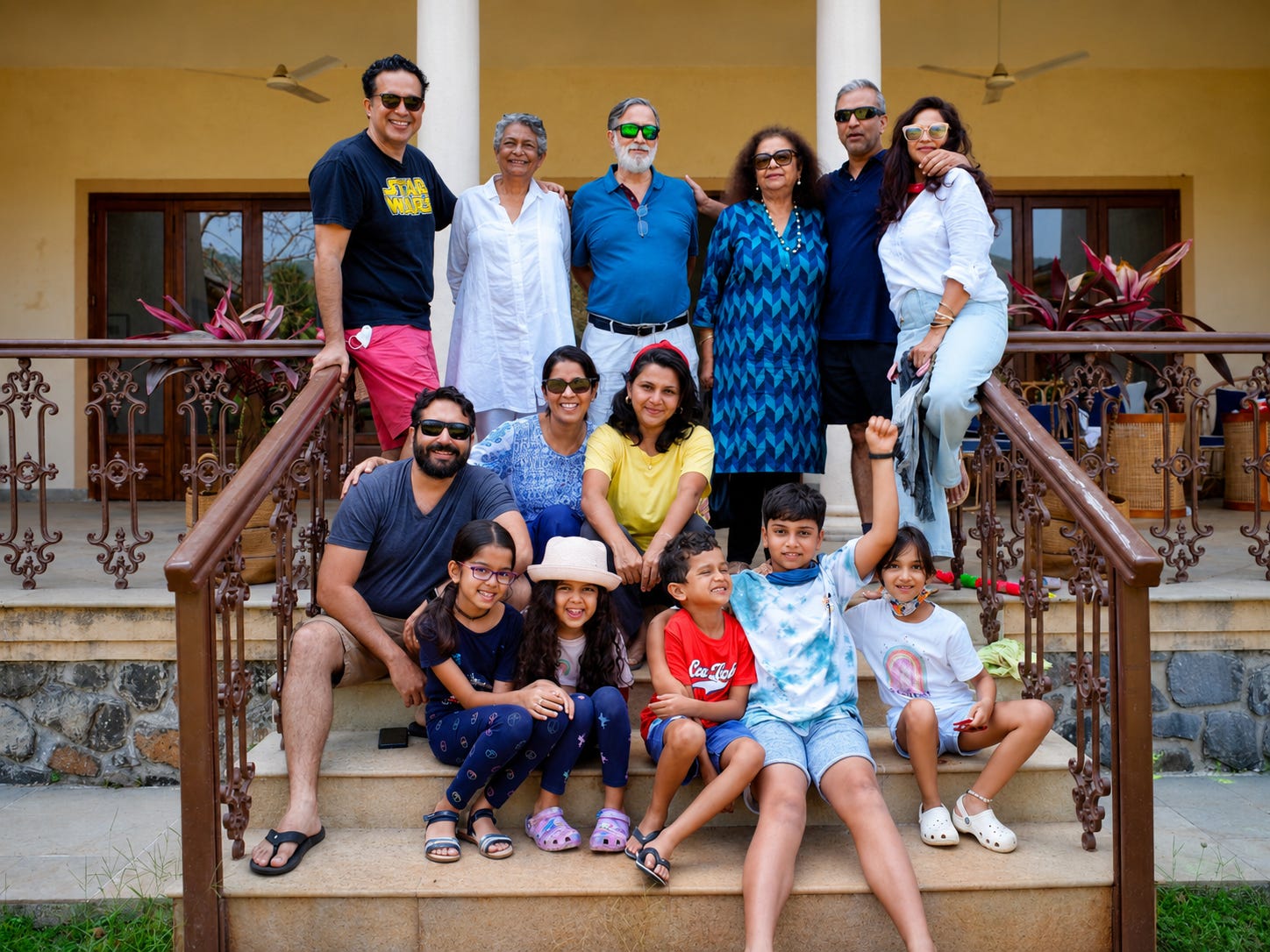
My mother, in other words, is still being handed trophies he won and never thought to mention.
A life of boundaries is totalled the day it ends. A life of singles is still being added up, by other people, for years.
Two months before he died, in October, we were home for Diwali and for his birthday, which fell within a few days of each other, so there were two things to celebrate under one roof. We were marking his last year as a man in his seventies and mine as a man in my forties, both of us standing within touching distance of a birthday with a zero on the end. We did not know it was the last good week. You never do. It looked exactly like every other good week, which is the cruelty of it and the mercy of it at once.
On the eve of his birthday, the last evening of the trip, I set up a camera. Not the phone-video-at-a-party kind of recording, but a real conversation, the sort you can sit with. There was a plate of papad between us and an open bottle of Ardbeg, one of many in a single malt collection he treated as close to sacred. The girls came and went as we talked, mostly to commandeer the bar and build themselves Shirley Temples, which was one of their favourite rituals at their Dadoo’s. I told him, as the camera started, that we were not doing this for him and me. We were doing it for Nyla and Naina. Then we talked: about Doon, and the friends he made there at eleven and kept for the rest of his life; about the long jump that won him a college place his grades could not; about London, and the factories, and the strikes; about what he thought he had learned, which he was characteristically reluctant to let me dress up as wisdom.
We broke for dinner that night, meaning to carry on, the next visit; there would, we both assumed, be a next visit. There was not. Two months later, the conversation was over.
Not finished. Over. There is a difference, and anyone who has lost someone mid-sentence knows it precisely. What I am left with is the first part of a conversation that was always meant to have a second, and that is exactly what I have called it: his first innings. It is the only honest title for the thing. My father had spent the better part of a decade facing the most difficult bowling of his life, the health that kept testing him, ball after ball pitched in the corridor of uncertainty that would have removed a lesser man years before, and he had seen almost all of it off. The delivery that finally got him was not, we had all been quietly certain, the one that would. We thought he had it covered. We were wrong. The interview, like the innings, was stopped mid-over, with shots still to play.
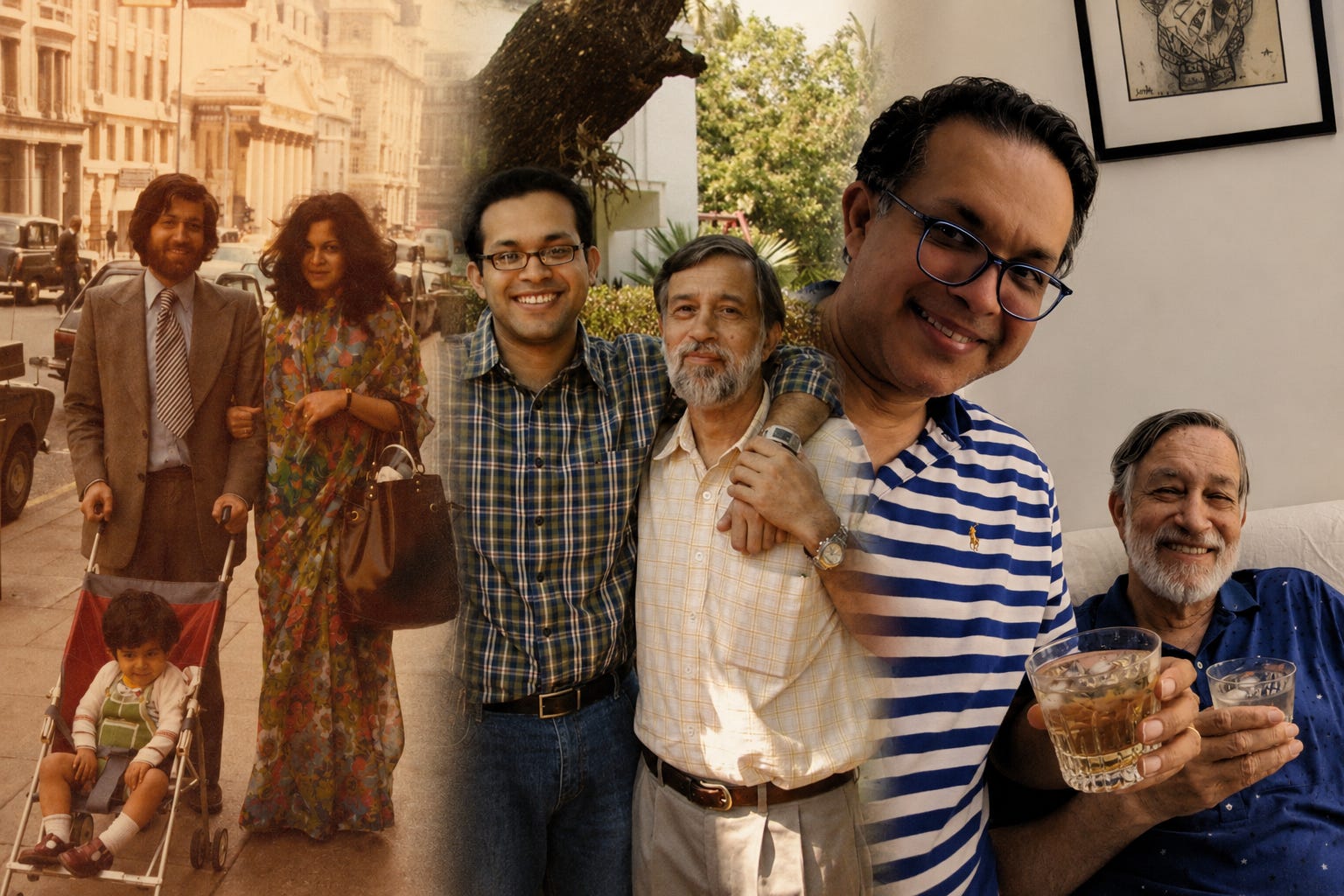
I always knew I would share this. The only question was when. What I wanted was for enough water to pass under the bridge, for my mother above all, so that the conversation would arrive as a gift and not as an open wound. Today is the day it finally feels right, in both senses of the phrase: the right occasion, Father’s Day, six months on, and the right amount of distance travelled. Because the conversation is not only ours. For the people who knew him, it is a chance to hear that voice again, the dry delivery, the refusal to take himself seriously, fully intact. And for those who never met him, there may be something useful in the words of an ordinary man who had worked out, rather better than most knights, how to live.
You cannot finish an innings that has been ended for you. You can only refuse to throw the scorebook away.
We are on the plane now, in the back third where the cheap seats live. I am in 30D. The girls are folded beside me, all elbows and stagey innocence, which is precisely how I know the ambush is still on. Shona is in the row directly behind, finally still after a punishing few weeks, and the kindest thing I can do for her tonight is let her sleep. In a few, minutes it will be midnight, and it will be Father’s Day, and the girls will produce whatever they have been arranging, and I will pretend to be surprised, and I will not be pretending about anything else.
The little book is still on my lap, still unopened. I find I am in no hurry, because I think I already know what is in it. A knight’s rules will be about courage, and honour, and the grand gesture made in the great moment. They will be about the boundary.
My father never read a book on how to be a knight, and would have found the very idea faintly ridiculous. He spent his life on the other code, the unwritten one, the one you cannot put in a manual because it cannot be taught, only shown. Watch the ball. Play it late. Take the single that is going. Steal the extra when the field has gone to sleep. Stand up straight, never make it look like effort, and, for heaven’s sake, do not take yourself seriously. Hand the trophy to someone else. Play for the people you are batting with, and let the crowd watch whoever they please.
He could have hit sixes. He played singles, and he scored, in the end, a total my mother is still counting, in a column the world does not bother to keep.
Next month I turn fifty, which means I am about to begin my own second innings. And the thought that has been creeping up on me at this gate, on this absurd flight, with this unread book on my knee, is that I spent a good deal of the first one playing the wrong shot.
Like most young men, I went looking for the boundary. I wanted the swashbuckling innings, the kind that fourteen-year-old Vaibhav Suryavanshi played in Jaipur earlier this year at the IPL. That is the innings the world photographs. That is the one it calls exceptional, and I chased a version of it for twenty-five years, in boardrooms and on stages, on the entirely reasonable assumption that exceptional was the highest thing a person could be.
My father knew about a different innings, and a better word. There is a way to bat that the cameras ignore: the hard-won single, the safe four taken only because it was genuinely on, the extra stolen through nothing grander than graft and attention and the refusal to switch off. Played for fifty years, that innings does not make you exceptional. It makes you something the world is worse at spotting and far worse at producing. It makes you extra-ordinary. The only trouble is that exceptional has always had the better brand manager.
So this is what I have settled on, somewhere over the runway, with my father six months gone and my second innings about to begin. I do not want to be a knight. I never did. I want to chase the extra the way he did: relentlessly, quietly, for the people I am batting with rather than the ones in the stands. I want to be an ordinary man who is awake to the extra, who finds the laugh in the mishap, who is happiest, as my father was and as I am at this exact moment, surrounded by the people he loves, waiting for a surprise he can see coming a mile off.
Below us, somewhere in the dark, is the Indian Ocean. Six months ago, in an India jersey, I gave his ashes back to the water.
The clock is about to turn. My children are about to spring their surprise, which is to say, take their sneaky single. And I am going to do precisely what my father always did with a sneaky single. I am going to let them have it and act as though I never saw it coming.
Happy Father’s Day, Dad. The scorebook is safe. We are still counting.
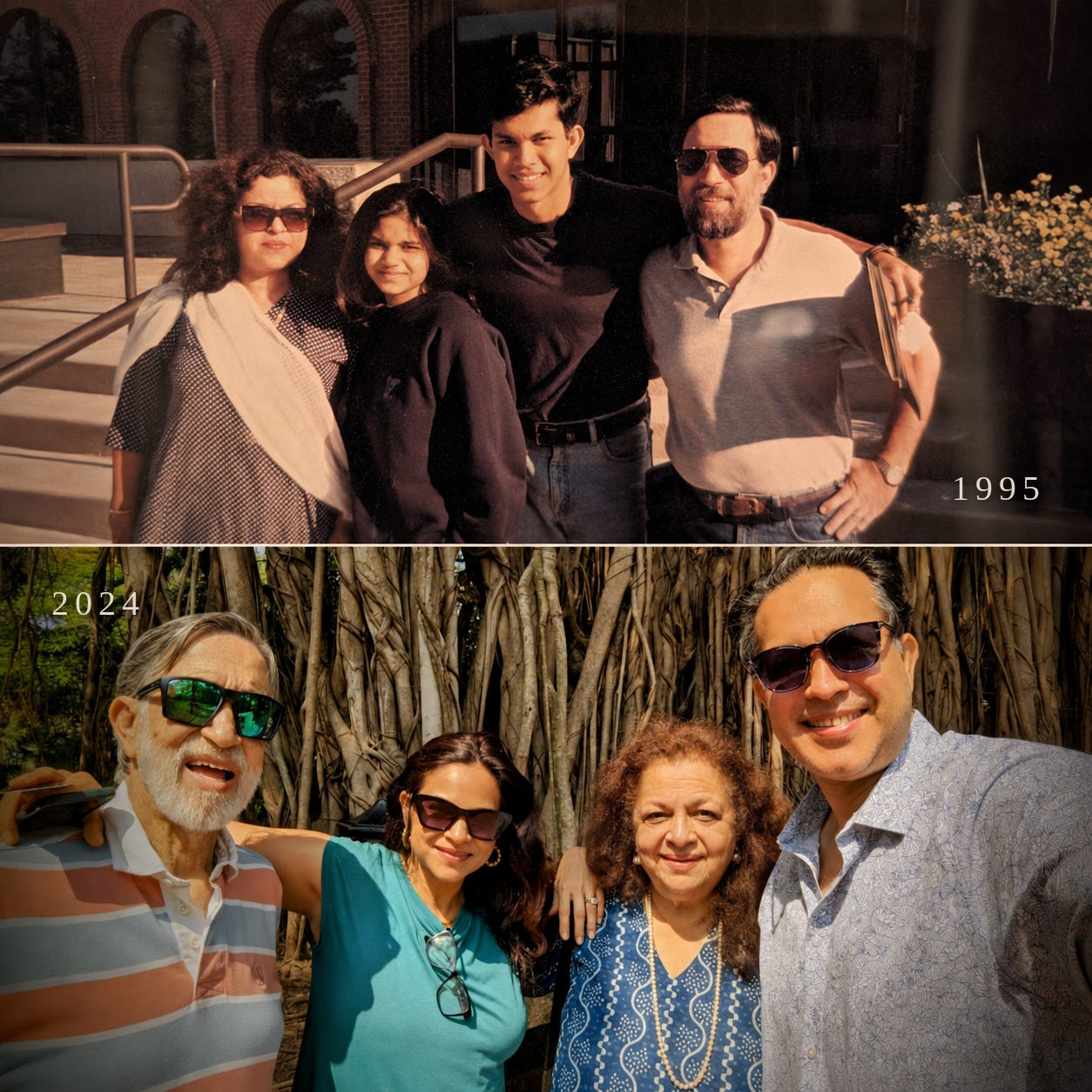
Go deeper. The gentlest way in is the short films: small moments from that evening, each its own self-contained story. If you watch only one, make it the one about the pub. It is my favourite thing he says in the whole conversation, and it tells you almost everything about how he carried himself
The one about the pub: the night a few Londoners decided his name should be Pete, and the deal he offered them in return.
The one about falling in love: a girl he was certain about long before he was certain of her name.
The one about being broke and happy: an attic flat you could not swing a cat in, shelves built from bricks and planks, and the happiest years of his life.
The one about becoming a father: five years married, a gentle ultimatum from my mother, and a role he grew into and loved.
The one about leaving London: why he came home when everyone else was trying to get out, and the small snub that sealed it.
These, and the rest of the films, sit on the Remembering Ajit channel. When you have twenty minutes, the complete conversation is there too, unhurried and dry and entirely him, alongside the eulogies the family read for him. All of it lives in one place: https://youtube.com/@RememberingAjit.
Aman Narain was born in the UK, raised in India, studied in the United States and France, and lives in Singapore, an arrangement his father considered entirely reasonable. He writes A Man Who Blogs, co-hosts the A2Z Fintech podcast, and runs A2Z Advisors. He turns fifty next month, still cannot play a convincing cover drive, and is, like his father before him, always on the lookout for a sneaky single.
No posts
Comments
Nothing yet. Say the first thing.
Sign in to join the conversation.