
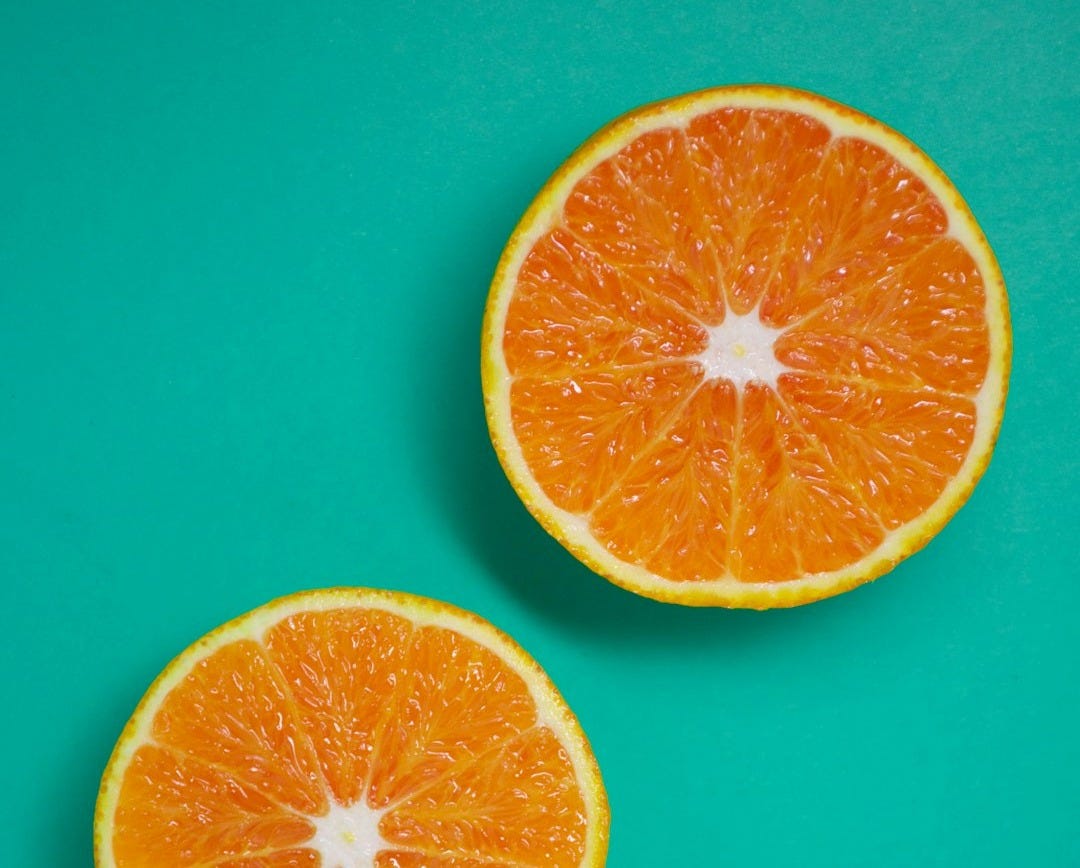
"You can't eat the orange and throw the peel away - a man is not a piece of fruit!
-Arthur Miller (Death of a Salesman)
If you’re dealing with cancer and are looking for an integrative oncology practitioner, I am now taking on new patients. For more information contact: admin@amandakingnd.com
You’ve seen Hesperidin in some cancer protocols but has anyone told you what it actually is?
Hesperidin is a flavonoid - one of a group of other supplements you are more likely to have heard of that are all flavonoids too - to name a few - Quercetin, EGCG, Resveratrol and Apigenin. All flavonoids come from plants and they are actually the plants defences. You’ve heard the carnivore diet tribe saying that plants have poisons in, and that’s the rationale for not eating them. Well, the carnivores are right - the plants do have poisons in them. They want to become bigger plants and make baby plants and being eaten by you will stop that from happening, so… they developed little deterrents like flavonoids to stop insects and pests from eating them.
But our healthy cells like a little stress… in fact they thrive on a little stress, and I mean a little amount. Healthy stress is measured, acute (not chronic - ongoing) and is at a level that your cells can overcome and develop strength. That’s optimal actually and it’s called the Zone of Hormesis, or a Hormetic effect.
In this article I share with you:
What MAPK/ERK, Notch and PI3K/Akt/mTOR actually ARE and DO!
How Hesperidin fights cancer
How to use Hesperidin
Why people with Colorectal Cancer, Breast Cancer, NSCLC (Lung Cancer), Liver Cancer and Ovarian Cancer might want to sit up and pay attention
References are embedded in the text.
The Metabolic Nutritionist is a reader-supported publication. To receive new posts and support my work, consider becoming a free or paid subscriber.
Comments
Nothing yet. Say the first thing.
Sign in to join the conversation.