
Today I want to bring the Ketogenic Diet to the spotlight - there has been some noise in the integrative oncology space lately that has caused some of my patients to ask me if the Keto Diet is genuinely safe for them and whether cancer can use ketones as fuel.
Understanding Ketosis and the impact on Cancer starts with the understanding that Cancer is a Metabolic Disease - not just a Genetic Disease. You can have all the cancer genes in the world, but if you get the diet, lifestyle and situation right, you won’t express cancer. It happens all the time. I have a case in point! One of my patients has had several primary cancers one after the other in her life over four decades but when her genes were tested, she didn’t show one single mutation, not one. So while genes may confer a ‘tendency’ - they are not necessarily deterministic. An important distinction!
If cancer were a genetic disease, this situation would be impossible. But it happened and what’s more… it’s not that uncommon either… i’ve seen it a few times.
I remember a while back someone wrote on my social media page ‘so you are telling me that I am responsible for my own illness? That this cancer is my own fault?’ The ‘blame game’ misses the point though…
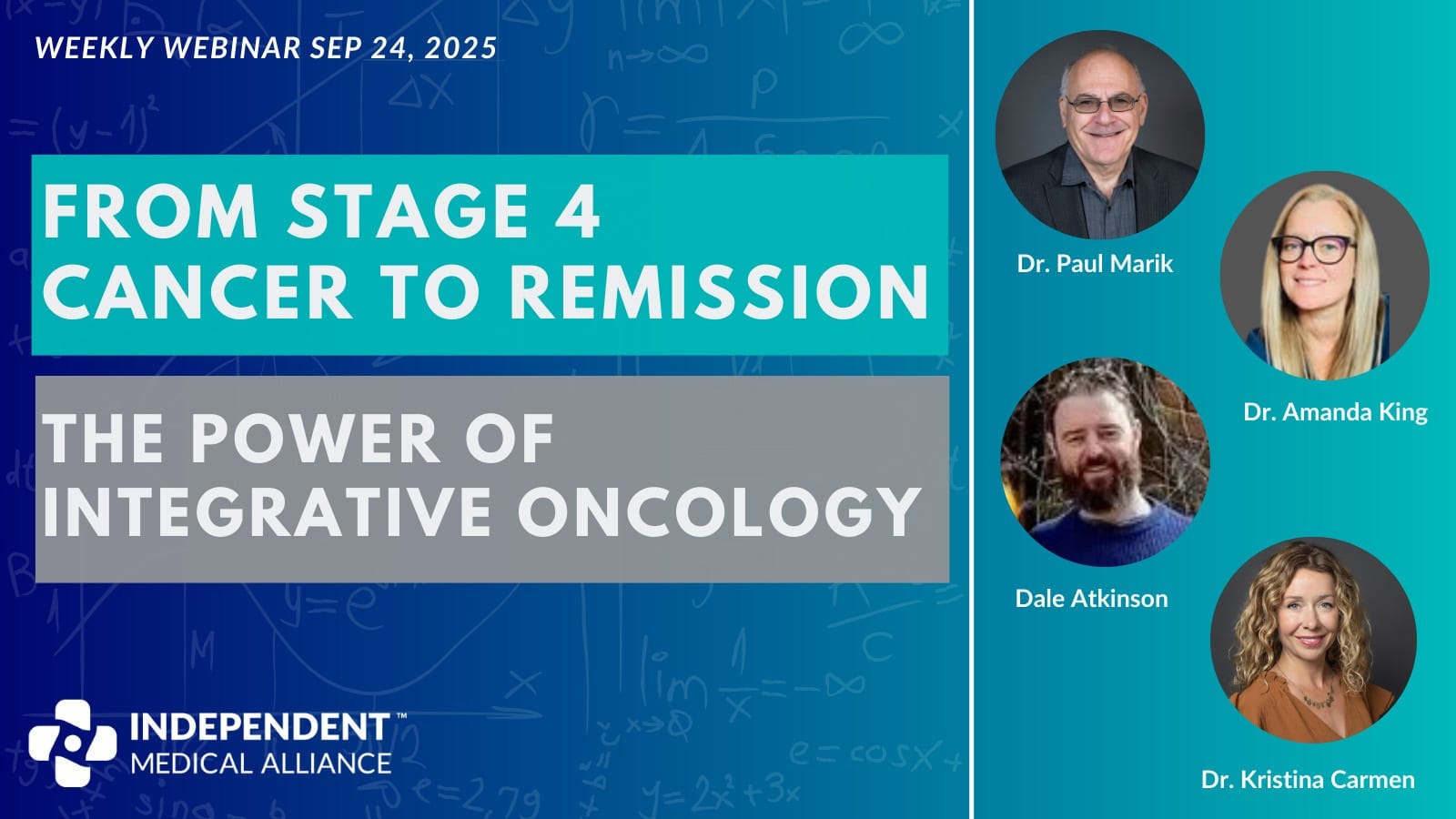
It’s truly great news that you can be responsible for healing your body, it’s a message of empowerment and not a message of blame. If you can take responsibility then you aren’t a victim, you are empowered. Integrative oncology is about empowering you.. with knowledge, with health, with skills and with options. Many people achieve remission, even when they are told they are terminal. A great example is Dale Atkinson who overcame his Stage 4 Terminal Diagnosis, achieving his NED (no evidence of disease) in just 9 months… You can find out more about that by clicking here. https://imahealth.org/stage-4-to-remission/
Every situation, no matter how challenging can be improved in some way. Our human biology is a true miracle and we are capable of defeating cancer. In fact we clear cancerous cells out all the time using our inbuilt immunosurveillance.
If you’re dealing with cancer and are looking for an integrative oncology practitioner, I am now taking on new patients again. For more information contact: admin@amandakingnd.com
Back in the 1920s, a researcher called Otto Warburg noticed something odd about cancer cells. Even when there was plenty of oxygen around, they still preferred to make their energy through fermentation, the same ancient, inefficient pathway your muscles use when you’re sprinting and starved of oxygen. Normal cells only do this under stress. Cancer cells do it all the time, whether there is oxygen present or not.
This became known as the Warburg effect, and for decades it was treated as a curious side note rather than something meaningful. Cancer research moved on to genetics… and billions has been poured into cancer research in this field, but in younger populations cancer rates and cancer mortality are still rising.
Share The Metabolic Nutritionist
Over the past twenty years or so, thanks to researchers like Dr Thomas Seyfried (recently featured with Steven Bartlett on DOAC) and his team - Join Dr Seyfried on Substack here at Target Cancer Metabolism, Warburg’s early observation has been getting a second look. Because here’s the problem - whatever triggers a cell to become cancerous, it still has to eat to grow. And what we’re learning thanks to that research, is that cancer cells are often unusually dependent on one particular fuel source. Glucose.
That sugar dependency is the opening into how we use Metabolic Nutrition against Cancer.
First Step = Fuel Dependency
Cancer cells divide and grow much faster than most healthy cells and that takes a huge amount of raw material. We aren’t talking just about energy but about the building blocks for actual cancer growth, like new cell membranes (membranes encase the cell - a bit like the shell around an egg), new DNA (the code that tells the body what to make next) and new proteins which are literally like lego building blocks to help us grow ie muscle.
Glycolysis is the name for the fast and inefficient sugar-burning pathway - which means that there is a LOT of waste. This pathway is brilliant at supplying these building blocks quickly. It’s a growth pathway as much as it’s an energy pathway and it’s primarily fuelled by glucose. Glucose is made in the body from all the carbs you eat (and excess protein). Restrict the glucose supply (the rice/pasta/bread and fruit - yup!), and you’re not just cutting off fuel, you’re cutting off genuine construction material.
Second step = Insulin
Every time we eat a carbohydrate, our blood sugar rises and our pancreas releases insulin to bring that blood sugar back down. This is to keep us safe, as uncontrolled high blood sugar can kill us. That’s a normal and healthy amount of insulin if it’s in the right amount. But insulin doesn’t just manage blood sugar, it’s also a growth signal. It talks to a pathway in the body called PI3K/Akt/mTOR, which is the body’s “grow now” switch and one that is associated in research with cancer growth. Chronically high insulin, which is incredibly common in the West given how we eat, means that switch is getting flipped on more often than it should. Since cancer cells are already primed to proliferate, we want to get that switch turned off as much as we can!
Third (and this is where it gets exciting…) KETONES
The great news is that we don’t have to use glucose for our fuel, we can use ketones.
There have been some poorly conducted research papers like this one here which suggested the ketogenic diet would progress cancer and others including a paper by Huang, 2016 which is widely cited, but these papers were either retracted or the studies were done on mice that were fed inflammatory seed oils and mouse chow (similar to modern breakfast cereal), diets that could never be considered close to a clean therapeutic ketogenic diet. This means that the terrain was inflammatory from the start and also these animals are largely herbivores, so this diet is entirely processed and unnatural for them.
The nuance is that under very stressed conditions, some cancers have the possibility to increase the activity of certain enzymes (like OXCT1) that could potentially let them use ketones as fuel in the absence of other fuels. But every animal study I'm aware of showing this, including Huang 2016 and all similar work, relied on commercial rodent 'ketogenic' chow built on cheap, inflammatory seed oils (soybean, corn, sunflower) rather than a clean, therapeutically-designed fat profile. That's not a minor detail, it’s huge and it changes the terrain the tumor is growing in before you even get to the ketone question. None of this is the kind of properly-formulated ketogenic diet used clinically, and it's a stretch to extrapolate from cheap industrial rodent chow to a well-managed human therapeutic protocol.
Fact - The Huang 2016 paper researchers actually fed their mice a 67.5% blend of lard + butter + processed soybean oil + processed sunflower oil and that still did NOT progress the liver cancer they were testing.
I want to throw in a caveat - Keto diets aren’t for every cancer and they aren’t for every person. They really aren’t - we need to be careful with prostate, liver/pancreatic and thyroid cancer - depending on the person and anywhere that we think any cancer may have switched to a dominant amino acid driven metabolism.
For Practitioners: If a person is pushing toward a more amino acid driven metabolic state over glucose, we might see evidence in the labs of accelerated amino acid turnover - higher BUN (blood urea nitrogen), or higher ammonia. Albumin and protein may fall and LDH may rise (we have to be careful not to confuse this with cachexia). If a patient is low on GKI but LDH keeps rising and the other markers appear to be suggestive of high amino acid turnover, you may have flipped to an amino acid driver and it’s time to bring in the glutamine blockers and cycle the diet around.
Having said that, low carb diets are universally necessary in cancer and the keto diet is ideal for almost all cancers (though it may not be ideal for all individuals), especially if coming from a firmly carbohydrate based diet. Practitioners may also stagger or pulse intake of protein, fat and carbs - working in a longer cyclical manner according to your blood metabolic markers. It’s really a call that your practitioner should make, based on your bloods, your symptoms and the knowledge we currently have about your cancer’s metabolic preferences.
And… back to how Keto works…
When you’re in ketosis, your liver produces a molecule called beta-hydroxybutyrate. For a long time we thought of this purely as an alternative energy source for the brain and body when glucose is scarce but we now know that beta-hydroxybutyrate does things in its own right too. It can calm one particular inflammatory pathway called NLRP3 - which means that ketones are anti-inflammatory - and we know that inflammation is a hallmark driver of cancer. It also acts on the way our DNA is packaged and read, through something called HDAC inhibition - (good news for people on HDAC inhibitors), which can influence which genes get switched on or off. This is still an active area of research, but the signalling role of ketones is, I think, one of the most underappreciated parts of this whole picture and probably the reason why this is such an important intervention for so many people.
Fourth = AMPK vs mTOR
I mentioned mTOR above as a “grow now” switch (downstream of PI3k/Akt). AMPK is roughly the opposite and you can learn more about this in my previous article here:
AMPK is the body’s energy sensor, and when it’s activated, typically through fasting or a low glucose, low insulin state (like Keto), it shifts cells toward maintenance and repair rather than unchecked growth. This includes a process called autophagy, where cells clear out damaged components. This is the body’s cleaning team. Ketogenic and fasting-mimicking approaches tend to push the balance toward AMPK and away from the growth state mTOR.
This means that AMPK is an unfriendly internal environment for a cancer cell to be operating in.
Not all “keto” is the same thing.
There’s a big difference between a loosely followed low carb diet and a therapeutic ketogenic ratio designed with a specific clinical intent. If this is something you’re considering alongside cancer treatment, it needs to be structured, not improvised, and it needs professional oversight or you risk unwanted weight loss and nutrient loss.
Monitoring matters. I’ll typically track blood ketones and blood glucose together, using something called the Glucose Ketone Index, or GKI, which gives a much clearer picture than either number alone. This lets us see whether someone is actually in a therapeutically meaningful metabolic state, rather than just assuming it because they’ve cut out bread.
Equipment - If you buy a Keto-Mojo or comparable monitor - you can check your ketones every day, you should always be in nutritional ketosis with ketones at 0.7mmol/l or more. Using this affiliate link will get you 10% off the price.

And the keto diet absolutely isn’t right for everyone even if it’s ideal on paper for that situation. Frankly it can be too challenging at first for many people and a staggered or measured approach is needed for longer term success - that’s absolutely OK. People experiencing cachexia, a serious medical complication meaning significant unintentional weight and muscle loss, need a very different and more careful approach. Certain metabolic conditions and certain cancer types also change the calculation. This is exactly why I don’t hand out blanket ketogenic diet advice to anyone who asks. It has to be built around the individual, their labs, their treatment stage, and their body’s actual capacity to handle it and sometimes once we try it, we need to change tack - the point is that it is personalised - there are no ‘one size fits all’ solutions to be had!
I think the most important thing to take from all of this is a shift in how you think about a cancer diagnosis. It’s not purely something that happened to your genes and now sits outside your influence - you have the power to influence where you are and take back some control.
Metabolism is something you have real, daily input into. It’s not about blame, it’s about recognising that you have genuine tools available to you, alongside your medical treatment.
If you’re navigating this yourself or with someone you love, I’d always encourage working with a practitioner who can build this around your specific case rather than trying to apply it generically. The application of this knowledge needs to be precise.
If you’re dealing with cancer and are looking for an integrative oncology practitioner, I am currently taking on a limited number of new patients. For more information contact admin@amandakingnd.com
Comments
Nothing yet. Say the first thing.
Sign in to join the conversation.