
How to spot your survival strategy and shift back into leadership
In last week’s substack, I explored how stepping up into senior leadership changes the way you create value.
You move from
expert value creation: using your expertise and subject matter knowledge as the axis through which you create value.
to
leadership value creation: using your presence to create an environment where value can be unlocked from others.
This week, I will take a deeper dive into your survival strategies and how they sabotage your value as a leader.
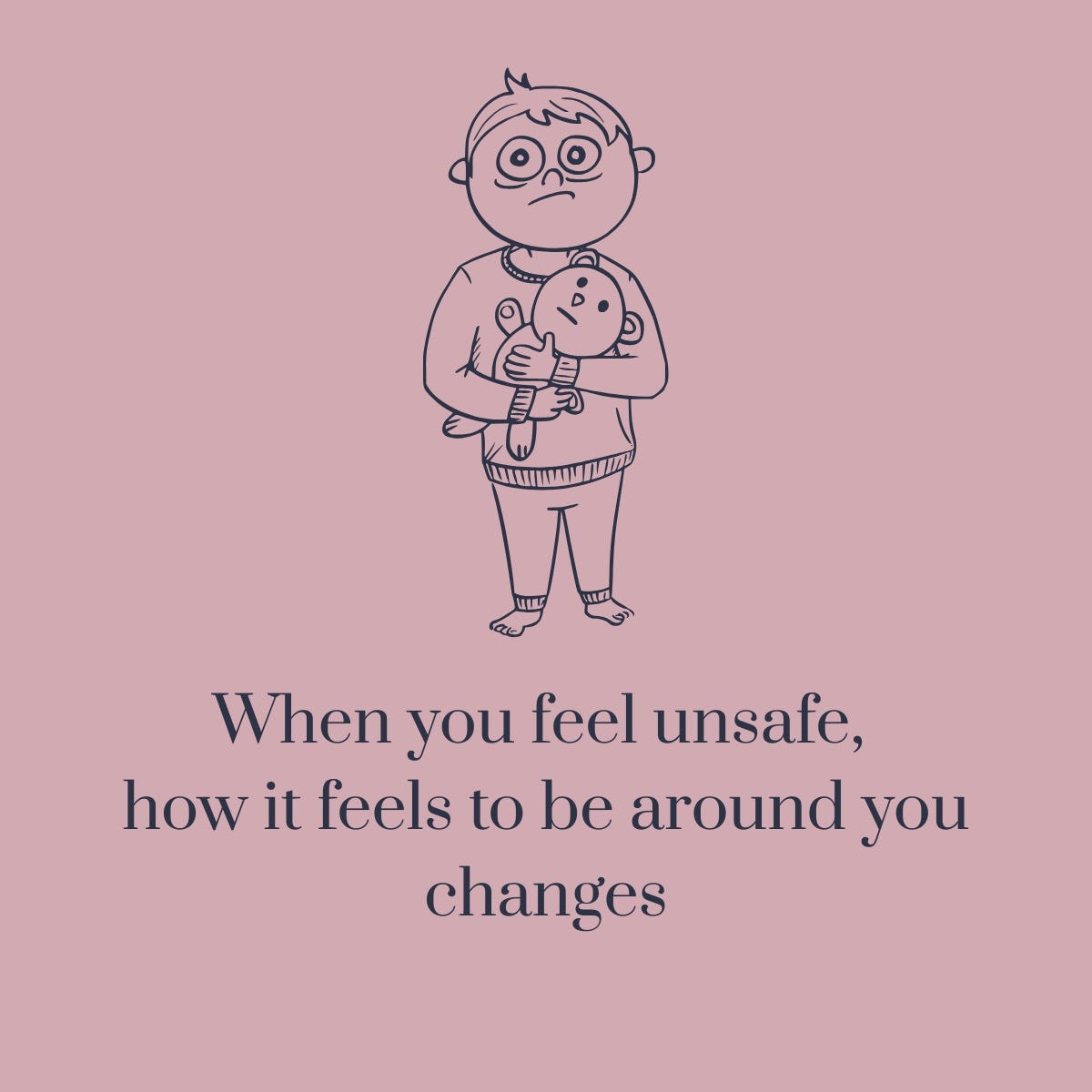
When you feel unsafe, how it feels to be around you changes
I believe this is universal, and every leader I’ve ever coached has been able to identify their version of this.
When at their best, they are capable, caring and impactful. Then something happens that knocks their inner balance: - A comment in an exec meeting - A decision made without their input - A suspicion that they’re not liked
This triggering event is deeply personal and often lives beneath the surface of their conscious awareness.
Their brain has registered danger
Not physical danger, but social danger.
A fear that they are not enough, will be judged stupid, a deep seated fear that they are not good with people, not liked, have another person’s disapproval.
This signal is enough for the amygdala [the brain’s threat detection system] to flip them into protection mode. When in protection mode - our behaviour becomes dominated by the instinct to survive and protect ourselves: not lead others.
When your first thoughts are self-preservation you can not lead others. You can not risk an idea; take a chance on a colleague; or give the benefit of the doubt.
When our brain senses danger we retreat into the old patterns that kept us safe in the past.
Often these behaviours are ingrained in us from our early experiences,
we stay silent or we shout
we make ourselves invisible or we create a scene.
We do what we have learned from our families and life experiences to protect ourselves, regardless of the cost this may have to those we lead or to our long term careers.
The five survival strategies (and how they hijack leaders)
The following 5 survival strategies have come from the work of Greg Baer and Tara Halliday. I was lucky enough to work with Tara Halliday last year; her understanding of the root cause of Imposter syndrome as conditional worth has transformed my own behaviour and the way that I understand and support the leaders I coach.
We all use some version of these 5 survival strategies when our brain flips into protection mode:
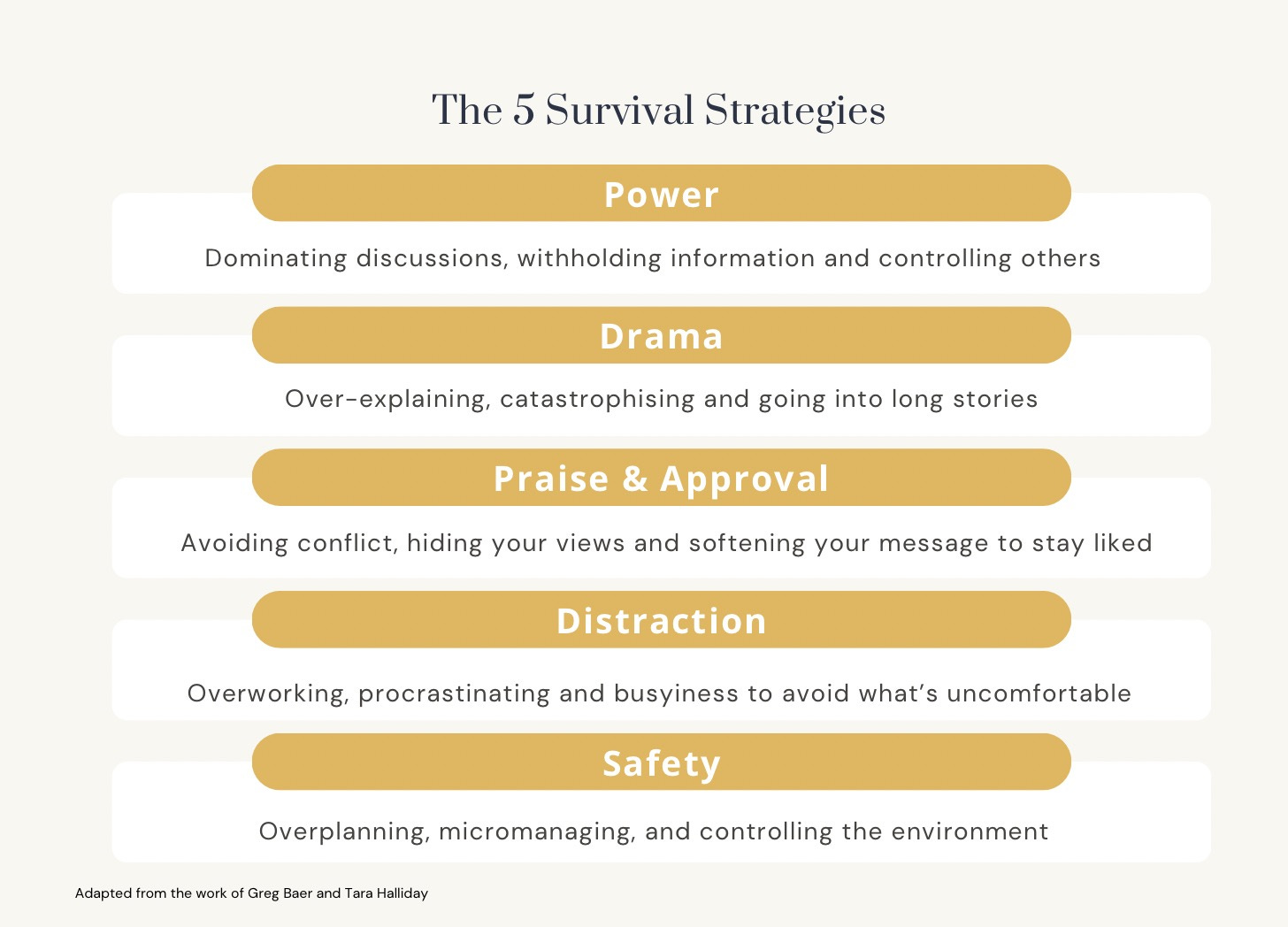
Survival strategies are something that every single human being uses.
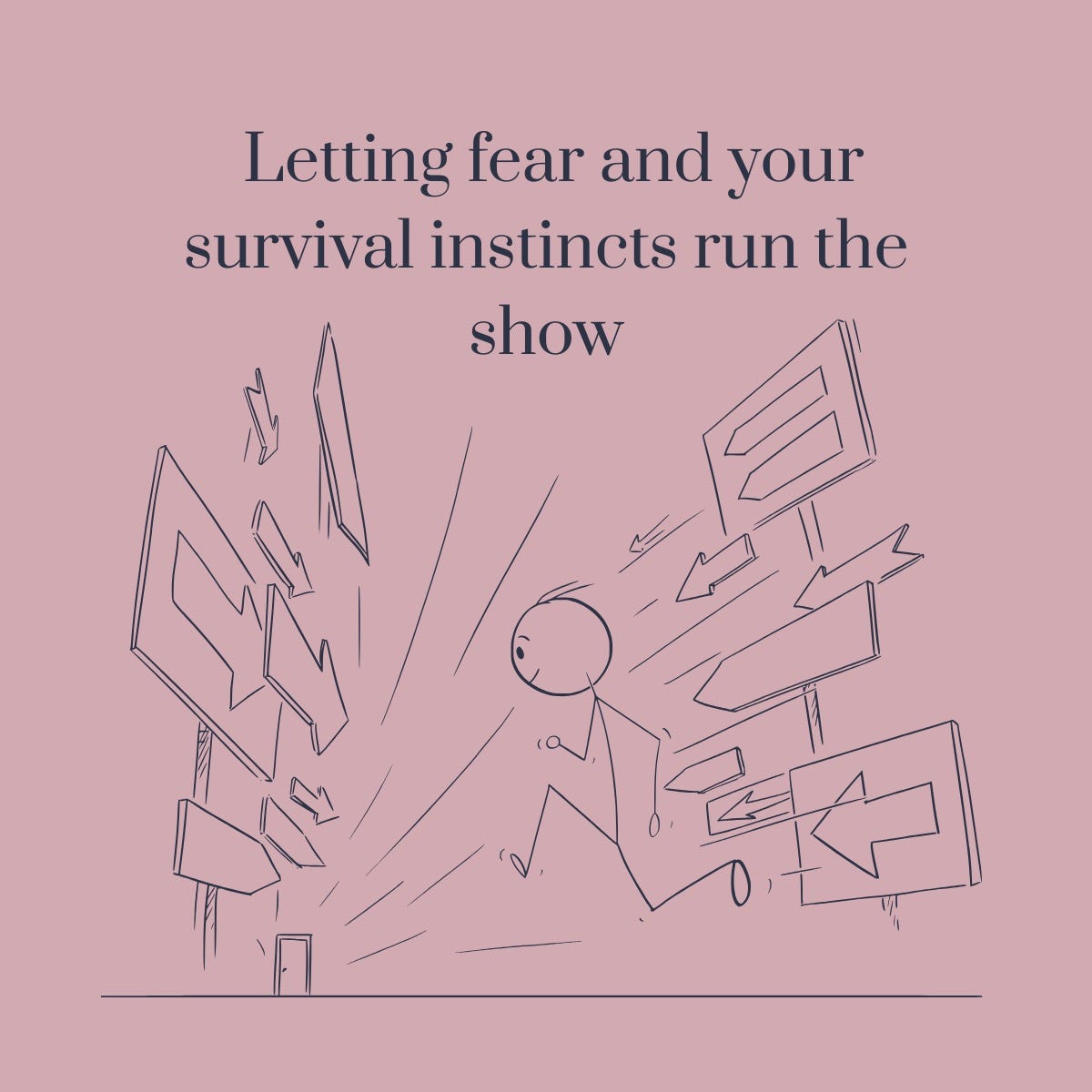
What’s most important to know is that when you let fear and your survival instincts run the show it will automatically shrink your presence and the value you create as a leader.
What transforms the quality of your leadership and expands exponentially the value you create through others is your ability to notice what survival behaviours are at play in yourself and others and then take action.
Each survival behaviour has beneath it an unmet need or perceived threat that has triggered our brain into reactiveness.
Feeling powerless - shout and control others
Feeling invisible or disliked - make a fuss to drive up attention
Feeling undervalued - seek approval
Feeling overwhelmed - distract yourself
Feeling out of control - control the environment
With awareness you can:
Use self-leadership and self-compassion when you are triggered into reactive behaviours
Use empathetic understanding and compassion when others are triggered and using their survival behaviours.
Often what we judge as toxic or thoughtless behaviour is someone acting from a place of fear.
Moving from being a reactive leader who bounces from one triggering event to another; to a leader that intentionally creates value at every touch point, needs you to find time for self-reflection and self-management.
Here are 4 simple steps to build your self-reflective muscles
Step one: Notice your pattern
Start by observing yourself with curiosity, not criticism.
Ask:
What triggers me most often: uncertainty, being wrong, feeling left out, making mistakes?
When I’m triggered, how does my behaviour change?
What would others say they see?
Which of the five survival strategies seem most like me?
You may recognise one dominant strategy or feel like you are a blend of many.
For example:
A leader with a Power strategy might argue their point instead of listening.
A leader using Safety as a survival strategy might struggle to delegate or add more checks to processes.
A leader who uses Praise & Approval leader might get very triggered if they feel their work is likely to be questioned.
Each behaviour is an attempt to feel safe.
But creating safety through control or avoidance only gives a false sense of temporary relief. The more these survival strategies run the way you lead the more problems they create
Step two: Make self-regulation your super power
When your brain goes into survival mode the very best thing to do is to reduce the level of Cortisol in your system.

Reducing Cortisol asks you to start accepting that you are a human being with thoughts, feelings, motivations and energy levels that ebb and flow.
You can’t think your way out of a flipped-lid state
To reduce your reactiveness - you need to look after your emotional state.
Back to back meetings, working long hours, late nights, not eating well, etc will drain your energy.
When someone makes a comment that your brain registers as ungrateful, or negatively judgemental - you will react.
To make self-regulation your super-power
Here’s how:
Notice the signs of dysregulation — shallow breathing, jaw tightness, racing thoughts, interrupting, short-tempered ness.
Name what’s happening. “I’m triggered,” or “My brain is flipped” or “I am using my survival strategy.”
Pause before acting. Take a break, go for a walk, ask to reschedule the meeting - do what you need to give your brain time to bring your thinking back.
Breathe. When your out breath is longer than your in breath, it signals to your nervous system that you’re safe.
Self-management must always come before people management.
I encourage my client to think both short-term and long term when it comes to Cortisol reduction.
Short-term - when triggered have things you can do immediately to calm your nervous system.
Long-term - what activities make you feel more relaxed? Country walks, no meetings on a Friday afternoon, swimming? Whatever it is - give yourself permission to add Cortisol reducing activities into your schedule.
Step three: Ask your leadership question
I encourage my clients to create a reflective prompt to guide the way they lead in each interaction. Some of my clients have asked themselves?
How can I empower my team today
How can I build high performance
How can I demonstrate trust
How can I demonstrate [my value] today
How can I lead with intention
Once you know what you want to bring intentionally into each touch point you can start to think about how you want to behave and choose that through conscious reflection rather than subconscious reaction.
Maybe it’s holding the silence instead of filling it.
Maybe it’s asking a question instead of offering a fix.
Maybe it’s saying what’s needed now rather than waiting.
Whatever you choose, it’s about moving out from protection mode where your best thinking has gone offline to purposefully choosing your next best step.
Step four: Get curious, not personal
The final step is perspective.
When you recognise a survival strategy in someone else, remind yourself:
“They’re not being difficult; they’re flipped.”
They’re using the same protection mode you do. Their behaviours and the survival strategies they choose may be a different flavour to you, but it is the same human need for safety and survival.
Being curious rather than critical will help you respond with intentionality.
Ask yourself
What survival behaviours am I seeing in others? (Safety, Power, Praise and Approval, Drama, Distraction?)
What unmet need or threat might be driving them?
What do they need to feel safer right now?
How can help them get their needs met without using their survival behaviours?
No posts
Comments
Nothing yet. Say the first thing.
Sign in to join the conversation.