
If you are leading a team of more than 50 and you are the smartest, most knowledgeable person in the team, the one that everyone comes to for answers. You have created a problem.
If you are constantly giving your team the answers - you are depriving them of learning and professional development. What you gain in the short term in the speed of a quick turn around, you will lose in the long term from a team that: seeks permission and reassurance; and waits to be told.
You are also killing your career as you will be seen as stuck in the weeds and as the expert who is too operational, and not strategic enough to step out from the details and implement lasting strategic change.
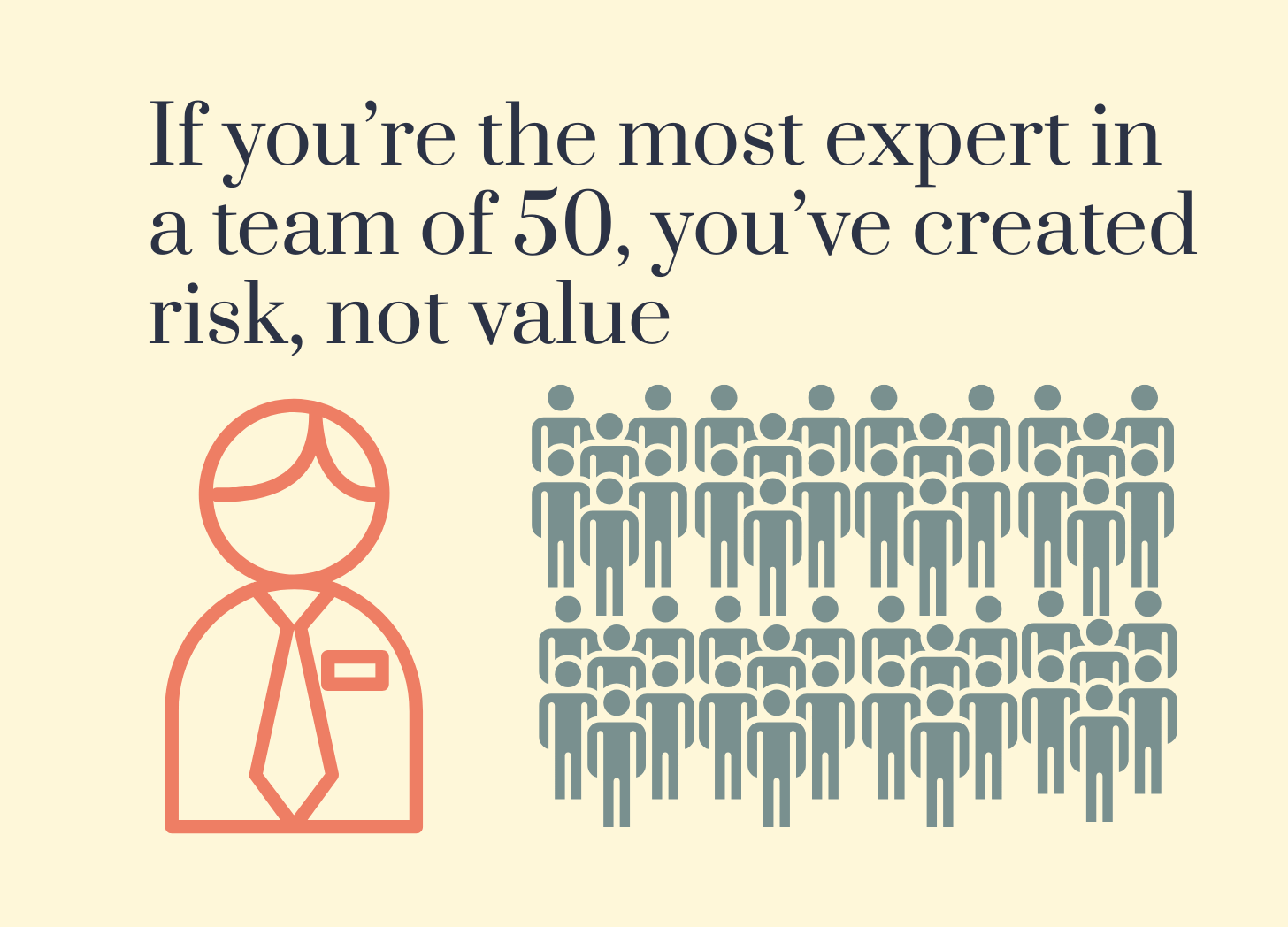
Think about it
If you want a team that is innovative, takes risks and speaks its mind; you must make it safe for other people to risk that uncomfortable feeling of not being sure, making mistakes and testing ideas.
If you are the one that is always right - it positions everyone else around you as always wrong.
If you are the one that solves every problem, you are the solution owner. You have made yourself the one that everyone has to come to for questions, clarity, reassurance and changes. Rather than making yourself useful - you have a bottle-neck and a single point of failure.
As a senior leader, your career progression has been based on what you know and how you have applied that knowledge to solve complex problems. Now that you are a senior leader who leads teams of experts to deliver strategic change - you need to shift how you create value at work.
It feels good to be right
When a team member comes to you with a question: giving the answer makes you feel good. It gives a quick dopamine hit that makes you feel capable, confident and useful.
But success as a senior leader doesn’t come from answering questions quickly.
Success comes when you turn every question into a micro-opportunity for learning.
Rather than answer a question with what you know; consider how you came to know what you do and what questions, experiences and opportunities might help your team step towards that same level of understanding.
When we change our role from the one that knows the answer to the one that grows potential - we start to seek those opportunities where people can learn a little more about the client, the problem, the tech, the approach, themselves.
Success comes when their confidence and capability expands.
Success comes when your knowledge increases the understanding and wisdom of those around you.
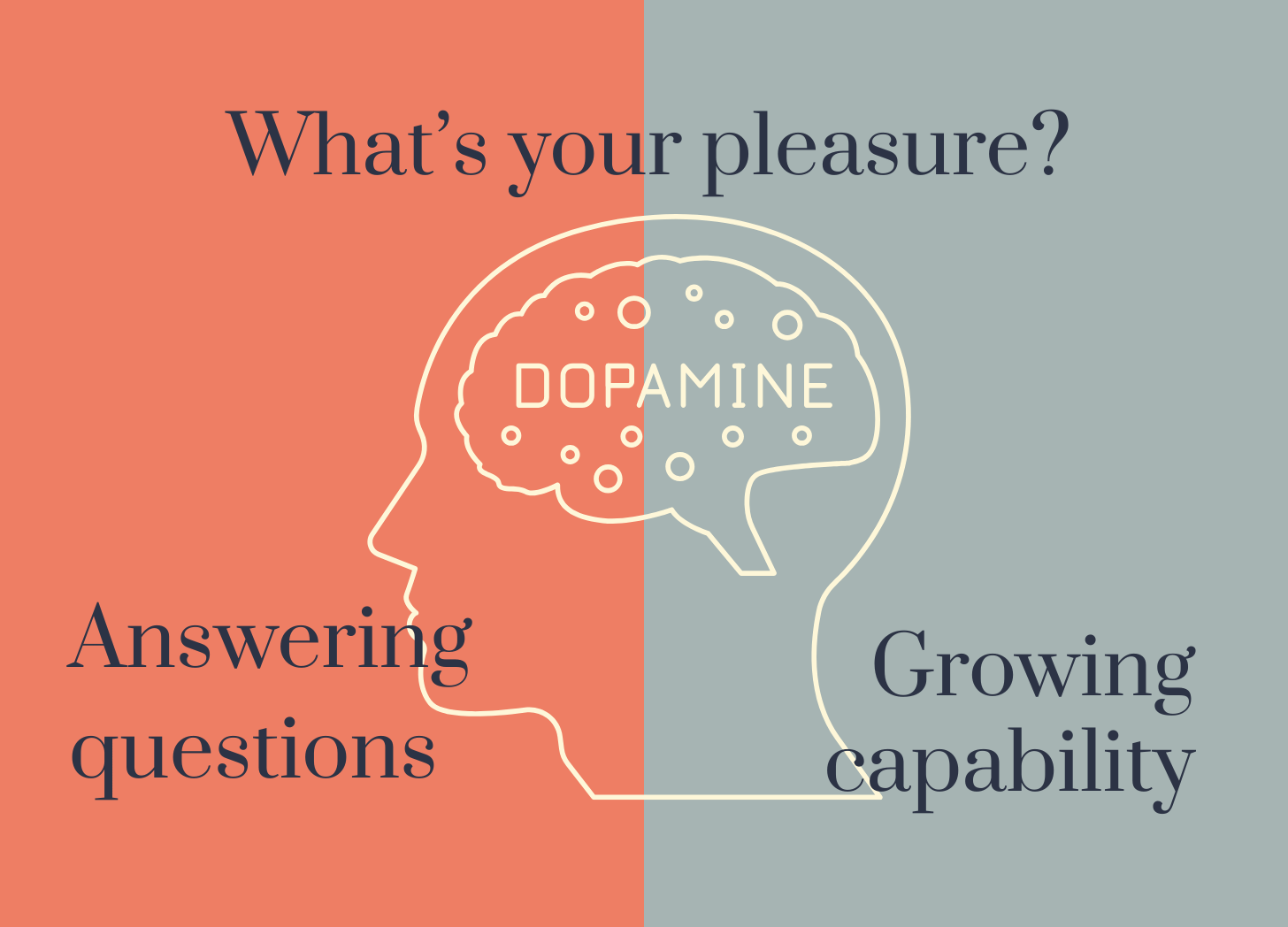
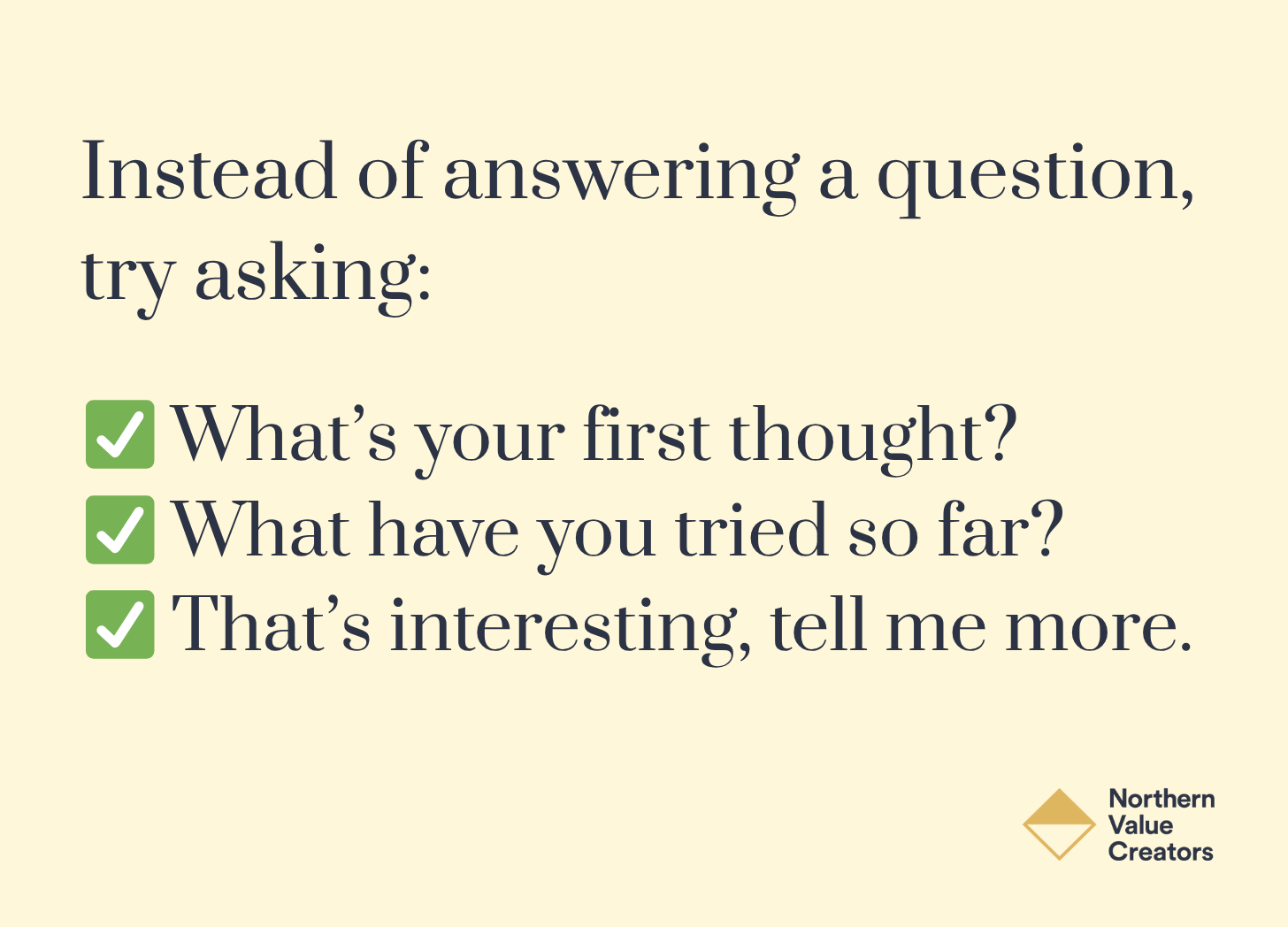
Here are 3 simple actions you can take when someone in your team asks you a question.
Ask ‘What’s your first thought?’
This is a great question as it isn’t putting people on the spot to give a definitive and potentially wrong answer. It’s an invitation to share a first thought. It is the beginning of a conversation to help them explore how they might go about answering the question for themselves.
Ask ‘What have you tried so far?’
This question helps people share their work in progress, what may have failed or not seemed right. It also has an expectation that they have made an attempt before they come and ask you. It is better than ‘Don’t come to me with questions - come to me with solutions’; because if the solution is eluding them they can come with what they have tried. Another benefit to these questions is that it encourages a ‘growth mindset’ approach - you’ve not found the solution YET rather than you obviously can’t find the solution yourself - so I’ll have to tell you.
Follow up their response with ‘That’s interesting - tell me more’
Whatever answer they give is worth its weight in gold because it shows you what they know and what more they need to learn. If the answer they give makes no sense or you feel it won’t work say “That’s really interesting, can you step me through your thinking”. When people step you through their thinking you can use your expertise to mentor and teach; to boost understanding and capability; and exponentially increase the performance in your team.
A senior leader’s role is to provide direction
It is tempting for a senior leader to confuse ‘directing’ with telling; and fall into the trap that in order to ‘direct’ [tell the team what to do] you need to continue to stay in the space of being the ‘most expert’.
I believe the true role of senior leadership is to unlock potential and high performance in others. Leaders need to ‘direct’ their team towards what is needed to enable high performance.
Unlocking the potential of the people in your team and creating the right environment for high performance needs a leader who has more to offer than just subject specific expertise.
Moving from ‘expert value creation’ to ‘leadership value creation’ needs leaders who can create an environment where high performance is inevitable. Where the people in your team are working to their full potential; and the collective results you create from the team is far beyond their individual contributions.
To achieve this there must be high psychological safety and learning.
And to achieve high psychological safety and learning you must move from being a leader who sees their value as answering questions, to a leader who sees their value as creating learning opportunities.
Start thinking ‘How can I create a learning opportunity?’
Here are 3 easy ways to create more learning in your team.
Be more coach-like and ask more questions
Think about how you build your knowledge and understanding and ask questions that will help others do the same
Encourage people to share their thinking
If you are thinking I don’t have time for this - here’s a few reasons why listen to people’s thinking will speed up both productivity and performance:
Asking what people think will show you where there is any misunderstanding and what you need to do to create clarity. It is likely if one person is confused others will be too, so it is a great opportunity to use what you learn as data to elevate clarity across the team. A lack of shared understanding is a key cause for under-performance and wasted effort in teams.
Sometimes the hardest thing for expert leaders to do is spot the difference between their way and the right way. Things can be right and reached through a set of steps and approaches that you would not personally use. Exploring others’ thinking can be a point of reverse mentoring - where you continue to learn different ways to achieve your outcomes.
Asking what people think is one of the best ways to demonstrate the value you place in your team. Being listened to and feeling heard creates a sense of connection, trust and value. Too often time with our managers and leaders is spent being told what to do, rather than exploring our thinking around how we will approach the work. The more quality time you give the greater the reward.
Exploring people’s thinking makes it easier to delegate problems and outcomes rather than single tasks. You de-risk people making fundamental mistakes and empower your team to feel like they can take action and make a difference - rather than tick tasks off a to do list.
If you are being asked a question - consider why this is happening. If you are the only person who can answer the question, what do you need to do to build capability and confidence in your team? The more you can delegate the freer you are to think about bigger picture strategic issues.
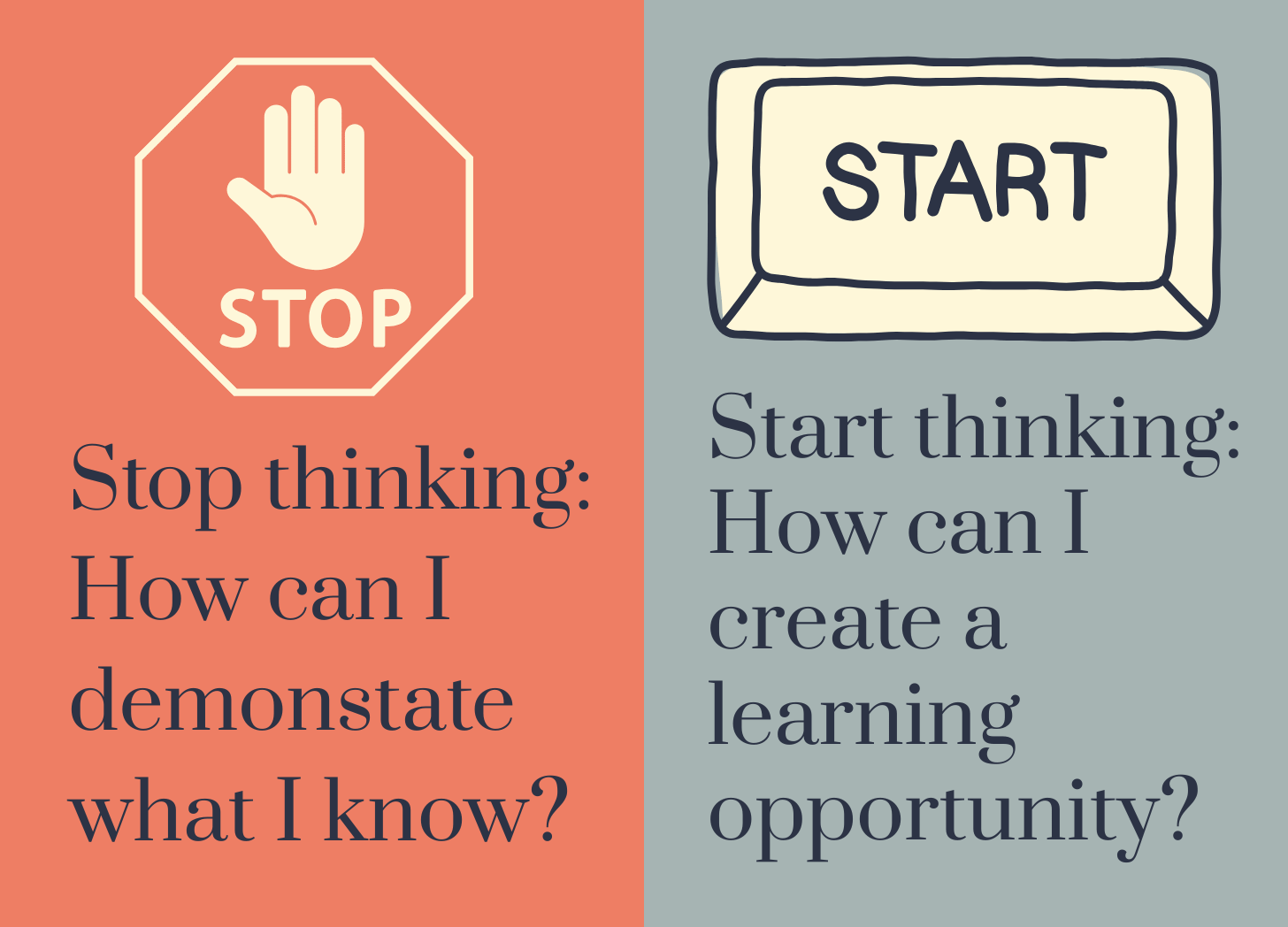
If you are in a senior leadership role and have found yourself still thinking: What I know is where I add value. I encourage you to think again. Let go of creating value by being the most expert in the room and use the knowledge and understanding you have built up over your career to find micro-opportinities for learning. Focus on growing the capability and confidence of everyone in your team, so you have time to become a trusted strategic partner that makes a positive impact that stretches beyond the sum of your expertise.
If you liked this post please consider subscribing to my substack
I’m an executive coach working with senior leaders in Higher Education and professional services. My focus is on helping leaders move from creating value through their expertise to creating value through their leadership. My goal is to think in the open and create a body of work around leadership value creation that I can publish as a book in October 2026.
Comments
Nothing yet. Say the first thing.
Sign in to join the conversation.