
We’ve all worked with leaders we can’t bear.
They’re either
Too cold: too focused on the task at hand and too distant to foster high trust relationships
or
Too hot: their need to protect the team or their backs feels smothering and their over done support creates an environment of high permission-seeking.
What I’ve learned from working with senior leaders is that what creates unbearable leaders - isn’t bad intent.
It’s fear.
Read on to discover what triggers that fear and why leaders who are afraid to fail can create the very environment that makes that failure inevitable.
For most IT directors and senior leaders in technical departments, your career trajectory has been fuelled by technical knowledge and expertise.
The value you bring to your organisation is grounded in your understanding of the detail and years of operational delivery.
You know what works and what needs to be done to push change from high level conversations to practical application.
But as your team expands, everything shifts.
You move from managing deliverers - where you are the expert; to managing the managers of managers.
The lines between you and delivery stretch.
There are now people in your wider team that
you only see briefly — perhaps in weekly all-hands meetings or as infrequently as the quarterly catch-up
hold a level of expertise that outstrips your own.
In this expanded team:
You can’t pull an all-nighter and just get things done
The more you physically do, the more damage you cause
You can’t dictate exactly what others should do
The more prescriptive you are, the more those instructions distort as they pass through the hierarchy: like a game of Chinese whispers
Leading large technical teams asks for a step change in how you create value.
Great results now come from honing interpersonal communication, asking better questions, co-creating clarity, and delivering results through others.
WWITPWWFMA — What Worked In The Past Will Work For Me Again
One of the biggest mistakes I see leaders fall into when they are promoted into senior roles is not spotting that success in this new role needs an entirely different set of skills.
When I first became a head of department I thought applying my project management skills and structured approach to delivery would be helpful. What had got me promoted was carving up time to reflect and create clear plans, articulating the tasks needed, and managing that delivery to quality and time though my team.
My overly controlled approach made me feel safe - I had a plan, everyone was clear, I had a list: I had it all ‘under control’ and I could tick things off as they were delivered.
My expanded team hated it.
My senior leaders weren’t on the ‘Amanda’ bus.
I’d not spent time building a shared vision of what we needed to do and why.
Intimidated by my lack of expertise in their areas and fear of my new role being challenge - I’d tried to work out all the answers so there would be no mistakes and in the process I had made a big mess.
Looking back it seems obvious that
not involving my team in creating a shared definition of what good looks would costs me more time and create confusion
not honouring the expertise within my team would create resentment and make people feel undervalued and like they didn’t have a voice
What drove me to approach my new team in this overly restrictive way can be answered with a simple understanding of neuroscience.
Our brains crave familiarity. They’re wired to conserve energy by repeating the patterns that have kept us safe and been successful before.
That’s confirmation bias — your mind reassuring you that your old approach is the best approach and will work if you stick at it, even when the signals suggest otherwise.
At the same time, under pressure, the stress response kicks in. When uncertainty rises — new role, new team, new dynamics — the amygdala (your brain’s threat detector) takes over, narrowing your focus to what feels safe and known.
The ability to stop, think and question disappears. You start running on autopilot.
The result?
You keep doing what’s familiar, long after it’s stopped creating value.
The subtle cues that tell you something is off and you need to do something different, e.g. silence in meetings, hesitation in others, the energy drop when you walk into a room, all tell your brain ‘there’s danger - we need to double down on what we did before - if we do it more it will work.
The WWITPWWFMA trap is your brain quietly convinces you that everything’s fine when it isn’t.
It tricks you into sleepwalking towards becoming the leader that your team can’t bear.
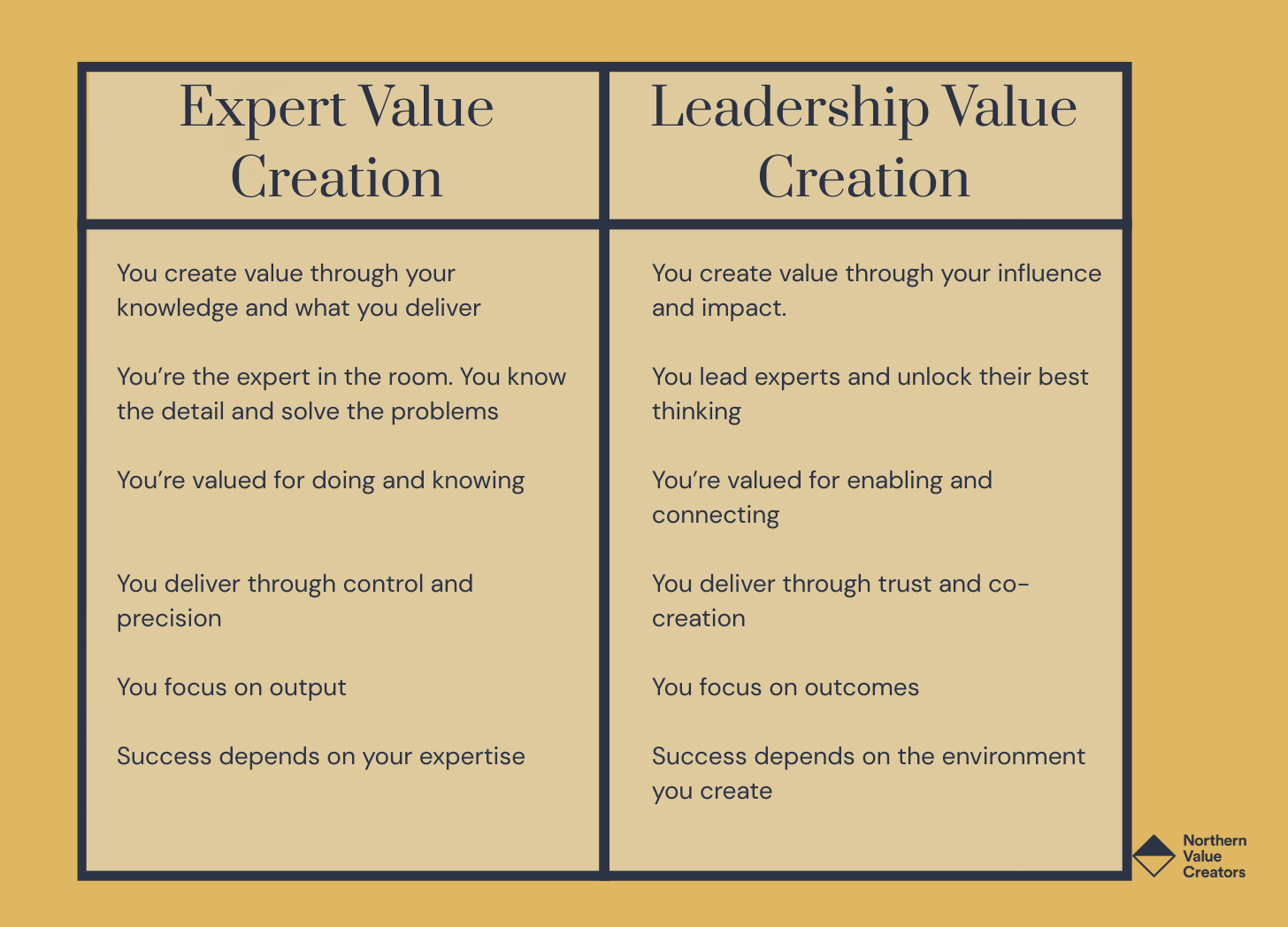
Expert Value Creation is where you create value by being the one who knows:
You are the expert in the room
You work out the solutions
You are the person everyone goes to when they are stuck
You have the answer.
Most senior leaders in professional services got to their role by delivering high value through their expertise.
At Director level leading larger, more complex teams requires a different kind of value creation. I call this ‘Leadership Value Creation’.
Leadership Value Creation means:
You create the environment for high performance
You ask questions that spark deeper thinking
You give your team what they need to deliver.
It’s not about being the expert. It’s about leading the experts.
It’s not about having the answer. It’s about unlocking the best thinking in others.
It’s not about being the top performer. It’s about empowering and inspiring others.
A director I once coached had spent a decade climbing the ranks through their technical brilliance. When promoted into his first IT Director role, he found himself managing experts who knew more than he did.
He felt like an imposter, his value had always been based on what he knew. So, to stay ahead of his team, he started spending his evenings and weekends researching their areas so he could “direct” them with confidence.
He thought it showed commitment and would help win their trust.
His team received his ill-informed instruction as insulting.
The harder he worked to prove his competence, the more they withdrew.
His fear of not being good enough - created an environment where he had lost the respect of his team.
What changed things was
learning to let go of being the expert and leaning into leading those who were
recognising an entirely different way of creating value at work
When leaders operate from fear, they drift to the extremes.
They become too cold or too hot.
Too Cold
The leader feels distant. The unwritten rules are that it is not safe to share your views or feelings. Psychological safety is missing and truth gets buried under ‘professional-politeness’. Because trust is low, permission-seeking replaces real ownership.
Too Hot
The leaders feeling form a big part of the discussion. There are too many check-ins and over-helping. In a bid to protect the team from discomfort - opportunities for learning and growth are removed.
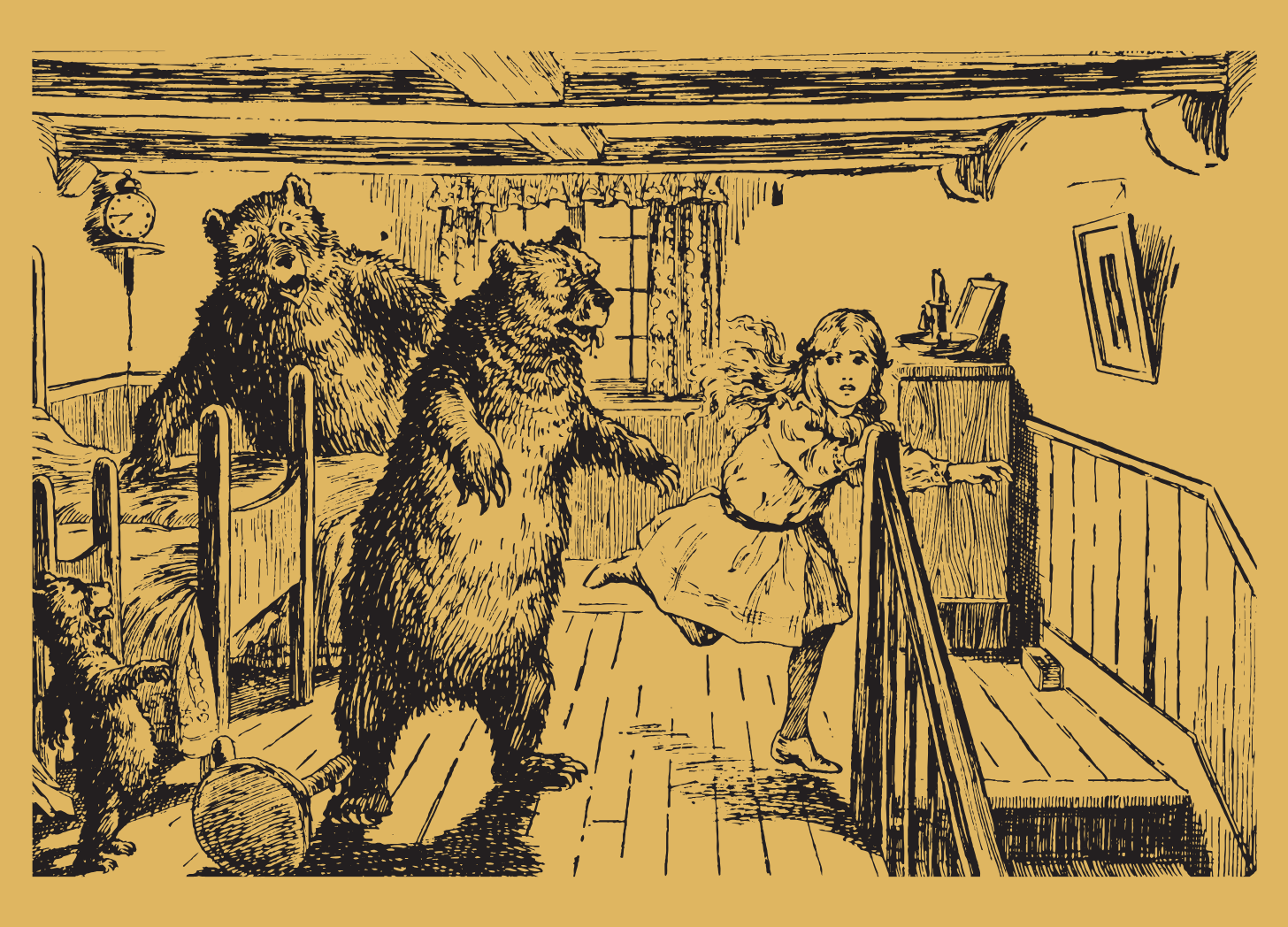
The Goldilocks Zone sits in the middle: where warmth and safety meet clarity and structure.
It’s where:
Support is calibrated to the individual
Expectations are co-created and clear
Problems are delegated and solutions explored together
The leader is present, self-aware and able to manage their mood
It’s safe to experiment and learning is celebrated.
This is where Leadership Value Creation lives: where clarity, connection, and trust replace fear, control, and confusion.
So how do you make that shift from delivering results through your expertise to delivering results through your leadership of people?
Leadership Value Creation unfolds in three stages. My working title is the CIO approach:
Consistency – Mastery of yourself. Managing your own mood and reactivity so you can stay calm, clear, and connected. Decisions come from your whole brain thinking rather than reacting from a place of fear.
Impact – Intentionally developing the way you influence across your department and organisation. Being brain aware so you can recognise what might be triggering or motivating others. Brave enough to say when you don’t know and working collaboratively to find those solutions.
Opus – Embedding the daily practices that will become your leadership legacy. recognising the bigger picture in which you operate, having a clear view of your wider impact and what your full potential, if unlocked, could deliver.
You can’t create a positive impact until you’ve mastered yourself.
And your opus — your enduring leadership story — will only emerge once you lead with intention rather than instinct.
Thanks for reading Leadership Value Creation! This post is public so feel free to share it.
At points in our career we have all exhibited the behaviours of unbearable leadership.
The fear of not being the expert anymore triggers:
a fear of losing control
the fear of being found out
The best senior leaders recognise this discomfort and work to manage their mood, presence, and impact. They shift how they create value from their ‘expertise’ to their ‘leadership’.
The way to finding your Goldilocks Zone is by calming your nervous system and leading from a place where calm replaces control, clarity replaces chaos, and leadership value is created through who you are, not just what you know.
No posts
Comments
Nothing yet. Say the first thing.
Sign in to join the conversation.