
Within the vast interconnectedness of our lives, this physical body is our most basic daily experience of Mother Earth. No matter how we look at it, to be in existence on this earth plane, we need this body. St Francis called his, Brother Ass.
Yet we push and prod our bodies to do things that only bring satisfaction to the mind. When I take an epic hike at 73, am I relaxing and nourishing every cell as I did at 50? Or am I proving to my mind that I can do it, that nothing has changed? Because in truth, lots has changed.
When I hustle to finish the last of some work on the computer, rather than taking the time to get myself to the plant sale or nursery to support our tiny food garden, who am I short-changing? What are my nourishment priorities?
The Dhatus, our essential earthly tissues
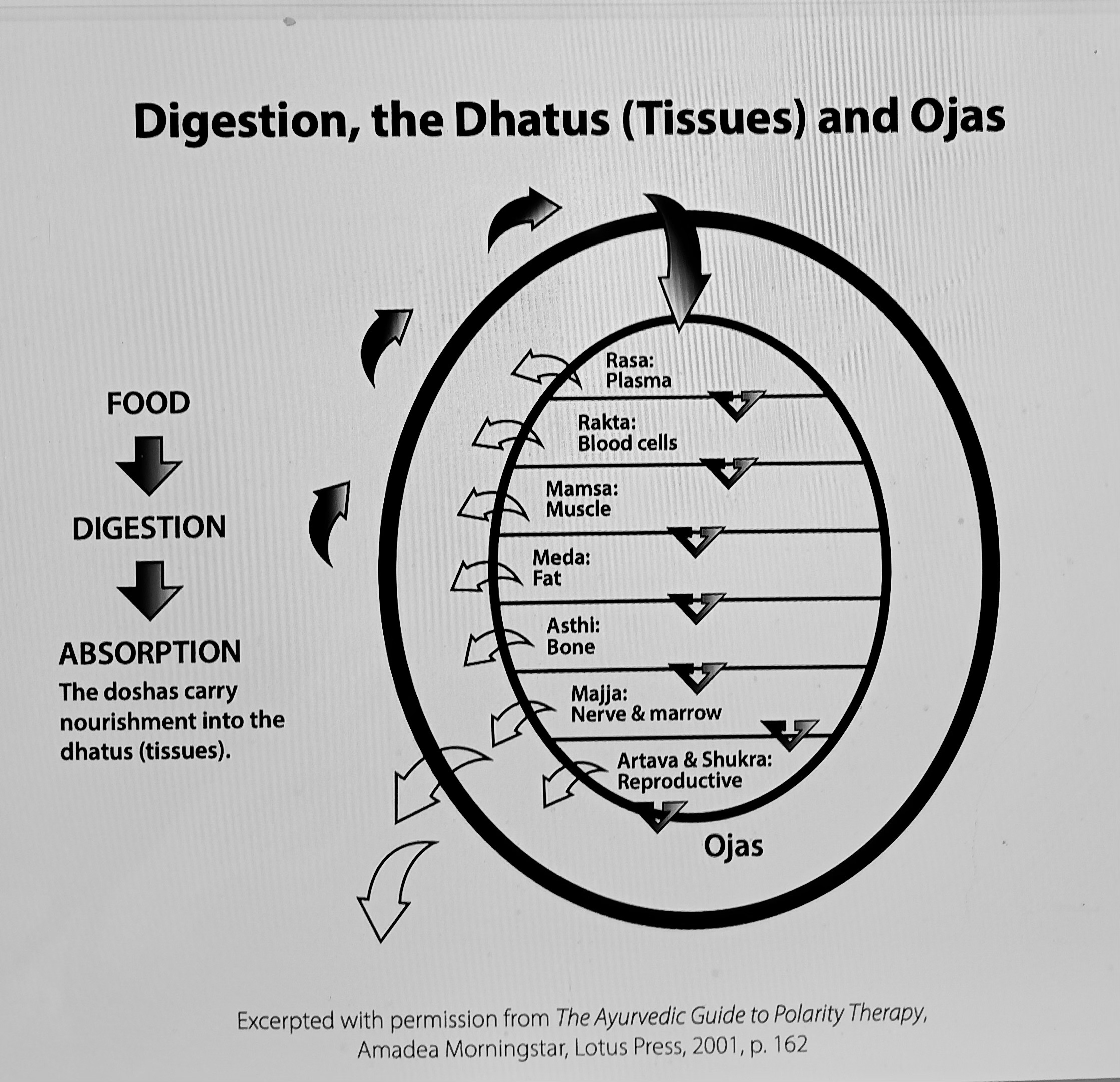
In Ayurveda the dhatus are the seven essential tissues within our physical bodies we need to stay alive and well. They include:
1. Plasma, the liquid part of our blood (Rasa)
2. Blood cells, both red and white, moving thru the plasma (Rakta)
3. Muscle, of all kinds (Mamsa)
4. Fat, healthy adipose tissue (Meda)
5. Bone (Asthi)
6. Nerves, connective tissue and bone marrow (Majja)
7. Reproductive tissue (Artava, female) (Shukra, male, sometimes used to refer to both)
All of these tissues contribute to Ojas, our vital cushion and immunity, when they are well-nourished. Generous ojas cushions us not only from infection, yet also excess stimulation. When ojas becomes depleted, every dog bark in the night, each challenging experience, can push our buttons. Ample ojas means deeper equanimity.
What might ecological restoration of the dhatus look like?
I want to credit Katie Singer and her latest Substack about ecological restoration within communities for inspiring this particular perspective on the dhatus. Thank you!
To look at examples of ecological restoration for the dhatus:
Plasma, like water in a landscape, feeds all the other tissues. When it (rasa) is low, dehydration occurs. None of the other tissues can function as well as if it were in generous supply. Think of a wilted plant, or on a more drastic scale, an AI center moving into your area.
Adequate fluid throughout the day, as invited by thirst, is the remedy. In Ayurveda we use specific plant supports to enhance the absorption of fluid into our bodies. Essential Rasa Tea from Easy Healing Drinks from the Wisdom of Ayurveda is designed to restore healthy plasma. Here’s the recipe for it, plus more discussion on how to recognize when your plasma needs help.
Blood cells deliver prana, oxygen, energy, and immunity
Rakta in the form of red blood cells carries oxygen to every cell, fueling multiple energy reactions within our bodies. Invigoration is its mission. When it is low, anemia can be the result: pallor, low energy, shortness of breath. White blood cells, on the other hand, fight germs by engulfing them in hydrogen peroxide produced onsite. (wild, yes). Iron-rich foods and enough protein are key to nourishing blood cells.
Muscle establishes form.
Mamsa creates healthy movement and shape. Many of our vital muscles are unseen, despite the big focus in our culture around body building. Muscles propel blood through the blood vessels in a network wrapped around those vessels. They move food through the gut, again with many muscles all along the way. Our heart pumps thanks to them. When we skip meals, we’re shorting these silent friends. Give them what they need; have compassion.
Mamsa is fed by both protein and wise movement.
Fat offers lubrication, love, and the resource for hormone production.
While here in the West we often think of fat as a waste to be gotten rid of, in Ayurveda it is an essential tissue. Meda provides lubrication and protection for other tissues. Cholesterol is used to make vital hormones like estrogen and testosterone.
Too much fat can block the flow of energy to other tissues. Yet too little can dry out the landscape of our bodies. Healthy fats from coconut, avocado, nuts, seeds, healthy oils, dairy, fish, poultry, and four-leggeds support this dhatu.
Bone creates structural support.
Bones are the levers on which muscles move. Minerals and protein build our bones. Minerals are also a key factor in sleep, which restores all the dhatus, including bone. There’s tips here for how to get enough calcium and magnesium, as well as sleep.
Majja transmits the magic.
Majja dhatu includes bone marrow (hence the traditional function, to fill bone), the nervous system and connective tissue. Omega 3 fatty acids help us transmit energy more effectively through our connective tissue. Sleep, again, is a vital support for the nervous system.
Our nervous systems process emotion as well as waking reality events. Awareness of the nervous system’s needs can help us restore it more effectively. Here are some simple ways to begin to restore the ecological terrain of your nerves.
Here are 3 more key tips to nourish majja.
The reproductive system is about creativity as well as reproduction.
Respect is a key support for the reproductive tissue. Actually, breathing in respect to each of the dhatus is a healing activity I use in my private practice.
Out of all this nourishment and connection, ojas is built
As I mentioned earlier, ojas is our vital cushion. Traditionally sitting by running water, practicing by alive flowing water, hanging out around waterfalls, offering kindness without conditions, these can build ojas.
FYI, I wrote a kind of wild take on Mining the Dhatus in an earlier post here.
Our larger ecosystem includes the sacred
When beset by difficulty, whether on the outside or the inside, it is wise to remember the sacred, the unseen friends, guides, and guardians we can call on for help. To open to their presence in healing is something I consider essential.
Dr. Larry Dossey has pioneered the practice of prayer as a key component of healing in medicine. Here’s an interview Oprah Winfrey had with him on her Soul Series.
How we put these ingredients together matters
One of the aspects of Ayurveda that has continued to draw me is its wise approach to practicalities. Simply feeding ourselves good foods, if we’re lucky enough to do this, will not completely restore the ecosystems of our bodies. Digestive fire is needed to incorporate what we’re offering our cells.
There’s more about how to cultivate agni, digestive fire here. While the focus is earlier rather than later spring, the recipes and observations are still useful now.
Aging and the dhatus
Inevitably with aging our tissues degrade. We can slow down the processes, be more skillful in how we tend them. Small changes can have big results when done with consistency and awareness.
Tissues degrade, yet love does not need to. Love can remain strong, at any age.
Connections, Fractures, and Restoring Communities
Katie Singer’s latest Substack highlighted the work of John D. Liu, founder of Ecosystem Restoration Communities. Click here to connect with some very inspiring work, one community at a time, across the planet.
There are millions, billions, of us here living through this ferocious time. May we connect to restore not only our health, but also our communities. And Katie Singer, may you find the home, the land, the neighborhood you need and that needs you two.
Love
Amadea
Image: Digestion, the Dhatus and Ojas used with permission from Ayurvedic Guide to Polarity Therapy, Morningstar
Bio: I’m an Ayurveda health educator and Polarity Therapist practicing in Santa Fe, NM. There’s quite a bit more info about the dhatus in my book Ayurvedic Guide to Polarity Therapy available for purchase here. My most recent seasonal cookbook Easy Healing Drinks from the Wisdom of Ayurveda is on special now.
No posts
Comments
Nothing yet. Say the first thing.
Sign in to join the conversation.