
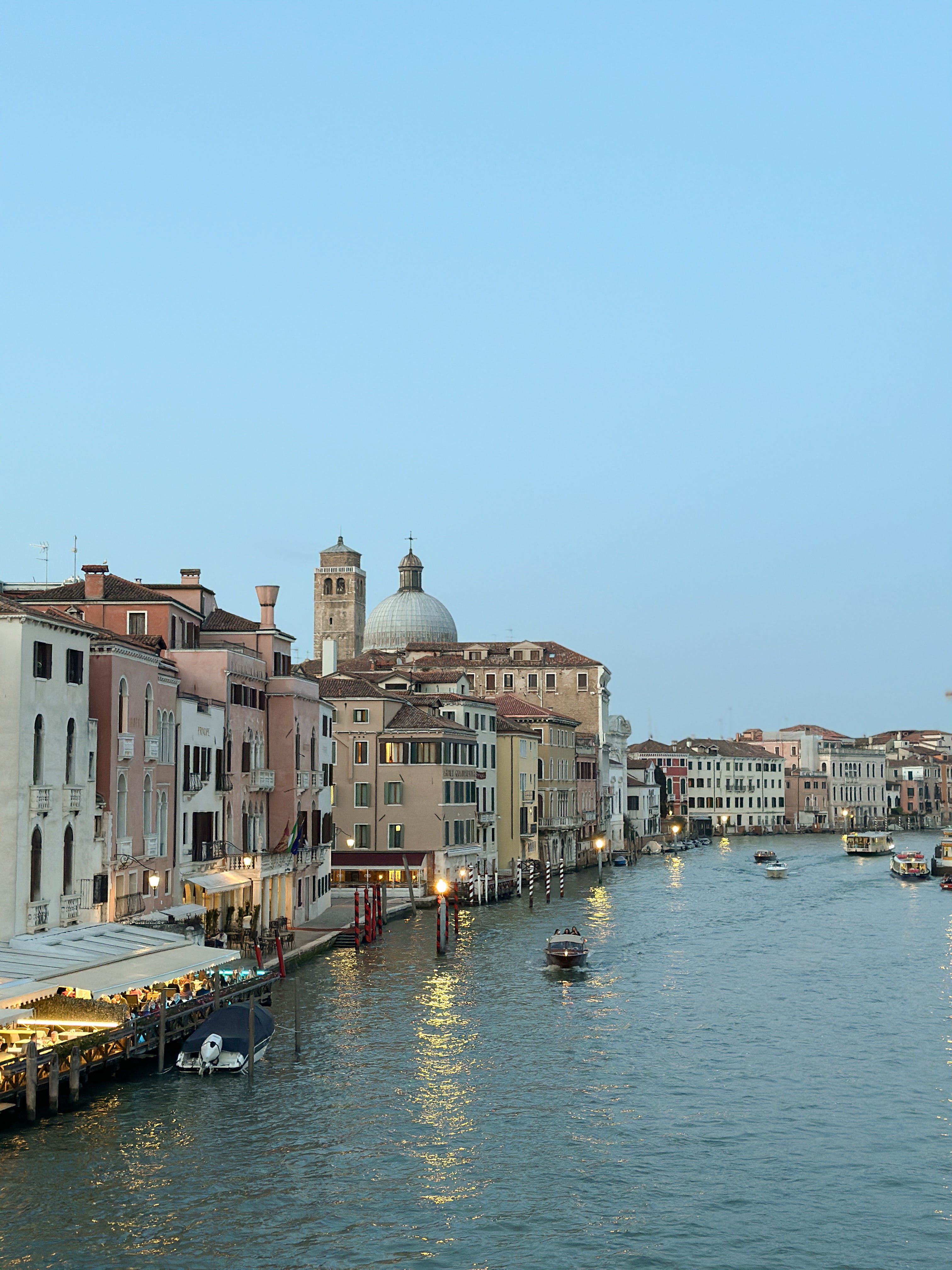
I packed the wrong shoes for Venice.
Everyone does. You see the influencers on cobblestones in photographs and think you understand the ground beneath your feet, but you don’t - not until you’re being lifted out of a boat in stilettos, in the air, in the rain, in a rising canal, in a fancy dress, laughing at yourself, holding onto the arms of the man you love. Wear your tennis shoes, ladies (I lived in these). Leave the heels at home. I have linked my packing list for you HERE because Venice will humble you beautifully.
We stayed in a 16th century palace off the Grand Canal - protected frescos on the ceilings, Baroque and Byzantine architecture woven together over centuries, and then you step into your room and it exhales into something almost Japanese in its restraint and clarity. That’s the Aman brand. Just enough of everything. Never more. It anchors peace and service. It honors where it is while knowing exactly what it is, and I find that quality rare and worth paying attention to - in places and in people.
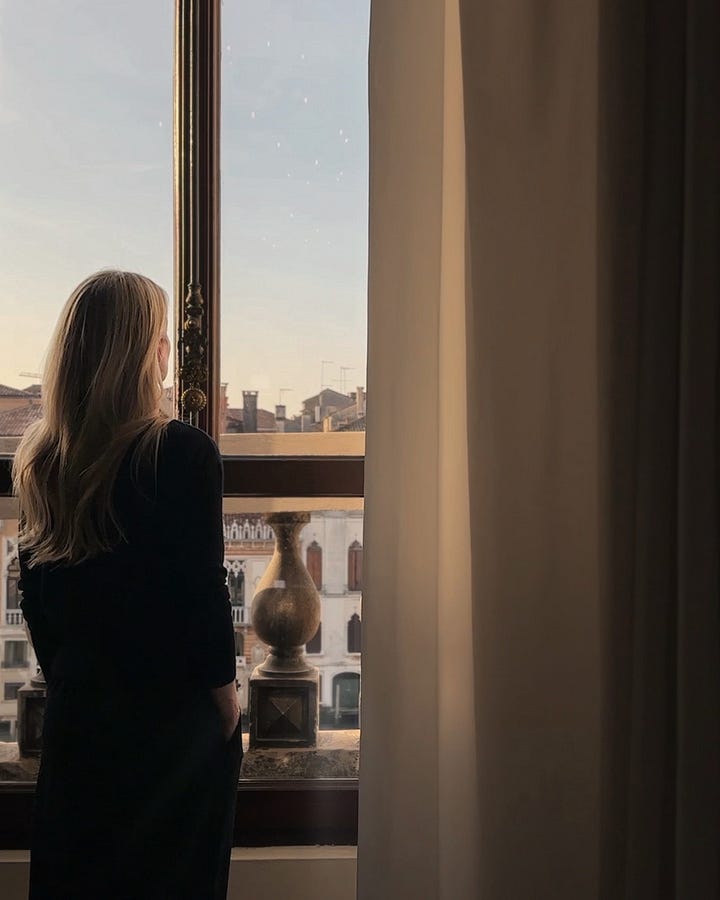
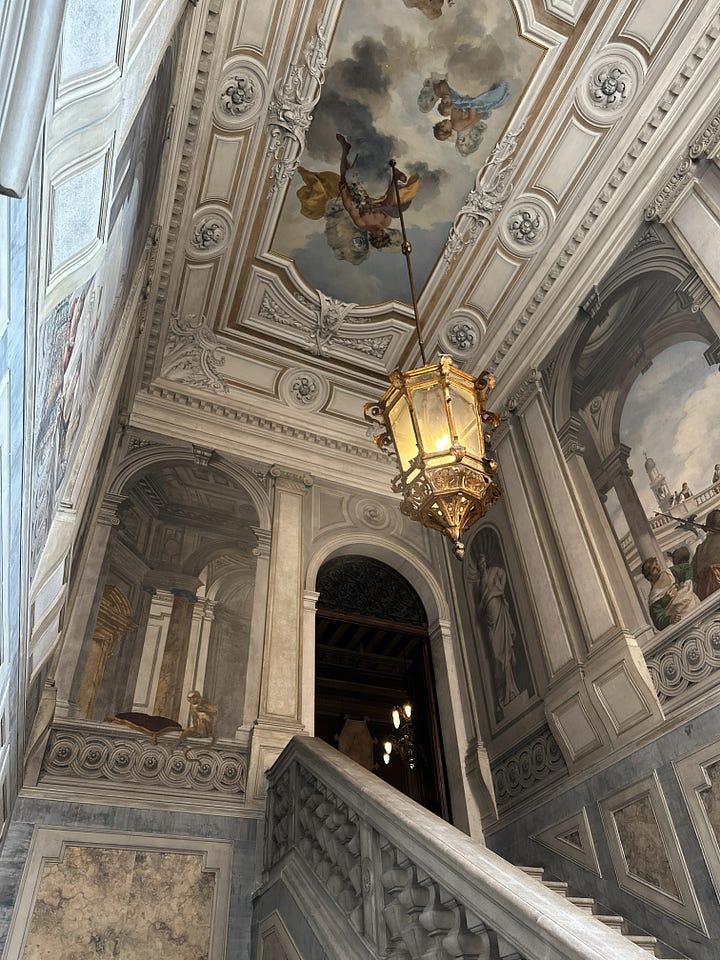
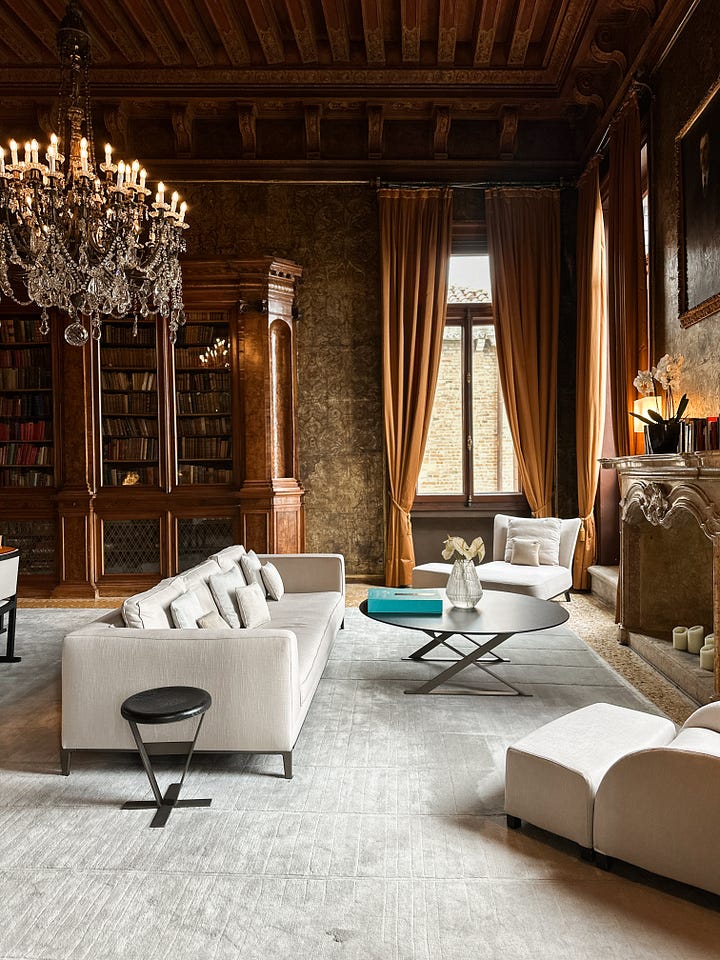
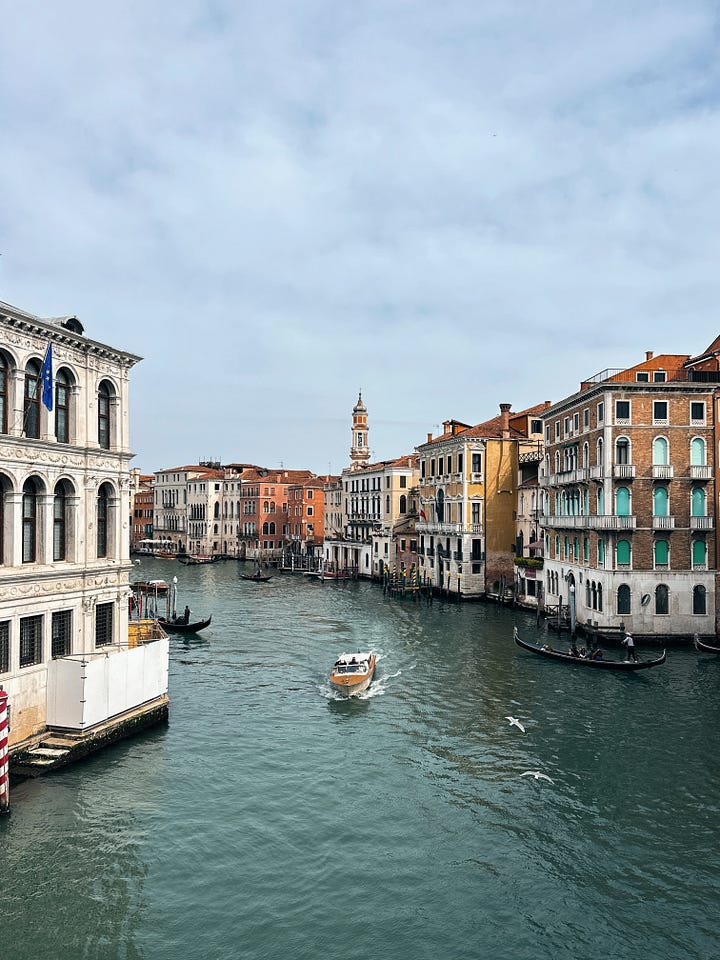
Venice is one of the most beautiful places I have ever stood inside of. I want to say that plainly and clearly before I say everything else. The light on the water. The way everything slows when you replace roads with water. The history of a city that has been stunning for so long it has stopped trying to impress you and simply is. To move through that with my partner beside me was when reality exceeded the dream.
What surprised me - what I wasn’t prepared for - were the flags.
Palestinian flags in windows. In planters. Draped across doorways like declarations. I lost count. And I looked, because once I saw the first one I couldn’t stop looking, the way you can’t stop pressing a bruise.
I did not see one Israeli flag. Not one.
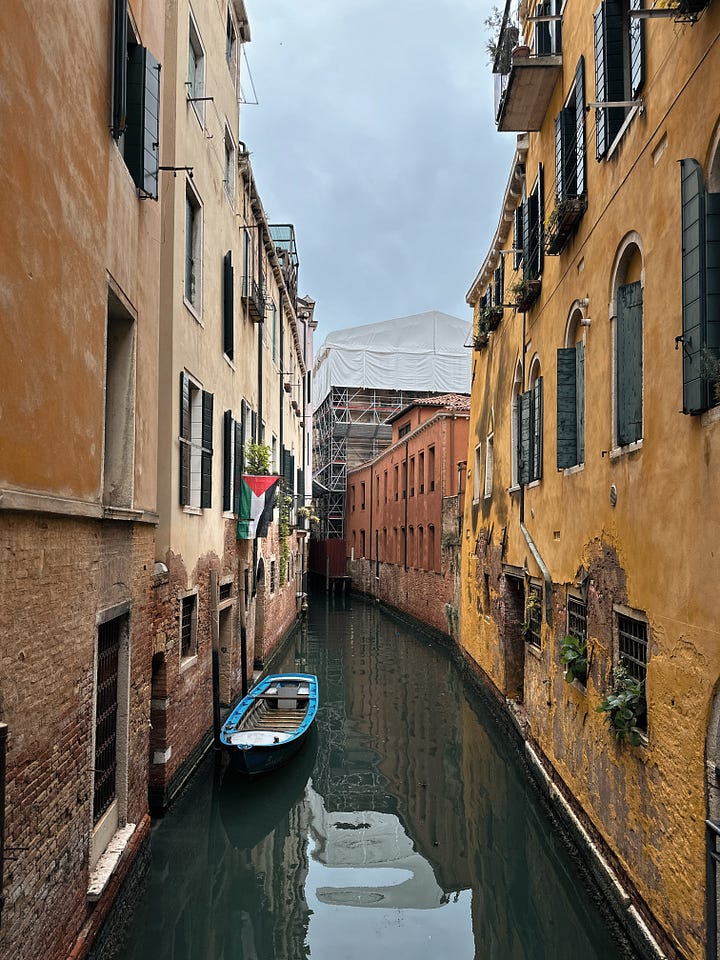
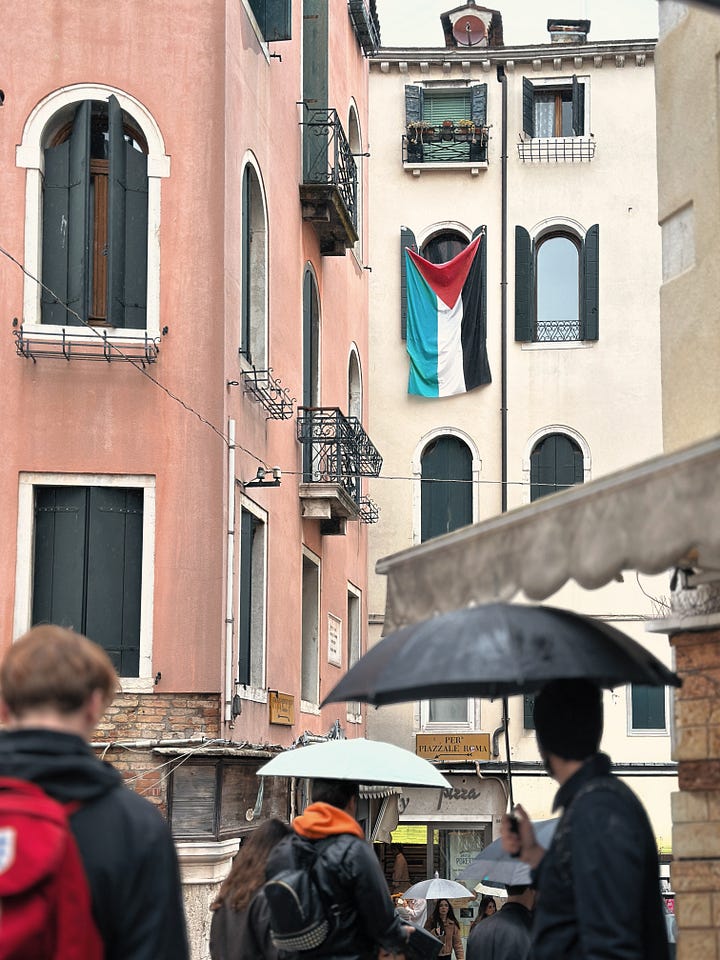
I want to be careful here because I believe in nuance and I believe in conversation and I believe that most people who hang a flag in a window are acting from feeling - not from studied history. Not from having stood at borders with their own feet, not from traveling to the land they advocate for, not from having looked at former hostage, Iair Horn in the eyes and asked him personally: did anyone show you humanity during the 498 days they hid and starved you in a tunnel? His answer to me was a resolute no.
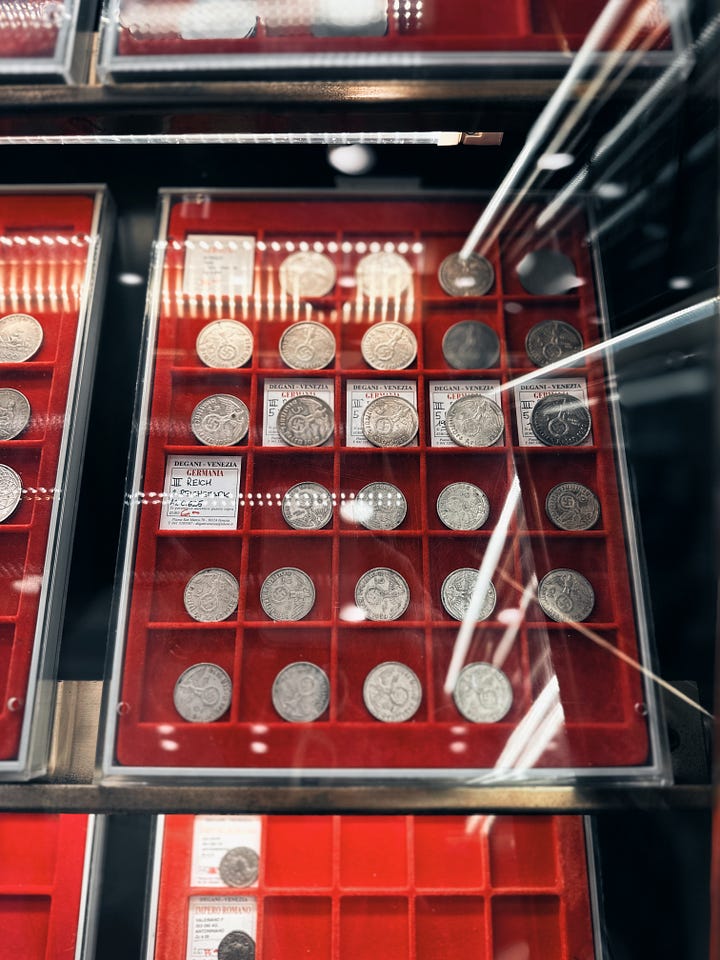
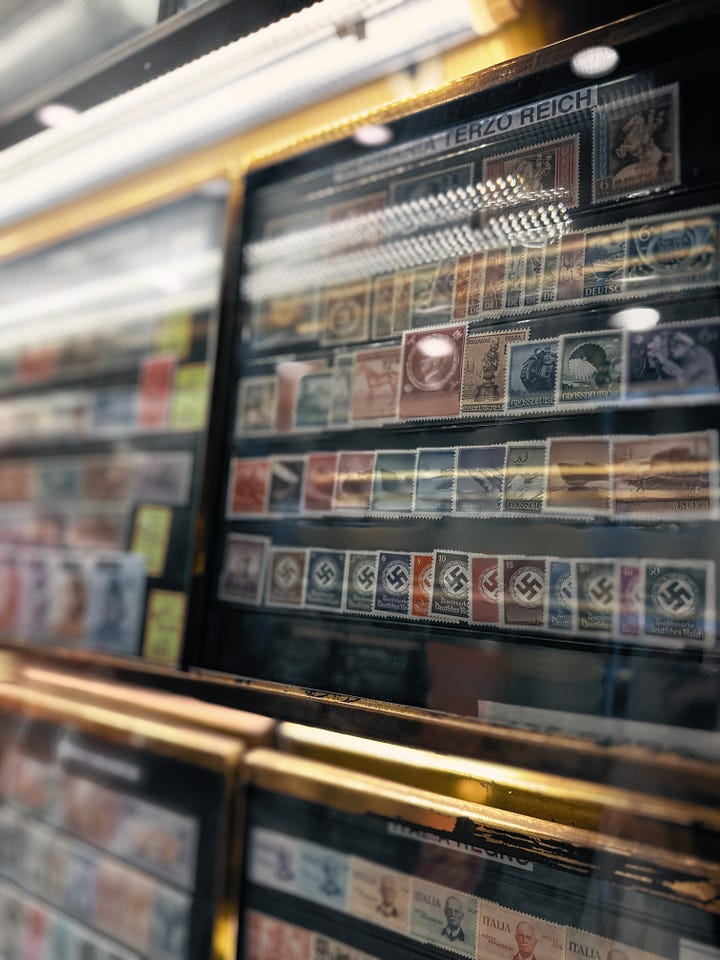
Feeling without history is just noise. And that noise, when it becomes a door draped in a flag, starts to look like a door that’s been decided - closed before anyone knocks, and reminiscent of the time not so long ago when the Germans brought the Holocaust to this very city. Those doors, I’ll tell you plainly, will not open a movement. They will stay shut behind a worldview that has yet to reckon with what it is actually endorsing. That reckoning is necessary. It is overdue. But I didn’t go to Venice to argue with a window. We went for love. We went to build forward. We went for vision. We went to plant seeds.
We went to find something older and truer than a flag and on this particular day, we went to find the ghetto.
Venice invented the word.
In 1516, the Republic of Venice ordered its Jewish residents onto a small island in the Cannaregio district - a former metals foundry, geto in the Venetian dialect. The gates closed at sunset. A guard watched from a window. Jews paid for their own imprisonment, funding the Christian guards who locked them in each night and let them out each morning to conduct the business the city needed but refused to dignify.
They built upward because they couldn’t build outward. The buildings in the Venetian Ghetto are among the tallest in the city - six, seven, eight stories - because when you are told your world has edges, you find the dimension no one thought to restrict.
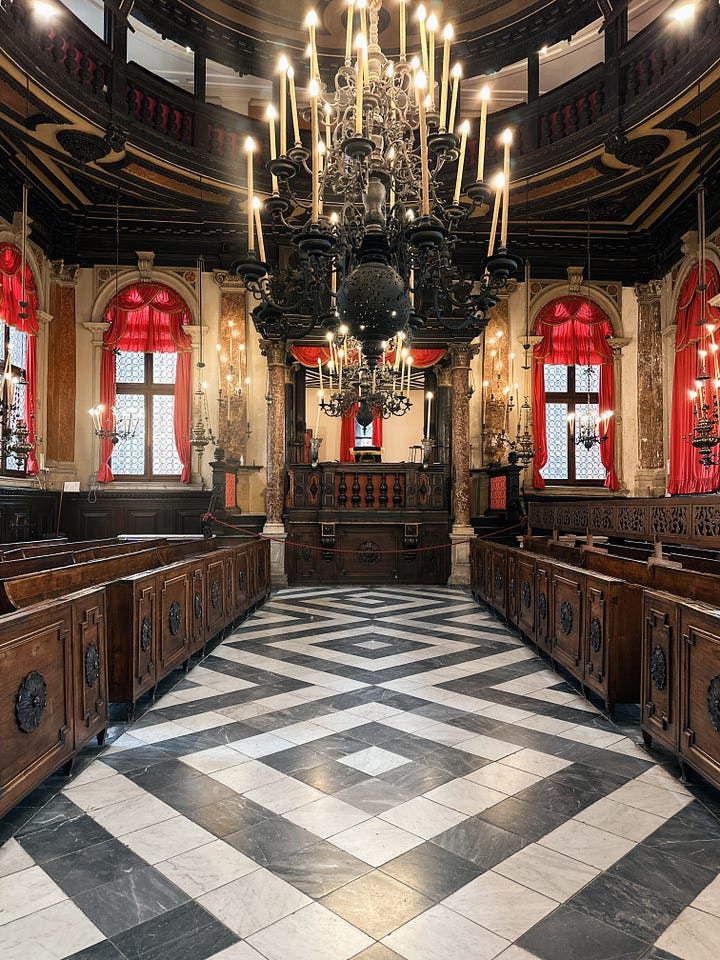
And they hid their synagogues in plain sight.
The buildings facing the square look like ordinary residential structures. They were meant to. But if you know what you’re looking for - five windows across the top of a facade (the number five symbolizing the five books of the Torah), a particular grouping that means we are here, come worship, you are safe -
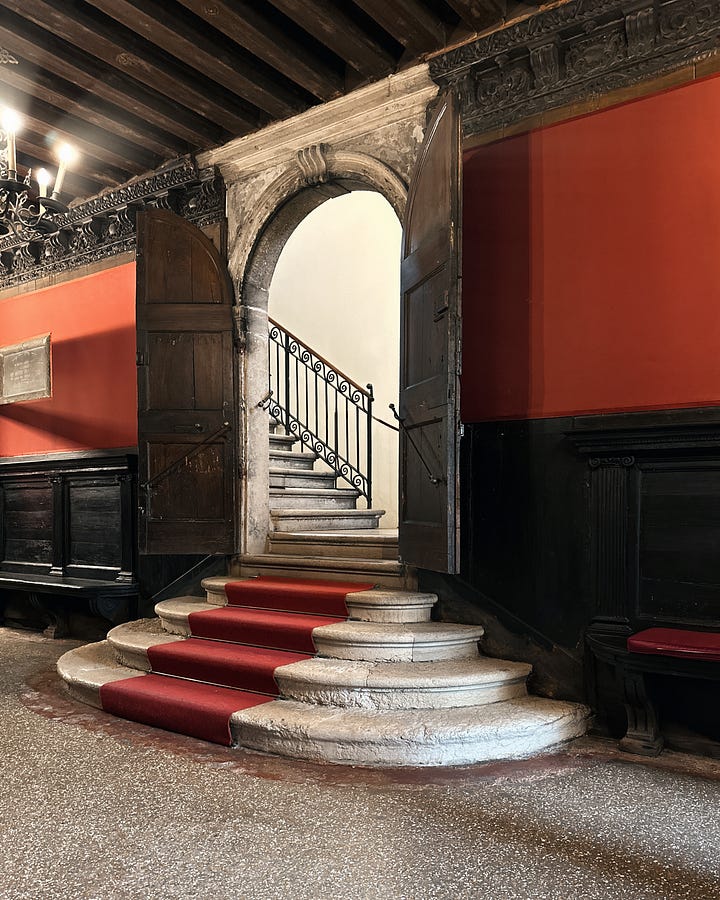
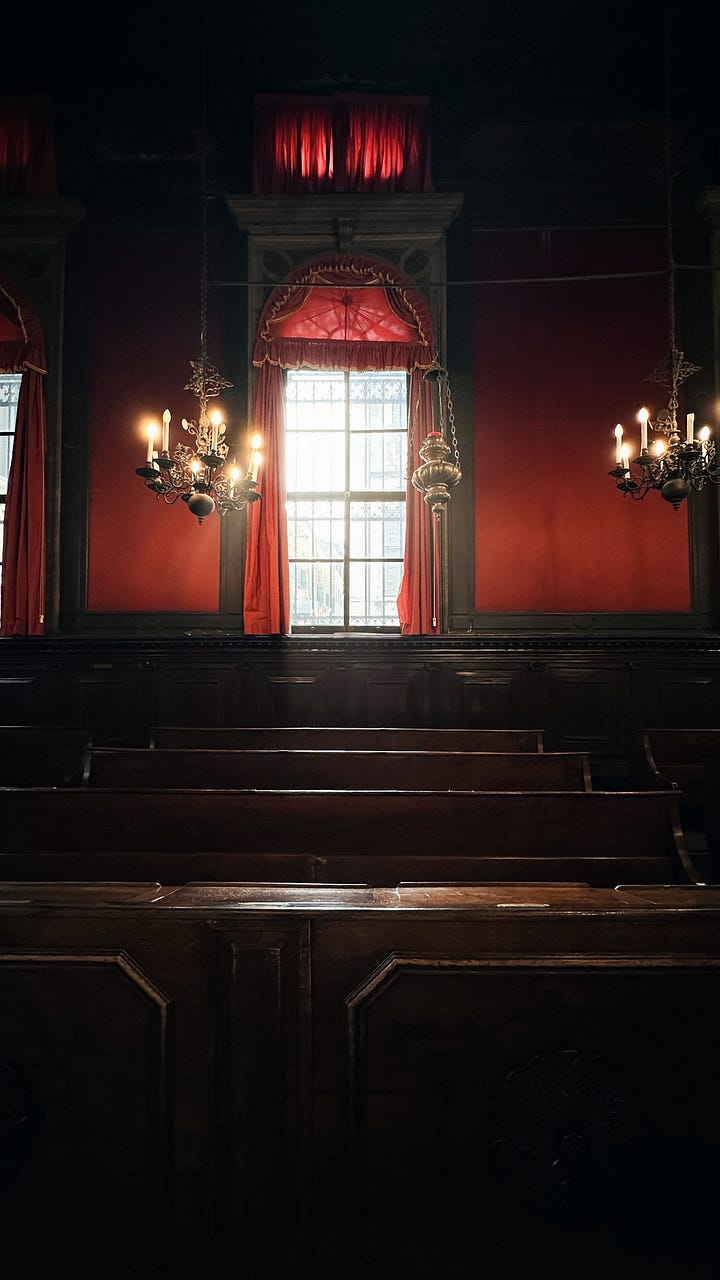
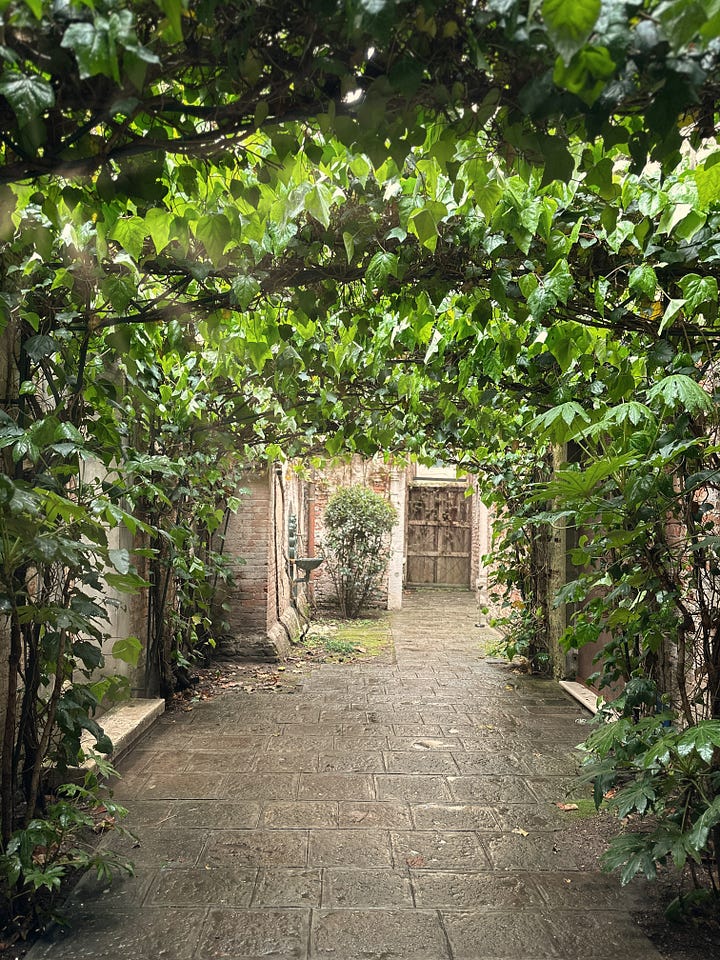
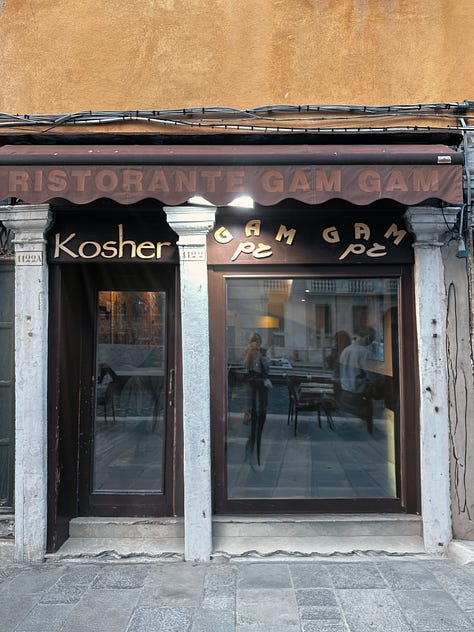
We found Gam Gam on our last night in the city.
It sits at the edge of the ghetto, facing the canal - and if you arrive when the weather is kind, the light on the water will stop you mid-sentence. The shawarma is extraordinary. The schnitzel rivals anything I’ve had in Israel, and I don’t say that lightly. We broke bread with new friends, with the Chabad Rabbi and Rebbetzin, and somewhere between the food and the laughter and the canal reflecting everything back at us, I felt that specific kind of joy that only exists when a place exceeds what you came looking for.
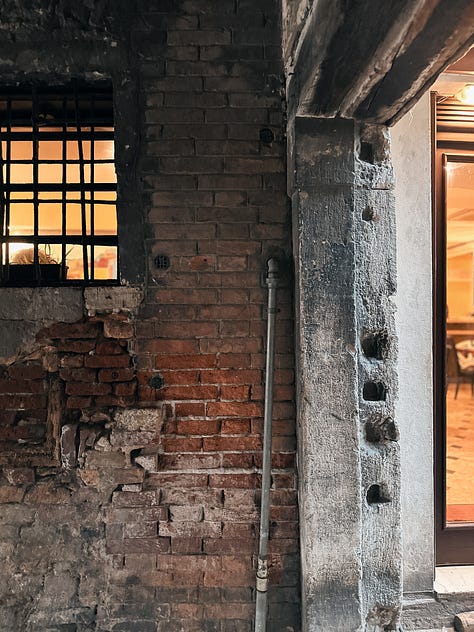
It wasn’t until I was leaving that the Rebbetzin touched my arm and pointed.
On the side of the building where you enter - bars still hang over a single window. Still there. The iron is old. The stone around it is worn. Those bars once framed the face of a guard whose job was to watch Jews cross a threshold they did not choose. The remnants of the gate are still visible if you look for them. And now, in that same threshold, there is a restaurant. A Jewish-owned, kosher restaurant, feeding people from everywhere, open to anyone who’s hungry.
I couldn’t move.
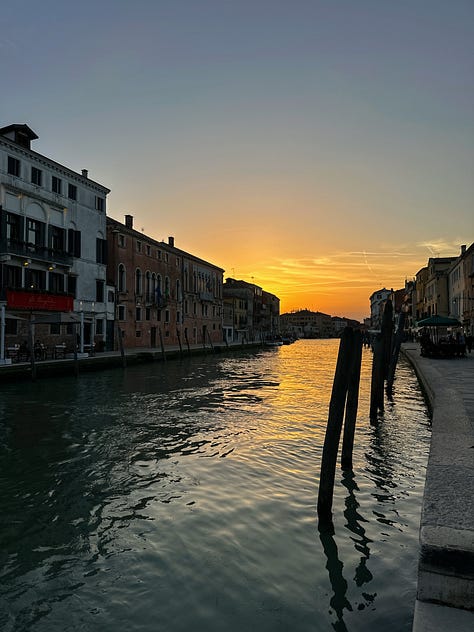
There are no words adequate to the distance between what that window once meant and what it means now - but I’ll try: we outlasted it. Not without devastating loss. The Jewish community in Venice numbers somewhere around 300 to 470 people today, and the Rabbi told us quietly that even that figure runs generous. The community has never recovered its prewar numbers and likely never will. That grief is real and it deserves to be named - not as a wound, but as a witness.
But Gam Gam is open. The gate is gone. The tables are full. The window that once surveilled Jewish people entering and leaving their own neighborhood now looks out over a table where the Shabbat candles are lit and the wine is poured and someone’s child is asking for more schnitzel.
That is not a small thing. That is everything.
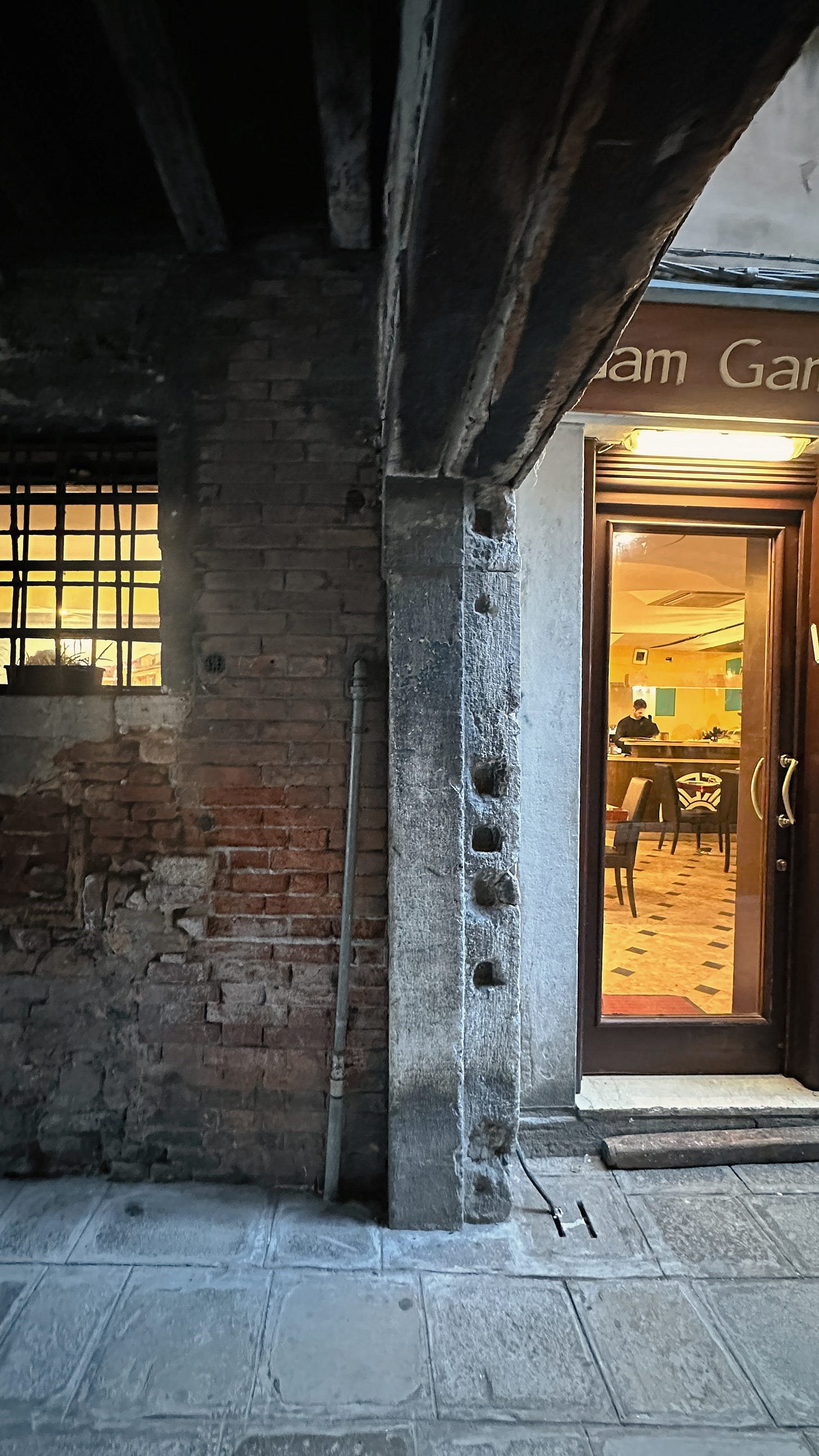
I’ve been thinking since I got home about what it means to build forward - a phrase I keep returning to, keep turning over.
It doesn’t mean forgetting. The bars on the window stay. The history stays. You don’t renovate over the remnants of a gate, you let them stand, because memory is not the same thing as wound.
Memory, held correctly, is instruction.
It asks something of you.
To build like they did. To find the dimension no one thought to restrict. To create meaning where constraint once lived. To let beauty be beautiful without requiring it to be simple.
The flags in those windows are not neutral - they are declarations, and they carry danger. Political symbols, lifted far from the complexity they claim to represent and reduced to something immediate, something easy to display and easier to misunderstand. Not unlike the way propaganda has always moved: reshaping reality into something more palatable, more persuasive. The Venice Film Festival itself was once used as a stage for propaganda under fascism. The objective isn’t new. The mechanism is the same.
The alliance is not new either. Adolf Hitler sought it, and Amin al-Husseini carried a stated commitment to continue that work in the Islamic world. The year changes, but the story does not. As civilization advances, so too does this colonizing strain of extremism- carrying the same hatred, repackaged in new symbols.
I understand that people in confusion or pain reach for easy symbols. They reach for what feels like clarity, even when it lives only on the surface.
But the symbol I couldn’t stop thinking about - the one that will stay with me - is quieter.
A set of iron bars over a window, where a guard once stood.
Once, the iron meant confinement. Now, they mean something else entirely: we are still here. We endured. We adapted. We created life anyway. There is food on the table. There is light in the room. Come in. Sit down. Stay a while.
That is the symbol I want to carry.
That is a life worth fighting for and protecting.
That is the one worth hanging in the window.

Comments
Nothing yet. Say the first thing.
Sign in to join the conversation.