
His name was Basil.
Something inside me told me to stay off my phone and pay attention.
So I asked my Uber driver where he was from.
“Palestine,” he said.
I paused - understanding there were a few different paths I could take in that moment. I chose curiosity over combat. Listening over performance. Not because I didn’t know better. Because I did.
I asked where his family was specifically from. He mentioned a small Arab city outside of Netanya.
Israel.
Not “Palestine.” Not a slogan. Not an Instagram infographic. Israel. He’s from Israel, by the way - right outside of Netanya, which happens to be my Hebrew name (Netanya Tikva).
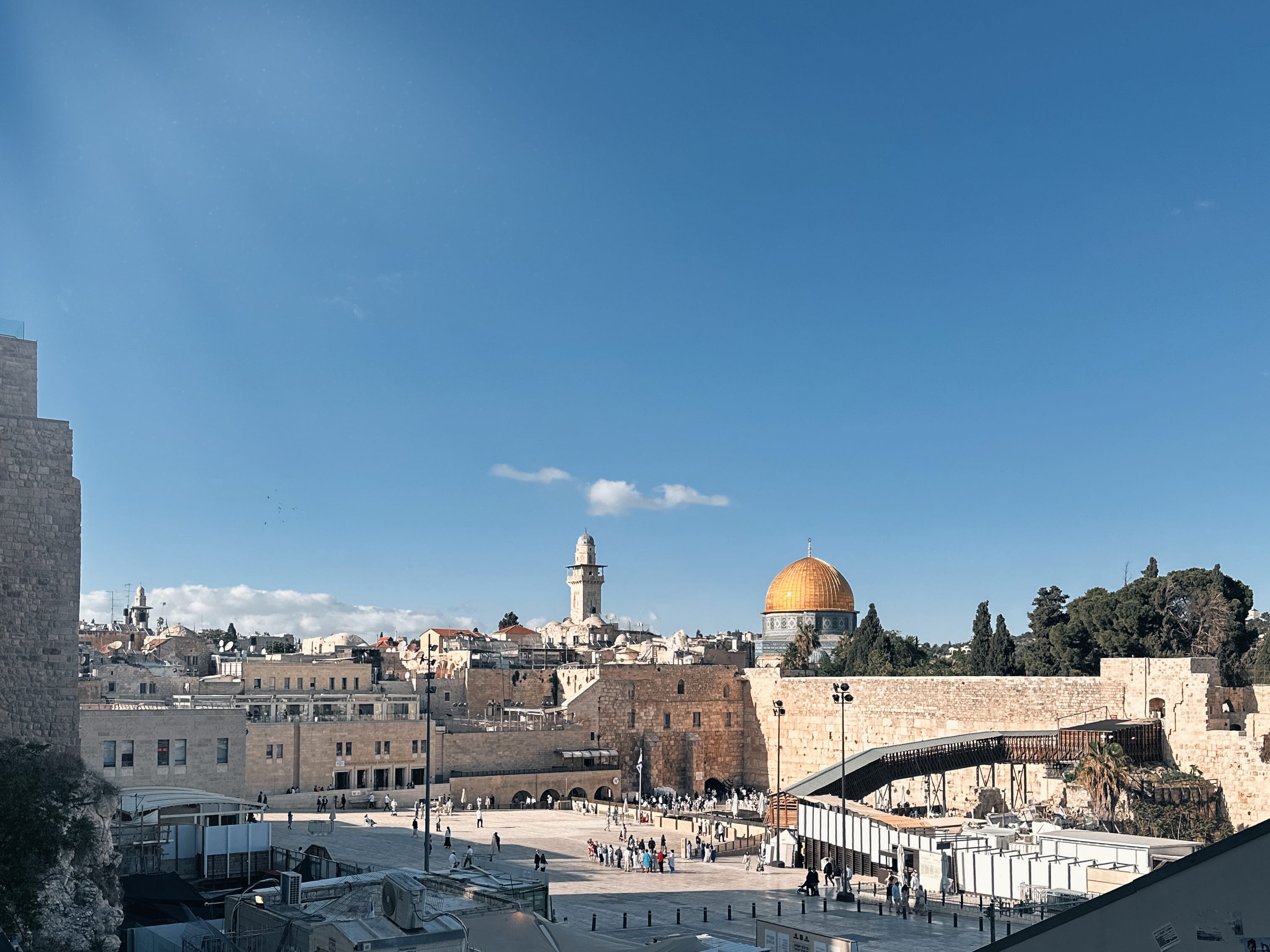
He asked if I had ever been and I nodded and smiled. I know the streets, the people, the texture of the land in a way that can’t be downloaded from a protest flyer. Then he asked if I had ever been to the Dome of the Rock. I kindly explained that Jews are not allowed to enter there. He paused before blurting out:
“THEY ALL LIVE TOGETHER.”
“Yes,” I said. “They do.”
Arabs, Jews, Christians, Druze. Imperfectly. Complicatedly. Humanly. I’ve seen it with my own eyes.
I asked if his family was safe. He shared a story about nephews disappearing - almost as though it happened out of thin air. I asked if they had served in the war. Israeli Arabs can volunteer and serve in the IDF. He didn’t answer. My mind went to the places it goes when you've spent years observing and traveling to this conflict - whether his young nephews were connected to terrorism, to radicalization, to the uncomfortable truths so many Americans flatten into hashtags because they've never had to live with the consequences of what they romanticize.
He mentioned checkpoints. I didn’t just nod. I asked if he understood why they existed - and then shared stories from the second Intifada. Buses exploding. Cafes shattered. Civilians murdered in ordinary moments. The kind of violence that forces a nation to choose between inconvenience and survival. He listened.
We were rounding the corner into the airport when I asked:
“Do you think we will ever see peace in the region?”
“Only if we remove politics,” he said. “When there are politics, there’s no peace.”
It’s a simple answer from someone living inside a complicated reality. The desire for peace is rarely the missing ingredient when I am in rooms with survivors, diplomats and military. Peace comes when there is a willingness to be honest about what stands in the way of it.
When we arrived, he opened my door and helped me with my bags. He was warm. Gentle. Before I walked away he smiled and said:
“Have a safe flight, my cousin.”
I shook his hand and held his arm for just a moment longer than a stranger would.
And somehow that word stayed with me the entire trip.
Cousin.
Not enemy. Not colonizer. Not oppressor.
Human.
It wasn’t lost on me what this 24-hour trip symbolized.
I flew to Connecticut to speak at a women’s auxiliary luncheon supporting Jewish seniors for Mosaic Senior Life. In Judaism, caring for our elders is covenantal. Sacred. They are living libraries - carrying memory, warning, resilience, survival, and the kind of wisdom that only comes from having outlasted the thing that was supposed to destroy you.
I spent the morning and afternoon speaking about humanity. About protecting life. About creating forward in a culture increasingly addicted to destruction, division, and identity as currency. About the recent research showing that when you teach people to sort the world through the binary of oppressors and victims, you do not create justice - you create a buffet for dehumanization. A framework where complexity dies, accountability disappears, and entire groups of people become morally disposable. I shared the personal wars behind the very public one and how I am rebuilding.
After the event, my dear friend Jamie (owner of my favorite JL Rocks) and fabulous host grabbed lunch with me before I headed back.
A turn and burn trip. Bags checked. Phone in hand. Mind still soft from the day - grateful, full, a little worn.
Then I heard it.
“Inshallah.”
He looked at me. Then he looked at my neck. He saw my Magen David.
He got louder.
He was maybe fifteen years younger than me, wearing a Deloitte backpack, standing beside a girl who didn’t notice me. Just the three of us in the elevator at LaGuardia before getting on a slow-moving conveyor. They were casually discussing attending a pro-Palestinian protest the way people make brunch plans on a Sunday.
And suddenly every conversation from that morning came rushing back.
The conversations about memory. About protecting life. About how war never fully disappears - it simply retreats beneath the surface long enough for people to forget what’s at stake. Then it returns. Different decade. Same story. I've watched it happen. I've studied it. I've stood in the places where it happened and talked to the people who survived it.
Because this war is no longer confined to the Middle East.
It’s in elevators at LaGuardia airport. In universities. In corporations. In our backyards. In the language people are too afraid to correct. Somewhere along the way, telling the truth became the controversial position.
Israel exists and it is not going anywhere.
And there is something deeply dangerous about raising generations of young Americans to emotionally invest themselves in a delusion while remaining historically illiterate about the reality.
Somewhere between Basil calling me cousin and two American twenty-somethings parroting slogans they don’t understand, something crystalized.
Basil was rooted in something real. In family. In complexity. In consequence. In humanity. When I spoke, he listened - and when he spoke, I listened to even the space between his words.
The kids in the elevator were rooted in ideology they inherited from people who were never there.
One understood the cost of war. The other romanticized it.
One conversation was grounded in lived reality. The other was performance.
One called me cousin. The other saw a Magen David and got louder.
And that - not the conflict overseas, but that - may be the most dangerous divide of all.

Comments
Nothing yet. Say the first thing.
Sign in to join the conversation.