
I remember things in feelings, not facts. It’s not great for my sense of direction or ability to argue without crashing out—but it’s perfect for my silly little hobby of rewatching movies. Moods linger. Plot points? Gone. Some more than others. Take Wall Street.
As a cable TV rerun classic, I must’ve seen it 50 times growing up. Yet somehow, I blacked out the part where Gordon Gekko gets taken down for insider trading. Am I okay?
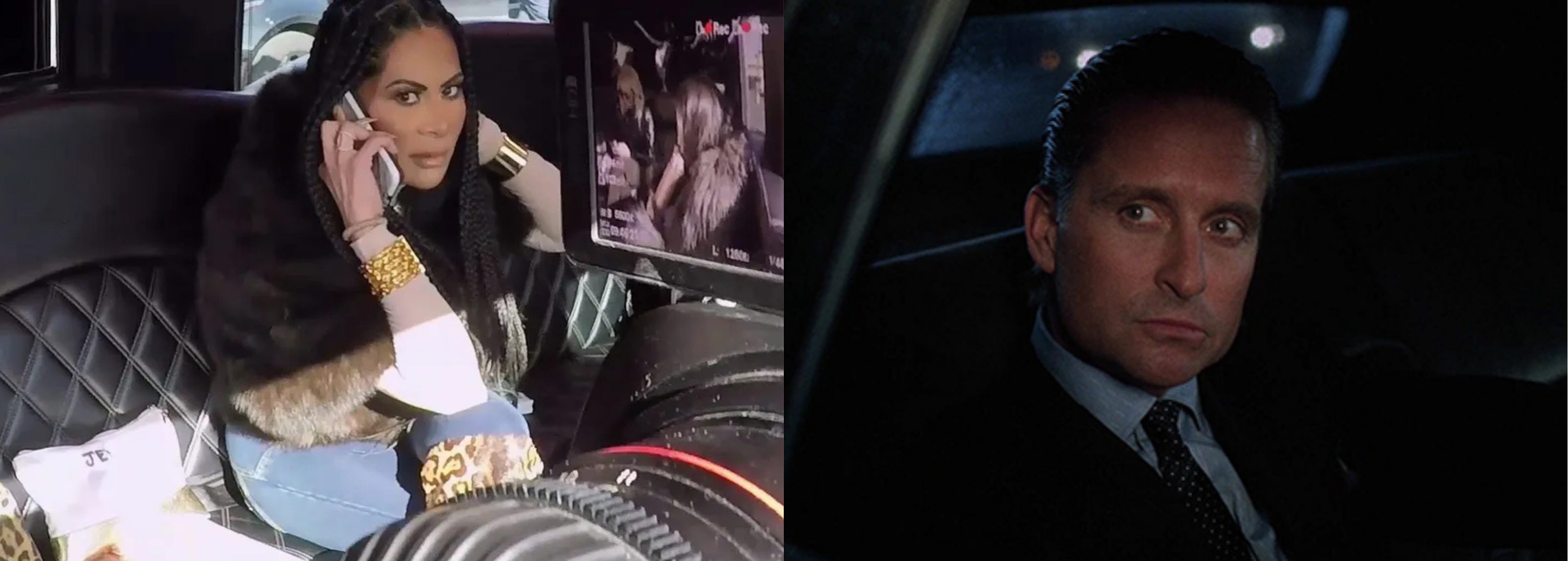
The only thing that really stuck with me (besides the fact that it’s set in the '80s and also stars Charlie Sheen before… well, you know) was Michael Douglas’ undeniable Big Dick Energy as the fraudulent financier.
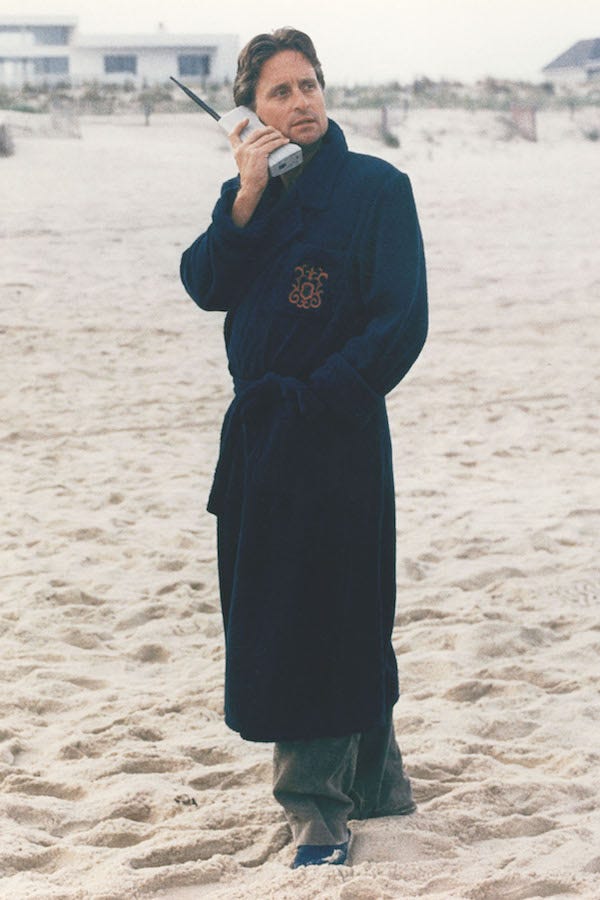
But the idealization of this so-called villain is more than a byproduct of my memory issues. Screenwriter Stanley Weiser has even commented, “I never could have imagined that the core message of Wall Street would be so misunderstood by so many.”
Upon rewatch, I simply must ask—if you wanted us to hate Gordon Gekko, then why, pray tell, did you give him such immaculate taste? Why did you cast someone with so much aura? We were never going to care that he’s a capitalist pig. We just want to know who makes his suit.
Besides, I’d argue that his protege Bud’s apartment decor is a far worse crime against humanity than Gekko’s schemes—but I digress.
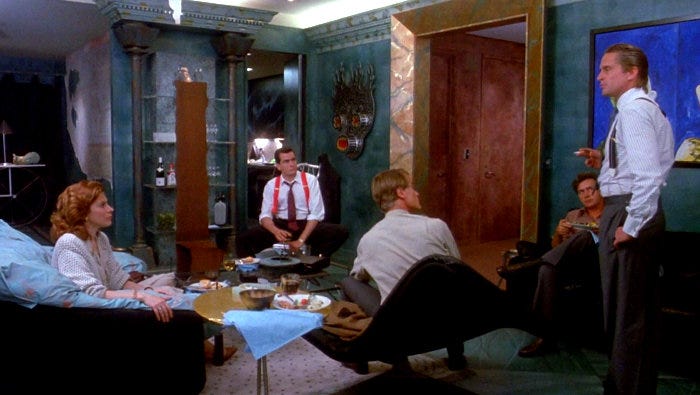
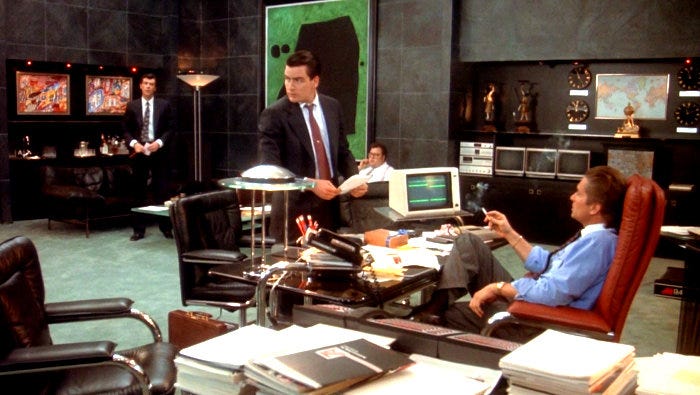
Our “protagonist” is Bud Fox, a young stockbroker who wakes up every morning and inflicts Anna Delvey–level shaming upon himself. (Lest we forget Julia Garner’s immortal line read: “Why do you look so poor?”) But Bud’s hunger for wealth isn’t about love of luxury—it’s about not ending up like his blue-collar dad. Which leads him to stanning Gekko a little too close to the sun.
An accidental insider tip is all it takes for Gekko to clock Bud as a useful pawn. And though our sweet, twenty-something prince is too naive to recognize these sinister motivations—it’s clear to the audience from the jump. Yet, much to the writer’s chagrin, we’re just as obsessed with him. Why?
Maybe it’s because Gekko’s art and antique collection aren’t just expensive displays of wealth—they’re revered, personal. His relationship with ‘stuff’ signals a deeper understanding of true power and legacy: that it comes from cultural literacy, not just capital. It comes from having a sharp eye, and actually trusting it.
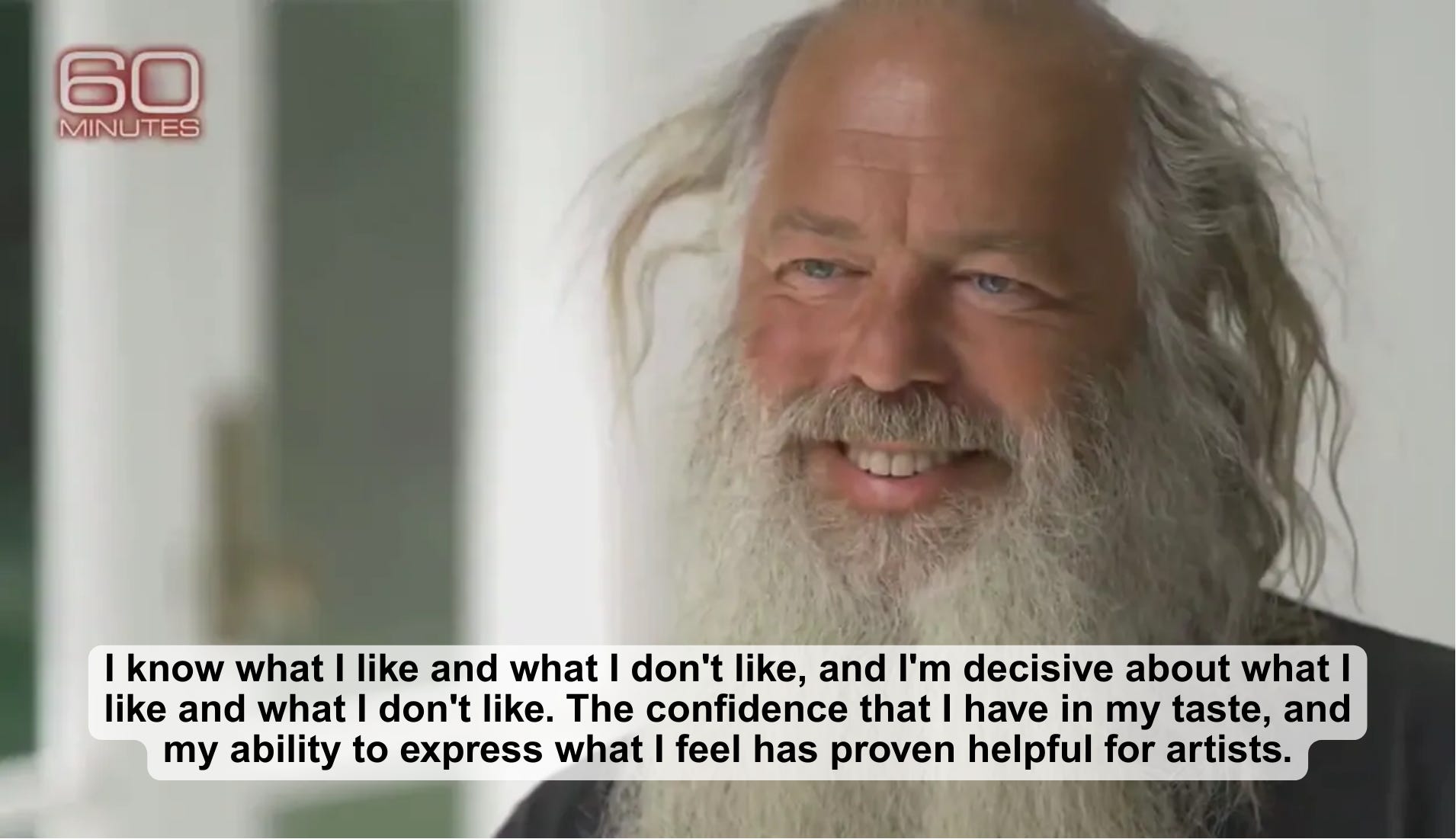
In a cinematic world where every other character is flattened into a plot device—Bud as the ambitious prodigal son, his father the bleeding-heart working-class hero, Darien the social-climbing girlfriend—Gekko’s taste gives him interiority. He might be a villain, sure. But he’s also ✨ so much more ✨. He’s an art girlie.
Bud, on the other hand, has no interest in engaging with culture on a personal level. (Which could be chalked up to his frontal lobe not being fully developed yet—but I'm nothing if not a hater, so I’m not giving him that benefit of the doubt!) When his big payday hits, he buys a penthouse and immediately hands over the curating to Darien—no input, no direction. The result? An apartment full of soulless status symbols. In the words of Luanne de Lesseps: money can’t buy you class.
When Gekko inevitably fucks him over, we’re asked to believe that Bud suddenly grows a conscience. But he doesn’t rat out of principle—he does it out of vengeance. It’s not earned transformation, it’s retaliation. That’s why Gekko stays with us instead. He’s bad—but he was never pretending. And honestly? I could fix him… but I really don’t see the need.

Anyway. Let’s talk about another rewatch: a movie that somehow understands materialism even less—Confessions of a Shopaholic.
Released hot on the heels of the housing market collapse, I’m convinced this movie had one covert goal: get the girlies swiping those credit cards again. Because Isla Fisher’s character is only $9,000 in debt—quaint!—and somehow boasts a wardrobe that could stock a RealReal brick and mortar.
And the job she lands in the end? Writing a 500-word column once a month. Now that’s why I went to journalism school, baby.
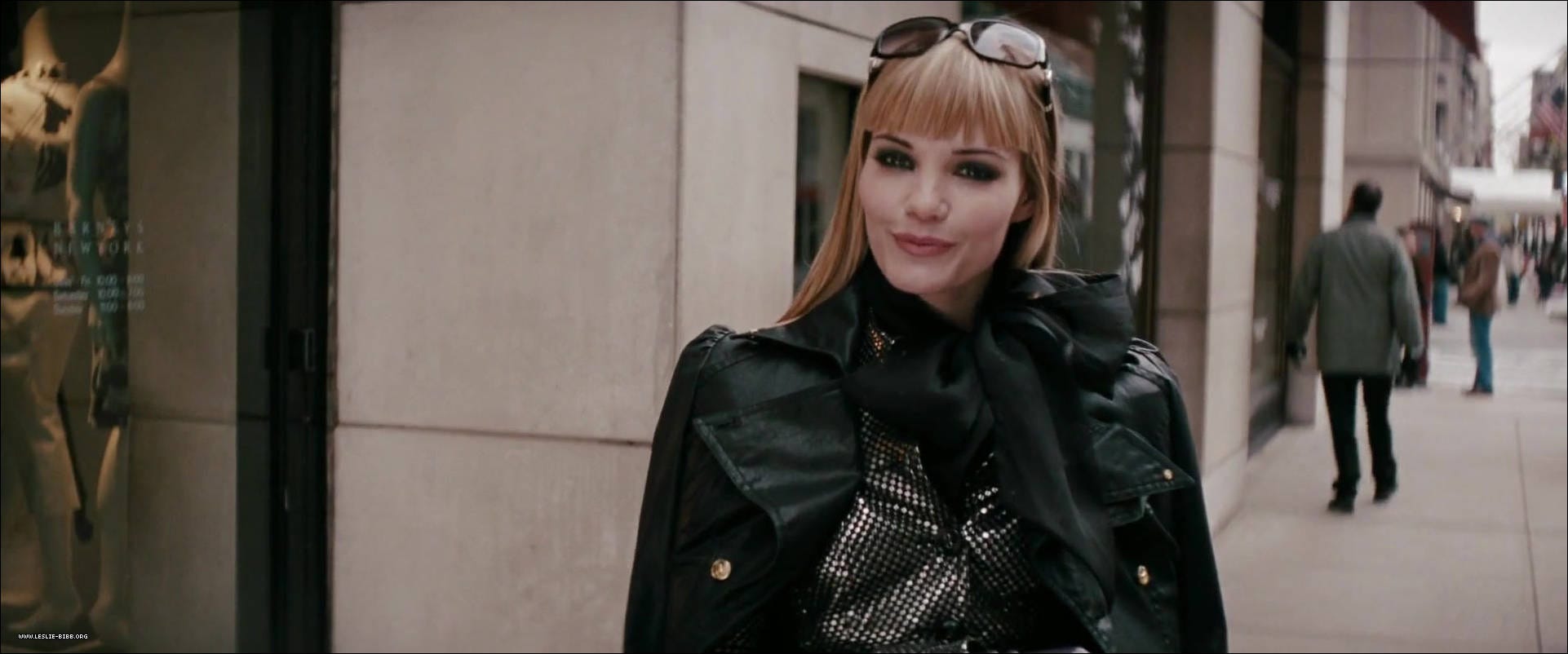
But the best part of this rewatch was seeing a vintage edition of Leslie Bibb’s cunty little bob in action—right when my post-White Lotus depression was hitting the hardest.
Until next time!
Comments
Nothing yet. Say the first thing.
Sign in to join the conversation.