
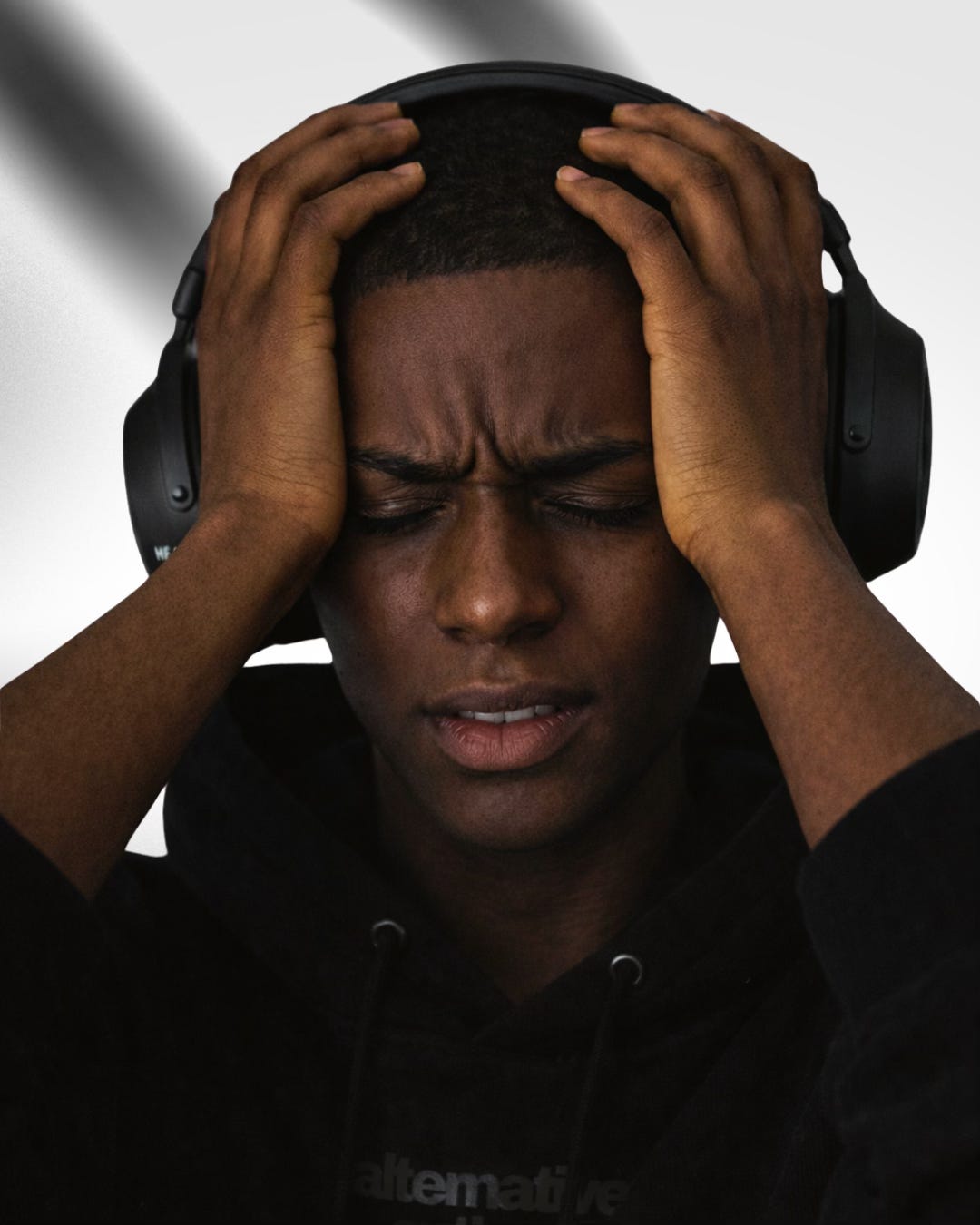
Anxiety isn’t always a diabolical shit storm.
Often it’s a low key scratching you can’t quite silence.
We all know this feeling.
But what is anxiety, really?
At its core, anxiety is a protective response. Your nervous system is scanning for threat … real or imagined … and preparing you to act. Heart rate increases. Muscles brace. Attention narrows. Cortisol rises.
It’s your body trying to keep you safe.
The problem is when the alarm doesn’t shut off.
Modern anxiety isn’t usually about a tiger in the room. It’s about emails. Deadlines. Social perception. Financial pressure. Unfinished conversations. The future.
The body doesn’t distinguish well between physical danger and psychological stress.
It just activates.

Why Music Changes the Equation
Research shows music measurably influences heart rate variability, cortisol levels and emotional regulation. Rhythm, especially, impacts how the brain synchronizes with external stimulus.
And here’s where it gets interesting:
Intensity isn’t always the opposite of calm.
Most anxiety advice leans toward soft, slow, sedative sounds … and yes, that CAN work. Certain musical structures help slow breathing and cue relaxation.
But when your system is already heightened, extreme quiet can feel disconnected from what your body is experiencing.
That mismatch matters.
Heavy music (with its dynamics, repetition and deliberate rhythm) gives the nervous system something structured to follow.
Instead of being dragged by anxious thought loops, attention locks onto pattern.
And pattern feels stabilizing.
In listeners who choose intense music intentionally, research suggests it doesn’t increase distress. It can actually help regulate it.
It’s not about drowning anxiety out.
It’s about giving it direction.
Instead of forcing the system down, you meet it where it is.
You guide it through.
Real-Life Regulation (Beyond the Music)
Heavy music is a tool. But it works even better when paired with real nervous system awareness.
If anxiety spikes, try:
• Name it. Literally say, “This is anxiety.” Naming emotions reduces amygdala activity.
• Exhale longer than you inhale. The vagus nerve responds to extended exhale.
• Ground physically. Feet flat on the floor. Notice five physical sensations.
• Reduce inputs. Anxiety multiplies with overstimulation. Fewer tabs. Fewer notifications.
• Move your body. Anxiety is activation energy. Let it discharge.
Heavy music fits into this because it combines movement, rhythm and agency.
You choose the song.
You choose the volume.
You choose when it ends.
Anxiety often feels like loss of control. Music reintroduces choice.

The Ritual
This week:
Pick a heavy track you genuinely love (check out our brand new curated Playlist!) the one that lands in your chest.
Headphones on.
No multitasking.
Focus on the rhythm more than the lyrics.
If it feels natural, let your breathing fall into the tempo.
When the song ends, pause before moving on.
Notice what shifted … in your body, your thoughts, your posture.
Anxiety isn’t weakness.
It’s energy without an anchor.
Give it something strong enough to move with.
With Intention,
Esjay for Alternative Options™
Wellness.
But make it Heavy ⚫️
www.alternativeoptionswellness.co

Comments
Nothing yet. Say the first thing.
Sign in to join the conversation.