
Parvat Say is a play on words. In Darjeeling, where we’re based out of, mountains are referred to as ‘Parvat.’ These dispatches are hence “From the Mountains.” They’re also a voice, putting to words the thoughts and ideas that are emanating from the mountains of Darjeeling, hence “the Mountains speak.”

In April, we delivered 2,500 Isometric-certified carbon removal credits to MOL. Largest-ever delivery of ERW credits certified under Isometric’s Enhanced Weathering Protocol. Our 2nd consecutive delivery to the same partner, 5 months after the first.
That’s roughly 3,500 one-way flights from Delhi to Tokyo, pulled from the atmosphere and locked in ocean chemistry for over 10,000 years.

2 years ago this was a moonshot. The default advice was to hire overseas teams, route samples to labs in the US or UK, build from the outside in. We went the other way: our own labs in Darjeeling and Bangalore, a science team trained in-house, the full stack built in India from scratch. Most people thought we’d gone mad. Honestly, there were moments we thought so too.
The 2,986 credits behind this are a relay across 4 teams.
Indra-Dhanush identified tens of thousands of acres of land, moved basalt from crushers to farmers, and coordinated sampling across every parcel. Shonku Labs processed 12,000 samples in-house; Iris built FELUDA, the digital stack tying land, logistics, lab data, and credit math together; and Climate Studio translated the science into a language the world could trust.

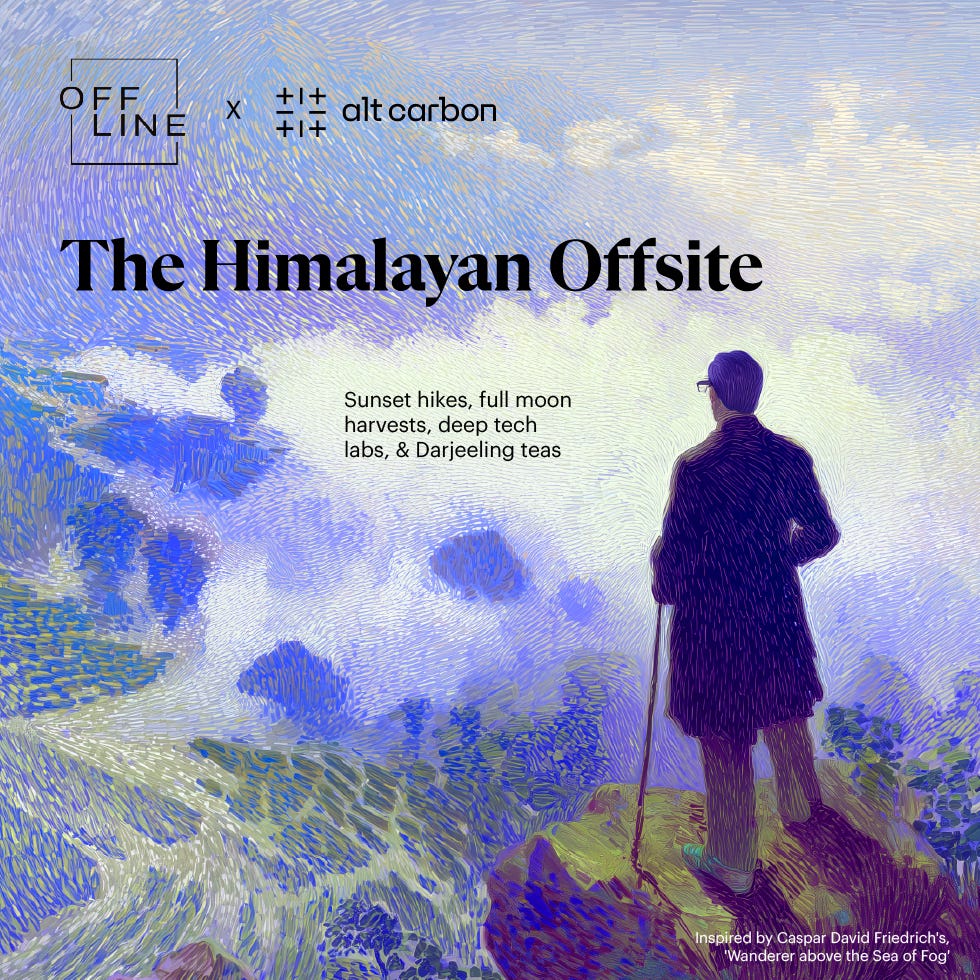
We hosted Offline x Alt Carbon: Off Grid Darjeeling earlier this month, a 2-day visit led by Dhruv Sharma, the current CEO of AngelList, and Utsav Somani, AngelList's co-founder and one of Alt Carbon's earliest believers.
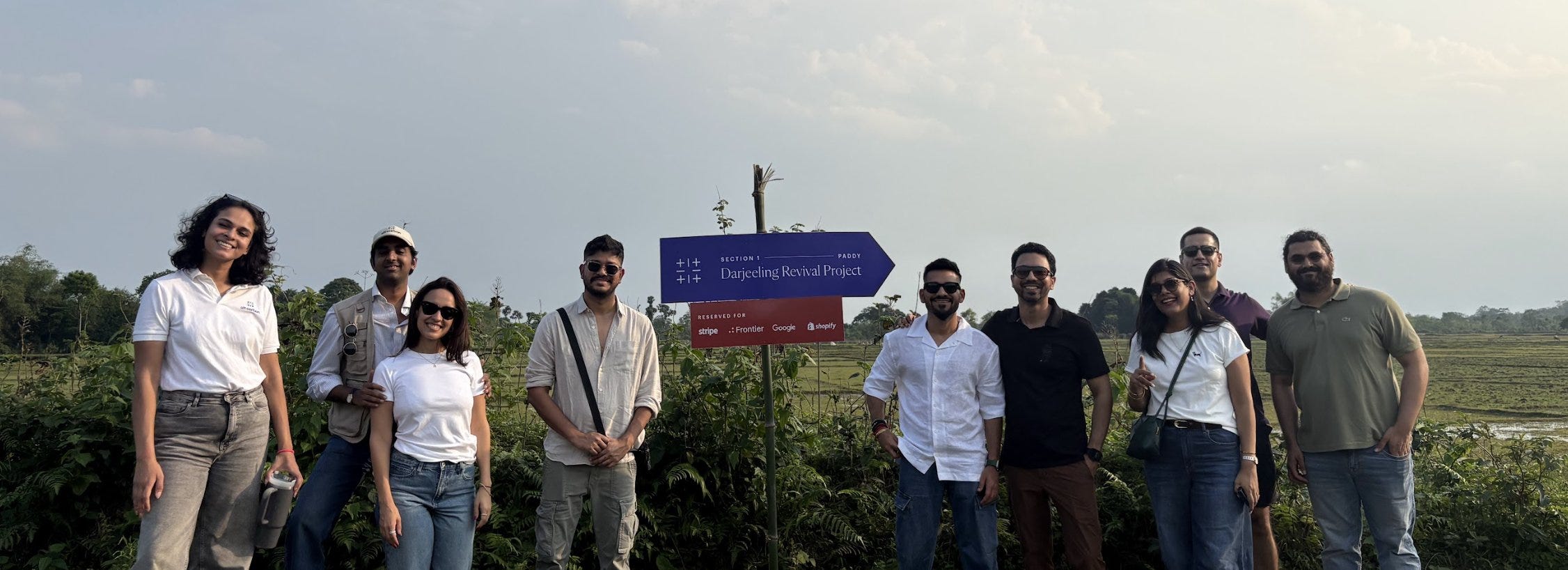
Day 1 opened on the fields. We took the group through a live field tour of the Darjeeling Revival Project, walking them through how our team collects soil samples and extracts pore water from the ground (the two primary measurements that tell us how much carbon a field has sequestered).
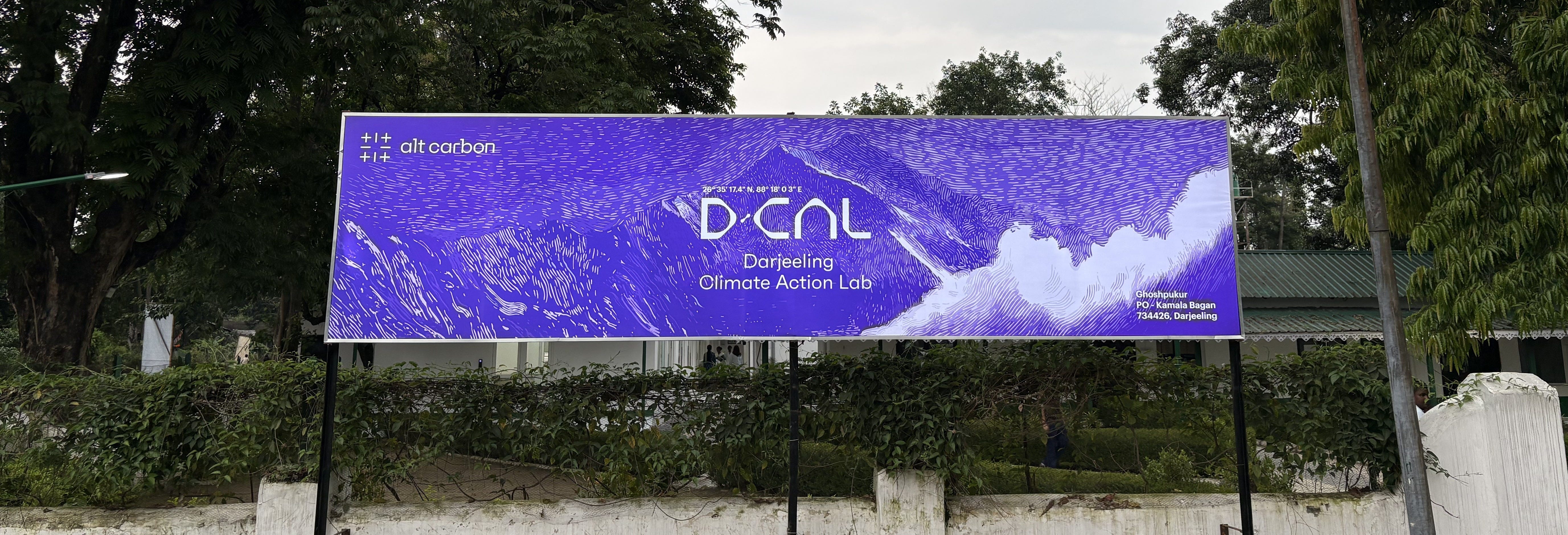
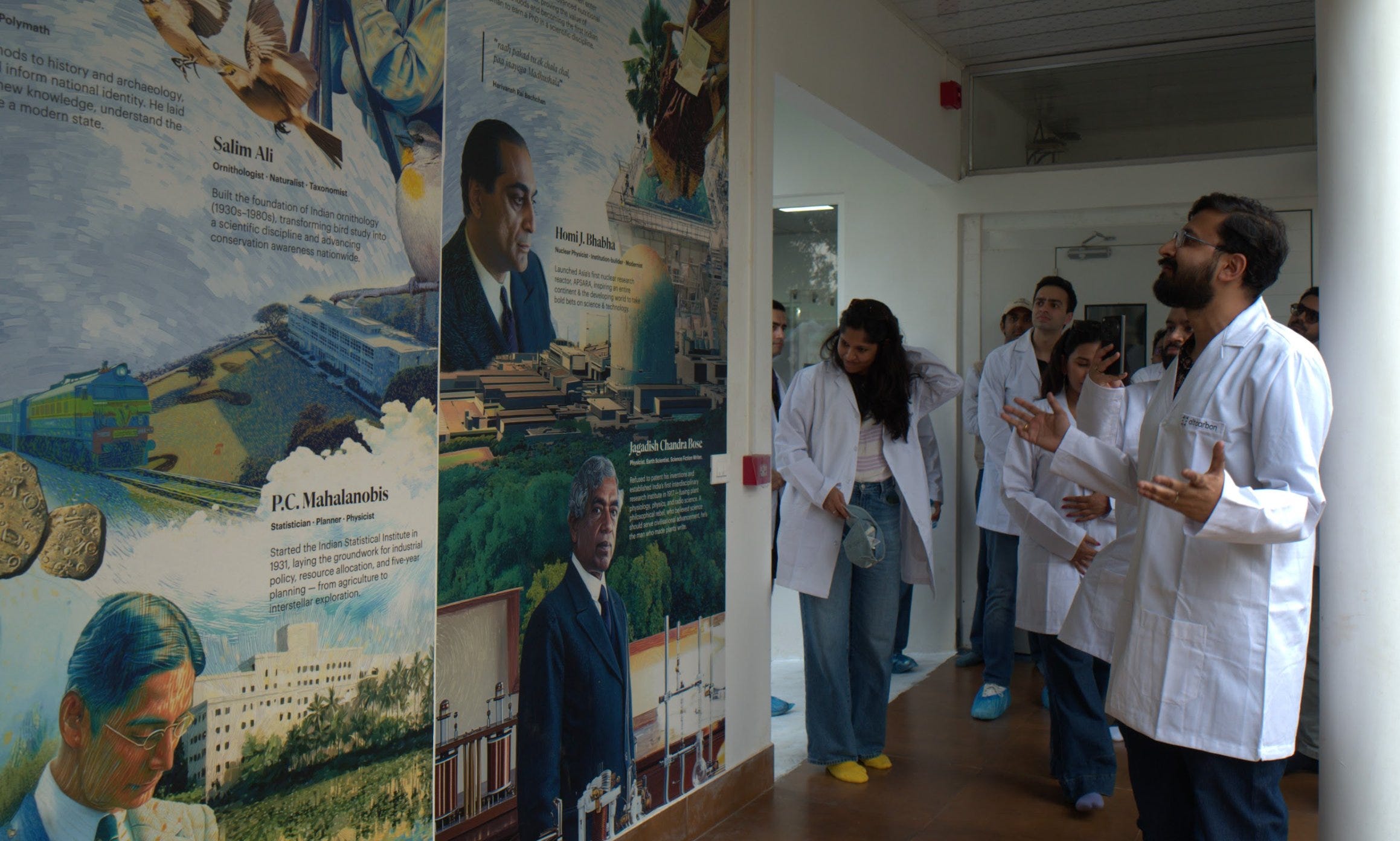
From the fields, we moved to the Darjeeling Climate Action Lab, India's leading Earth Sciences facility and our answer to Bell Labs.
The evening ended at Nobojagoron, our biochar facility in Bengal. Climate Studio, led by Adi and Amritha, put on a full light and sound show inside the plant: 10 projectors, a large factory floor, and a show built around the Bengal Renaissance Project, Alt Carbon's initiative to make India the Biochar Capital of the World.
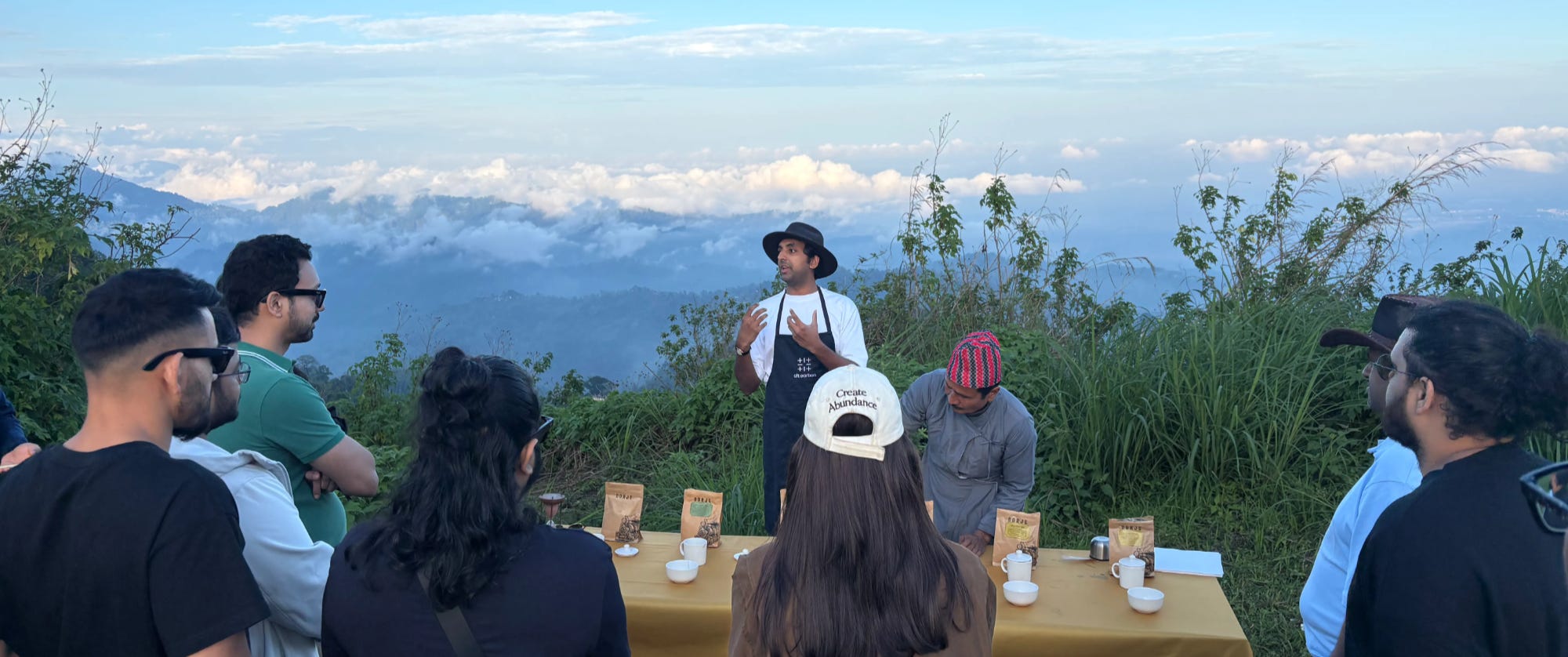
The next day we headed to the Second Chance House at Selim Hill, then hiked up through the Gitanjali section of the estate. Midway through, we stopped to taste the teas coming straight from those gardens.
The night ended on the fields. Our first Full Moon Harvest of 2026: a Flower Moon, Buddha Purnima. Harvest began with a puja to Shiva Chandrashekhara, the moon-bearer, a ritual that has anchored Selim Hill for generations. "Dui Path, Ek Suiro" (two leaves and a bud): found by lantern light, plucked with a flick of the wrist.


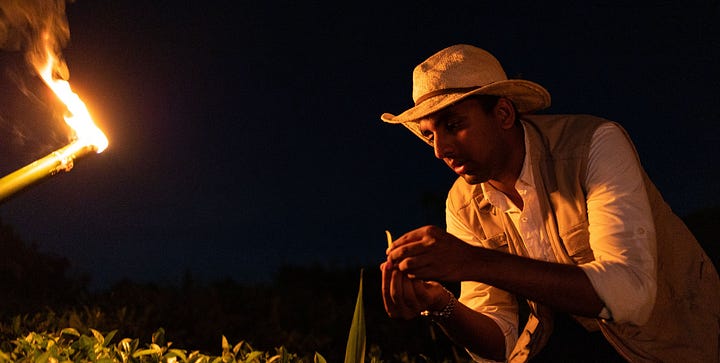

Reminds me of Buddha’s Flower Sermon: he picked up a flower and smiled. Faiz sahab would agree, years later:
guloñ meñ rang bhare bād-e-nau-bahār chale
chale bhī aao ki darjeeling kā kārobār chale
(Translation: Let colors fill the flowers, let the fresh spring breeze blow; won't you come, so that Darjeeling's work may carry on)

Amritha and I wrote about how you design a magazine ad from scratch. The brief: tell a story of Indian progress for the Works in Progress audience. What followed was weeks of rejected concepts, from the India Tech Stack rendered as miniature painting to an inversion of the School of Athens, before SN Bose unlocked everything. Bosons change the world by gathering. So do ideas.

A huge thank you to Works in Progress for featuring Alter Magazine!
Our in-house geochemist Arya wrote about the instrument at the heart of our measurement process: the Isotope Ratio Mass Spectrometer. A single drop of cave water can reconstruct 23,000 years of Indian Ocean rainfall. The same machine fingerprints carbon in our Darjeeling soil samples and traces it back to its origin. Matter remembers where it's been. The IRMS just knows how to ask. Read the full piece here.


On April 27, every one of the planet’s 50 hottest cities was in India, with average peak temperatures across the list hitting 44.7°C (112.5°F).
Banda in Uttar Pradesh topped the chart: a daytime high of 46.1°C (115°F) and a night-time low of 34.7°C (94.5°F). AQI, the air quality platform that compiled the data, said there’s “no modern precedent.” Climatologist Maximiliano Herrera called it “among the top if not the top harshest April” on record, with dozens, possibly hundreds of April heat records broken.April is not India’s hottest month.
The Indian Meteorological Department is already forecasting a below-average monsoon for 2026. Heat index values in central and eastern India could hit 60°C (140°F) later this month.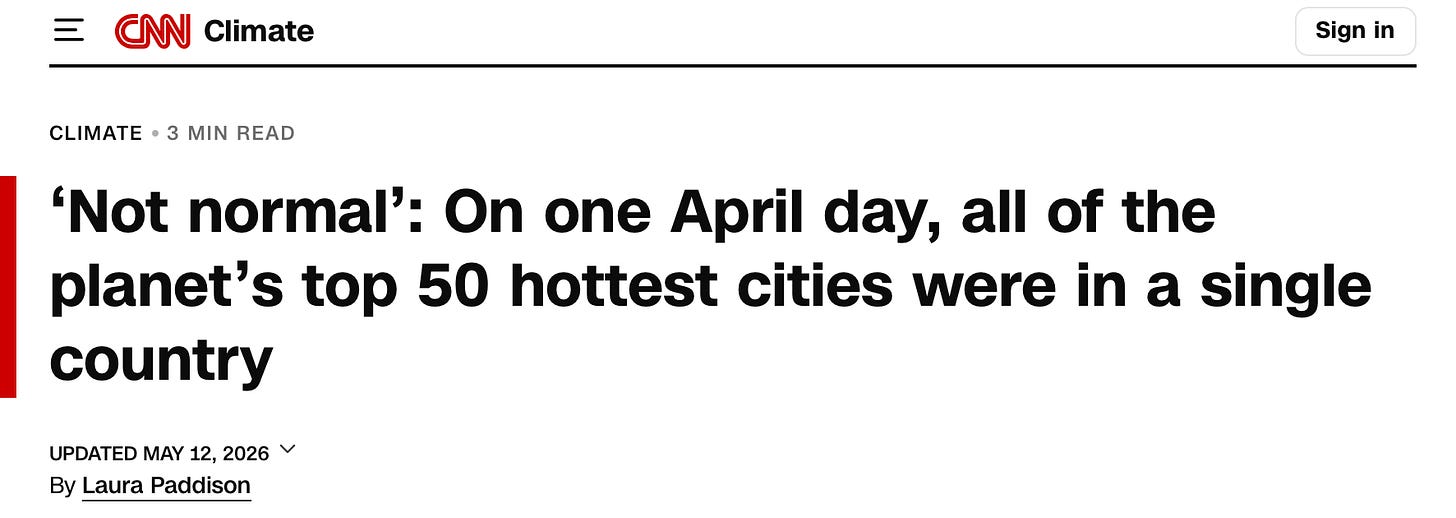
A Harvard white paper finds northern India has been cooling in winter since 1980, masking the greenhouse warming already baked in.
The Salata Institute released a 51-page multidisciplinary report this month on India’s heat exposure. Peter Huybers finds that aerosols from crop-residue burning and irrigation-driven evapotranspiration have suppressed winter daytime temperatures across the Indo-Gangetic Plain by up to 0.53°C since 1980. As India’s National Clean Air Programme reduces particulate matter and groundwater depletion slows irrigation, both suppression effects are expected to weaken. Heat action plans calibrated to historical averages in northern India are, by the report’s account, underestimating future exposure.
Two other findings: only 8% of India’s households have AC, against 380 million people in heat-exposed labor. And parametric heat insurance, currently being piloted at scale, pays out after the heat wave ends. Workers can’t afford to skip work on the chance a threshold might trigger. The authors call it hazard pay.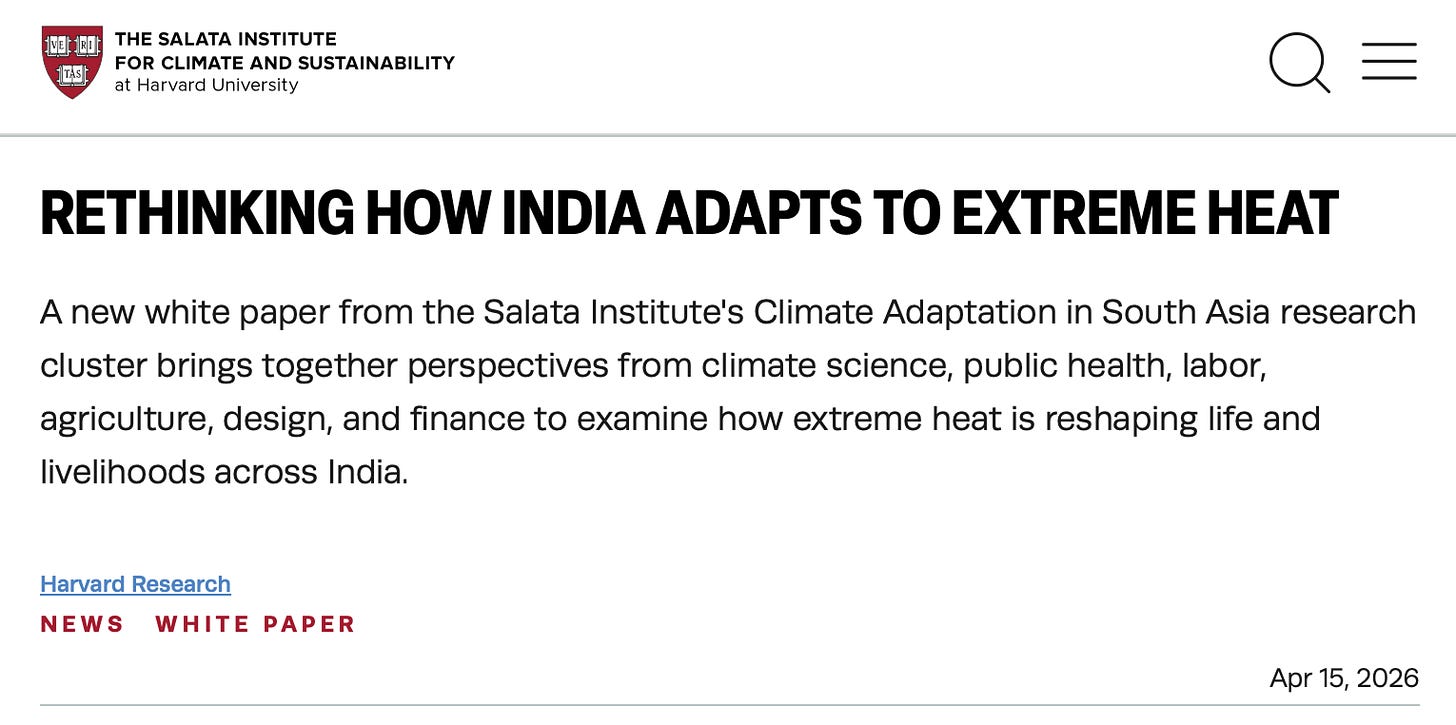

Children of Time by Adrian Tchaikovsky
A species of uplifted spiders inherits a terraformed planet and spends 1,000 years building language, mathematics, and theology, while the last humans orbit overhead, looking for somewhere to land. Tchaikovsky spends 600 pages making the spiders the more sympathetic civilization. A novel about what civilization actually is, and who gets to claim it.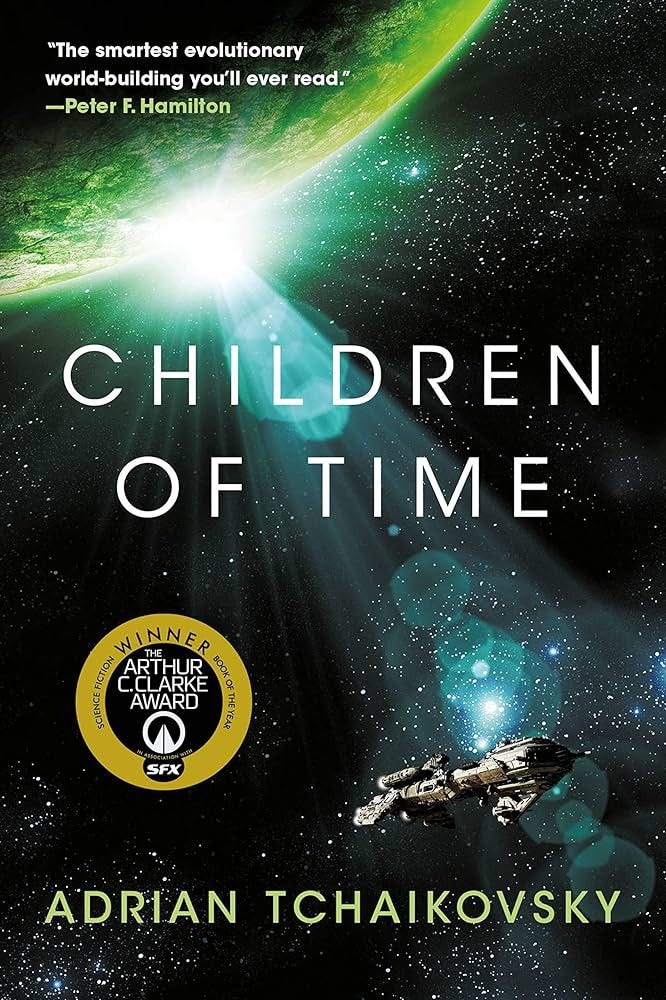
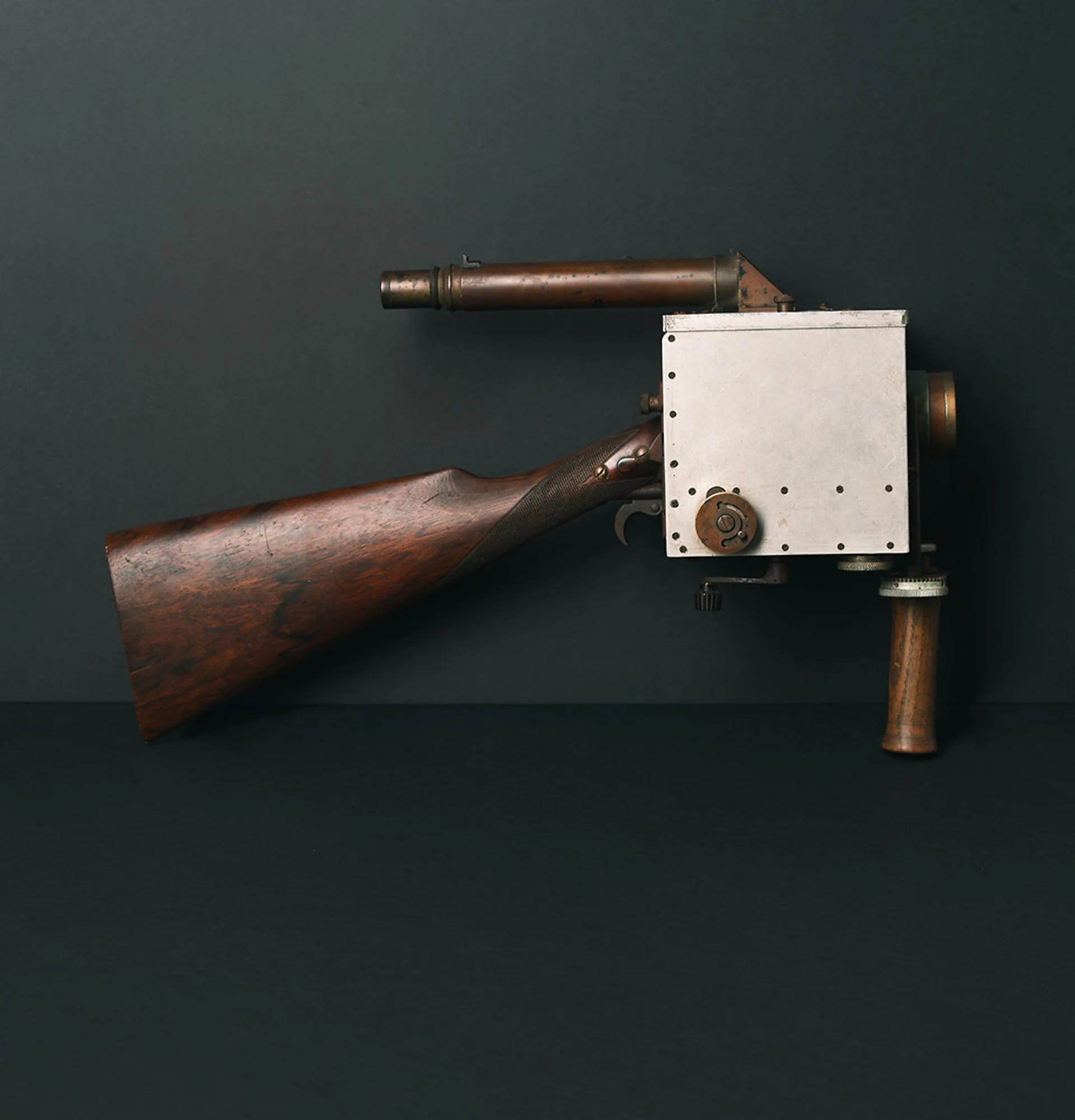
A BBC Future piece, written for Attenborough’s 100th birthday. Stephen Dowling traces everything back to Cherry Kearton, a Yorkshire farmboy who became probably the world’s first professional wildlife photographer by hiding inside a hollow wooden ox to get close to birds. He made the first-ever recording of a bird in the wild. A 7-year-old Attenborough saw his 1930 penguin film and decided he wanted to travel the world filming animals. The rifle camera that Kearton built by hand in his shed still works.
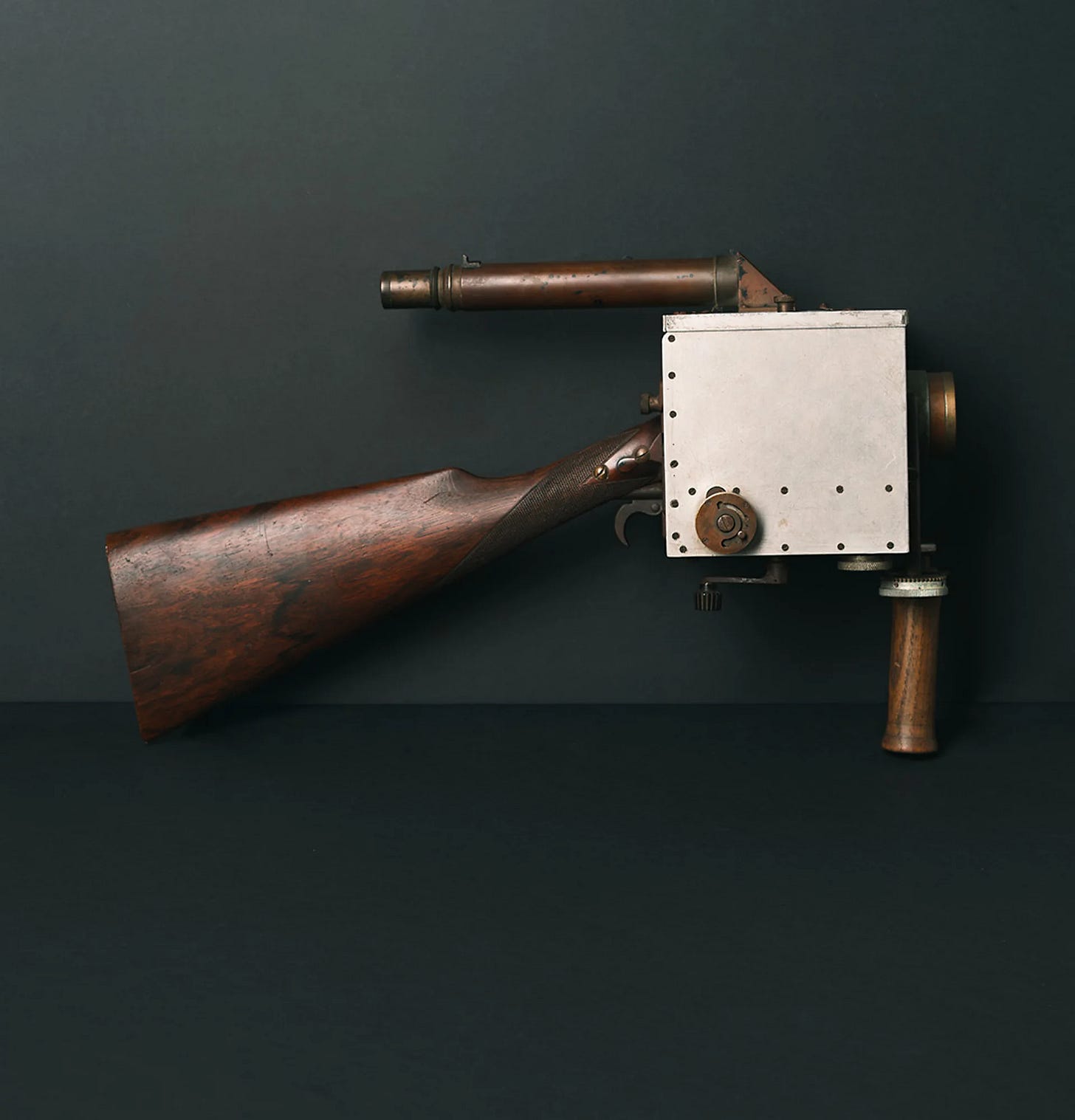
The rifle camera sold earlier this year looks more like a prop from an early science fiction film than a serious tool – but it was ahead of its time (Credit: Chiswick Auctions)

A shipping container-sized device, powered entirely by waste heat and sunlight, pulls 1,000 litres of clean water a day from desert air.
Omar Yaghi won the 2025 Nobel Prize in Chemistry for building metal-organic frameworks: molecular sponges with more surface area per gram than a football field. His company Atoco has turned that into a machine that works at 20% humidity with no grid connection and no brine discharge into the ocean. Caribbean islands that currently import water from the mainland after each hurricane season are testing it.
Yaghi grew up in a refugee community in Jordan. In his Nobel banquet speech, he described the whisper that would move through his neighbourhood: “the water is coming.” The government truck arrived once a week or two. He’d run to fill every container he could find before the flow stopped. He spent the following decades building a material that turns air into water.
The constraint it removes: fresh water has always required a river, an aquifer, or a functioning grid. 2.2 billion people currently lack safely managed drinking water. The same reticular chemistry also underlies Yaghi’s direct air capture work: a material from his Berkeley lab captures essentially all CO₂ from ambient air passed through it, what he calls the best commercially viable DAC material currently in existence.

That’s a wrap from me. ✌️
To discuss Planetary Intelligence, hit me up at sparsh@altcarbon.com
No posts
Comments
Nothing yet. Say the first thing.
Sign in to join the conversation.