
Parvat Say is a play on words. In Darjeeling, where we’re based out of, mountains are referred to as ‘Parvat.’ These dispatches are hence “From the Mountains.” They’re also a voice, putting to words the thoughts and ideas that are emanating from the mountains of Darjeeling, hence “the Mountains speak.”

📭 Introduction
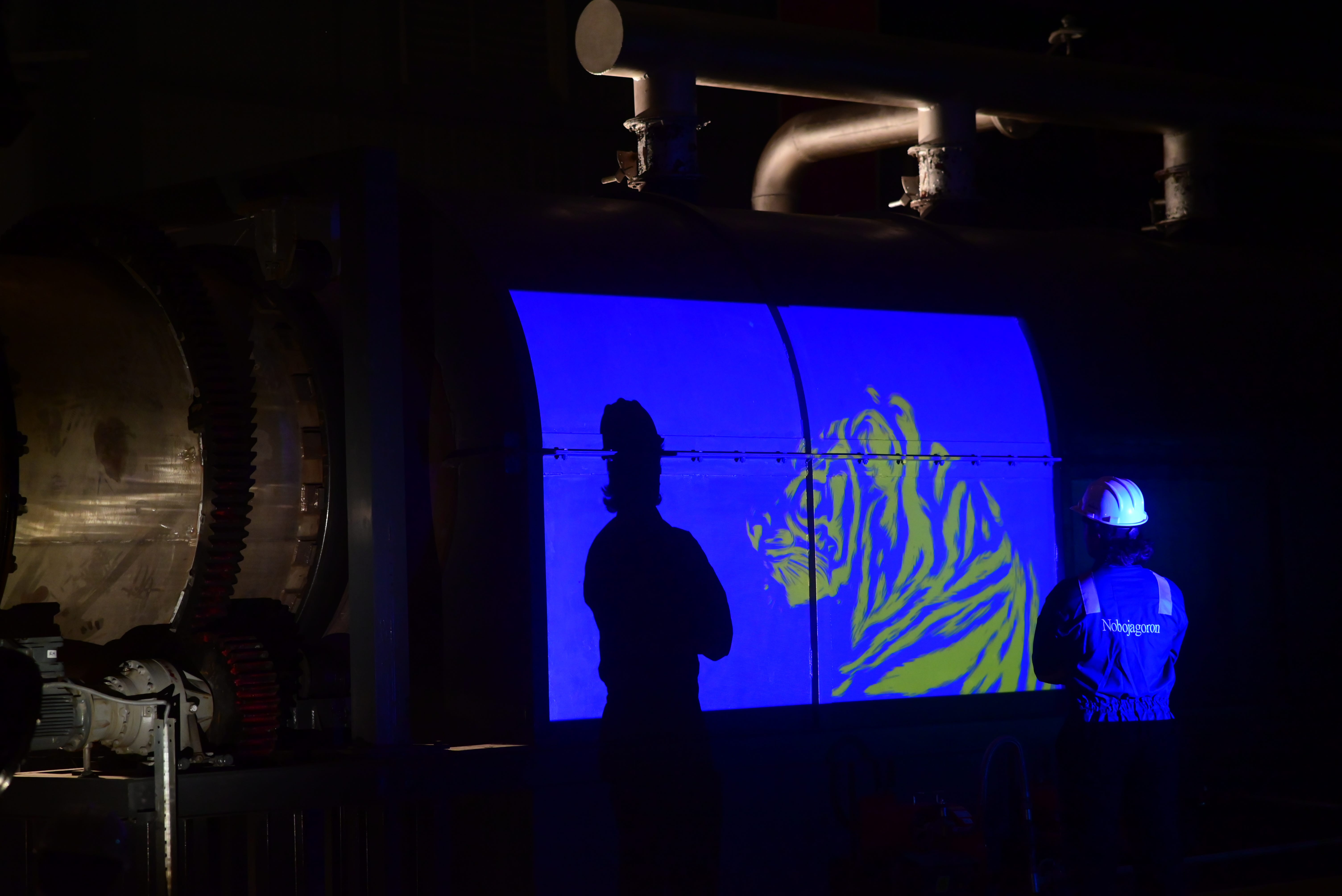
The Indra Dhanush team has been on the gas pedal since the start of this year. They're working closely with Puro.earth to get our Nobojagoron biochar facility audited, as we gear up for our first biochar credits very soon.
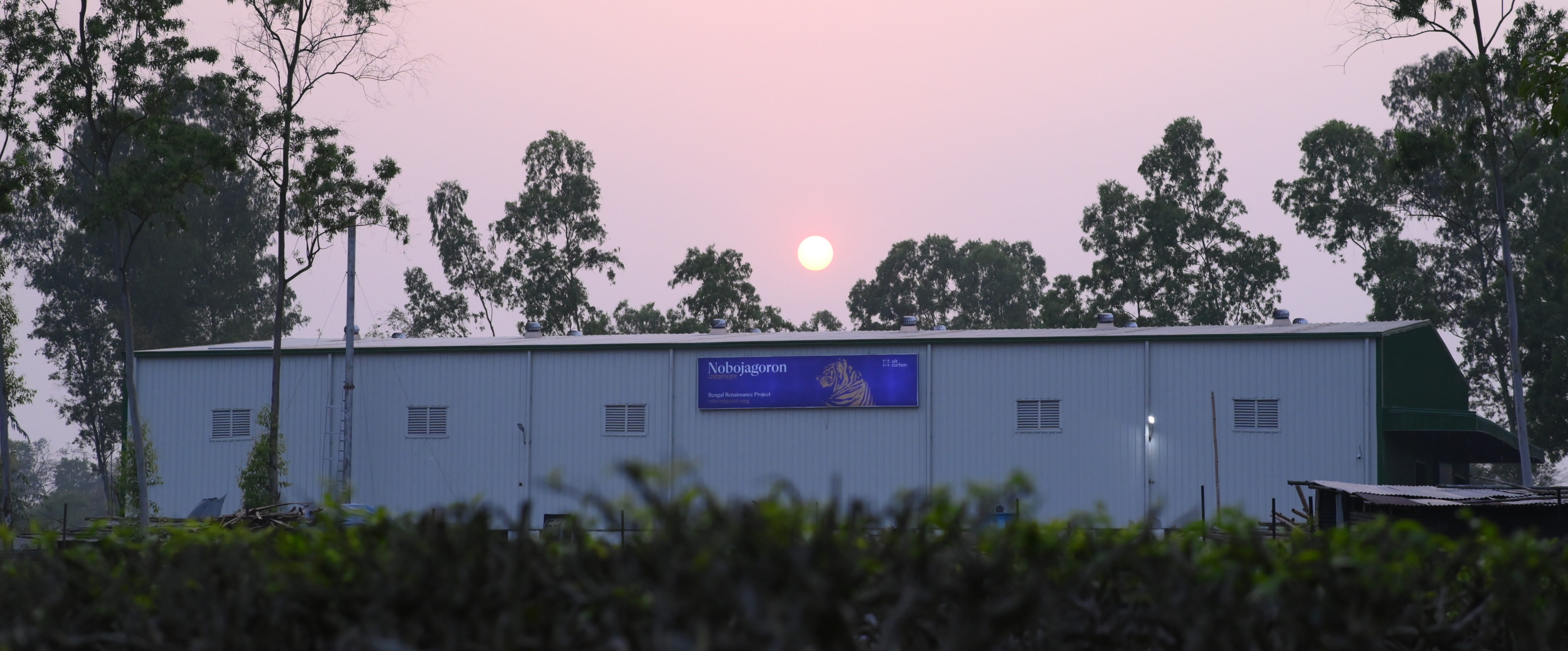
On the ERW side, our Darjeeling Revival: Monsoon Harvest project is now validated by Isometric, joining the MOL x Alt Carbon project, which has been delivering since Nov ‘25. The Monsoon Harvest validation involved submitting the largest ERW dataset Isometric has received to date. A bigger delivery is lined up for later this month. More on that in the next edition.
The Climate Studio team was in Bagdogra last month for a special project. Or as Adi would put it, something is cooking. We can’t wait to share this with you soon.
Before joining me, they made a stop in Kalimpong. Chinmay drew this painting of a bungalow he came across there.

I was fascinated by what Adi told me about the place. The bungalow is called Niharika. The British built it in the early 1900s when they were developing Kalimpong as a hill station. By 1920, it passed to a family of Indian vakils and judges. And then, for decades, it became home to two sisters who traced their lineage to Sardar Muhammad Ayub Khan, the Afghan prince who routed the British at the Battle of Maiwand in 1880. Born in India, in exile. They never once set foot in Afghanistan.
Kiran Desai wrote them into The Inheritance of Loss as a pair of Afghan princesses in Kalimpong. The house eventually fell apart (graffiti on the walls, pigeons in the rafters) before someone restored it during lockdown.

🏔️ Latest at Alt Carbon:
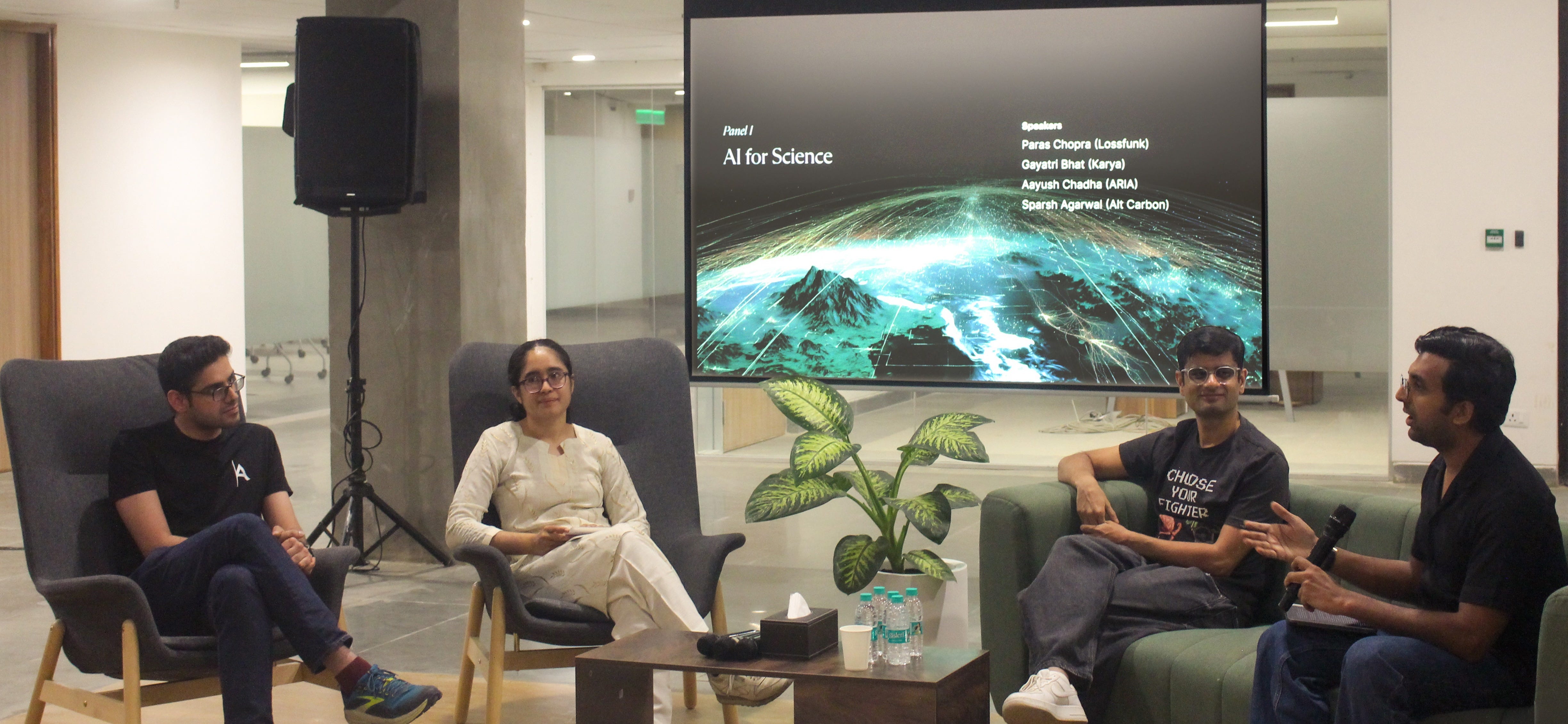
We hosted Aayush Chadha from ARIA (the UK’s answer to DARPA, backed by £800 million in government funding for high-risk research), Gayatri from Karya, and Paras from Lossfunk for an evening at IISc Bangalore, bringing together deeptech founders and investors from across the city. A second panel had Arnav Bansal from Lagrange Point, Pratik from Accel, and Shrey talking about why deeptech is difficult, from timelines that spook traditional venture to the gap between lab results and field-ready products.
One question that landed well: if budget were no constraint, what would you solve for? Gayatri said better climate and air quality. Paras said understanding how the human brain works. Aayush said room-temperature superconductivity.
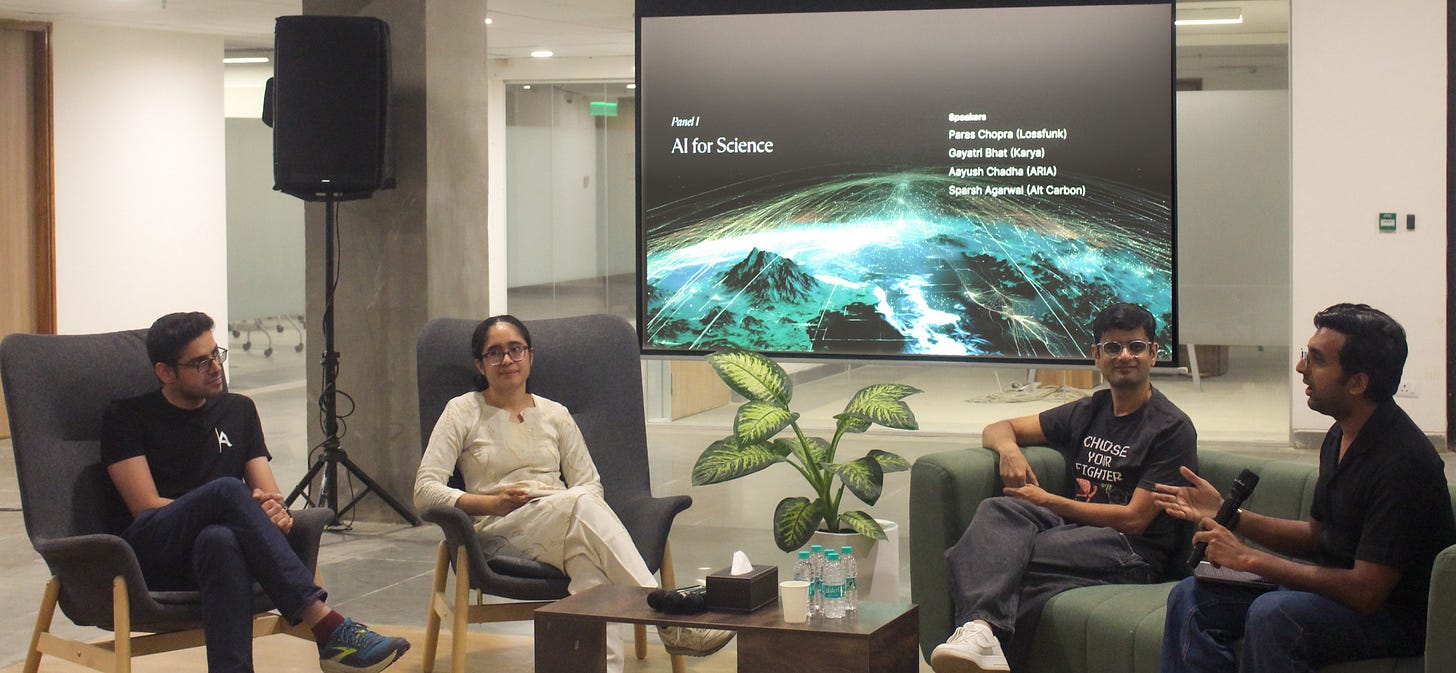
AI for Science Panel. Aayush Chadha (ARIA), Gayatri (Karya AI), Paras Chopra (Lossfunk) and Sparsh Agarwal (Alt Carbon). (L to R) That question is a thought experiment for most rooms. At ARIA, it’s the actual mandate: £50 million per programme director, freedom to fund ideas most institutions would call too speculative.
ARIA’s third cohort of programme directors opens in August 2026 (apply here).
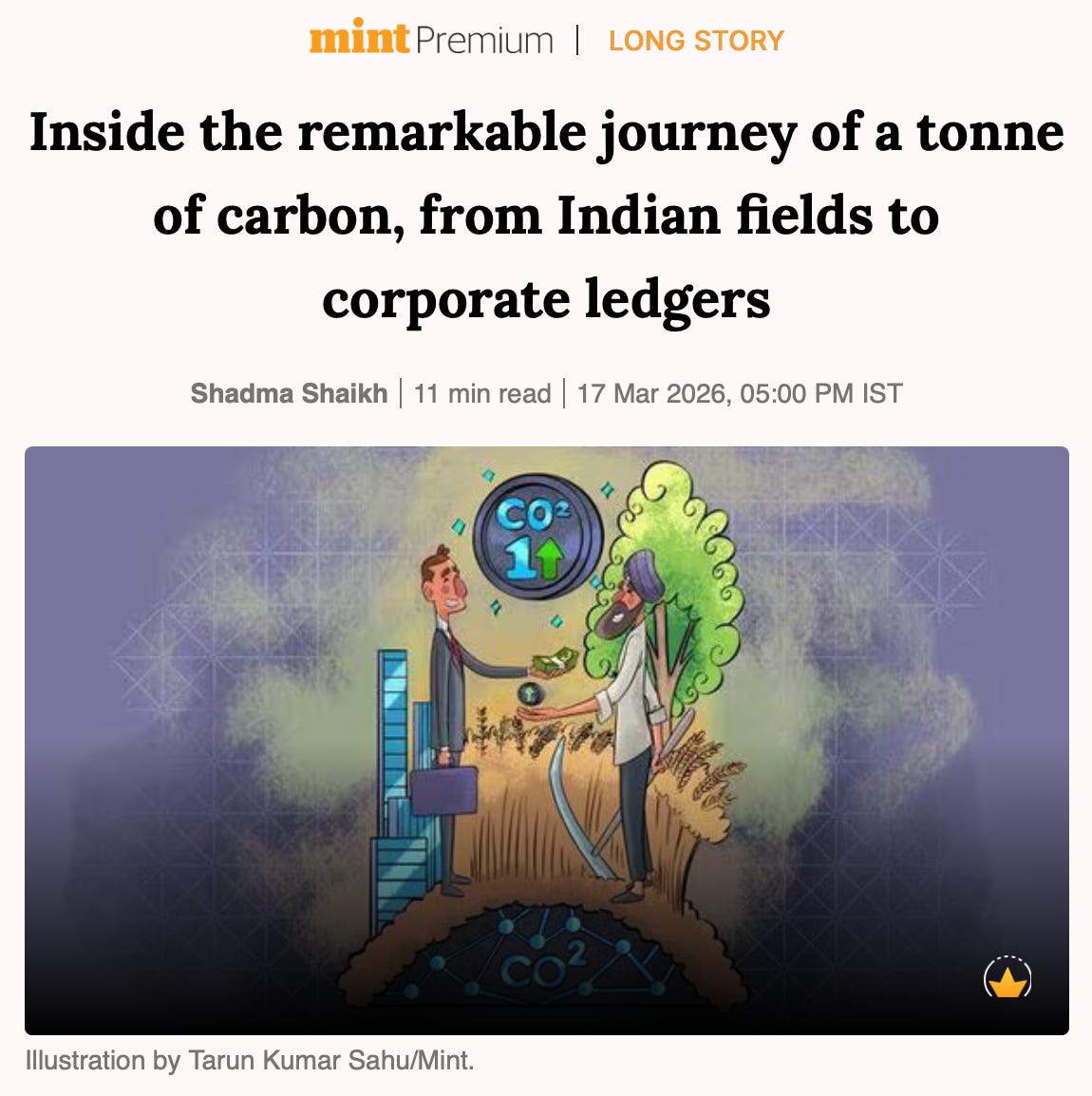
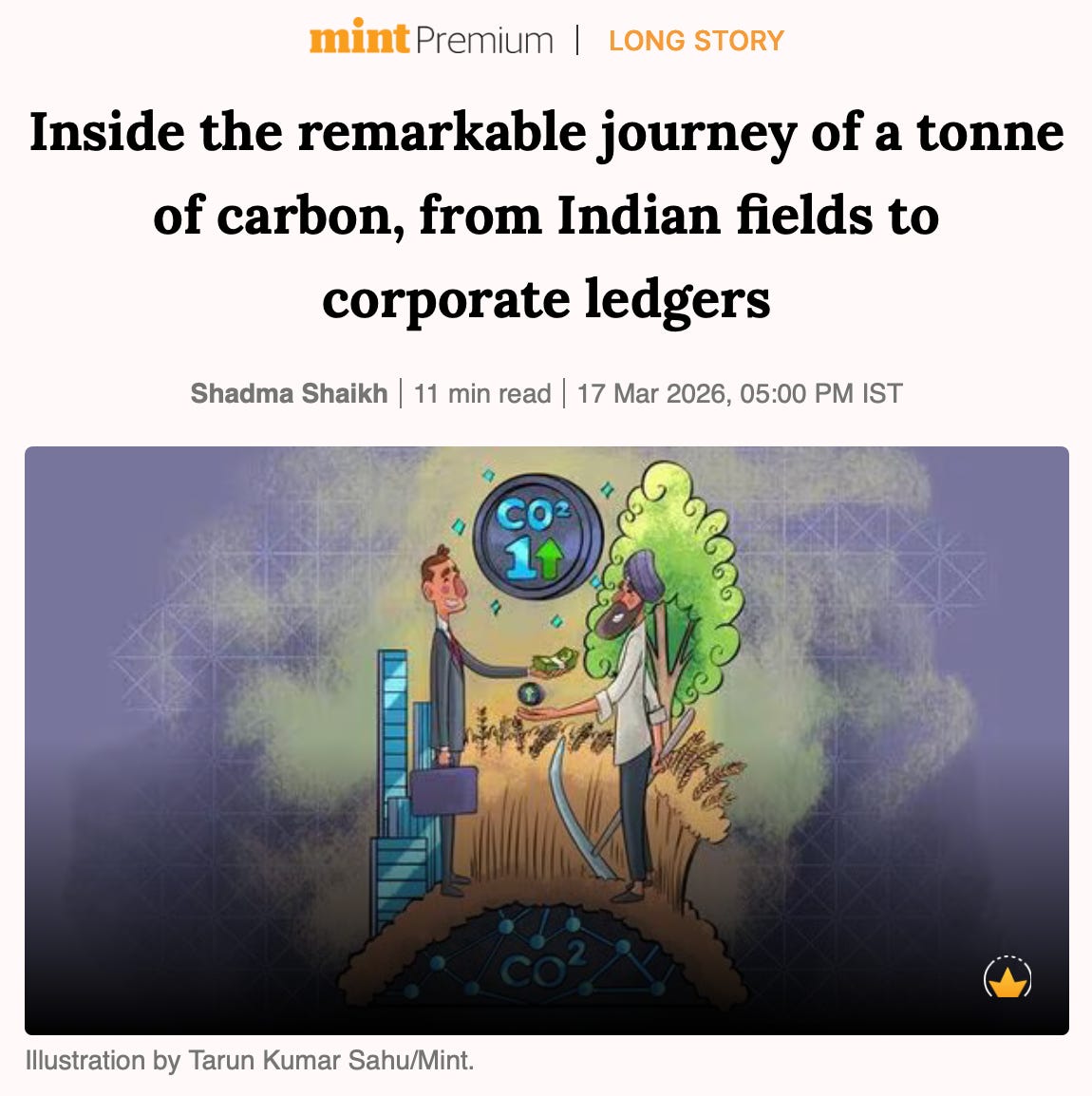
Relatedly, DRDO Chairman Sameer Kamat recently argued that India needs its own version of this model, where R&D is treated as investment and failure doesn’t trigger a CAG inquiry.Mint ran a long-form feature on our work this week.
Reporter Shadma Shaikh‘s piece, “How Climate Startups Are Turning Carbon Into Gold,” opens in Dubgachi village, Darjeeling, where farmer Subhonanda Singha spreads basalt dust across his paddy fields. The story covers how Mitti Labs, Varaha, and Alt Carbon are doing the hard work of rebuilding trust in India’s carbon credit market, after years of low-quality, avoidance-based credits damaged India’s reputation globally.
The piece gets into the integrity question sitting at the heart of ERW: can you prove, after the fact, that carbon was actually removed? Read the full piece here.

🌎 In the World of Climate
Three carbon markets, three directions. Japan's mandatory emissions trading system kicks in this April, pulling 300 to 400 of the country's largest emitters (roughly 60% of national emissions) into binding reporting for the first time.

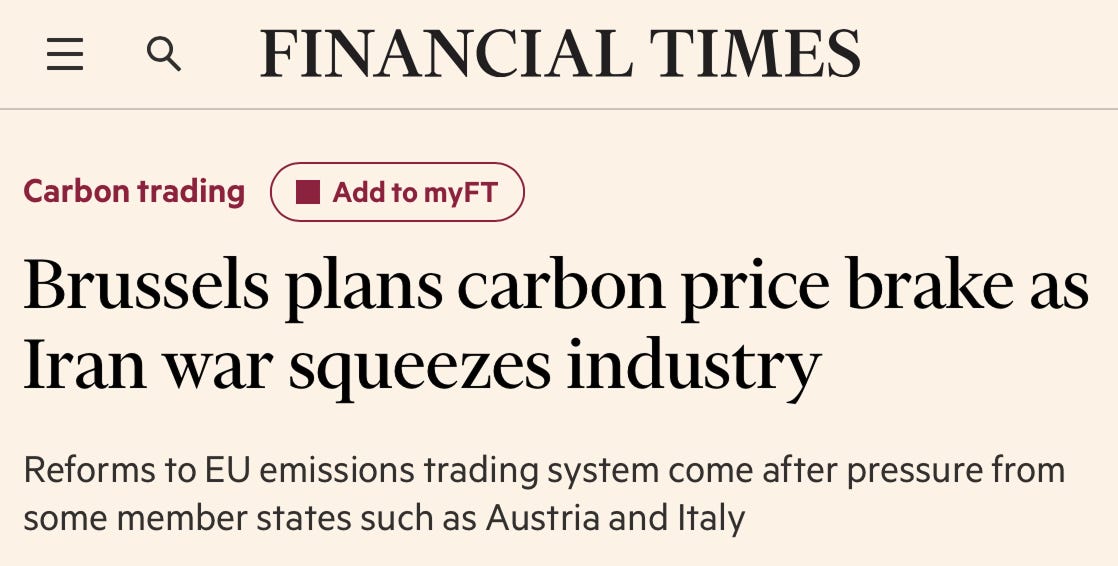
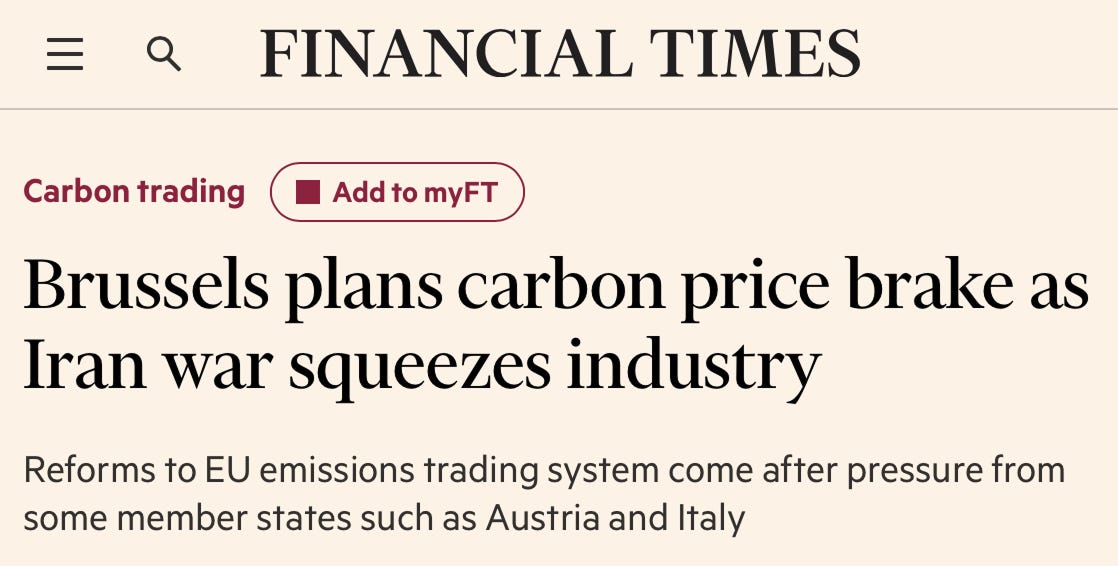
In Europe, the opposite: Brussels is planning an "emergency brake" on its ETS, a mechanism that keeps carbon credits in the market that would normally be cancelled, capping how high prices can surge. The Iran war has driven energy costs up and member states like Austria, Italy, and Poland have been pushing for relief. Carbon prices have already dropped from ~€90 to €74/tonne as traders priced in the weakening. Spain opposes the changes.
And China, in its latest Five-Year Plan, set a new carbon intensity target of 17% reduction by 2030, down from the 18% it narrowly missed. The fine print: Beijing changed its counting methodology to include industrial process emissions for the first time, letting it report 17.7% where independent analysts calculated closer to 12%.
Carbon pricing that bankrupts domestic industry before alternatives are ready helps nobody. There’s a real case for calibrating ambition to economic capacity.
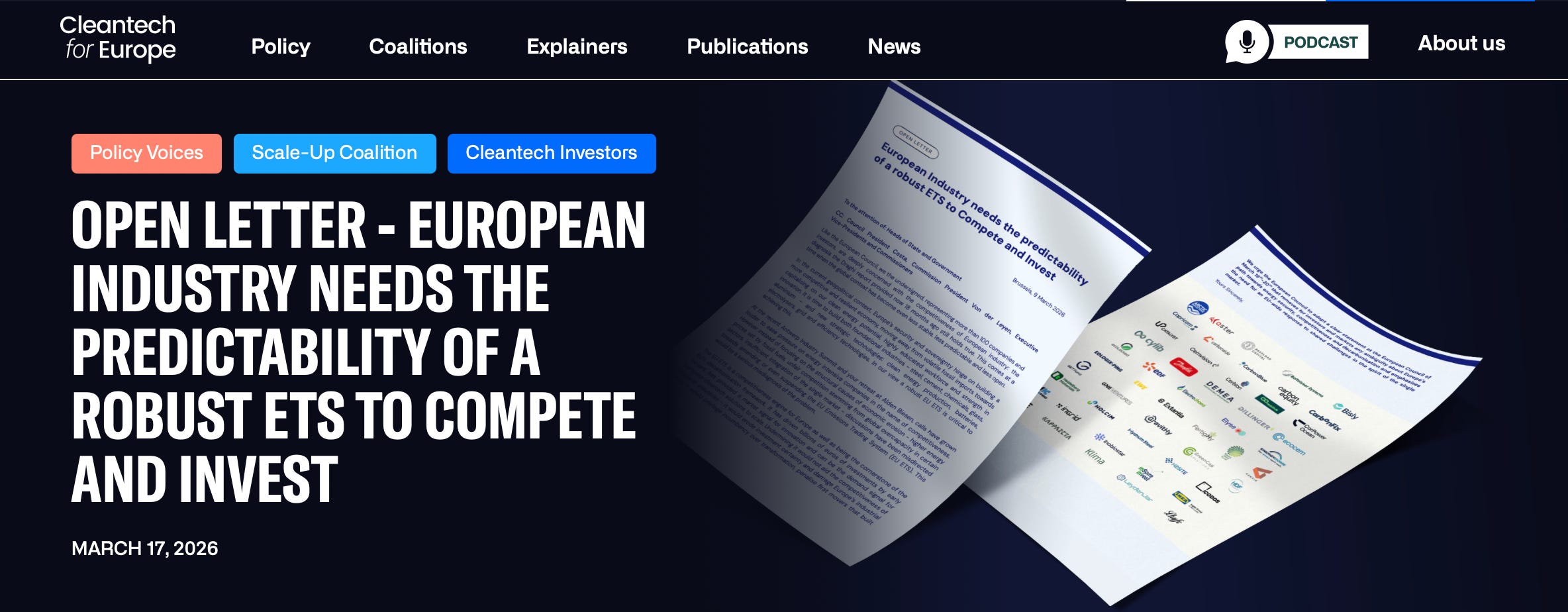
Nearly 150 companies and investors signed an open letter urging EU leaders to hold the ETS line. A credible carbon price is what pulls investment into the transition. Weaken the signal and capital finds other places to go. Japan seems to have read that playbook. The question for China and Europe is whether they’ll build the same discipline, or whether the next cycle will require an even harder correction.



🇮🇳 Good Reads from India
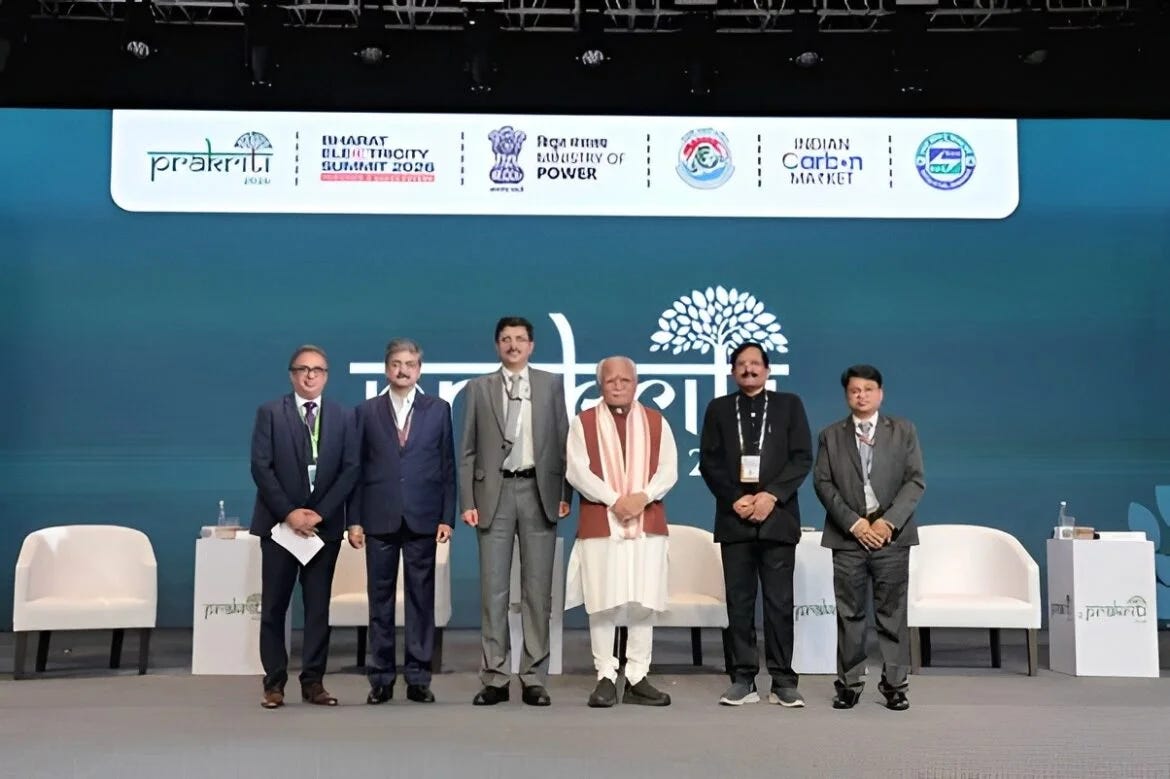
India launched a carbon market portal at Prakriti 2026, with formal trading in carbon certificates expected to begin within 4 months.
Union Minister of Power Manohar Lal announced the portal at the International Conference on Carbon Markets in New Delhi last month. We covered how India’s new carbon market is structured, who gets regulated, and why it’s different this time in Parvat Say #18. This is the next step: the actual plumbing going live. Read more here.
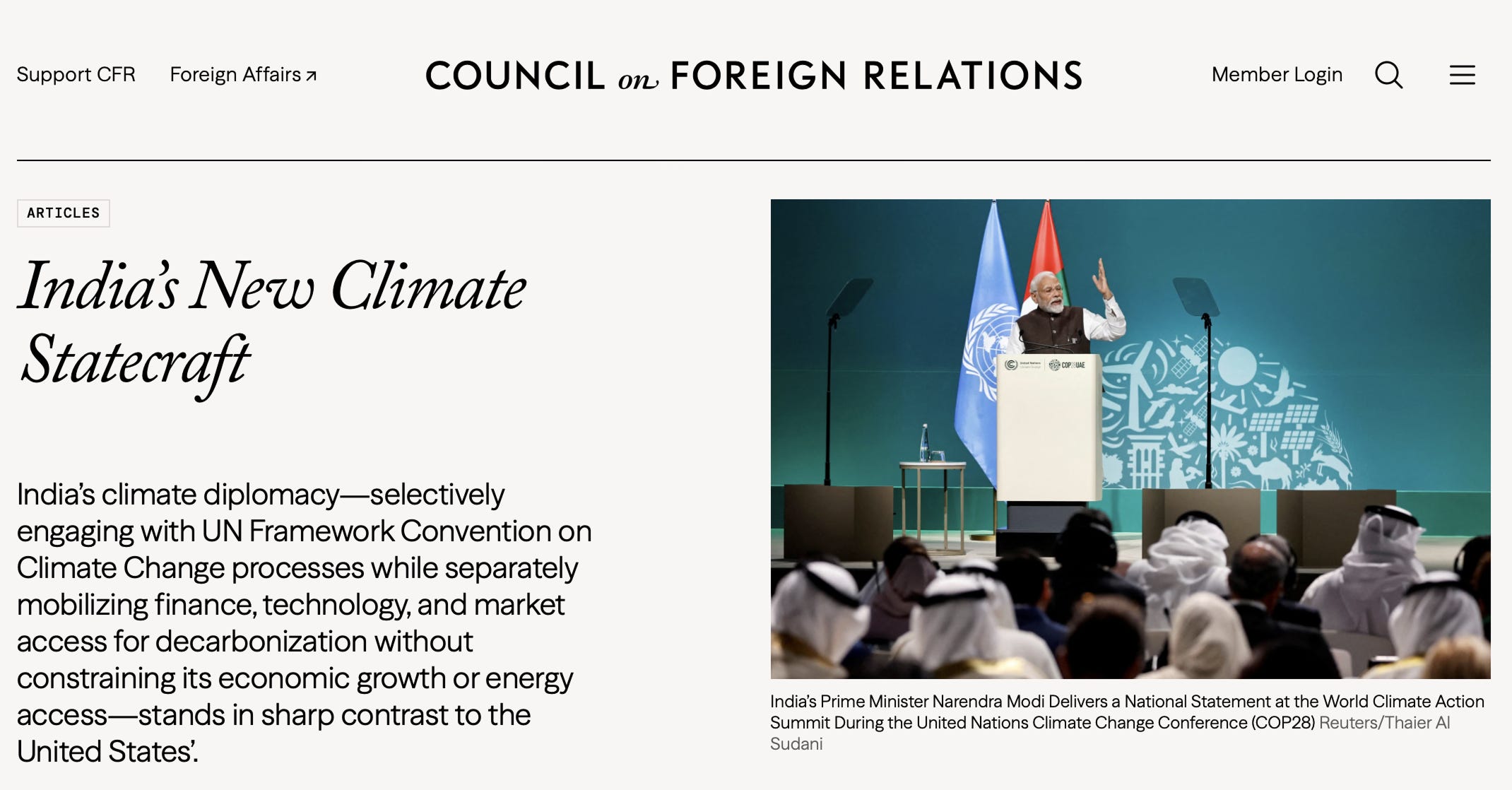
How India’s climate diplomacy actually works.
Karthik Nachiappan’s memo for the Council on Foreign Relations traces how India shifted from a defensive, equity-first posture at COPs to something more strategic: selectively engaging multilateral processes while separately locking in finance, technology, and market access through bilateral deals with the US, Japan, the EU, and the Gulf. India still invokes equity and Common but Differentiated Responsibilities, but now uses them to negotiate flexibility rather than deflect responsibility. The real action increasingly happens outside the COPs, through the G20, BRICS, the Quad, and bilateral climate partnerships that tie decarbonisation to industrial policy, supply chains, and energy security.


🛋️ What We’re Reading
“And So I Roar“ — Abi Daré on Climate Fiction, Nigeria, and the Girls Who Carry It
Abi Daré won the inaugural Climate Fiction Prize in 2025 for And So I Roar, a sequel to The Girl with the Louding Voice. In this Bloomberg Zero episode, she talks about writing a climate novel without intending to: “Every time my axe hit the artery of the vein, climate change bled.” The book follows a 14-year-old in rural Nigeria over 24 hours as drought, superstition, and patriarchy converge. Daré’s observation that climate fiction as a genre is only now becoming legible enough to have a shelf. Worth your time. Listen here.
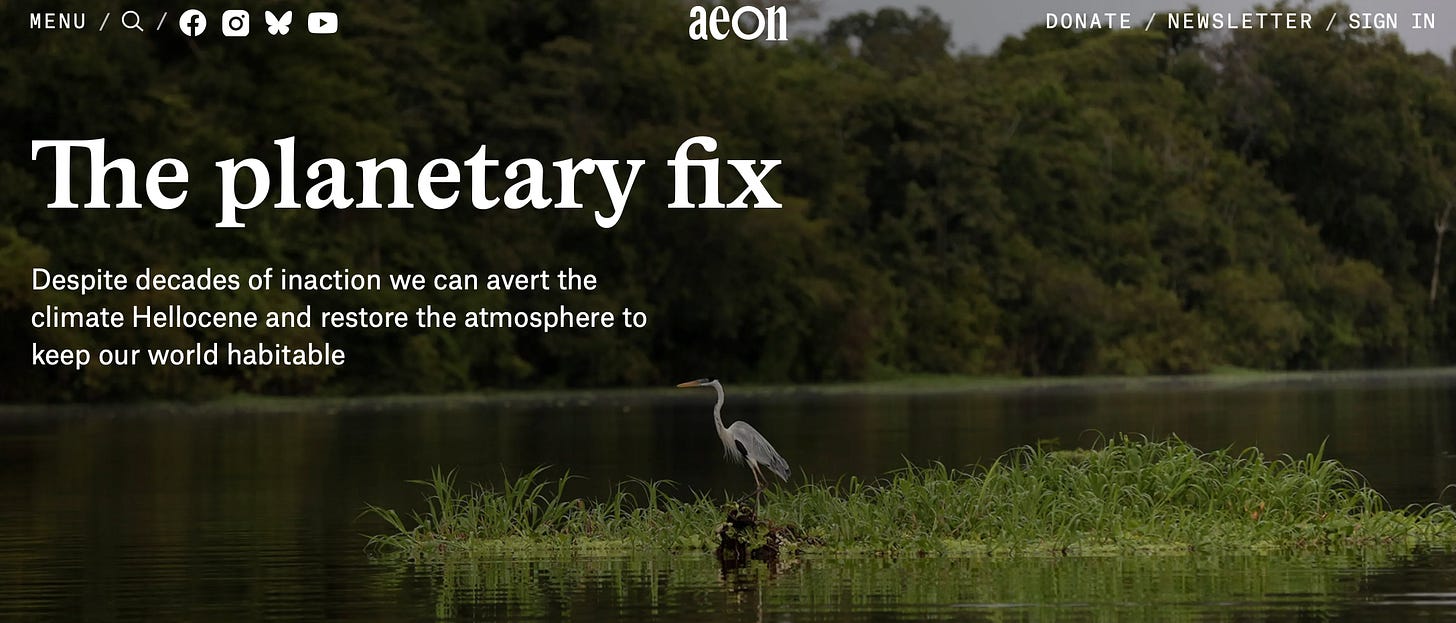
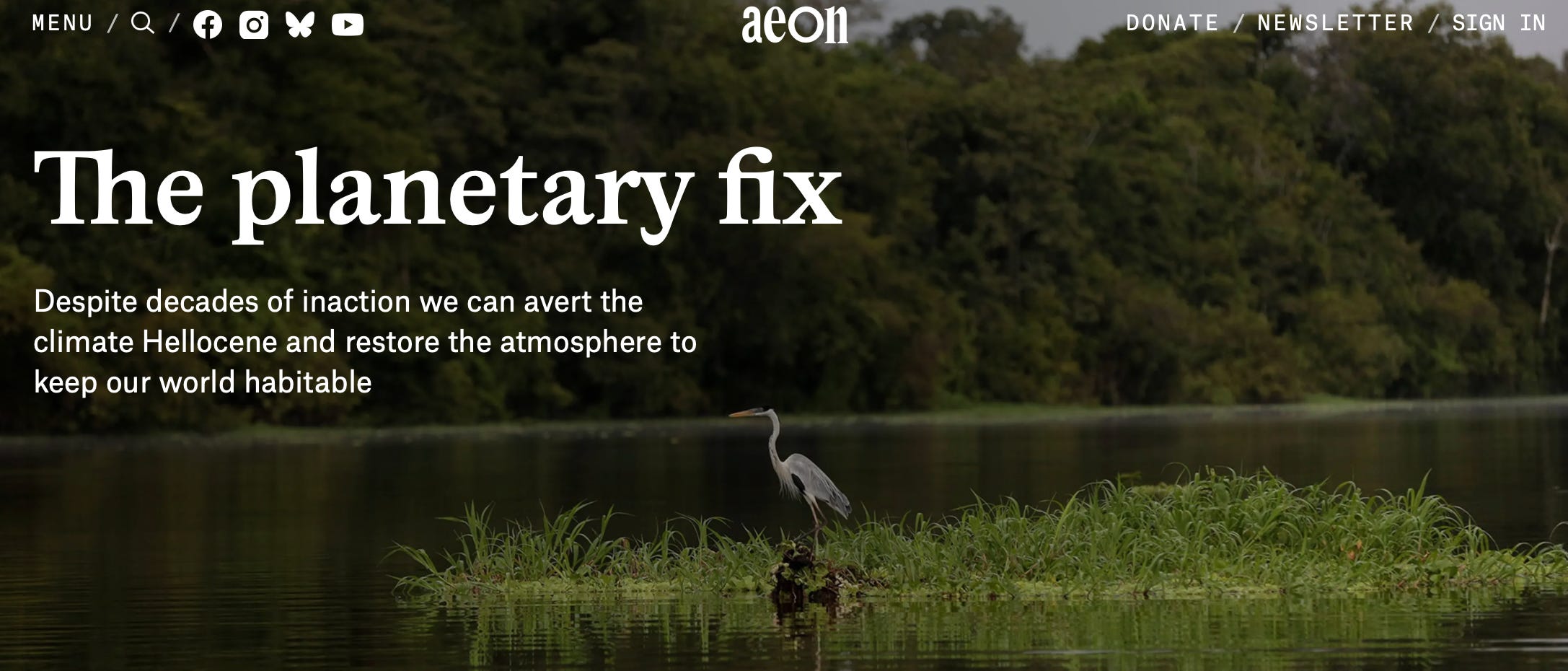
CO₂ stays in the atmosphere for centuries. Methane clears in about a decade.
If human methane emissions from agriculture, waste, and fossil fuels stopped tomorrow, atmospheric methane could return to preindustrial levels within 10 to 20 years, preventing roughly 0.5°C of warming. A February 2026 paper in Science found the atmosphere’s ability to clean itself is declining, while biogenic emissions keep rising.The two gases run on different clocks. Cutting methane buys time within a generation. CO₂ requires centuries of natural drawdown or active removal. Methane is the fastest lever we have, and we’re pulling it too slowly. Read the full Aeon piece here.

🌱 Abundance Index
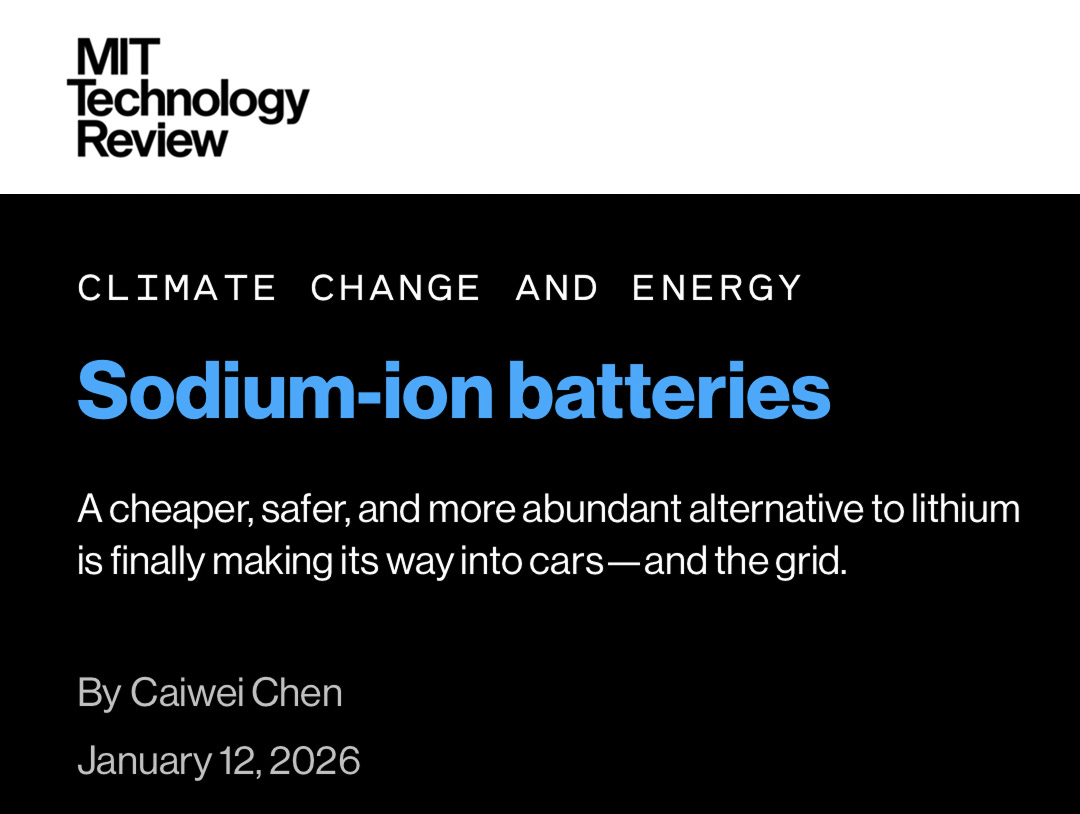
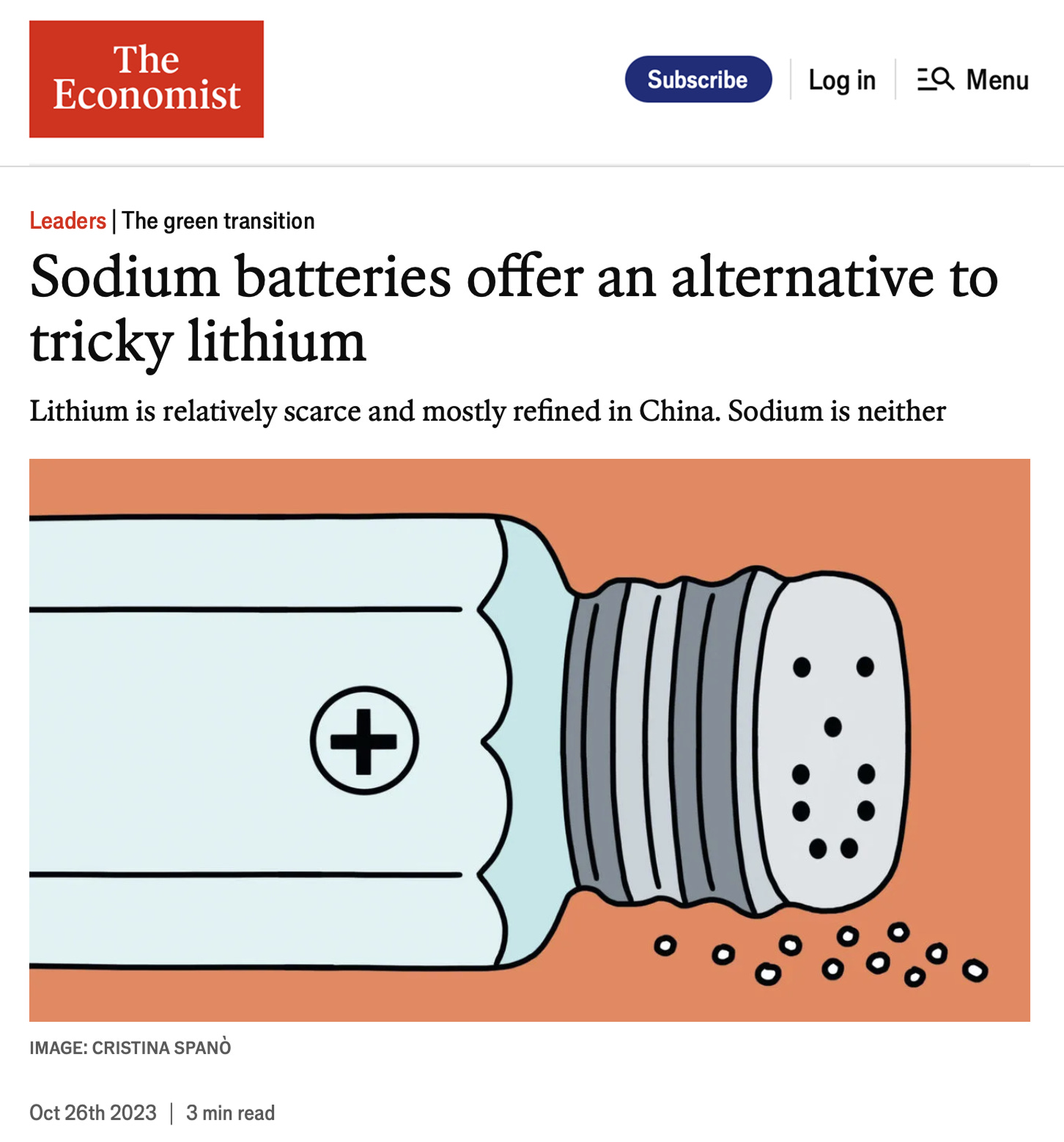
Sodium is roughly 400 times more abundant in the Earth's crust than lithium. It's in seawater, in salt flats, in ordinary rock. In 2025, CATL started mass-producing batteries from it. Their Naxtra line hits 175 Wh/kg, operates from -40°C to 70°C, and already passed China's latest national safety standard. BYD commissioned a 30 GWh production line. Global sodium-ion shipments reached 9 GWh last year, up 150% from 2024.
Sodium is lithium's chemical cousin: it shuttles ions between electrodes in the same way, charges and discharges through the same basic architecture. The differences are in what you mine. Lithium extraction is water-intensive and concentrated in a few countries. The best lithium batteries require cobalt (much of it from artisanal mines in the DRC, where child labour is well documented) and nickel (environmentally destructive to extract on land). Sodium-ion batteries skip all three. Their electrodes use iron and manganese. Their current collectors use aluminum instead of copper. Researchers at Chalmers University found sodium-ion batteries perform much better on mineral resource scarcity and match lithium-ion on climate impact.

The trade-off is energy density: sodium-ion stores about 30% less energy per kilogram, which means shorter range in cars. For grid-scale storage, where weight is irrelevant, that trade-off disappears. Storing intermittent solar and wind is one of the hardest infrastructure problems in the energy transition, and lithium supply can't scale fast enough to cover both EVs and the grid. Sodium can take the grid, freeing lithium for the applications where density actually matters.
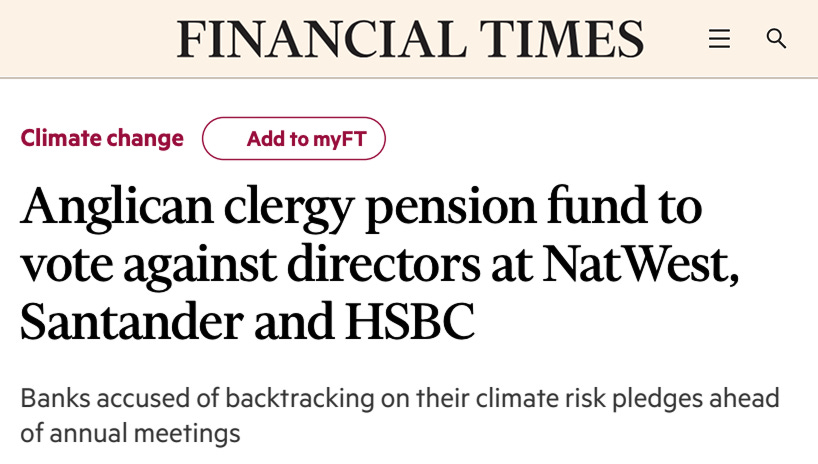
The Church of England’s clergy pension fund (£3.5 billion AUM) will vote against board directors at NatWest, Santander, and HSBC over what it calls a “material backtrack” on climate commitments.
HSBC watered down its 2030 interim targets for oil and gas in November. NatWest and Santander softened fossil fuel financing rules in February. Voting against directors is usually a last resort, but the Church board’s case rests on governance integrity: when strategy shifts quietly, directors should face scrutiny at the Annual General Meeting. Denmark’s AkademikerPension is taking the same line at the same three banks.

That’s a wrap from me. ✌️
To discuss Planetary Intelligence, hit me up at sparsh@altcarbon.com
Thanks for reading Alt Carbon's Substack! Subscribe for free to receive new posts and support my work.
Comments
Nothing yet. Say the first thing.
Sign in to join the conversation.