
Parvat Say is a play on words. In Darjeeling, where we’re based out of, mountains are referred to as ‘Parvat.’ These dispatches are hence “From the Mountains.” They’re also a voice, putting to words the thoughts and ideas that are emanating from the mountains of Darjeeling, hence “the Mountains speak.”

Most months at Alt Carbon follow a familiar rhythm. I am usually the one on the road, moving between meetings overseas, while Shrey holds the fort across Bangalore and Darjeeling, close to the labs, the land, and the facilities.
This month, we switched places.
I spent most of January in Darjeeling, running trials with the biochar team at the Nobojagoron facility of our Bengal Renaissance Project. It was a month of being fully on the ground.

Shrey, meanwhile, was travelling overseas, visiting labs and manufacturers as we think about the next phase of equipment and capability building for Darjeeling-Climate Action Labs (D-CAL).
While we were trading notes from opposite ends of the world, one message from Shrey stood out. So I convinced him to write it up.
Here’s Shrey, from Omaha.
January in Omaha is unforgiving. The cold slows everything down.
I spent a day visiting Elemental Scientific’s headquarters, with Dan and Paul. For over two decades, they have been quietly building critical infrastructure for analytical labs, especially in sample introduction and automation for ICP MS and OES systems used across semiconductors and pharma. And now in CDR MRV.
What stayed with me was the environment. You walk in and realise you are surrounded by accumulated problem solving. Patents lining the walls, each one marking a very specific technical decision made, defended, and refined over time.
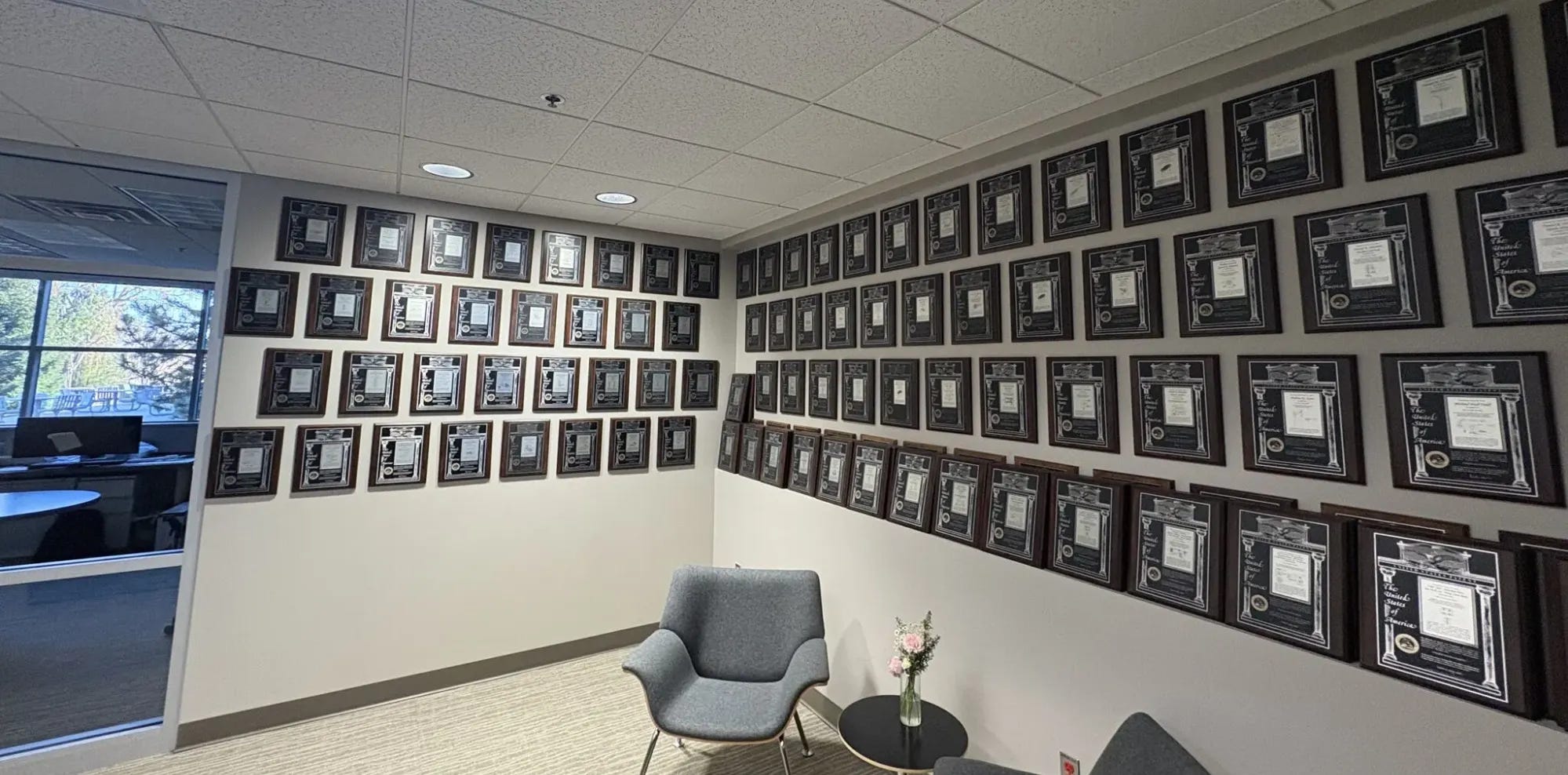
It was a good reminder that the most durable work in deep tech is usually invisible. No noise, no announcements, just people staying with hard problems longer than others are willing to.
I kept thinking about that on the way back, especially in the context of what we are building at Alt.
It felt like a good nudge to get our own IP work on paper. xD

Soil sits at the centre of everything we do.The science of Enhanced Rock Weathering is written into it. From the first baseline samples we take in the field to the final analysis inside the Darjeeling Climate Action Lab (D-CAL). Understanding soil is essential to how carbon removal is measured and verified.
We’ve built a new microsite to explain this journey: The Magic in our Labs
At the 175th Anniversary of the Geological Survey of India, Alt Carbon received a shoutout from Dr. Vikram Vishal of IIT Bombay.
The event brought together India’s top geoscience leadership, from the Union Minister for Coal and Mines and GSI’s Director General to international researchers and academic partners from institutions like Indian Institute of Technology Bombay, the United States Geological Survey, the British Geological Survey, and Geoscience Australia.
Here is a short video from the session:

We launched Alter Magazine Issue #3 at the Vimor Museum of Living Textiles.
We invited Pavithra Muddaya, founder of the museum and a sari designer who works closely with weaving communities across India. She touched upon how the museum emerged from long-term engagement with craft and educated us on the role of the weaver as they turn raw material into living art.
Participants with Pavithra and Devika at Vimor Museum of Living Textiles. We were also joined by Devika Krishnan, who has spent over 35 years building the Goodearth Heritage Foundation where she is working on improving rural women’s livelihoods across textiles, pottery, and other artisanal sectors.
Issue #3: Kanchipuram Saris and Thinking Machines follows the sari from loom to lab. Written by Nivedita Kousik, it captures how AI, microbial dyes, and digital provenance intersect with a thousand-year-old craft of traditional Indian garment— the sari.


For the first time in a long while, India’s carbon markets feel intentional.
Not because a market has suddenly switched on, but because its architecture is finally being laid out in public. The recent sectoral roadmaps released by NITI Aayog, the Government of India’s policy think tank, for cement, aluminium, and MSMEs are not climate manifestos. They are operating manuals. They tell us who will be regulated, how performance will be measured, and where market incentives are meant to do the heavy lifting.
At the core of this system is a simple idea: instead of capping absolute emissions, India is building a rate-based compliance market. Emissions are judged per unit of output, not in aggregate. This matters in a growing economy. It allows industry to expand while still pushing every factory to become cleaner over time.
The system applies first to obligated entities. These are large, energy-intensive industrial facilities that fall under mandatory emissions-intensity targets. Think cement plants, aluminium smelters, and eventually other heavy industries.
Each obligated entity is assigned a benchmark. Emissions per tonne of cement. Per tonne of aluminium. Performance is assessed annually against that benchmark.
If a facility performs better than its target, it generates domestically traceable compliance carbon credits (CCCs).
If it performs worse, it must buy credits to cover the gap or pay a penalty that is a multiplier of the going rate of carbon credits at the moment.
This is where the market comes in.
Credits can be purchased from two places:
other obligated entities that have outperformed their targets,
non-obligated entities, meaning project developers and actors outside the compliance pool, as long as their credits meet national standards.
This dual supply structure is deliberate. It creates liquidity early on and allows project developers to plug into the compliance system.

The most encouraging shift is how India is going about methodically building its carbon market.
Both Council on Energy, Environment and Water (CEEW) and the Sustainable Futures Collaborative (SFC) have been clear on this point: markets fail when rules are unclear, institutions are fragmented, and participation is uneven. It’s encouraging to see how these hurdles are being tackled by policy design.
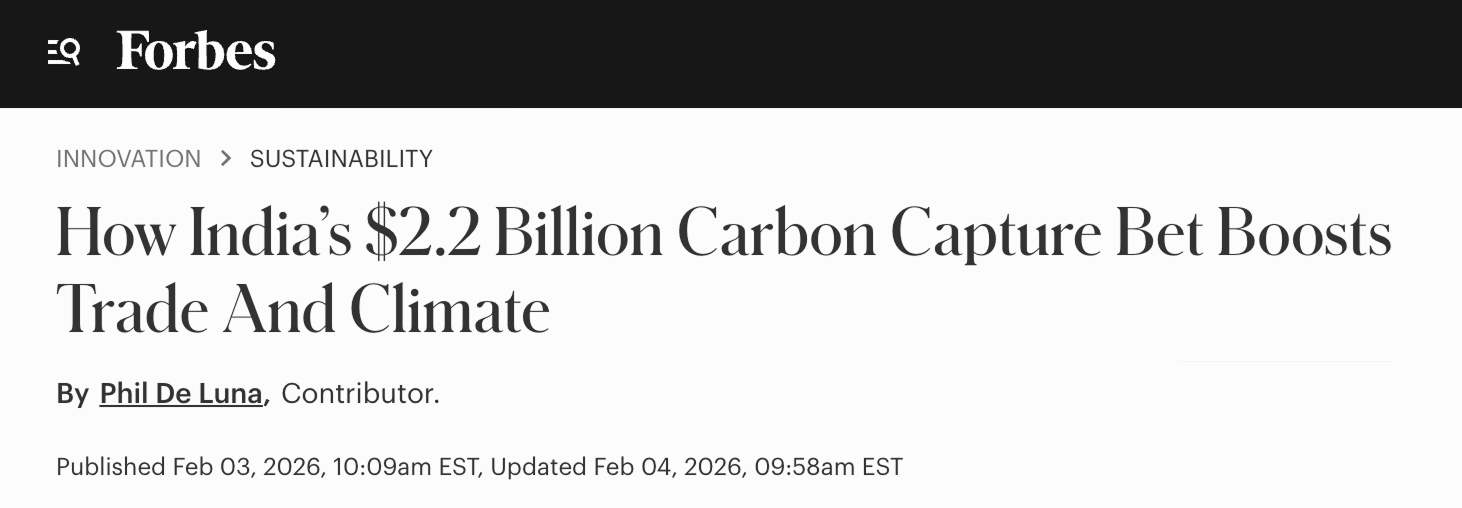
And you can see this in how the transition is being financed. Carbon markets are not being asked to do everything on their own. Alongside market design, the government has proposed a ₹200 billion ($2.2 billion) programme to scale carbon capture and storage across hard-to-abate sectors like cement, steel, and refining.
There is also an external reason this architecture is taking shape now. As India advances FTA negotiations with the European Union, carbon accounting is becoming a condition of market access. Mechanisms like the EU’s Carbon Border Adjustment Mechanism (CBAM) are effectively globalising carbon pricing. For Indian exporters in sectors such as cement, aluminium, steel, and chemicals, carbon is now a domestic regulatory concern AND a critical trade variable.

The impact of CBAM is going to be real. If emissions are not measured, priced, and reduced at home, they will be taxed at the border. In that sense, India’s compliance carbon market is a strategic response to trade and competitiveness. By building credible domestic benchmarks, MRV systems, and carbon pricing infrastructure, India retains control over how carbon costs are discovered and absorbed, rather than importing them through foreign regulation.
In practice, carbon markets become a way to meet external constraints on India’s own terms.

The United States Congress has stepped up its bet on carbon removal. Recent appropriations direct tens of millions of dollars toward carbon removal research, pilot deployments, and federal procurement programs. Read more here.
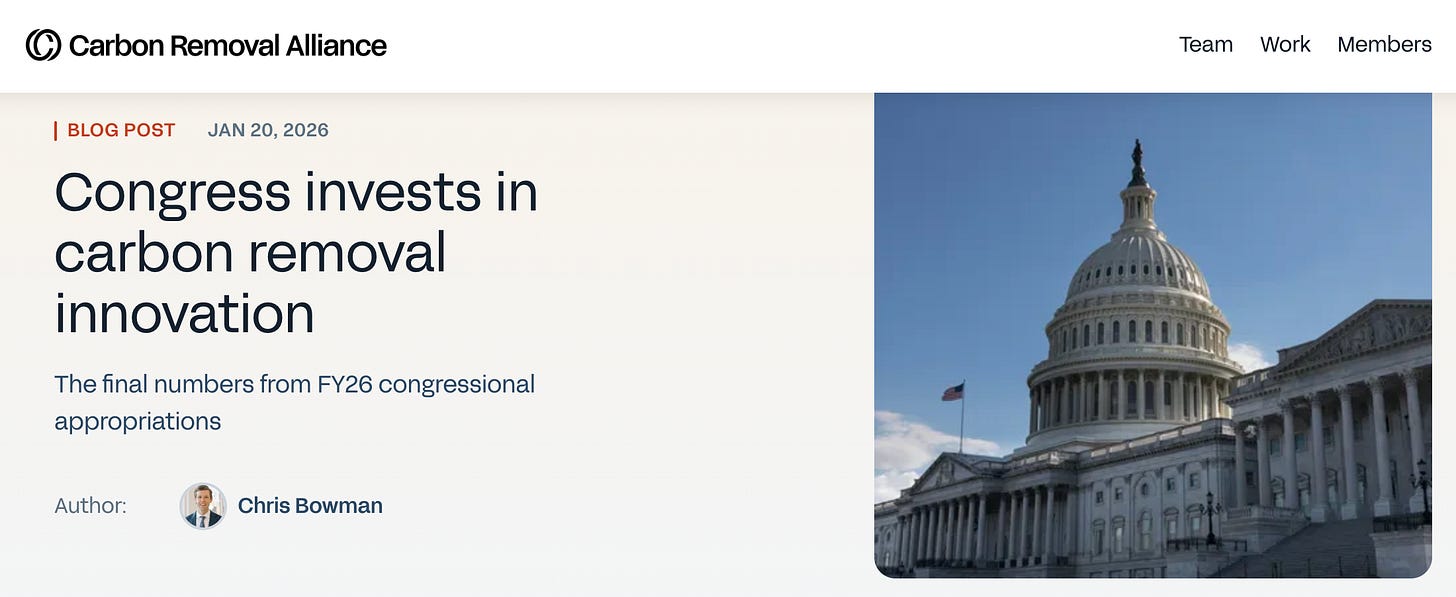
More than the dollar amounts, the signal matters; carbon removal is starting to be treated as climate infrastructure, not just a discretionary offset.
Japan’s largest emitters are already buying carbon credits, ahead of regulation.
Major Japanese industrial companies have begun purchasing carbon credits on the Tokyo Stock Exchange’s voluntary carbon market, even before the country’s mandatory emissions trading system comes into force. Exchange officials say demand is being driven by companies preparing for compliance, as well as firms retiring credits early to meet internal climate targets within the current fiscal year.
Read the full Bloomberg story here.


When We Cease to Understand the World by Benjamin Labatut

A haunting, nonlinear meditation on the twentieth century’s greatest scientific minds and the moral costs of discovery. Labatut traces how breakthroughs in physics, mathematics, and chemistry often emerge alongside obsession, madness, and ethical collapse. It is less a history of science and more an inquiry into what happens when human reason outruns human wisdom.
Home in the World by Amartya Sen

A quiet, reflective memoir from our side of the world on belonging, identity, and the many meanings of home. Moving between Santiniketan, Bengal, and the wider world, Sen reflects on how place, language, and intellectual inheritance shape a life.



Data centers are among the most energy-hungry buildings ever constructed. Almost all of that energy leaves the building as heat, and almost all of it is wasted.
In parts of Europe, this waste heat is already being piped into homes, swimming pools, greenhouses, and district heating networks. As compute scales, the question shifts from whether we can afford this infrastructure to why it is not designed to give something back.
Read the column here.

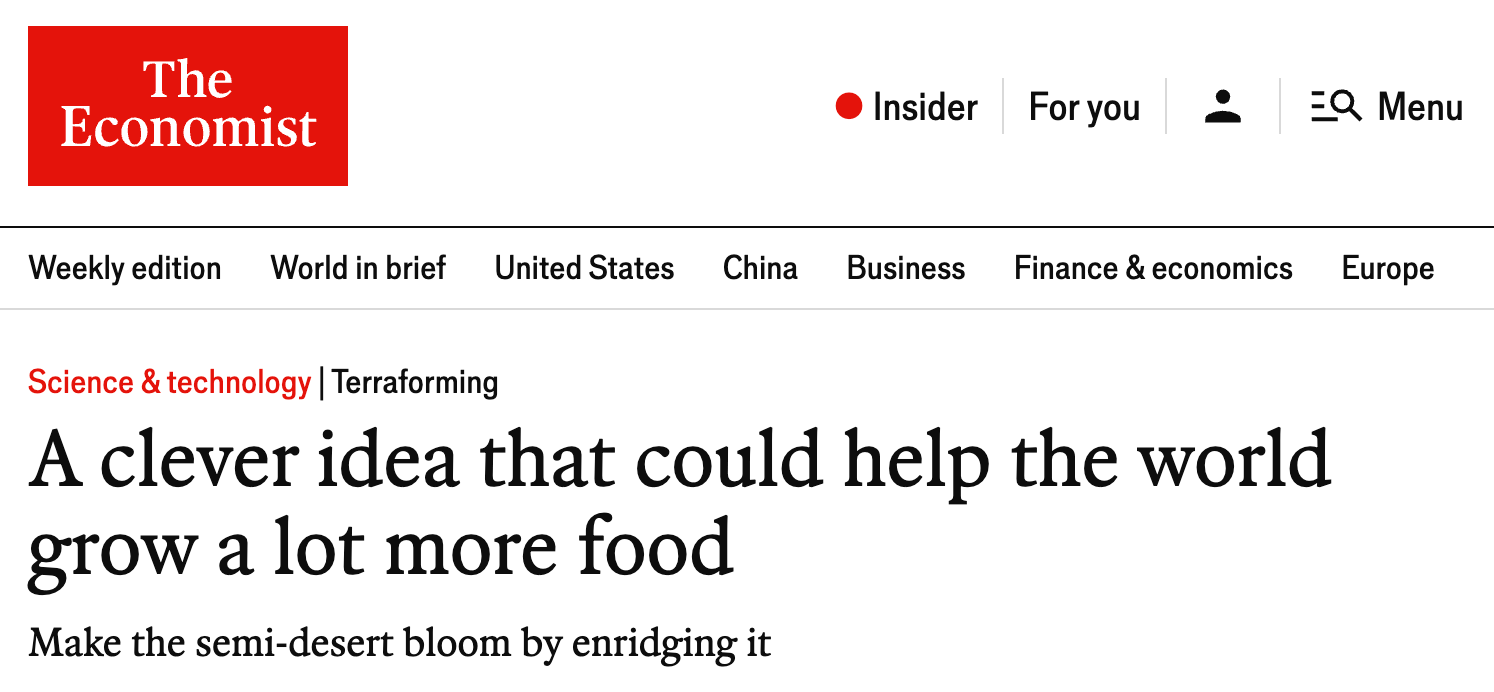
What if one of the biggest constraints on food isn’t water or land, but the angle at which sunlight hits soil?
By subtly reshaping semi-arid terrain so crops grow only on the cooler, moisture-retaining sides of gentle slopes, marginal land could become productive without new inputs. The idea is simple enough to sound implausible, which is exactly why it’s worth reading.
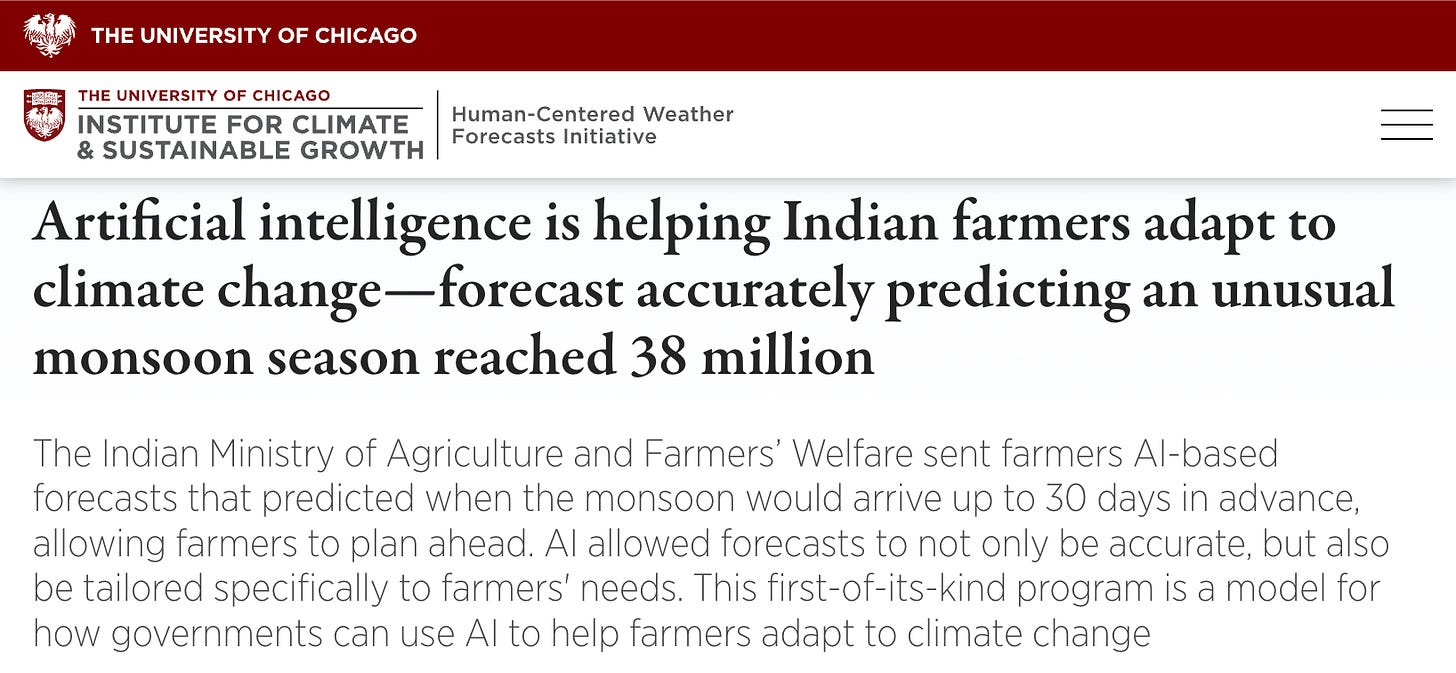
In 2025, the Indian government used AI-based weather forecasting to predict the onset of the monsoon up to 30 days in advance and delivered those forecasts directly to 38 million farmers via SMS and voice messages. Built by blending multiple AI models with decades of meteorological data, the system helped farmers make better planting and crop decisions during an unusually erratic monsoon season. Read the complete article here.

That’s a wrap from me. ✌️
To discuss Planetary Intelligence hit me up at sparsh@altcarbon.com
No posts
Comments
Nothing yet. Say the first thing.
Sign in to join the conversation.